OLD LYME — The Connecticut Department of Energy and Environmental Protection (CT DEEP) is hosting a conversation about water quality priority focus topics and potential waters for development in order to develop Water Quality Action Plans for the state.
Written comments may be submitted through email or regular mail by February 16, 2024. Email comments should be submitted to: rebecca.jascot@ct.gov. All comments must be submitted in writing.
Hello everyone; so much to do and so little time in this holiday season …
Maureen Haseley-Jones is ‘The English Lady’
Remember, to breathe, stretch and take time out for yourself each day. On a pleasant December day, go out into the garden. There is still time to plant your spring bulb; the earth is still workable so enjoy the fresh air and the gentle exercise.
Plant the bulbs three times as deep as they measure in their upright position. For example, Daffodils should be planted nine inches down below the frost line, spread composted manure, which hopefully you stored in the shed or garage, on the soil where the bulbs are planted.
Don’t worry if you do not have the manure now, as when the bulbs peak up from the soil in spring, you can obtain the composted manure then and spread it around the emerging bulbs at that time.
Right now, it is a sunny afternoon, and I am sitting in my armchair with a delicious cup of Earl Grey tea, inhaling the air wafting from the kitchen, bringing with it the fragrance of cloves. Clove fragrance is an old family tradition that I follow each December, when I fill my great-grandmother’s brass saucepan with water, then add whole cloves, bring the water to the boil, then turn it down to simmer gently.
The fragrance is a special memory of Christmas in the kitchen of Gran’s thatched roof cottage on the grounds of our plant nursery in England.
On this side of ‘The Pond’, in early winter before snow falls or even on a sunny day with snow on the ground, there are construction projects that can be accomplished with patios, decks, ponds, and dry stonewalls to repair and build. By accomplishing these tasks in winter, you will be ready to plant in spring.
If you are not into heavy work, I suggest you call a landscape company that you trust to give you an estimate for your project. In fact, if you would like to get in touch with my son Ian, at LandscapesByIan.com for an estimate or a consult on stonework work or a design for the spring. Ian has been telling me that there is a scarcity of building supplies right now, which might hinder your projects for your garden, unless you act early, like right now.
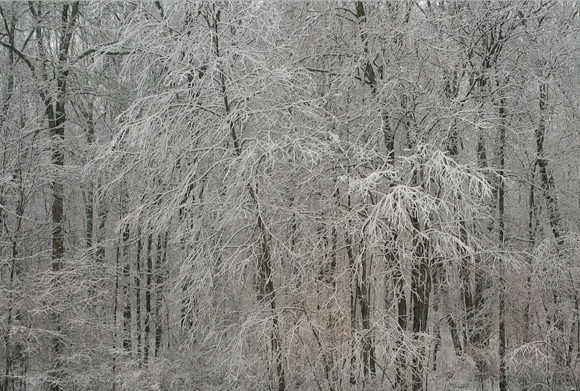
‘The English Lady’ is sure that snow will soon be with us. This view looking up Maywood in Old Lyme was taken a few years ago by Beth Sullivan.
I am sure that snow will be with us before long, so I hope you have the snow shovel handy or perhaps you decide you need a new one? If so, buy a lightweight wood- handle and plastic shovel instead of heavy metal.
When the storm has passed and you are ready for clearing the paths and driveways, don’t load the shovel heavily, scoop lighter loads. You will get done faster and with less aches and pains, or chance of injury.
If you are not able to clear the snow yourself from driveways, walkways and steps; I’m sure there are some teenagers in your neighborhood who would be willing to help you out.
We need the moisture from the snow for the soil and plants and I hope that we also get a good amount of rain to carry us through to spring.
If you have not already done so, mulch around the trunks of roses, mounding at least six to nine inches up the stems. As I mentioned earlier, buy a few extra bags of mulch and topsoil, and store them in the garage or shed.
Tie down the long whip-like rose canes of climbers to supporting structures so they are not broken off by strong winds. If the shrub roses are planted in an exposed area, cover them with a rose cone or if they are larger, cover them lightly with burlap until April.
I just walked into my living room to check on my Amaryllis bulbs, which have striped blooms. Amaryllis can be enjoyed for a long time with little effort.
Amaryllis in bloom by ‘I Do Nothing But Love’ on Unsplash.
As the flower buds begin to open, remove the pollen bearing anthers with tweezers, before they begin to shed—this will add days to the flowering period and remember to water.
Once the bloom is finished, deadhead it, remove the bulb from the soil and let it dry off. Store in a cool dark basement or some other cool dry place at about 55 degrees for10 weeks without watering. When you want to start it again, pot up the bulb tightly in fresh potting soil and begin to water again.
By the way, Amaryllis is poisonous so do not let children or animals eat the flowers.
Outside my kitchen window I can see the holly bush with lovely red berries, some of which I cut to decorate the house. Holly is a good weather predictor; few berries mean a mild winter, whilst many berries denote a harsh one. My red and black friends, the ladybugs, have begun to come indoors, earning their keep by consuming white fly and aphids, which often gather on houseplants.
This week, in the house, I am planting up my first group of paper white narcissus to get a head start on bloom in about a month. I store two dozen bulbs in the vegetable keeper of the refrigerator, away from the food. I plant half of them now and store the rest in a paper bag in the refrigerator, which I will plant later. With this method I will have continuous bloom and fragrance through the winter months. By keeping the bulbs in the refrigerator, they stay dormant, until planted.
I plant my bulbs in pebbles, with just enough pebbles to anchor the bulbs and enough depth for the roots to grow. Cram a lot of bulbs in the pot so they are touching – the more bulbs, the more vibrant the display. Make sure the bulb pots do not have drainage holes; if they do, cover the holes with shards of broken pottery.
I place the planted bulbs in a dark cool room or cupboard, always keeping the pebbles moist. In a few weeks, when the shoots of the narcissus are about six inches tall, I take the vases into a cool room on the south side of the house and place them about six feet away from the window in indirect light where they remain, keeping the pebbles moist until the buds appear.
When the buds appear and the stems are about 12 inches tall, bring them into the area of the house to be enjoyed. Always place them about six- foot from a sunny window and away from draughts and heat. Keep the soil or pebbles moist throughout the life of the plants.
I know that the stems of paper whites get leggy and often topple over. My tall glass vases do not allow this to occur but if you don’t have tall containers, here is a suggestion to keep the plant upright.
An English gardening colleague of mine gave me his ‘gin tip’. He pours a dessertspoon of gin (not the expensive stuff) on the soil or pebbles around the plants every couple of weeks after he has watered them. This limits the height of the stems, so they do not collapse, and the gin does not affect the bloom.
Regarding alcohol, another tip my grandmother whispered is to add a few drops of brandy or port to invigorate potpourri that has gone stale. Personally, I pour a few drops of either lemon oil or lavender oil on the potpourri.
I know that many of you spread salt on walkways, and driveways to thaw ice. However, the salt ruins plants, when it seeps into borders. Use an alternative like unscented kitty litter or sand that works well. In spring, just hose off steps and paths; the sand and kitty litter are good additions to your soil.
There is still time to prune dead or diseased branches from established deciduous trees and shrubs; it is an easier task to do at this time of year, as you are able to see what needs to be done without foliage obstructing your view. If you would like to have a fall pruning, call a reputable arborist to give you a quote and a team will come and use their practiced eyes to give you a great result.
Last winter, squirrels, raccoons or whomever, got into the birdseed in the milk shed. I bought out the supermarket’s supply of cayenne pepper that week and sprinkled it on my birdseed to keep the marauders at bay. This trick will also keep those critters out of your garbage. I also sprinkle cayenne pepper in the bird seeders for the feeders and on the suet blocks – the heat of the pepper does not affect the birds – they do not feel the heat.
To keep moths and bugs away from cupboards and in clothes; collect some remaining herbs, which may be still available, perhaps sage and lavender. Tie them into bunches with string and slip over a hangar in your closet or in a drawer. This week, I put bunches of dried sage in my closets and drawers—insects do not like fragrance and so the sage or lavender keeps insects away.
A few bags of soil and mulch that you may have stored in the garage or shed will be useful after frost. Often the frost heaves plants above the soil and exposes the roots. The plants roots can be covered and protected with the soil and mulch, until they can be resettled again when spring arrives.
When a plant is knocked askew by wind, ice or snow, do not be in a hurry to straighten it since, quite often, the plant will bounce back on its own. However, uprooted trees or shrubs should be straightened immediately then staked, their roots covered with soil and mulched, then resettle the plant in the spring. When snow is heavy on the branches of the evergreens, gently brush the snow off with a broom — with ‘gently’ being the operative word.
When you receive or buy cut flowers during the holiday, of course you want them to last. To accomplish this, your vases need to be squeaky clean. If there is a build up of dirty residue that regular soap and water won’t budge, try adding a little coarse sand to dislodge the mucky residue, then use soap and rinse well. For a narrow or globe-shaped vase ,use a bottlebrush.
Poinsettias:
Photo by Jessica Johnston on Unsplash.
I receive many questions about how to keep Poinsettias alive. I have a friend who has kept the same poinsettia alive for eight years. After blooming, she places the plant in a cool room, watering when the top of the soil feels dry, then in late May puts it, still in its container in the garden. In September, she brings it into her porch and begins gently watering. A combination I enjoy is poinsettias in a container with ivy and forced spring bulbs.
I was always curious as to how Poinsettias got their name. Last year I heard an old story on that very subject.
‘In a tiny village in Mexico, the tradition on Christmas Eve was to put gifts before the Crèche at the Church. A poor young boy, who had nothing to offer, went outside and knelt in the snow praying for a gift to give the newborn king. Where he knelt, a beautiful plant with vivid scarlet leaves appeared beside him and the boy joyfully presented his gift to the Christ Child. Thus, Mexicans call the plant Flor de la Noche Buena (Flower of the Holy Night), many believe the plant resembles the Star of Bethlehem.
Dr Joel Roberts Poinsett, the first minister to Mexico, brought the plant to the United States in the 1830’s, and it is for him that the plant is now named’.
On a delicious note to end my tips this year – I present my recipe for English trifle – a scrumptious dessert at Christmas.
ENGLISH TRIFLE
This dessert is made of layers, made over a three-day period; it requires this length of time for each layer to set. I use a nine-inch-tall glass bowl, as the appearance of this dessert is as mouth-watering as the taste.
Ingredients: 2 pints of strawberries or raspberries (you can use frozen strawberries or raspberries, and omit the sugar) 2 tablespoons of sugar on fresh fruit 1-package ladyfingers or sponge cake or pound cake 1-cup Harvey’s Bristol Cream Sherry (omit the sherry if you do not want the alcohol) instead use water to make the Jell-O 1 small package strawberry or raspberry-flavored Jell-O 1 small package of vanilla custard mix or Birds English custard (see note) 1 -pint whipped cream
Combine washed and drained fresh strawberries/raspberries and sugar in a bowl and set aside at room temperature for about an hour.
In a 9-inch glass bowl, cover the bottom of the bowl with ladyfingers or sponge cake or pound cake, cut into 2-inch slices. Drain the strawberries and reserve the juice. Cover the cake with the fruit.
Add sherry to the reserved fruit juice to make one cup. Prepare Jell-O using the fruit juice-sherry mixture as the cold-water part of the Jell-O mix, and hot water for the other part. Pour the Jell-O over the fruit and cake layer, then refrigerate until it sets (usually about two hours or overnight).
When the Jell-O is set, prepare the custard and spread over the cake/fruit/Jell-O layer. Refrigerate until custard is set.
The day you serve the trifle spread a thick layer of unsweetened whipped cream over the top.
If you are serving more people, repeat the cake, fruit, and Jell-O layers and top with the whipped cream.
The nine-inch bowl serves 6 to 8.
Note: I use Birds English Custard mix, which can be found in specialty food stores and most supermarkets.
Have a wonderful Holiday and I’ll see you in your garden in January. Be safe, well and enjoy!
About the author: Maureen Haseley-Jones is a member of a family of renowned horticultural artisans, whose landscaping heritage dates back to the 17th century. She is one of the founders, together with her son Ian, of, The English Lady Landscape and Home Company. Maureen and Ian are landscape designers and garden experts, who believe that everyone deserves to live in an eco-conscious environment and enjoy the pleasure that it brings. Maureen learned her design skills from both her mother and grandmother, and honed her horticultural and construction skills while working in the family nursery and landscape business in the U.K. Her formal horticultural training was undertaken at the Royal Botanic Gardens at Kew in Surrey.
Plaut Previously Held Position More Than Eight Years
Matthew B. Lynch is the new Harbor Master for the Town of Old Lyme..
OLD LYME– On Nov. 29, Connecticut Governor Ned Lamont appointed Matthew B. Lynch as the Harbor Master for the harbors and navigable waterways of the Town of Old Lyme.
Lynch succeeds Harry Plaut, who served as Old Lyme’s Harbor Master for more than eight years.
A native of Waterford, Conn., Lynch is a seasoned mariner, who now resides in Old Lyme. He is a senior manager for Towboat US in Old Saybrook, and an owner of Waterside Transit Services LLC.
Additionally, he holds a U.S. Coast Guard 200-ton Inland Masters License, is a National Safe Boating Council Instructor, and a Member of the Niantic Bay Yacht Club.
Michael Presti, Old Lyme Harbor Management Commission Co-Chair, commented, “Matt’s professionalism, technical knowledge, and dedication to all mariners will undoubtedly serve the community of Old Lyme well in the years to come.”
Lynch begins his appointment immediately with his term ending on June 30, 2026.
Enjoy the final colors of fall this month. Photo by Timothy Eberly on Unsplash.
Maureen Haseley-Jones is “The English Lady.”
We have been fortunate here in New England to have the pleasure of a lovely summer not too hot with adequate rain. Followed by a warm fall with more than enough rain into November to encourage healthy root growth for a vibrant spring next year. I am keeping my fingers crossed that this weather foretells a mild winter – we can only hope, but then again, this is New England.
With the warm fall we are enjoying, the soil is easy for digging, which to me means planting spring bulbs. So let us discuss daffodils …
Before handling these bulbs, I suggest wearing gloves as they can cause an irritation called a ‘lily rash’. Wearing gloves (I use the farmer’s soft leather gloves, which can be washed) plant the bulb at a depth of at least three times the size of the bulb with the pointed end up. Dig a trench a foot deep and scatter the bulbs in the trench at least nine inches down in the soil below the frost line. The bulbs can touch one another without a problem and by planting this way you will produce a dramatic show in spring.
Tulip bulbs should be planted 12 inches down, getting them out of reach of rodents; tulips are the caviar of the rodent family. A suggestion to avoid this problem, before planting soak them in an organic deer repellent, and allow them to dry in the sun. This will deter other critters from eating them. Another protection is to line the planting hole with gravel.
In the spring when the bulb foliage is about four inches tall, apply composted manure on the soil around the emerging bulb foliage.
I hear you saying, okay Maureen, I’m ready to plant the bulbs but what else is there to do in the garden”? Folks, there are many tasks to get you out in the garden this fall.
The most important task is to apply a few inches of composted manure on all planted borders with a light layer of natural brown mulch on top. By doing this, you will continue to build the humus component in the soil.
Before the snow flies, any construction projects that you have in mind can be accomplished. This includes stonework and carpentry, building decks, and mending fences and building dry laid stonewalls, walkways, patios and digging ponds. This is definitely labor-intensive work, but at this time of year you won’t be uncomfortably hot. Make sure to stretch, take breaks and drink lots of water.
When the weather is inclement, work under a construction tent when building walls, decks or digging ponds. Or build trellises, pergolas, arbors and fences in a shed or garage. The added advantage to the hard labor is that it keeps one in shape, especially with those fattening holiday meals looming on the horizon.
If you are not able or do not want to do the work yourself, now is the time to call in a professional to do the work so that the project is completed before you plant in spring. Each year, harsh winter wind damages much of the foliage of broadleaf evergreens. Rhododendrons, mountain laurel and azaleas are particularly vulnerable as cold wind drains them of much-needed moisture. Broadleaf evergreens with their shallow root system need a good store of water going into the winter. We have had reasonable rain but need more this fall; the rain helps the broadleaves to survive, as they will continue to lose water vapor through the cold months.
Many of you have said that you notice the harsh winds of the past two winters caused the foliage on many rhododendrons to become brown and brittle. This happens when the soil freezes as plant roots cannot take up water to make up for moisture lost from water vapor. Dehydration is the result causing brown or wind burnt foliage.
I don’t go overboard with wrapping large evergreens with burlap in winter. My own White Pines, Colorado blue spruce and Fraser firs are at least 50-years-old and well-established so no worries about damage. However, there are exceptions regardng plants that require a burlap wrap. Among those are evergreens planted in September, especially the Dwarf Alberta Spruce, which is extremely prone to wind burn. The Albertas should be covered with one layer of burlap, loosely wrapped.
If the evergreens are close to a road and exposed to salt spray from snow trucks and ploughs, burlap these plants three feet up from the base may help to protect them. The best idea is not to plant them close to the road or plant salt-tolerant species like Juniper instead.
At the base of all evergreens. spread a three-inch layer of leaves or fine bark mulch, composted manure and peat around the base of the trunk. Following a heavy snowstorm when evergreen branches are weighed down with snow, gently brush the snow off with a broom.
The leaves of the deciduous trees are falling quite quickly due to the recent wind and rain. Either you or a nimble person can climb a ladder and remove leaves from gutters and drainpipes. Water from clogged gutters and pipes falling onto foundation plantings cause damage to the plants below. But please be careful as there can be nasty injuries on falls from ladders.
Peonies and Perennials:
After the first hard frost, cut Peonies down to within six inches from the ground, adding just a small amount of composted manure around the base.
I leave up my spent perennials until next April; I enjoy their soft grays, browns and yellows that enhance the muted hues of a winter landscape. Also our feathered friends appreciate the seed heads from the spent perennials.
Any leftover vegetables in the vegetable garden should have been turned into the soil. Add one part compost to three parts manure to the vegetable garden and plant a cover crop of buckwheat, alfalfa or white clover to minimize erosion. In spring, turn the cover crop into the soil, which has weathered into green manure.
Take any of your power tools that require repair or sharpening into the shop at this time. The repair shops are less busy now than in the spring. Clean your tools off in a bucket of sand, the roughness of the sand will help clean off soil and debris, then oil and grease wooden handles to preserve them and prevent splinters. Hang them neatly on hooks in the garage or shed and not just “higgledy piggledy” in a pile!
If you have an inground irrigation system, blow out the lines or have this done professionally. Also coil your hoses and store under cover and shut off outdoor faucets.
Put a bag of potting soil in the corner of the garage or basement, it will come in handy for repotting houseplants, bulb forcing or starting seeds in the spring. A supply of peat, composted manure, sand and vermiculite is also useful. Also put a bag of topsoil and some mulch under cover so that you can cover the shallow roots of evergreens if they become uncovered due to frost heave.
Houseplants:
The best time to transplant houseplants is during the growing season beginning in April. However, if you need to repot some houseplants that have outgrown their containers, transplant to a clean pot only two inches larger than the original as plants like to be compact; add new potting soil and water.
Container geraniums and begonias that you brought indoors should be placed in a sunny window to be enjoyed. In February, cut the plants down to about six inches from the soil surface and water them.
Water houseplants, early in the day; not in the evening, as plants do not like to have wet feet at night. Water them only when the top four inches of soil is dry to the touch. Once a month stand them in the bathtub or sink and spray the leaves with lukewarm water to remove any dust, dirt, white fly or aphids. Do not get water on the leaves of African violets.
Paper white Narcissus bulbs are great for forcing. I force these bulbs in pebbles; you may use potting soil if you wish; keep the pebbles or soil moist. Put the Narcissus bulbs in tall containers. I use tall clear glass vases, which help support the stems. I anchor the bulbs with pebbles, and keep the pebbles moist, then place the containers in a cool, dark place. As soon as you see root growth and the beginnings of leaf growth, bring the bowls into medium light, always keep the pebbles or soil moist at all times.
I force about a dozen narcissus at a time and the remainder I store in the vegetable keeper in the refrigerator in a brown paper bag away from food. I bring them out and pot them up a few at a time so that I have a succession of fragrant bloom throughout the winter.
Grow pots of parsley, dill, basil and other herbs in a sunny window, which offers delicious fresh herbs for cooking and salads through winter.
Roses:
The last of the summer roses need special attention in November. Photo by Bailey Chenevey on Unsplash.
Remove any dead or diseased leaves from Roses and pick up any Rose debris off the ground. If you notice disease like black spot in the debris, do not put it in your compost pile; throw it away in the garbage. Mound soil, composted manure and mulch around the base of the Roses. The mounding helps maintain a constant temperature around the Rose.
If the Roses are grown in an exposed area, which makes them vulnerable to drying winter winds, cover the plant with one loose layer of burlap or use a rose cone. Make sure all climber Roses or other Vines are securely fastened to the fence or trellis.
Set up your bird feeders where you can enjoy the birds, placed near to some low shrubs or small trees sheltered from the wind; birds like to flit from these protected spots to the feeder. Offer a varied menu for different birds. Birds enjoy a recipe I received from my stepmother in England; a lump of suet embedded with peanuts or try hollowed-out pinecones filled with peanut butter.
To prevent squirrels from raiding the feeders, set up a baffle and sprinkle cayenne pepper in the birdseed and on the suet feeders; the heat does not bother the birds and squirrels will stay clear. I am aware that hungry squirrels can jump vertically five feet; but don’t worry if you happen to be a squirrel lover; they always manage to get food from some feeders.
This is the time of year when we gardeners can pause and with the previous season still fresh in your mind, say, “this worked”, and “that I will never try again”. It is worthwhile to take a leisurely stroll around the garden before the snow falls. Look at the garden, squarely and soberly, making notes as you walk to plan for next season. Plan as you stroll, writing down your impressions, making sketches and lists and save them for your winter armchair gardening.
Enjoy the Thanksgiving holiday and I’ll see you in your garden next month.
About the author: Maureen Haseley-Jones is a member of a family of renowned horticultural artisans, whose landscaping heritage dates back to the 17th century. She is one of the founders, together with her son Ian, of, The English Lady Landscape and Home Company. Maureen and Ian are landscape designers and garden experts, who believe that everyone deserves to live in an eco-conscious environment and enjoy the pleasure that it brings. Maureen learned her design skills from both her mother and grandmother, and honed her horticultural and construction skills while working in the family nursery and landscape business in the U.K. Her formal horticultural training was undertaken at the Royal Botanic Gardens at Kew in Surrey.
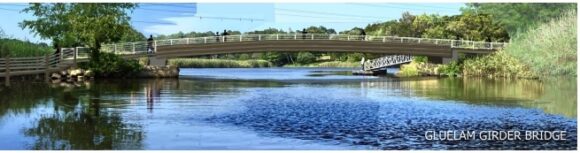
The Gluelam Girder pictured above was the preferred design for the bridge over the Lieutenant River in Old Lyme from the voting held during the late October/early November Open Houses hosted by the Halls Rd. Improvement Committee.
OLD LYME — On Sept. 30 and Oct. 5, the Halls Rd. Improvement Committee hosted Open Houses to present two options for the Lieutenant River Trails and Bridge. Ninety-two people viewed the presentation and 64 voted with some voting for some elements but not others.
The overall results of the voting were as follows:
Glulam Bridge received the most votes.
Maintaining the natural elements of wood was most important, although consideration for durability was also highly important.
Fishing and boat access were close to an even draw. Fishing was called out for trash issues.
Traditional light fixture style, timed, with down lighting was favored.
Many were in favor of some type of space for spontaneous gathering.
Beyond the consensus for a natural feel and high end signage similar to that of the Florence Griswold Museum (FGM), a mix of art and nature themes plus history were the most requested.
Two important questions cropped up frequently. The first was, ‘Why don’t we do the sidewalks first?’ and the second, ‘Who is paying for this?’
These are the HRIC responses to those questions:
Why don’t we do the sidewalks first?’
We are doing the sidewalks first. Construction projects involving state agencies have multi-year lead times. We applied for a LOTCIP grant (which is also the only way to get DOT approval) for the sidewalks in 2022. We may hear DOT’s response by 2025.
Beginning the bridge project in parallel can help promote a best outcome from the DOT grant process. Allowing new options for private investment with HROD will also take years to bear fruit. Pursuing these elements one at a time would be a serious mistake. Each supports the others, and one without the others is a waste of money and effort.
Who is paying? Sidewalks:
The LOTCIP grant should cover a significant part of the construction costs for the sidewalks, but will not cover their design costs. Other grants may be available for this, and the town will apply for them.
Bridge: Grants already won cover the design costs of the bridge and trails. Other grants are available for bridge and trails construction, and we expect the town will move forward only if we win such grants.
Overlay District: Changing zoning to create an option for new private investment on Halls Road costs nothing, comparatively, and will allow town revenue to increase.
In terms of final net costs to Old Lyme, the sidewalks are the most expensive part of the Master Plan. The Bridge and trails are less expensive. The proposed new zoning (HROD) will actually make money for the town. All three work together to keep Halls Road a flourishing part of Old Lyme into the mid-21st century.
Scope of project with Art Theme and one set of details.
The following comments represent a selection of those received:-
“Nice choice of landscape architect. They are forward thinking and care about the environment.” Chris Penniman
“I honestly believe we should address the sidewalk issues prior to considering this project. We should prioritize the order in which we proceed and then go forward.” Barbara Gaudio
“I am against the fishing access. I live on Ferry Rd. and walk on the pier at the DEEP regularly. While it is nice to make fishing available to people, many of the people do not respect the area. There is always garbage. People bring carts, coolers, buckets, chairs, boom boxes, and it can be hard to pass by. While many of the people fishing are respectful, many are not. There is often drinking and pot smoking. I always bring a garbage bag and rubber gloves to clean up. I love the idea of this project and I hope it moves forward. Parking will be an issue.” Mary Devins
“Looking for a safe egress that continues aesthetic of FGM. Natural and blends with environment.” Jill Todd
“Park & Amphitheater seems beyond scope at this point. We hope for a simple & safe bridge, pathway, and natural trail that promotes a walk-able, sustainable community.” Diana Prince
“Are there any state or federal funds to help with the construction cost?” Christina Gotowaka
“Would love to see aesthetic tie into FGM. All natural, simple, clean. Very little, if any dark sky lighting. Also the path, sculpture walk idea seems a little too much.” Julie Malloy
“While I am in favor of recreating the historic bow bridge, I am strongly opposed to creating a fishing pier in this location. The lR is a sensitive ecosystem which supports critical habitat and food for a wide variety of wildlife. Fishing line, crab bait, and other refuse are routinely left behind by those who come to fish or crab along the river edges – In sanctioned and unsanctioned locations. In addition I am doubtful there is capacity for the number of people and cars that would result from creating such a pier. Another concern is boater safety. Fishing lines would endanger boaters moving up or down this very narrow river, who already have to navigate two bridges – and now potentially a third. Fishing lines are very difficult to see and avoid from the water; I think this is a very real safety hazard. In sum, encouraging fishing and crabbing would pose a threat to marine environment including waterfowl who depend upon it for food: would endanger boaters, and could increase congestion along the busiest stretch of road. Sightseeing and boating are very benign activities that should be prioritized instead. “ Anne Redfield
“Thanks Committee for all your hard work!” Bill Beluzzi