
Talking Transportation: The Fairest (and Least Popular) Way To Pay for Roads

Back in April, I wrote about the challenge we face to pay for Gov. Malloy’s $100 billion transportation plan.  And I expressed sympathy for his bipartisan, blue-ribbon panel tasked with coming up with funding alternatives, the Transportation Finance Panel.

To be honest, I think that panel may be on a fool’s errand.  They’re trying to pay for a wish list of projects not of their making and many of which may not be necessary let alone affordable.  Maybe we only need $50 billion.  But it’s not their mandate to question our “transportation Governor.”  Someone else will have to do the “vetting.”

But even as the Finance Panel does its work, exploring all manner of funding options, they are being second-guessed by politicians and public alike.

How about tolls?  Too expensive … they’ll slow traffic … and don’t forget those flaming truck crashes at toll barriers!  (Not true … no they won’t … and there won’t be toll barriers).

Gas tax?  Unfair … out-of-state motorists won’t pay … improved gas mileage means dwindling revenue.  (Totally fair … maybe so … and absolutely correct).

Which brings us to what would seem to be the fairest, most equitable fundraising mechanism for paying for our roads, but which brought a bipartisan crap-storm of response when suggested:  a mileage tax, or VMT (vehicle miles traveled) tax.

The concept is simple:  have each motorist pay a tax for the number of miles he/she drives each year.  The data could be collected electronically by a GPS or with an odometer check when you get your annual emissions inspection.  You drive more, you pay more … whether you drive on I-95 or back-country roads.  Take mass transit, you’d drive less and pay less.

The VMT idea was discussed at the Finance Panel’s July 29 meeting, and the public and political reaction was immediate and universally negative.

Senate Majority Leader Bob Duff (D-Norwalk) called it “unproven,” despite successful trials in the Netherlands and Oregon and VMT’s endorsement by the US Government Accountability Office.

Republican State Senator Toni Boucher calls VMT nonsensical and an invasion of privacy, though testimony proved both claims wrong.

Face it:  nobody likes a tax that they have to pay.  Tax the other guy … the trucker, the out-of-state driver, the real estate transferor … but don’t tax me!

Driving a car is not free.  Paying for gasoline is only part of the cost and even Connecticut’s relatively high gas tax comes nowhere near to paying for upkeep of our roads.  Our deteriorating roads are a hidden toll as we pay for car repairs.

The Transportation Finance Panel will find there is no easy or popular solution to paying for the Governor’s $100 billion untested and unattainable wish list of projects.  Whatever they recommend, citizens will scream bloody murder and their lawmakers will vote it down.

But shame on reactionaries in Hartford for calling the VMT, or any funding alternative, “dead on arrival.”  Let’s at least let the Finance Panel do its due diligence before saying they have wasted their time.

Jim Cameron

Jim Cameron

Jim Cameron is founder of The Commuter Action Group, and a member of the Darien RTM.  The opinions expressed in this column are his own.  You can reach him at CommuterActionGroup@gmail.com   For a full collection of “Talking Transportation” columns, see www.talkingtransportation.blogspot.com
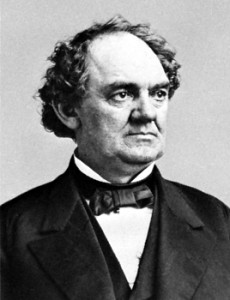
Talking Transportation: PT Barnum and Metro-North

P.T. Barnum

P.T. Barnum

What do Connecticut’s own PT Barnum and I have in common?  No, not just a love of circuses.  We are both “rail advocates” fighting for the interests of commuters.

This amazing piece of news about Barnum, a man better known for his showmanship and menageries, came to me while watching a speech at the Old State House in Hartford broadcast on CT-N (every policy wonk’s favorite channel).  The speaker was Executive Director and Curator of the Barnum Museum Kathleen Maher.

She explained that Barnum was more than a showman.  He was also a railroad advocate. (He also went on to be part-owner of a cross-Sound ferryboat service that’s still running today.)

In 1879 Barnum wrote an impassioned letter to the NY Times promoting a street railway be built in New York City along Broadway between Bleecker and 14th Street, enlisting the support of local merchants such as the Brooks Brothers and, “the carpet men, W & J Sloan”.

Earlier, in 1865, Barnum went to Hartford representing the town of Fairfield as a Republican — later he became Mayor of Bridgeport.  As he writes in his autobiography, he arrived at the capitol to find that powerful railroad interests had conspired to elect a Speaker of the House who had protected their monopoly interests in the state.

Further, he found that Connecticut’s “Railroad Commission” had been similarly ensnared by the industry it was supposed to regulate and that one member was even a clerk in the office of the NY & New Haven RR!  Barnum pushed through a bill prohibiting such obvious conflicts of interest.

Then he turned his sights on helping commuters.  Barnum noted that New York railroad magnate Commodore Vanderbilt’s new rail lines (now the Hudson and Harlem divisions of Metro-North) were popular with affluent commuters.  Once Vanderbilt had them hooked as passengers for their daily ride into and out of New York City, he jacked up fares by 200 to 400 percent.

Sensing that Vanderbilt might try to do the same to Connecticut riders on the new New Haven line (in which “The Commodore” had a financial stake), Barnum set to work in the legislature to make sure the state had some control over “its” railroad.  Barnum said his only ally in the fight was then-State Senator Ballard of Darien.

So spirited were they in their lobbying that the railroad’s “man” on the state Railroad Commission “took to his bed some ten days before the end of the session and actually remained there ‘sick’” until the legislature adjourned.” (Sound familiar?)

Fast forward to the present and we could again use Barnum’s help.

Though Connecticut hires Metro-North to run “our” trains on “our” tracks, our contract with that New York state agency gives us little say and no seat on it board.  As one lawmaker noted, the Connecticut Department of Transport defends Metro-North much as a kidnap victim fights for its captor (what he called the Stockholm syndrome).

Jim Cameron

Jim Cameron


Editor’s Note:
Jim Cameron is founder of The Commuter Action Group, and a member of the Darien RTM.  The opinions expressed in this column are only his own.  You can reach him at CommuterActionGroup@gmail.com   For a full collection of “Talking Transportation” columns, see www.talkingtransportation.blogspot.com

Talking Transportation: Transportation News Updates

It’s time to update you on some of the hot topics we’ve discussed in recent weeks:

MALLOY’S TRANSIT LAND GRAB:
Remember the Governor’s stealth proposal for a “Transit Corridor Development Authority,” described by some as “eminent domain on steroids”? Well, the initial idea to allow the state to acquire any land within a half-mile of train stations was modified, then killed in the legislature. I predict it will be back.

BRIDGE WOES:
Just as planning begins to replace Norwalk’s 118-year-old railroad bridge, which opens but doesn’t close, another ancient bridge is suffering the same engineering arthritis. On July 1st the Devon Bridge in Stratford was raised but wouldn’t close, delaying every train that ran across it for days. Estimated replacement cost, $750 million.

STAMFORD GARAGE:
It has been two years since the CDOT tapped Darien developer John McClutchy as their choice to demolish the old rail station garage. (That announcement came 10 days after, just coincidentally, McClutchy’s wife donated $10,000 to the state Democrats.) But a final deal has yet to be signed for reasons unknown, so any work is still many months away. Meanwhile in April of this year the old garage was crumbling so badly that the CDOT closed it for safety inspections. Those inspections were completed, but the garage is still closed, displacing 700+ daily commuters.

THIS IS “SAFETY FIRST”?
On June 29, Metro-North allowed two trains to run toward each other on a single track just south of New Canaan. Fortunately they stopped before a collision and one of the trains backed up and out of the way. When reporters first asked Metro-North what happened, they insisted nothing was wrong. Later, they described the incident as “undesirable train routing”, an amazing euphemism for a near collision.

TAKEN TO COURT IN HANDCUFFS:
Is it reassuring to passengers to see MTA conductors and engineers on a “perp walk” for the news media? Thirteen current and former employees of the MTA were taken to court last week, indicted on charges of cheating on safety exams that were testing their knowledge of signals, speed limits and safe operation of trains. The cheating ring ran for more than two years in a period just before Metro-North was hit with a series of derailments and collisions. Eight different exam cycles were compromised before the MTA’s internal investigators started their probe.

HOW LATE WAS YOUR TRAIN?
When the 11:39 p.m. left Grand Central on the night of July 1, passengers settled in for a nap en route to Stamford and a 12:48 a.m. arrival. But instead of taking one hour, their journey took three. Near Woodlawn, the train entered a section with inoperative third-rail and coasted to a halt. The train sat there for 90 minutes before a rescue train arrived, taking 40 minutes to pull them to a station where passengers got on another train. To their credit, the crew did pass out water to the stranded passengers … never a good sign when you’re on a stranded train.

Jim Cameron

Jim Cameron

Jim Cameron is founder of The Commuter Action Group, and a member of the Darien RTM. The opinions expressed in this column are only his own. You can reach him at CommuterActionGroup@gmail.com For a full collection of “Talking Transportation” columns, see www.talkingtransportation.blogspot.com

Talking Transportation: The End Did Not Justify the Means

As someone who has battled two decades for more spending on transportation, you’d think I would be happy with the state’s new biennial budget.  But when you drill down into the details, there’s reason for concern.

Governor Malloy promised a down-payment on his $100 billion transportation dreams.  And he did get one-half of one percent of the state sales tax repurposed for that … but it only pays down the Connecticut Department Of Transportation’s  enormous debt service.

That must have come as a surprise to his recently appointed Transportation Funding Task Force which is just getting started.  Why have a taskforce when you’re playing a shell game with transportation funds?

Not kept was the Governor’s promise for a “lock box” on the Special Transportation Fund.  Nor did he keep his promise to not raise taxes, having the chutzpah to blame the legislature for that when it was very clear that the budget’s new taxes were negotiated by his team with his blessing.  As the Governor signs the new budget into law, he owns those hikes and broken promises.

There will be tax hikes on the middle class, sin taxes (cigarettes and Keno – a tax on ignorance) and corporations.  You know it’s bad when GE, Aetna and Travelers all scream in pain, though they’ll doubtless be paid off to stay put just as UBS was paid $20 million years ago.

Any budget that narrowly passes the House 73-70 and the Senate 19-17 in an “emergency vote” without debate bears closer scrutiny, especially in a state with one party so clearly in control.

CT-N’s coverage of the marathon two-day final session showed lawmakers who were deliberately sleep deprived, kept at their desks all night debating measure after measure until they were exhausted.   Sleep deprivation is a great interrogation technique for terrorists but no way to pass new laws.

I am told that Democrats who did not toe the party line on this budget and threatened to vote “no,” were told to “go home,” rather than cast a negative ballot.  Indeed, in the final House tally eight lawmakers did not vote, some because they were said to be “sick,” others because they were “absent on other business.”  What legislator misses the final ballot on a two-year, $40 billion budget that passes by a single vote?

So divisive was the final debate, the Governor didn’t even have the guts to speak to lawmakers after the budget session ended, a long-standing tradition.

I have respect for the office of Governor, but also believe strongly in open, transparent government “of the people, by the people.”  Beware the tyranny of any one party when majority power is so brazenly wielded and the public ignored.  Governor Malloy did deliver on his promise to start funding long-neglected transportation projects.  I just disagree with the way he did it.

Keep your eyes on the prize but embrace the process.  Whatever good came out of this year’s budget process, those ends did not justify the means.

Jim Cameron

Jim Cameron


About the author:
 Jim Cameron is founder of The Commuter Action Group, and a member of the Darien RTM.  The opinions expressed in this column are only his own.  You can reach him at CommuterActionGroup@gmail.com   For a full collection of “Talking Transportation” columns, see www.talkingtransportation.blogspot.com

Talking Transportation: Collecting Fares Using the Honor System

Connecticut’s newest mass transit system, CTfastrak, is off to a great start.  The bus rapid transit system running from New Britain to Hartford is carrying up to 10,000 passengers daily.  Mind you, that’s coming off of its debut week when all rides were free.

In fact, it’s the fare collection process on CTfastrak that makes it innovative:  it’s on the honor system.

Unlike most buses, CTfastrak passengers pay before getting onboard, purchasing tickets ($1.50 for two hour’s use) at the stations or online.  This reduces the “dwell time” at each stop as passengers can board through any door. A similar system is running in NYC on certain “Select Bus” routes and seems popular.

But without paying a fare to the bus driver as you board, how do they know you have a ticket?  Ah, there’s the rub.  The “honor system” relies on “Fare Inspectors” making random checks.  Getting caught without a valid ticket means a $75 fine, though in these early days they’re mostly giving warnings.

Only a handful of US transit systems have adopted the honor system for fare collection, including the San Diego Trolley and the MUNI subway in San Francisco. In Minneapolis getting caught on a bus without a ticket is a $180 lesson in “doing the right thing”.

In Los Angeles, the Metro had so many problems with free-loaders they converted to turnstiles. Even a $250 ticket for fare evaders didn’t encourage payment, resulting in a $9 million loss in ticket sales. And the fare there is only $1.50.

On Metro-North, fare evasion doesn’t seem to be a problem.  If you don’t have a ticket, they’ll just throw you off the train (at the next station, of course).  Or get an MTA cop to issue a fine.

Until a few years ago you could buy a ticket on the train for the same fare as on the platform.  That meant wasted time for conductors and a “money room” at Grand Central processing a million in cash each week.  Now if you don’t have a ticket and buy one on the train, there’s a $5.75 – $6.50 penalty… even on a $2 ticket.  Senior citizens get a break, as do those boarding at stations that don’t have ticket machines.

The bigger problem on Metro-North is uncollected fares. The railroad admits it loses money by not collecting all tickets … but less money than it would cost to properly staff trains with enough conductors to collect them all.

Most infuriating is when trains from Grand Central leave Stamford.  Everyone can see that dozens of commuters got off there and scores more got on.  But the new arrivals’ tickets are seldom collected unless conductors have issued seat checks to the original NY passengers.

Watching someone traveling from Stamford to, say, Bridgeport get a “free ride” is like watching someone shoplift in a store.  You just know you’ll be paying more to subsidize their larceny, with neglectful conductors as their willing accomplices.

href=”https://www.ftc.gov/faq/consumer-protection/get-my-free-credit-report”>credit report before quoting us a fare?

Jim Cameron

Jim Cameron


About the author:
Jim Cameron is founder of The Commuter Action Group, and a member of the Darien RTM.  The opinions expressed in this column are only his own.  You can reach him at CommuterActionGroup@gmail.com   For a full collection of “Talking Transportation” columns, see www.talkingtransportation.blogspot.com