
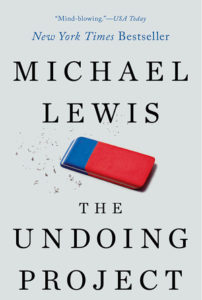
Reading Uncertainly? ‘The Undoing Project’ by Michael Lewis

No, this is not the story of a baseball team savant, who doubted conventional statistics and reused them with extraordinary success (Moneyball). It is not a personal disclosure of the seamy underbelly of financial markets (The Big Short; Flash Boys; Liar’s Poker).

Rather, it is the story of learning how our minds work, of behavioral economics, and of the unusual and highly prolific working relationship of two Israeli academics, who first met in 1960. It is the story of how an extrovert, Amos Tversky, and an introvert, Daniel Kahneman, stimulated and prodded each other over almost 40 years, first in Israel and then teaching  in the United States on the West coast, then in the Midwest, and finally in the East, uncovering and describing the numerous biases that confuse our thinking.

Each challenged the ideas of the other.

As the author describes an early intellectual collision, “Theories for Amos were like mental pockets or briefcases, places to out the ideas you wanted to keep. Until you could replace a theory with a better theory–a theory that better predicted what actually happened—you didn’t chuck a theory out. Theories ordered knowledge, and allowed for better prediction … But (Amos) left Danny’s seminar in a state of mid unusual for him: doubt. After the seminar, he treated theories that he had more or less accepted as sound and plausible as objects of suspicion.”

Kahneman: his “defining emotion is doubt.”

Tversky:  his interest is psychology: “why people behaved as they behaved, and thought as they thought,” never entirely “rational.”

Kahneman:  “He thought of himself as someone who enjoyed, more than most, changing his mind.”

Tversky: “People live under uncertainty whether they like it or not.”

Kahneman:  “It is the anticipation of regret that affects decisions, along with the anticipation of other consequences. This is why we seem to be instinctively ‘risk averse’.”

Tversky: “Reality is a cloud of possibility, not a point.”

Kahneman:  “The basic rules of undoing, however, apply alike to frustration and regret. They require a more or less plausible path leading to an alternative state.”

Together these two thinkers described the numerous biases that both confuse and enlighten our thinking: hindsight, anchoring, availability, small numbers, context, framing, the endowment effect, and many others. As Lewis explains it, “ they would learn to evaluate a decision not by its outcomes—whether it turned out to be right or wrong—but by the process that led to it. He then concludes: “ … the brain is limited. There are gaps in our attention. The mind contrives to make those gaps invisible to us. We think we know things we don’t. We think we are safe when we are not.”

In 1996, Amos Tversky died. In 2002, Daniel Kahneman won a Nobel Prize, one that almost certainly would have been awarded to Amos as well, had he been alive.

Do read this fascinating story of two thinkers, and go further and read Kahneman’s Thinking, Fast and Slow (2011).  And consider my own personal haiku, one that forces me to rethink all the time:

Pause for a moment:
Doubt, then curiosity.
Try another path.

Editor’s Note: ‘The Undoing Project’ by Michael Lewis was published by W. W. Norton, New York, in 2017.
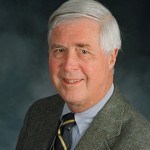
About the Author: Felix Kloman is a sailor, rower, husband, father, grandfather, retired management consultant and, above all, a curious reader and writer. He’s explored how we as human beings and organizations respond to ever-present uncertainty in two books, ‘Mumpsimus Revisited’ (2005) and ‘The Fantods of Risk’ (2008). A 20-year resident of Lyme, he now writes book reviews, mostly of non-fiction that explores our minds, our behavior, our politics and our history. But he does throw in a novel here and there. For more than 50 years, he’s put together the 17 syllables that comprise haiku, the traditional Japanese poetry, and now serves as the self-appointed “poet laureate” of Ashlawn Farms Coffee, where he may be seen on Friday mornings. His wife, Ann, is also a writer, but of mystery novels, all of which begin in a bubbling village in midcoast Maine, strangely reminiscent of the town she and her husband visit every summer.

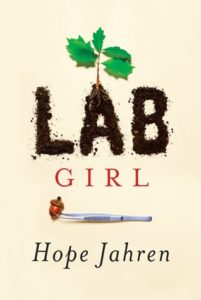
Reading Uncertainly? ‘A Gentleman in Moscow’ by Amor Towles

“By their very nature, human beings are so capricious, so complex, so delightfully contradictory, that they deserve not only our consideration, but our reconsideration – and our unwavering determination to withhold our opinion until we have engaged with them in every possible setting at every possible hour.” This is the theme of a compelling, engrossing, and forever cheerful story of an Russian aristocrat condemned to lifetime “house arrest” in Moscow’s Metropol Hotel in 1921.
Through the eyes and experiences of Count Alexander Rostov, in five segments (1921-22; 1923-46; 1950; 1950-53; and 1954), we are treated to a history of Russia, the Soviet Union, European literature, art, music, medicine and architecture. And dining: the Count becomes the Head Waiter at the hotel’s superlative dining room. An entire chapter is devoted to the creation of a sumptuous bouillabaisse – a foodie’s delight!

Consider this analysis: “Surely, the span of time between the placing of an order and the arrival of appetizers is one of the most perilous in all human interaction. What young lovers have not found themselves bat this juncture in a silence so sudden, so seemingly insurmountable that it threatens to cast doubt upon their chemistry as a couple? What husband and wife have not found themselves suddenly unnerved by the fear that they might not ever have something urgent, impassioned, or surprising to say to each other again?”

The good Count is forever curious, of people, events, and changing circumstances. On reading: “After all, isn’t that why the pages of a book are numbered? To facilitate the finding of one’s place after a reasonable interruption?” On how he spends his time: “dining, discussing, reading, reflection.” On history: “the business of identifying momentous events from the comfort of a high-backed chair.” On life itself: “ … life does not proceed by leaps and bounds. It unfolds. At any given moment, it is the manifestation of a thousand transitions.” And, given his confinement, also exercising: squats and push-ups every morning, plus climbing stairs to his attic rooms.

Towles names the Count’s barber at the hotel, Yaroslav Yaroslavl, provoking my own recollections of travel in Russia, first to St. Petersburg (then Leningrad) at its Hermitage in 1984 and later to Moscow and Yaroslavl in 1992. And the Count also states emphatically that, “all poets must eventually bow before the haiku,” a statement which — as a modest haiku composer myself — I endorse with pleasure!

So the Metropol becomes hardly a “prison” for Count Alexander, but rather it is his own wide, wide world.

One unusual note: all chapters have titles beginning in the letter A. And the end of the story has an unnamed lady waiting for the Count. But we know her name both begins and ends with an A …

The keynote of the eminently readable novel is “Montaigne’s maxim, that the surest sign of wisdom is constant cheerfulness.”

Editor’s Note: ‘A Gentleman in Moscow’ by Amor Towles is published by Viking, New York 2016.

Felix Kloman

About the Author: Felix Kloman is a sailor, rower, husband, father, grandfather, retired management consultant and, above all, a curious reader and writer. He’s explored how we as human beings and organizations respond to ever-present uncertainty in two books, ‘Mumpsimus Revisited’ (2005) and ‘The Fantods of Risk’ (2008). A 20-year resident of Lyme, he now writes book reviews, mostly of non-fiction that explores our minds, our behavior, our politics and our history. But he does throw in a novel here and there. For more than 50 years, he’s put together the 17 syllables that comprise haiku, the traditional Japanese poetry, and now serves as the self-appointed “poet laureate” of Ashlawn Farms Coffee, where he may be seen on Friday mornings. His wife, Ann, is also a writer, but of mystery novels, all of which begin in a bubbling village in midcoast Maine, strangely reminiscent of the town she and her husband visit every summer.

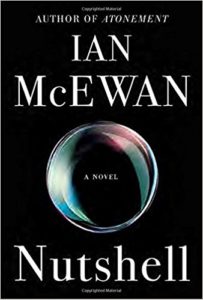
Reading Uncertainly? ‘Lab Girl’ by Hope Jahren

This month, let’s try an intensely introspective autobiography of a botanical scientist, wrapped in a biography of trees, flowers, and plants.
Hope Jahren, a professor at the University of Hawaii at Manoa in Honolulu, writes the clear, coherent, and engaging story of her upbringing in Minnesota, her education, travel and work in California, Georgia, Maryland, and Hawaii, intermixed with her study and analysis of the history and lives of plants and trees. And she apparently has a photographic memory as she recalls detailed conversations with her teachers, students, science mates and husband.

But, early on in my reading, I had a nagging question: does this intense self-analysis and self-reflection indicate something else?

Jahren finally acknowledges being a “manic-depressive woman” four-fifths of the way through her writing. She is consumed with her love of and study of plants: it dominates her life.

Fellow human beings? She acknowledges an early debt to her science-minded father, but never mentions him again after her first pages. Her scientific partner, Bill, is never granted a last name, nor is her husband, Clint. And none of those three is mentioned in her credits. She devotes one of the longest chapters to the birth of her son, but he remains nameless (mentioned only as “my toddler” and “my son.” Note he is not “our” son.)

But her often lyrical phrases continue to delight you as a reader, “a leaf is a platter of pigment strung with vascular lace,” and “vines are hopelessly ambitious,” and “being able to derive happiness from discovery is a recipe for a beautiful life.” Hers is a two-part, parallel story of intense curiosity – her science and her life.

Her self-analysis close to the end reads as follows:

“I’m good at science because I’m not good at listening. I have been told that I’m intelligent, and I have been told that I am simple-minded. I have been told that I am trying to do to much, and I have been told that what I have done amounts to very little. I have been told that I can’t do what I want to do because I am a woman, and I have been told that I have only been allowed to do what I have done because I am a woman. I have been told that I can have eternal life, and I have been told that I will burn myself out into an early death. I have been admonished for being too feminine and I have been distrusted for being too masculine. I have been warned that I am far too sensitive and I have been accused of being heartlessly callous.

But I was told all these things by people who can’t understand the present or see the future any better than I can. Such recurrent pronouncements have forced me to accept that because I am a female scientist, nobody knows what the hell I am, and it has given me the delicious freedom to make it up as I go along. I don’t take advice from my colleagues, and I try not to give it. When I am pressed, I resort to these two sentences: You shouldn’t take this job too seriously. Except for when you should.”

If that doesn’t arouse your curiosity to read this book, I don’t know what will!

Jahren’s conclusion, “Our world is falling apart quietly.” And her more optimistic recommendation: go plant a tree once a year! Which is exactly what my wife and I have done in our 24 years in Lyme, Conn. We’ve planted 13 Evergreens, four Red Maples, three Acacia, two Apples, one Japanese Maple, and one Witch Hazel. Yes, we’ve cut down an apple savaged by a hurricane, plus two small apples, but the latter were promptly replaced with two pears!

Do read Hope Jahren … and plant a tree.

Editor’s Note: ‘Lab Girl’ by Hope Jahren is published by Alfred A. Knopf, New York 2016

Felix Kloman

About the Author: Felix Kloman is a sailor, rower, husband, father, grandfather, retired management consultant and, above all, a curious reader and writer. He’s explored how we as human beings and organizations respond to ever-present uncertainty in two books, ‘Mumpsimus Revisited’ (2005) and ‘The Fantods of Risk’ (2008). A 20-year resident of Lyme, he now writes book reviews, mostly of non-fiction that explores our minds, our behavior, our politics and our history. But he does throw in a novel here and there. For more than 50 years, he’s put together the 17 syllables that comprise haiku, the traditional Japanese poetry, and now serves as the self-appointed “poet laureate” of Ashlawn Farms Coffee, where he may be seen on Friday mornings. His wife, Ann, is also a writer, but of mystery novels, all of which begin in a bubbling village in midcoast Maine, strangely reminiscent of the town she and her husband visit every summer.

Reading Uncertainly: ‘Nutshell’ by Ian McEwan

Can you imagine an entire novel, spoken through the senses of a foetus, awaiting his entry into this world?

McEwan’s opening sentence sets the stage: “Here I am, upside down in a woman.” From that point, this young man extols first the “condition of the modern foetus. Just think: nothing to do but be and grow, where growing is hardly a conscious act. The joy of pure existence, the tedium of undifferentiated days. Extended bliss is boredom of the existential kind … In here I’m owed the privilege and luxury of solitude,” as his mother listens continuously, with ear-buds, to self-improvement books, biographies and world classics.

But at the same time it is a story of, first, murder, and then the revenge of his mother and of the young man himself. I realized that about halfway through this engrossing and often-hilarious tale, McEwan is embedded in a take-off on Hamlet. This youngster’s mother, Trudy, is drawn from Gertrude. His stepfather, Claude, is Claudius, a “fraud who’s wormed in between my family and my hopes.”

This leads the still-enclosed boy to conclude his “dim view of our species, of which psychopaths are a constant fraction, a human constant. ” His reaction: “Anxiously, I finger my cord.”

His brain, after listening to all that his mother hears, plus her plans with her lover, leads him to a sour conclusion about his life yet to come, “Long ago, someone pronounced a groundless certainty a virtue. Now, the politest people say it is. I’ve heard their Sunday-morning broadcasts from cathedral precincts. Europe’s most virtuous spectres, religion and, when it faltered, godless utopias bursting with scientific proofs, together they scorched the earth from the tenth to the twentieth centuries. Here they come again, risen in the East, pursuing the millennium, teaching toddlers to slit the throats of teddy bears. And here I am with my home-grown faith in the life beyond.”

Towards the end (or the beginning, his birth), he comments: “It’s already clear to me how much of life is forgotten even as it happens. Most of it. The unregarded present spooling away from us, the soft tumble of unremarkable thoughts, the long-neglected miracle of existence.” But the young man does start …

That sums up this mesmerizing story, in a nutshell: a woman’s womb for your world view.

My own coda: “To be or yet to be: that is gestation.”

Editor’s Note: ‘Nutshell’ by Ian McEwan, was published by Doubleday, New York, 2016.

Felix Kloman

About the Author: Felix Kloman is a sailor, rower, husband, father, grandfather, retired management consultant and, above all, a curious reader and writer. He’s explored how we as human beings and organizations respond to ever-present uncertainty in two books, ‘Mumpsimus Revisited’ (2005) and ‘The Fantods of Risk’ (2008). A 20-year resident of Lyme, he now writes book reviews, mostly of non-fiction that explores our minds, our behavior, our politics and our history. But he does throw in a novel here and there. For more than 50 years, he’s put together the 17 syllables that comprise haiku, the traditional Japanese poetry, and now serves as the self-appointed “poet laureate” of Ashlawn Farms Coffee, where he may be seen on Friday mornings. His wife, Ann, is also a writer, but of mystery novels, all of which begin in a bubbling village in midcoast Maine, strangely reminiscent of the town she and her husband visit every summer.

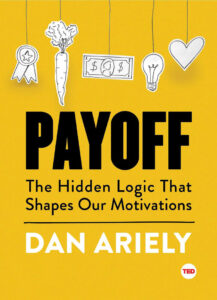
Reading Uncertainly? ‘Payoff’ by Dan Ariely

What is “motivation” and how does it affect our daily activity? Is motivation “central to our lives”? Dan Ariely, a professor of behavioral economics at Duke University, explores the human feeling of identification with and empathy for others, suggesting these two feelings help stimulate motivation, while their absence destroys it.

This brief book (103 pages) combine stories from Dr. Ariely’s personal life and his continuing work studying our strange behaviors. It continues his earlier work: Predictably Irrational, The Upside of Irrationality, and The (Honest) Truth About Dishonesty, all of which I’ve read with fascination.

At the very start, the author describes his own teenage accident in Israel, in which he sustained severe burns over some 70 percent of his body, leading to three years of hospitalization and slow and painful recovery. It was then he began to discover the idea of motivation, enlarged later when he helped a friend’s two teenage children, similarly injured.

As he writes, “I also realized how many of our motivations spring from trying to conquer a sense of helplessness and reclaim even a tiny modicum of control over our lives.” Any success in such an effort becomes a “feeling of accomplishment.” This then leads to the need to “look closely at the positive side of motivation,” creating pleasure and affection for your own handiwork.

But does financial reward motivate us? Ariely suggests “money matters far less than we think.” We should avoid “overemphasizing the countable dimension and beware (my italics) treating the uncountable dimension as if it were easily countable.” This skewers the old adage that if you can’t count it, it doesn’t exist!

He continues: “In short, these findings suggest that when we are in the midst of a task, we focus on the inherent joy of the task, but when we think about the same task in advance, we over-focus on the extrinsic motivators, such as payment and bonuses. This is why we are not good predictors of what will motivate us and what will crush our motivation. This inability to intuit what will make us happy at work is sad.” Trust and goodwill seem to be far better inspirations than cash … Is it possible that large bonuses are actually counterproductive?

Dr. Ariely concludes: “We are certainly far from grasping the full complexity of motivation, but the journey to understand  … (its) nuances … (is) exciting, interesting, important and useful.”

As usual, brevity enhances comprehension. A short book motivates continued reading!

Editor’s Note: ‘Payoff ‘ by Dan Ariely is published by TED Books, New York 2016.

Felix Kloman

About the Author: Felix Kloman is a sailor, rower, husband, father, grandfather, retired management consultant and, above all, a curious reader and writer. He’s explored how we as human beings and organizations respond to ever-present uncertainty in two books, ‘Mumpsimus Revisited’ (2005) and ‘The Fantods of Risk’ (2008). A 20-year resident of Lyme, he now writes book reviews, mostly of non-fiction that explores our minds, our behavior, our politics and our history. But he does throw in a novel here and there. For more than 50 years, he’s put together the 17 syllables that comprise haiku, the traditional Japanese poetry, and now serves as the self-appointed “poet laureate” of Ashlawn Farms Coffee, where he may be seen on Friday mornings. His wife, Ann, is also a writer, but of mystery novels, all of which begin in a bubbling village in midcoast Maine, strangely reminiscent of the town she and her husband visit every summer.