
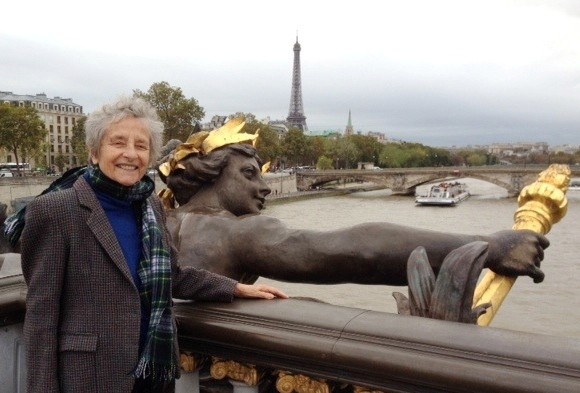
Letter From Paris: Life in the ‘City of Light’ is a War Zone … with Wheels!

Nicole Prévost Logan

Paris is waging a war on wheels.

In order to survive crossing the street, pedestrians have to defy car drivers while on the sidewalks, the war is between the people who walk and those on wheels in a multitude of forms.

Mayor Anne Hidalgo, a socialist, has made it her mission to reduce pollution in the French capital by shrinking the space open to vehicles.  It is a laudable cause and many Parisians appreciate its immediate results. 

Thanks to the closing of the roadways along the Seine, people have regained the previously lost pleasure of walking leisurely near the water, away from the noise of the traffic, while their children can play freely.

It is possible now to walk miles and discover Paris from east to west.  More boats line up at the quays and have become floating cafés.  In warm weather, tons of sand and palm trees appear overnight to give the berges (banks) de la Seine a summery look. 

But the process of narrowing avenues with larger sidewalks and creating bicycle and bus lanes can be overwhelming for residents.  For months, the ambitious project to reduce the Bastille circle to merely an intersection of avenues has turned the area into a gigantic worksite. 

People have to struggle through ever-changing makeshift paths amid the noise and dust of heavy equipment that is variously moving mountains of dirt or asphalt, installing fire hydrants and electrical cables, and relocating bus stops.  Everyday the urban landscape changes causing irritation among Parisians and resultant excessive horn-blowing. 

For pedestrians, crossing a street feels like an obstacle course.  When the lights change, motorcycles seem to think they are at the Le Mans 24 hour race (the most famous car race in France), backfire their engine to make as much noise as possible and surge forward riding only on their back wheel.  Pedestrians had better get out of the way! 

Arriving at a traffic light, drivers will not stop until it turns to amber.  The crossing space, called les clous in France (it used to be-marked by what looked like oversize thumbtacks), is encumbered with trucks, cars and busses through which one has to meander to find a passage. 

Even when the light turns green, a war of nerves starts between drivers and pedestrians. Tourists and out-of-towners hesitate and are too polite.  This is a big mistake, which is interpreted as an opportunity to move forward rapidly by drivers.  But old-time Parisians are more daring and will bluff their adversaries at the wheel.  At busy intersections, the vehicles coming from side streets do not even slow down, turning the scene into ridiculous grid locks .

Sidewalks are supposedly designed for pedestrians. Wrong!

A ‘trottinette’

A ‘gyrorue’

Today the latter share the space with an ever-increasing number of humans on wheels: big-engined motorbikes taking a short-cut then parking right in front of their destination, bicycles, skateboards, electric scooters or trottinettes — the current rage — and monowheel scooters or gyroroue.  The list is open-ended since technology invents new devices all the time. 

Traffic on sidewalks is not regulated and follows the rule of the jungle, which means no rules at all.  

Last month, I attended a big event along with hundreds of residents of my arrondissement to hear our mayor present his New Year wishes.  Among the elected members of the conseil municipal (town council), I spotted the person in charge of transportation and commented on the war-like atmosphere in our streets. 

He was very evasive, saying, yes, we are aware there is a problem, but I wondered what this transportation official was actually doing besides “being aware of the problem.” 

I almost forgot … I should add another category to my story about the wheels onslaught and that is the hordes of tourists pushing their suitcases … on wheels!

Living in Paris is an enjoyable challenge.  Having no wheels definitely keeps you on your toes.

Editor’s Note: This is the opinion of Nicole Prévost Logan.

Nicole Prévost Logan

About the author: Nicole Prévost Logan divides her time between Essex and Paris, spending summers in the former and winters in the latter. She writes a regular column for us from her Paris home where her topics will include politics, economy, social unrest — mostly in France — but also in other European countries. She also covers a variety of art exhibits and the performing arts in Europe. Logan is the author of ‘Forever on the Road: A Franco-American Family’s Thirty Years in the Foreign Service,’ an autobiography of her life as the wife of an overseas diplomat, who lived in 10 foreign countries on three continents. Her experiences during her foreign service life included being in Lebanon when civil war erupted, excavating a medieval city in Moscow and spending a week under house arrest in Guinea.

Talking Transportation: Why 30-30-30 Doesn’t Add Up

How would you like a faster ride on Metro-North?  Who wouldn’t?!  How about a 30-minute ride from Hartford to New Haven, from New Haven to Stamford or from Stamford to Grand Central?

That’s the vision announced by Governor Lamont in his inaugural address.  It’s known as the 30-30-30 plan and sounds good compared to current running times (52 minutes, 55 minutes and 48 minutes respectively.)  But how can such vast improvements be done?  Ask Joe McGee, VP of the Fairfield Business Council, who’s been pitching this idea for years.

So confident was McGee of this concept that his Council recently paid $400,000 to Ty Lin Consulting of San Francisco to study it.  And which railroad expert did Ty Lin hire to spearhead the study?  Joseph Giulietti, former President of Metro-North … recently named as Connecticut’s new Commissioner of Transportation.

Though the Ty Lin study has yet to be released, McGee admits that the 30-30-30 idea is more of a goal than a possibility.  Yet, for as little as $75 to $95 million, Ty Lin thinks significant improvements can be made in speeding up service by accelerating Metro-North’s return to a “state of good repair.”

When he was President of Metro-North, Giulietti said it would take five years to get the railroad back in shape after years of neglect.  Today, Metro-North says a more realistic time frame is 10 years.

By fixing rail ties and overhead power lines to improve speeds on curves, by restoring the fourth track east of Milford and by adding express trains (at a premium fare), McGee claims service will improve quickly, maybe shaving 24 minutes off of the current 103 minute running time from New Haven to Grand Central. That would make it a 79-minute run, but not 60.

But wait.  If this was Giulietti’s idea as a consultant, why didn’t he make that happen when he was running Metro-North?  Or how will he now, as Commissioner of the CDOT, get his old railroad to adopt Ty Lin’s (his) ideas?  I asked, but he isn’t saying.

What seasoned professionals at CDOT have told me is that the Ty Lin ideas will cost billions of dollars and take a decade.  In other words … there’s no quick, cheap fix.

Meantime, Metro-North is planning to add six to 10 minutes of running time to all New Haven line trains for the spring timetable to better reflect the reality of current delays due to work.  For 2018, the railroad had only 88 percent on time performance (OTP).  By extending the train schedule on paper, OTP will go up and riders will have a more dependable, albeit slower, ride.

Lengthening running times, even on paper, “is not acceptable,” says McGee who hopes to release his Ty Lin study in about two weeks, fully expecting huge pushback from the railroad and east-coast consultants beholden to the MTA.

But it’s really the FRA (the Federal Railroad Administration) that’s the biggest block to faster trains.  The slower speeds they required after the 2013 Bridgeport and Spuyten Duyvil derailments won’t be raised until they’re convinced the railroad is safe.

So let the debate begin:  is 30-30-30 possible or just a fantasy?  Did Giulietti create himself a nightmare in proposing as a consultant what he may not be able to deliver as CDOT Commissioner?

Posted with permission of Hearst CT Media

Jim Cameron

About the author: Jim Cameron is founder of The Commuter Action Group, and a member of the Darien RTM.  The opinions expressed in this column are only his own.  You can reach him at CommuterActionGroup@gmail.com

For a full collection of  “Talking Transportation” columns, visit www.talkingtransportation.blogspot.com

Reading Uncertainly: ‘The Dawn Watch: Joseph Conrad in a Global World’ by Maya Jasanoff

Having read all of Patrick O’Brian, plus his biography (see LymeLine, Feb. 22, 2018), and having read most of that other great author of sea stories in the 20th Century, Joseph Conrad, it was only natural to launch into this latest study of him by Harvard’s Maya Jasanoff.

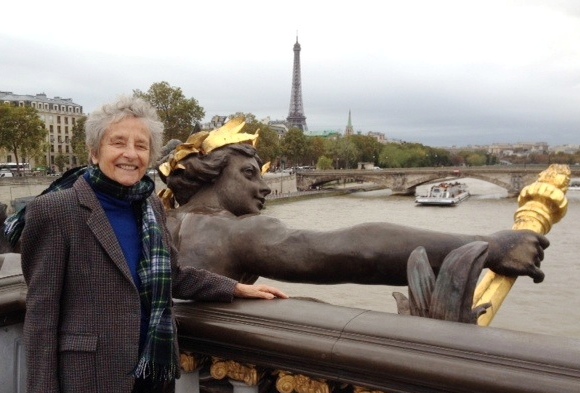
Josef Teodor Konrad Korzeniowski was as compulsive a reader as O’Brian, but this Pole added global travel to his years. Born to Polish parents in the Ukraine in 1857, he followed his banished father to Nizhny Novgorod in Russia (this city was where Count Alexander Rostov ended in Amor Towles’s A Gentleman in Moscow: see my review in LymeLine, Dec. 17, 2017!), he returned to Poland, then went to sea from France and ended an English gentleman and author.

Jasanoff’s thesis is that, “Conrad watched the emergence of the globally interrelated world …” first from Eastern Europe, then from various sailing ships in the Far East and Africa, and finally from southern England. While early on he was “obsessed with becoming a sailor” he also found that, “in books he could travel the world.” For a life at sea, Conrad wrote “There’s rarely something to look at, there’s always something to see. People are always asleep, people are always awake. You’re never alone, you’re always isolated.”

Two delightful bits that recalled to me my few years at sea: (1) “Having matured in the surroundings and under the special conditions of sea life, I have a special piety toward that form of my past …” and (2) “For utter surrender to indolence you cannot beat a sailor ashore when that mood is on him, the mood of absolute irresponsibility tasted to the full.”

Jasanoff concludes thus with her linkage of Conrad to our increasingly interconnected world, “What Conrad had made me see, I realized, was a set of forces whose shapes may have changed but whose challenges have not. Today’s hearts of darkness are to be found in other places where civilizing missions serve as covers for exploitation. The heirs of Conrad’s technologically displaced sailors (steam replacing sail) are to be found in industries disrupted by digitization. The analogues to his anarchists are to be found in Internet chat rooms or terrorist cells. The material interests he centered in the United States emanate today as much from China.”

So perhaps it was only natural that I turned again to Conrad himself in A Personal Record, first published in 1908 when he was 50-years-old. Some jewels:
“It is better for mankind to be impressionable than reflective. Nothing humanly great—great, I mean as affecting a whole mass of lives—has come from reflection.”
“Only in men’s imagination does every truth find an effective and undeniable existence. Imagination, not invention, is the supreme master of art as of life. An imaginative and exact rendering of authentic memories may serve worthily that spirit of piety toward all things human which sanction the conceptions of a writer of tales, and the emotions of the man reviewing his own experience.”
And, of course …
“Books are an integral part of one’s life.”

Editor’s Note: ‘The Dawn Watch: Joseph Conrad in a Global World’ by Maya Jasanoff was published by Penguin Press, New York, 2017.

Felix Kloman

About the Author: Felix Kloman is a sailor, rower, husband, father, grandfather, retired management consultant and, above all, a curious reader and writer. He’s explored how we as human beings and organizations respond to ever-present uncertainty in two books, ‘Mumpsimus Revisited’ (2005) and ‘The Fantods of Risk’ (2008). A 20-year resident of Lyme, he now writes book reviews, mostly of non-fiction, which explores our minds, our behavior, our politics and our history. But he does throw in a novel here and there. For more than 50 years, he’s put together the 17 syllables that comprise haiku, the traditional Japanese poetry, and now serves as the self-appointed “poet laureate” of Ashlawn Farm Coffee, where he may be seen on Friday mornings. His late wife, Ann, was also a writer, but of mystery novels, all of which begin in a village in midcoast Maine, strangely reminiscent of the town she and her husband visited every summer.

Letter From Paris: It’s Been a Rocky Ride, But Will Macron Still Make It?

Nicole Prévost Logan

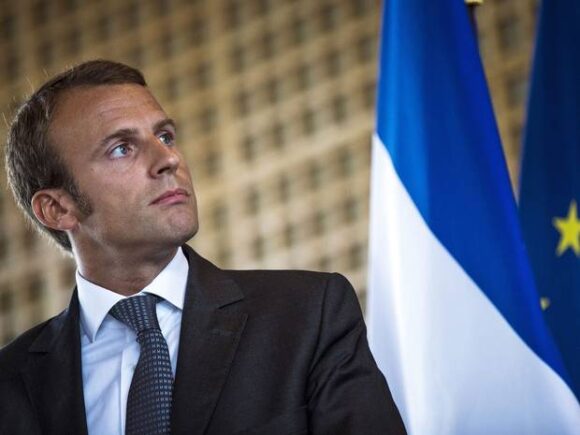
France always seems to stand out by doing the best or the worst through social and political upheavals.  The movement of the gilets jaunes has been like an earthquake shaking the system to its foundations.    It has created the most serious political crisis the Fifth Republic has known since its creation by General de Gaulle in 1958. 

It is a pivotal moment for France and many other Western democracies when the mechanism of political institutions does not seem to work any more. 

The gilets jaunes are the voice of a rural population never heard before and which feels abandoned.  It is a lower middle class of workers and retirees, who can’t make it to the end of the month and feel squeezed between the very poor — benefiting from social relief — and the more affluent middle class. 

At first overwhelmingly supported by the public opinion, their number –occupying roundabouts and tolls — has reduced from over 280,000 on Nov. 17, to about 84.000 today. Public opinion is becoming weary of the continuous violence.

“Act XI” is taking place as this article is being written. 

French President Emmanuel Macron.

A spectacular fist fight on the footbridge linking the Quai d’Orsay and the Tuileries garden marked the month of January.  Over time a hard core of  gilets jaunes has become more radical, asking for the dissolution of Parliament, the suppression of the Senate, and basically total destruction of the system in place.  It refuses dialogue while chanting “Macron. Demission” (Macron. Resign.)  

The Rassemblement National (RN) extreme right party of Marine Le Pen and the communist party or France Insoumise (LFI) are riding the wave. They help circulate false news to discredit Macron and his government.  The terrorist attack in Strasbourg in early December or the recent deadly explosion due to a gas leak in the center of Paris were just diversion tactics by the Executive, they say. 

On Jan. 23,  France and Germany signed the treaty of Aix La Chapelle to reinforce cooperation between the two countries and facilitate trans-border relations.  The treaty was followed by the announcement of outrageously distorted news on social networks that Alsace-Lorraine was being returned to Germany. 

Eighteen months into his mandate, Macron started  to suffer a catastrophic collapse in the polls. It was not a first for a French president:  Sarkozy and Hollande before him suffered the same disaffection soon after their election. For Macron though, the intensity of the fall was all the more spectacular as his victory had created a surge of hope.

Today he is trying to turn the tide around and pull the country out of its crisis.  And his method? A “Great Debate” throughout the country lasting until March 15.

On Jan. 13, the president posted a “Lettre aux Français” suggesting four themes open to discussion: taxes, public services, energetic transition, and political institutions, including immigration.  France is being turned into a laboratory to experiment with new forms of government – representative, participative or direct (with frequent referendums).

The hard core of gilets jaunes declined to participate.

Macron’s initial step was to face some of the 35.000 mayors of France.  First 700 of them in Normandy, then two days later 700 in the Lot department (Occitanie region.)  It was an impressive show of participative government in action.  Selected mayors presented their grievances related to very concrete and local problems: closing schools, disappearance of public services, medical “desertification,” lack of accessible transports, inadequate internet and phone access, hurtful impact of giant shopping malls on small business, and the demise of downtown areas of small town and villages.

Each speaker was polite, direct and, at times, quite tough. Macron’s performance was phenomenal.  As each speaker took the microphone, the president was taking notes furiously.  For close to seven hours, he absorbed the remarks then answered each one, recalling the interlocutor’s name.  His language was familiar, bringing smiles to the faces in the audience and devoid of any demagoguery. 

For instance, he expressed his opinion on how dangerous popular referenda can be, especially when based on false information — citing the UK’s Brexit vote as an example. Overall it was refreshing to witness courteous and constructive exchanges, far from the heinous invectives to which the president has been submitted lately. 

The “Great Debate” is a courageous, but risky exercise.  Talking to the mayors was the easy part. It will be harder for him to convince broader public opinion — including the moderate gilets jaunes — how to make a synthesis from all the wide array of  grievances and turn them into immediate and concrete measures?

Macron must meet some, if not all, of the demands being made by the gilets jaunes without appearing to be weak and submissive. In spite of the popular pressure for lower taxes and more benefits, he cannot afford to lose his objective, which is to reform France and make it economically competitive. Finally, time is short since there will only be two months left after the debate before the European elections are held. 

Violence hit cities throughout France causing widespread damage.

The violence brought on by the weekly street warfare in Paris, Bordeaux and many other cities has tarnished the image of France abroad.  The damage caused  to the urban landscape, small businesses and whole sectors of the economy can be numbered in millions of Euros. The loss of one point of France’s GDP has even become worrisome for the IMF. 

On Jan. 22, Macron invited 125 of the most important world CEOs, who were on their way to the Davos Economic Forum, to  a lavish lunch at the Chateau de Versailles, in order to reassure them of his country’s viability and stability prior to a possible Brexit.

The polls have risen slightly in favor of Macron but the president still faces an uphill battle. France is fortunate to have a young president full of energy … but the jury is still out on his future.

Editor’s Note: This is the opinion of Nicole Prévost Logan.

Nicole Prévost Logan

About the author: Nicole Prévost Logan divides her time between Essex and Paris, spending summers in the former and winters in the latter. She writes a regular column for us from her Paris home where her topics will include politics, economy, social unrest — mostly in France — but also in other European countries. She also covers a variety of art exhibits and the performing arts in Europe. Logan is the author of ‘Forever on the Road: A Franco-American Family’s Thirty Years in the Foreign Service,’ an autobiography of her life as the wife of an overseas diplomat, who lived in 10 foreign countries on three continents. Her experiences during her foreign service life included being in Lebanon when civil war erupted, excavating a medieval city in Moscow and spending a week under house arrest in Guinea.

Talking Transportation: Global Warming vs. Northeast Travel — An Apology to Future Generations

What follows is a public apology.  Not to you, dear reader, but to future generations.

“To my grand children:  I’m sorry we left you with this mess.  We should have done more, when we still had time.”

What am I referring to?  Not the national debt.  Not even global terrorism.  No, this apology is about coastal flooding that threatens the Northeast Corridor’s rail lines.

I won’t even get into the debate about what’s causing sea-level rise.  Whether it’s man-made or natural, it is happening and we have not been planning for its inevitable effects.  Sure, when the tides are high and the winds are from the east, we already see a little flooding along the Connecticut coastline.  “Look Dad!  The beach parking lot is under water,” the kids would say.  But the tides and winds then subsided and we’d forget about it.

Aside from pretty beaches and expensive homes, what else is along Connecticut’s coast?  Our railroads:  Metro-North, Shore Line East and Amtrak.  And according to a long hidden report, those tracks, and the trains that run on them, are being threatened by sea level rise.

Just before Christmas, Bloomberg wrote about a three year study, “Amtrak NEC Climate Change Vulnerability Assessment,” that was finished in 2017 but never released to the public.  Using an FOI request, they got hold of a redacted (censored) portion of the study, and its findings are frightening.

The Northeast Corridor of Amtrak runs 457 miles from Washington to Boston and carries 12 million passengers a year on 2200 daily trains.  Those tracks not only serve Amtrak’s inter-city trains but also many commuter rail lines, like Metro-North and Shore Line East.  And the rising sea level is already lapping at its edge, where in some areas those tracks are just feet from the ocean. By 2050 the water may be two feet higher.

When it was originally built in the 19th century, the coastline made perfect sense as a location for the railroad tracks:  the coast is where the major cities were and the terrain was flat, perfect for trains.  Sure, there were storms (even hurricanes) that caused short-term flooding, but nothing that was persistent.  Until now.

So what’s to be done?

Amtrak and the Federal Railroad Administration have no plans to raise the tracks.  They’re already facing $40 billion in unfunded projects just to keep the darn trains running.  As for building a “wall” to keep out the sea water, even a temporary version erected before a storm would take 12 to 30 days to assemble and cost $24 million a mile.

Keeping this all in perspective, Amtrak reminds us that the cities they serve along the coast are also in danger of flooding, so what are a few damp railroad tracks when your city-center looks like Venice?

What’s most concerning is that this study was suppressed by Amtrak and the FRA because, as Bloomberg wrote, “The disclosure of that information “could possibly cause public confusion.” 

I’m not confused, are you?  Maybe enraged, but not confused.  I may not be around to see these predictions come to pass, but I do feel some sense of obligation (guilt) to future generations to whom I can offer little more than an apology.

Sorry kids.  We left you with a mess.  We should have done more.

Posted with permission of Hearst CT Media.

Jim Cameron

About the author: Jim Cameron is founder of The Commuter Action Group, and a member of the Darien RTM.  The opinions expressed in this column are only his own.  You can reach him at CommuterActionGroup@gmail.com

For a full collection of  “Talking Transportation” columns, visit www.talkingtransportation.blogspot.com