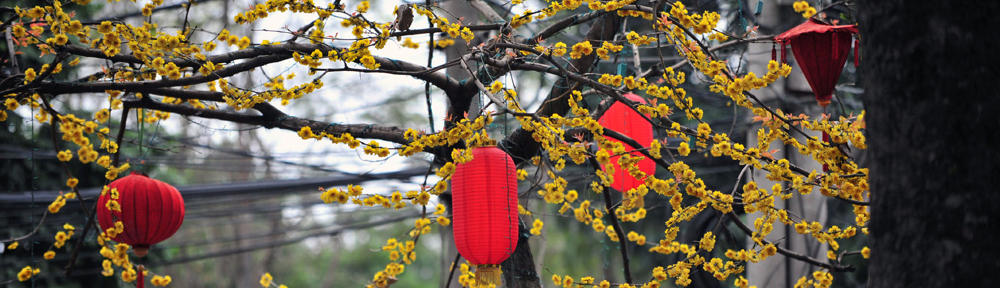

‘Warmth, depth and color’ on show in this autumn garden. Photo by Jan Canty on Unsplash.
Rain through August has been quite plentiful. The weeds continue to grow but I have been able to keep a handle on them with the use of natural Bradfield Organics corn gluten-based weed pre-emergent, which can be purchased at any reputable garden center.

Blue hydrangeas. Photo by Gemma Evans on Unsplash.
HYDRANGEAS … AND THEIR PRUNING
The reason that Hydrangeas do not bloom is that gardeners prune them at the wrong time. If you feel that your Hydrangea macrophylla needs ventilation, as the growth has become too dense. then prune by the middle of September. The reason being, that Hydrangeas set their buds for next season by late September; consequently, later pruning will cut off those buds, which negates any chance of bloom for next season or even the following season.
Now that September has arrived, prune any old woody stems that have not bloomed well and any weak new shoots. After pruning, apply a few inches of composted manure and some peat followed by a top dressing of natural brown bark mulch. The peat aids acidity in the soil, which is necessary as Hydrangeas may become chlorotic if the soil is too alkaline. By the way, chlorotic means abnormal reduction or loss of normal green coloration of the leaves of plants.
Hydrangeas also do not like to be transplanted; transplanting them can result in little to no bloom for many seasons.
This fall, as you contemplate your landscape, think on the past season as to what worked for you and what you will never try again.
Unfortunately, mint has taken over the border beneath my Franklinia tree. Many years ago my friend Roz, was kindly lending a hand in the garden and planted mint in the garden instead of a large container I located for that very purpose. As I was busy with other garden chores at that moment, by the time I noticed the error, six months had gone by and the mint was rampant among the blue myrtle edging the borders. Please take note that mint is extremely invasive and should only be planted in containers where its wayward habits can be controlled.
‘A gardener’s work is never done’, with that being said, in September after all your hard labor in the growing season, take a break. Sit outside and inhale the late garden fragrances and allow Mother Nature to anchor and relax you.
This month, gardening chores are not overwhelming so enjoy the autumn sunshine, pleasantly warm on the face with cool breezes that are so welcome.
In the early morning, I like to sit on my patio near the herb garden, looking at my sage, making a note to cut some to take indoors for drying and in my recipes. I will also gather sage and lavender, which will be tied with string into small bunches to hang in my closets; this helps to repel moths. I also insert small bunches of lavender in drawers to keep moths from devouring my woolens as insects do not like fragrance.
In your vegetable garden, sow spinach for spring harvest and sow a cover crop like winter rye, which can be dug in next spring together with composted manure as green manure. Green manure gives a rich growing environment for next year’s vegetables.
Now is the time to get your fall compost pile cooking with the last of the grass clippings, spent perennials, leaves and small woody twigs.
It’s also the time to dig up, divide and replant overgrown perennials. Follow this method every three to four years to ensure vibrant bloom from these plants. Never plant or transplant any division or transplant deeper in the soil than it is now or any deeper than the plant sits in the pot.
In the less hectic pace of fall, early autumn is the time to re-think your gardens. The garden’s pre-winter grooming will wait for a few weeks. You may feel that you would like to have a professional design as you have decided that your borders are not up to scratch.
If that is so, then contact someone that you trust to create a plan in the fall and winter, which can be phased in beginning next spring. Engage someone who will listen to your thoughts and stay within your budget.

Peonies in bloom. Photo by Sarah Mitchell-Baker on Unsplash.
PEONIES
September is the month to plant and transplant Peonies. Do not plant them deeply or they will not bloom, that means only have enough soil to hold them erect with the ‘pink eyes’ on the roots barely covered. Plant them with a light application of composted manure around the plant. Then in November, following the first hard frost, cut down the Peony foliage to about four inches from the ground.
In a few weeks, the bright vibrancy of autumn color will appear on the maples. Fall’s brilliant autumn finery is the last hurrah, before winter sets in. Climbing up the red milk shed near the barn, the buds on the autumn clematis are beginning to unfurl and in the herb garden, autumn crocus, asters and sedum will take their curtain calls.
In order for your soil to remain healthy, add a reasonable layer of composted manure to all the borders now or in early October, together with a two-inch layer of fine bark mulch around to all newly-planted and -transplanted perennials and shrubs. With the application of the manure and mulch, you are continuing to build the humus component, which will ensure a rich growing environment for spring and protect the plants from winter’s harsh conditions.
I do not cut down my spent perennials but leave them up for the birds, as the ripened seed heads are a delicious treat. Following the vibrancy of summer bloom, I enjoy the softer subtle colors of gray, brown and yellow of spent perennials and grasses blending naturally with the muted winter landscape, which to me offers a resting of the senses.
A TIME FOR PLANTING
Early- to mid-October is a great time to be planting. The benefits of fall planting for trees, shrubs and perennials include giving them a head-start with root development over those planted in the spring. This is especially so when we experience a late spring when planting cannot begin until late April. In New England’s fall, the cooler temperatures and still warm soil encourage the plants to direct their energy into producing strong roots.
Any new evergreens you have acquired must be planted in early October. The reason being that evergreens are shallow rooted and need time to establish before the ground freezes. Root growth will continue in fall, as long as soil temperature is above 40 degrees, which here in Connecticut, is about the second week of November.
Plant the evergreens with peat and composted manure and natural brown mulch around the plants and water until the ground freezes in November. Keep the mulch about six inches away from the trunks so that rodents do not take up residence and gnaw on the bark.
Evergreens lose water quickly when exposed to cold winter wind, especially for broad leaf evergreens like the rhododendrons. Natural additions of mulch around the plants help to keep them moist and protected from the damage of bitter windblasts.
Small evergreens can be protected by loosely covering with burlap. The same treatment can be given to rose bushes. Continue watering all newly-planted trees, shrubs and perennials until the ground freezes.
The following trees are not good candidates for fall planting: Birches, Larches, Gingko, Oaks, Magnolia, and all flowering fruit and flowering trees as well as the Eastern Red Cedar. These trees have fleshy root systems and their feeder roots are not large when young and take time to establish; they therefore are susceptible to frost heave.
Also some perennials that do not like to be planted in fall are Artemisia, Lambs Ears, Foxglove, Penstemon, Anemone, Campanula, Kniphofia, Lupines, Scabiosa, Ferns and Grasses.
Plant garlic this month for harvest next June – garlic is the antibiotic of the garden. Plant it under fruit trees to avoid scab and root disease, next to ponds or standing water to control mosquito larvae or pour garlic water into ponds, bird baths and fountains to deter adult mosquitoes.
BARGAINS
This is a good time to pick up end of season plant bargains. Most nurseries and garden centers reduce their prices so they do not have to winter plants over in the nursery. However, keep your eyes open for the following problem plants:
POTBOUND PLANTS
Check the bottom of the pot to see if the roots are growing through the holes. If not, gently tap the plant out of the container to see if it has a network of overlapping roots that wrap around the root ball. It is possible to salvage a root-bound plant, which is suffering from water and nutrient deficiencies over the summer, but it will be slow to root. Before you plant this one in your garden, cut the encircling roots – the roots will now be shorter but will take root easier.
DISEASED PLANTS
Plants that have been in containers all summer and have been fed high nitrogen fertilizers are easy targets for pests and diseases. Check for spots on the foliage, wilted or curling leaves and discolored roots, as well as visible signs of pest damage and infestation such as webbing or sticky residue on foliage. Not only would these plants do poorly in the garden but could infect your other plants and the soil. Soil-borne diseases are the most difficult to deal with.
BADLY-SHAPED PLANTS
Badly shaped plants are the ‘Charlie Brown’ Christmas trees of the plant world, the unwanted orphans that have been passed over year after year; these are the runts of the litter! Do not set yourself up for disappointment looking at an ugly tree or shrub just to save a few dollars.
MISLABLED PLANTS
At the end of the season, many plant tags have been lost or mixed up, which means you are likely to get a perennial with flowers that are not the color you expected. Or you may buy a deciduous tree or shrub when you were looking for an evergreen variety. Stick to the plants that are part of large displays of identically-labeled plants or with labels so firmly attached that look like they have been there for a while.
With any and all above-mentioned plants – always add composted manure around the plant and do not plant any deeper than it is in its pot or burlap wrapping. Always wear gloves when working with manure; there is bacteria in the manure – great for the soil but not healthy for you.
Please note that the bargain you get is often not worth the discount price.
NEW LAWN OR PATCH SEEDING

Photo by Chris Zhang on Unsplash.
September is an excellent time to plant new grass — the young grass plants will have the advantage over weeds. Do not buy cheap seed, you reap what you sow!
Gently de-thatch the areas that you wish to overseed or patch. Do not use the large thatching machines, which can damage existing grass. Add some composted manure to the area, broadcast the seed and cover the newly-seeded grass area with salt hay (free from weed seed). Do not allow the soil surface to dry out, keep it moist. Do not saturate the area or the seed will wash away.
When the grass appears, stay off it, do not mow and leave the salt hay to rot. Next spring, a healthy lawn will emerge and if there are a few bare patches in April, you can fill in those spots.

‘A host of golden daffodils.’ Photo by Sarah Mitchell-Baker on Unsplash.
I hope your spring bulb orders are in by now. Be adventurous this year and go for masses of a single color for the greatest impact. No matter how small your planting area, it is the intensity that counts, with two or three dozen red Tulips or a hundred Daffodils planted on your woodland edge.
Buying daffodils in large numbers is less expensive, although the bulbs are usually smaller – this is not a problem as daffodil bulbs grow larger each year. Even though many say the spacing between these larger bulbs should be six inches, there is no reason they cannot touch.
Put some composted manure or bulb food on the soil where the bulbs are planted. Make sure you plant the Daffodils eight inches below the frost line, with the pointed end up. Wear gloves when you plant bulbs as they have a skin irritant, which may cause a rash.
If you cannot plant your bulbs when you receive them, store them in a cool, dry place in paper bags. The best time to plant spring bulbs in the Northeast is the end of October to the middle of November.
Lily of the Valley can be transplanted this month, but wear gloves because there is toxicity in this plant.
Dig up your gladioli corms, Calla bulbs, Elephant ear bulbs and Dahlia tubers when the foliage turns yellow. Lay them in the sun to “cure” and store them in a cool, dry dark place. When you dig the Dahlia tubers, do not pull them, pulling can break the tubers.
In early September after their summer sojourn outdoors, take your houseplants indoors and wash the foliage gently and repot with new potting soil into a clean container. Repot those plants that have outgrown their pots to a clean container that is only one size larger.
Fall and early winter is a great time to do stonework – dry-laid paths, walls and patios, as well as repairing fences, arbors and pergolas, and building decks. Paint wooden outdoor furniture with eco-conscious paint before putting them undercover for winter. In October, I will tell you more about how to go about stonework.
September is a gardener’s paradise; the air is cooler, the soil easy to work and you will not overheat with the effort. Stay awhile in your garden; enjoy the comforting fragrance of fall.
I’ll see you in your garden next month. Meanwhile, e-mail me with gardening questions at MaureenHaseleyJones@gmail.com

Maureen Haseley-Jones
About the author: Maureen Haseley-Jones is a member of a family of renowned horticultural artisans, whose landscaping heritage dates back to the 17th century. She is one of the founders, together with her son Ian, of, ‘The English Lady Landscape and Home Company.’ Maureen and Ian are landscape designers and garden experts, who believe that everyone deserves to live in an eco-conscious environment and enjoy the pleasure that it brings. Maureen learned her design skills from both her mother and grandmother, and honed her horticultural and construction skills while working in the family nursery and landscape business in the U.K. Her formal horticultural training was undertaken at the Royal Botanic Gardens at Kew in Surrey.
Contact Maureen at maureenhaseleyjones@gmail.com
 There is nothing quite like reading about the advances in medicine in the middle of a pandemic, especially when those advances were first reported to me some 37 years ago.
 As I drive around our beautiful shoreline, I think about what is inland rather than the seashore. Apples will be everywhere, along with cider and cider donuts.
