
A la Carte: Two Columns Bursting with Strawberry Treats

Lee White

Column 1

Oh my, no matter the season, last week was a perfect summer day. Was it always sunny? Not really, but for Friday night, Saturday and Sunday, the clouds didn’t explode with raindrops and the humidity stayed around 70 percent and in Groton and Madison, there was always a soft breeze.

Friday I learned how to make a watermelon “sorbet (well, it required some sweetened condensed milk),” and I will try it with other fruits.

Next week I will give you that recipe (and the new friend who created it) and another recipe for fresh fruit and a two or three cream that tops a grainy bread. I just met a new friend that was a lovely appetizer that requires only if you make your own bread (which she did!).

For today, now that strawberries are local and delicious. Then again, strawberry’s  two- or three-week season may be my favorite time of the year. (At least until it’s corn time, or tomato time, or basil time).
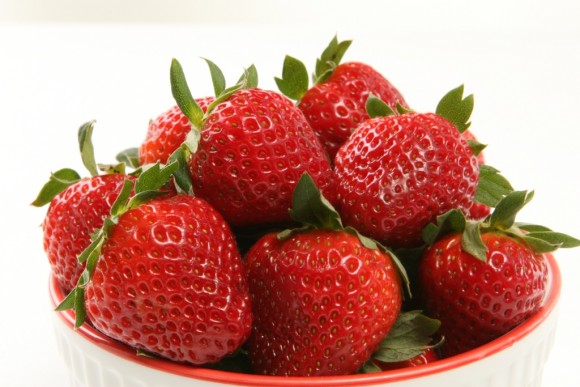
Toasted-almond Cake with Strawberries in Whipped Cream

Adapted from Gourmet, June, 2007, page 143

Yield: about 8 to 10 servings

Three-quarters cup whole almonds with skins (one-quarter pound), toasted and cooled
1 ¼  cup all-purpose flour
1 teaspoon baking powder
½  teaspoon salt
4 large eggs at room temperature about 30 minutes
1 ¼  cup superfine granulated sugar (I put sugar into processor to get it fine)
1 ½  sticks (three-quarter cup) unsalted butter, melted and cool
1/3  cup milk (2 percent is fine)
¼  teaspoon almond extract
½  cup sliced almonds
2 pints frozen strawberries with sugar, thawed, or 2 pints fresh strawberries, sugared to taste
4 tablespoons fresh lemon juice
1 teaspoon pure vanilla extract (or one-half teaspoon rose water)
1 and one-half heavy cream, whipped

Put oven rack on middle position and preheat oven to 350 degrees. Butter and flour 8- or 9-inch square or round cake pan. 

With blender on high, add half toasted almonds through top hole and finely grind (be careful not to grind to a paste). Transfer to bowl and grind remaining almonds in same manner, transferring to bowl. Add flour, baking powder and salt to ground almonds and whisk until combined well.

Beat eggs in a large bowl with an electric mixer at high speed until foamy, about 15 seconds, then add sugar a little at a time, beating. Continue beating until mixture is thick, pale and forms a ribbon when beater is lifted, 7 to 8 minutes in a stand mixer or 10 to 14 minutes with a handheld.

Add butter in a slow stream, then add milk and almond extract and beat until just combined. Reduce speed to low, then add flour mixture, mixing until just combined.

Spread batter in pan, smoothing top, and then sprinkle with sliced almonds. Bake until  top is golden, cake begins to pull away from side of pan and a wooden pick inserted in center of cake comes in clean, around 25 to 35 minutes, depending on size of cake pan.

Cool on a rack around 30 minutes, then run knife around edge to loosen and invert onto rack. Take cake right side up on rack and cool completely.

To serve, slice cake onto individual plates, cover with strawberries and top with lots of whipped cream. 

Column 2

Oh, the two recipes I’d promised to give you today will have to wait. My friend, Jennifer is leaving today for London for a few weeks, so her recipe will come later in the summer. When she gets home, fruits will be even riper and she will show me how to make them.

I will, however, give you two other fruity recipes.

The first is easy and it comes from Karen Valente.

Cut watermelon from its rind (get rid of all the green and yellow). Cut the watermelon into approximately 1-inch chunks. Place the melon chunks into a fresh gallon-sized plastic bag, carefully push the bag somewhat flat and seal it well.

Freeze the melon overnight or even a few days later.

Open the bag of melon and pour into a Cuisinart bowl. As you puree the fruit, add sweetened condensed milk into the melon. Stop the food processor and taste the melon. When it is sweet enough for you, add a whisk of salt and puree another second or two.

Spoon the mixture into a plastic container, seal it and freeze, What you have here is not a sorbet, actually; sorbet is usually dairy-free. But there is so little dairy in the dessert, yet it has the mouth-feel and texture that is heavenly. 

For my second dessert, I was going to give you a Bon Appetit recipe for a strawberry hand pie, but it requires making a pie dough, making a strawberry filling, then creating frosting and assembling the dessert. And, with that, the hand pie might gush out on your white pants or sneakers. Instead, why not make enough crisp recipes for the whole summer, freezing it (right out of the freezer you can crumble it over the fruit and serve it after dinner). This is a dish you can serve in no time. So here is the recipe for crisp that top almost any dessert all summer long.

Strawberry Filling 

From Bon Appetit, Summer, 2022

12 ounces strawberries, hulled, finely chopped
2 tablespoons granulated sugar
1 teaspoon cornstarch
1 teaspoon grated ginger
1 teaspoon fresh lemon juice
¼ teaspoon vanilla extract
1/8 teaspoon kosher salter

Toss all ingredients in a medium bowl to combine. Let sit for 30 minutes. Place the strawberries in a gratin or Pyrex pan. Top with one package of crisp over the fruit and place in a 350 degree oven for about 30 minutes, or until the filling bubbles.

Crisp Topping
Created by Deb Jensen, a dear friend who died just a few years ago
I quadruple this recipe and freeze it in little plastic bags.

Yield: makes around 5 cups 

1 cup flour
1 cup brown sugar
1 cup oatmeal (rolled oats)
1 cup walnuts or pecans
1 cup almonds or pine nuts
1 stick (8 tablespoons) butter, melted

Add all ingredients into a bowl and mix together with nice, clean hands.

About the author: Lee White has been writing about restaurants and cooking since 1976 and has been extensively published in the Worcester (Mass.) Magazine, The Day, Norwich Bulletin, and Hartford Courant. She currently writes Nibbles and a cooking column called A La Carte for LymeLine.com and the Shore Publishing and the Times newspapers, both of which are owned by The Day. She was a resident of Old Lyme for many years but now lives in Groton, Conn. Contact Lee at leeawhite@aol.com.
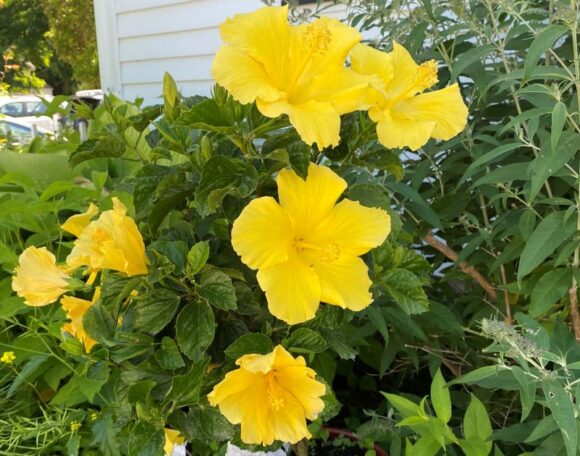
Gardening Tips from ‘The English Lady’ for June, ‘The Time of Perfect Young Summer’ (Gertrude Jekyll)

June is, ‘The Time of Perfect, Young Summer’ (Gertrude Jekyll)

Maureen Haseley-Jones is “The English Lady.”

We have had a few cool nights recently, which are just wonderful and allow one to sleep with the windows open.  I cannot remember the last time we had a real spring such as we are experiencing this year, with plenty of gentle rain. This beneficial rain is wonderful for all the spring plant growth and such a pleasure to see.

I am so in awe of the miracle of Mother Nature; the symbiotic relationship between plants and all of God’s creatures.

As I looked out of my window from my old home a few years ago,  I could see the buds opening on my 30-foot-long stand of Peonies, which had been planted by the original homeowner in the early 1900s. That sight brought to mind one of the symbiotic relationships, the friendly partnership between ants and peonies.

I am often asked, “Maureen, should I worry about ants on my peonies?” The answer is, “That’s not a problem, lots of ants on the peonies just demonstrate that you have healthy plants with big buds producing more nectar, which therefore, in turn, attract the ants.”

Peonies:

A stand of peonies is always stunning.

Make sure Peonies get plenty of water and after blooming, apply a light application of composted manure and check the soils PH which should be between 6.5 and 7.0.  It is hard to ruin a good peony border but you can err in the fertilizing process, so go easy on the organic aged manure.

Following the bloom, do not cut the peonies down until November, after the first frost. Now, in early June, I pinched off the side buds on my large stand of peonies, this ensures big blooms on the rest of the plant.

Ants:

On the subject of ants; if you see them “let them live,” because often their presence indicates that we have aphids around and ants feed off aphids; very useful creatures.

Another useful creature in wars against pests is the lowly toad. I suggest putting some toad houses in and around your border.  You may purchase toad houses from the garden center if you so desire. Or you can do as I do which is to use an old clay pot that is cracked and make sure that the crack is two to three inches wide for the door so the toad can enter. Also put a small saucer as a floor under the pot with some rocks, which you keep damp, so that your friendly bad bug eater has his or her ideal home environment.

Mulch:

Mulch your gardens this month when the ground has warmed up to 55 degrees.  When mulching, take care mulching around trees. Apply the mulch at least six inches from the base of the trunk, any closer can promote rot and disease in the tree itself. Any trees that are mulched too deeply near the trunk invite mice and other rodents to come in order to nest and gnaw on the trunk.

Your garden can be mulched to a depth of between two and three inches.  I prefer fine dark brown hardwood mulch but please do not use dyed red mulch, keep the garden natural, not looking like a Disney theme park.

Roses:

June is the month when Roses begin to bloom.  I prefer David Austin roses, I find these roses are the most -trouble free Roses and offer so much reward being repeat bloomers with wonderful fragrances.

Some of my favorites are:

  • ‘A Shropshire Lad,’ a soft peachy pink
  • ‘Abraham Darby,’ with blooms showing a blend of apricot and yellow
  • ‘Fair Bianca,’ a pure white
  • ‘Heritage,’ a soft clear pink

And my favorite ‘Evelyn’, which has giant apricot flowers in a saucer shape and the fragrance is second to none with a luscious fruity tone, reminding me of fresh peaches and apricots.

Feed your roses with composted manure, keeping the manure and mulch about six inches away from the base of the rose, then adding a few more inches of manure once a month until mid-August, at that time stop feeding for the roses to gently move into a slow dormancy.

Japanese beetles are very attracted to roses therefore, any Japanese beetle traps should be placed far away from your borders on the perimeter of the property.

A tip for keeping cut roses fresh: cut the roses in the early morning and cut just above a five-leaf cluster and place stems in a container of lukewarm water. Inside the house, recut the stems to produce a one-and-a-half inch angular cut, under warm running water, then place cut roses in a vase filled with warm water.

Do not remove the thorns on cut roses. I have found that removing the thorns, reduces their indoor life by as much as three days.

Hydrangeas:

Blue hydrangeas. Photo by Gemma Evans on Unsplash.

These need plenty of water, (in the fields where they were found growing close to water and classified as a wetland plant before they were introduced into our gardens), also apply aged manure around the Hydrangeas, have them spaced at least four feet apart for good ventilation, which will help to prevent mildew and plant them in full sun. If you have blue Hydrangea macrophylla and want a more vibrant shade of blue, add some peat moss on top of the manure, the peat is acidic and will produce a lovely shade of blue.

Wisteria:

Regular pruning through spring and summer is the main factor to help this arrogant vine to flower; by that I mean prune several times during the season. Prune every two weeks at least six inches on each stem.

Clematis wilt:

If you have this problem with clematis, you will notice it early because the shoots wilt and die. This disease is impossible to cure, as it is soil borne, so it is not possible to plant another clematis of that species in that area of the garden.

However, you can plant the Viticella clematis selection; these are vigorous, free flowering blooms and are not susceptible to wilt.  Some good choices in this variety are Blue Belle, Etoile Violette, both are purple and Huldine, which is white,

Container Gardens:

Unexpected objects can make interesting plant containers. Photo by Annie Spratt on Unsplash.

If you have room for one pot, you have room for a number; placed close together in different shapes and sizes, they can create your own miniature garden.

Apart from regular pots, the most unexpected objects make interesting containers. A friend, who cut down trees this past winter, left the stumps and hollowed them out to make containers, one large and two smaller stumps together, an interesting combo.

At the same time look in your basement, shed or barn to see if you have an old wheelbarrow, even if it has a wheel missing it will present an unusual angle as a planter.

Or you may come across a large, chipped ceramic jar (I, in fact, have an old two foot tall ceramic vinegar container, replete with a hole where the vinegar tap was inserted, ideal for drainage), which will look great on my newly-painted blue bench next to my red milk shed.

Lawn Care:

Do not forget to add organic grub control through July, so that you keep down the mole infestation; remember no grubs, less food for the moles.

Powdery Mildew:

Keep an eye open for powdery mildew, especially after a rain when humidity returns. In a sprayer, mix two tablespoons of baking soda, one tablespoon of vegetable or horticultural oil in a gallon of water and spray the mildew.

Hydrangeas and Summer phlox are particularly prone to be affected by this problem. I recommend Phlox Miss Lingard or Phlox David, white ones of the species, which are the most mildew resistant. Monarda, commonly known as Bee Balm, is also affected by the mildew; the one I have found to be the most resistant is “Cambridge Scarlet”.

Do be careful when introducing Monarda into the garden; this plant, like Purple Loosestrife and Evening Primrose, is extremely invasive and can take over your entire border.

Still with invasive plants, if you plant mint, plant it only in containers, otherwise mint will spread throughout your borders.

I hope these tips are useful to you in this busy time of year in the garden. Stretch, hydrate and enjoy the burgeoning promise of your garden and I’ll see you next month.

If you would like some more gardening advice, contact my son Ian at LandscapesbByIan.com. I am sure you would enjoy speaking with him as he is full of knowledge since, as the saying goes, “The apple does not fall far from the tree.”

About the author: Maureen Haseley-Jones is a member of a family of renowned horticultural artisans, whose landscaping heritage dates back to the 17th century. She is one of the founders, together with her son Ian, of, The English Lady Landscape and Home Company. Maureen and Ian are landscape designers and garden experts, who believe that everyone deserves to live in an eco-conscious environment and enjoy the pleasure that it brings. Maureen learned her design skills from both her mother and grandmother, and honed her horticultural and construction skills while working in the family nursery and landscape business in the U.K. Her formal horticultural training was undertaken at the Royal Botanic Gardens at Kew in Surrey.

A la Carte: Creamy Coconutty Shrimp Makes a Super Summer Salad

Lee White

After the quick turnover to the Dallas wedding (flew there at 6 a.m. Saturday and was home by Monday, mid-afternoon), I unpacked, played with the cats, watched a DVR’d Connecticut Sun game) and finished a book, then slept until 7:30 Tuesday.

Then I drove to Madison and took friends to pick up their new car in Westchester County, NY. 

Eric drove the new car home (the next morning he drove to Montreal to pick up their son from college), Lisa and I stopped at Trader Joe’s in Milford to do some quick food shopping, but realized we could not both go because Lucy the dog was with us.

Since I really needed nothing (I’d gotten my Trader Joe’s fix the week before), I read in the air- conditioned car and played with Lucy. About 20 minutes later, Lisa arrived with a cart filled with goodies, giving me some frozen shrimp and her favorite goat cheese.

I assumed the pink shrimp was cooked. Instead, it was the raw pink shrimp we used to get in Stonington, CT. I had just gotten my new Bon Appetit and saw the recipe below. The next morning, I bought a lime, some cilantro and a little green jalapeno; that night I made the recipe below.

It was as good the night I made it as it was twice more as leftovers.

Creamy Coconutty Shrimp Salad

From Bon Appetit, Summer Issue, June/July 2022
Yield: 4-6 servings 

1 large lime
2 garlic cloves, smashed
1 13.5-ounce can unsweetened coconut milk
2 teaspoons fish sauce
1 pound large shrimp, peeled, deveined, patted dry
Kosher salt; freshly ground black pepper
½ small red onion, thinly sliced
1 small jalapeno, thinly sliced on a diagonal, seeds remove if desired
½ cup cherry tomatoes, preferably heirloom, halved, quartered if large
1 cup packed coarsely chopped cilantro
High-quality extra-virgin olive oil (for serving)
1 cup tortilla chips, lightly crushed
Flaky sea salt

Remove zest from lime in wide strips with a vegetable peeler, cut lime in half and set aside. Bring zest, garlic, coconut milk and fish sauce to a simmer in a large skillet over medium heat. Arrange shrimp in a single layer and cook, maintaining a bare simmer, until opaque, about 3 minutes. Using a slotted spoon, transfer shrimp t a large shallow bowl and let cool.

Increase heat to high; cook coconut until thick and pourable (similar to the consistency of runny honey), about 5 minutes; remove from heat. Remove and discard lime zest and any shrimpy bits. Season coconut sauce with kosher salt and pepper and let cool in pan.

Squeeze juice from reserved lime half over shrimp and spoon coconut sauce over. Top with onion, jalapeno, tomatoes and cilantro. Squeeze remaining lime over. Drizzle with oil, then top with tortilla chips and sprinkle with sea salt.

Do ahead: Shrimp can be cooked and coconut sauce can be made 1 day ahead. Transfer to separate airtight container; cover and chill.

About the author: Lee White has been writing about restaurants and cooking since 1976 and has been extensively published in the Worcester (Mass.) Magazine, The Day, Norwich Bulletin, and Hartford Courant. She currently writes Nibbles and a cooking column called A La Carte for LymeLine.com and the Shore Publishing and the Times newspapers, both of which are owned by The Day. She was a resident of Old Lyme for many years but now lives in Groton, Conn. Contact Lee at leeawhite@aol.com.

A la Carte: Chicken Tetrazzini is Lovely for Left-Overs

Lee White

Having a daughter who has taken over my work as a mother can be pretty nifty. When she wants me to go something with her (or even when we are not going together but I mention that I am thinking of doing something alone), she offers to make all the arrangements. 

This time there is a wedding for my late brother’s granddaughter. For me, traveling via plane is hellish: I hate having to get to the airport early and finding a place to park my car (or, worse, staying overnight in a cheap motel or leaving my house at 3 a.m. for a 6 a.m. plane.)

Then there is changing planes and doing the same thing in a few days.

But this time, she really wanted me to go with her, so she got me non-stops to and from Dallas and called to confirm my flight. She even got me priority boarding (maybe because I am old).

Photo by Claudio Schwarz on Unsplash.

But a week before, I had to think about what I would eat on the plane and during the seven hours until her plane arrived from LA. So, Wednesday I bought a big, fat rotisserie chicken. I used some of it for two dinner salads, and this evening I will make chicken salad on rye (and grapes for grazing) for tomorrow’s flights.

But that leaves me with lots of chicken. What to do?

How about turkey (or, in my case, chicken) tetrazzini. This I made and will save in the freezer for four different “what-to-make” dinners. 

Left-over Chicken Tetrazzini

From Saveur Cooks Authentic American by the editors of Saveur Magazine (Chronicle Books, San Francisco, 1998)
Yield: Serves 6

½ pound wide egg noodles
8 tablespoons butter, divided (1 stick)
½ pound white mushrooms, sliced
5 tablespoons flour
salt and freshly ground black pepper
3 cups turkey or chicken stock (low-sodium, if using canned)
1 ½ cups heavy cream (I use less than that)
1/3 cup dry sherry
3 cups coarsely chopped cooked chicken
¼ teaspoon freshly ground nutmeg
¼ cup freshly grated Parmigiano Reggiano

Fresh parsley (optional)

  1. Bring large pot of salted water to a boil over medium-high heat. Add noodles and cook until tender, about 8 minutes. Drain, then transfer to a medium baking dish and toss with 1 tablespoons butter. 
  2. Preheat oven to 375 degrees. Melt 2 tablespoons butter in a large skillet over medium-high heat. Add mushrooms and cook until lightly browned, 3 to 5 minutes. Scatter mushrooms over noodles.
  3. Reduce heat to medium-low and melt remaining 5 tablespoons butter in same skillet. Sprinkle in flour, season to taste with salt and pepper and cook, stirring constantly, for 2 minutes. Increase heat to medium, gradually whisk in stock and simmer until sauce thickens, about 7 minutes. Add cream, sherry and chicken, then adjust seasoning with salt, pepper and nutmeg.
  4. Spoon turkey and sauce over noodles, then sprinkle with Parmigiano Reggiano. Bake until sauce is bubbling, about 20 minutes. Heat broiler and brown for 3 to 5 minutes. Garnish with parsley, if you like.

About the author: Lee White has been writing about restaurants and cooking since 1976 and has been extensively published in the Worcester (Mass.) Magazine, The Day, Norwich Bulletin, and Hartford Courant. She currently writes Nibbles and a cooking column called A La Carte for LymeLine.com and the Shore Publishing and the Times newspapers, both of which are owned by The Day. She was a resident of Old Lyme for many years but now lives in Groton, Conn. Contact Lee at leeawhite@aol.com.
A la Carte: It’s Queen Elizabeth’s Platinum Jubilee, so Think British With (Sheet Pan) Fish & Chips!

Lee White

My friend, Lian Obrey, asked me if I would teach her a couple of dishes she could make if she invited friends for dinner.

Of course, I said I would.

“One of those days” might happen within a few days, but I am off to Dallas for the wedding of my grandniece. So, as I am writing this column this morning, I will give her the draft of this column, along with a half-sheet pan and a piece of Silpat. Even a person who cooks little will find this recipe very easy.

By the way, for those of us who don’t have Silpat (a non-disposable piece of plastic that fits into an oven pan), I have had mine for decades. I wash and dry them after I use them, and roll them in a circular blueprint holder.

As for inexpensive half-sheet pans, buy a couple but buy good ones; the cheap ones will wobble in the oven. You will use them forever, in every season, for everything from baking brownies or cookies, roasting vegetables or just using them under the rack to keep those apple or peach pies from gushing into the oven.

As for the Silpat, sure, use parchment instead and you will never have to clean up the sheet pan residue.

Sheet Pan Fish and Chips

Adapted from Real Simple, May, 2022
Yield: Serves 4

1 ½ pounds russet potatoes, cut into ½ inch wedges (I use the tiny potatoes, not cut up)
¼ cup olive oil, divided
2 teaspoons josher salt, divided
1 teaspoon freshly ground black pepper, divided
1/3 cup panko
1 tablespoon unsalted butter, melted
1 ½ teaspoons lemon zest (from 1 lemon) divided, plus more for serving
4 6-ounce skinless cod fillets
2 cups frozen sweet peas
Malt vinegar for serving (optional)
Finely chopped parsley for serving

Preheat oven to 425 degrees. Toss potatoes with 1 tablespoon oil, 1 teaspoon salt and ½ teaspoon pepper on a parchment-lined baking sheet. Spread in an even layer and roast for 25 minutes.

Combine panko, butter, 1 teaspoon lemon zest and 1 tablespoon oil in a small bowl. Season cod with ¾ teaspoon salt and ¼ teaspoon pepper.

Push potatoes to side of baking sheet; add cod. Drizzle cod with 1 tablespoon oil and top with panko mixture. Roast until potatoes and fish are golden and cooked through, about 10 minutes. 

Heat remaining 1 tablespoon oil in a skillet over medium-heat. Add peas; cook for 4 to 5 minutes. Add remaining lemon zest and ¼ teaspoon salt and pepper. Serve with cod, potatoes, lemon wedges and male vinegar, if using. Top with parsley.

About the author: Lee White has been writing about restaurants and cooking since 1976 and has been extensively published in the Worcester (Mass.) Magazine, The Day, Norwich Bulletin, and Hartford Courant. She currently writes Nibbles and a cooking column called A La Carte for LymeLine.com and the Shore Publishing and the Times newspapers, both of which are owned by The Day. She was a resident of Old Lyme for many years but now lives in Groton, Conn. Contact Lee at leeawhite@aol.com.