A View From My Porch: Baby Boomers, Millennials … Who They Are, How They Differ, ‘Acting Their Wage’ & More

Millennials are the first “digital natives,” who experienced the internet, mobile devices, and social media from childhood onwards. Photo by Helena Lopes on Unsplash.

Behavioral economists report that Americans’ attitudes about work and the workplace have gone through some remarkable changes.

News reports on CBS, both national and local, have presented several stories on one aspect of this change, “the rise of the side hustle”. Another aspect, “quiet quitting”, was addressed on 12/06/2022 in the comic pages in “Hi and Lois”, by Mort Walker.  Then, the “side hustle” received some additional coverage in the week of 12/19/2022 in two “Peanuts” comic strips in which Sally Brown pitched her patriotic Bicentennial souvenirs to her brother, Charlie. 

Accordingly, I developed an interest in the topic and decided to do some research that extended even beyond CBS and the “funny papers.” Note that “Peanuts” originally ran from 1950 to Charles Schulz’s death in 2000, but continues in reruns; and so, all current “Peanuts” comic strips are repeats of those that have already been published. There is no “ghost cartoonist,” and the two comics mentioned above were originally published during America’s Bicentennial. I am impressed that “Peanuts” appears to stand the test of time.

This essay reviews some of the generational factors that impact our work expectations, defines a few of the trendy buzzwords that form the lexicon of this emerging work phenomenon, and touches on the longer-term impact that the pandemic had on the workplace. 

I had several hours one-on-one over the holidays and holy days with my youngest daughter, “D”; who was willing to share both her insider-millennial’s view, and provide me with a way to illustrate the topic.

Boomers vs. Millennials:

The “baby boomer” generation includes those born between the end of WWII and the mid-1960s; and named for the booming birth rate that occurred in the post-war period. This was the generation that started the families that Americans postponed during the war — and even earlier, during the Great Depression. They were promised the “American Dream” and enjoyed a sense of confidence that the coming era would be safe and prosperous. However, they experienced the tensions of the Cold War era, and many constructed backyard bomb shelters in preparation for a nuclear attack by the USSR.

Boomers are driven by loyalty, value stability and commitment. Many worked for the same company for long periods of time and were most comfortable when promotions and pay raises were earned by dedicating years of service to the organization. Forty percent of boomers stayed with an employer for at least 20 years, and 18 percent stayed for 30 years or more. 

Baby boomers embraced the “automobile culture” and discovered the suburbs and “country life” in their 20s and 30s.  

They were “digital immigrants” (see below), and needed to accept and adapt to new technologies that then became the tools essential for both work and life. Baby boomers are more comfortable with face-to-face than digital communication.

Millennials are generally considered as those born between 1980 and the mid-1990s, and are mostly the children of baby boomers. They grew up in in a hyper-connected society and became the first generation to be fully globalized online during adolescence and early adulthood. These “digital natives” experienced the internet, mobile devices, and social media from childhood onwards. 

They surpassed the baby boomers as America’s largest generation in 2019 when they comprised more than one-third of the American labor force. They are America’s most racially diverse generation and are less likely to buy homes and get married in their 20s and 30s than their parents. They are the first generation to be happier living in larger, more urban environments than rural or suburban settings. 

They are more willing than baby boomers to change jobs or work independently and are motivated to seek jobs where they feel that their work matters and has an impact. 

Millennial women are much better educated than their mothers and grandmothers and have greatly increased their participation in America’s workforce. The men are also better educated; but a greater share of this generation’s women have a bachelor’s degree than their male counterparts — a reversal from the past. 

Millennials have higher levels of student loan debt and individuals are poorer, in real dollars, than their parents. However, more than one-half of U.S. households are now dual income; so, their total household income may not have changed as much. The events of September 11, 2001 shaped the millennial generation, much as the Cold War affected the baby boomers.

Significantly, millennials are more concerned than their parents with achieving a healthy balance between work and home; and the statement, “It’s not supposed to be fun; that’s why they call it work,” would be anathema to them. They are health-conscious and are probably responsible for menu items like avocado toast.

The Lexicon:

As you might infer from the words, “act your wage” refers to accomplishing only the work for which you are paid and nothing more; and so, if you are making minimum wage, you would put in the bare minimum of effort.

Similarly, “quiet quitting” isn’t really a resignation, since the worker doesn’t actually leave their position and continues to collect a salary. Quiet quitters do their jobs and nothing above and beyond. They may not make themselves available for Zoom meetings after hours and are unlikely to take work home to deal with over the weekend.

Proponents of “act your wage” and “quiet quitting” view them both as just what’s required to set firm, healthy boundaries in the workplace. 

The “side hustle” may be easiest to understand because it seems to be just old-fashioned “moonlighting”. It’s the work you do outside your full-time or primary job and people typically engage in side hustles to supplement their income. It can be online, in-person, freelance, etc. 

Finally, the “hybrid work model” has its roots in the pandemic, and refers to work arrangements that enable the employee to work remotely part of the week at home or somewhere off-worksite; and the remainder of the week in the physical office.

The Pandemic:

Business and government agency leaders had explored work arrangements like flex-time, telecommuting, job sharing, and work-from-home for years. 

However, it was the rapid onset of the pandemic in the spring of 2020, when businesses closed and millions of workers were forced to adapt to new working arrangements that the transition to remote and hybrid work accelerated. 

A few years later, restrictions were relaxed, and employers had to decide how to re-architect the post- pandemic workplace. Some companies (e.g., Goldman Sachs) required a fulltime return to the physical office. However, many employers still allow employees to work from home full- or part-time. Researchers at Harvard and Stanford have independently concluded that the hybrid work model may be the most reasonable solution going forward for both employers and their employees, who often want to continue to work remotely and be flexible in their schedules. 

Of course, many jobs cannot be performed remotely and require that workers be physically present at their worksites. 

Offices will look different with a hybrid workforce. Less space will be needed and every worker will probably not require a designated desk. Companies will need to manage technology in remote settings. Collaborative space in the office will become a priority for more team-focused work, while individual work will, of course, be done at home.

Case histories:

I am a baby boomer and digital immigrant. My first cell phone had a retractable antenna. My e-mail address ends “@AOL.com”; and keeping it has become an “embarrassment” for my middle daughter. I originally connected via a telephone modem. My personal computer was a DEC Rainbow and it was mouseless. I wrote my papers with an early release of “WordStar” and stored files on floppy disks. I still think of myself as an “early adopter”, despite the e-mail address.

I was surprised at how closely our youngest daughter, “D” aligns with the above profile of her generation. She is probably our most millennial child. She announced to the family at age seven or eight that she was no longer eating meat; and she has remained a vegetarian thereafter, which we have all supported. She went on to NYU after graduating from Westminster School; and then, after that graduation, went on to Brooklyn College to pursue advanced training in some arcane computer science field.

Her first job was with an international “big data” company. She kept her Brooklyn apartment and worked from their Manhattan office and was very happy in that environment. Her colleagues were all young, smart, and high energy. 

Her team included a group of engineers located in India and she had the occasion to meet with them in-person on the subcontinent

She now works with a large, international cyber security company. She works with a team of engineers located in Belfast from either Brooklyn or a second residence in Red Hook, NY on the Hudson River.  Except for occasional meetings in her company’s East- or West-coast hubs, she is totally remote. She visits us and her Connecticut nieces and nephew regularly, but not frequently. Her nieces and nephew, who are six years old and younger, all think of her as “Cool Aunty ‘D’”  

Author’s Comments: If this evolution of attitude is at all surprising, it may be because we haven’t been listening to the music; or perhaps, just been too focused on the beat and inattentive to the lyrics. 
Harry Belafonte (1956): “Work all night on a drink of rum; daylight come and we want to go home”.
Pete Seeger (1957): “I’ve been working on the railroad all the live-long day”.
The Who (1965): “Why don’t you all fade away; and don’t try to dig what we all say”.
Paul Simon & Art Garfunkel (1969): “Asking only workman’s wages I come looking for a job; but I get no offers”.
Joan Baez (1969): “Where workers fight and organize; it’s there you’ll find Joe Hill”.
Bachman-Turner Overdrive (1973): “And if your train’s on time, you can get to work by nine; and start your slaving job to get your pay”.
Donna Summer (1983): “She works hard for the money; so you better treat her right”.
Bob Dylan (2006): “It’s a new path that we trod; and they say low wages are reality if we want to compete abroad”.

Sources:
Fry, Richard, Patten, Eatten, Eileen; and Igielnik, Ruth. “How Millennials today compare with their grandparents 50 years ago”. Pew Research Center. 03/16/2018.
Fry, Richard. “Millennials are the largest generation in the U.S. labor force”. Pew Research Center. 04/11/2018.
Taylor, Stephanie. “Five major differences between the lives of millennials and baby boomers. Business Insider. 04/03/2019.
Vasel, Kathryn. “Two years later, remote work has changed millions of careers”. CNN. 03/18/2022.
Kaplan, Juliana.How to ‘act your wage,’ according to two millennials who did it.”. Pew Research Center. 11/27/2022. 
Auginbaugh, Alison and Rothstein, Donna S. “How did employment change during the COVID-19 pandemic?” Bureau Of Labor Statistics Supplement. Vol. 11/No.1.  01/ 2022.
Walsh, Colleen. “Hybrid work’s sweet spot”. Harvard Magazine. 01-02/2023.

Editor’s Note: This is the opinion of Thomas D. Gotowka.

About the author: Tom Gotowka is a resident of Old Lyme, whose entire adult career has been in healthcare. He will sit on the Navy side at the Army/Navy football game. He always sit on the crimson side at any Harvard/Yale contest. He enjoys reading historic speeches and considers himself a scholar of the period from FDR through JFK. A child of AM Radio, he probably knows the lyrics of every rock and roll or folk song published since 1960. He hopes these experiences give readers a sense of what he believes “qualify” him to write this column.

Gardening Tips for December from ‘The English Lady’ – ‘The Color of Winter is in the Imagination’

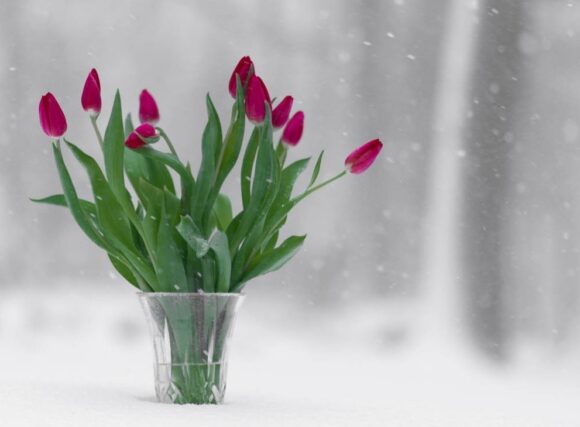
Tulips on a snowy day. Photo by Theresa Sullivan.

Hello everyone; so much to do and so little time in this holiday season … remember to breathe, stretch and take time out for yourself each day.

Maureen Haseley-Jones is “The English Lady.”

On a pleasant December day, go out into the garden — there is still time to plant your spring bulbs. The earth is still workable so enjoy the fresh air and the gentle exercise before you indulge in the Holiday festivities. 

Plant the bulbs three times as deep as they measure in their upright position.  For example, the Daffodils should be planted nine inches down below the frost line. Last month, I suggested that you put a bag of composted manure in the shed or garage to spread around the bulb area after planting. However, if you do not have the manure now, when the bulbs peak up from the soil in spring, you can obtain the composted manure and sprinkle it around the emerging bulbs.

At this moment, I am sitting in my armchair with a delicious cup of Earl Grey tea, inhaling the air wafting from the kitchen, the fragrance of cloves. It is an old family tradition that I follow each December, filling my great-grandmother’s brass saucepan with water – adding whole cloves – bringing the water to the boil, then turning it down to simmer gently. The fragrance is a special memory of Christmas in the kitchen in Gran’s thatched roof cottage on the grounds of our plant nursery in England. 

On this side of The Pond, in early winter before snow falls or even on a sunny day with snow on the ground, there are construction projects that can be accomplished with patios, decks, ponds, and dry stonewalls to repair and build. By accomplishing these tasks in winter, you will be ready to plant in spring. 

If you are not into heavy work, I suggest you call a landscape company that you trust to give you an estimate for your project. In fact, you my care to get in touch with my son Ian, at landscapesByIan.com for an estimate or a consult on stonework work or a design for the spring. Ian tells me that there is a scarcity of building supplies because of the pandemic, which might hinder your projects for your garden, unless you act promptly.

Snow is already here, so I hope you have the snow shovel handy or perhaps you require a new one? If so, buy a lightweight, wood-handled and plastic shovel instead of heavy metal. When the storm has passed and you are ready for cleanup, don’t load the shovel heavily, scoop lighter loads. You will get it done faster and with less aches and pains, or chance of injury. If you are not able to clear the snow yourself from driveways, walkways and steps, I’m sure there are some teenagers in your neighborhood who would be willing to help you out. We need the moisture from the snow for the soil and plants.  My hope is that we also get a good amount of rain to carry us through to spring.  

If you have not already done so, mulch around the trunks of roses, mound at least six to nine inches up the stems. As I mentioned earlier, buy a few extra bags of mulch and topsoil and store them in the garage or shed.  

Tie down the long whip-like rose canes of climbers to supporting structures so they are not broken off by strong winds. If the shrub roses are planted in an exposed area, cover them with a rose cone or if they are larger, cover them lightly with burlap until April.  

Amaryllises are a wonderful winter bloom since they enjoy an extended flowering period.

I just walked into my living room to check on my Amaryllis bulbs, which have striped blooms. Amaryllises can be enjoyed for a long time with little effort. As the flower buds begin to open, remove the pollen bearing anthers with tweezers, before they begin to shed — this will add days to the flowering period and remember to water.

Once the bloom is finished, deadhead it, remove the bulb from the soil and let it dry off. Store in a cool dark basement or some other cool dry place at about 55 degrees for 10 weeks without watering. When you want to start it again, pot up the bulb tightly in fresh potting soil and begin to water again. By the way, the Amaryllis is poisonous so do not let children or animals eat the flowers.  

Outside my kitchen window, I can see the holly bush with lovely red berries, some of which I cut to decorate the house. Holly is a good weather predictor; few berries mean a mild winter, whilst many berries denote a harsh one. My red and black friends, the ladybugs, have begun to come indoors, earning their keep by consuming white fly and aphids, which often gather on houseplants.      

This week, in the house, I am planting up my first group of paper white narcissus to get a head start on bloom in about a month. I store two dozen bulbs in the vegetable keeper of the refrigerator, away from the food. I plant half of them now and store the rest in a paper bag in the refrigerator, away from food, which I will plant later. With this method, I will have continuous blooms and fragrance through the winter months. By keeping the bulbs in the refrigerator, they stay dormant, until planted. 

Paper-white narcissi give off a beautiful fragrance. Photo by Jonathan Diemel on Unsplash.

I plant my bulbs in pebbles, with just enough pebbles to anchor the bulbs and enough depth for the roots to grow. Cram a lot of bulbs in the pot so they are touching – the more bulbs, the more vibrant the display. Make sure the bulb pots do not have drainage holes; if they do, cover the holes with shards of broken pottery.  

I place the planted bulbs in a dark, cool room or cupboard, always keeping the pebbles moist. In a few weeks, when the shoots of the narcissi are about six inches tall, I take the vases into a cool room on the south side of the house and place them about six feet away from the window in indirect light where they remain, keeping the pebbles moist until the buds appear. When the buds appear and the stems are about 12 inches tall, bring them into the area of the house to be enjoyed. Always place them about six-feet from a sunny window and away from draughts and heat. Keep the soil or pebbles moist throughout the life of the plants.

I know that the stems of paper whites get leggy and often topple over. My tall glass vases do not allow this to occur but if you don’t have tall containers, here is a suggestion to keep the plant upright. An English gardening colleague of mine gave me his ‘gin tip’. He pours a dessertspoon of gin (not the expensive stuff) on the soil or pebbles around the plants every couple of weeks after he has watered them. This limits the height of the stems, so they do not collapse, and the gin does not affect the bloom.

Regarding alcohol, another tip my grandmother whispered is to add a few drops of brandy or port to invigorate potpourri that has gone stale. Personally, I pour a few drops of either lemon oil or lavender oil on the potpourri. 

I know that many of you spread salt on walkways, and driveways to thaw ice. However, the salt ruins plants, when it seeps into borders.  Use an alternative like unscented kitty litter or sand that works well. In spring, just hose off steps and paths; the sand and kitty litter are good additions to your soil.

There is still time to prune dead or diseased branches from established deciduous trees and shrubs; it is an easier task to do at this time of year, as you are able to see what needs to be done without foliage obstructing your view. If you would like to have a fall pruning, call a reputable arborist to give you a quote and whose team will come and use their practiced eyes to give you a great result.

Last winter, squirrels, raccoons or whomever, got into the birdseed in the milk shed. I bought out the supermarket’s supply of cayenne pepper that week and sprinkled it on my birdseed to keep the marauders at bay. This trick will also keep those critters out of your garbage. I also sprinkle cayenne pepper in the bird seeders for the feeders and on the suet blocks – the heat of the pepper does not affect the birds – they do not feel the heat.   

To keep moths and bugs away from cupboards and in clothes; collect some remaining herbs that may be still available, perhaps sage and lavender. Tie them into bunches with string and slip over a hanger in your closet or in drawers — just this week, I put bunches of dried sage in my closets and drawers. Insects do not like fragrance and will keep away. 

A few bags of soil and mulch in the garage or shed will be useful after frost. Often the frost heaves plants above the soil and exposes the roots. The plants roots can be covered and protected with the soil and mulch, until they can be resettled again when spring arrives.   

When a plant is knocked askew by wind, ice or snow, do not be in a hurry to straighten it, quite often the plant will bounce back on its own. However, uprooted trees or shrubs should be straightened immediately and staked, roots covered with soil and mulched, then resettle the plant in the spring. When snow is heavy on the branches of the evergreens, gently brush the snow off with a broom — gently being the operative word.   

When you receive or buy cut flowers during the holiday you want them to last. To accomplish this, vases need to be squeaky clean. If there is a build up of dirty residue that regular soap and water won’t budge, try adding a little coarse sand to dislodge the mucky residue then use soap and rinse well. For a narrow- or globe-shaped vase use a bottlebrush.     

Poinsettias always add color to any space.

Poinsettias

I receive many questions about how to keep Poinsettias alive. I have a friend, who has kept the same poinsettia alive for eight years. After blooming, she places the plant in a cool room, watering when the top of the soil feels dry, then in late May puts it — still in its container — in the garden. In September, she brings it into her porch and begins gently watering. 

A combination I enjoy is poinsettias in a container with ivy and forced spring bulbs.  

I was always curious as to how Poinsettias got their name. Last year I heard an old story on that very subject. In a tiny village in Mexico, the tradition on Christmas Eve was to put gifts before the Crèche at the Church. A poor young boy, who had nothing to offer, went outside and knelt in the snow praying for a gift to give the newborn king. Where he knelt, a beautiful plant with vivid scarlet leaves appeared beside him and the boy joyfully presented his gift to the Christ Child. Mexicans therefore call the plant Flor de la Noche Buena (Flower of the Holy Night) and many believe the plant resembles the Star of Bethlehem.  Dr Joel Roberts Poinsett, the first minister to Mexico in the 1830s, brought the plant to the United States and it is for him that the plant is now named.

On a delicious note to end my tips this year – I present my recipe for English trifle – a scrumptious dessert at Christmas.

ENGLISH TRIFLE

This dessert is made of layers, made over a three-day period; it requires this length of time for each layer to set. I use a nine-inch tall glass bowl, as the appearance of this dessert is as mouth-watering as the taste.  

Ingredients:

2 pints of strawberries or raspberries  (you can use frozen strawberries or raspberries, and omit the sugar)
2 tablespoons of sugar on fresh fruit 
1-package ladyfingers or sponge cake or pound cake
1-cup Harvey’s Bristol Cream Sherry (omit the sherry if you do not want the alcohol) instead use water to make the Jell-O 
1 small package strawberry or raspberry-flavored Jell-O
1 small package of vanilla custard mix or Birds English custard (see note)
1 pint whipped cream

Combine washed and drained fresh strawberries/raspberries and sugar in a bowl and set aside at room temperature for about an hour.

In a 9-inch glass bowl, cover the bottom of the bowl with ladyfingers or sponge cake or pound cake, cut into 2-inch slices.  Drain the strawberries and reserve the juice.  Cover the cake with the fruit.

Add sherry to the reserved fruit juice to make one cup.  Prepare Jell-O using the fruit juice/sherry mixture as the cold-water part of the Jell-O mix, and hot water for the other part.  Pour the Jell-O over the fruit and cake layer, then refrigerate until it sets (usually about two hours or overnight).

When the Jell-O is set, prepare the custard and spread over the cake/fruit/Jell-O layer.  Refrigerate until custard is set.  

The day you serve the trifle spread a thick layer of unsweetened whipped cream over the top.    

If you are serving more people, repeat the cake, fruit, and Jell-O layers and top with the whipped cream.  

The nine-inch bowl serves 6 to 8.

Note: I use Birds English Custard mix, which can be found in specialty food stores and most supermarkets.  

If you have any gardening questions, feel free to email me at MaureenHaseleyJones@gmail.com. Have a wonderful Holiday and I’ll see you in your garden in January.  Be safe and well.

About the author: Maureen Haseley-Jones is a member of a family of renowned horticultural artisans, whose landscaping heritage dates back to the 17th century. She is one of the founders, together with her son Ian, of, The English Lady Landscape and Home Company. Maureen and Ian are landscape designers and garden experts, who believe that everyone deserves to live in an eco-conscious environment and enjoy the pleasure that it brings. Maureen learned her design skills from both her mother and grandmother, and honed her horticultural and construction skills while working in the family nursery and landscape business in the U.K. Her formal horticultural training was undertaken at the Royal Botanic Gardens at Kew in Surrey.

A Cornucopia of Lee’s Favorite Thanksgiving Recipes

Editor’s Note: We are publishing several of the late Lee White’s Thanksgiving recipes today both to honor her memory and once again share her culinary wisdom with our readers.

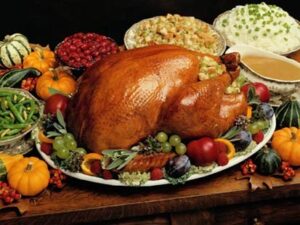
Let’s start with Lee’s favorite recipe for cooking a turkey.

Turkey

1 14- to 16-pound turkey
salt
1 stick butter
½ (one-half) cup good white wine

Gravy

¼ (one-quarter) cup all-purpose flour
cold water
Gravy Master (optional)
salt and pepper to taste

Remove giblets from turkey (I don’t use them; instead, I boiled them for the kitties, less bones). Rinse and dry turkey inside and out. Rub salt inside cavity of bird. Fill cavity with cold stuffing made the night before or early morning. Place bird in a rack (or upside glass pie pan) atop a large, heavy-duty roasting pan. Place in a 350-degree oven.

Add butter and wine in a saucepan, bring to a boil, then simmer for about 10 to 15 minutes. Open oven, pour wine-butter over turkey and close oven. Every half hour baste liquid over turkey. Bake until turkey is done (when the thermometer plunged into the thickest part of the thigh registered 175 to 180 degrees, 10 to 12 minutes per pound if not stuffed or 12 to 15 minutes stuffed).

Turn off the oven, remove turkey from the oven, Place the turkey on a platter and spooned the Stuffing into a bowl; cover each with aluminum foil and return both to still-warm oven. (Extra stuffing can be heated in a casserole dish; it is not as tasty but if you spoon some juice on the dish before heating, it’s pretty good.)

Remove grease from roasting pan. and place the pan on the stove. Turn heat to medium. In a large jar, add all-purpose flour and about 2 cups of water. Screw jar cover and shake. When the brown bits are hot, add flour-water mixture and, over medium-high heat, whisk constantly. If you need more water, add some. Once the gravy is ready, add and stir in Gravy Master to taste (optional). Add salt and pepper to taste.

CRANBERRY, GRAPE AND APPLE SAUCE 

From Cooking Light, November 2018
Serves 12

Cooking spray
2 cups seedless black grapes (about 10 ounces)
1 and three-quarter cups chopped Honeycrisp apple (or Gala or ????)
2 tablespoons chopped scallop
1 cup fresh or frozen whole cranberries
1 and one half tablespoons unsalted butter
3 and one-half teaspoons pure maple syrup
One-eighth teaspoon kosher salt
One-quarter teaspoon fresh thyme leaves or sprigs (optional)

Preheat oven to 325 degrees. Lightly coat a rimmed baking sheet with spray. Place grapes, apple and shallot on prepared baking sheet and lightly coat with cooking spray. Bake until shallots begin to soften, about 5 minutes.

Add cranberries to baking sheet. Bake at 425 degrees until cranberries burst, apple is tender and grape skins are beginning to burst, about 20 more minutes. Remove from oven and transfer mixture to a medium bowl. Stir in butter, maple syrup and salt. Cool completely, about one hour. Sprinkle with thyme, if desired.

STUFFING

I make the stuffing at least the day ahead because it should be cold when you put it in the turkey, which is also cold. This is probably more stuffing you will use. You can put the rest in a casserole and bake for Thanksgiving, or freeze it for another turkey or chicken dinner.

I large Pepperidge Farms herb-seasoned stuffing mix
6 to 8 tablespoons butter
1 cup onions, minced
1 cup celery, minced
1 small can of diced mushrooms
1 cup walnuts, chopped (I chop it with my hands because I don’t want it chopped fine)
salt and pepper, to taste
Bell’s seasoning, to taste

Make Pepperidge Farms stuffing according to package instructions.

In a skillet, add butter and melt over medium heat. Add onions, celery, mushrooms and walnuts. Saute for about 10 minutes. Add salt, pepper and Bell’s seasoning to taste. Add to stuffing mix and stir. Refrigerate until cold (I often put the stuffing in a large plastic bag and put it in the porch, since I rarely have much space in my refrigerator.)

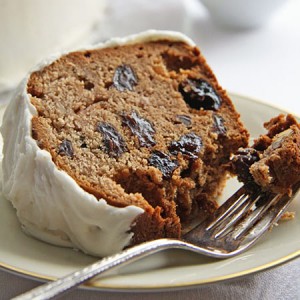
OLD-FASHIONED SPICE CAKE

Adapted from Linnea Rufo of San Miguel de Allende, Mexico
Yield: serves 10 to 12 people

1 cup sugar
one-half cup (1 stick) butter
one-half cup currants or raisins or dried cherries (optional)
one-half cup candied ginger, chopped
2 eggs
2 tablespoons molasses
2 cups flour
1 teaspoon baking soda
1 teaspoon cinnamon
one-quarter teaspoon cloves
one-half teaspoon ginger
one-teaspoon salt
1 cup milk

Preheat oven to 350º F. Grease a 10-inch tube pan.

Cream butter and sugar until light and fluffy. Beat in eggs, one at a time, blending well after each addition.

Whisk together flour, baking soda, cinnamon, cloves, ginger and salt. Stir dry ingredients into egg mixture alternately with milk, beginning and ending with dry ingredients.

Pour batter into prepared tube pan. Set on the middle rack of the oven and bake for 1 hour and 5 minutes, or until cake pulls away from sides of pan and a tester inserted in the center comes out clean.

Cool cake in the pan, set on a rack, for 10 minutes. Remove cake from pan and spread on icing at once, while cake is still warm.

Espresso Icing

1 and one-half cups of confectioners’ sugar
1 tablespoon of espresso (use a teaspoon or so of cold coffee)
1 tablespoon milk

Whisk icing ingredients together.

TURKEY HASH SALAD

From Julee Rosso and Sheila Lukins, The New Basics Cookbook (Workman, New York, 1989)
Yield: 6 to 8 servings
Preheat oven to 400 degrees.

5 teaspoons Dijon mustard
one-half cup red wine vinegar
1 cup light olive oil (or other good vegetable oil)
12 small red potatoes
one-half teaspoon kosher or sea salt
2 teaspoons coarsely ground black pepper
12 large cloves garlic
8 ounces bacon cut into one-half-inch pieces
one-half cup finely chopped red onion
one-quarter cup chopped fresh flat-leaf parsley
3 cups coarsely shredded cook turkey
1 bunch arugula, rinsed, trimmed and patted dry
2 bunches watercress, rinsed, trimmed and patted dry

Whisk mustard and vinegar together in a small bowl. Slowly pour in three-quarters of the oil, whisking constantly. Set the vinaigrette aside.

Prick the potatoes all over with the tines of a fork. Combine remaining one-quarter oil, salt and 1 teaspoon of the pepper in a bowl. Add potatoes and toss until well coated with the mixture. Place the potatoes in a shallow roasting pan and bake, uncovered, for 1 hour, turning occasionally.

Remove potatoes from the oven and allow them to cool. Then cut them into one-half-inch slices and place in a large bowl.

Place the garlic cloves in a small saucepan. Cover with water, bring to a boil, lower the heat and simmer for 10 minutes. Drain, allow to cool. Then peel.

Saute bacon in a heavy skillet until crisp. Transfer bacon to paper towels to drain, reserving the fat.

Add garlic cloves to bacon fat in the skillet and cook over low heat for 2 minutes. Remove with slotted spoon. Discard the fat.

Add red onion, parsley, remaining teaspoon of black pepper and the vinaigrette to the potatoes. Toss gently.

Add turkey, bacon and garlic cloves. Gently fold all ingredients together.

Arrange the arugula and watercress on a large serving platter and place the salad on top. Serve immediately.

About the author: Lee White wrote about restaurants and cooking for almost 50 years. Her columns and recipes were extensively published in LymeLine.com, Shore Publishing & Times newspapers, the Worcester (Mass.) Magazine, The Day, Norwich Bulletin, and Hartford Courant.

Gardening Tips for Mid-Fall from ‘The English Lady’

Maureen Haseley-Jones

Welcome to mid-fall everyone. I love the cool breezes and soft sunshine and the soil is still warm for you to plant until around now in the first week of November. 

This is an ideal time to divide summer blooming perennials, which have been in the ground for three years or more. Dividing perennials gives them a new lease on life and encourages more prolific bloom next season. The rules on transplanting also cover dividing.  

Early spring blooming perennials such as Iris can still be divided up when there is enough root growth to anchor these divisions before frost heave becomes a problem. 

When dividing Iris, cover the horizontal root divisions (the rhizomes) with just enough soil so they do not topple over, any deeper and they will not flower, and add composted manure around them when planted.

PLANTING AND TRANSPLANTING PLANTS

When planting a tree or shrub, dig a hole at least one and a half times as wide, not deep, as the root ball.  An important rule to remember on planting and transplanting is not to plant the tree or shrub any deeper than it is in the container or wrapped in burlap. Or when transplanting any plant, tree, shrub and perennial is not to plant any of these plants any deeper than it was originally in the soil; planting too deep can be the death of plants. 

If you are unable to dig to any depth for a plant in the case of ledge in your garden, berm up the soil on the ledge and plant so that part of the root ball is above the soil grade, mounding soil around it.  

Handle your tree or shrub by its root ball, not by the trunk or branches.  After planting and transplanting add composted manure and, one part compost to three parts manure. If you do not have compost, manure is excellent.  Water deeply, slowly and thoroughly when planting and at least twice a week through the fall until the first hard frost, which in this area of New England is usually about the second week of November.

The following trees are not good candidates for fall planting: 

Birches, Larches, Gingko, Oaks, Magnolia, and all flowering fruit and flowering trees as well as the Eastern Red Cedar.  These trees have a fleshy root system and their feeder roots are not large when young and take time to establish, therefore are susceptible to frost heave.

Perennials that do not like to be planted in fall are Artemisia, Lambs Ears, Foxglove, Penstemon, Anemone, Campanula, Kniphofia, Lupines, Scabiosa, Ferns and Grasses. 

Plant garlic this fall – garlic is the antibiotic of the garden. Plant it under fruit trees to avoid scab and root disease, next to ponds or standing water to control mosquito larvae or pour garlic water into ponds, bird baths and fountains to deter adult mosquitoes.

At this juncture, I want to speak as to what Franklin D Roosevelt said in 1937; ‘The nation that destroys its soil destroys itself’. America has not heeded that warning. Precious soils in this country and around the world are being destroyed by dangerous practices in industrialized agriculture and poisonous chemicals, which completely disrupts our eco system and poisoning all living things.

The Humus component – good news for organic gardeners – in your own garden you can build and retain a rich growing environment by building the Humus component. We are all carbon-based creatures as is all life on earth. Not only humans but also our soil microbes need carbon to flourish.  To attract carbon from the atmosphere needed to build the humus component. 

To begin the process of humus – add composted manure three times through the year  – early May, July and October/November. Manure builds soil structure and provides a rich planting environment for the following season by encouraging the millions of soil animals down below to manufacture nutrients for the roots of the plants. 

Plus add mulch in the form of natural brown fine bark mulch or wood chips that you produce from your garden – aged wood chips with a combo of leaves, twigs and branches. 

With manure and fine bark mulch, you are building the humus component.  The manure and mulch attract carbon from the air, which builds the richest organic planting environment – the humus component. 

Mulching the garden and in particular any plants planted, divided or transplanted this fall with two inches of fine bark mulch, after the ground begins to cool in late October, will keep warmth and moisture in the soil and protect the roots of your plants through the winter.

You are probably asking what are the benefits of humus?

Humus acts like a sponge and holds 90% of its weight in water

Because of its negative charge – plant nutrients stick to humus with nitrogen, calcium, phosphorus and other elements, which prevents these from washing away, and acts as nature’s slow- release fertilizer.

Humus improves soil structure making it loose and friable, which helps plant root in the soil and makes for better access to nutrients, water and oxygen.

Humus also helps’ filter’ toxic chemicals from the soil, mulch like carbon-based water filtration systems filter toxins from your water. 

We cannot control industrialized agricultural practices – but in your own garden you can make a difference.   Grow the soil and the soil will grow the plants. 

Mulch and peat, which provides the acidity is particularly important for any newly planted broadleaf evergreens installed in September. As mentioned previously, evergreens are shallow rooted, and can heave above ground in hard frosts.  I suggest that you store a few bags of topsoil and mulch in the shed or garage.  When you see exposed roots from frost heave, cover them with the soil and mulch until the plant can be resettled next spring.       

Now let’s look at what should be done now in the vegetable garden focusing first on cover crops.  Next week I will cut down the finished crops and dig them lightly into the soil. 

This year, my choice for a cover crop in one area of the vegetable garden, is Alfalfa, which has 3.4% nitrogen content, and on the opposite side of the garden I will plant Buckwheat, which has 1.4% nitrogen content which provides nectar for beneficial insects. I will then cover the seeds with organic composted manure. There are many cover crops to choose from; I use white clover and rye grass in alternate years.  In spring when the earth is workable not too wet or cold, the cover crop is turned into the earth as ‘green manure’. 

The less hectic pace of fall provides an opportunity to rethink your gardens. The garden’s pre-winter grooming can wait for a few weeks.  You may feel that you would like a professional design, having thrown good money after bad and nothing looks right. 

If that is so then contact someone that you trust to work with you to create a plan in the fall and winter, which can be phased in beginning next spring.  Engage someone who will listen to your wants and stays within your budget.  My son, Ian of Landscapes by Ian.com always says ‘it is not what you do in the garden, but how it makes you feel’. 

SPRING BULBS 

Plant spring bulbs in early November.

Early November is the time to plant spring bulbs. When purchasing Daffodils, – choose early, mid- season and late blooming Daffodils, and by doing so you will have a succession of bloom.  Be adventurous this year and go for masses of a single color for the greatest impact. No matter how small your planting area, it is the intensity that counts, with two or three dozen red Tulips or a hundred Daffodils planted on your woodland edge. 

Buying daffodils in large numbers in less expensive — it’s true the bulbs are usually smaller but that is not a problem because daffodil bulbs grow larger each year they are in the ground. Even though many say that the bulbs should be spaced six inches apart, there is no reason they cannot touch. 

Apply some composted manure or bulbs food on the soil where bulbs are planted.  Wear gloves when you plant bulbs as they contain a skin irritant, which may cause a rash. 

The general rule is to plant bulbs about three times as deep as the bulb is tall and with the pointed end up.  This method is appropriate for most bulbs although tulips should be planted about twelve inches down if you want to have bloom for a second year. Daffodils should be planted no less than nine inches down, which is below the frost line.  Don’t plant the bulbs singly for the most colorful impact– plant in groups of odd numbers, 5,7 or 9 bulbs (odd numbers are harmonious in nature). 

Small bulbs like crocus, can be tossed gently into a shallow trench with composted manure on the bottom of the trench, about three inches deep and plant them where they land, pointed side up. For larger bulbs like tulips and daffodils dig a trench about nine inches deep and three or four feet long also of course with composted manure on the bottom and scatter these larger bulbs in the trench, also with the pointed end of the bulb faces up! 

Personally, I treat Tulips as annuals because their first year’s bloom is the best, after that first year the bloom is never as full and vibrant; the only exception to this is the parrot tulip, which flourish for years.  

Tulips are the ‘caviar’ of the bulb family. The best method to prevent them from becoming a tasty item on the rodent’s menu is to soak them in an organic deer repellent, which also repels rodents. Allow the tulip bulbs to dry before planting. 

If you are unable to plants your bulbs immediately when purchased, keep them in a cool, dry place in paper bags.  The best time to plant spring bulbs in the Northeast is in mid- November.

Observe Mother Nature; plants in nature do not grow in straight lines but in gentle curves that connect harmoniously with the earth.  

TREE WORK

Choose a licensed arborist. This work is much less expensive to have done in the fall after the foliage has fallen, then the arborist is able to see more clearly what needs to be done and the work goes faster – meaning less labor time and less expensive. 

If you have deep shade and want more sunlight in an area, ask the arborist to thin out the tree’s canopy and prune lower branches to make for a sunnier area, this will give you more choice of plants, that grow in dappled rather than deep shade.  

If you have a badly damaged tree, meaning over 50 percent damaged or diseased then have it removed, which allows for a sun garden or perhaps the vegetable garden you have always wanted.  

I do not cut down my spent perennials in fall, leaving them up so that I can enjoy the browns, grays, and yellows and faded greens, which blend gently with winter’s muted landscape. The seed heads of the perennials are wonderful snacks for the birds and in the dead of winter, what better sight than a red cardinal on the Winterberry bush in the snow.  

Also wait until next April to cut down ornamental grasses; their graceful foliage is lovely to enjoy with the icicles on them shining in the pale winter sun. 

Any spent perennials that show disease should be cut down but if the plant is more than one third diseased it should be dug up and discarded. The diseased material cleaned up and discarded it in the garbage not in the compost. Clean up any fallen plant debris from the soil and ONLY if it is disease and weed free, can it be added to the compost pile.

PEONIES

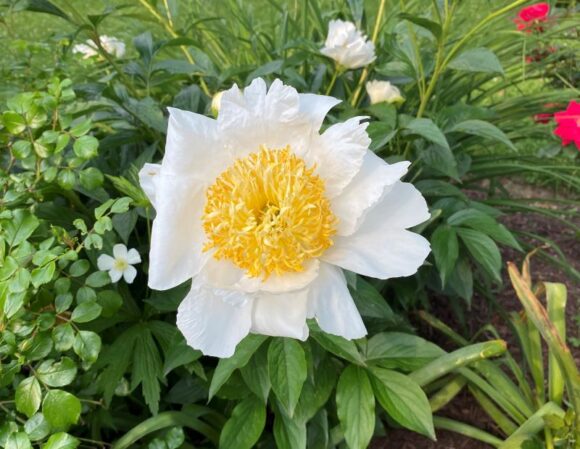
In November after the first hard frost, cut down peonies to within six inches from the ground and add some composted manure around the base of the plant.

SIGNS OF FROST

You can foretell a hard frost when you notice the afternoon temperature falling fast under a clear sky.  Assess the wind, by taking a long strip of plastic, like a shopping bag from the supermarket, and hang it from a tree branch. If the bag flutters about a foot in either direction, you do not have to worry about frost, but if it blows vigorously then frost is on the way.  If you still have plants in the garden that are of concern, cover them with salt hay, newspapers or light weight old quilts and put a brown paper bag from the grocery store over smaller plants like herbs, anchored down with rocks.      

Your houseplants should be indoors by now, following their summer sojourn outdoors. Wash the pots thoroughly and add fresh potting soil.  Then replant the plant at the same depth it was at originally and put in the sink or shower and allow water to wash the foliage and water the plant well.  If the plant has outgrown its pot, transplant it to the next size clean pot, only one and a half inches larger.

If you have any gardening questions, feel free to email me at MaureenHaseleyJones@gmail.com  and I will see you in your garden again later in November.

About the author: Maureen Haseley-Jones is a member of a family of renowned horticultural artisans, whose landscaping heritage dates back to the 17th century. She is one of the founders, together with her son Ian, of, The English Lady Landscape and Home Company. Maureen and Ian are landscape designers and garden experts, who believe that everyone deserves to live in an eco-conscious environment and enjoy the pleasure that it brings. Maureen learned her design skills from both her mother and grandmother, and honed her horticultural and construction skills while working in the family nursery and landscape business in the U.K. Her formal horticultural training was undertaken at the Royal Botanic Gardens at Kew in Surrey.

A View from My Porch: Bumble Bee Economics

Prologue:

Christina and I both grew up in homes that observed meatless Fridays, which lasted until the Second Vatican Council; after which Pope John XXIII, seeking to modernize the Church, enacted several reforms, which included an end to both Latin services and meatless Fridays.

However, in deference to Christina’s sense of nostalgia for life before the Vatican Council, we still occasionally have tuna melts for dinner on Fridays. I am glad that she is not nostalgic for creamed tuna and peas on toast, any variations of tuna casserole, or fish sticks. 

This essay is not about the popular recipes of the 1950s and 60s. Rather, I am reviewing an economic and retail commodities practice that emerged over the last few decades; and which really became evident to me when I realized that my tuna salad now required less mayo, diced celery, onion, and pickle relish per drained can of Bumble Bee tuna than it did in the past. 

Shrinkflation:

Some companies have reduced the size of their products in order to offset price increases that would have otherwise occurred as a result of inflation or increased production and materials costs. This practice, which crosses countries and industries, is referred to as “shrinkflation”, and was first labeled as such by economist and presidential advisor, Philippa Malmgren.

Accordingly, instead of substantially increasing the price of a product, which would be readily apparent to buyers, manufacturers reduce the size, but might maintain the original price and original “look and feel” on the store shelf.

In these cases, the retail price of the product might not increase, but the price per unit of weight or volume does. The phenomenon has become quite common in the food and beverage industries. Note that I use some recognizable brand names below as examples that illustrate this economic concept. However, I have no financial interest in any of them beyond that of a super market customer.  

Tuna School:

There are two main varieties of tuna in grocery stores; “light” tuna, largely skipjack, and “white” tuna, primarily albacore; and both may be packed in either oil or water. According to the USDA, one-half cup of canned tuna in oil contains 145 calories, while a half cup in water has only 66 calories.

The “Daily Beast” reported in 2017 that “gone are the days of the six-ounce can of tuna, leaving buyers and sandwich lovers outraged.” Most brands are now 5 oz “net weight”, which actually includes the water or oil in which they are packed. Further, labels now indicate a “drained weight” of 4 oz in that 5 oz. can! 

According to the National Fisheries Institute, Americans eat about a billion pounds of canned and pouched tuna every year; about one-third of the world’s consumption; and so, these small weight reductions really add up. 

Coffee:

My parents probably included a “one pound” can of coffee on their shopping lists for brewing in their home percolator; — possibly “Maxwell House” or “Chase and Sanborn”.   With the exception of the occasional thermos-full, they probably consumed their “cuppa(s) joe” mostly at home. They did not enjoy the convenience or ambience of “Starbucks” or “Dunkins”. 

In 1993, American news commentator, Andy Rooney, continued his earlier investigation of the practices of “corporate coffee” and reported that, “in 1988 ‘Chock Full O’ Nuts’ had not only reduced the amount of coffee in their one pound can, but they’d also reduced the size of the print that indicated how much is inside.”

His 1993 update reported that “it’s now down to 13 ounces. If they’re not going to put a pound in it, they should at least use a smaller can.” He continued “Maxwell House still says it’s good to the last drop”. Maybe so, but there have been fewer and fewer drops over the years.” 

In a recent trip to our local super market, I noticed that both Maxwell House and Chase and Sanborn are now only 10.5 ounces.

Mr. Rooney is no longer with us.

The Ice Cream Chronicles:

Breyer’s, founded in 1866 in Philadelphia, is the oldest ice cream company in the United States. They incorporated in 1908, and remained  independent until their 1926 sale to the National Dairy Products Corporation/Sealtest, which became “Kraftco” in 1968; and eventually sold its ice cream brands to Unilever, the largest producer of soap in the world. 

Breyers downsized their half-gallons from 64 to 56 ounces, and then again, in 2008, to 48 ounces. They then went on to reformulate their products. Their new product is no longer even called “ice cream”, which is required by the USDA to contain at least 10 percent milk fat, but is now “frozen dairy dessert.” Breyers also removed their “all natural” from their cartons. Forty percent of Breyers’ production is now “frozen dairy dessert”. Many other ice cream producers have converted to 48-ounce cartons, and also offer frozen dairy desserts as an alternative to real ice cream. 

Of note, Ben Cohen and Jerry Greenfield still produce their ice cream in pint cartons that contain a full 16-ounces of ice cream. Their “New York Super Fudge Chunk” flavor is a staple in our house; and Christina will occasionally treat herself to a heaping teaspoon for dessert. 

Unfortunately, the Haagen Dazs “pint” is now 14 ounces.

Shrinkflation Innovation:

I believe that a little “sleight of Hand is required to make “shrinkflation” profitable for the manufacturer.  For example, if the “look and feel” of the downsized can of tuna bears a strong resemblance to the original 6 ounce can, you’re probably less likely to stop in the middle of the aisle and read the label. The new Breyers carton looks a lot like the original black half gallon carton. 

If you check the bottom of your peanut butter container, you’ll notice a dimple. The producers of Skippy peanut butter added a small indentation to the bottom of their jars in 2009. Originally 18 ounces, this subtle change reduced the weight to 16.3 ounces. The dimple was adopted by most manufactures of peanut butter.

Breakfast cereals have appeared to wax and wane by a few fractions over the past several years; and cereal boxes have changed dimensions. 

Companies did not change the height or width of the box, just made it thinner. Consequently, cereal boxes actually contain less cereal; but on the shelf, with the unchanged front panel facing out, they look the same.

Some Thoughts:

I guess that I can summarize this essay with “caveat emptor”, which is Latin for “let the buyer beware”.  As I recall, it’s the principle that the buyer alone is responsible for checking the quality and suitability of goods before a purchase is made. 

However, according to a Harvard study, most consumers would rather get less than pay more. In investigating this essay, I began reading the conclusions  of Edgar Dworsky, a consumer advocate and former assistant attorney general in Massachusetts,  who has documented shrinkflation on his “Consumer World” website for years.

Sources: 

  • Chernev, Alexander. “Customers Will Pay More for Less”. Harvard Business Review. 06/2012.
  • Dua, Shrey. “What Is Shrinkflation? 5 Examples in 2022”. 06/13/2022. Investor Place
  • Dworsky, Edgar. “Consumer World Newsletter” Several Dates. 
  • Malmgren, Philippa. “Signals: How Everyday Signs Can Help Us Navigate the World’s Turbulent Economy”. Weidenfeld & Nicolson. (2016).
  • Rooney, Andy A “Pound of Coffee?” 03/09/ 2003. CBS “Sixty Minutes”.
  • Durbin, Dee-Ann. “No, you’re not imagining it — package sizes are shrinking” June 8, 2022. Associated Press.
  • Sherman, William. “Tuna Shrinkage: Cans Now Five Ounces, More Expensive”.  07/14/2017. The Daily Beast
  • Vosding, Adam. “Americans consume a whopping amount of canned tuna each year.” 02/24/2022. Mashed. com
Tom Gotowka

Editor’s Note: This is the opinion of Thomas D. Gotowka.

About the author: Tom Gotowka is a resident of Old Lyme, whose entire adult career has been in healthcare. He will sit on the Navy side at the Army/Navy football game. He always sit on the crimson side at any Harvard/Yale contest. He enjoys reading historic speeches and considers himself a scholar of the period from FDR through JFK. A child of AM Radio, he probably knows the lyrics of every rock and roll or folk song published since 1960. He hopes these experiences give readers a sense of what he believes “qualify” him to write this column.