Driving to Hartford the other day (no, you cannot really get there by train) I saw a beautiful sight: hundreds of trucks! Yet, motorists hate trucks and mistakenly blame them for traffic congestion and accidents that cause hours of delays.
Readers of this column know I’m a “rail guy” and would love to see freight trains replace trucks, but that ain’t gonna happen anytime soon. But as motorists we should not blame truckers for traffic woes of our own creation.
Check the facts and you’ll find most highway accidents are caused by motor cars, not the trucks.
Do trucks drive too fast? Sure, but don’t we all? Next time you’re on I-95, check who’s in the high-speed left lane and you’ll see cars, not trucks.
Should there be better safety inspections of trucks? Absolutely! But for every over-weight truck or over-worked truck driver, there are doubtless hundreds of unsafe cars and equally road-weary warriors behind the wheel whose reckless disregard endangers us all.
Truckers drive for a living. They are tested and licensed to far more rigorous standards than anyone else. And because they drive hundreds of miles each day, overall I think they are far better drivers. When’s the last time you saw a trucker juggling a cellphone and a latte like some soccer moms?
And remember … they’re not out there driving their big-rigs up and down the highway just to annoy us. We put those trucks on the road by our voracious consumption patterns. Every product we buy at stores large and small, including the very newspaper or iPad you hold in your hand, was delivered by trucks. Want fewer trucks on the road? Just stop buying stuff.
By definition, trucks are high-occupancy vehicles. Compare the energy efficiency of a loaded truck delivering its cargo to you in your “SOV” (single occupancy vehicle), even if it is a hybrid. Only rail offers better fuel efficiency.
Why are trucks jamming our highways at rush hour? Because merchants require them to drive at those times to meet the stores’ delivery timetable. If big-box stores and supermarkets only took truck deliveries in the overnight hours, our highways would flow much better at rush hour.
Truckers must use the interstates while passenger cars can chose among many alternate routes. Why is the average distance driven on I-95 in Connecticut just 11 miles? Because most of us drive the ‘pike for local, not interstate trips.
If we were smart enough to “value price” our highways (i.e., return tolling), we’d see fewer vehicles of all kinds on I-95, and those that were willing to pay for the privilege of motoring there would get real value in a faster ride.
I’m hardly an apologist for the trucking lobby. But neither is it fair for us to blame anyone but ourselves for highway safety and congestion. It’s the SOV crowd, not the truckers, who are to blame.
Let’s be honest about this mess of our own making and stop trying to blame truckers as our scapegoat. As the great philosopher Pogo once put it, “We have met the enemy and he is us!

Jim Cameron
About the author: Jim Cameron is founder of The Commuter Action Group, and a member of the Darien RTM. The opinions expressed in this column are only his own. You can reach him at CommuterActionGroup@gmail.com
For a full collection of “Talking Transportation” columns, see www.talkingtransportation.blogspot.com
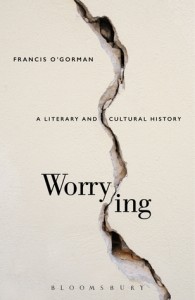 “What if … ?” This is the key question that confronts all worriers, their dominant question about an ever-uncertain future. Professor O’Gorman, who teaches at the University of Leeds (U.K.) readily admits he is a worrier, and, in this slim volume (163 pages) he deftly probes, with humility plus good humor, the various definitions, strategies, relevant observations, advantages, and consolations, concluding with some fatalism that there may be little he can do about his condition. He actually begins with his end, “If we can’t ‘cure’ worry, we can venture to understand it – for better or worse.”
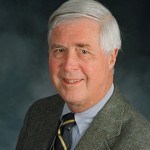 About the Author: Felix Kloman is a sailor, rower, husband, father, grandfather, retired management consultant and, above all, a curious reader and writer. He’s explored how we as human beings and organizations respond to ever-present uncertainty in two books, ‘Mumpsimus Revisited’ (2005) and ‘The Fantods of Risk’ (2008). A 20-year resident of Lyme, he now writes book reviews, mostly of non-fiction that explores our minds, our behavior, our politics and our history. But he does throw in a novel here and there. For more than 50 years, he’s put together the 17 syllables that comprise haiku, the traditional Japanese poetry, and now serves as the self-appointed “poet laureate” of Ashlawn Farms Coffee, where he may be seen on Friday mornings. His wife, Ann, is also a writer, but of mystery novels, all of which begin in a bubbling village in midcoast Maine, strangely reminiscent of the town she and her husband visit every summer.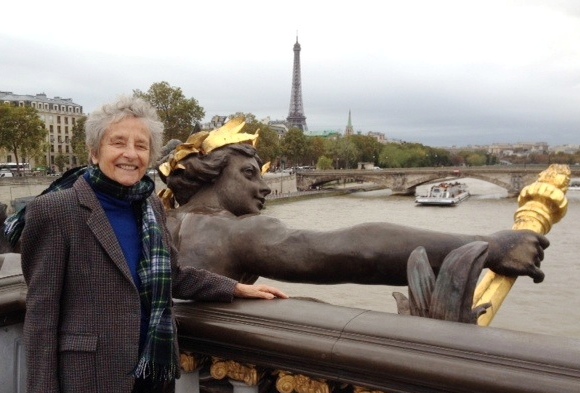

 About the author: Nicole Prévost Logan divides her time between Essex and Paris, spending summers in the former and winters in the latter. She writes a regular column for us from her Paris home where her topics will include politics, economy, social unrest — mostly in France — but also in other European countries. She also covers a variety of art exhibits and the performing arts in Europe. Logan is the author of ‘Forever on the Road: A Franco-American Family’s Thirty Years in the Foreign Service,’ an autobiography of her life as the wife of an overseas diplomat, who lived in 10 foreign countries on three continents. Her experiences during her foreign service life included being in Lebanon when civil war erupted, excavating a medieval city in Moscow and spending a week under house arrest in Guinea.
 These luxurious objects make travel by air, train or sea glamorous and modern. The visitor rides an old-fashioned, wood-paneled train and feels transported into the “Out of Africa” world of Karen Blixen, as the Kenya savannah speeds outside the windows. Several pieces of the Vuitton family’s private luggage — first seen by the public at the 1900 Exposition Universelle (World Fair) — are scattered on sand dunes, evoking the beautifully photographed scene of a couple riding in the desert near the Pyramids in the 1978 Agatha Christy’s movie “Death on the Nile.”