Letter From Paris: Madrid and the Incredible Wealth of its Museums

Nicole Prévost Logan

Nicole Prévost Logan

The silent crowd stands with emotion as it would in a cathedral, keeping respectfully a few feet away from “Guernica” – the huge (11 by 27 ft. ) scene painted by Pablo Picasso in 1937 after the bombings by the Nationalist forces led by General Franco of the Basque village of Guernica.

A weekend spent stomping the art collections of Madrid is mind-boggling.  Spend six hours a day and you will only have a glimpse at the Thyssen museum, the Prado, the house studio of Sorolla and the Reina Sofia modern art museum.

Baron Hans Heinrich Thyssen-Bornemisza and his son Heinrich had an unusual flair when they selected outstanding works of art in the 1920s and 1930s to create one of the world’s richest private collections at the Thyssen.

Some of the early masterpieces there include, “The portrait of Giovanna degli Albizzi Tornabuoni” (1480), which is a beautiful example of the work of Florence Quattrocento, showing the idealized profile of a woman. “A young man in a landscape” was painted by Vittore Carpaccio, probably from the Venetian school.  Nature is codified with each animal having a symbolic meaning related to good and evil.

In his “Jesus among the doctors” (1506), Albrecht Dürer – the most important representative of the German Renaissance – depicts the 12-year-old Jesus surrounded by a group of old men.  Some of them have been touched by grace while others have sin written all over their ugly faces, hands like claws threatening the child.   In The “Portrait of a lady” (1530?) painted by Hans Baldung Grien – the remarkable disciple of Dürer – the influence of Cranach the Elder is noticeable in the rendering of the decorative elements of the dress, necklaces and large hat with feathers of a supremely elegant model.

Flanders – or modern Belgium and Netherlands – was part of Spain in medieval times and the Prado has many Flemish paintings, which reflect the highly sophisticated culture of trading towns like Ghent or Bruges.  Jan van Eyck, Rogier van der Weyden, Gerard David or Hans Memling are the best representatives the 15th century “Northern Renaissance.”

Contacts were frequent between artists who traveled from the “Low Countries” of Northern Europe to Italy.  Unlike the Italians who painted with tempura and an egg base applied over a thin layer of wet plaster called “gesso,” Flemish painters used oil directly on panels of wood without knots, such as mahogany or oak.
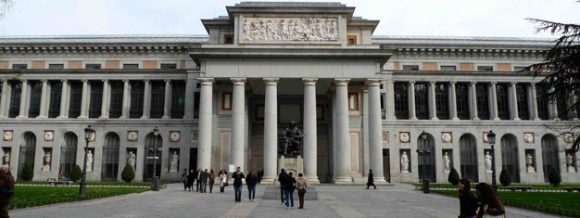
The Prado Museum in Madrid, Spain.

The Prado Museum in Madrid, Spain.

The “Garden of Delights” by Hieronymous Bosch is one of the highlights of the Prado — it is a display of amusing, bawdy or frightening details intended to give a didactic message to the population of his time.  The Flemish landscape painter Joachim Patinir (1480-525) offered panoramic views, with details at some times naturalistic, and at others, fantastic.  Instead of using linear perspective, which Florentine artists had mastered at that time, his way of showing distance was by drowning the landscape in bluish colors.

One room of the Prado is turned into a gallery of family portraits of the Spanish dynasty of the Habsburgs.  An equestrian painting by Titian of Charles V (1500-1558) at the battle of Mulhberg shows the most powerful sovereign in the world.  His kingdom went from the North Sea to the Mediterranean.  Velasquez painted many of his descendants: Philip II, Philip III, Philip IV and his son, the young prince Balthazar Carlos, riding a frisky horse.  His death, at age 17 from smallpox was a tragedy.  And there is poor Charles II, the end of the Habsburg dynasty, who was a total mental and physical disaster because of repeated consanguine marriages.

“Las Meninas”  (ladies in waiting), also by Velasquez, is one the most famous paintings ever.  It is a complex composition, which has puzzled art historians through the centuries.  At the center stands the five-year-old infanta Margareta Teresa, Philip IV’s daughter. Velasquez is looking at us and working on a huge painting, which he never painted.  The infanta’s parents are not far away and we see their reflection in a mirror.  There are two sources of light, which is quite unusual.  In 1957, inspired by the masters of the past, Picasso tackled the deconstruction of “Las Meninas,” particularly of the dog.

Velasquez (1599-1660) was the leading painter of the Spanish “Golden Age,”  during the Baroque age which lasted until 1690.  As a court painter, he had an immense influence living and working in the el-Escorial palace and was not only honored as an artist but also as the curator of the Kings’ art collections.

The love for animals is strong in Spanish painting.  Just two examples:  “Agnus Dei”, by Zurbaran (1640) showing a lamb with its  four legs garroted is probably the most heartbreaking sight in the Prado, with the animal accepting his fate.  The other one is a dog by Goya.  In an undefined brownish background of sand and sky, a dog is looking in panic at his master as he is being pulled down by quicksand.

It was not until 1840 that Spanish art began to be known in France.  The Pyrenees constituted an insurmountable barrier separating Spain from the rest of Europe.  In 1835, French King Louis Philippe sent Baron Isidore Taylor to Spain to acquire some Spanish paintings intended for the future Galerie Espagnole or Spanish Gallery at the Louvre.  After his visit to Spain in 1865, Manet said, “the scales fell off my eyes.”  The Spanish influence on Manet and Courbet is clear, especially their use of black.

Beside the works of the well-known artists like Miro, Dali or Juan Gris, the presence of Ignacio Zuloaga (1870-1945), Joaquin Sorolla (1863-1923), Santiago Rossignol (1861-1931), and Ramon Casas (1866-1933) at the Reina Sofia museum attests to the importance of Spanish contemporary art.
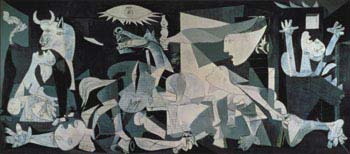
'Guernica' by Pablo Picasso is one of the most famous paintings in the world.

‘Guernica’ by Pablo Picasso is one of the most famous paintings in the world. It hangs today in the Reine Sofia Museum in Madrid.

In the attic of the old convent of Grands Augustins, near the Seine, Picasso completed  “Guernica” – probably the most important artistic statement of the 20th century against war.  The Spanish civil war from 1936 to 1939 left 500,000 dead.  Dora Maar, his companion, photographed each stage of the work , leaving a unique document on the creative process of the artist.

The composition is a frieze, powerful, fluid, easy to read and devoid of any narrative. The horse and the bull – the main actors of the bullfight about which he was so passionate – are treated like human characters.  The horse underwent many changes from deep suffering to the defiance he shows in raising his head.  The bull is aloof and protective of the population.  The dead warrior lying on the ground has the profile of Marie Therese Walter, his previous companion.  To balance the duo of bull and horse, Picasso created a screaming mother, head thrown back, with a tongue like a dagger, her dead child hanging limp from her arm.

Painted in May and June of 1937, “Guernica”  traveled the world, stayed several years at MOMA at the request of Picasso, then returned to Spain in 1981 and hangs today in the Reina Sofia museum of Madrid, never to be moved again.

Editor’s Note: This is the opinion of Nicole Prévost Logan.
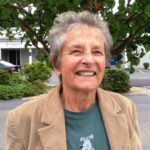
Nicole LoganAbout the author: Nicole Prévost Logan divides her time between Essex and Paris, spending summers in the former and winters in the latter. She writes a regular column for us from her Paris home where her topics will include politics, economy, social unrest — mostly in France — but also in other European countries. She also covers a variety of art exhibits and the performing arts in Europe. Logan is the author of ‘Forever on the Road: A Franco-American Family’s Thirty Years in the Foreign Service,’ an autobiography of her life as the wife of an overseas diplomat, who lived in 10 foreign countries on three continents. Her experiences during her foreign service life included being in Lebanon when civil war erupted, excavating a medieval city in Moscow and spending a week under house arrest in Guinea.
Letter from Paris: Moderate, Radical Islamists in France — a Difficult Cohabitation

Nicole Prévost Logan

Nicole Prévost Logan

Introduction 

For years the buzz word in France has been “amalgam.” On ne doit pas faire l’amalgame entre Islam modéreé et Islamisme radical. (One must not confuse moderate Islam and radical Islamism.)  After the repeated terrorist attacks in France and Belgium and with the discovery of other jihadist enclaves, it is hard to keep making that distinction.  The voice of moderate Muslims has been barely audible lately.  Until they start speaking with a stronger voice, the cohabitation within our democratic and secular society is becoming more difficult.

Belgium

Belgium was the last victim of terrorist attacks when, on March 22, 34 people died at Zaventem airport and at Malbeek metro station (close to the European Commission offices) combined.

Why Belgium?  For the past two decades, it has been a divided country between Flemish and Walloon languages and cultures.   It remained without a central government for 18 months.  How can such country produce six parliaments and six governments? asked David Van Reybrouck, a Dutch-speaking Belgian writer in Le Monde dated March 28.  The author of the article adds with irony, “… and the icing on the cake is the creation by the government of a Commission communautaire commune” (joint Commission of communities.)

It was in Molenbeek that the four and a half month-long chase of Salah Abdeslam, who was involved in the Nov. 13 Paris attack, ended.  Molenbeek is one of  the 19 Brussels municipalities — it has a population of 93,000 with 80 percent of them Muslim, 56 percent of them unemployed and 24 mosques.  After the closing of the coal mines and the steel plants in northern France in the 1980s and 1990s, many of the workers  emigrated to Belgium.  Molenbeek is a typical agglomeration of a second generation Maghreb population – more specifically of Rifains, coming from the Rif mountains of Morocco.  It constitutes almost a self-ruled community, many of whose members are related and even siblings.  No better safe haven for people running away from the law. 

Belgium has been described as the “ventre mou” (litterally the soft belly), in other words, the weak link, of Europe. Patrick Kanner, one of the French ministers made the chilling remark, “but there are tens of Molenbeeks in France “.

France on the front line

France is, in fact, on the front line of the confrontation with radical Islamism.

The weekly Le Point‘s issue of March 24 describes the long history of France’s interaction with the Arabs. It started with the 732 AD defeat of the Saracens at Poitiers by Charles Martel, grandfather of Charlemagne. Then came The Crusades and subsequently Napoleon Bonaparte’s expedition to Egypt in 1798.  The French began their conquest of Algeria in 1830 and made it a part of France.  The country gained its independence after the bloody war of  1954-1962.  France established protectorates in Tunisia in 1881 and in Morocco in 1912 until 1955.  At the present time, France has become the “gendarme” across the Sahel region, ready to deploy its forces to stop extremist groups. 

Gilles Kepel, professor at Sciences Po and an authority on Islam, has  just published “Terreur dans l’Hexagone – Genèse du Dhihad Français,” in which he stresses the deep-rooted antagonism of the North African population for the former colonial power and the existence of a specific French jihadism.  Acts of terrorism in France are accomplished by individuals with French nationality. The country holds the sad record of having the highest number of jihadists in theEuropean Union who have gone to Syria. 

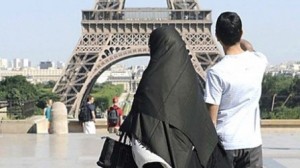
Eiffel-Tower-322x252Kepel, sees a correlation between politics and the spread of Islamism in France.  He remarks that, during the 2012 elections, François Hollande benefited from 93 percent of the Muslim electorate voting for him.  Kepel believes, as most other Islam scholars do, that the problem our society is facing is cultural.  He criticizes the unpreparedness of the political elites for the ongoing debate about religions.  He deplores the fact that insufficient public funds have been allocated both to research and Middle East studies.
Mohammed Sifaoui is a brillant French journalist born in Algeria, who is quite forthright in expressing his opinions.  He advocates a relentless reprisal against the preachers of violence in the 2,000 mosques and Koranic schools of France.  Sifaoui’s opinion is that we have to abandon the attitude that only the FN (Front National party) has a right to fight back against the Islamists.  Besides, he says, we should stop treating these people as victims from discrimination.

Daesch

After the fall and occupation of Fallouja in Irak in 2014, Abou Bakr al-Baghdadi became the self-appointed ruler of the Islamic State organization or Daesch. (The “ch” sound stands for “sham” meaning Levant in Arabic ) The objective of this organization is to re-create a caliphate reminiscent of the golden years of  the 661-750 AD Ommayad and 750-1258 AD Abbasid caliphates. The totalitarian organization banished the Wahhabism and any other doctrines of Islam and has broken all ties with Al-Qaeda.  Al-Baghdadi gave his founding speech at the great mosque of Mossoul, dressed in black like the Abbasids. 

Mathieu Guidère, professor of Islamic Studies at the University of Toulouse 2, a learned scholar in geopolitics with a PhD in the Arabic language, believes that the objective of Daesch is to build a state, anchored solidly in a territory, with the elimination of the 1916 Sykes-Picot borders.  Its aim is also to break up the cohesion of Europe.  So far, we are still only at the initial stage of “collateral terrorism,” comments Guidère. 

The riposte

Alain Bauer, professor of  applied criminology at the Conservatoire  des Arts et Metiers, former advisor to Nicolas Sarkozy and Manuel Valls on security and counter-espionage, says, “The problem is that we seem to have too much information and not enough analysis.  We still do not have the ability to connect the dots.  We have a brain and two ears and four ears will not help ” He concludes, “What we need is a return to Human Intelligence.”  Bauer and Guidère agree that there should be a European Intelligence agency but several states oppose it for fear of losing part of their sovereignty.  The creation of a PNR (personal name register) still awaits a vote.

Euro 2016 – the European soccer championship – will be held in France in June. This means, on the one hand, a great deal of excitement for millions of spectators, but on the other, an equal — or even greater amount — of nervousness for the security forces.

Editor’s Note: This is the opinion of Nicole Prévost Logan.

Nicole LoganAbout the author: Nicole Prévost Logan divides her time between Essex and Paris, spending summers in the former and winters in the latter. She writes a regular column for us from her Paris home where her topics will include politics, economy, social unrest — mostly in France — but also in other European countries. She also covers a variety of art exhibits and the performing arts in Europe. Logan is the author of ‘Forever on the Road: A Franco-American Family’s Thirty Years in the Foreign Service,’ an autobiography of her life as the wife of an overseas diplomat, who lived in 10 foreign countries on three continents. Her experiences during her foreign service life included being in Lebanon when civil war erupted, excavating a medieval city in Moscow and spending a week under house arrest in Guinea.

Reading Uncertainly? ‘The Court and the World’ by Stephen Breyer

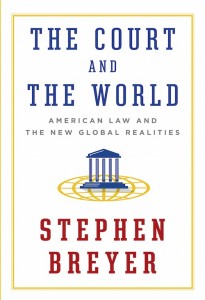
The_Court&the_WorldShould our Supreme Court be a pragmatic, flexible, problem-solving institution or should it continue to rely on the distant past to address today’s challenges?
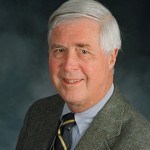
Stephen Breyer, perhaps our most articulate and thoughtful Supreme Court Justice, discusses in his latest study “the new challenges imposed by an ever more interdependent world,” asking how we should “interpret” our 18h century Constitution in the 21st century. He is both concise and compelling on the general themes of the rule of law and “the need for courts to listen to ‘many voices ‘. “

The judge suggests we discontinue our perpetual deification of the Declaration of Independence, Constitution, and its Bill of Rights, which may well have led to numerous serious mistakes: the ethnic cleansing of native Americans and war-mongering (citing the Mexican-American War, the Spanish-American War, the Vietnam War, and the Iraq War II, among others). Is, for example, our foreign policy, including going to war and security, solely the responsibility of the executive and legislative branches of government, and not the judiciary? Is this an outmoded 18th century idea?

Breyer goes on to dissect the “worst Court decisions in U. S. history:” Dred Scott (confirmation of slavery), Plessy vs. Ferguson(confirmation of state racial segregation), and Korematsu (approving the interning of Japanese-Americans).  These show we require some external ideas to modify our domestic prejudices.

Since 1787 we’ve entered into many international agreements, such as the Geneva Convention, the United Nations, NATO, and the World Trade Organization.  “In an intensely interdependent world facing global threats that are likely to last a generation or more (particularly terrorism), special security needs are no longer as intermittent or short-lived as they once were.” Our Afghanistan War is the longest in our history …

Add to this the growing complexity of international commerce: “ … the reality of modern-day commerce: national markets are now so interconnected and integrated that the most ordinary commercial transactions can involve a host of different activities and entities across the globe.” This leads to a “judicial need for information about foreign practices, rules, laws, and procedures.” We should try to stimulate the “laws of different nations” to “work together in harmony.” Better to argue than shoot each other.

Judge Breyer concludes, “Today’s Court should not base its answer to the kinds of questions illustrated here by reference solely (my italics) to the facts and conclusions of eighteenth century society.” The goal of the “rule of law” is to acknowledge that it is always in flux: “ … the rule of law prevents the opposite – namely the arbitrary, the autocratic, the despotic, the unreasonable, the dictatorial, the illegal, the unjust, and the tyrannical.” The reviewer in The New York Times had a succinct observation — “Democracy has never been a nativist straitjacket.”

History is the “sustained struggle against arbitrariness.”  So the good judge gives us no conclusion. “There are no easy answers to this question.” We must continue “our conversations,” as our Court does.

A most thoughtful and stimulating read.

Editor’s Note: ‘The Court and the World’ by Stephen Breyer is published by Alfred A. Knopf, New York, 2015

Felix Kloman_headshot_2005_284x331-150x150About the Author: Felix Kloman is a sailor, rower, husband, father, grandfather, retired management consultant and, above all, a curious reader and writer. He’s explored how we as human beings and organizations respond to ever-present uncertainty in two books, ‘Mumpsimus Revisited’ (2005) and ‘The Fantods of Risk’ (2008). A 20-year resident of Lyme, he now writes book reviews, mostly of non-fiction that explores our minds, our behavior, our politics and our history. But he does throw in a novel here and there. For more than 50 years, he’s put together the 17 syllables that comprise haiku, the traditional Japanese poetry, and now serves as the self-appointed “poet laureate” of Ashlawn Farms Coffee, where he may be seen on Friday mornings. His wife, Ann, is also a writer, but of mystery novels, all of which begin in a bubbling village in midcoast Maine, strangely reminiscent of the town she and her husband visit every summer.


Talking Transportation: Why There’s No Wi-Fi On Metro-North

wifi-train-600x397

A few weeks ago a friend was showing me his new Chevy Volt. Not only does the hybrid-electric car get 42 mpg, it has its own Wi-Fi hotspot. That’s right. The car is a Wi-Fi device, so kids in the backseat can watch YouTube.

Days later we were on a road-trip from the Maryland shore when we caught the Lewes – Cape May ferry. Onboard the vessel they offered passengers free Wi-Fi.

Airlines have offered flyers Wi-Fi for years now. Discount bus lines like Megabus have free Wi-Fi. Even Connecticut’s new CTfastrak commuter bus system to Hartford gives its passengers free Wi-Fi.

But there is no Wi-Fi on Metro-North. And the railroad says none is planned, even though the new M8 railcars are ready for the needed gear. And therein lies a story.

Offering Wi-Fi on a moving vehicle usually involves cellular technology. That’s how the first airline Wi-Fi was offered by companies like Go-Go, though JetBlue and Southwest now rely on proprietary satellite systems, which are much faster (up to 30 mb per second.)

When Amtrak first offered Wi-Fi on its Acela trains between Washington and Boston, they immediately had bandwidth issues. So many passengers were using their cell phones and tablets, speeds dropped to 0.6 mb per second and the complaints came pouring in.

That’s part of the reason that Metro-North is reluctant to offer Wi-Fi: if an Acela train carrying 300 passengers can’t handle the online load, how could a 10-car train carrying a thousand commuters? The railroad has enough complaints as it is.

Metro-North’s experience with on-board communications has left them feeling burned. Remember years ago when the railroad installed pay-phones on the trains? Great idea, until a year later when costs came down and everyone had their own cell phone. Those pay cell phone booths went unused and were eventually removed.

Back in 2006 then-President of MNRR Peter Cannito said Wi-Fi would be built into the new M8 cars, both for passengers and to allow the railcars to “talk” to HQ by beaming diagnostic reports. The railroad issued an RFP for ideas and got a number of responses, including from Cablevision, with whom they negotiated for many months. They even initiated on-train testing of Wi-Fi gear on one railcar.

But Metro-North insisted any Wi-Fi would have to cost it nothing, that all the expense and tech risk would be borne by Cablevision or its customers. And that’s where the negotiations deadlocked.

Today the railroad sees Wi-Fi as just a convenience. Smart phones and cell-card configured laptops can access the internet just fine, they say, using cellular technology. But to their credit the railroad is trying to get cell providers to fill in the coverage gaps, for example, in the tunnels and at GCT.

So don’t look for Wi-Fi anytime soon on America’s biggest and busiest commuter railroad. It’s not seen as a necessity … except perhaps by its passengers who really have no other transportation option.

Jim CameronAbout the author: Jim Cameron is founder of The Commuter Action Group, and a member of the Darien RTM. The opinions expressed in this column are only his own. You can reach him at CommuterActionGroup@gmail.com For a full collection of “Talking Transportation” columns, visit www.talkingtransportation.blogspot.com
Letter From Paris: Immortal Chekhov Rises Again in Paris

Nicole Prévost Logan

Nicole Prévost Logan

Chekhov will never die!

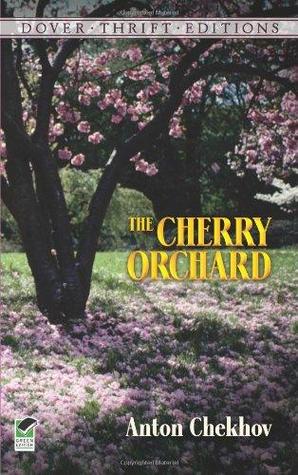
This winter four of his plays appeared on the Paris stages: two short one-act plays (“The Swan” and “The Bear”) at the Studio de la Comédie Française, “Three Sisters” at theTheatre de la Colline and “The Cherry Orchard” at the Theatre de l’Ile Saint Louis-Paul Rey. I chose the latter.

The first time I saw a play by Chekhov was at the Moscow Art Theater (MXAT) in downtown Moscow in the mid 1960s. The production and the reception by the public were electric. In those days, theater was the only possible evasion from a drab and controlled life for Soviet citizens. The audience knew by heart and relished every single line beautifully spoken by the adulated actors. Period clothes, settings and furnishing provided an authentic reconstitution of life in a run-down country estate.

What is amazing is that Anton Chekhov’s plays, written under the Tsarist regime, lasted through the Soviet era, although he depicted members of the idle bourgeoisie, about to disappear from the surface of the earth. Other playwrights were not so lucky. Some of the controversial plays – Bulgakov’s for instance – did not make it through censorship and were suddenly removed from Moscow stages.

Chekhov’s universal message explains why his plays still attract huge audiences around the world — in different languages and re-adapted by directors. His “inward-looking” realism came from a traditional line of dramatic art founded by Constantin Stanislavsky (1863-1938), one of the greatest founders of theater staging and philosophy of all times.

The_cherry_Orchard‘The Cherry Orchard,’ created at MXAT in January, 1904, was Chekhov’s last play. Six months later he died in his Yalta “white house.” Obliged to live far away from Moscow, in the warmer climate of the Crimea because of his tuberculosis, it was hard for him to give long-distance stage directions to his high-spirited wife, actress Olga Knipper.

In the play, Liubov Andreevna Ranevskaya, her daughter Ania, age 17, and adopted daughter Varia, age 30, just returned to Russia from five years spent in France. The family was crippled with debts and the creditors were forcing the sale. A retinue of servants, some of them providing a light touch of vaudeville, and penniless hangers-on, are part of the large household.

The main character is Ermolai Alekseevich Lopakhin, full of energy, ideas, and, apparently money. He is trying to convince Liubov Andreevna to sell the estate with the cherry orchard to a developer who will build small houses for vacationers. But she is not interested in money; if things do not work out, she will return to Paris and live off an inheritance. Lopakhin was a slave or “soul” owned by the Liubov’s family. This former muzhik is now rich and ambitious.

His antithesis is Petr Sergueevich Trofimov, the eternal student who lives in a world of noble ideas, philosophy and poetry. He tells Lopakhin, “Soon you will be a millionaire. Sharks are needed also.” Such archetypes exist in many countries.

The Theater of Ile St Louis is the smallest theater in Paris with only 50 seats. The full cast of 12 characters barely fitted on the tiny stage and looked like giants. The set was limited to two benches and the period clothes to the slim laced-up boots of the women. When, at the end of the play, the spectators heard the chain saw felling the cherry trees and noticed the very old servant forgotten in the locked-up house, the emotion was intense.

I went on feeling that emotion while walking along the rushing grey waters of the Seine river.

Editor’s Note: This is the opinion of Nicole Prévost Logan.

Nicole LoganAbout the author: Nicole Prévost Logan divides her time between Essex and Paris, spending summers in the former and winters in the latter. She writes a regular column for us from her Paris home where her topics will include politics, economy, social unrest — mostly in France — but also in other European countries. She also covers a variety of art exhibits and the performing arts in Europe. Logan is the author of ‘Forever on the Road: A Franco-American Family’s Thirty Years in the Foreign Service,’ an autobiography of her life as the wife of an overseas diplomat, who lived in 10 foreign countries on three continents. Her experiences during her foreign service life included being in Lebanon when civil war erupted, excavating a medieval city in Moscow and spending a week under house arrest in Guinea.