

Reading Uncertainly? ‘Divergent Paths – The Academy and the Judiciary’ by Richard A. Posner

Judge and Professor Posner explores the apparent diverging paths of our judiciary, especially the Federal, from the academies that teach our would-be lawyers, some of them advancing to become judges. This is a sobering view. Forgive me for an extensive quote, but it summarizes in one page the 400 pages of his thesis:

“ . . . at this writing the United States exhibits an unprecedented array of failed social systems. The political system is in disarray – Congress is a mess, the executive branch poorly managed. The Supreme Court bears some of the responsibility for congressional malfunction because of its refusal to allow reasonable limitations on campaign expenditures and its refusal to outlaw, as a denial of equal protection of the laws, political gerrymandering.

Likewise in disarray is the medical industry (as in matters of cost and coverage, preventive medicine, and the care of the elderly and the poor); also education (other than in the elite private and public high schools and the elite colleges and universities), public pensions, immigration, federal taxation, and the nation’s transportation infrastructure.

Our prison systems and our criminal laws (especially sentencing) are an international disgrace, and the judges, including federal judges, are complicit. A number of state and local governments are seriously underfinanced. Our foreign and national security policies are pervaded by a degree of indecision unseen since the 1930s. Although admired by most Americans, our armed forces are plagued by serious cost, competence, and leadership problems.

Economic inequality has reached a dangerous level. There are too many guns in private hands. Conflict between religious and secular views on issues of public policy such as abortion, contraception, same-sex marriage, and the teaching of evolution is increasingly bitter. The government cannot get a handle on global warming or environmental regulation generally.

There are sectional tensions, racial and ethnic tensions along with sexual and religious ones, regulatory failures everywhere, bureaucratic incompetence, widespread corruption and fraud both public and private, and a weakening of family structure as reflected in the greatly increased prevalence of single-parent households. One can hardly expect the federal judiciary to be completely immune from so pervasive a national malaise, and it isn’t.

And this analysis was written before the death of Justice Scalia and the election of the loud-mouthed, newly elected president.

Is there any hope for us?

But there is!

From what he calls this gallimaufry (a confused jumble of things), Judge Posner extracts, first, notable deficiencies in our judicial system, followed later by his numerous suggestions for change. He is not an “originalist,” one who puts his faith entirely in earlier mandates such as our Constitution. “As society changes, so must the law,” is his thesis. He also acknowledges his own missteps: “Very wrong was I!” and “I don’t have a solution to this problem.”

At the end of Chapter 6, he summarizes his 55 “problems” and 48 reasonable and doable “solutions.” Best yet is his quote from Oliver Wendell Holmes: “certitude is not the test of certainty. We have been cocksure of many things that were not so  …  And this again means skepticism.” With this admonition in mind, Posner gives us a note of optimism.

Posner attributes much of our judicial problem to the “adversarial” nature of our system, in which lawyers tee off against one another in the courtroom, with judges as observers. He prefers the European “inquisitorial” approach, not in the sense of the Spanish Inquisition, but rather in the sense of judges acting as questioners and researchers, a third voice in the hearings.

He optimistically sees “the law” as a fluid, evolving instrument that “does not have a solid foundation. It is ultimately a collection of rules and procedures, highly malleable, often antiquated, often contestable, often internally conflicted, for managing social conflict – a set of aging, blunt tools.” Both we and the law can and should evolve. That is why we have judges, to help in interpretation.

But I do have a minor qualm with his writing. About halfway through his argument, he suggests a “good judicial opinion requires:

  1. No jargon.
  2. No footnotes.
  3. Forget citation form.
  4. Delete every superfluous word.
  5. Use adverbs and adjectives sparingly.
  6. Avoid section headings.
  7. Be grammatical.
  8. Brevity.
  9. Be candid as well as truthful.”

These are excellent admonitions, straight from Strunk and White’s Elements of Style. But Posner often fails to follow his own advice! Take footnotes, for example. In the 403 pages of his exegesis, he gives us 453 (!) footnotes, one of which is more than a page long. They are useful, perhaps, to legal minds, but to the uninitiated?

He frequently utilizes the word “utilization” instead of the simpler “use.” And he is the archbishop of parenthetical phrases, often inserting two or three within a single sentence (I confess to doing this myself – this one being an example.) His very last and very first sentences include those diverting asides. Am I being too pedantic? No. I fully agree with Posner’s recommendations.

Despite my minor reservations, Judge Posner’s analysis of our aging judicial system should be required reading.

Editor’s Note: ‘Divergent Paths’ by Richard A. Posner, is published by Harvard U. Press, Cambridge 2016.

Felix Kloman

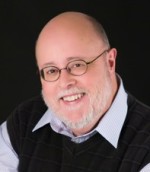
About the Author: Felix Kloman is a sailor, rower, husband, father, grandfather, retired management consultant and, above all, a curious reader and writer. He’s explored how we as human beings and organizations respond to ever-present uncertainty in two books, ‘Mumpsimus Revisited’ (2005) and ‘The Fantods of Risk’ (2008). A 20-year-resident of Lyme, he now writes book reviews, mostly of non-fiction that explores our minds, our behavior, our politics and our history. But he does throw in a novel here and there. For more than 50 years, he’s put together the 17 syllables that comprise haiku, the traditional Japanese poetry, and now serves as the self-appointed “poet laureate” of Ashlawn Farms Coffee. His wife, Ann, is also a writer, but of mystery novels, all of which begin in a bubbling village in midcoast Maine, strangely reminiscent of the town she and her husband visit every summer.

Talking Transportation: Why Metro-North’s ‘Quiet Cars’ Aren’t Quiet

What happens when a good idea goes bad?  Consider Metro-North’s ‘Quiet Car’ initiative.
Sixteen years ago a group of regular commuters on Amtrak’s early morning train to DC had an idea:  why not designate one car on the train as a ‘Quiet Car‘, free from cell phone chatter and loud conversations.  The railroad agreed and the experiment proved a great success.

Now all Amtrak trains in the Northeast Corridor have a ‘Quiet Car’.  They are a major selling point for taking the train … the chance to nap or read in a quiet environment.

But as early as 2006 when I suggested the same idea to Metro-North, it was rejected outright.  Then serving on the CT Rail Commuter Council, I persisted and finally, in 2011 the railroad agreed to a trial with one car on each rush hour train dedicated to what it called a ‘Quiet CALMmute.’

Almost immediately the plan ran into trouble.  Not because it wasn’t wanted but because it wasn’t enforced.

There were no signs designating which were the ‘quiet’ cars and only occasional PA announcements before departure reminding folks who sat there of the quiet, library-like environment that was expected.  Most of all, many conductors refused to enforce the new rules.  But why?

Conductors seem to have no trouble reminding passengers to keep their feet off the seats, put luggage in the overhead racks or refrain from smoking.  But all that the railroad gave conductors to enforce the ‘Quiet Car’ rules were bilingual “Shhh cards” to give to gabby violators.

It seemed left to passengers to remind fellow riders what a ‘Quiet Car’ was for and confrontations resulted.

This spring the railroad surprised even me by announcing an expansion of the program:  every weekday train, peak and off-peak, would now have two ‘Quiet Cars’!  Two ‘Quiet Cars’ on a 10-car train gives everyone a choice.  That sounds great, but still without signage, education or enforcement, the battles continued.

A commuter recently emailed me about an evening train from Grand Central with a group of rowdy drunks in the ‘Quiet Car’.  When commuters asked the offending passengers to chill out or move their seat, the tipsy  group told the complainer, “screw you.”  The quiet-seeking commuters then asked the conductor for help but he simply declared the train was too crowded and the ‘Quiet Car’ was being eliminated on that run.  “Have fun” he told the drunks.  Really?

On Amtrak trains those violating Quiet Car rules have been thrown off the train and arrested.  Even NJ Governor Chris Christie had to move his seat on an Acela once for yabbering with his staff in the wrong car.

Nobody wants these kinds of altercations on Metro-North.  So why initiate and then expand such a passenger amenity as ‘Quiet CALMmute’ without proper education and enforcement?  A few signs and friendly reminders from conductors should make passengers aware that “train time may be your own time” (as the railroad’s old marketing slogan used to say), but it’s also shared time.

Commuters want ‘Quiet Cars.’  The railroad gave them to us, but until they can get their staff to enforce the rules, consistently, they might as well not exist.

If you’re in a ‘Quiet Car’ and the rules are not enforced, report it to Metro-North on their website complaint form.  If we all raise our voices, we can get some peace a quiet.

Republished with permission of Hearst CT Media.

Jim Cameron


About the author:
 Jim Cameron is founder of The Commuter Action Group, and a member of the Darien RTM.  The opinions expressed in this column are only his own.  You can reach him at CommuterActionGroup@gmail.com

For a full collection of “Talking Transportation” columns, visit www.talkingtransportation.blogspot.com

Letter From Paris: Extraordinary ‘Shchukin Collection’ Currently on View in Paris Attracts Massive Crowds

Nicole Prévost Logan

It is the first time ever that the masterpieces of the Russian art collector Sergei Ivanovich Shchukin have traveled abroad as a collection.  Until now only separate works have been seen in the West.  In the 1979 “Paris-Moscow” major retrospective at the Pompidou Center – a huge exhibition from Soviet state museums –  there was no mention anywhere of the origin of the art works.

It was not until  2010 at the “Matisse Malevich” exhibit held at the Hermitage Amsterdam that the French canvasses were identified as follows: “Origin: Museum of Modern  Western Art, formerly from the collection of Sergei Shchukin.”  So, it is a first to see more than half of the entire collection in Paris today.  Almost unnecessary to say that the astronomical insurance cost covering such important objects could only be afforded by Bernard Arnault, the 14th richest man in the world and CEO of LVMC (Louis Vuitton and Moët and Chandon).*

The Fondation Louis Art Museum in the Bois de Boulogne in Paris where the Shchukin exhibition is currently on display.

The thrill of seeing for the first time works from well-known artists – Monet, Derain, Gauguin, Cezanne, Matisse, Picasso and others – explains why the exhibit is attracting such huge crowds, happy to be in familiar territory.  The well-organized flow of people meanders through the Frank Gehry’s whimsical structure of glass panels seemingly billowing in the wind.  At each of the four levels, one catches spectacular vistas of the Eiffel Tower and Paris with its cluster of skyscrapers in the Defense business district or the vast wooded expanse of the Bois de Boulogne.

The wealthy textile merchant Shchukin was – with his friend and rival Ivan Morozov – the most illustrious Russian art collector at the turn of the 20th century.  He went into exile in France after the 1917 revolution and died there in 1936.  His collection was nationalized  and later divided between the Pushkin museum of Fine Art in Moscow and the Hermitage in St Petersburg, and then vanished into Siberian storage.  During the Cold War, the works were returned to Moscow, but remained in boxes.  By the 1960s, they gradually reappeared.

Shchukin was an avid and methodical collector.  Following the example of his older brothers (in a family of 10), he started collecting in the 1880s.  He acquired  paintings from the leading art merchants in Paris, such as Ambroise Vollard, Durand Rueil or the Swiss  Daniel-Henry Kahnweiler.  He had an exceptional ability to detect talent.  For instance, by including the constructivist Montagne Sainte-Victoire vue des Lauves, 1905, he revealed how well he understood the importance of Cezanne (26 paintings) as the spiritual father of modern art.

The organizers of the exhibit reproduced the way the canvasses were hung in Shchukin’s Moscow residence in a touhe touche fashion, that is touching each other all the way to the ceiling.

‘Pink Studio’ by Henri Matisse, 1911.

He had a special relationship with Henri Matisse and became his sponsor, commissioning  many of his 57 paintings, among them La Danse, the largest (8’6″x 12’10”) and most beautiful version of which is today on view at the Hermitage.  The painting had caused a scandal at the Salon d’Automne of 1910.  The Desserte dominates one of the rooms at the Vuitton exhibit with its decorative floral shapes and fruits scattered on a rich red background of a table dropping vertically and merging with the wall. 

‘Peasants picking apples’ by Natalian Goncharova, 1911.

His acquisition of Picasso’s works (54 canvasses) is particularly interesting.  At first  he was repelled by them, particularly by the cubist period.  Stephane Guegan, French art critic and curator at Orsay, wrote, “Shchukin compared the analytic cubism of Picasso to buckets of crushed glass.”  But gradually, he grew to appreciate the brutal forms,  such as Femme tenant an eventail (woman holding a fan) 1907.  He shared with Gertrude Stein the attraction for the preparatory studies to the seminal Demoiselles d’Avignon, 1907 .

‘Woman with a fan’ by Pablo Picasso, 1908.

Shchukin was eager to show his works and educate the public.  He turned his residence into a museum that was open several days a week.  Among the visitors were the members of the Russian avant garde. They were  stunned by what they saw.  In less than 10 years not only the talented young Russian artists assimilated Western  art but were able to grow from it and create suprematism, neo-primitivism, cubo-futurism, etc. 

The Vuitton exhibit offers a sampling of the works by the extraordinary generation of Russian artists on the eve of World War I : Casimir Malevich, Larionov, Tatlin, Klioune, Rodchenko and the acclaimed female artists: Goncharova, Popova, Rozanova, Exter, Popova, or Udaltsova. 

Shchukin heirs did not try to receive financial compensation for the art taken away by the Soviet government.   All they wanted was to restore their grandfather’s memory,  the recognition for his genius and avoid breaking up the collection among different owners. 

One century later they may have fulfilled their wish. 

Editor’s Notes:
i)   This is the opinion of Nicole Prévost Logan.

ii) *See Nicole Logan’s previous article published  on ValleyNewsNow.com, Jan. 22, 2016.
iii) ‘Icons of Modern Art – The Shchukin Collection’ is on display at the Fondation Louis Vuitton, which is housed in a Frank Gehry building in the middle of the Bois de Boulogne in Paris, France through Feb. 20, 2017.

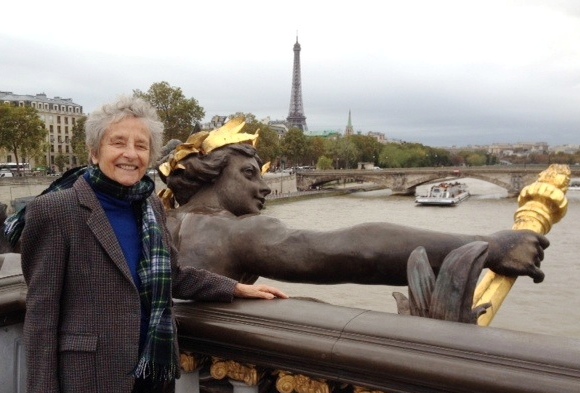
Nicole LoganAbout the author: Nicole Prévost Logan divides her time between Essex and Paris, spending summers in the former and winters in the latter. She writes a regular column for us from her Paris home where her topics will include politics, economy, social unrest — mostly in France — but also in other European countries. She also covers a variety of art exhibits and the performing arts in Europe. Logan is the author of ‘Forever on the Road: A Franco-American Family’s Thirty Years in the Foreign Service,’ an autobiography of her life as the wife of an overseas diplomat, who lived in 10 foreign countries on three continents. Her experiences during her foreign service life included being in Lebanon when civil war erupted, excavating a medieval city in Moscow and spending a week under house arrest in Guinea.
Letter From Paris: A Transition Like No Other … And a French Take on Trump

Nicole Prévost Logan

We Americans are always interested in knowing what the world is thinking of us.  From my listening post in Paris, I can say that for months the Europeans have followed the US presidential elections with fascination.

With only a few days left until Jan. 20, everyone here is watching the transition between a cerebral Democrat president and a “sanguine, non- principled” Republican president-elect, to quote professor Jean Louis Bourlanges during the popular Sunday morning radio talk show Esprit Public. The four participants in the discussion – all representative of the French intellectual elite and well-versed in American affairs – describe what is happening as totally unprecedented.

President Obama is cramming his last days in office with long interviews, articles in magazines, laying out policies to regulate the environment, drilling of oil, or family planning.  Furthermore he just made two important foreign policy decisions.

On Dec. 23, the US abstained in the UN Security Council vote on the 2334 resolution instructing Israel to stop any further settlements on the occupied West Bank and in East Jerusalem.  This represents a striking change from President Obama’s position during his eight-year mandate, especially when, on Sept. 15, he approved the largest ever military assistance package of 38 billion dollars and committed the US for the unusually long period of 10 years.

The reaction here was, why now?  Why so late?  French analysts suggest that Obama wanted to get even with Prime Minister Benjamin Netanyahu for his repeated snubbing.

For instance, on both official visits of the American president to Israel, “by coincidence,” the Israeli government announced the building of more settlements.  But the real slap in the face took place in March 2015 when the Israeli prime minister gave a speech to the joint session of the US Congress, short-circuiting the White House.  The abstention at the Security Council  might be a way to express remorse for the failure to solve the Israeli-Palestinian conflict and an effort to set a garde-fou or safeguard for the future.

On Dec. 30,  President Obama announced the expulsion of 35 Russian “diplomats” for interfering in the US elections by hacking the headquarters of the Democratic National Committee.  His outrage at a foreign power for influencing a democratic process was such that he had to resort to a tool reminiscent of the Cold War.

President-Elect Donald Trump.

As to Donald Trump, the French are literally baffled by his behavior.

He is making a point of dissociating himself from Washington while anticipating his role as president in making political and economic decisions by tweets.  “Trump, Tweeter in Chief” writes Sylvie Kauffmann, in Le Monde.  She adds, “When you have room for only 140 characters, you have to be brief and forget nuances.”  Tweeting is apparently catching on as a form of communication.

Thierry Pech, CEO of think-tank Terra Nova, made the Esprit Public live audience laugh when he described former Mexican president Vicente Fox’s reaction to one of Trump’s announcements.  He sent his own tweet saying  “your f—ing wall, we are not going to pay for it.” Former French ambassador to the United States, François Bujon de l’Estang, commented that “carrying out diplomacy by tweets is like an oxymoron.”  He added, “tweets are the degré zéro or lowest level of diplomacy.”

All eyes are turned toward the US right now.  Europe, like the rest of the world, is bracing itself to see how the key players of the planet are going to manage world affairs, since the rules of the game  have changed.  Traditional diplomacy is now replaced by tweets.  Social networks are turning out to be more effective than propaganda in shaping the public opinion and hacking is widely used as a political tool.

Editor’s Note: This is the opinion of Nicole Prévost Logan.

Nicole LoganAbout the author: Nicole Prévost Logan divides her time between Essex and Paris, spending summers in the former and winters in the latter. She writes a regular column for us from her Paris home where her topics will include politics, economy, social unrest — mostly in France — but also in other European countries. She also covers a variety of art exhibits and the performing arts in Europe. Logan is the author of ‘Forever on the Road: A Franco-American Family’s Thirty Years in the Foreign Service,’ an autobiography of her life as the wife of an overseas diplomat, who lived in 10 foreign countries on three continents. Her experiences during her foreign service life included being in Lebanon when civil war erupted, excavating a medieval city in Moscow and spending a week under house arrest in Guinea.

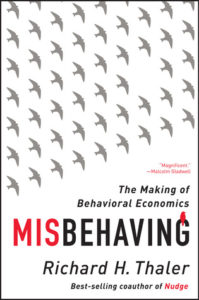
Reading Uncertainly? ‘Misbehaving: The Making of Behavioral Economics’ by Richard Thaler

This is the engaging story of the development and rise to practical significance of “behavioral economics,” the recognition that we “Humans” (as Professor Thaler calls us) are inevitably flawed in our dealing with finance and the market. It is also the personal biography of the author, along with many of the most important thinkers of the past 50 years.

The idea that our financial markets are “efficient,” as suggested by the “Econs,” the gurus we followed for many years, is destroyed by the realities of the human brain. First came Daniel Kahneman and Amos Tversky, who discovered our innate aversion to loss. Thaler notes that “ … losses hurt about twice as much as gains make you feel good,” noting, “Loss aversion has become the single-most powerful tool in the behavioral economist’s arsenal.”

But, Thaler also warns that, “… people who are threatened with big losses and have a chance to break even will be unusually willing to take risks, even if they are normally risk averse. Watch out!”

We need to be far more aware of the vagaries of the human mind when trying to guide ourselves and others toward the best balance of risk and reward: “The bottom line is that in many situations in which agents are making poor choices, the person who is misbehaving is often the principal, not the agent. The misbehavior is in failing to create an environment in which employees feel that they can take good risks and not be punished if the risks do not pay off.”

Unfortunately, we all tend to follow the herd: “It is better for reputation to fail conventionally than to succeed unconventionally.” Many years ago, IBM tried a better idea: it created a “Skunk Works” (from Al Capp’s L’il Abner cartoon) where employees with new and uncommon ideas could use corporate funds and help to work them out. If they succeeded, glory. If not, they could return, without blame, to their former employment.

Thaler’s sense of humor is always evident. Instead of watching our investment portfolios too closely, a uniformly bad habit, he suggests doing a crossword puzzle instead. He made a correct prediction about the collapse of the market in 2008: “Having made that one correct prediction, I am resolving not to make any more.”

And in American football, he urges teams to do the unexpected, such as “going for it” on fourth down. It changes the psychology on both sides echoing the, “And now for something completely different,” from Monty Python.

Thaler’s language is distinctly non-academic, a pleasure to read. He quotes Douglas Bernheim (2002): “As an economist, one cannot review the voluminous literature on taxation and saving without being somewhat humbled by the enormous difficulty of learning anything useful about even the most basic empirical questions.”

The last third of the book details the writing and reception of Nudge, the 2008 book he co-authored with Cass Sunstein. Their original title was “libertarian paternalism,” abbreviated, thank goodness, to “nudge,” the idea that we can encourage someone to do something that is in their best interests, by making it slightly easier.

At the end, Thaler asks “What Is Next?” He answers: “the only sensible prediction is to say what happens will surely surprise us.” Behavioral economics, the role of humans in what we do and how we live, is critical to both strategic and tactical planning.

And I did find a word I’ve never seen before: “corybantic.” It means frenzied, agitated, unrestrained: exactly how some human respond when their traditional beliefs and ideals are challenged.

Editor’s Note: ‘Misbehaving: The Making of Behavioral Economics’ by Richard Thaler is published by W. W. Norton & Co., New York 2015

Felix Kloman

About the Author: Felix Kloman is a sailor, rower, husband, father, grandfather, retired management consultant and, above all, a curious reader and writer. He’s explored how we as human beings and organizations respond to ever-present uncertainty in two books, ‘Mumpsimus Revisited’ (2005) and ‘The Fantods of Risk’ (2008). A 20-year-resident of Lyme, he now writes book reviews, mostly of non-fiction that explores our minds, our behavior, our politics and our history. But he does throw in a novel here and there. For more than 50 years, he’s put together the 17 syllables that comprise haiku, the traditional Japanese poetry, and now serves as the self-appointed “poet laureate” of Ashlawn Farms Coffee. His wife, Ann, is also a writer, but of mystery novels, all of which begin in a bubbling village in midcoast Maine, strangely reminiscent of the town she and her husband visit every summer.