Letter from Paris: Gambling on Impressionism

Nicole Prévost Logan

Nicole Prévost Logan

One could describe the exhibit as intimate.  Only 80 paintings hang in the small rooms of the Musée du Luxembourg, some of them never seen before.  The style is familiar. the colors are soft, the scenes are peaceful — we are in the Impressionists’ world to meet old friends: Monet, Manet, Degas, Sisley, Pissarro, Eugene Boudin, Renoir, Berthe Morisot, Mary Cassatt.
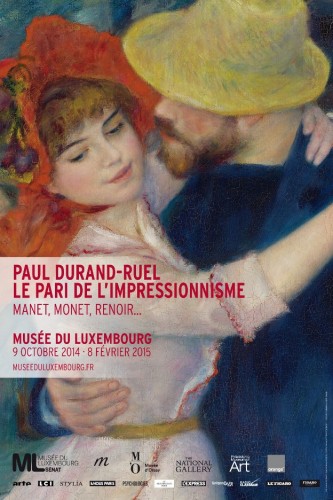
poster for Musee_de_luxembourg_ExhibitThe title of the exhibit is, “Paul Durand-Ruel. The Impressionist Gamble – Manet, Monet, Renoir,”  and it tells the endearing story of the first art dealer in history … and also one of the most influential.

The artwork is stunning: in “Le Pont à Villeneuve -la-Garenne,”  Sisley creates the fluidity of the water by using multicolor brush strokes and in Renoir’s dance scenes, 1883, couples twirl around happily, women’s eyes bright, their ruffled dresses contrasting with the dark suits of their older escorts.   “Liseuse” by Monet  shows a young woman sitting on the grass, enveloped by vegetation, spots of light dots her pink dress and in “Le Foyer de la Dance,” Degas’ dancers warm up, others are stretching, while, in the foreground, a little old lady, slouching in a chair is reading a newspaper.  Nearby another painting is identical, except for the empty chair — the little old lady is gone.

The story behind the artwork is equally fascinating.  Durand-Ruel (1831-1922) became an art dealer by accident.   Attracted to a military career, he entered Saint Cyr (equivalent of West Point) but  renounced for medical reasons.  He was struck by the paintings of Eugene Delacroix exhibited at the 1855  Exposition Universelle (World’s Fair). He became fascinated by the artists who were refused access to the official Salon of the Academy of Fine Arts because of their innovative techniques.

In 1871, Paul met Monet and Pissarro in London where they had taken refuge from the Franco-Prussian war.  After his return to Paris, he visited Manet in his studio, liked his work so much that he bought 23 of his paintings at one go.  The Luxembourg exhibit includes two of Manet ‘s major works:  “Clair de Lune at Boulogne” and “Le Combat du Kearsage et de l’Alabama”.

Left alone after the his wife’s death, he turned his art dealership into a family business with his five children.  He opened galleries in London, Brussels, New York and later, Berlin.

In 1874, a group of young artists – who were given, at that time, the collective term of ‘Impressionists’ – showed their work for the first time together in the studio of   photographer Nadar.

Durand-Ruel fought to help the artists, both morally and financially, and became their friend. He borrowed money to purchase their paintings. He offered his living room on Rue de Rome to a penniless Monet and lent him money to move to Giverny. Years later, when he was rich and famous, Monet wrote, “We would have starved to death without Paul. ”

In 1886, the American Art Association invited him to organize an exhibit in New York.  It was a success and became the first official recognition of the Impressionists.

One cannot help compare the story of such a life to the speculation around art today and to the giant art fairs (like Art Basel) when  intermediaries are commissioned by owners with deep pockets.

The exhibition at the Musée de Luxembourg continues through Feb. 8, 2015.

Nicole Prévost Logan

Nicole Prévost Logan

About the author: Nicole Prévost Logan divides her time between Essex and Paris, spending summers in the former and winters in the latter.  She writes a regular column for us from her Paris home where her topics will include politics, economy, social unrest — mostly in France — but also in other European countries.  She also covers a variety of art exhibits and the performing arts in Europe.  Logan is the author of ‘Forever on the Road: A Franco-American Family’s Thirty Years in the Foreign Service,’ an autobiography of her life as the wife of an overseas diplomat, who lived in 10 foreign countries on three continents.  Her experiences during her foreign service life included being in Lebanon when civil war erupted, excavating a medieval city in Moscow and spending a week under house arrest in Guinea.
Letter from Paris: New European Union Commission Leadership Faces Rocky Road

Nicole Prévost Logan

Nicole Prévost Logan

On Nov. 1, following the mandate of Manual Barroso (2009-2014) from Portugal, the 12th Commission of the European Union (EU) moved into its headquarters at the Berlaymont  in Brussels.

The selection process of the Commission – the key institution of the EU and a formidable machine employing 25,000 persons – has greatly changed since its beginnings in 1951.  The mandate was shortened from nine years to five ;  whereas the president of the Commission used to be designated by the Council of Ministers (equivalent to the present European Council), he (or she) )  is now elected by the Parliament.  A major turn in the composition of the Commission took place in 2004 with the addition of 10 new members from Central and Eastern Europe.  The present rule assigning one commissioner per country creates an odd situation: Malta, with a population of 400,000, has the same representation as Germany with a population of 82 millions.

Jean-Claude Juncker from Luxemburg, a member of the European People’s Party, was elected by the Parliament with 422 votes out of 751 as the new president of the Commission.  Angela Merkel strongly supported him.  Linguistically and culturally he stands half way between France and Germany – a real asset for the most important official of the EU.

Upon his return from the G20 summit meeting in Brisbane, Australia, in mid November, Juncker had to face the “Luxleaks” crisis exposed by the press.  Forty international newspapers, including Le Monde, the Guardian and the Suddentsche Zeitung, investigated the tax breaks granted by Luxemburg to 340 multinationals, like Google, Apple or Amazon.  Yuncker’s critics said that, while he was serving as prime minister and minister of finances, Luxemburg became the leading tax haven of Europe.  To put an end to these practices, the “rulings” – holding companies and other devices used for tax “optimization” – were suspended.  As the new president of the Commission, Yuncker reaffirmed his commitment to fight tax evasion.

The post of commissioner of economy and budget was given to Pierre Moscovici, the former French minister of economy. The choice seems ironic since France almost flunked the rule imposed by the Pact of Stability and Growth requiring a deficit of 3 percent of the GDP (France’s deficit has reached 4.4 percent)

The new High Representative of the European Union for Foreign Affairs is Federica Mogherini , 41,  a diplomat with an impressive record.  Her intention to improve relations with Russia was not appreciated by some of the Eastern European countries.

Tibor Navracsics, a former minister with the ultra conservative Hungarian government was to become commissioner of culture, but his nomination was voted down by the Parliament.

It is a tumultuous time for the new team of the EU.  In the guidelines he presented to the plenary session of the Parliament in July 2014, Jean-Claude Yuncker set his priorities as follows: a plan of public and private investment of 300 billion over three years to stimulate the economy, harmonizing budgetary policies of the member states and coping with the explosive surge of refugees.

Nicole Prévost Logan

Nicole Prévost Logan

About the author: Nicole Prévost Logan divides her time between Essex and Paris, spending summers in the former and winters in the latter.  She writes a regular column for us from her Paris home where her topics will include politics, economy, social unrest — mostly in France — but also in other European countries.  She also covers a variety of art exhibits and the performing arts in Europe.  Logan is the author of ‘Forever on the Road: A Franco-American Family’s Thirty Years in the Foreign Service,’ an autobiography of her life as the wife of an overseas diplomat, who lived in 10 foreign countries on three continents.  Her experiences during her foreign service life included being in Lebanon when civil war erupted, excavating a medieval city in Moscow and spending a week under house arrest in Guinea.

Letter From Paris: The Dangers of Drones

Nicole Prévost Logan

Nicole Prévost Logan

Something strange happened lately in the skies of France:  drones were spotted over several nuclear plants, including one dangerously close to Paris in Nogent sur Seine.  A few days later more drones flew over nuclear complexes.  A wave of anxiety gripped the public opinion.  Who was manipulating those machines?  Was the country under threat?

Greenpeace was immediately suspected of being the one to operate the unmanned contraptions.  As a pro-environmental watchdog this international association has a history of peaceful action against nuclear power.  In 2012, a paraglider had landed on a nuclear installation to prove that the installation was not well protected.  In July 2013, 29 activists broke into Tricastin nuclear plant, in southern France.  Yannick Rousselet, head of the anti-nuclear Greenpeace campaign, vehemently denied any involvement this time in a television interview.

If Greenpeace had nothing to do with it, the question remained, who did?  A few days later, three individuals suspected of operating the drones, were arrested.  So, for now, the fear is defused.  But it was a wake-up call of a potential danger.

The most advanced drone technologies are found in Israel and the US.  To obtain current and accurate information, I interviewed a French engineer who used to work with a German company manufacturing drones.  He told me that 10 years ago, all of them were built for military use, mostly for reconnaissance and surveillance.  They included the HALE (High Altitude Long Endurance), MALE (Medium Altitude Long Endurance), tactical drones and portable drones for use in ground combat.  The Israeli Watchkeeper with sensors and camera can fire missiles and bombs from sometimes thousands of miles away.  Today drones have become a necessity in wars taking place in huge territories such as Mali.

France is at the cutting-edge of research but lacks funds to develop its ideas.  As an example, Dassault designed the NEURON and produced one model, whereas the American PREDATOR, built in 2010, has already flown one million hours.

European countries are catching up with drone technology.  On Nov. 5 of this year, François Hollande and David Cameron attended the signing of an agreement between Dassault Aviation and BAE Systems (British Aerospace and Marconi Electronics Systems) for a new generation of drones.  Germany and Italy will be part of the project in the future.

miniature-drone

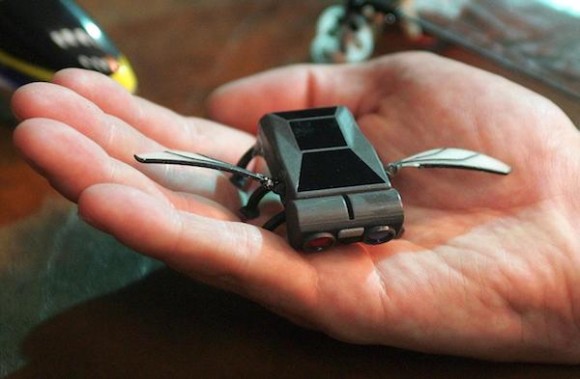
Today civilian drones exist in all sizes and degrees of complexity.  Drones called “Insects” (see photo above) are so small that they can be held in the palm of the hand.  The  Chinese DJI Fantom flies like an helicopter with quadrotors,  carries a remote camera and is very popular with the general public.  Drones have become invaluable at times of natural disasters to test the strength of bridges, in mapping, archaeology and multiple other uses.

But they can be dangerous, for example, causing the crash of commercial airplanes by entering the reactors.  When a drone fell less than six feet from Angela Merkel during her political campaign in Sept. 2013, people realized that a drone was anything but a toy.

Nicole Prévost Logan

Nicole Prévost Logan


About the author:
 Nicole Prévost Logan divides her time between Essex and Paris, spending summers in the former and winters in the latter.  She writes a regular column for us from her Paris home where her topics will include politics, economy, social unrest — mostly in France — but also in other European countries.  She also covers a variety of art exhibits and the performing arts in Europe.  Logan is the author of ‘Forever on the Road: A Franco-American Family’s Thirty Years in the Foreign Service,’ an autobiography of her life as the wife of an overseas diplomat, who lived in 10 foreign countries on three continents.  Her experiences during her foreign service life included being in Lebanon when civil war erupted, excavating a medieval city in Moscow and spending a week under house arrest in Guinea.

Tunisian Election Outcome Offers Remarkable Example to Countries Dealing With Terrorism, Violence

Nicole Prévost Logan

Nicole Prévost Logan

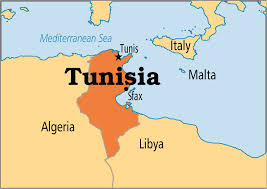
Map_of_tunisiaTunisia did it again!  This small country in North Africa was the one to start the Arab Spring in December 2010.  On Oct. 26 of this year, the parliamentary elections marked the return to some degree of normalcy after a difficult period of assassinations and violence.
The latest elections revealed a “collective intelligence,” to use the words of a French political scientist – the result of a well established civil society.  Instead of a single party hijacking the political scene, the people voted for several parties.  The liberal party Nidaa Taures won with 38 percent of the votes.  In order to reach a majority of 109 seats in the parliament, it is willing to form a coalition – quite unusual in this part of the world.

The Islamist party Ennahda secured second place with only 28 percent of the votes and 69 seats — or 16 seats less than in the previous election.  Wisely it  conceded defeat.  How to explain the resistance of the population to the Ennahda program?

The answer lies for a large part in the key role played by women.  They spearheaded the resistance against the strict enforcement of the Sharia or moral code, which limits their rights in many areas: inheritance, divorce, veil and regulations on clothing, custody of children, adultery sanctioned by stoning or “honor killing,” right to travel, right to open a bank account, and access to higher education, etc.

In the text of the constitution approved in January 2014,  Ennahda had reluctantly agreed to replace the expression “complementarity of men and women” by “equality for all.”  A journalist had the nerve to make the following extraordinary comment, “This was a small victory for a few Tunisian feminists”.

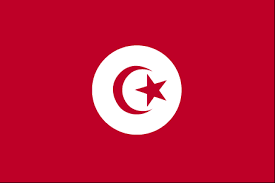
Tunisian_flagThe “Personal Status Code,” which was installed by president Habib Bourguiba in 1956,  had given empowerment to Tunisian women, thus making them the most emancipated in the Arab world.  This revolution was at the center of his program in order to model his country on Kemal Ataturk’s vision of a secular  and modern country.  Incidentally, it is interesting to note that both Turkey and Tunisia have almost identical flags.  Bourguiba is said to have remarked at one time, “… the veil – that odious rag.”
Tunisia can be considered to-day as a bulwark between a dangerously chaotic Libya and an Algeria unable to control terrorism (on Oct.14, a  Frenchman visiting the rugged mountainous area south of Algiers, in order to train young Algerians to become mountain guides, was taken hostage and  beheaded two days later.)   In other words, Tunis is of great importance not only as a model of democratic process coexisting with a moderate Islam but also, one hopes, as an oasis of stability for the whole area.

Nicole Logan

Nicole Prévost Logan

About the author: Nicole Prévost Logan divides her time between Essex and Paris, spending summers in the former and winters in the latter.  She writes a regular column for us from her Paris home where her topics will include politics, economy, social unrest — mostly in France — but also in other European countries.  She also covers a variety of art exhibits and the performing arts in Europe.  Logan is the author of ‘Forever on the Road: A Franco-American Family’s Thirty Years in the Foreign Service,’ an autobiography of her life as the wife of an overseas diplomat, who lived in 10 foreign countries on three continents.  Her experiences during her foreign service life included being in Lebanon when civil war erupted, excavating a medieval city in Moscow and spending a week under house arrest in Guinea.

Letter from Paris: Picasso in Paris – A New Museum Opens

Nicole Prévost Logan

Nicole Prévost Logan

After five years of over-budget restoration, the Picasso museum in Paris reopened on Oct. 25.  It was worth the wait — the new museum is spectacular.

I decided – like the rest of Paris, it seemed – to go to the opening.  The logistics to handle the thousands of visitors passing through the magnificent courtyard of the XVII century Hotel Salé  (thus nicknamed because the owner was a salt tax collector) in the Marais was the best I have ever seen in France.

The renovation has doubled the exhibition space.  The museum gives a feeling of openness thanks to the series of rooms opening onto the garden; wide thresholds and corridors facilitate the flow of visitors.  The classical architecture – grand stairs, loggia with arched windows and baroque haut-reliefs – coexist with modern minimalism.

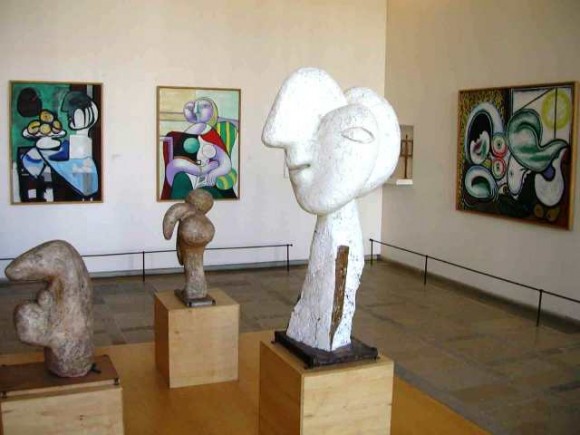
The walls are stark white, allowing the creations of Picasso to literally explode.  The lighting of weathered bronze and white resin is imaginative, but discreet.  The upper level, which houses the private collection of the artist, was carved out from the original attic.  The enormous wooden beams constitute a stunning setting for Cezanne, Matisse, “Le Douanier” Rousseau (a nickname given to Rousseau related to his occupation as a toll collector), or artifacts from the South Pacific.  The exhibit spans the long life (1881-1973) of the artist.

At an early age in Malaga and la Corogne, Pablo Picasso showed his precocious talent.  His supportive father — an art teacher — acknowledging the genius of his son, put down his paint brushes in 1895 and never painted again.  In the first room of the museum, the portrait of “L’homme à la casquette” reveals  the virtuosity of the 14-year old.

picassomuseum-1

A self portrait, 1901, showing a middle-aged man (although Picasso himself is only 20) belongs to his “Blue Period.”  A gaunt, almost emaciated acrobat  (1905) with elongated hands and sad eyes is part of the circus world which fascinated Picasso.  In 1906, he begins working on the Demoiselles d’Avignon.  Gertrude Stein, foresaw the importance of what was to be one the major works of the 20th century and bought most of the preparatory sketches of the unknown young artist.  The painting hangs today at MoMA in New York City.

A voyage to Italy in the early 1920s inspired Picasso to return to the classicism of ancient Rome.  In La Course, painted 1922 in surprisingly small dimensions, two gargantuan women run on the beach, their  heads touching the clouds.

Women – whether wives or mistresses – are his sources of inspiration:  Fernande, Olga, Dora Maar, Marie Therese, Françoise, Jacqueline – each of them represents a new start.  Picasso reinvents himself continuously and keeps experimenting with new techniques and media.

There is a recurrent theme of violence in his depictions of bullfights, wars and erotic scenes.  He deconstructs his models and reassembles them in a shamble of distorted strokes which have become his trademark.  Les Amoureux, 1918, is the most irreverent and humorous example.

Picasso’s sculptures – made of crude recycled material and always full of humor – are interspersed with the paintings, which gives the visit a lighter angle. In September 2015, an exhibit on “Picasso the sculptor” will take place at MoMA.

Nicole Logan

Nicole Prévost Logan

About the author: Nicole Prévost Logan divides her time between Essex and Paris, spending summers in the former and winters in the latter.  She writes a regular column for us from her Paris home where her topics will include politics, economy, social unrest — mostly in France — but also in other European countries.  She also covers a variety of art exhibits and the performing arts in Europe.  Logan is the author of ‘Forever on the Road: A Franco-American Family’s Thirty Years in the Foreign Service,’ an autobiography of her life as the wife of an overseas diplomat, who lived in 10 foreign countries on three continents.  Her experiences during her foreign service life included being in Lebanon when civil war erupted, excavating a medieval city in Moscow and spending a week under house arrest in Guinea.