New Dance Center in Old Lyme Welcomes New Students

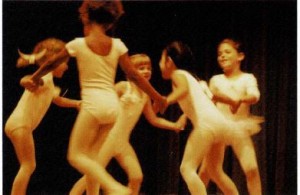
Ballet class.

Ballet classes are for all ages.

So you think you can dance?  Well, there’ll soon be a new place in town where you can find out whether that’s true or not!

The Dance Center of Old Lyme hosts its Grand Opening and Fall Registration events today, Saturday, Aug. 17, from 9 a.m. to 1 p.m., at The Dance Center of Old Lyme, located in the Old Lyme Shopping Center, 19 Halls Road #106, in Old Lyme (next to Pizzeria DaVinci).

The Dance Center of Old Lyme offers fun, high-energy dance classes for children, teens and adults in Tap, Ballet, Jazz, Hip Hop, Contemporary and Musical Theatre, along with Mommy & Me classes for toddlers, and much more.   Fall classes begin Tuesday, Sept. 3.

The owner, Bethany Haslam, is an Old Lyme resident with extensive dance training and teaching experience with dancers of all ages.  Before opening The Dance Center of Old Lyme, Haslam worked as an instructor and choreographer at A Dance Class of Cheshire, where she taught tap, jazz, ballet, contemporary, lyrical and hip hop dance to beginner, intermediate and advanced students, and choreographed several works for their annual recital performances.

In addition, Haslam served as lead choreographer for Cheshire Youth Theater’s productions of The Wizard of Oz, Oliver!, Babes in Arms and Oklahoma!, and Cheshire Academy’s production of The King & I – opportunities which allowed her to create and teach her original choreography to hundreds of children and teens

Her experience also includes an internship with Boston Ballet, service as a Certified Judge for the Miss Connecticut Scholarship Program and attendance at the Teacher Training School of Dance Masters of America.   

While Haslam’s focus in recent years has been on teaching and choreographing, she has a strong foundation in dance technique and performance, stemming from years of dancing competitively and performing with a select company under the instruction of Doreen Cran, whose countless dance accomplishments include the Capezio Award of Excellence and the Del Keiffner Lifetime Achievement Award.

Further, Haslam was fortunate to study tap for a brief period under the instruction of the late Louise Neistat, and to serve as a performer, choreographer and assistant director of the Boston College Dance Ensemble.

The Dance Center of Old Lyme appreciates the importance of small class sizes and one-on-one attention between instructors and students, which allows even the youngest dancers to feel comfortable in the classroom.  Our newly renovated studio offers a bright, beautiful large dance space with expansive mirrors and modern ballet barres, along with a comfortable waiting area for parents and opportunities to view their children’s progress in class.

Dance classes are held weekly during the months of September through May, and culminate in a spring recital performance, which offers students an opportunity to showcase choreography and techniques developed throughout the year.

The Dance Center of Old Lyme is excited to offer this new opportunity to the residents of Old Lyme and our surrounding communities.  All are welcome to join the festivities for the Grand Opening and Fall Registration next week, which offer an opportunity to meet the Director, register for fall classes and visit the new studio.

For more information, contact Bethany Haslam at (860) 460-5473 or DanceCenterOldLyme@gmail.com

The $40K Binge

Only 30% of students enrolled in liberal arts colleges graduate in four years

Some years before the term “helicopter parent” insinuated itself into the lexicon of higher learning, a father and mother took to the road.

Among the flotsam and jetsam of “college necessities” crammed into the Ford Country Squire station wagon was their son and heir who, perhaps for the first time in his 18-year existence, had—at his father’s insistence—organized his own belongings without his mother’s aid.

Roughly an hour into the four-hour trek to school, dad squinted into the rear view mirror, scanned the hodge-podge of electronic and sports equipment and the vacuum cleaner (mother’s one allowed input), and dryly inquired, “Michael, where are your clothes?”

Having put in time a) as an undergrad; b) as a parent of undergrads; and c) as an undergrad professor, I’ve evolved the thesis that parents of college students often confuse the proverbial brake and the spur when dealing both with their students and the institutions they’re attending.

That is, the tendency can be to obsess over picayune details and to snooze at the helm when confronted with issues that may threaten their students’ success and wellbeing.

Reading Craig Brandon’s new book “The Five Year Party” well before the car departs for campus can be a helpful beginning.  Subtitled, “How Colleges Have Given Up On Educating Your Child and What You Can Do About It,” Brandon’s book makes some bold and disturbing accusations.

Among them: That many universities fail to exact minimal standards of scholarship (as in read the material, complete the assignments, participate in discussion); dumb-down grade averaging; and, by becoming de-facto education-free zones, thus over charge parents for under-serving their students.  (The book’s title refers to studies noting that today, only 30% of students enrolled in liberal arts colleges graduate in four years.)

Further, Brandon, a former education reporter as well as a former college instructor, notes that many campuses are so awash in sex, drugs and alcohol that they make National Lampoon’s 1978 classic “Animal House” look like a nursery school romp.

Alas—and here’s where the spur/brake confusion comes in—many Class of 20-Something parents tacitly accept the idea that their kids’ “rites of passage” include such infantile behaviors, and that they’re powerless to do anything about it: as if pulling the purse strings closed was not an option.

At the same time, if parents do get wind of unacceptable or failing grades (it’s an “if” because the Federal Education Rights and Privacy Act passed in 1974 makes grade reports the property of all students over age 18)), the same people who turn the blind eye to their kids flagrant waste of tuition dollars often aim righteous indignation at professors who reward their students’ non-study habits with C’s or D’s rather than A’s or B’s.

Prior to setting off for campus, then, it might be useful if both parents and students examined closely their expectations for the university experience.

To expect hard-working adults to furnish unlimited sex, drugs and rock n’ roll to their progeny at the rate of $40,000-plus-a-year might, for example, be considered a tad excessive.

It’s also reasonable that parents are entitled to some evidence that, in return for hard-earned dollars spent on her behalf, their child is returning that enormous favor and working diligently toward the purpose of college, which is to learn to think.

To exact such minimal standards of a student is hardly helicoptering; it is responsible parenting.

So much for the spur.

As to the brake: It’s also responsible, as Brandon notes, for parents to hold universities to their stated purpose of education.  A trenchant question parents might want answered, Brandon thinks, is how many of a given college’s professors send their children to their own institution.

If the term “responsibility” has cropped up several times in this piece, it’s because I think it’s time that the on-going bad behavior by some universities, students and parents comes to a halt.

If universities, in the quest for enrollment dollars, decline to exact minimal scholastic standards and turn blind, deaf and dumb to outrageous, even dangerous undergraduate behaviors, then they should retool tuition and call it a cover charge, restyle themselves social clubs, and replace professors with professional bouncers.

If students actually confuse “trying hard” with producing decent scholarship, and regard gratification bingeing as a means to that end, then they should defer college until they can discern the difference.

If parents doff their roles as mentors and leave value instruction to high schools and colleges, then parents leave themselves little recourse to demand credible grades, much less adult behaviors, from their offspring.

“Responsibility,” after all, means accepting obligations and making good on them.  It’s about owning our own actions.

And finally—how novel when discussing education—responsibility is about being smart.

Trish Bennett is an award-winning journalist and the former assistant editor of Main Street News.  She holds a master of science degree in journalism and was adjunct professor of media history at Quinnipiac University before relocating Bryn Mawr, Pennsylvania.  Her latest work appears in the up-coming volume of “This I Believe: The Personal Philosophies of Remarkable Men and Women” slated for publication in association with National Public Radio this Fall.  She can be reached at pwbennett@verizon.net

Just Don’t Do It

The notion that simple solutions exist to knotty problems should trigger a host of red flags.

I have a bone to pick with “just,” because in at least one of its permutations, it lies.

My dictionary defines “just” in its adverbial sense as ”simply; no more than,” which, when you think about it, “just” seldom is.

Consider, for example,  Nike’s admonition to “Just do it,” and Nancy Reagan’s solution to the lure of recreational drugs: “Just say no.”

If it were as simple as Nike and Nancy would have us believe–if we’d “just” lace up our running shoes, and “just” decline the drug du jour—then the percentage of obese adults (34%) and obese kids (17%) would fall to zero, and zero drug use would mean we were all clean.

The point here, is that with campaign season upon us, and about as unavoidable as a 900-pound, halitosis-ridden gorilla on the coffee table, the notion that simple solutions exist to knotty problems should trigger a host of red flags.

Because in these days of financial uncertainties, social realignments, and toxic exchanges that pass for public discourse, chances are, if the solution to any problem were as simple and obvious as “just” doing it implies, whatever the “it” was, it would have been done, and we’d all be seeing its beneficial effects.

Unfortunately, there exist a number of office seekers this fall for whom the “just” admonition constitutes the entirety of their political platform, while any concrete, creative change that might result from their rhetoric is either immaterial or non-existent.

In New York, for example, gubernatorial candidate Carl Paladino has come up with the simple (or simplistic, depending on your views) notion of “taking a baseball bat” to Albany.  According to some polls, this “just” approach resonates with more than a few voters who note that Mr. Paladino’s campaign reflects their “anger” at political “insiders.”

But as columnist Clyde Haberman noted recently in the New York Times, if Mr. Paladino “believes that he can waltz into Albany with his baseball bat and, as he vows, pound it into cutting state taxes by 10 percent in his first six months and state spending by 20 percent in his first year, he better own a helmet that fits well.”

Leaving aside the question of whether anger represents a viable methodology to bring about constructive change, consider the impact on the public discourse of both public and private voices who lay claim to some sort of real Americanism by virtue of their “just”-ness—as in “just” being Every-day Joes and Josephines— while at the same time exhibiting little or no grasp of basic American democratic tenants.

It is apparently came as a news flash to Christine O’Donnell, a candidate for the U.S. Senate in Delaware, that the First Amendment to the Constitution forbids the establishment of any national religion, or the preference of one religion over any other.

And apparently neither Dred Scott v. Sandford— in which the Supreme Court ruled that people of African descent were, in effect, non-citizens—nor Brown v. Board of Education, which struck down separate public schooling for black and white children, were sufficient blips on Sarah Palin’s radar screen that she could cite them as pivotal moments of American history, despite her highly-touted image as a patriot and a representative of the American Everyperson.

Further, it seems that along with ratcheting up public rancor and attempting to pass off “Don’t Tread On Me” as the solution to convoluted national problems, some voices out there are equating ignorance with chic–or at least evidence of some sort of “real” patriotism.

The more a candidate demonstrates ignorance of basic English; the more a candidate dismisses educated, critical thinking as “elite,” the more, in the candidate’s own parlance, those gaffes qualify them as “real” Americans. (Or, as Ms. Palin put it in a recent tweet, “‘Refudiate,’ ‘misunderestimate,’ ‘wee-wee’d up.’  English is a living language.  Shakespeare liked to coin new words too. Got to celebrate it!”)

Fraught times can morph the most innocuous-seeming words into distinct threats to clear thinking, to informed public discourse, even to the basic understanding of who we are as citizens in a working democracy.

“Just” is one of those words.

Benjamin Franklin famously described the American experiment as “a republic—if we can keep it.”

That’s an admonition to informed debate and careful considerations, not “just” sloganeering; sloppy, uninformed rhetoric, and simplistic reasoning.

Come to think of it, let me tweak the title of this piece with the power of punctuation.  How about “Just: Don’t Do It.” 

Trish Bennett’s award-winning column, “Between Us,” ran in the Main Street News for many years.  She holds a master of science degree in journalism and was adjunct professor of media history at Quinnipiac University before relocating Bryn Mawr, PA.  Her latest work appears in “This I Believe: On Love,” a collection of essays submitted for broadcast on National Public Radio, and on sale in stores nationwide beginning Nov. 9.  
Click to read Trish’s essay in “This I Believe: On Love.


Porching It

Porches are, like summer, are sloth-inducing and community-inviting

The American poet Robert Frost is famous for—among other things—penning the line, “One could do worse than be a swinger of birches.”

Frost’s lines concern a stand of birches observed in winter, bent down, as those trees

tend to be, by snow and ice. It is as if, Frost observes, a small boy had shinnied up the trunk, and, with the bravado of the young, reached the end of the tree, and flung himself, clutching its topmost branches, feet-first into the blue winter sky and “ridden” the tree to the ground.

The image of the birch-swinger is a metaphor for the poet’s on-again, off-again relationship with the world: “It’s when I’m weary of considerations,” he writes, “and life is too much like a pathless wood…I’d like to get away from earth awhile, and then come back to it and begin over.”

Now given the fact that it’s July in New England, as opposed to January, I will make bold to offer a seasonal amendment to Mr. Frost and note that, fine as birches are, one could also do worse than be a sitter of porches.

Bear with me, and I may actually get you to believe that homely, un-“hot” objects like birches and porches can actually be the stuff of meaning, allowing us to revel in life rather than merely regarding it as a conquerable commodity or something to be endured.

Porches are ephemera to many modern home builders and largely to the 21st century mindset in which everything seems to require justification via a specific purpose.

Real porches–and here I exclude so-called “three-season rooms” which are made practicable,  and therefore justifiable, by insulation or infomercial awnings; and “decks” which many times dangle in space supported only by four by fours and which function as a grilling stations and occasionally collapse, sending bratwurst, steaks and grill person into the sump-pump bog some 18 feet below—are, like summer, short-lived, sloth-inducing, and community-inviting.

And to have one, especially a front porch, is to be blessed.

First, porches represent the once-upon-a-time in architecture. A time when folks strolled streets after dinner; a time when neighbors knew their community as faces and names met over day-to-day dealings; a time when social interaction was spontaneous rather than marked on an agenda three weeks in advance.

So once upon a time, after supper, you spied Fred and Mabel over your flower boxes and invited them up to your porch for ice cream and/or gossip.

Porch furniture, likewise, embodies a largely abandoned approach to existence: It does not warm, vibrate or advertise as orthopedically approved. Rather, it rocks, but back-and-forth; it swings, but in the wind.

So once upon a time, Junior de-camped to the porch and poured over Treasure Island, or Pop left the edging until tomorrow and expended his strength willing Ted Williams to first base while downing a lemonade.

“A good porch,” notes writer Garrison Keillor, gets you out of the parlor; lets you smoke, talk loud, eat with your fingers—without apology and without having to run away from home. No wonder that people with porches have hundreds of friends…Me and the missus float back and forth on the swing, Mark and Rhonda are collapsed at opposite ends of the couch. Marlene peruses her paperback novel in which an astounding event is about to occur…the cats lie on the floor listening to birdies, and I say, ‘It’s a heck of a deal, ain’t it, a heck of a deal.’ A golden creamy silence suffuses this happy scene, and only on a porch is it possible.”

As I said, one could do worse than be a sitter of porches.

Happy summer.

Trish Bennett is the former associate editor of the Main Street News. Her award-winning column, “Between Us,” ran in that paper for many years. She holds a master of science degree in journalism and now lives in Bryn Mawr, Pa., where she currently works at an inner-city elementary school in West Philadelphia with disadvantaged kids as a “library lady” and reading specialist. She can be reached at pwbennett@verizon.net

The “I” in the Devil

Rather than “low self esteem” being the culprit of every societal ill from thumb-sucking to murder, it is an overweening sense of self-importance that encourages many of us to conclude we can do no wrong.

“What do we live for, if it is not to make life less difficult to each other?”
             
George Eliot (nee Mary Anne Evans) Middlemarch 1871

Item: Monday, March 29

“Bricks were thrown through windows of a Republican Party office in the Charlottesville [VA] area late last week in an act that seemed similar to incidents of political vandalism reported elsewhere.”

The Washington Post

Item: Monday, March 29

“In an indictment…unsealed on Monday, the Justice Department said…a group of apocalyptic Christian militants…were plotting to kill law enforcement officers in hopes of inciting an antigovernment uprising, the latest in a recent surge in right-wing militia activity.”

The New York Times

Item: Monday, March 29

“Insults and threats followed 15-year-old Phoebe Prince almost from her first day at South Hadley [MA] High School, targeting the Irish immigrant in the halls, library and in vicious cell phone text messages. Phoebe…reached her breaking point and hanged herself after one particularly hellish day in January—a day that…included being hounded with slurs and pelted with a beverage container as she walked home from school. Now, nine teenagers face charges in what a prosecutor called ‘unrelenting’ bullying.

The Associated Press

If we are to make any sense at all of these three sorry tales of the American experience, I would submit that we must reach a more trenchant conclusion than the simplistic notion that Mondays are downers.

Rather I think the case could be made that these news items represent reaping the whirlwind after years of hitching our kites to the flighty air of the “self-esteem” movement.

If that notion sounds mildly outrageous, I commend to you a piece by Theodore Dalrymple (pseudonym of Anthony Daniels), a physician and author whose works include Our Culture, What’s Left of It: The Mandarins and the Masses.

His “On Self-Esteem and Self Respect” appears on the website “In Character: A Journal of Everyday Values” (http://incharacter.org/authors/theodore-dalrymple/) and is a thoughtful discourse debunking a child-rearing concept many of us have adopted as sacred text.

In brief, Dalrymple makes the case that, rather than “low self esteem” being the culprit of every societal ill from thumb-sucking to murder, it is an overweening sense of self-importance that encourages many of us to conclude we can do no wrong; that indeed “self esteem” translates as our will being law, given our self-appointed place in our own right-thinking universe.

With Dalrymple’s thesis in mind, then, I’m forced to conclude that the Old Wives had it wrong: The devil is not “in the details.” Rather it’s in the letter “I,” the all-consuming obsession we have with ourselves, that makes up the devil’s playground.

Evidence?

Consider it is the myopic dominance of the “I,” the preoccupation with the self, that makes rational the outrageous behavior cited in the stories above.

“I don’t like the healthcare legislation, therefore my Congressperson deserves intimidation.”

“I think law enforcement officials represent authority I reject, therefore, I am justified in plotting their murder.”

“I hate my classmate, therefore I can harass her to my heart’s content.”

“The self-esteemist,” Dalrymple writes, “wants something for nothing, and because in his heart he knows that what he wants is impossible he is wretched and ascribes all the many failures of his life to it. Self-esteem is therefore, the first cousin to resentment.”

Exactly who is resented, in Dalrymple’s thinking, can never, by definition, be the self-esteemist, but rather others. And as “others” outside the self, and therefore, possibly hinderers of the self’s intent, “others” are enemies: to be intimidated, murdered or simply hounded to death.

Or to be run roughshod over, because hell, life’s just that way and as long as I get what I want, all’s right with the world.

Until…until that rationalization is followed to its logical conclusion: Namely that the self prevails over the good of the greater whole, which, the last time I looked, isn’t democracy, or even commendable human behavior.

In contrast, there is George Eliot’s “Victorian” notion that the self may actually be best realized when it considers, and acts for the good of others. That we are best and most truly ourselves when we forget or put aside our own druthers and act out of a concern for the common welfare.

Some of us today might deem that notion “socialism.”

I imagine the rest of us could come up with a more accurate definition.

Trish Bennett’s award-winning column, “Between Us,” ran in the Main Street News for many years. She holds a master of science degree in journalism and was adjunct professor of media history at Quinnipiac University before relocating Bryn Mawr, Pa.  Her latest work appears in the up-coming volume of “This I Believe: The Personal Philosophies of Remarkable Men and Women” slated for publication in association with National Public Radio this Fall.