Letter From Paris: Nous Sommes Tous Charlie

Our French correspondent Nicole Prévost Logan was in Paris last Wednesday when the horrific shootings at the Charlie Hebdo office occurred and for the subsequent days of terror in the environs of Paris. This column reflects her thoughts on the tragedy.  She writes:
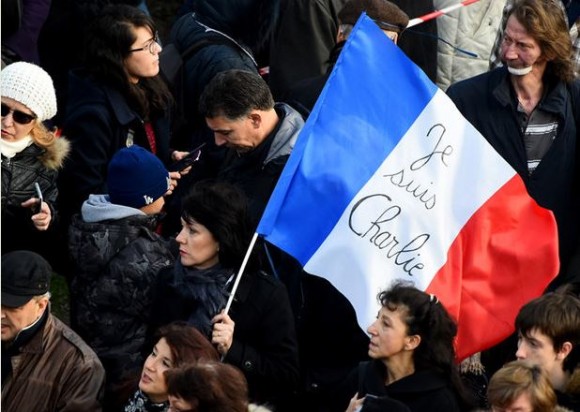
Je_suis_Charlie_v3

They were a talented, irreverent, friendly and humorous bunch of cartoonists and journalists.  They were like family.  We knew them by name.  Charb, Cabu, Wolinski (Stéphane Charbonnier, Jean Cabut,  Georges Wolinski) and the others were also incredibly courageous.  Round the clock they had to be protected by police and body guards.  In 2011, their office was blown up in an explosion.  Charb, leader and editor-in-chief of the Charlie Hebdo weekly satirical newspaper, was on the ‘Wanted’ list of Al-Qaeda as someone to be eliminated.

On Wednesday, January 7, at noon, I was walking by the Bastille, near my apartment, when police cars, ambulances, Red Cross vehicles, fire trucks – their sirens howling – seemed to be converging on the square.  Strange, I thought.  When I met my daughter for lunch, she told me that the entire editorial board of Charlie Hebdo had been shot.  Being “connected” with her smart phone, she was able to follow every minute of the crisis

The crisis lasted for three days with the pursuit of the two Kouachi brothers by tens of thousands of police and special forces.  Two more attacks (related, as it turned out later) occurred in Montrouge and Porte de Vincennes with the taking of hostages by a third terrorist Amedy Coulibaly.  Seventeen people died during the 72 hours, including four Jewish hostages  who had been held in a Kosher supermarket.
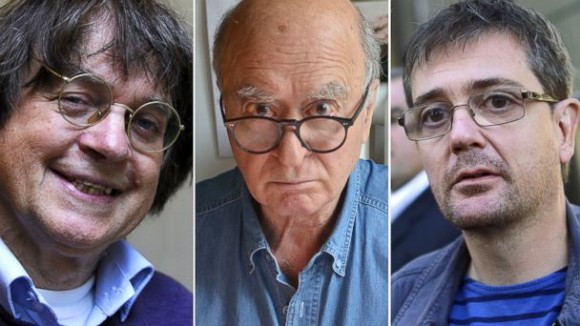
From left to right, Charlie Hebdo victims Cabu, Wolinski and Charb

From left to right, Charlie Hebdo victims Cabu, Wolinski and Charb.

The emotion in France was intense.  The French have always relished Charlie Hebdo’s iconoclastic derision aimed at everyone … women, Jews, Moslems, blacks, no exceptions … and their making fun of politics, religion and other serious topics.

The tragic end of an entire editorial staff of a newspaper at the point of a gun in the name of a principle explains the incredible shock wave of sympathy with spread around the world in a few hours.  A journalist from Los Angeles said in his grief at the talent lost that, in one throw, more cartoonists were killed than the total number existing in the US.  The victims have become the heroes, for having pushed to the extreme the right to say, write or draw anything in a free democratic society.

One may quote Voltaire, “I may not agree with what you say but I will fight to death for your right to say it.” Humor rather than violence or a call to violence, this was their motto.  This weekend France became a libertarian banner and the world seemed grateful to France for doing what no one else dared to do.  This attack and the planet’s reaction that it triggered can be seen as a fight for a secular state threatened by obscurantist developments, both in the regions where ISIL is taking hold and against terrorism anywhere in the world.

The French opinion from all parties, (except the Front National) is that president François Hollande managed the crisis superbly.  He was on the front line at all times.  He scared the police forces beyond belief when he came to the Charlie Hebdo street barely one hour after the attack, even before the area was made secure.  Hollande was at the helm of the operations and gave the green light for the two final assaults  to be perfectly synchronized.  He addressed the nation several times, avoiding grandiloquence and photo-op opportunities.

Instead of being belligerent and declaring “at war” status, what he stressed was the national unity and the need of inclusion of the overwhelmingly moderate Moslem population (about four million or 6.8 percent of the population, by 2012 figures.)  He urged the leaders of that community – imams, clergy, intellectuals and associations – to speak up and to join the march organized on Sunday. Hassan Chalghoumi, imam of the mosque of Drancy, a neighborhood with a majority of immigrants, declared on television, “What they have done is not Islam, we strongly condemn their acts.”  This is important because the problem of “integration” in France (one remembers the hostility caused by the ban on the veil) is a difficult process.

For three days, men in black, super-equipped with helmets, bullet-proof vests, shields and heavy arms, occupied our television screens.  We learned more about the elite groups which carried out the assaults.  In Dammartin-en-Goële,  it was the GIGN  (Groupe d’Intervention de la Gendarmerie Nationale), part of a 400-strong military elite corps based in Versailles.  At the Kosher market of the Porte de Vincennes, RAID (Recherche pour Assistance Intervention Dissuasion) is part of the police.  It was the first time ever that GIGN and RAID collaborated.

A question was immediately raised: how was it possible that Cherif and Saïd Kouachi and Amedy Coulibaly, young French men with murky pasts of convictions, prisons terms, and, most of all, trips to Syria and several months training in Yemen with the most  dangerous groups of Al-Qaeda (AQPA) in the Arabian Peninsula, included on the US “no fly list,” could have been overlooked by the DGSE  (Direction Generale de la Securite Exterieure)?  Pierre Martinet, one of the heads of  the DGSE explained that the data about all these people has been collected, but they do not have the manpower to put several thousands potential terrorists under surveillance.

Gilles Keppel, a Middle East specialist and professor at Sciences Po) revealed that France has been designated as the prime enemy. There are about 1,200 French Jihadists, the largest group in Europe.  The era when terrorists learnt how to fly planes is over — today the social networks have created another situation when Al-Qaeda is less an organization than a system.  Private individuals make decisions, hence the difficulty in controlling them.

In an interview Monday morning, Laurent Fabius, Minister of Foreign Affairs, summarized the priorities:  control the calls for violence on the internet; in prison, separate radical islamists to prevent their radicalization of other prisoners; and intensify the coordination of intelligence agencies within Europe and around the world.  The Socialists are reluctant to introduce legislation comparable to the Patriot Act in the US at the expense of the rule of law.
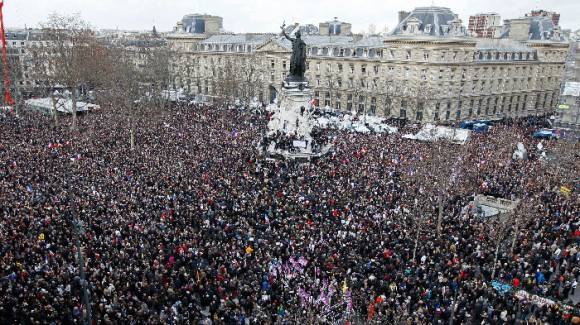
Millions gathered Sunday to pay tribute to the victims of the previous week and stand together in defense of the right to free speech.

Millions gathered Sunday to pay tribute to the victims of the previous week and stand in solidarity in defence of the right to free speech.

Sunday, January 11, saw the march of the century.  Forty heads of state participated in the demonstration.  François Hollande led the march, accompanied by Angela Merkel and 40 other heads of state.  Some commentators wondered whether Benjamin Netanyahu’s presence was politically motivated or also to defend the principle of freedom of expression.

Four million people were on the streets, almost half of them in Paris.  The crowd, including many children, was calm and disciplined, sang La Marseillaise, and applauded the police – probably for the first time in French history.
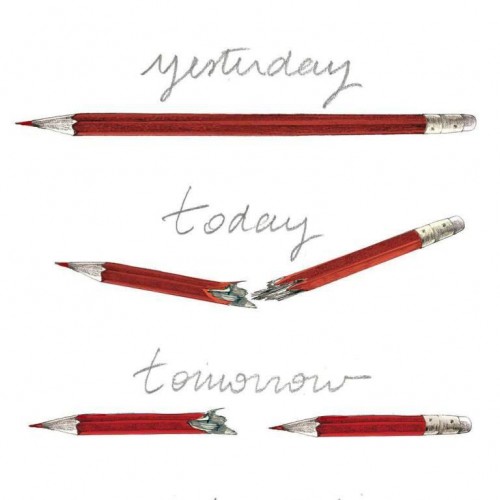
3_pencils_97.5KB

Nicole Prévost Logan

Nicole Prévost Logan

About the author: Nicole Prévost Logan divides her time between Essex and Paris, spending summers in the former and winters in the latter. She writes a regular column for us from her Paris home where her topics will include politics, economy, social unrest — mostly in France — but also in other European countries. She also covers a variety of art exhibits and the performing arts in Europe. Logan is the author of ‘Forever on the Road: A Franco-American Family’s Thirty Years in the Foreign Service,’ an autobiography of her life as the wife of an overseas diplomat, who lived in 10 foreign countries on three continents. Her experiences during her foreign service life included being in Lebanon when civil war erupted, excavating a medieval city in Moscow and spending a week under house arrest in Guinea.
Letter from Paris: Chinese Make Increasing Inroads into France

Nicole Prévost Logan

Nicole Prévost Logan

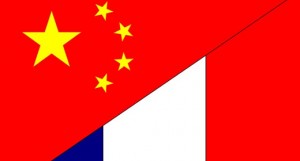
china-franceChinese president Xi Jiping , wearing oversize headphones, appeared on the cover of the French weekly Nouvel Obs on Dec. 4.  “Are they spying on us?” asked the magazine.
The same week, huge parabolic antennae showed up on the roof of an inconspicuous building four miles from Paris.

Some people found the picture rather amusing and did not take this disclosure too seriously.  But not everybody.  In fact, the way China is making inroads into the French economy is somewhat disturbing for many.

This week, the International Monetary Fund announced that China surpassed the US as the largest economy in the world.  The sheer size of this sub-continent, which represents over one fifth of the world population, is rather frightening for a small country like France.  The economic strategy of China starts with the creation of partnerships with foreign companies, then a growing participation in their capital, and finally their acquisition.  It is by absorbing the ideas, the know-how and the technology of older countries, that China was able to race to the number one slot.  French officials and heads of private companies facilitate China’s grand design.

Economic relationships between the two countries have existed for years, but what is new is its accelerating pace.  In 2007, China had no high-speed trains.  Then it turned to France (Alstom), Germany (Siemens) and Japan ( Shinkansen) to obtain the transfer of their technologies.  Today China has the longest fast train network in the world.

In 1992, Donfeng Motor Corporation and Peugeot-Citroen, the leading carmaker in France entered in a joint venture and started manufacturing cars in China.

In March 2014, China Donfeng became an equal share holder of Peugeot-Citroen, thereby bringing to an end the 200-year-old family dynasty.

France sold the idea of Club Med and the Shanghai-based Fosun company is currently fighting to win a bid for its acquisition.

For the French, it feels like selling the family jewels when they see their prestigious wines of Bordeaux or Burgundy, along with their chateaux, being bought by the Chinese.

But the most unsettling development so far just took place on Dec. 4.  Emmanuel Macron, Minister of the Economy, signed an agreement with a Chinese consortium granting it 49.99 percent of the capital of the Toulouse airport.

It is a disastrous business move by the French government.  Toulouse is the country’s fourth largest airport.  Extensive work has just been completed at a high cost.  The airport has been a money-making undertaking, so why sell it for a dismal 308 million – the price of one Airbus?

The answer is simple: France is under extraordinary pressure from Brussels to lower its deficit.  It needs money.

The new giant facility will handle 20 million passengers a year, multiplying by five the number of Chinese tourists visiting France, with direct flights to several Chinese provinces.  Anybody, who has ever been to the “pink city” (pink is the color of the stone) on the banks of the Garonne with its quaint historical districts, will feel shocked by this decision.

Besides, Toulouse is the European capital of aeronautics as well as an important center of nuclear and spatial research.  A large Chinese presence in the neighborhood understandably makes some people nervous.

Nicole Prévost Logan

Nicole Prévost Logan


About the author:
 Nicole Prévost Logan divides her time between Essex and Paris, spending summers in the former and winters in the latter.  She writes a regular column for us from her Paris home where her topics will include politics, economy, social unrest — mostly in France — but also in other European countries.  She also covers a variety of art exhibits and the performing arts in Europe.  Logan is the author of ‘Forever on the Road: A Franco-American Family’s Thirty Years in the Foreign Service,’ an autobiography of her life as the wife of an overseas diplomat, who lived in 10 foreign countries on three continents.  Her experiences during her foreign service life included being in Lebanon when civil war erupted, excavating a medieval city in Moscow and spending a week under house arrest in Guinea.

Letter from Paris: The UK and Europe: Divided, We Stand Together … for the Moment

Nicole Prévost Logan

Nicole Prévost Logan

France and the rest of Europe look at the United Kingdom with some envy: the UK is currently enjoying a three percent growth in its economy, unemployment as low as six percent, a paired down number of civil servants and the dynamism of the City as a world financial center.  No wonder young entrepreneurs and students are flocking to Britain from the continent.

This week the spotlight was on Prime Minister David Cameron.  On Nov. 28, he gave a resounding speech to an industrial audience in the West Midlands.  The main thrust of his message was to stress the inability of his country to absorb hundreds of thousands of refugees and job seekers.  He announced that, if reelected in May 2015, he will renegotiate the terms of the UK’s membership of the European Union (EU).  In the case of refusal, he would organize a referendum on “Brexit” (the colloquial expression for British exit).

To control immigration, his demands include the expulsion of  immigrants still jobless six months after their arrival in England and a four year waiting period for new immigrants before they can receive benefits, tax  credits or social housing .

David Cameron’s position in regards to the surge of immigration should not be singled out. An increasing flow of migrants is taking place around the world, from Australia  to America.  In Europe, the phenomenon is compounded because of several circumstances: sub- Sahara persons fleeing for political or economic reasons, refugees escaping the Middle East military conflicts and finally, the recent surge of migrants from Eastern to Western Europe (228,000 this year — the highest number ever registered.)

According to the “Schengen Zone Agreement”, Rumania and Bulgaria, which joined the European Union in 2007, had to wait until Jan. 1, 2014, to enjoy full rights to travel and apply for work within the Schengen space.  This explains the spectacular increase in the number of immigrants from those countries to England during the past nine months – increases respectively of 468 percent of Rumanians and 205 percent of Bulgarians.  Government corruption, hard to integrate “Romas” and a lagging economy in both those countries explain why other EU members are reluctant to open the flood gates too soon.  This week David Cameron sent a special message to the Polish Prime Minister, Ewa Kopacz, to reassure that his demands would not apply to job seekers from her country.

On Nov. 25, the Pope, speaking in the EU Parliament in Strasbourg,  admonished the Europeans for being too egoistic and urged them to coordinate their immigration policies.  The Mediterranean, he said, should not become a cemetery.  Stressing human dignity, the Pope puts immigration at the center of his message.  The choice of Lampeduza as his first trip out of Rome was symbolic.

David Cameron is under pressure from the Euro-skeptics  and the conservative UKIP (UK Independence Party).  It is clear he is ready to moderate his demands since he does not want to sever links with the EU.  The desire to negotiate is also strong on the other side of the English Channel.

Nicole Prévost Logan

Nicole Prévost Logan


About the author:
 Nicole Prévost Logan divides her time between Essex and Paris, spending summers in the former and winters in the latter.  She writes a regular column for us from her Paris home where her topics will include politics, economy, social unrest — mostly in France — but also in other European countries.  She also covers a variety of art exhibits and the performing arts in Europe.  Logan is the author of ‘Forever on the Road: A Franco-American Family’s Thirty Years in the Foreign Service,’ an autobiography of her life as the wife of an overseas diplomat, who lived in 10 foreign countries on three continents.  Her experiences during her foreign service life included being in Lebanon when civil war erupted, excavating a medieval city in Moscow and spending a week under house arrest in Guinea.

Letter from Paris: Gambling on Impressionism

Nicole Prévost Logan

Nicole Prévost Logan

One could describe the exhibit as intimate.  Only 80 paintings hang in the small rooms of the Musée du Luxembourg, some of them never seen before.  The style is familiar. the colors are soft, the scenes are peaceful — we are in the Impressionists’ world to meet old friends: Monet, Manet, Degas, Sisley, Pissarro, Eugene Boudin, Renoir, Berthe Morisot, Mary Cassatt.

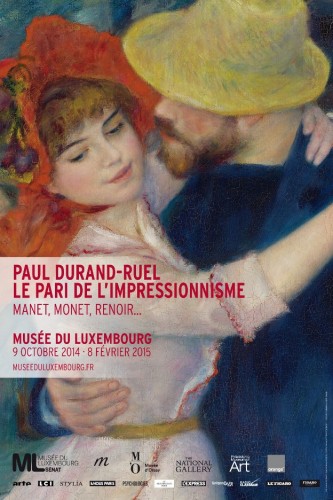
poster for Musee_de_luxembourg_ExhibitThe title of the exhibit is, “Paul Durand-Ruel. The Impressionist Gamble – Manet, Monet, Renoir,”  and it tells the endearing story of the first art dealer in history … and also one of the most influential.

The artwork is stunning: in “Le Pont à Villeneuve -la-Garenne,”  Sisley creates the fluidity of the water by using multicolor brush strokes and in Renoir’s dance scenes, 1883, couples twirl around happily, women’s eyes bright, their ruffled dresses contrasting with the dark suits of their older escorts.   “Liseuse” by Monet  shows a young woman sitting on the grass, enveloped by vegetation, spots of light dots her pink dress and in “Le Foyer de la Dance,” Degas’ dancers warm up, others are stretching, while, in the foreground, a little old lady, slouching in a chair is reading a newspaper.  Nearby another painting is identical, except for the empty chair — the little old lady is gone.

The story behind the artwork is equally fascinating.  Durand-Ruel (1831-1922) became an art dealer by accident.   Attracted to a military career, he entered Saint Cyr (equivalent of West Point) but  renounced for medical reasons.  He was struck by the paintings of Eugene Delacroix exhibited at the 1855  Exposition Universelle (World’s Fair). He became fascinated by the artists who were refused access to the official Salon of the Academy of Fine Arts because of their innovative techniques.

In 1871, Paul met Monet and Pissarro in London where they had taken refuge from the Franco-Prussian war.  After his return to Paris, he visited Manet in his studio, liked his work so much that he bought 23 of his paintings at one go.  The Luxembourg exhibit includes two of Manet ‘s major works:  “Clair de Lune at Boulogne” and “Le Combat du Kearsage et de l’Alabama”.

Left alone after the his wife’s death, he turned his art dealership into a family business with his five children.  He opened galleries in London, Brussels, New York and later, Berlin.

In 1874, a group of young artists – who were given, at that time, the collective term of ‘Impressionists’ – showed their work for the first time together in the studio of   photographer Nadar.

Durand-Ruel fought to help the artists, both morally and financially, and became their friend. He borrowed money to purchase their paintings. He offered his living room on Rue de Rome to a penniless Monet and lent him money to move to Giverny. Years later, when he was rich and famous, Monet wrote, “We would have starved to death without Paul. ”

In 1886, the American Art Association invited him to organize an exhibit in New York.  It was a success and became the first official recognition of the Impressionists.

One cannot help compare the story of such a life to the speculation around art today and to the giant art fairs (like Art Basel) when  intermediaries are commissioned by owners with deep pockets.

The exhibition at the Musée de Luxembourg continues through Feb. 8, 2015.

Nicole Prévost Logan

Nicole Prévost Logan

About the author: Nicole Prévost Logan divides her time between Essex and Paris, spending summers in the former and winters in the latter.  She writes a regular column for us from her Paris home where her topics will include politics, economy, social unrest — mostly in France — but also in other European countries.  She also covers a variety of art exhibits and the performing arts in Europe.  Logan is the author of ‘Forever on the Road: A Franco-American Family’s Thirty Years in the Foreign Service,’ an autobiography of her life as the wife of an overseas diplomat, who lived in 10 foreign countries on three continents.  Her experiences during her foreign service life included being in Lebanon when civil war erupted, excavating a medieval city in Moscow and spending a week under house arrest in Guinea.

Letter from Paris: New European Union Commission Leadership Faces Rocky Road

Nicole Prévost Logan

Nicole Prévost Logan

On Nov. 1, following the mandate of Manual Barroso (2009-2014) from Portugal, the 12th Commission of the European Union (EU) moved into its headquarters at the Berlaymont  in Brussels.

The selection process of the Commission – the key institution of the EU and a formidable machine employing 25,000 persons – has greatly changed since its beginnings in 1951.  The mandate was shortened from nine years to five ;  whereas the president of the Commission used to be designated by the Council of Ministers (equivalent to the present European Council), he (or she) )  is now elected by the Parliament.  A major turn in the composition of the Commission took place in 2004 with the addition of 10 new members from Central and Eastern Europe.  The present rule assigning one commissioner per country creates an odd situation: Malta, with a population of 400,000, has the same representation as Germany with a population of 82 millions.

Jean-Claude Juncker from Luxemburg, a member of the European People’s Party, was elected by the Parliament with 422 votes out of 751 as the new president of the Commission.  Angela Merkel strongly supported him.  Linguistically and culturally he stands half way between France and Germany – a real asset for the most important official of the EU.

Upon his return from the G20 summit meeting in Brisbane, Australia, in mid November, Juncker had to face the “Luxleaks” crisis exposed by the press.  Forty international newspapers, including Le Monde, the Guardian and the Suddentsche Zeitung, investigated the tax breaks granted by Luxemburg to 340 multinationals, like Google, Apple or Amazon.  Yuncker’s critics said that, while he was serving as prime minister and minister of finances, Luxemburg became the leading tax haven of Europe.  To put an end to these practices, the “rulings” – holding companies and other devices used for tax “optimization” – were suspended.  As the new president of the Commission, Yuncker reaffirmed his commitment to fight tax evasion.

The post of commissioner of economy and budget was given to Pierre Moscovici, the former French minister of economy. The choice seems ironic since France almost flunked the rule imposed by the Pact of Stability and Growth requiring a deficit of 3 percent of the GDP (France’s deficit has reached 4.4 percent)

The new High Representative of the European Union for Foreign Affairs is Federica Mogherini , 41,  a diplomat with an impressive record.  Her intention to improve relations with Russia was not appreciated by some of the Eastern European countries.

Tibor Navracsics, a former minister with the ultra conservative Hungarian government was to become commissioner of culture, but his nomination was voted down by the Parliament.

It is a tumultuous time for the new team of the EU.  In the guidelines he presented to the plenary session of the Parliament in July 2014, Jean-Claude Yuncker set his priorities as follows: a plan of public and private investment of 300 billion over three years to stimulate the economy, harmonizing budgetary policies of the member states and coping with the explosive surge of refugees.

Nicole Prévost Logan

Nicole Prévost Logan

About the author: Nicole Prévost Logan divides her time between Essex and Paris, spending summers in the former and winters in the latter.  She writes a regular column for us from her Paris home where her topics will include politics, economy, social unrest — mostly in France — but also in other European countries.  She also covers a variety of art exhibits and the performing arts in Europe.  Logan is the author of ‘Forever on the Road: A Franco-American Family’s Thirty Years in the Foreign Service,’ an autobiography of her life as the wife of an overseas diplomat, who lived in 10 foreign countries on three continents.  Her experiences during her foreign service life included being in Lebanon when civil war erupted, excavating a medieval city in Moscow and spending a week under house arrest in Guinea.