Letter from Paris: Fabulous FIAC Celebrates Contemporary Art Throughout Paris

Nicole Prévost Logan

Nicole Prévost Logan

She’s back!  We’ve probably been asked more often about what has happened to Nicole Prévost Logan than any other of our wonderful writers.  You see, Nicole takes a break from writing for us in the summer when she is living in Essex, Conn.  But now she has returned to her house in Paris and (metaphorically) picked up her pen again … and we’re delighted … along with many of our readers!
fiac_2012_jardin_des_plantes

In late October every year, France attracts visitors from around the world to take part in the FIAC (Foire Internationale de l’Art Contemporain.) Multiple exhibits  open, not only in museums, but also hors murs (outdoors)  on the grounds of historical monuments like the Chateau de Versailles, or on public squares and parks like Place la Concorde or the Jardin des Tuileries .

For a few days, Paris becomes the capital of arts, fashion and design. The main event of the FIAC takes place in the Grand Palais and was attended this year by 75,000 professionals in the arts and owners of the 173 most prestigious galleries of the world. (not individual artists.) The high entrance fee was set at $40. The works exhibited were in all media –  paintings, sculptures, videos, installations.  Values of the objects varied from a few thousands euros to several millions.

What makes the specificity of the FIAC is that it expands every year and  becomes increasingly accessible to the general public.  The French minister of Culture and Communication Fleur Pellerin, who occupied the media center stage during the week, stressed the civic importance of the richness and diversity of culture open to all in the public space.

When walking around Paris it seemed impossible not to stumble over some work of art: on the banks of the Seine in the new Cité de la Mode et du Design, in the department stores or the elegant lobbies of five-star hotels palaces. In the historical districts of the Marais, or St Germain des Prés, unbridled art creations were the norm.  The “off” art found additional space under  white tents.  Digital art celebrated its tenth anniversary near the Alexandre III bridge.

The “Outsider Art Fair” (art brut) – made up of the works of mentally disturbed , marginal or self-taught artists –  placed its 38 stands in a private mansion.  It included the works of the well known American artist Henry Darger whose permanent collection is in the New York American Folk Art museum.

To  stroll through the Jardin des Tuileries was to be in for a great treat.  One could admire whimsical, mostly thought-provoking artistic creations on lawns, near the two pools,  along the tree-lined paths. Young and articulate art students from the Ecole du Louvre  described the works to the curious passers-by.

Just two examples.  Heimo Zobernig, who lives and works in Vienna, created a  tall androgynous statue. The body was made of three pieces from three different sculptures scanned in 3D. The head, legs, and torso were assembled digitally, raising the question of figurative sculpture.  On the Tuileries bassin rond, a transparent sphere, of about 10 feet in diameter was floating  under the motion of a crystal chandelier hanging inside and spinning around.  The artist’s intention was to show the hidden properties of objects by the incongruous mix of an inflatable toy, a scooter’s chain and a 24 volt rotating mechanism.

The visitor reaches the Place de la Concorde.  Four pavilions mesmerized the crowds. They had been erected by St Gobain – the French company specialized in construction material for the past 450  years (it built the Louvre pyramid.) The pavilions showed the company’s innovations for the future: how can sensorial modules create thermic and acoustic comfort or a 21st house being built entirely from materials created by 3D printers.

After an absence of a few months, what better way than the FIAC to reacquaint  oneself with the Paris scene?
Letter from Paris: The Rise of Islam in Europe; Reactions and Results

Nicole Prévost Logan

Nicole Prévost Logan

As we were driving toward Baden Baden in Germany, our tour director pointed to the brand new mosque rising above the red-roofed houses. “This mosque was not there last year,” he commented.  On a recent river cruise through five European countries — Belgium, The Netherlands, Germany, France and Switzerland – it was impossible not to notice the increasing presence of Islam — or at least our perception of it.

In the tense international context of conflict with the Islamic State, there is a feeling in Europe of being caught in a two-pronged threat, both from within and abroad. This is why many believe that it is more important than ever for the Muslims living in Europe, moderate in the majority, to speak up with a loud voice against Daesch violence.

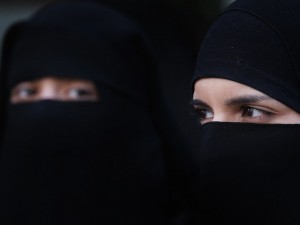
muslim_womenThere are more than 40 million Muslims in Europe, which translates to an average of 8 percent of the population.  France has the largest percentage with 10 percent versus 0.6 percent in the US.  The Muslim inhabitants are mostly concentrated in urban areas, where they can sometimes reach 20 percent and even 30 percent as in Basel, Switzerland.

For an American readership it is hard to grasp the impact of such a concentration on the urban landscape.  Living in Europe, one has to adjust to the changing profile of the Muslim community.  Take, for instance, the recent announcement made by the rector of the Great Mosque of Paris that the number of mosques existing today — 2,000 — in France needs to be doubled.

In early April,  L’Union des Organisations Islamiques de France (UOIF — the Union of Muslim Organizations of France) held its 33rd annual gathering at Le Bourget, north of Paris.  For three days, thousands flocked to this event, bringing their families and looking forward to do some shopping or attending seminars.  French Prime Minister Manuel Valls expressed some concern that the Muslim Brotherhood, which conceived this event, might exert too much influence on the crowds.

One forum attracted many visitors and one, an older man, said, “At the mosque, I am a Muslim — in the street I am a lay person.  When I became French, I accepted the 1905 law of separation of Church and State and I respect the idea of a secular State.”  A young lawyer retorted, “I was born in France, which gave me some rights.  Today I demand that these rights be respected.”  This heated exchange epitomizes the contrast of attitudes between generations of immigrants.

A disturbing trend is the radicalization of the European Muslim community by the Salafists – a conservative Sunni sect.  They want Islam to return to its original form with a strict application of the Sharia.  A journalist describes how, 20 years ago, a suburb outside Montpellier had a theater and drama workshops, where young people loved to practice on the stage.  Today the theater is run down and empty. The Salafists have ordered the premises to be closed, and forbade the women to appear in public.  Le Monde published an article describing the growing number of Salafists in Dusseldorf, but also stressing the distinction between Salafist true believers and “pseudo Salafists,” who are potential jihadists.

Once more France is in the line of fire for its military interventions in several parts of the world.  Recently the screens of TV5 Monde, a television station broadcasting programs in the French language to 200 countries, turned black for 20 hours.  One viewer, in Zarhle, Lebanon, said, “I am not even French, but for me the programs offered by TV5 Monde represent culture, a window onto the free world.”

One can only hope that the ongoing destruction of archaeological sites, the attacks on journalists and the hacking of channels of communication with their social networks, are not going to be followed by further cyber attacks.

Nicole Prévost Logan

Nicole Prévost Logan

About the author: Nicole Prévost Logan divides her time between Essex and Paris, spending summers in the former and winters in the latter. She writes a regular column for us from her Paris home where her topics will include politics, economy, social unrest — mostly in France — but also in other European countries. She also covers a variety of art exhibits and the performing arts in Europe. Logan is the author of ‘Forever on the Road: A Franco-American Family’s Thirty Years in the Foreign Service,’ an autobiography of her life as the wife of an overseas diplomat, who lived in 10 foreign countries on three continents. Her experiences during her foreign service life included being in Lebanon when civil war erupted, excavating a medieval city in Moscow and spending a week under house arrest in Guinea.

A Letter From Paris: Munich Museum Celebrates Tragically Truncated Careers of Two German Artists

Nicole Prévost Logan

Nicole Prévost Logan

The promise of two young men to become among the most important German artists of the 20th century was cut short when Franz Marc (1880-1916) and August Macke (1887-1914) were both killed on the front at the outset of World War I.

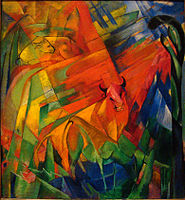
Animals in a Landscape by Franz Marc, 1914.

Animals in a Landscape by Franz Marc, 1914.

The Lenbachhaus museum of Munich, built at the turn of the (20th) century when Munich was the capital of German art, will hold an exhibit in May entitled. “Two Friends.” It shows how Marc and Macke met in 1910, discovered their mutual works with enthusiasm and struck a friendship, which was to last until their death.

The eve of the “Great War” was a time of artistic explosion, not limited to the Impressionists, Cézanne and other great French masters. All of Europe, including the Russian giants like Malevich, or Tatlin, was set ablaze and the German schools of painting played an important role in the cross-pollinization of the art movements.

In 1905 Ernest Ludwig Kirchner (1880-1938) founded Die Brucke (the bridge) in Dresden. The human figures he painted are very distinctive with an angular and depraved look. The Nazis called him “degenerate.” Die Brucke was part of a larger German Expressionist movement based at the Sturm gallery in Berlin and characterized by the rejection of any form of academism, the acerbic satire of the bourgeois decadence, and the crude, almost perverted, representation of the bohemian life the artists led in their studios.

In 1909, Wassily Kandisky (1866-1944) wanted to distance himself from the Neue Künstlervereinigung München (NKVM — the Munich New Artist’s Association) painters and settled in Murnau, a small village on the edge of Bavarian Alps with a group of artists including his companion Gabriele Munter and Alexej Jawlensky. For Marc and Macke, it was a pivotal moment to meet them there.

Even before knowing each other, Marc and Macke had shared a love for painting animals, particularly cats. Both were fascinated by the artistic developments taking place in France. In 1907, and again in 1908 Macke was in Paris and visited the galleries of Bernheim-Jeune, Ambroise Vollard and Durand Rueil, to see Pissaro, Monet, Dégas, Renoir and Seurat. Marc travelled several times to France from 1903 onwards, spending long hours at the Louvre, where he was particularly attracted to Van Gogh’s paintings.

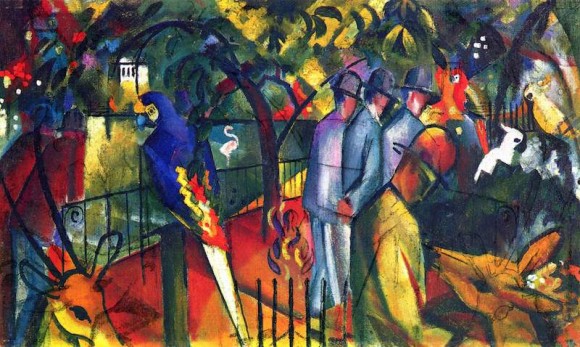
Zoological garden by August Macke, 1912.

Zoological Garden by August Macke, 1912.

August Macke’s city scenes showed silhouettes of slim and elegant women, admiring the latest fashion at shop windows and a sophisticated urban population sitting at cafes or strolling leisurely in a park. Macke looked for harmony in humans and in nature. His colors were vibrant and the atmosphere serene in sharp contrast with the violent, even depressive paintings of the Expressionists like Otto Dix, George Grosz or Max Beckman.

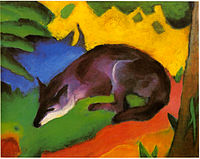
Blue black fox by Franz Marc.

Blue black fox by Franz Marc.

Before becoming an artist, Marc had thought of becoming a theologian. In 1909, he left Munich for the wilderness of Bavarian Alps to paint animals and eventually moved closer to Murnau. He sought the essence and the purity of animal through a theosophical view of the cosmos. Instead of being naturalistic, his representation of deers or tigers was increasingly stylized. The young wild horses seemed to bask in their freedom. In 1911 Wassily Kandisky and Marc created Der Blaue Reiter (The Blue Rider) group, named after the themes of horses and cavaliers found in their paintings.

At a time when the abstraction was like a tidal wave – Picasso and Braque in France, Paul Klee in Switzerland, or Mikhail Larionov in Russia – it is not surprising that Marc and Macke were drawn to these new forms. Robert Delaunay and Italian Futurist Gino Severini became their inspiration.

But sadly this was to be a brief adventure, since both artists were killed prematurely in the war.

Nicole Prévost Logan

Nicole Prévost Logan

About the author: Nicole Prévost Logan divides her time between Essex and Paris, spending summers in the former and winters in the latter. She writes a regular column for us from her Paris home where her topics will include politics, economy, social unrest — mostly in France — but also in other European countries. She also covers a variety of art exhibits and the performing arts in Europe. Logan is the author of ‘Forever on the Road: A Franco-American Family’s Thirty Years in the Foreign Service,’ an autobiography of her life as the wife of an overseas diplomat, who lived in 10 foreign countries on three continents. Her experiences during her foreign service life included being in Lebanon when civil war erupted, excavating a medieval city in Moscow and spending a week under house arrest in Guinea.

A Letter From Paris: A Look at Little (But Oh, So Powerful) Luxembourg

Nicole Prévost Logan

Nicole Prévost Logan

Although Luxembourg is a minuscule country, with only 476,000 inhabitants, it is one of the world banking powerhouses occupying second place with 2.4 trillion euros under its management. It is one of the founding members of the European Union (EU) and has been an active participant at every step of its construction. How did this happen?

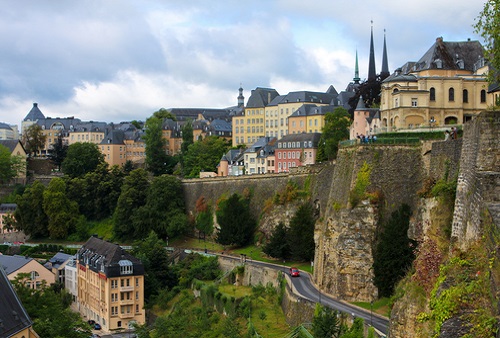
The capital occupies a spectacular site on a rocky ridge overlooking the precipitous ravines of the Petrusse and Alzette rivers. From the Roman streets (Cardo and Decumanus) intersecting in the Marchė aux Poissons (fish market) to the all-glass museum of contemporary art designed by I. M. Pei, a visitor to Luxembourg can admire many periods of architecture including the ducal palace built in a rare 15th century Spanish-Moorish style.

Luxembourg's Ville Haute has a stunning location

Luxembourg’s Ville Haute has a stunning location.

After centuries of domination by neighbors, including France, the Netherlands and Belgium, the 1839 Treaty of London granted the Grand Duchy of Luxembourg both its independence and definitive borders. Grand Duke Henri is the incumbent ruler of the reigning Nassau-Weilbourg dynasty .

The vocation of Luxembourg was at first to be an impregnable fortress. In 963, Count Sigefroi chose the rock of Bock to build a fort. When, in 1684, Napoleon laid siege to the town, he turned to his renowned military architect Vauban to expand the fortifications, which are still visible today, with ramparts, towers, tunnels, bastions and casemates (military blockhouses), all dug out of the cliffs.

Luxembourg has also enjoyed another vocation — to be chosen sometimes as the ruler of Europe. In 1308, Count Henry VII was elected King of Germany by the Prince Electors and soon afterward crowned as head of the German Holy Roman Empire. Since December 2014, the EU President – its highest executive – is Jean Claude Juncker, former Prime Minister of Luxembourg.

Luxembourg has been closely associated with the process of unification of Europe. Robert Schuman, born of a French father and a Luxembourg mother, was among the founding fathers of Europe. In 1947, the BENELUX convention, which created a customs union, was signed between Belgium, the Netherlands and Luxembourg. In 1950, Schuman and Jean Monet from France created the ECSC (European Coal and Steel Community). In 1957, Luxembourg, France, Germany, Italy, the Netherlands, and Belgium signed the Treaty of Rome, creating the EEC (European Economic Community).

The 1985 “Schengen Space” agreement, abolishing borders within Europe, took its name from a small Luxembourg village. The ‘quartier européeen’ has sprung up as a small Manhattan on the Kirchberg plateau with the sky scrapers of the European institutions like the European Investment Bank, the European Court of Justice, and most of the 150 international banks emblematic of modern Luxembourg.

In the 19th century, the discovery of iron ore brought Luxembourg into the industrial age. On the eve of World War I, it was the sixth producer of steel in the world. But, with the decline of steel metallurgy after the 1970s, Luxembourg had to reinvent itself and turned toward financial activities, which today constitute more than 30 percent of the country’s GDP. In 2001 the “Clearstream” scandal raised the suspicion of tax evasion.

Currently the trend is toward increasing transparency in the banking business. In early March of this year, during an official visit to Luxembourg by French president Hollande, “tax optimization” was discussed. It was decided that, by 2017, the exchange of information will become automatic between the two countries.

The policy of Brussels, led by Juncker, is to launch a program of “quantitative easing” or QE (similar to the one carried by the Federal Reserve in the US), of 3,000 billion into the European economy. Countries are now scrambling to qualify for the bail-out funds by presenting their most innovative projects.

Nicole Prévost Logan

Nicole Prévost Logan

About the author: Nicole Prévost Logan divides her time between Essex and Paris, spending summers in the former and winters in the latter. She writes a regular column for us from her Paris home where her topics will include politics, economy, social unrest — mostly in France — but also in other European countries. She also covers a variety of art exhibits and the performing arts in Europe. Logan is the author of ‘Forever on the Road: A Franco-American Family’s Thirty Years in the Foreign Service,’ an autobiography of her life as the wife of an overseas diplomat, who lived in 10 foreign countries on three continents. Her experiences during her foreign service life included being in Lebanon when civil war erupted, excavating a medieval city in Moscow and spending a week under house arrest in Guinea.

Letter From Paris: Greece Given Four Month Debt Deal Extension … But Then What?

Nicole Prévost Logan

Nicole Prévost Logan

During the last week of February 2015, intense negotiations took place between the Greek government and the three members of the “Troika” – the International Monetary Fund (IMF), the Central European Bank (CEB) and the Eurozone.  On Feb. 27, the Bundestag, by a massive majority, approved the four month extension of aid to Greece.

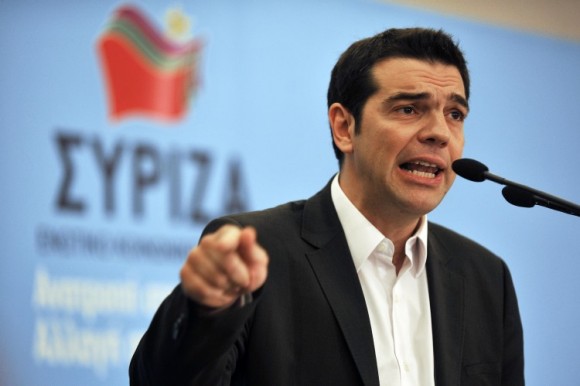
It looked very much like a “déjà vu”scenario: Greece deep in debt, Greece kept alive thanks to several rounds of loans, Greece repeating its promises to curb public spending, and put a stop to fraud, corruption and tax avoidance.  The creditors, however, wanted to give the new government of Alexis Tsipras. a chance to prove itself.  The objective was to strike a compromise between austerity reforms and measures granting some respite to the most vulnerable segment of the population.  The Greek government had five days left before running out of money.

Greek President Alexis Tsipras

Greek Prime Minister Alexis Tsipras

Greece joined the Eurozone on Jan. 1, 2001.  Before 2000, the Greek deficit was about 13 percent of the Gross Domestic Product (GDP.)  By some miracle, in order to meet the criteria for joining the European Union (EU), the deficit was brought down to 3 percent, or more precisely to 3.07 percent.  Eurostat, the statistical office of the EU, the Organization for Economic Co-operation and Development (OECD) and other organizations, pondered over the figures.  The situation was confusing, especially after the Goldman Sachs experts helped Greece with some “creative accounting” by deducting currency swaps and derivatives amounting to 2.8 billion from the calculation of the deficit.

Before 2012, Greece’s creditors were mostly private banks, such as the Société Générale in France.  In March of that year, the banks agreed to cancel 70 percent of their loan or 107 billion.  In 2010 and 2012, the “Troika” granted two rounds of loans, amounting respectively to 110 and 141 billion.  Germany supports 30 percent of the Greek loan, France 23 percent (or 40 billion) and Italy 20 percent.  The participation of the Eurozone members is proportional to the size of their population.  The loans’s maturity is 30 years, 10 percent of the loan carries zero interest and the remainder has interest as low as 2 percent in 2015.  It is important to note these facts in order to counter a lot of disinformation available on the internet.

The discussions, held in Brussels, went well until the disastrous final press conference when the new Greek minister of finances Yanis Varoujakis posturing as a cool Bruce Willis, (to use the Le Monde expression) first demanded that the “Troika” change its name and then asked for a “restructuring” of the debt.  His tour of European capitals, ending in Berlin (where he should have started) was not much appreciated by the German Minister of Finance Wolfgang Schauble, who commented, “We agreed not to agree.”  Varoujakis retorted, “We did not even agree not to agree.”

At a time when refugees and migrants try desperately to reach Europe, the immigration policy of the Tsipras’s recently-elected Syriza party is quite unsettling.  Their plan calls for the retention centers, where refugees and migrants have been held until now, to be turned into “open centers;” to grant citizenship to 150,000 second generation children born in Greece; and to provide housing, schooling and medical care.  How are these programs going to be financed?  The wall built to protect the border between Turkey and Greece fell into disrepair after recent floods.  Maintaining this wall is not a priority announced the government.

There is pretty much a consensus about Greece’s inability to ever pay back its debt.  The creation of the European Funds of Stability and Finances in 2013 to “mutualize” the debt will help Europe absorb the Greek default with more serenity.

But it is far from a done deal.  In four months, before your know it, there will be fierce opposition to write off the debt.  Countries like Portugal or Spain are struggling through austerity and are are not about to continue bailing out Greece.

Nicole Prévost Logan

Nicole Prévost Logan

About the author: Nicole Prévost Logan divides her time between Essex and Paris, spending summers in the former and winters in the latter.  She writes a regular column for us from her Paris home where her topics will include politics, economy, social unrest — mostly in France — but also in other European countries.  She also covers a variety of art exhibits and the performing arts in Europe.  Logan is the author of ‘Forever on the Road: A Franco-American Family’s Thirty Years in the Foreign Service,’ an autobiography of her life as the wife of an overseas diplomat, who lived in 10 foreign countries on three continents.  Her experiences during her foreign service life included being in Lebanon when civil war erupted, excavating a medieval city in Moscow and spending a week under house arrest in Guinea.