
Talking Transportation: Five Terrible Ideas for Solving Traffic Congestion

The fall campaign has brought a welcome discussion of the state’s transportation woes, especially getting mass transit back into a state of good repair.  But gubernatorial candidate Tom Foley says he thinks the real issue isn’t the trains and buses but highway congestion.  Yet, he offers no solutions, saying only “we’ll figure it out.”  Really?

Tom, if there were easy answers, they’d have been implemented by now.  Look … this is really a matter of supply and demand: too much demand (highway traffic) and not enough supply (spaces on those roads).   I think the solution is in managing the demand.  But Foley says it’s a “supply side” issue.

So here are a few of the crazier ideas for fixing traffic that I hope he does not embrace:

  1. DOUBLE-DECK I-95: Seriously, this was once proposed.  Can you imagine the decades of construction and billions in cost, with “upper level” roads having to soar hundreds of feet over existing bridges.
  2. ALLOW TRUCKS ON THE MERRIT PARKWAY: There are two words to explain why this can’t happen:  low bridges.
  3. BAN TRUCKS FROM I-95: Trucks are high-occupancy vehicles delivering goods to the stores that you, in your single-occupancy vehicle, drive to so you can shop.  No trucks, no goods, no shopping.
  4. DRIVE IN THE EMERGENCY BREAK-DOWN LANE: This was Governor Rowland’s idea and he even wasted a million dollars studying it.  But if you think of that far right-hand lane instead as the “emergency rescue lane,” you’ll see why this doesn’t make sense.  This plan would also require re-striping traffic lanes to a narrower width, making driving more dangerous.
  5. WIDENING I-95 TO FOUR LANES: Again, billions in cost and decades of construction.  And if you build it, they will come.  Traffic will expand to fill available space.  Then what, a fifth lane?

I think there are better ideas for managing congestion, some of them already being implemented:

OPERATIONAL LANES:   Adding a fourth lane from on-ramps to off-ramps gives traffic a better chance of merging on and off the highway without blocking the through-lanes.

WIDENING CHOKE-POINTS: For example, the exit 14-15 mess in Norwalk.  But this one small construction project, discussed since 2002, has been under construction for four or five years and it’s still not done!

MANAGE DEMAND WITH TOLLS: Tolls are coming, as I’ve predicted before.  And with time-of-day pricing they’ll not only raise badly needed funds but also mitigate demand.  Those who absolutely must drive at peak hours will pay for the privilege and get a faster ride as those who can wait will defer their trip.  We have peak and off-peak fares on Metro-North, so why not on highways.

ADD A ZIPPER LANE: Sure, this may require highway widening, but just one lane that’s reversible depending on demand, a system that’s long been in effect on the Tappan Zee Bridge.

As I say, there are no simple solutions to highway congestion.  So when any candidate says he or she has one, be skeptical.  It’s easy to identify the problems.  But fixing them will always be expensive.

Jim Cameron

Jim Cameron

Editor’s Note: Jim Cameron has been a Darien resident for 23 years.  He is the founder of the Commuter Action Group and also serves on the Darien RTM.  The opinions expressed in this column are only his own.  You can reach him at CommuterActionGroup@gmail.com  

Talking Transportation: No Blue Ribbons for Metro-North

The long awaited MTA “Blue Ribbon Panel” of experts has issued its report on Metro-North and its sister railroads, and it isn’t pretty.

Their 50 page report confirms much of what we already knew:  that the railroad placed too much emphasis on “on time performance” instead of safety … that there were serious repair issues unattended to for months … and that there has been an enormous “brain drain” of experienced railroad employees who have opted for retirement after 30 years.

All of those problems could have been prevented if MTA Chairman Thomas Prendergast had been doing his job, which he wasn’t.  That is surprising, given his almost 40 years in the industry.  Remember, he was selected as Chairman by Governor Cuomo (just a month before the Bridgeport crash) after successfully turning around the NYC subway system.  And he had also spent years at the LIRR.

But the Blue Ribbon Panel was especially critical of Prendergast for running his three railroads (MNRR, LIRR, NY Subways) as silos, not communicating with each other on best practices.  If the NYC subways had a cool parts-inventory system, MNRR never knew about it.  The “safety culture” at the LIRR may have been great, but it was never shared with MNRR.

But the Panel says the problems were far deeper than just that:

TENSION:

The Panel said there is a “tension” between the railroad workers, who maintain the tracks and signals, and their colleagues, who run the trains over them.  The track workers aren’t given enough time to do their job.  To paraphrase Lincoln:  “A house (or railroad) divided cannot stand”.

TOOLS:

Compared to the LIRR and NYC subway, Metro-North is in the dark ages of technology.  Track inspection reports are still done on paper.  We don’t have state-of-the-art track inspection cars or autonomous bridge monitoring systems.  Much of the maintenance work is done manually instead of using machines.

TIDINESS:

The panel even suggests the railroad clean up all the scrap and debris along the tracks to prevent tripping hazards.

TOP-DOWN:

Did they have to suggest this: “Periodically have management walk with track inspectors to reinforce (the crucial nature of this work)”?

TIME:

The Panel suggests MTA re-open union contracts to do track and signal maintenance work overnight when there’s lots of time and fewer trains.  (Japan’s Shinkansen high speed rail has gone 50 years without a track fatality thanks to inspections of every mile of tracks every night).

TRANSPARENCY:

After years of denying there were any safety problems, the recent derailments and deaths have forced MNRR to face its neglect of safety.  The Panel also suggests increased “customer engagement” on this topic with town halls, media oppotunities and direct customer communications.

So, kudos to the Panel of industry experts and thank you for a year of hard work.  Now it’s up to the MTA and Metro-North to take the list of 29 recommendations to heart and make our trains on-time and safe.

Jim Cameron

Jim Cameron

Editor’s Note: Jim Cameron has been a Darien resident for 23 years. He is the founder of the Commuter Action Group and also serves on the Darien RTM. The opinions expressed in this column are only his own. You can reach him at CommuterActionGroup@gmail.com

Talking Transportation: Why a Another Fare Hike Seems Inevitable

I hate to be the bearer of bad news, but chances are we will see another fare hike on Metro-North in the coming months.

Not that any elected official would endorse such a plan (at least not before the November elections), but once again Connecticut is not totally in control of its financial destiny when it comes to our trains.

True, fare increases in Connecticut must be initiated by the state regardless of what New York does to its riders, but the financial numbers speak for themselves.

We are tied to New York’s operations by an antiquated contract going back 30 years. The cost of running “our” trains is born by both Connecticut and New York, and those costs are soaring from $70 million a year to $110 million thanks to remedial track work and expected contract settlements (with four years of retroactive pay hikes).

How will Connecticut make up this $40 million deficit? There are only three choices: raise fares, cut service or find that money elsewhere. The latter two choices are either undesirable or impossible, leaving the prospect (necessity?) of fare increases.

After a year of slower, unreliable and often-disrupted service, it’s hard to explain to commuters they should be paying more… especially in an election year. So when the rumored necessity of a fare hike was floated last week, Governor Malloy expressed outrage and bewilderment.

But our governor and his Department of Transportation (DOT) knew darn well this was coming. They’re the ones who pushed Metro-North for badly needed track work after derailments and deaths. Who did they think would pay for that? And one wonders… does Connecticut’s DOT ever audit Metro-North’s ever-increasing budgets and bills to our state?

Fares in Connecticut are already the highest in the US because our subsidy of those fares is the lowest. Upstate lawmakers who dominate our legislature loathe the idea of subsidizing fat-cat investment bankers’ trips to their high-paying jobs in New York City. But they have no trouble taxing their incomes, do they?

Fairfield County residents represent 26 percent of our state’s population but pay 40 percent of its taxes. Legislators made us subsidize Adriaen’s Landing ($770 million) in Hartford and the UConn football stadium ($90+ million), neither of which we are ever likely to use. So why can’t they keep residing in Fairfield County affordable by keeping Metro-North safe, on-time and affordable.

Since 2012 we’ve already had 12 percent fare hikes, thanks in part to Governor Malloy using rail fares to balance his budget (a move I called that more of a tax on commuters than anything else.)

The good news is that a fare increase in Connecticut requires 90 days notice and public hearings. And with the November elections just weeks away, no right-minded politician will pull that trigger.

Mind you, it was now-GOP nominee Tom Foley who recently told reporters he thought we in Connecticut spend too much subsidizing mass transit, so who knows? It should be an interesting campaign season and my hope is that Metro-North will be a much debated topic.

Jim Cameron

Jim Cameron

Editor’s Note: Jim Cameron has been a Darien resident for 23 years. He is the founder of the Commuter Action Group and also serves on the Darien RTM. The opinions expressed in this column are only his own. You can reach him at CommuterActionGroup@gmail.com

Talking Transportation: To Vermont, By Train

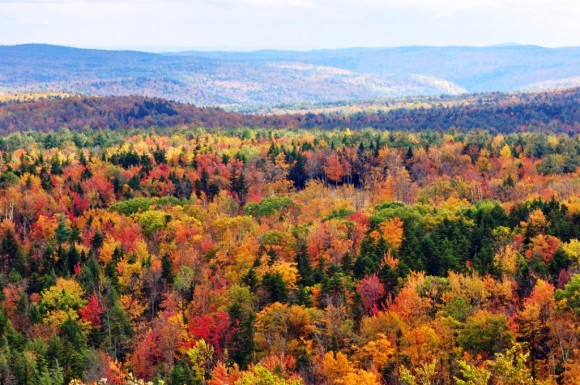
The Vermont landscape always draws visitors.

The beautiful Vermont landscape always draws visitors.

Like many, I love Vermont.  But I’m not crazy about getting there.

From my home to Burlington VT is about 300 miles.  By car, that’s at least five hours and about $50 in gas each way.  Flying may seem quicker, but with the airport drive, it’s not much better and about $150 each way.  But there’s another alternative: Amtrak.

There are actually three trains a day that will take you to (or close to) Vermont:

THE VERMONTER:

Your best choice, this train runs daily from Washington DC to St Albans VT, coming through Stamford at about noontime each day.  It also stops in Bridgeport and New Haven before heading up the Connecticut River Valley to Vermont stops in Brattleboro, Windsor, Montpelier, Waterbury (Stowe) and Essex Junction (Burlington), to name but a few.

It’s not the fastest run (Stamford to Essex Junction is 8 hours), but it’s certainly beautiful and relaxing.  A frustrating reverse move at Palmer, Mass., will be eliminated this fall with new tracks, shaving an hour off the run.

The Amfleet seats in coach are comfy.  There’s also business class seating (for a premium).  The AmFood is tasty.  The crew is great … and there’s even free wifi.  Despite the many stops, the train hits 80 mph in many stretches on smooth, welded rails.

Remember:  Amtrak runs in any kind of weather, so if you’re thinking of skiing this winter when there’s a blizzard and its 20 below zero, the train will get you there when airports and highways are closed.

THE ETHAN ALLEN EXPRESS:

If you’re heading to Rutland, Vt., this is your train.  Originating at NY’s Penn Station mid-afternoon, this train bypasses Connecticut and shoots up the Hudson Valley, arriving in Rutland just before 9 p.m. with stops in Saratoga Springs, Glens Falls and Castleton, Vt.  Best strategy here is to catch this train at Croton-Harmon (in Westchester County) where there’s plenty of paid parking available.  The hope is that the Ethan Allen may be extended from Rutland north to Burlington in the coming years.

Same kind of Amfleet cars, coach and business, AmCafé and free wifi.

THE ADIRONDACK:

This daily train from NY’s Penn Station to Montreal doesn’t go through Vermont, but it gets you close … if you don’t mind a ferry boat ride.  Leaving NYC at 8:15 a.m., you detrain at Port Kent, N.Y., on the western shore of Lake Champlain about 2:30 p.m., walk about 100 yards down to the dock and catch the ferry to downtown Burlington.

Same kind of seating, wifi, etc., but on this train you’re traveling with a much more international crowd of Quebecois.  Poutine anyone?

Thanks to state subsidies and increasing ridership, fares on all of these Amtrak are very affordable:  on The Vermonter, Stamford to Burlington (booked in advance) is just $55 one way ($47 for seniors and kids are half-price.)

So if you’re planning a vacation in The Green Mountain state, remember that getting there can be half the fun if you leave the driving to Amtrak … the “green” way to travel.

Jim Cameron

Jim Cameron


JIM CAMERON has been a Darien resident for 23 years.  He is the founder of the Commuter Action Group and also serves on the Darien RTM.  The opinions expressed in this column are only his own.  You can reach him at CommuterActionGroup@gmail.com  
“Talking Transportation: Is It Safe To Ride Metro-North?

logoIt has been seven months since a drowsy engineer drove a speeding Metro-North train off the tracks at Spuyten Duyvil, killing four and injuring 59.

Months earlier a derailment and collision near Bridgeport sent 70 to the hospital. Ever since, the railroad has promised that improving safety is its top priority.  So does that mean the railroad is now “safe”?

Aside from taking the word of management, how are we to know?  Just because we haven’t had another accident doesn’t mean the railroad is safe.  Nobody suspected it was unsafe until those two accidents last year showed us just how dangerous our daily commute had become.

In April this year The Commuter Action Group surveyed 642 commuters and asked them, “Do you feel safe riding Metro-North?” and 56% said yes, 15% said no and 29% said they “weren’t sure”. Neither am I, but I ride those trains regularly, hoping for the best.  And so far, so good.

I take the railroad at its word when it says safety is its top priority, but I have no way of telling it that’s true.  As Donald Rumsfeld famously said, “We don’t know what we don’t know.” Waiting on a station platform, how can the average commuter look at the tracks, the overhead wires or signals and know that Metro-North is safe?  We can’t even see the engineers because they hide in their control booth behind jerry-rigged cardboard curtains ‘lest riders should watch them at work. Here’s what we do know.

The trains are running slower (on-time performance was only 79% in May).  And last week we also learned that an entire class of conductor trainees had been dismissed because they were caught cheating on a safety exam.  Good for the MTA for catching and disciplining them.  But the worry is whether this kind of cheating has been going on for years.

Reassuring?  The only way to be sure that Metro-North is safe is better federal oversight by the FRA, the Federal Railroad Administration.  That agency still hasn’t issued its final report on the May 2013 derailment… and only fined the railroad $5,000 following a Metro-North trainee’s mistake, which killed one of their own track foremen.

As US Senator Richard Blumenthal put it, “The watchdogs were asleep.  The FRA has been lax and sluggish.” That’s why commuters should be reassured that Senator Blumenthal will soon introduce a bill to give the FRA some real teeth:  increasing civil penalties for railroad mistakes, strengthening railroad oversight, mandating new safety gear, introduction of a fatigue management plan for personnel, requiring anonymous reporting systems for whistle-blowers, installation of cameras, alerters and redundant safety systems for track workers.

Further, the bill would also require stronger safety standards for crude oil rail-tankers, the “pipelines on wheels” carrying crude oil and petroleum products on US railroads. The only thing missing?  Mandatory transparency.  I’d hope that the FRA would be required to explain its oversight and reassure all railroad riders of their safety in a simple, understandable manner.

That would make me feel safe.

Jim Cameron

Jim Cameron

Jim Cameron has been a Darien resident for 23 years.  He is the founder of the Commuter Action Group and also serves on the Darien RTM.  The opinions expressed in this column are his own.  You can reach him at CommuterActionGroup@gmail.com