Reading Uncertainly? ‘The Uninhabitable Earth: Life After Warming’ by David Wallace-Wells

Is global warming a sensible hypothesis? Is it happening? What may be its consequences?  What can and should we, as human beings, do about it?

These are some of the most important questions facing us today. David Wallace-Wells begins with startling pessimism, moving on to despair, but he finally concludes with a modest sense of optimism. Thank goodness … at least for this reader.

He tests our ability to continue reading in an ominous Chapter 2, some 100 pages of possible woe: heat death, hunger, drowning, wildfires, disasters (no longer natural). freshwater drain, dying oceans, unbreathable air, plagues of warming, economic collapse, climate “conflict”, and “systems” collapses.

What a challenge!

As the author writes at its end, “If you have made it this far, you are a brave reader.” It confirms Pogo’s famous law: “We have met the enemy, and he is us.”

This analysis leads Wallace-Wells to suggest how we might respond: “But climate change inverts the (human) perspective – giving us not a deep time of permanence but a deep time of cascading, disorienting change, so deep that it mocks any pretense of permanence on the planet.” Does this then enhance the delusions of apocalypse believers?

What do other think of this proposition?

John Lancaster, writing in The New York Times (4/28/19) says: “a remorseless, near unbearable account of what we are doing to our planet.”
From The Economist (5/25/19): “[the book explores the] … causal link between climate change and conflict (encompassing everything from interpersonal to large-scale violence.)”
From the New Scientist (4/27/19): “The goal should not be net-zero carbon emissions, as fast as possible. How fast is feasible is a legitimate matter for debate.”
Dana Wilde, writing in The Working Waterfront (9/20/19) notes: “Reading the book’s first sections is like being caught in a carpet-bombing.”

Buried in the author’s notes is a conclusion by Paul Kingsnorth, from Dark Ecology (2012): “The answer is that it leaves you with an obligation to be honest about here you are in history’s great cycle, and what you have the power to do, and what you don’t.” At least, we can try.

Then Wallace-Wells counsels that the problem stems from “ … both human humility and human grandiosity … If humans are responsible for the problem, they must be capable of undoing it … it is an acceptance of responsibility.”

My personal counsel: “Don’t despair; respond!” Or perhaps, to my offspring, “Go North, young people, and go inland!”

Editor’s Note: The Uninhabitable Earth: Life After Warming by David Wallace-Wells, was published by Tim Duggan Books, New York, 2019 .
Felix Kloman

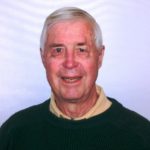
About the Author: Felix Kloman is a sailor, rower, husband, father, grandfather, retired management consultant and, above all, a curious reader and writer. He’s explored how we as human beings and organizations respond to ever-present uncertainty in two books, ‘Mumpsimus Revisited’ (2005) and ‘The Fantods of Risk’ (2008). A 20-year resident of Lyme, he now writes book reviews, mostly of non-fiction, a subject which explores our minds, our behavior, our politics and our history. But he does throw in a novel here and there.
For more than 50 years, he’s put together the 17 syllables that comprise haiku, the traditional Japanese poetry, and now serves as the self-appointed “poet laureate” of Ashlawn Farm Coffee, where he may be seen on Friday mornings. His late wife, Ann, was also a writer, but of mystery novels, all of which begin in a village in midcoast Maine, strangely reminiscent of the town she and her husband visited every summer.

Reading Uncertainly: ‘The Library Book’ by Susan Orlean

Editor’s Note (i): If you’re still searching for a last-minute gift, then consider this book — it’s the perfect present for book- and library-lovers everywhere! Many thanks to our wonderful and ever faithful book-reviewer Felix Kloman of Lyme for sharing his thoughts on this best-seller, which is described by The New York Times as “a sheer delight…as rich in insight and as varied as the treasures contained on the shelves in any local library” and by USA TODAY as, “a dazzling love letter to a beloved institution and an investigation into one of its greatest mysteries. 

Susan Orlean, a long-time writer for The New Yorker, gives us, at once, a paean to all libraries, a biography of a singular library in Los Angeles, a story of its crippling fire in April, 1986 and its possible arsonist, and, above all, the tale of the devotion and delight of all librarians. It is a love story, too, resonating with all of us enamored of those enticing shelves.

She begins with that fire and its effect on guides and users alike, facing the enormity of the destruction, “This was a shrine to being forgotten; to memories sprinkled like salt, ideas vaporized as if they never had been formed; stories evaporated as if they had no substance and no weight keeping them bound to the earth and to each of us, and, most of all, to the yet-unfolded future”.

What is a library? The author suggests that ”every problem that society has, the library has too,” from homelessness, thievery, fractious adults, uncontrolled children, and waste, yet our librarians manage and smile though it all.  Susan Orlean remains enthralled: “As I stood there, gobsmacked by this serendipity!”

She also wonders about the future of book lending, under the effects of advancing technology, the Internet and social media, concluding with optimism, “Libraries are physical spaces belonging to a community where we gather to share information. … A library is a good place to soften solitude; a place where you feel part of a conversation that has gone on for hundreds and hundreds of year even when you’re all alone. The library is a whispering post. You don’t need to take a book off a shelf to know thee is a voice inside that is waiting to speak to you”.

So off I go to wander through the stacks in Phoebe Griffin Noyes, the Lyme Library, the Acton in Old Saybrook, the Essex Library, and even to Middletown. And everywhere I will find smiling librarians and a veritable profusion of riches.

Editor’s Note (ii): ‘The Library Book’ by Susan Orlean was published by Simon & Schuster, New York 2018.

Felix Kloman

About the Author: Felix Kloman is a sailor, rower, husband, father, grandfather, retired management consultant and, above all, a curious reader and writer. He’s explored how we as human beings and organizations respond to ever-present uncertainty in two books, ‘Mumpsimus Revisited’ (2005) and ‘The Fantods of Risk’ (2008). A 20-year resident of Lyme, he now writes book reviews, mostly of non-fiction, a subject which explores our minds, our behavior, our politics and our history. But he does throw in a novel here and there.
For more than 50 years, he’s put together the 17 syllables that comprise haiku, the traditional Japanese poetry, and now serves as the self-appointed “poet laureate” of Ashlawn Farm Coffee, where he may be seen on Friday mornings. His late wife, Ann, was also a writer, but of mystery novels, all of which begin in a village in midcoast Maine, strangely reminiscent of the town she and her husband visited every summer.

Reading Uncertainly? ‘Genesis’ by Edward O. Wilson

“What are we, what created us, and what do we wish ultimately to become?” Dr. Edward O. Wilson, the prolific emeritus professor at Harvard, biologist, and naturalist, is also a continual questioner. His last book, The Meaning of Human Existence (2014) also began with a question,“Who are we?”

He begins with a restatement of what we have learned from our studies of human evolution: “Every part of the human body and mind has a physical base obedient to the laws of physics and chemistry. And all of it, so far as we can tell by continuous scientific examination, originated through evolution by natural selection.”

“The first organisms on earth,” he continues, “were self-assembled into replicating systems out of the endless random combinations of molecules present in the primordial sea.” We are the result of a series of “transitions” that evolved into “groups” and then “eusocial species” that began to practice altruism.”

Dr. Wilson then goes on to describe “eusociality,” a condition that has “arisen only rarely” as “colonies divided into reproductive and non-reproductive castes.” He cites, of course, insects (the subject of many of his earlier studies) with more than a million known species, of which some “twenty-thousand have been found to be eusocial” (ants, social bees, social wasps, and termites).  Eusocial orders now appear to dominate the terrestrial animal world, and they are found within Homo sapiens: aged grandmothers, homosexuals, monastic orders.

As the author answers the question, “What was the force that made us?” he explicitly also asks, “What exactly replaced the gods?” And, “Why should people around the world continue to believe one fantasy over another out of the more than four thousand that exist on Earth?”

His answer: “tribalism,” a condition that appears to be slowly subsiding. But that is changing as humans expand and as the groups in which we gather enlarge: “the larger the group size, the more frequently innovations occur within the group. “Storytime” for humans has expanded from one to two hours a day to “five hours for modern humanity.”

But we are simultaneously both altruistic and selfish.  How are we to work within these opposing traits?  Wilson’s key suggestion of hope: “ … within groups, selfish individuals win against altruists, but groups of altruists beat groups of selfish individuals.”

One sidebar comment from this reader. Wilson uses that lovely word “murmurations,” as in the murmurations of starlings swooping, flying in coordinated patterns.

And I too now end with a question: What next?

Editor’s Note:

Felix Kloman

About the Author: Felix Kloman is a sailor, rower, husband, father, grandfather, retired management consultant and, above all, a curious reader and writer. He’s explored how we as human beings and organizations respond to ever-present uncertainty in two books, ‘Mumpsimus Revisited’ (2005) and ‘The Fantods of Risk’ (2008). A 20-year resident of Lyme, he now writes book reviews, mostly of non-fiction, which explores our minds, our behavior, our politics and our history. But he does throw in a novel here and there.
For more than 50 years, he’s put together the 17 syllables that comprise haiku, the traditional Japanese poetry, and now serves as the self-appointed “poet laureate” of Ashlawn Farm Coffee, where he may be seen on Friday mornings. His late wife, Ann, was also a writer, but of mystery novels, all of which begin in a village in midcoast Maine, strangely reminiscent of the town she and her husband visited every summer.

Reading Uncertainly? Halloween Special! ‘Connecticut: Spooky Trails and Tall Tales’ by Local Author Gencarella

Here is an engaging, enthralling, timely, and often frightening set of stories from our Nutmeg State, subtitled “Hiking the State’s Legends, Hauntings and History”. These are stories we love to hear, tell – and retell – regardless of origin and authenticity, especially if they involve ghosts, mysteries, illnesses and deaths. And we storytellers do modify them to fit our local purposes!

It is yet another publication of a local Lyme writer: Dr. Gencarella wrote Wicked, Weird and Wily Yankees: A Celebration of New England Eccentrics and Misfits, reviewed in LymeLine on June 3, 2018. He teaches at the University of Massachusetts – Amherst and recently served as the resident folklorist at the Connecticut River Museum in Essex.

These are stories – and hiking linked to each of them – from all over this state. Locally, he explores nearby spots such as Selden Creek, Selden Cove, East Haddam, the Devil’s Hopyard and Rogers Lake.

He is a sleuth of old and questionable stories, often a confusion of clashing religious beliefs, still pertinent today. He writes, “This story is yet another compelling example of folklore operating with sensational journalism to sell newspapers,” and cites the continuing “co-dependent relationship between folklore and yellow journalism in the nineteenth century.”  Today also?

And introduces his readers to unusual words, for example, have you met a “glawackus”? Or do you know friends with these first names: Zerubbabel or Adoniram?  Read on …

Many of these stories are based on misinterpreted natural events, and then “reinterpreted”, “revised” and embellished to attract tourists and sell newspapers. The themes of these stories are common: “depiction of ‘foolish Indians’ “, or “drunken Indians” and attractions between young men and attractive young maidens, often leading to parental objections and dual suicides.

The author comments: “As a folklorist, I reluctantly understand why salacious stories about impoverished rural folk can please people who have greater means. Such tales titillate with scandal, arouse schadenfruede, and allow audiences to feel better knowing someone else is worse off.”

Having lived almost 50 years in this state, I relished these stories, as I have rowed on Lake Waramaug, Selden Creek, Rogers Lake and the Connecticut River. I wish I had known them then …

Is Captain Kidd’s buried treasure in Rogers Lake? But, at the end of each chapter is Dr. Gencarella’s “Legend Tripping” — his directions for hikes at or near each locale … and try rowing, too!

Editor’s Note: Connecticut: Spooky Trails and Tall Tales, by Stephen Gencarella is published by Falcon, Guilford, CT, 2019.

Felix Kloman

About the Author: Felix Kloman is a sailor, rower, husband, father, grandfather, retired management consultant and, above all, a curious reader and writer. He’s explored how we as human beings and organizations respond to ever-present uncertainty in two books, ‘Mumpsimus Revisited’ (2005) and ‘The Fantods of Risk’ (2008). A 20-year resident of Lyme, he now writes book reviews, mostly of non-fiction, which explores our minds, our behavior, our politics and our history. But he does throw in a novel here and there. For more than 50 years, he’s put together the 17 syllables that comprise haiku, the traditional Japanese poetry, and now serves as the self-appointed “poet laureate” of Ashlawn Farm Coffee, where he may be seen on Friday mornings. His late wife, Ann, was also a writer, but of mystery novels, all of which begin in a village in midcoast Maine, strangely reminiscent of the town she and her husband visited every summer.

Reading Uncertainly: ‘The Meaning of Human Existence’ by Edward O. Wilson

Who are we?

Edward O. Wilson, the eminent Harvard biologist and noted student of ants, describes our strange species in a remarkable and memorable book. In 15 brief, succinct and challenging chapters, each less than 10 pages, he suggests that, at once, we are far more and far less than we imagine.

His is a daunting title but the contents live up to expectations.

First, far less: homo sapiens have existed through a modest six millennia, a mere blip in the 13-plus billion years of our universe, the 4.5 billion years of this earth and the 400 million years of other “species on earth.” And this earth is but a “mote of stardust near the edge of our galaxy (an estimated hundred billion star systems make up the Milky Way galaxy) among a hundred billion or more galaxies in the universe.”

And even among the other species here on this planet, “how bizarre we are as a species … we are chemosensory idiots” when compared to most of them. “Our species is almost unconscious of most stimuli.”

But we are unusual.

We have the “capacity to imagine possible futures, and to plan and choose among them,” the “ability to invent and inwardly rehearse competing scenarios of future interactions.”

Dr. Wilson compares the “humanities” to “science.” The humanities tell us “what,” “the particularities of human nature back and forth in endless permutations, albeit laced with genius and in exquisite detail,” while science increasingly is needed to tell us “why.”

Are we trapped in our own egos?

In Chapter 11, The Collapse of Biodiversity, we seem to be knocking off many species, only to find more.  But “ … without nature,  finally, no people!” “The human impact on biodiversity, to put the matter as briefly as possible, is an attack on ourselves!” This re-confirms the famous Pogo adage, “We have met the enemy and he is us.”

Wilson suggests we remember the acronym HIPPO: Habitat loss; Invasive species; Pollution: Population growth; and Overharvesting. These may be the most important challenges our species face.

Has the human creation of religions helped? Wilson is dubious.

Religion’s “history is as old or nearly so as that of humanity itself. The attempted resolution of its mysteries lies at the heart of philosophy.” But “the great religions are also, and tragically, sources of ceaseless and unnecessary suffering.”

He adds: “the true cause of hatred and violence is faith versus faith, an outward expression of the ancient instinct of tribalism. Faith is the one thing that makes otherwise good people do bad things.” Many will find this offensive but it is a considered opinion, backed up with solid examples. Wilson summarizes thus, “the best way to live in this real world is to free ourselves of demons and tribal gods!”

He returns to the balance of science and the humanities; the latter describe “the human condition,” while science “encompasses the meaning of human existence.”  We are “an accident of evolution,” from herbivore to carnivore, from wanderer to static, from small families to multiple “tribes.” And “when an individual is cooperative and altruistic, this reduces his advantage in competition to a comparable degree with other members, but increases the survival and reproduction rate of the group as a whole.” No wonder we have conflicting views of how to respond …

Dr. Wilson’s conclusion: “Are human beings intrinsically good but corrupted by the forces of evil, or the reverse, innately sinful yet redeemable by the forces of good? Are we built to pledge our lives to a group, even to the risk of death, or the opposite, built to place ourselves and our families above all else? Scientific evidence, a good part of it accumulated during the past twenty years, suggests that we are both of these things simultaneously. Each of us in inherently conflicted.”

“If the heuristic and analytical power of science can be joined with the introspective creativity of the humanities, human instinct will rise to an infinitely more productive and interesting meaning.”

After each chapter, I had to stop and reflect on Wilson’s ideas, taking many notes.

And I plan to re-read it in its entirety next year.

Editor’s Note: ‘The Meaning of Human Existence’ by  Edward O. Wilson, was published by W. W. Norton  & Co., New York, 2014.

Felix Kloman

About the Author: Felix Kloman is a sailor, rower, husband, father, grandfather, retired management consultant and, above all, a curious reader and writer. He’s explored how we as human beings and organizations respond to ever-present uncertainty in two books, ‘Mumpsimus Revisited’ (2005) and ‘The Fantods of Risk’ (2008). A 20-year resident of Lyme, he now writes book reviews, mostly of non-fiction, which explores our minds, our behavior, our politics and our history. But he does throw in a novel here and there. For more than 50 years, he’s put together the 17 syllables that comprise haiku, the traditional Japanese poetry, and now serves as the self-appointed “poet laureate” of Ashlawn Farm Coffee, where he may be seen on Friday mornings. His late wife, Ann, was also a writer, but of mystery novels, all of which begin in a village in midcoast Maine, strangely reminiscent of the town she and her husband visited every summer.