Reading Uncertainly? “The Cockroach” by Ian McEwan

Cockroaches have successfully inhabited this earth for more than 300 million years and are like to continue to do so for millions more, so long as it exists. But what about their working relationship with Homo sapiens, we relative newcomers?

Ian McEwan, one of my favorite authors, suggests in this political satire that they may well take matters into their own hands (six each) in order to preserve their habitat. With the growing chaotic conditions in England, a group of cockroaches living in relative splendor in the bowels of the “pleasantly decaying” Palace of Westminster decide to act.

One, in particular, leaves “the floorboards, safety and solace among millions of its siblings” to make the treacherous crawl to Number 10 Downing Street, through a crack in the front door, up several flights of stairs and into the bedroom, where it (he) then takes over the body of and becomes the Prime Minister. Several of his mates also take over other government officials.

Their goal: make the United Kingdom (or what’s left if it) adopt a radical new economic policy called “Reversalism:” “Let the money flow be reversed and the entire economic system, even the nation itself, will be purified, purged of absurdities, waste and injustice.” It will be “forbidden by law to hoard cash.” “Bank deposits will attract high negative interest rates.” “The government sends out tax gifts to its workers.” You will pay an employer to take a job. You will be paid to take food and goods. In other words, spend!

The Prime Minister (appropriately named “Jim Sams” from Franz Kafka’s Gregor Samsa, in Metamorphosis) then plans a telephone call to the President of the United States to try and persuade him to adopt this new economic policy. “It was 6 p.m. in Washington. The president would be busy watching television and might not appreciate the interruption.”

But Sams went ahead, background noise and all. The conversation was, as he reported, “all poetry, smoothly combining density of meaning with fleet-footed liberation from detail …  There was nothing more liberating than a closely knit sequence of lies.” The president is never named, but the PM is interrupted when he starts to ask, “How is Mel—“

At the end of this brief exposition, our cockroach leaves the body of the Prime Minister and crawls safely back to its compatriots at the Palace, secure in the knowledge that universal adoption of Reversalism will result in a dramatic reduction of the human species on this earth, thus assuring the continuity of cockroaches.

 A delightful, challenging, and worrisome satire.

Editor’s Note: “The Cockroach” by Ian McEwan is published by Anchor Books, New York 2019
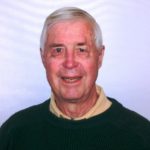
About the Author: Felix Kloman is a sailor, rower, husband, father, grandfather, retired management consultant and, above all, a curious reader and writer. He’s explored how we as human beings and organizations respond to ever-present uncertainty in two books, ‘Mumpsimus Revisited’ (2005) and ‘The Fantods of Risk’ (2008). A 20-year resident of Lyme, he now writes book reviews, mostly of non-fiction, a subject which explores our minds, our behavior, our politics and our history. But he does throw in a novel here and there.
For more than 50 years, he’s put together the 17 syllables that comprise haiku, the traditional Japanese poetry, and now serves as the self-appointed “poet laureate” of Ashlawn Farm Coffee, where he may be seen on Friday mornings. His late wife, Ann, was also a writer, but of mystery novels, all of which begin in a village in midcoast Maine, strangely reminiscent of the town she and her husband visited every summer.

Reading Uncertainly? ‘Varina’ by Charles Frazier

Slip back some 120 years and reconsider our Civil War through the eyes and mind of the wife of Jefferson Davis, Varina. This is Charles Frazier’s latest gripping and, often hilarious, novel.  Married to the much older man at 18, she gives us a stimulation of memories of her life with the Confederate President first in Richmond, then an escape attempt to Cuba by way of Florida at war’s end, then her later experiences in the South, and, finally her residences in New York City and summers in Saratoga Springs, NY, after Davis’s death.

And always accentuating her story is that of James Blake, a young mixed-race orphan she rescues one day in Richmond, brings into her home with her children, and carries with her on their escape south. He returns to her life in New York, trying to resurrect memories of their early days together. It was a volatile life, as she explains, “Thinking how all the lesser increments of the time between then and now — years, months, days, hours, moments – drained constantly into the black sump where time resides after it’s been used up, whether used well or squandered.” Varina goes on, “ … lives rarely have plots, but sometimes they find shape.”

Constantly she reminds us at that period, it was always “them or us,” referring to the dominance of color. As she notes to James, we are, “witnesses needing to apply skin color to every personal transaction.”  Varina describes the long-term working relationship between Jefferson Davis and his black slave, “that the fundamental note of their long history together condensed to a single fact – one member of the friendship was owner and the other was both labor and capital.”

Has that changed much today?

Frazier’s language is challenging and lyrical. Challenging thus, “an eidolon took her place” (an idealized person, specter or phantom), and “all gaumed up beyond belief.” (smeared or covered with a gummy, sticky substance.” Lyrical thus, “A dense flight of swallows formed shapes against the sky like a child molding a dough ball, never quite creating a convincing box turtle or dog’s head or teapot, but still moving from idea to idea with a beautiful fluidity.”

And at the conclusion of this joint memoir (by both Varina and James Blake), he writes in his notebook after a lengthy discussion with Varina: “Especially since I found the blue book, I’ve come to see Mr. Davis and his beliefs this way. He did as most politicians do – except more so – corrupt our language and symbols of freedom, pervert our war heroes. Because, like so many of them, he held no beloved idea or philosophy as tightly as his money purse. Take a king or a president or anybody. Put a heavy sack of gold in one hand and a feather-light about freedom in the other. And then an outlaw sticks a pistol in his face and says give me one or the other. Every time – ten out of ten – he’ll hug the sack and throw away the ideals, like the foundation under a building … And that’s how freedom and chains and a whipping post can live alongside each other comfortably.”

Do those words remind you of today?

Editor’s Note: ‘Varina’ by Charles Frazier is published by Ecco, New York 2018

About the Author: Felix Kloman is a sailor, rower, husband, father, grandfather, retired management consultant and, above all, a curious reader and writer. He’s explored how we as human beings and organizations respond to ever-present uncertainty in two books, ‘Mumpsimus Revisited’ (2005) and ‘The Fantods of Risk’ (2008). A 20-year resident of Lyme, he now writes book reviews, mostly of non-fiction, a subject which explores our minds, our behavior, our politics and our history. But he does throw in a novel here and there.
For more than 50 years, he’s put together the 17 syllables that comprise haiku, the traditional Japanese poetry, and now serves as the self-appointed “poet laureate” of Ashlawn Farm Coffee, where he may be seen on Friday mornings. His late wife, Ann, was also a writer, but of mystery novels, all of which begin in a village in midcoast Maine, strangely reminiscent of the town she and her husband visited every summer.

Reading Uncertainly? ‘Life Undercover’ by Amaryllis Fox

A lyrical memoir of an unusual woman’s life, in Washington, London, Moscow, London and finally Washington again, minus her father. Then on to the CIA, described in amazing detail, and her life afterwards as an agent around the world.

Fox’s language is engaging, plus her almost-total recall of conversations.  A compelling read, but it raises two questions: (1) How was she able to obtain the permission of her employer, the CIA, to describe in such detail her solicitation, training, and her actual work? And (2) do the details in her conversations make this almost a fictional novel?

It is as if she is being seduced by some opiate, “I feel the high of not just observing the world but actually changing it.”

At the outset she believes that “terrorism is a psychological game of escalation” practiced by all of us.” When she first goes to China undercover, she remarks “This is my first time living the lie around the clock. The years of deception yawn ahead, like an ink-black void.” It is as if the Cheshire Cat is asking her, “Who are YOU?”

Her stories provoked my own memories.

Her father, reporting on a visit to Moscow told her that his only hardship, “was the Soviet toilet paper.” How true! When I traveled with a small group to Yaroslavl, many miles north of Moscow, we were advised to bring our own. What was on offer was minuscule. Later, Fox herself  walked Red Square, stopping at Lenin’s tomb, noting that “Lenin seems smaller … petite and fragile … He looks weak and human and beautiful.” I had that same impression in 1992 on my own transit of the Square.

Later she explains to a friend her rationale for her secret work, “If not us, who? If not now, when?” That prompted my neurons to recall the famous haiku reported by Dogen Zenji when he asked the monk Tenzo why he was drying mushrooms on a steaming hot day. Tenzo replied:

If not I, then who
Dries mushrooms in the hot sun?
If not now, then when?

This is perhaps the best reward from one’s reading: the stimulation of buried memories!

The author, now a writer and exponent of peacemaking, continues her work in a different direction. She now asks “why?” continually. She suggests that, “planting a garden is the ultimate act of faith in tomorrow,” a thought worth remembering.

And finally, “ … peacemaking requires listening, that vulnerability is a component of strength … and building trust simply works better than exerting force.”

Hear! Hear!

Editor’s Note (i): We second Felix’s vote of support for Fox’s final statement.

(ii) ‘Life Undercover’ by Amaryllis Fox was published by Alfred A. Knopf, New York 2019.

About the Author: Felix Kloman is a sailor, rower, husband, father, grandfather, retired management consultant and, above all, a curious reader and writer. He’s explored how we as human beings and organizations respond to ever-present uncertainty in two books, ‘Mumpsimus Revisited’ (2005) and ‘The Fantods of Risk’ (2008). A 20-year resident of Lyme, he now writes book reviews, mostly of non-fiction, a subject which explores our minds, our behavior, our politics and our history. But he does throw in a novel here and there.
For more than 50 years, he’s put together the 17 syllables that comprise haiku, the traditional Japanese poetry, and now serves as the self-appointed “poet laureate” of Ashlawn Farm Coffee, where he may be seen on Friday mornings. His late wife, Ann, was also a writer, but of mystery novels, all of which begin in a village in midcoast Maine, strangely reminiscent of the town she and her husband visited every summer.

Reading Uncertainly? ‘How to Do Nothing: Resisting the Attention Economy’ by Jenny Odell

Are you overwhelmed by today’s information and attention economy? Then listen to Jenny Odell, a writer, artist, lecturer at Stanford University, resident of Oakland, Calif., and a true daughter of the current information revolution.

She suggests it is time to step back from today’s tidal wave of “information”: the resources of social media and constant “breaking news” that “capitalize on our natural interest in others, and an ageless need for community, hijacking and frustrating our most innate desires, and profiting from them. Solitude, observation, and simple conviviality should be recognized not only as ends in and of themselves, but inalienable rights belonging to anyone lucky enough to be alive.”

Our basic urges, “self-reflection, curiosity, and a desire to belong to a community” are being corrupted by  “ … the invasive logic of commercial social media and its financial incentive to keep us in a profitable state of anxiety, envy, and distraction.” It is, as she says, “the usefulness of uselessness.”

But is it really possible to “disengage from the attention economy” and to reengage with something else?

And with what?

Odell cites numerous writers before her: from Diogenes and Plato to Thoreau, Martin Buber, David Hockney and many others. But Herman Melville’s Bartleby, The Scrivener, had perhaps the best response: “I would prefer not to.” One idea is “deep listening” proposed by Pauline Oliveros: to cut out noise distraction in order to listen to “silence”, to “repair”, seeking moments of quiet, reflection and consideration, and simply to listen to what we are neglecting.

Social media, she argues, inevitably, and probably inadvertently, whip up a “permanent state of frenzy” and anxiety, and the compulsive need to be “connected”. But can we both “participate” and “contemplate”? This is a serious unanswered question.

Ms. Odell’s suggestions:

  1. “loosen our grip on the idea of discrete entities, simple origin stories, and neat A-to-B causalities”;
  2. accept “humility and openness . . . seek context . . and acknowledge that you don’t have the whole story”; and
  3. acknowledge that “an ecological understanding takes time.”

And her conclusions:

  1. “Instantaneous communication threatens visibility and comprehension.”;
  2.  “The immediacy of social media closes down the time needed for ‘political elaboration’ ”; and
  3.  “ . . . immediacy challenges political activism because it creates ‘weak ties’ .”

The author has also made progress: “I find that I’m looking at my phone less these days.”

But what have I missed? I have never used social media, never! Is this wrong? I am a retired, relatively ancient widower, writer, and deliberate contemplator. I check my email about twice a day, thinking that I should cut this to once.

I do read extensively (books, the Sunday Times and weekly The Economist and The New Yorker). I try to avoid “breaking news”, except, of course, the Boston Red Sox scores.

I do watch trees swaying in gentle breezes, flowers bursting into display, swirling clouds, birds (especially turkey buzzards), and listen to the sounds of Lyme. And write haiku and, of course, book reviews.

I relish relative anonymity!

Editor’s Note: ‘How to Do Nothing: Resisting the Attention Economy’ by Jenny Odell was published by Melville House, Brooklyn, New York in 2019.

About the Author: Felix Kloman is a sailor, rower, husband, father, grandfather, retired management consultant and, above all, a curious reader and writer. He’s explored how we as human beings and organizations respond to ever-present uncertainty in two books, ‘Mumpsimus Revisited’ (2005) and ‘The Fantods of Risk’ (2008). A 20-year resident of Lyme, he now writes book reviews, mostly of non-fiction, a subject which explores our minds, our behavior, our politics and our history. But he does throw in a novel here and there.
For more than 50 years, he’s put together the 17 syllables that comprise haiku, the traditional Japanese poetry, and now serves as the self-appointed “poet laureate” of Ashlawn Farm Coffee, where he may be seen on Friday mornings. His late wife, Ann, was also a writer, but of mystery novels, all of which begin in a village in midcoast Maine, strangely reminiscent of the town she and her husband visited every summer.

Reading Uncertainly? ‘The Goodness Paradox’ by Richard Wrangham

My goodness … we are indeed a strange species!

Dr. Wrangham, a Harvard anthropologist, tackles his subtitle, “The Strange Relationship Between Virtue and Violence in Human Evolution,” by going on to suggest, “We can be the nastiest of species and also the nicest.”

But, he offers, “The key fact about humans is that within our social communities we have a low propensity to fight. Compared to most wild mammals we are very tolerant.” One possible reason for this is “the domestication syndrome,” a process that started over 300,000 years ago, and, incidentally, is also found among some species of dogs and sheep.

Are we going to continue to evolve towards more pacifism, as Steven Pinker also suggests in his The Better Angels of Our Nature (2011), or might we regress?

Will our “progress’ continue or might we revert to once prevalent habits?

Wrangham notes that in 17th century New England, ‘”You could be executed for witchcraft, idolatry, blasphemy, rape, adultery, bestiality, sodomy, and, in New Haven, masturbation.”

Our altruism has continued to evolve within Homo sapiens, as we have delighted in “the sheer cosmological fascination of understanding where we come from,” and recognized that altruism is inherently more successful.

Edward O. Wilson also proposed this idea in Genesis* (2019): groups of altruists always beat aggressive groups. Wrangham also offers the idea that “docility … seems likely to be a vital precondition for advanced cooperation and social learning.” Chimpanzees lack this “docility,” while bonobos (pygmy chimpanzees), who are much closer to we humans in their development, seem to have it.

How will our genes move us in the future?

Might our natural “evolution” towards pacifism stall, and might other creatures move faster in that direction, adopting and encompassing altruism and docility, and therefore survive?

Dr. Wrangham challenges us to think seriously about these questions.

Editor’s Note: ‘The Goodness Paradox’ by Richard Wrangham is published by Pantheon Books, New York 2019.

*Read Felix Kloman’s review of ‘Genesis’ by Edward O. Wilson at this link.

Felix Kloman

About the Author: Felix Kloman is a sailor, rower, husband, father, grandfather, retired management consultant and, above all, a curious reader and writer. He’s explored how we as human beings and organizations respond to ever-present uncertainty in two books, ‘Mumpsimus Revisited’ (2005) and ‘The Fantods of Risk’ (2008). A 20-year resident of Lyme, he now writes book reviews, mostly of non-fiction, a subject which explores our minds, our behavior, our politics and our history. But he does throw in a novel here and there.
For more than 50 years, he’s put together the 17 syllables that comprise haiku, the traditional Japanese poetry, and now serves as the self-appointed “poet laureate” of Ashlawn Farm Coffee, where he may be seen on Friday mornings. His late wife, Ann, was also a writer, but of mystery novels, all of which begin in a village in midcoast Maine, strangely reminiscent of the town she and her husband visited every summer.