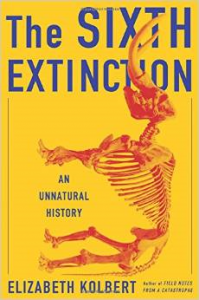
Reading Uncertainly? “The Sixth Extinction: An Unnatural History” by Elizabeth Kolbert

The_Sixth_Extinction

Rats! Is there a real possibility that rats may be the species that survives the human race? Elizabeth Kolbert suggests such an outcome in her engrossing perambulation around this modest earth on which we live, since we may well be living at the start of the “Sixth Extinction.”

Science tells us the earth has experienced five earlier “extinctions,” when many living creatures, small and large, disappeared because of a major change in the earth’s constitution or because of an errant asteroid. But these five occurred approximately 450, 375, 250, 200 and 60 million years ago, in a universe that is 13.5 billion years old.

So we are minute upstarts on this planet. But, as a thinking and intensely curious species, we’ve tried to understand that long past, plus our present and a most uncertain future.

Kolbert’s question: are we creating our own Sixth Extinction?

Like Pogo, she suggests “the cataclysm is us!” “Since the start of the industrial revolution,” she writes, “humans have burned through enough fossil fuels—coal, oil, and natural gas—to add some 365 billion metric tons of carbon to the atmosphere. Deforestation has contributed another 180 billion tons. Each year we throw up another nine billion tons or so . . . . The concentration of carbon dioxide in the air today . . . is higher than at any other point in the last eight hundred thousand years. . . . It is expected that such an increase will produce an eventual average global temperature rise of between three and a half and seven degrees Fahrenheit . . . (triggering) the disappearance of most remaining glaciers, the inundation of low-lying islands and coastal cities, and the melting of the Arctic ice cap.”

Then add to that “ocean acidification.”

We know that all species on this planet are interdependent, but are humans also an “invasive species?” Yes, we seem to be collective problem solvers (much like ants, according to E. O. Wilson) but we seem to be unable to solve our biggest problem: us! “Though it might be nice to imagine there was once a time when men lived in harmony with nature, it is not clear he ever did!”

Is it possible, then, as Kolbert suggests, “ . . . a hushed hundred million years from now, all that we consider to be the great works of man – the sculptures and the libraries, the monuments and the museums, the cities and the factories – will all be compressed into a layer of sediment not much thicker than a cigarette paper?”

Kolbert visits locations all around this earth – some 11 countries – very much like Alan Weisman’s research for his Countdown, exploring current rates of extinction. One is on an island in the Great Barrier Reef of Australia, looking at the erosion of coral. Another is the decline of bats in the eastern United States. Still another is the Panamanian golden frog. Together, she says, they indicate we are a part of the Anthropocene epoch, during which we may well become extinct.

This is a sobering analysis of current practices and signs. She acknowledges the possibility that “human ingenuity will outrun any disaster that human ingenuity sets in motion.” But I’m left with the likelihood that our friend the rat, who has hitchhiked to almost every piece of this earth with us, and who successfully scavenges our debris, may survive us. As Ratty pronounced, in Kenneth Grahame’s The Wind in the Willows (my paraphrase), “Believe me, my young friend, there is nothing – absolutely nothing — half so much worth doing as simply messing about with humans.”

Her book is “one of 2014’s best” according to The Economist.

HFK_headshot_2005_284x331About the author: Felix Kloman is a sailor, rower, husband, father, grandfather, retired management consultant and, above all, a curious reader and writer. He’s explored how we as human beings and organizations respond to ever-present uncertainty in two books, ‘Mumpsimus Revisited’ (2005) and ‘The Fantods of Risk’ (2008). A 20-year resident of Lyme, he now writes book reviews, mostly of non-fiction that explores our minds, our behavior, our politics and our history. But he does throw in a novel here and there. For more than 50 years, he’s put together the 17 syllables that comprise haiku, the traditional Japanese poetry, and now serves as the self-appointed “poet laureate” of Ashlawn Farms Coffee, where he may be seen on Friday mornings. His wife, Ann, is also a writer, but of mystery novels, all of which begin in a bubbling village in midcoast Maine, strangely reminiscent of the town she and her husband visit every summer.
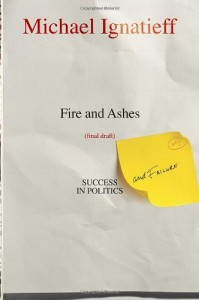
Reading Uncertainly: ‘Fire and Ashes’ by Michael Ignatieff

Fire and Ashes by Michael Ignatieff

I admit to a lifelong fascination with the people and territory of that land just north of the United States.  I first drove through Alberta and the Yukon in 1952, on my way to Alaska, and then sailed up the St. Lawrence River on a Navy cruiser to Quebec City in 1954. Since then I’ve spent considerable time in Vancouver, Calgary, Toronto, Ottawa, Montreal and Quebec, with side excursions to Victoria, Banff, Edmonton, Trenton, and Beaconsfield. So it was only natural to buy an early copy of Michael Ignatieff’s description of his six-year foray into Canadian politics.

Who can ignore this description of Canada: “ten provinces and three territories strung out like birds on the wire of the forty-ninth parallel?” And its political uniqueness: “ . . . the fact that we didn’t have capital punishment or a right to bear arms; that we believed in group rights to protect the French language and aboriginal title to land; the fact that we believed a woman’s right to choose should prevail; the fact that a bilingual national experiment, always under stress, forced us constantly, as a condition of survival, to try and understand each other and reach common ground.”

Ignatieff first ran for Parliament in 2005, resigning a professorial chair at Harvard and returning to the land of his birth after many years abroad. He later became the leader of Canada’s Liberal Party, one with which his family had early close connections, only to lose a national election in 2011. The book is his analysis of those years and the nature of politics in a democracy. He concludes with a “renewed respect for politicians as a breed and with reinvigorated faith in the good sense of citizens,” and “ . . . what is right about the democratic ideal: the faith, constantly tested, that ordinary men and women can rightly choose those who govern in their name, and that those they choose can govern with justice and compassion.”

But how can mere mortals stand for leadership positions? “Politics tests your capacity for self-knowledge more than any profession I know,” Ignatieff says, going on to offer “self-dramatization is the essence of politics,” playing on a perpetual stage. He also urges development of listening skills: “listening, being deeply able to deeply listen to your fellow citizens, is the most under-rated skill in politics.” And “standing” is equally important: “When you first enter politics, your first job is to secure your standing, the authority to make your case and ensure a hearing.” That is especially true for newcomers, who will certainly be attacked for their “lack of experience.”

He also argues for civility in political life, something all too lacking recently. But is it possible to treat someone, civilly, as an “adversary” when that person treats you as an “enemy?”

The “virtues” of successful politics include “adaptability, cunning, rapid-fire recognition of Fortuna, the keen intuition that a situation has changed and that what was true is no longer so, together with the noble capacity to lead, to charm, to inspire.” Politics is then “the baffling combination of will and chance that determines the shape of life.”

I now know something more about my Canadian friends and their country. Oh, Canada!

Editor’s Note: Michael Ignatieff’s ‘Fire and Ashes’ is published by Harvard University Press, Cambridge 2013

Felix Kloman

Felix Kloman

About the author: Felix Kloman is a sailor, rower, husband, father, grandfather, retired management consultant and, above all, a curious reader and writer.  He’s explored how we as human beings and organizations respond to ever-present uncertainty in two books, ‘Mumpsimus Revisited’ (2005) and ‘The Fantods of Risk’ (2008).  A 20-year resident of Lyme, he now writes book reviews, mostly of non-fiction that explores our minds, our behavior, our politics and our history.  But he does throw in a novel here and there. For more than 50 years, he’s put together the 17 syllables that comprise haiku, the traditional Japanese poetry, and now serves as the self-appointed “poet laureate” of Ashlawn Farms Coffee, where he may be seen on Friday mornings.  His wife, Ann, is also a writer, but of mystery novels, all of which begin in a bubbling village in midcoast Maine, strangely reminiscent of the town she and her husband visit every summer.
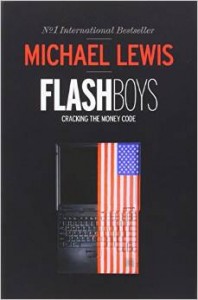
Reading Uncertainly: ‘Flash Boys’ by Michael Lewis

Flash_BoysWhat on earth is “the stock market?” It is something in which I have participated for almost 60 years, first as a most modest buyer of stocks, then through the investments of growing pension and profit-sharing funds, and finally, today, trying to stretch my dwindling IRA to cover our modest expenses as my wife and I enter our eightieth years. Throughout this time I’ve maintained a trust that the “market system” is reasonably fair.
Michael Lewis pops that balloon. In his mesmerizing story of high frequency trading on the world’s stock markets, but especially in the U. S., we learn that customers are “prey,” that “people are getting screwed because they can’t imagine a microsecond” (a millionth of a second), that “moral inertia” is the dominant trait, and that “ the entire history of Wall Street was the story of scandals.”

And yet, what the so-called high-speed traders were (and are) doing is “riskless, larcenous, and legal.”  The story seems to be the result of “human nature and the power of incentives,” plus the incredible complexity of today’s markets, a complexity whose outcomes are totally unpredictable — witness the recent series of “flash sales” in which markets drop precipitously and then recover, all within moments.

And how do the brokers, banks and traders respond, other than in their natural, self-admiring language?  They have learned the “art of torturing data” to try and persuade their customers they are entirely honest!  Lewis’s conclusion … “the stock market at bottom is rigged!”

But where on earth can we safely invest our funds?  My mattress is already stuffed!

Felix Kloman

Felix Kloman


About the author:
 Felix Kloman is a sailor, rower, husband, father, grandfather, retired management consultant and, above all, a curious reader and writer.  He’s explored how we as human beings and organizations respond to ever-present uncertainty in two books, ‘Mumpsimus Revisited’ (2005) and ‘The Fantods of Risk’ (2008).  A 20-year resident of Lyme, he now writes book reviews, mostly of non-fiction that explores our minds, our behavior, our politics and our history.  But he does throw in a novel here and there. For more than 50 years, he’s put together the 17 syllables that comprise haiku, the traditional Japanese poetry, and now serves as the self-appointed “poet laureate” of Ashlawn Farms Coffee, where he may be seen on Friday mornings.  His wife, Ann, is also a writer, but of mystery novels, all of which begin in a bubbling village in midcoast Maine, strangely reminiscent of the town she and her husband visit every summer.

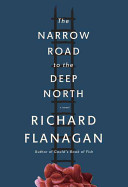
Reading Uncertainly? The Narrow Road to the Deep North

Narrow Road to the Deep NorthRichard Flanagan, an Australian writer born in Tasmania, whose father survived labor for the Japanese in the Second World War, has written a compelling, mesmerizing and thoroughly memorable novel of that period.  And it is the 2014 Man Booker Prize winner!
The Aussies in the story are led by Dorrigo Evans while his physician officer tries to save his troops from starvation, disease and beatings as they attempt to build a rail line for the Japanese through the jungle from Siam to Burma.  They are controlled by a few Japanese, consumed with love for their country, their emperor and for the poet Matsuo Basho, whose most famous work is the title for the book.

You will remember the names: Darky Gardner, Rabbitt Hendricks, Rooster MacNeice, Wat Cooney, Gallipoli von Kessler, Jimmy Bigelow and their captors,  Colonel Shira Kota, Major Tenji Nakamura, Lieutenant Fukihara and The Goanna, Corporal Aki Tomokawa.  Flanagan follows many of them, plus Evans, in shifts of perspectives and time, from present to past, with uncanny ability to maintain our interest and understanding.  But did any of them really understand what they experienced?

It is a story of obedience and disobedience. The Aussies (and many of us from the West) are intuitively and culturally critical of authority: when an order is issued, their (our) first instinct is to ask “Why?”  The Japanese, and many Eastern cultures, in contrast, are taught to revere “authority.”  Their reply to an order is an immediate “Yes!”  Flanagan explores this natural friction, one that seems to continue even after the war.

Dorrigo Evans’ inability to connect with family and friends after the war is explained with these words:

“It did not fit within the new age of conformity that was coming in all things, even emotions, and it baffled him how some people now touched each other excessively and talked about their problems as though naming life in some ways described its mysteries or denied its chaos. He felt the withering of something, the way risk was increasingly evaluated and, as much as possible, eliminated, replaced with a bland new world where the viewing of food preparation would be felt more moving than the reading of poetry; more excitement would come from paying for a soup made out of foraged grass.”

Evans goes on: “Adversity brings out the best in us  . . .  It’s everyday living that does us in.”  And he gives us the perfect conclusion to this novel: “A good book, he had concluded, leaves you wanting to reread the book.  A great book compels you to reread your soul.”  The Narrow Road to the Deep North comes close to “the elegant mystery of poetry.”

And it is the poetry, the haiku, of Matsuo Basho that intrigues both Evans and his Japanese captors.  So that inevitably led me to his The Narrow Road to the Deep North (in Japanese: oku no hoso-michi) his story of a 1689 walk from Edo (now Tokyo) north along the east coast of Japan, then northwest through the mountains, and finally southwest by the Japan Sea.  In it are some of the poet’s most memorable haiku. Consider these:

Furuike ya  Old pond

Kawisu tobikomu  Frog jumps in

Mizu no oto  Sound of water

Flanagan incorporates Basho with a line late in his novel: “ . . .  the fish fell into the sound of water.”

Natsugusa ya  Summer grasses

Tsuwamono  domo ga  All  that remains

Yume no ito  Of mighty warriors’ dreams

And Flanagan’s final sentence: “Of imperial dreams and dead men , all that remained was long grass.”  I suspect I may well have missed other allusions to the poet’s famous haiku.

And for a more recent view of Basho’s walk, try Lesley Downer’s story of retracing his steps in the early 1980s.

A novel to read, reread and think on.  Rightio, mates!

Editor’s Notes: Book details are as follows:
Richard Flanagan, The Narrow Road to the Deep North, Alfred A. Knopf, New York 2014
Matsuo Basho, The Narrow Road to the Deep North, translated by Nobuyuki Yuasa, Penguin Classics, Baltimore 1966
Lesley Downer, On the Narrow Road, Summit Books, New York 1989

Felix Kloman

Felix Kloman

About the author: Felix Kloman is a sailor, rower, husband, father, grandfather, retired management consultant and, above all, a curious reader and writer.  He’s explored how we as human beings and organizations respond to ever-present uncertainty in two books, ‘Mumpsimus Revisited’ (2005) and ‘The Fantods of Risk’ (2008).  A 20-year resident of Lyme, he now writes book reviews, mostly of non-fiction that explores our minds, our behavior, our politics and our history.  But he does throw in a novel here and there. For more than 50 years, he’s put together the 17 syllables that comprise haiku, the traditional Japanese poetry, and now serves as the self-appointed “poet laureate” of Ashlawn Farms Coffee, where he may be seen on Friday mornings.
His wife, Ann, is also a writer, but of mystery novels, all of which begin in a bubbling village in midcoast Maine, strangely reminiscent of the town she and her husband visit every summer.

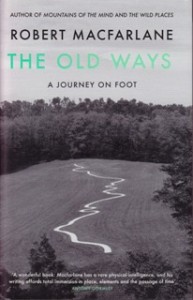
Reading Uncertainly? ‘The Old Ways’ by Robert Macfarlane

the_old_ways_robert_macfarlane_206x320What a refreshing and stimulating view of the practice of walking, “as enabling sight and thought rather than encouraging retreat and escape; paths as offering not only means of traversing space, but also ways of feeling, being and knowing.”

First suggested by our schoolteacher son, Robert Macfarlane’s mesmerizing and lyrical stories of his walks along the English Downs, sailing and hiking in Scotland, plus other walks in Palestine, Spain and Tibet are a paean to movement, observation, thought and imagination.  As he says, “paths connect. This is their first duty and their chief reason for being.”  They then become a “labyrinth of victory,” of personal freedom. “Walking is a means of personal myth-making.”

I agree completely!

Walking, especially solo treks, can restore serenity and sanity, curiosity and calm.  Macfarlane’s words reminded me of my hiking England’s South Downs and its Way in 1978, during an autumn sabbatical in West Sussex, from Cocking and Graffham, where we were living for four months, around Bigham Hill and on to Arundel, where a pub and a pint rewarded my effort.  I also recall with fondness my many treks on the “public footpaths” of England, on the “wanderwegs” of Germany and the Appenzell of Switzerland, around Sydney Harbor in Australia, the Milford Track in New Zealand and, closer to home, in the Nehantic State Forest of Lyme, Conn.

And his words pulled back into memory Jonathan Raban’s ‘Coasting,’ his story of sailing counterclockwise around the British Isles, and Paul Theroux’s ‘A Kingdom By The Sea,’ his clockwise walk around England, both in 1982 (the two travelers met by chance in a pub on their respective journeys and had little to say to each other!)

Macfarlane’s remarkable memory and descriptions of his travels become almost Joycean at times.  Here is his sailing departure from Stornoway Harbor:

“ . . . hints of oil, hints of hooley.  Sounds of boatslip, reek of diesel. Broad Boy’s (the boat he travelled on) wake through the harbor – a tugged line through the fuel slicks on the water’s surface, our keel slurring petrol-rainbows.  Light quibbling on the swell . . . . Seals . . . their blubbery backs looking like the puffed-up anoraks of murder victims.”

Strangely, though, Macfarlane never mentions or quotes Baudelaire and his famous flaneur, another exponent of the joy of setting one foot in front of the other, without worry of time and course.

He concludes with a lovely Spanish palindrome: “La ruta nos aporto otro paso natural” (The path provides the next step.)  The “old ways” are indeed “rights of way and rites of way.”

Editor’s Note: Robert Macfarlane’s ‘The Old Ways’ is published by Penguin Books, New York 2012.

Felix Kloman

Felix Kloman

About the author: Felix Kloman is a sailor, rower, husband, father, grandfather, retired management consultant and, above all, a curious reader and writer.  He’s explored how we as human beings and organizations respond to ever-present uncertainty in two books, ‘Mumpsimus Revisited’ (2005) and ‘The Fantods of Risk’ (2008).  A 20-year resident of Lyme, he now writes book reviews, mostly of non-fiction that explores our minds, our behavior, our politics and our history.  But he does throw in a novel here and there. For more than 50 years, he’s put together the 17 syllables that comprise haiku, the traditional Japanese poetry, and now serves as the self-appointed “poet laureate” of Ashlawn Farms Coffee, where he may be seen on Friday mornings.
His wife, Ann, is also a writer, but of mystery novels, all of which begin in a bubbling village in midcoast Maine, strangely reminiscent of the town she and her husband visit every summer.