Old Lyme’s Tributary Mill Allows Interns to Experience Environmental Preservation Efforts First-hand 

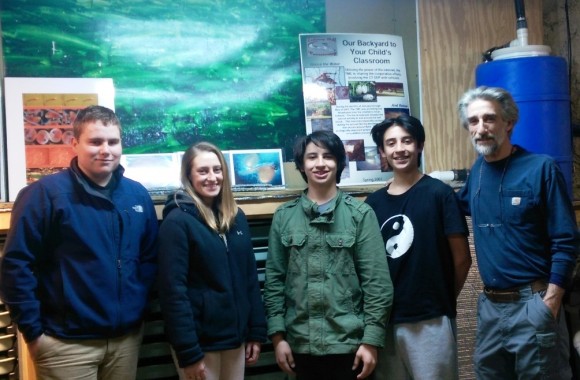
Gathered for a photo are, from left to right, Tyler Clinton, Ashley Bright, Gray Tripp, Morey Tripp, and Jim Tripp.

Gathered for a photo are, from left to right, Tyler Clinton, Ashley Bright, Gray Tripp, Morey Tripp, and Jim Tripp.

The Tributary Mill has stood strong in the heart of Old Lyme since 1672. Originally used to grind grains such as corn and wheat, the mill often became referred to as Rooks Mill in honor of Edward Rooks, an American impressionist who was enthralled with the mill’s beauty, which has since been the subject of many paintings.
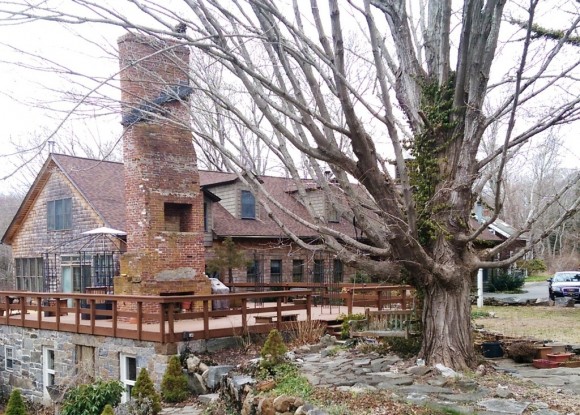
The Tributary Mill in Old Lyme.

The Tributary Mill in Old Lyme.

Purchased by Fran Tripp in 1981, her son Jim and his wife Sandra created the Tributary Mill Conservancy (TMC) that exists today from the original foundation. A nonprofit organization that strives to merge science and art through the conservation of the unique tributary ecosystem, the TMC has serviced its surrounding community in innumerable ways.
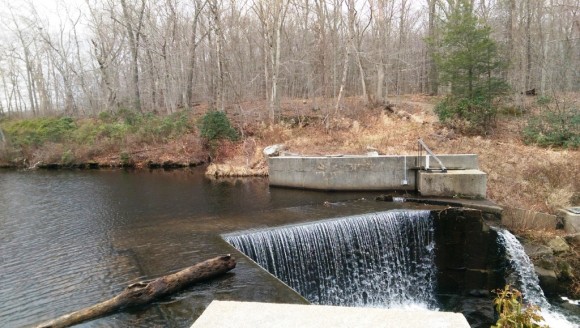
The waterfall at the mill.

The waterfall at the mill.

Operated by Jim, a carpenter, and Sandra, a high school chemistry teacher, as well as a variety of additional volunteers of all ages, the TMC works closely with a variety of environmentally oriented organizations such as the state Department of Energy and Environmental Protection (DEEP), Mystic Aquarium, and the Quebec-Labrador Foundation.
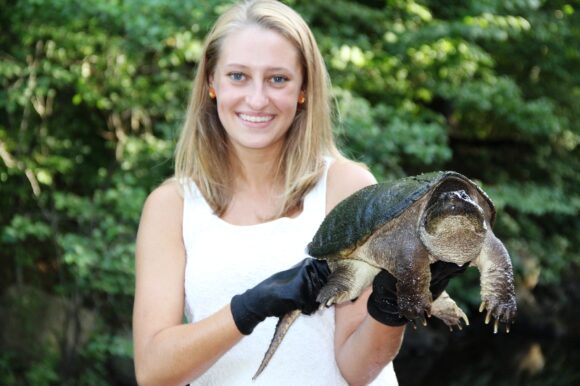
Smile for the camera! Ashley Bright holds a turtle.

Smile for the camera! Ashley Bright holds a turtle.

During the summer and fall seasons, the TMC focuses its energies on trapping and collecting data from snapping turtles by conducting blood tests,  fecal tests, and collecting the leeches found on the turtles for further testing.

In addition, National Geographic recently donated a large number of cameras to put on the backs of the snapping turtles to further track them.
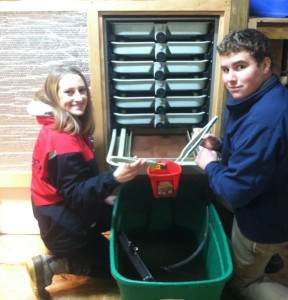
Ashley and Tyler work on transferring the baby salmon.

Ashley and Tyler work on transferring the baby salmon.

In the winter, the TMC turns its attention to hatching Atlantic salmon eggs given to them and regulated by the DEEP. An endangered species, the Atlantic salmon thrive in the unique ecosystem found at the TMC.

The highly efficient filtration system used by the TMC to hatch the eggs, which was engineered by Jim Tripp himself, has resulted in an 18 percent death rate for the eggs, significantly lower than the average 20 percent death rate. The eggs, once hatched, are then released into the surrounding Connecticut River tributaries.

In the spring, the TMC collects data on glass eels. Estimating the number of eels migrating up the Mill Brook as well as weighing trapped eels gives them valuable data, which they then send to the DEEP.
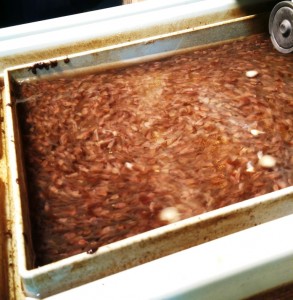
Eels galore!

Eels galore!

The Conservancy also focuses on educating and involving the community in their work. Along with offering tours for school groups ranging from elementary to high schoolers, the Conservancy also provides hands on learning opportunities for middle schoolers, high schoolers, and college students.

Old Saybrook High School seniors Ashley Bright and Tyler Clinton have been deeply impacted by their time at the preserve, which has inspired both of them to pursue careers in environmental science and engineering.

Ashley, who has been interning at the TMC since September, said, “I never expected to get so much out of a high school internship. I feel like I’ve been part of their family. It’s amazing that I’ve been able to do what I’ve done here as a high school student, and I know this experience is something I’ll always remember.”

Tyler, who has been interning at the TMC for two years, echoed Ashley’s sentiment, saying, “I have a second family here,” before going on to praise the kindness of Jim and Sandra Tripp. “They do this out of the kindness of their hearts. They really care about conserving the ecosystem and helping it thrive.”

Jim Tripp notes, “Our original goal was to make a prototype of a mill that could be emulated throughout the area because our location here on the river is such a great place to do wildlife work.”

For more information about the Tributary Mill Conservancy, visit tributarymill.org or email  tributarymill@comcast.net.  Donations to the nonprofit can also be made through the TMC website.
RiverQuest Offers Osprey/Eagle Cruises in April

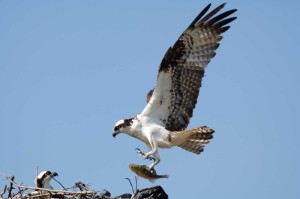
An osprey, returned from his winter spent in the southern hemisphere, feeds his young on the nest.

An osprey, returned from his winter spent in the southern hemisphere, feeds his young in the nest.

Late March into early April is when the Osprey returns to Connecticut from its southern wintering grounds. It is a wonderful sign that spring is here …

The Osprey is a large bird of prey (raptor) with a wingspan up to 6′ that eats fish, hence, it is sometimes referred to as the fish hawk. Connecticut Ospreys migrate south in late August through late September to areas where their food supply will not be affected by frozen rivers and lakes, sometimes as far south as Argentina. Ospreys of breeding age, at least three-years-old, are returning north now to start a new nest or to re-establish and re-build a nest they may have used in previous years.

Ospreys nest along the edges of the lower Connecticut River, from the mouth of the river in Old Lyme/Old Saybrook up river as far as Middletown. There will be activity on the many man-made nesting platforms at the Roger Tory Peterson Preserve near the mouth of the river in Old Lyme and on several other nesting platforms on the river, in “natural” tree settings and on the top of each of the navigational day markers that indicate the river channel. It is also hoped there will be Ospreys nesting on the new Osprey platform placed on the 101-year-old East Haddam Swing Bridge.

A great way to see this nesting activity is by boat. RiverQuest, an eco-tour vessel located at Eagle Landing State Park in the Tylerville section of Haddam is offering several cruises to the general public throughout April to view and learn about the Osprey and other wildlife that may be spotted, including hawks and another famous raptor, the American Bald Eagle.

After disappearing from Connecticut in 1948, the Bald Eagle has made a return and there are several active eagle nests on the river. It will be possible to view two of these nests from RiverQuest and very possibly, see one or more of the local resident Bald Eagles.

Other areas of interest that will be seen on the cruise include the Goodspeed Opera House, Gillette Castle and the Chester/Hadlyme Ferry. The cruises are about 2.5 hours in length and cost $40 per passenger (no children under 10-years-old.) There will be complimentary coffee and tea and a limited supply of binoculars on loan for the cruise.

To learn more about these informative cruises and/or reserve your spot with the easy on-line booking system, visit ctriverquest.com or phone 860-662-0577.

Nilsson Offers Five Day Painting Workshop in August

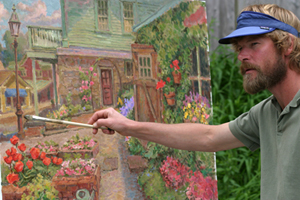
Leif Nillson painting outdoors

Leif Nillson painting outdoors

Acclaimed local artist Leif Nilsson is offering a five day painting workshop from Aug. 3 to 7, 2015 from 9 a.m. to 5 p.m. daily for $500 per student.

This workshop will explore the lower Connecticut River Valley’s landscape, its architecture and the light that reveals it through a combination of one shot “alla prima” paintings and by further developing other canvases over the course of several days, all on location in the open air.

Nilsson’s medium of choice is oil paint but he is familiar with other media such as pencil, pastel, watercolor and acrylics, so participants are asked to bring whatever they are comfortable using.

Subjects during the course may include painting the Village of Chester, Nillson’s studio garden (possibly with a live model) and the Connecticut River.

Throughout each day, he will provide a variety of tips and suggestions from how to set up one’s equipment and choosing a composition to learning how to see more through squinted eyes through formal and spontaneous demonstrations and individual discussions.

Technical assistance with drawing, perspective, proportions, color mixing and application will be offered as students work on their own paintings and as the need arises.

A general materials and suggested equipment list will be provided upon registration.

The daily schedule for the course will be:

9 a.m. to noon: Meet at a predetermined location at 9am and work until noon.

Noon to 1 p.m.: Take an hour break for lunch. Students are responsible for providing their own lunch. Chester has some excellent markets for eating in and take out.

1 to 5 p.m.: Start up again at 1 p.m. at an agreed upon location and work until 5 p.m.

Students are welcome to start earlier and work later if they’d like to without me present.

Nillson and his wife Caryn Davis, who is a professional photographer, will host one or two informal dinner parties at their home and gallery during the week to welcome students, share in lively discussions and view everyone’s work.

A list of local motels, B&Bs and Inns is available at: http://www.visitchester.com/chester/merchants/inns_and%20_B_and_Bs.html

A 50 percent non-refundable deposit of $250 is required by May 15, 2015 to secure a place. If the workshop is cancelled, the deposit will be refunded in full.

For more information, visit http://www.nilssonstudio.com/classes/index.html

Old Lyme’s Mentoring Corps Quietly Helps Those in Need

MCCD founder Richard Shriver

MCCD founder Richard Shriver

Old Lyme resident Richard Shriver formed the Mentoring Corps for Community Development (MCCD) in June 2012 with an ambitious purpose in mind: he wanted to harness the experience of retirees who had been successful in their careers to give back to the community through free advice and consultations.

After writing a paper on the subject of retired people doing something to give back to their communities, Shriver met with three different individuals, each of them friends of his who did not know each other, but who had expressed an interest in this very idea. “I had three strangers who didn’t know each other, and I thought I would bring them together, have coffee, and see what happens. For that to grow into something useful is unlikely, but luckily for us, it did, and I think it’s a good thing for any community to have.”

A group of what has now grown to 12 MCCD board members has convened every Friday morning since its founding to meet with people and organizations about a variety of problems; MCCD’s work is all volunteer with no fees paid by the beneficiaries. The group’s areas of focus include humanitarian aid to those who have an illness or are in need; helping those with economic issues; assisting people with career changes; aiding companies, start-ups, and businesses that either want to expand or are in economic trouble; and mentoring students from 5th grade through high school.

A phone call is often how initial contact is made with the MCCD.

A phone call is often how initial contact is made with the MCCD.

As for how they actually help, Shriver summed it up by saying, “After the first contact is made by the person in need, we listen, and we react.” The process begins with an initial meeting where two members of the MCCD meet with the person(s) seeking help. Businesses send their business concepts in writing and may then be invited to a brainstorming session where seven or eight members of the MCCD critique the plan based on practicality, political soundness, administrative efficiency, and economic justification.

Shriver commented, “We discovered the power of  brainstorming,” adding, “Things come out that nobody would expect. This is one of the most powerful services we offer. Someone comes in with a plan, and we apply our 300 years plus of combined experience.”

Although the experience of MCCD members is diverse, occasionally people come to them with problems with which they are unfamiliar. When this happens, the MCCD looks for people to bring in to help. “It’s amazing what we find,” said Mr. Shriver. “People never say no to helping if they have time.”

Rather than offering to go out and raise money, the MCCD helps people to develop the tools to accomplish that for themselves. One of their major success stories occurred soon after the MCCD was founded in the fall of 2012. A single mother of three children still in school was struggling after Superstorm Sandy, and the entire group worked tirelessly on the problem for months to help her obtain aid from various sources including FEMA. She now volunteers with MCCD when she has the time.

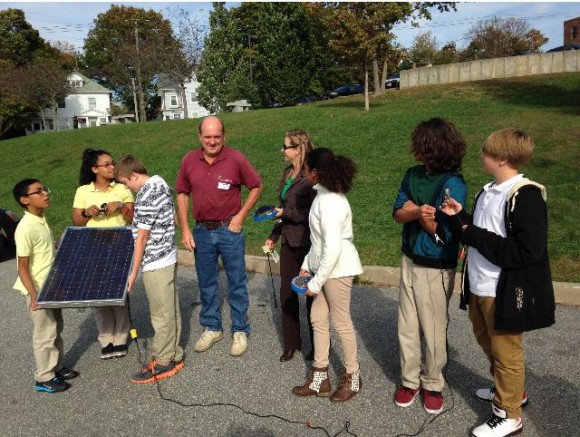
An MCCD member works with students in New London on the new STEM program initiated by the MCCD.

An MCCD member works with students and their teacher in New London on the new STEM program initiated by the MCCD.

The MCCD currently has about 30 projects, including a STEM (Science, Technology, Engineering and Math) program for the New London school system, with the goal being not specifically to educate, but rather to inspire students to take and excel in STEM classes in high school. ”I like to see people succeed, whether they are 8 or 80,” said Shriver. “That’s certainly my motivation. If they succeed through one conversation, that’s great; if I worry they won’t succeed, then I get passionate. I do my best to help them get on the right track.”

headshot

Carina Using

Carina Using is the director of the Old Saybrook High School Internship Program that has placed over 300 interns at different job sites throughout the area for a combined total of 50,000 hours working in the community. She explained how the MCCD was a invaluable asset to her. “More than anything else, having them as a resource to help find internship sites, mentorship for students, and even advice for me on how to run things is incredibly valuable.”

She continued, “Without the support from our community and the amazing businesses that take our interns, as well as organizations such as the MCCD, our internship program wouldn’t be possible. The commitment of community  businesses and organizations is absolutely vital to the success of this program and really shows how they are investing in our students’ futures.”

Shriver said, “We like to help people at a crossroads. We’re interested in high school  and college internships because it’s an underserved area to help young people find careers. We are eager to help kids choose the right education, as well as provide inspiration to get the education.”

When asked if he had anything he’d like to say to people in the community, who might be considering contacting the MCCD for help, Shriver responded, ”Just give us a call, it’s as easy as that. Nobody should feel awkward or uncomfortable about needing help, Everything is private and confidential. Just go to mentoringcorps.org where there is contact information for getting in touch with us. It never hurts to have an initial discussion, tell us what you need, and see if the relationship works. We don’t say no to anybody about anything until that first discussion.”