Death Announced of Hildegarde Kate Hannum of Old Lyme, Mother of Lisa Holmes of Hadlyme

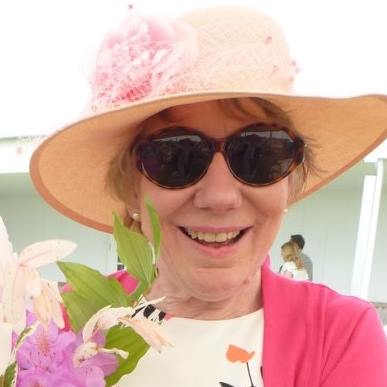
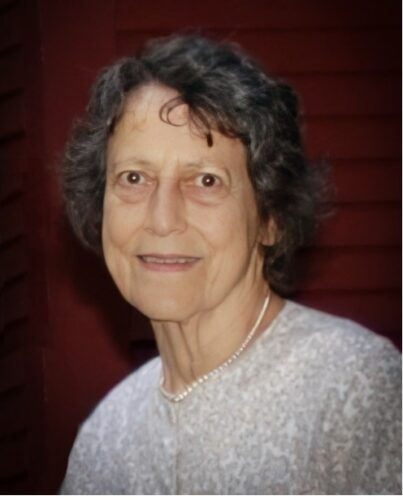
Hildegarde Kate Hannum

OLD LYME—Hildegarde Kate Hannum, née Drexl, died peacefully at home on Christmas Eve. Born in 1931 in Springfield, Massachusetts, she was the only child of Karl and Kate Vogeler Drexl, both born in Germany. She graduated from Classical High School in Springfield in 1949 and graduated Phi Beta Kappa from Connecticut College in 1953, and then spent a year at the University of Munich, Germany, as a Fulbright scholar (one of her fondest memories). In 1955 she received her M.A. in German from Middlebury College. She was then a Teaching Fellow as a graduate student at Harvard University from 1957 to 1959. It was at Harvard that she met her husband of sixty-one years, Hunter Grubb Hannum, who predeceased her. They married in 1959 and moved to the San Francisco Bay Area, where their only daughter Lisa was born.

After completing a dissertation on Thomas Mann, she received her Ph.D. in German Studies from Harvard in 1968. She taught at Hayward State University and the University of California, Berkeley. The family moved to Old Lyme in 1973 and she then taught for a few years at Connecticut College. In the mid-1970’s she and her husband began a career as freelance literary translators from German to English. In 1986 they were awarded the Lewis Galantière Award from the American Translators Association for their translations of two books by the psychoanalyst Alice Miller.

In 1968 she became a trustee of her husband’s family foundation which she remained devoted to until his death in 2020; their lifelong compassion for humanity and commitment to social justice touched the lives of many. From 1973 to 1985 she was very active with the American Friends Service Committee, and she served as a board member of the E.F. Schumacher Society, an organization promoting local economic revitalization and environmental sustainability, for decades. In that capacity she edited their annual lectures and People, Land, and Community: The Collected E.F. Schumacher Society Lectures. In 1997 she co-founded the Energy Options Study Group, a citizens group promoting the use of renewable energy resources combined with energy efficiency.

She was at her happiest hiking and climbing in the Sierra Nevada Mountains (which she did every summer into her 70’s), reading, or spending time with friends and family.

She leaves her daughter Lisa Kate Holmes and her partner Robert Stern of Hadlyme, two dear grandchildren; Hunter Holmes and his wife Anna, and Amelia and her husband Daniel Wood; and one great-granddaughter, Fiona.

In lieu of flowers, it is requested that donations be in her name to The Martha and Hunter Grubb Foundation, PO Box 190, Old Lyme, CT 06371. The family would like to express their heartfelt appreciation to Katherine Clark-Nilsson, Virginija Babiliute, Sibiya Sibahle and Rashmi Childress for their loving care; it was because of their dedication that she could remain comfortably at home with her beloved dachshund, Richie.

To sign the online guest book visit www.fultontherouxoldlyme.com.

To plant trees in memory, please visit the Sympathy Store.
Lyme-Old Lyme Food Share Garden’s Second Annual ‘Sponsor a Row’ Campaign Continues

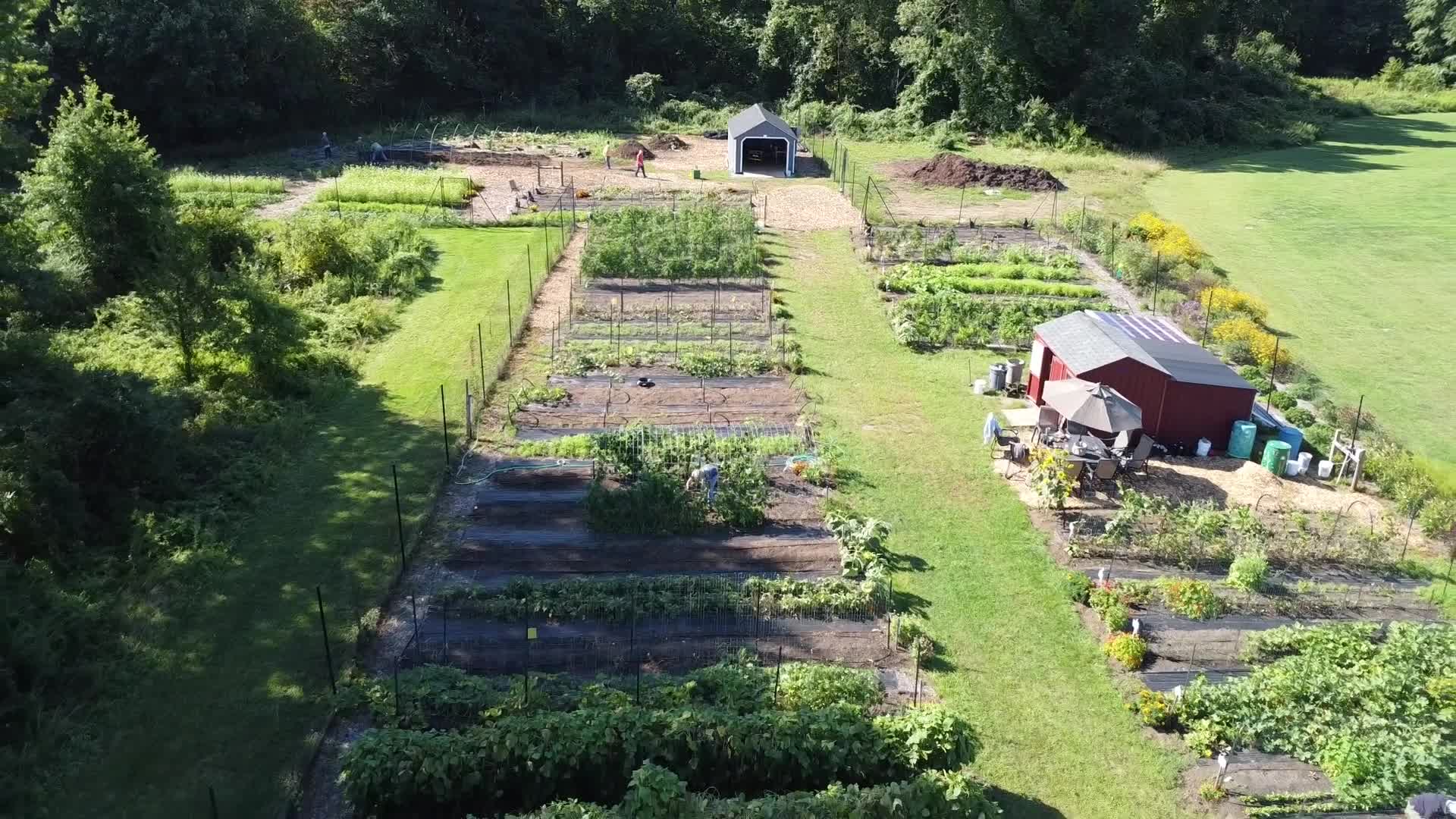
Aerial view of the Lyme-Old Lyme Food Share Garden, which launched its second annual Sponsor a Row campaign on Oct. 1.

OLD LYME—The annual Lyme-Old Lyme Food Share Garden (LOLFSG) Sponsor a Row campaign kicked off on Oct. 1, 2024. The LOLFSG is immensely grateful to individuals, families, organizations, and businesses who sponsored the garden this season. 

This year volunteers donated more than 1100 hours, gave more than 4700 pounds of food to local food pantries, installed a hoop house, and composted more than 1000 pounds of donated food waste.

The garden is also working with the Region 18 school district to renovate the middle school greenhouse. An official Ribbon Cutting Ceremony will be announced soon.

The annual cost to maintain a garden bed from seed through delivery is approximately $250. All money will go directly towards the operating expenses of the garden, including seeds/transplants, fertilizer, weed barrier fabric, irrigation tape, electricity, and tools. In appreciation, each $250 donation from Oct. 1, 2024 – March 31, 2025 will be recognized with a sign at the garden and on the LOLFSG website. 

Donations in any amount are also welcome.  Donations can be made at lolfoodsharegarden.org or mailed to LOL Food Share Garden Inc., PO Box 395, South Lyme, CT 06376.

Season’s Greetings!

LYME/OLD LYME — We send heartiest holiday greetings to all our readers, writers, advertisers and friends,

We hope everyone has a lovely time celebrating their special holiday. May the day—or days—when you celebrate be filled with peace, wonder and joy.

Lyme Consolidated School Receives $23.7K Grant From ‘CT Grown for CT Kids’ Program

LYME–The Connecticut Department of Agriculture has announced that Lyme is among the 15 communities receiving a $23,753 grant through the ‘CT Grown for CT Kids’ program.

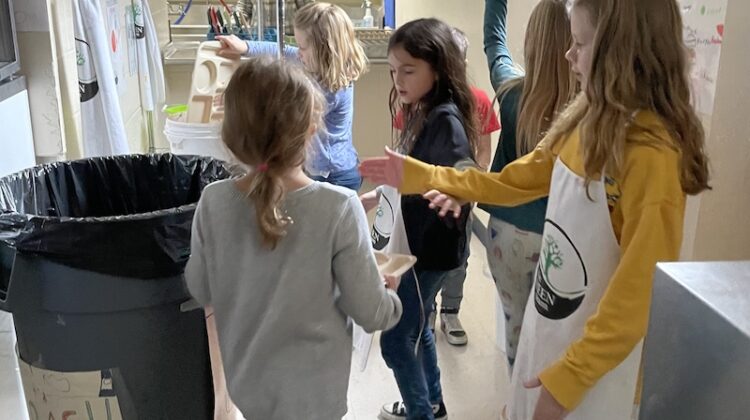
Lyme Consolidated School will receive the grant to support its “Waste Warriors” project. This project teaches local students about the value of composting, which allows them to reduce food waste and learn how they can recycle and support local agriculture. It also teaches them about waste management and ecosystems.

Asked her reaction to receiving the award, Allison Hine, Principal of Lyme School, told LymeLine by email, “Lyme Consolidated is excited to have received this grant award.  We will be partnering with the Town of Lyme and with Long Table Farm to support and enhance the composting and recycling initiatives of our Green Team.”

She added, “Ultimately, the project aims to enhance environmental stewardship, promote sustainability, and deepen students’ understanding of how effective waste management contributes to a healthier, more resilient community.”

State Senator Norm Needleman (D-33rd), whose District includes Lyme, commented in a press release, “Our local students learning about agriculture and the connections between our farms, our diets and our communities is very valuable as they grow.” He commented, “I’m really happy to hear that our region is getting support from the ‘CT Grown for CT Kids‘ program.”

CT Grown for CT Kids‘ focuses on increasing availability of locally grown foods in child nutrition programs and teaching children about the importance of nutrition and farm-to-school connections.

A Christmas Essay: Food For Thought At Christmas

Linda Ahnert

Editor’s Note: We are delighted to re-publish this wonderful piece by our friend Linda Ahnert of Old Lyme. She wrote it way back in 2005 but it remains just as relevant today.

Yes, Virginia, there can be too much of a good thing. That’s especially true during the Yuletide.

All that over-spending, all the over-eating, and all those over-decorated houses. That is why, last year at this time, I went back to several books I first read in childhood to look for Christmases just like the ones I used to know. Yes, I found tidings of comfort and joy. I also realized the importance of food in these stories and in our own Christmas memories.

One of the books, “Little Women,” is the classic about the four March sisters growing up in New England. As the story opens, it is a Christmas during the Civil War and the March family is living in straightened circumstances. But when the girls hear of a needy family in the neighborhood, they gladly give up their Christmas breakfast to feed the hungry children. Even self-centered Amy sacrifices her favorite things—“the cream and the muffins.”

Jo March laments that “Christmas won’t be Christmas without any presents.” And for most of us, Christmas wouldn’t be the same if we didn’t have some particular food in the house during the season.

For instance, one of my early food memories of Christmas is tangerines and walnuts. My paternal grandparents came to this country from Germany. On Christmas Eve, everyone would gather at their home. I remember my grandfather playing the mandolin and singing “Stille Nacht” and other German carols. My grandmother decorated the buffet in the dining room with evergreen boughs. Interspersed in the greens were tangerines and all varieties of nuts in the shell. Before we left, my grandmother would stuff our mittens with the fruit and nuts.

Another family that I spent many hours with as a child were the Ingalls in the “Little House” books. How I loved reading about the adventures of Laura, Mary, Carrie, Ma and Pa as they crossed the prairie. The author, Laura Ingalls Wilder, describes the delight of the children one Christmas morning. The girls have reached into their stockings to find shiny tin cups and each has a “long, long stick” of peppermint candy, striped red and white.

But their stockings weren’t empty yet. The girls pull out small packages and unwrap them to discover heart-shaped cakes. “Over their delicate brown tops was sprinkled white sugar. The sparkling grains lay like tiny drifts of snow.” It might be a simple Christmas on the frontier but the girls can’t imagine being any happier.

Across the pond in merrie old England, Charles Dickens included numerous descriptions of food in “A Christmas Carol.” You may not look forward to your weekly trips to the A & P but, trust me, your mouth will water reading Dickens’ descriptions of the produce in the London grocery shops at Christmas.

And who could forget the account of the Cratchit Christmas dinner? (“There never was such a goose.”) To complement this “feathered phenomenon,” Mrs. Cratchit “made the gravy (ready beforehand in a little saucepan) hissing hot, Master Peter mashed the potatoes with incredible vigor, Miss Belinda sweetened up the apple sauce …”

Bob Cratchit rolled up his threadbare sleeves and “compounded some hot mixture in a jug with gin and lemons, and stirred it round and round, and put it on the hob to simmer.” In 21st century parlance … I’ll have what they’re having.

Truman Capote’s “A Christmas Memory” is an autobiographical story set in rural Alabama in the 1930s. It opens on a November morning when the elderly cousin who is raising seven-year-old Buddy announces that “It’s fruitcake weather!” For Buddy this means the official start of the Christmas season.

They begin the yearly ritual of gathering pecans in an old buggy and scrimping together their meager funds to buy the ingredients to bake 30 fruitcakes. For days “eggbeaters whirl, spoons spin round in bowls of butter and sugar, vanilla sweetens the air, ginger spices it; melting, nose-tingling odors saturate the kitchen, suffuse the house, drift out to the world on puffs of chimney smoke.” When the work is done, the “cakes, dampened with whiskey, bask on window sills and shelves.”

In our family, too, the holiday season begins on a November day. A week or two before Thanksgiving, we receive a package of pecans from Louisiana. They are from the trees in my aunt’s yard and she sends them each year in time to bake our holiday desserts. My mother was born and raised in Louisiana and it wouldn’t be Christmas in our house without cornbread and pecan pies.

And so, gentle readers, whether your Christmas traditions include roasting chestnuts on an open fire or whipping up a batch of wassail, may God bless us, everyone.