Letter From Paris: Memories of Crimea … a Strategic Peninsula Steeped in History, Culture

Nicole Prévost Logan

Subsequent to the Russian occupation of Crimea in 2014, which took place 60 years after USSR First Secretary Nikita Khrushchev transferred it to Ukraine in 1944, the strategically-important peninsula has frequently made news headlines.

I visited the region twice and have always been fascinated by the important events and famous people with which it is associated.

Map of the Crimea with inset showing the broader geographic location of the peninsula. Image published under the Creative Commons Attribution-Share Alike 2.0 Generic license.

In July 1990, my husband Alan, four friends and myself were sailing around the Black Sea on “Katy II”, our French-built 44 ft. ketch. After a 24-hour stretch from Sochi, we proceeded south through the Sea of Azov. Lightning followed us throughout the night. (Alan’s comment was, “That was a hell of a good sail,” while mine was along the lines of, “That was a hellish sail in spades!” ) 

We reached the Crimean coast, carefully keeping away from the naval base of Feodosia. We passed Koktebel, famous for its writers’ colony, which has existed there since 1911. Some of the greatest Russian poets, among them Anna Akhmatova and Marina Tsetaeva, spent time at the colony.

As we approached the port town of Alushta, a booming voice from a loudspeaker barked, ” What are you doing there?” 

Soon after, we were boarded by the Soviet Coast Guard. Their metal launch rammed violently into our boat.  

But the encounter turned out to be pleasant. The  sailors enjoyed having their picture taken with Jane, our young crew member from California.

Then we sailed along a beautiful coast, reminiscent of the French Riviera. with elegant residences, hotels and casinos. This was the resort of Gurzuf  where Alexander Pushkin spent a few months in exile in 1821 for having written a piece about freedom. 

Yalta is located in a spectacular setting, with a mountainous backdrop reminding  me of Table Mountain in Cape Town. Initially, we tied “Katy II” near a boardwalk in the center of town. The people had never seen a foreign sail boat before, so you can imagine the crowd. 

It was on Yalta‘s boardwalk that Anton Chekhov staged one his most charming short stories entitled, ” The Lady and the Dog.”  The Russian playwright, sick with tuberculosis, spent his final days in the mild Mediterranean climate of Crimea. 

While staying in Yalta, we toured the vineyards’ cellars to taste some of the many sweet wines, like Porto, Tokaï or Muscat, grown on the sun-drenched hills.

Nicholas II, Alexandra and their five children spent several blissful summers in their Livadia palace, near Yalta. The elegant, neo-classical buildings overlook the Black Sea. 

In February 1945, the conference of the “Big Three” took place in this gorgeous area. US President Roosevelt stayed in the last Tsar’s summer residence. A special apartment was arranged for him on the ground floor. A few miles away, British Prime Minister Winston Churchill settled in the Vorontsov Palace – an extravagant architectural complex combining Moorish and gothic styles. S0viet Union Premiiiapi Stalin took his lodgings in the Koreiz palace also nearby. 

As we cleared a rocky promontory, west of Yalta, the Russian Coast Guard paid us another “visit”. The reason this time was that we were too close to the seaside “dacha” of Gorbachev in Soros.

In 1992, I accompanied the team from the Pushkin museum Department of Ancient Art and Archaeology to the ancient site of Pantikapeon * (or modern Kerch) on the most eastern point of the Crimean peninsula. I knew the team since I had taken part in the excavation of a 17th century estate located on the grounds of the Pushkin museum in Moscow. 

After a 28-hour train ride with the friendly group, lots of singing and a fair amount of vodka, we reached our dig-house at the foot of Mount Mithridates. 

In the 7th century BC, Pantikapeon was one of the most important settlements created by the wealthy Greek cities of Asia Minor (or modern Turkey) on the northern shore of the Black Sea. Numerous archaeological sites are being excavated by Russians, Ukrainians as well as Westerners in this part of the world. 

Offset poster for US lecture-series Energy Plan for the Western Man (1974) by Joseph Beuys,.

The Kerch region still shows traces of the fierce combats, which took place between the German and Soviet forces, particularly between 1941and 1942. Out of the tragic scenes of devastation and killings came an amazing story of redemption though it is disputed by German military sources. 

It is the story of the controversial modern German artist Joseph Beuys (1921-1985). He was flying with the Luftwaffe during World War II over Crimea. His plane was shot down and a Tatar shaman rescued him. (A shaman is someone who interacts with the spirit world through altered states of consciousness, such as trance.)

The shaman saved the pilot’s life by rubbing sheep fat on his skin and covering him with a felt blanket. From then on, felt and grease constituted the central part of the artist’s works and “installations.”

Wikipedia notes, however, that, “Records state that Beuys remained conscious, was recovered by a German search commando, and that there were no Tatars in the village at the time.”

Today, Beuys is considered an icon in Berlin.  

Author’s Note: For more information about the Pantikapeon excavation, access my article titled, ‘The View from Mount Mithridates’, published in the November/December 1994 edition of ‘Archaeology’ magazine.
Nicole Prévost Logan

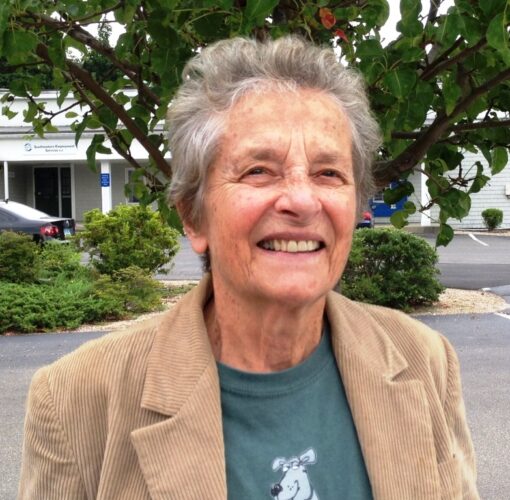
About the author: Nicole Prévost Logan divides her time between Essex and Paris, spending summers in the former and winters in the latter. She writes an occasional column for us from her Paris home where her topics will include politics, economy, social unrest — mostly in France — but also in other European countries. She also covers a variety of art exhibits and the performing arts in Europe. Logan is the author of ‘Forever on the Road: A Franco-American Family’s Thirty Years in the Foreign Service,’ an autobiography of her life as the wife of an overseas diplomat, who lived in 10 foreign countries on three continents. Her experiences during her foreign service life included being in Lebanon when civil war erupted, excavating a medieval city in Moscow and spending a week under house arrest in Guinea.

Editor’s Notes: i) This is the opinion of Nicole Prévost Logan.

ii) The offset poster for US lecture-series ‘Energy Plan for the Western Man’ (1974) by Joseph Beuys, organised by Ronald Feldman Gallery, New York is published courtesy pf Ronald Feldman Fine Arts, New York. This file is licensed under the Creative Commons Attribution-Share Alike 3.0 Unported license.
Found Phone!

OLD LYME — A reader contacted us earlier in the week to say she lost her phone at the fireworks event held in Old Lyme Saturday, Aug. 12. We duly posted a missing phone announcement.

We are delighted to report that the owner of the lost phone has now been reconnected with it. She emailed us to say, “I have my phone! Thank you so much for posting for me. That was key to my getting it back.”

And sincere thanks to the reader, who responded to our post with critical information.

A good news story all round, in which we are pleased and proud to have played a part.

Hurtle’s ‘Lyme Home Watch’ Earns Accreditation From National Home Watch Association.

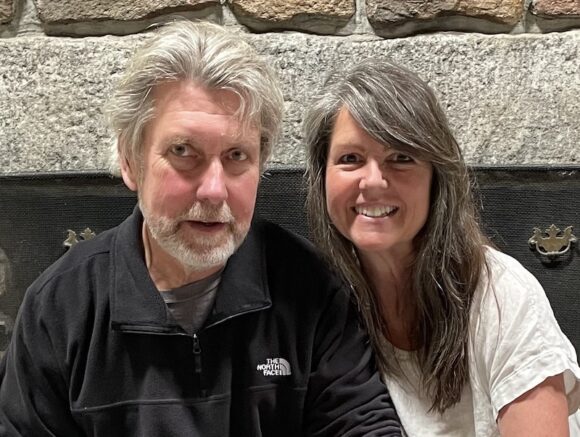
Bill Hurtle, pictured with his wife Jennifer, has recently earned accreditation for his business ‘Lyme Home Watch’ from the National Home Watch Association.

LYME, CT — Lyme Home Watch, which is owned by Bill Hurtle of Lyme, has recently earned accreditation from the National Home Watch Association (NWHA).

The NHWA was formed in 2009 in order to establish and maintain the highest industry standards for Home Watch and absentee homeowner services throughout the United States and Canada. Home Watch is a visual inspection of a home or property, looking for obvious issues, which means that it is a service that “keeps an eye on things” at your vacation or primary home while you are not in residence. All principals of NHWA Accredited Member companies are background-checked, insured, and bonded.

Hurtle has lived in Lyme since 2013. Over the years, he has observed friends and family head south for the winter, leaving their home unoccupied or having a non-professional “home watcher” monitor their property. They usually spend much of their time away wondering if their home is being adequately watched. Hurtle works to take the worry out while his clients are away by providing a consistent, dependable service that one may not receive from a relative or neighbor, who is busy with other things.

Lyme Home Watch serves Lyme, Old Lyme, Niantic, Old Saybrook, Essex, and Westbrook.

Home Watch services for the exterior and interior of a home are Lyme Home Watch’s primary mission. They also provide pre- and post-storm checks, facilitate contractor and vendor meetings, and offer keyholder services to their Home Watch clients.

Hurtle is a graduate of the NHWA’s Home Watch Boot Camp and has earned the designation of Certified Home Watch Professional (CHWP), which places him among the élite Home Watch providers in the industry. The CHWP designation and Boot Camp training exemplify Hurtle’s commitment to Home Watch excellence. 

Hurtle is a federal civil servant nearing retirement. For the last 18 years, Hurtle worked as a microbiologist for the Department of Homeland Security. Prior to that, he was employed by the Department of the Army and at the United States Army Medical Research Institute of Infectious Diseases in Frederick, Md.

He has a bachelor’s degree in biotechnology from the Rochester Institute of Technology and a master’s degree in biomedical science from Hood College.

Contact Hurtle at (860) 912-0629 or bill.hurtle@lymehomewatch.com. Learn more at his website, www.lymehomewatch.com.

Editor’s Note: This article is based on a press release issued by Aug. 7, by the NHWA.

Letter to the Editor: Old Lyme Ice Cream Store’s Closure Prompts Questions on Future Viability of Retail in Town, OL EDC Has a Process to Address Challenge

To the Editor:

The announced closing of the ice cream store on Lyme Street has prompted many expressions of both disappointment, and concern and has even led to a broader based discussion regarding the economic viability of the town’s retail sector. This is very understandable since our town, as well as most others, is facing significant challenges due to a combination of forces. Among these are: the paradigm shift to online shopping, demographic changes, staffing issues, and the threat from  a return of COVID or some other epidemic.

The [Old Lyme] Economic Development Commission, a few years back, adopted a process to address these economic challenges and to provide a systematic approach to reposition our economy for the future. This approach has served as the template for the Halls Road Improvement Committee and is being utilized by the Shoreline Gateway Committee. It can also be potentially adopted to address the future of Lyme Street.

There are five key steps to the process. The first is to draft a consensus-based VISION STATEMENT that clearly articulates the goals and results desired for the area of the town under review, including the extent of economic development the town is comfortable with, and the type of businesses it wishes to attract. CONSENSUS is developed by obtaining input from the residents, businesses,stakeholders and the town’s boards and commissions.

The next step is to generate a MASTER PLAN that details the process needed to actualize the vision statement, and turn the vision statement into reality. It should include input from experts in economic development to ensure the master plan is realistic and doable.

REVISING ZONING REGULATIONS is a key element, and once the master plan is completed, the Zoning Commission should consider revising the zoning regulations in order to conform with the master plan.

IMPLEMENTING the master plan is the final step in the process.

Without an organized systemic approach to economic development, we risk losing additional businesses and not attracting businesses that are inline with the needs and desires of the town’s residents. The success of this process also requires the collaboration of the appropriate boards and commissions as well as the input and leadership from the Board of Selectmen. We do have an overarching Plan of Conservation and Development that is useful as a guideline, but it is very broad and provides no mechanism to create and implement a master plan.

Visit this link to view the Halls Road Improvement Committee’s Q & A  document [scroll down to the third paragraph.] It is a good example of the results achieved by utilizing an economic development process that includes starting with input from multiple sources, obtaining CONSENSUS, creating a VISION STATEMENT, and a MASTER PLAN, seeking ZONING REVISIONS, and IMPLEMENTING the master plan.

Sincerely,

Howard Margules,
Old Lyme.

A View From My Porch: Some Funny Things Happened on the Way to the Celebration

Tom Gotowka

The celebration:

“Rock the Phoebe’s” joyful acknowledgement of the century and a quarter anniversary of the founding of Old Lyme’s Phoebe Griffin Noyes (PGN) Library in 1898 was scheduled for the evening of June 23.  

The funny things:

A letter, signed by 23 members of the Greater Old Lyme community was sent to the library on May 25. This was then followed by another letter on June 16, which was signed by 135.

The letters questioned the suitability of two titles available in the library’s “Teens & Tweens” section and called for the removal of Let’s Talk About It: The Teen’s Guide to Sex, Relationships and Being a Human, by Erika Moen and Matthew Nolan and You Know, Sex: Bodies, Gender, Puberty and Other Things, by Cory Silverberg and Fiona Smyth from that section. Perhaps even more startling they also requested a “… proper review of the materials in the ‘Teen-Tween’ room in hopes that no other content like this is available in that space.”

Nevertheless, “Rock the Phoebe” went on as planned; and a few days later, more than 400 Old Lyme and Lyme residents responded formally in a letter opposing the actions proposed in the two earlier letters.  

This “View” is not about the two ‘offending’ titles; and I am not going to present a play-by-play of the situation as it developed and was finally resolved without removal or relocation of the two books — that has all been exhaustively covered in the regional and national print and broadcast media.

I will not weigh in on the arguments regarding whether these actions represent a ban on the two books, or whether either book was “unbecoming of our community values”.

Rather, I will explore these actions in a broader context to get a feel of how unique the Old Lyme experience was, but first, I will return to the era of the “founding”. 

The Free Library Movement:

This movement really began in the 1840s when New Hampshire, followed by Massachusetts, and then Maine; authorized towns to levy taxes for the establishment and support of public libraries. The movement spread and continued through much of the second half of the 19th and early-20th centuries. 

The designation “free” means open to the public at no charge and was used to provide a distinction from the subscription libraries that were common in many communities at that time.

The movement was advanced by the philanthropy of industrialist Andrew Carnegie, whose support between 1883 and 1929 led to the construction of a system of 1,689 public libraries across the United States. These include 11 in Connecticut, but none in southeast Connecticut.

Local Activism:

Old Lyme has been blessed with an activist cleric, who is a strong advocate for social justice. The Rev. Steven R. Jungkeit, senior minister at the First Congregational Church of Old Lyme (FCCOL), has publicly stated his concerns regarding guns, book bans, and systemic racism. Apparently, a few are uncomfortable with such advocacy, especially when it came from the pulpit.

I was particularly troubled by an aggressive response to one of his sermons by a local political party leader, published at the end of March in another online source of community news. In my opinion, the language used in the response was insulting and almost threatening.

Is Old Lyme unique?

Yes, of course … but not in terms of book challenges.

Some candid observations of the broader environment: 

  • PEN America, the nonprofit organization that works to defend and celebrate free expression, identified nearly 1,477 incidents of books being prohibited during the first half of the 2022-23 academic year, up 28.5 percent from 1,149 cases in the previous semester. Overall, the organization has recorded more than 4,000 such incidents of banned books in the United States since it started tracking cases in July 2021. Such incidents are most prevalent in five states: — Texas, Florida, Missouri, Utah, and South Carolina.
  • The Connecticut Library Association has identified 38 active book challenges across the state, including Newtown, Westport, Darien, Brookfield, Fairfield, and Guilford; up from about nine at this time last year.
  • In Guilford, some residents called for parental notification for books they regarded as “vulgar and inappropriate”. Perhaps that could be called the “I’m telling on you” program? (Note: that is my own suggestion, not Guilford Memorial Library’s.)
  • Fairfield Library’s Board of Trustees unanimously voted to not remove “Let’s Talk About It,” from its shelves last October, with staff stating, “The book belongs exactly where it is.”
  • Old Lyme PGN Library Director Katie Huffman has reported that the two contested titles were the third and fourth books challenged at the library in the last two years, with no books removed so far.
  • PEN America also found that book challenges are not new, but the tactics are changing. Once provoked primarily by concerned parents, challenges are increasingly driven by organized groups, elected leaders and legislation targeting titles that “don’t align with their own values”. 
  • Of the national groups, Moms for Liberty (M4L), formed in Florida in 2021, has become widespread and militant. The group began by campaigning against COVID-19 protections, including masks and vaccines. Moms for Liberty advocates against school curricula that mention LGBTQ rights, Critical Race Theory, ethnicity, and/or discrimination. Many chapters have also campaigned to ban books that address gender and sexuality.
    The Southern Poverty Law Center characterized M4L as a far-right, extremist organization with close ties to the Republican Party rather than a genuine grassroots organization. Two chapters of this group are active in Connecticut. Is that really possible? At the very least, I will quote from the oft-banned book, Alice’s Adventures in Wonderland, in which Alice says, “Curiouser and curiouser.”
  • Aaron Sorkin’s new stage adaptation of Harper Lee’s To Kill a Mockingbird (which is based on the also frequently banned book of the same name) begins with Scout Finch telling the audience, ““Something didn’t make sense,” which, in retrospect, I could have used to introduce this “View.”
  • Avra Montazella, a senior at Lyme-Old Lyme High School, founded the Banned Books Club during her freshman year when she saw many books she loved being censored across the country.
  • Since 1982, the American Library Association’s Banned Books Week has been held in the fall as an annual awareness campaign to celebrate the freedom to read and stress the importance of ensuring access, even to unorthodox or unpopular viewpoints. The week is now co-sponsored by a coalition of organizations dedicated to free expression.

For 15 minutes of fame?

Our library has an established process for initiating a challenge to materials in its collection. It is simple and begins by filing a Request for Reconsideration … but of course, this process does not generate the media coverage or produce the angst that occurred here. 

The library’s collection development policies and reconsideration procedures can be accessed via the following link: Collection-Development-Policy-2022.pdf (oldlymelibrary.org)

Note that the “Sources” section below includes everything I reviewed in preparing this piece and, if interested in the underlying journalism, please refer to the sources that I have cited, which are readily available online.

Editor’s Note: This is the opinion of Thomas D. Gotowka.

About the Author: Tom Gotowka is a resident of Old Lyme, whose entire adult career has been in healthcare. He will sit on the Navy side at the Army/Navy football game. He always sit on the crimson side at any Harvard/Yale contest. He enjoys reading historic speeches and considers himself a scholar of the period from FDR through JFK. A child of AM Radio, he probably knows the lyrics of every rock and roll or folk song published since 1960. He hopes these experiences give readers a sense of what he believes “qualify” him to write this column.

Author’s Notes: I wholly support a parent’s right to oversee their ‘teen’s & tween’s’ book selections, but feel strongly that they do not have the right to make those decisions for other parents. My advice — based on personal experience — would be to talk with your children and endeavor to create an environment in which they are comfortable approaching you for advice or feedback on any number of issues.

The Day’s’ editorial board stated last month that, ”… while the letters contend the request to remove these books from the teen-tween section of the library does not constitute book banning, it is obvious that is exactly what is being advocated here.”

In closing, perhaps I can add some lighter perspective to this difficult subject by recalling the wisdom of Detective Sergeant Nick Yemana of NYPD’s 12th Precinct, who once told Captain Bernard “Barney” Miller, Commanding Officer of the detectives’ squad, that (sic) “What you gotta do is develop an Oriental philosophy. My grandfather used to say that many things look bleak at the moment of occurrence; but at least we ain’t got locusts.”

Sources:

Barnett, S. “’Mama bears’ may be the 2024 race’s soccer moms; some see extremism as GOP seeks votes”. The Day. 07/23/2023.

Brownstein, R. “The Book Bans Debate Has Finally Reached a Turning Point”. The Atlantic. 05/10/2023.

Chavez, N. “About a third of book bans reported in fall 2022 were a result of new state laws, free speech group says” CNN. 04/20/2023.

Chen, J. “Two adolescent sex-ed books challenged at Old Lyme library”. NBC-CT. 06/27/2023.

Dunne, S. “Old Lyme library facing calls to ban two sex-ed books from teen section”. Hartford Courant. 06/28/2023

Dunne, S. “More than 400 residents of a small CT town oppose sex-ed book ban attempt”. Hartford Courant. 08/07/2023

Editorial Board. “Let parents pick their kids’ books”. The Day. 07/11/2023.

Fitzgerald, W. “Op-ed: Book Banning Is About More Than Book Banning”. LymeLine. 07/03/2023

Gregorian, V. “Remembering Andrew Carnegie’s Legacy”. American Libraries Magazine.09/30/2019. 

Fleishman, J. “School librarians vilified as the ‘arm of Satan’ in book-banning wars”. L.A. Times. 01/27/2023. 

Friedman, J. & Farid-Johnson, N. “Banned in the USA: The Growing Movement to Censor Books in Schools”. PEN America.09/19/2022. 

Harkay, J. “Newtown is weighing a book ban. It’s not the only CT town to do so”. CT Mirror. 06/01/2023

Jungkeit, S.R., Fitzpatrick-Nager, L., & Gerber. C.  “Opinion: The banning of books – all books – is wrong”. Hartford Courant. 08/03/2023

LaBella, J. “Fairfield Library decides to not remove controversial book”. Fairfield Citizen. 10/12/2022. 

Littlefield, “The Real Agenda of Moms for Liberty”. The Nation. 08/07/2023.

Logan, O. “More Than 400 Sign Letter Supporting Old Lyme Library, Urging Rejection of Censorship Requests ‘In Their Entirety’”. LymeLine.com 06/29/1023

Mazariegos, M. “In a record year for book ban attempts, ALA says these 10 books were challenged most”. NPR. 04/04/2022 

Mongkol, C. “Old Lyme residents challenge two sex education books in library over sexual content”. NH Register. 06/28/2023.

Logan, O. “Old Lyme Library Board Issues New Statement Answering Additional Questions Related to Recent Book Challenges”. LymeLine.com 07/27/2023. 

Nixon, R.A. “Sermonizing a ‘Complete Misrepresentation of the Facts’ in Old Lyme” CT Examiner. 03/31/2023. 

Perreault, E. “Old Lyme library votes against banning sex education books after community backlash”. WTNH. 07/12/2023

Petri, A. E. “Book bans are on the rise in U.S. schools, fueled by new laws in Republican-led states”. L.A. Times. 04/22/2023. 

Putterman, A. “The national book banning debate has come to CT: ‘It’s kind of tearing the community apart’”. CTInsider. 05/30/2023. 

Regan, E. “Containing multitudes: minister, social justice activist, Marx scholar shakes things up in Old Lyme. The Day. 05/15/2021. 

Regan, E. “National culture war blows through Old Lyme’s town center”.The Day. 07/29/2023

Regan, E. “Old Lyme ‘kerfuffle’ over sex education book spills into Lyme”. The Day. 07/28/2023.

Shadmi, K. “Sketchbook/ Reality Hurts”. The NYT Book Review. 08/13/2023. 

Shakelford, K. “Opinion. — Religious Freedom Is Under Attack Like Never Before”. Newsweek. 08/05/2020. 
Sims, D. “A New Way of Looking at ‘To Kill a Mockingbird’”. The Atlantic. 12/2019.

Torres, L. C.Old Lyme library will keep two sex-education books in the teen section”. CT Public Radio. 07/11/202