Major General Israel Putnam, during the American Revolutionary War. Public Domain.
Prelude:
The June 9 edition of The Day reported that the team of Tessa Grethel and Sophia D’Amico — both Lyme-Old Lyme Middle School seventh graders — took first place in Connecticut in the junior group exhibit category of the National History Day Contest with their project titled “Bombings of Hiroshima and Nagasaki: The Origins of Atomic Diplomacy.”
Phil Rizzuto would have exclaimed “holy cow” for a homerun like that!
Introduction:
I reported in my last essay that Connecticut legend credits General Israel Putnam with “increasing the popularity of cigars in New England after he returned from an expedition to Cuba with thousands of Havana cigars.”
In trying to corroborate that claim with an additional source, I discovered that there is substantial folklore surrounding the General’s life and his acclaim as a warrior and military hero. (To avoid any misinterpretation of this essay’s title, note that I use “Rock Star” to express high praise.)
Kerri Provost, writing in “Real Hartford”, refers to Putnam as “Connecticut’s first authentic folk hero”. I am not suggesting that his story is historic fiction, just something worthy of a friendly review. All that said, he was very cool, and a fascinating American patriot, who had significant influence on freeing New England from the Redcoats, and Connecticut from predatory wolves.
I have also considered other Connecticut Revolutionary War heroes in previous columns, including Ezra Lee, who was the first man to command a submarine in an attack on the enemy; and David Bushnell, who invented “The Turtle”, which was used by Lee in his 1776 assault on the British flagship, “HMS Eagle”, in New York harbor.
Israel Putnam was born in 1718 into a wealthy farming family in what is now Danvers, Mass. and moved to Connecticut in 1739 to establish his own farm, a “500-acre spread just south of what is now Pomfret, Conn. He had 10 children with his first wife; and much later, in 1767, established a “house for the general accommodation of the public” (i.e., a tavern) in Brooklyn, Conn. with his second wife.
He owned a slave, and as we have learned through the “Witness Stones” Project, that was not unusual in Connecticut at that time.
The Hartford Courant reported that “Israel Putnam defied the image of a classic American hero. “Stout, if not fat, he was unreserved, a man of many words who reveled in racy ballads and rum-fueled stories.” So, I guess that he bore more resemblance to Ben Franklin than George Washington.
Putnam and the Wolf:
In 1742, after he and his neighbors had suffered repeated losses of sheep from wolf attacks, Putnam organized watches in an effort to protect the flocks and to help track the wolf back to its den. They spotted the wolf at dusk on a winter’s day and followed it to the den, a cave with a very narrow and shallow entrance.
Absent another volunteer, Putnam attached a rope to a yoke around his ankles and crawled into the cave with a lighted torch, trying to determine whether he could get within musket range of the animal … and he did come within yards of the snarling wolf.
He signaled, and was dragged out; and then crawled back in with torch and musket and shot the wolf. His neighbors drew him out again, nearly overcome by smoke.
After being revived, he crawled back into the cave a third time, where he grabbed the wolf by the ears; and the dead wolf and the live farmer were hauled out together. Putnam had dispatched Connecticut’s last wolf with a single shot.
The Colonial Warrior:
I’ll review a few of the notable battlefield events that contributed to Putnam’s legendary status with the following historical vignettes; and then identify some of the memorials and public works of art associated with those events. He became known for his natural leadership ability and reckless courage; and rose steadily through the ranks, ultimately gaining the rank of brigadier general before the Battle of Bunker Hill.
This is not a skirmish-by-skirmish list; just a few highlights.
French and Indian War:
In 1755, he joined Rogers’ Rangers, a New Hampshire-based militia company affiliated with the British. The Rangers were a “highly resourceful force trained in irregular warfare tactics” and stealthy reconnaissance. Ranger companies were developed because the English Regulars (i.e., the British foot soldiers) were so unaccustomed to frontier warfare.
Rogers’ is considered as the precursor to the U.S. Army Rangers.
Putnam is said to have excelled at that form of frontier fighting. He was captured in 1758 by French-allied Mohawks while on a military mission near Crown Point, N.Y., and was saved from the ritual burning allegedly exacted by Mohawk warriors on their enemies through the intervention of a French officer.
Putnam was then taken as a prisoner of war to a camp near Montreal. Note that many former Rogers’ Rangers’ officers eventually defected from the British ranks to fight for the Continental Army against the British.
The Siege of Havana:
He was freed from the French in an exchange of prisoners, and sailed in 1762 with a British mission that captured the Spanish garrison at Havana harbor and assumed control of the Caribbean Spanish fleet. He had survived a shipwreck during that expedition and may have been part of the British occupying force that remained on the island until the “Peace of Paris” ended the seven years of the French and Indian War in 1763.
Putnam returned to his Connecticut farm after Cuba, and prospered.
He became a prominent member of the Connecticut Sons of Liberty and a leader in the opposition to the 1765 Stamp Act, which imposed a substantial tax on the colonies to fund the cost of the French and Indian War. He led the mob of former soldiers that forced the Mass. Colony’s Stamp administrator in Boston to resign.
The Battle of Bunker Hill:
Now 57–years-old, Putnam was working in his fields with his son, Daniel, when a messenger rode into the village and proclaimed that the British had fired on the militia at Lexington, killing six men; and were on the march. This advance by the Redcoats on Lexington, and then Concord, marked the beginning of the American Revolution.
Putnam left his plough in the field, and without changing from his working clothes, departed immediately on horseback for the home of Governor Trumbull in Lebanon, Conn., who ordered him to sound the alarm with the militia officers and the patriot assemblies in the neighboring townsm and then continue on to the conflict.
Putnam proceeded to Cambridge, where several colonial militias had encamped, and set up his headquarters. He began preparing what were untested fighters for the inevitable battle with the British. Their ranks comprised militiamen from several colonies, former soldiers, and farmers, who had signed on with “the cause”.to the revolution.
The British ships controlling Boston’s harbor began firing their cannons on the Americans on the morning of June 17, 1775; and soon after, landed soldiers in preparation for attack.
After General Warren, the American commander, had been seriously wounded, Putnam assumed command and then served as commanding officer in the battle. As the British approached the poorly-supplied militiamen, he ordered them to conserve their ammunition, and “Don’t fire until you see the whites of their eyes.”
The colonists repelled the first two British assaults, but ran out of ammunition during the third attack and were forced to abandon their position, returning to their lines outside the battle perimeter. The entire time, Putnam rode his horse up and down the lines, setting an example of courage and steadying the troops.
Although the battle was a tactical victory for the British, it came at a terrible price. Nearly half of the 2,200 Redcoats who entered the battle were killed or wounded in the two hours of fighting — twice as many casualties as the Americans had suffered, including many of the British officers.
The Americans’ fierce defense demonstrated their ability to fight “toe-to-toe” with the British, and provided an important confidence boost, convincing them that they could overcome the superior power of the British military.
Although usually referred to as the Battle of Bunker Hill, the battle actually took place on Breed’s Hill.
The Aftermath:
“The loss we have sustained is greater than we can bear,” wrote British General Thomas Gage. After the battle, patriot leader Nathanael Greene remarked “I wish we could sell them another hill at the same price.”
George Washington arrived and assumed command of the new Continental Army in Cambridge and stayed on to direct the ongoing campaign at Boston. Afterwards, he moved the Army to New York, and Putnam was given command at Long Island.
Unfortunately, Putnam was “outflanked, out-maneuvered and out-smarted” in the Battle for Long Island”. Washington never blamed him for the loss, but it was clear that he was past his prime as a battlefield commander; and was delegated less important commands. If Bunker Hill was Putnam’s high point, then the Battle of Long Island was his lowest.
The Die Is Cast:
The Americans had long felt that relations with the British were nearly irreconcilable. The bloodshed at Bunker Hill, however, virtually eliminated any chance for reconciliation and pointed the colonies on the path to independence.
When King George III received the news of the battle in London on August 23, 1775, he issued a proclamation declaring the colonies in a state of “open and avowed rebellion.” Further, in the wake of Bunker Hill, Benjamin Franklin penned a letter to an English friend and member of Parliament that he closed with, “You are now my enemy and I am yours.” Finally, the high price of victory at the Battle of Bunker Hill made the British realize that the war with the colonies would be long, tough and costly.
Israel Putnam Public Art and Memorials:
Substantial public space has been dedicated to memorializing Israel Putnam.
The Israel Putnam Wolf Den, the site where he killed the last wolf in Connecticut, is now maintained in Mashamoquet Brook State Park in Pomfret, and is on the National Register of Historic Places.
A bronze Marker, installed by the Daughters of the American Revolution on Lake Road in Crown Point, N.Y. is inscribed, “182 feet north of this spot stood the oak to which Israel Putnam was tied and tortured by the Indians in 1758”.
The image of Putnam leaving his plough in the field after learning of the British attack on the Americans at Lexington, is carved on the east façade of the Connecticut State Capitol Building, one of five tympana on the east façade portraying the founding of Connecticut and the Revolutionary War.
Putnam’s actual plough and saddle are on display in the Entrance Hall of the Hartford Armory.
John Quincy Adams Ward’s bronze of Israel Putnam, completed in 1874, was one of the first public sculptures dedicated in Bushnell Park; and the first of six Revolutionary War memorials executed by Ward. Putnam is depicted striding forward, with his sword held under his arm.
His remains are buried in the base of an equestrian monument on the Brooklyn Town Green. The monument was created in response to the deteriorated condition of Putnam’s original grave marker; and was funded by the Connecticut state government with the provision that it also serves as a tomb for Putnam.
Upon its completion, Putnam’s remains were reinterred under the monument. The dedication was held on June 14, 1888 and included the governors of Connecticut and Rhode Island. The equestrian monument was criticized by contemporary reviewers, who especially criticized the horse, with one reviewer saying that the horse appeared to be suffering from bone spavin (i.e., Osteoarthritis).
The original grave marker is under glass and can be seen in the north alcove of the Connecticut State Capital in Hartford; his epitaph was “He dared to lead where any dared to follow”.
A statue of William Prescott was installed next to the Bunker Hill Monument in Charlestown, Mass.
Some Final Thoughts:
I want to say up front that I see absolutely no parallels between what I have presented in this essay and the activities of January 6th.
I have read history since I got my first library card from the Darwin R. Barker Library in Fredonia NY; and not because I thought that ” those who ignore history are doomed to repeat it.” (see https://archive06371.com/2021/02/a-view-from-my-porch-the-marquis-groucho-sam-and-me/ )
I still read history and I realize that it helps me re-confirm the honor, courage, heroism and eloquence of Americans.
Clearly, my essay presents a Connecticut-centric view of Putnam’s exploits.
However, William Prescott (Mass.) shared leadership responsibility with Putnam on the battlefield. “Don’t shoot until you see the whites of their eyes.” has also been attributed by some to Prescott. Historians have not reached agreement on whom is responsible for that exact quote.
Regarding the original question: I still cannot confirm whether Putnam brought a cache of Cuban cigars with him on his return to Connecticut; and my original statement did come from a legitimate source, However, as a successful farmer, it is more likely that he returned with tobacco seeds; and I have since found several sources supporting “tobacco seeds”.
Finally, Robert Rogers created the ” 28 “Rules of Ranging”, a series of procedures and guidelines, in 1757 during the French and Indian War. A modified version of the “Rules” is still followed by the 75th Ranger Regiment, (i.e., the U. S. Army Rangers), and they are considered as “standing orders” for Ranger activities.
Sources:
Niven, John. Connecticut Hero: Israel Putnam. American Revolution Bicentennial Commission of Connecticut. 1977.
Leavenworth, Jesse. Israel Putnam, A Man of Legendary Courage. Hartford Courant. May 24, 2014.
(Note that the following two sources are available from that omnipresent online bookseller with all the blue vans):
Goodrich, Samuel G. A Tale of the Revolution: and Other Sketches. Peter Parley Children’s Series.1845
Marsh, John. Putnam And the Wolf, Or, The Monster Destroyed: An Address Delivered At Pomfret, Connecticut Before The Windham Co. Temperance Society. October 28, 1829.
Editor’s Notes: (i) The photo above is available from the United States Library of Congress’s Prints and Photographs division under the digital ID cph.3a08971.
(ii) This is the opinion of Thomas D. Gotowka.
Tom Gotowka
About the author: Tom Gotowka’s entire adult career has been in healthcare. He will sit on the Navy side at the Army/Navy football game. He always sit on the crimson side at any Harvard/Yale contest. He enjoys reading historic speeches and considers himself a scholar of the period from FDR through JFK. A child of AM Radio, he probably knows the lyrics of every rock and roll or folk song published since 1960. He hopes these experiences give readers a sense of what he believes “qualify” him to write this column.

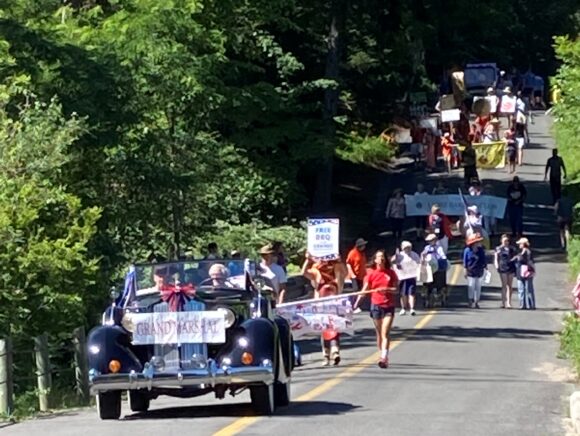
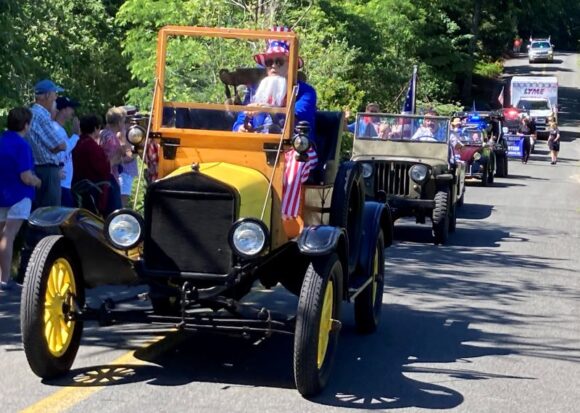
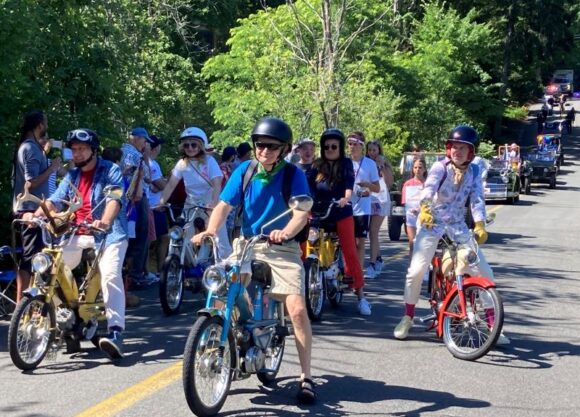
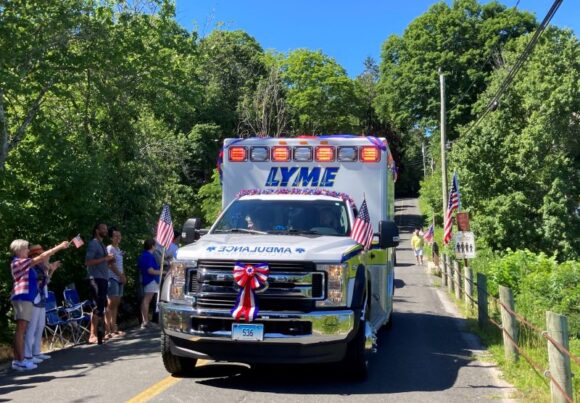
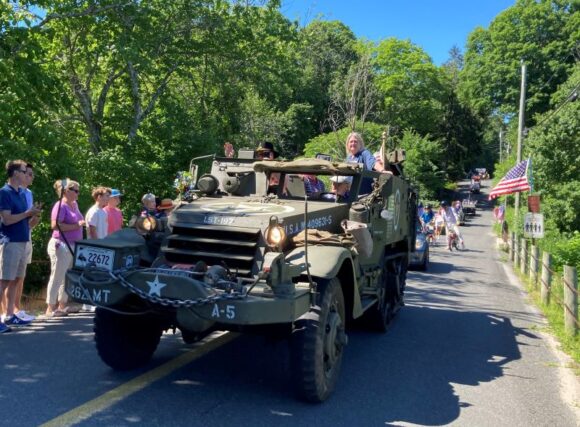
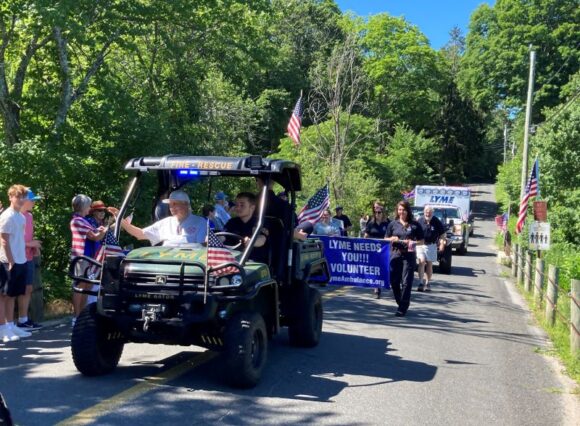
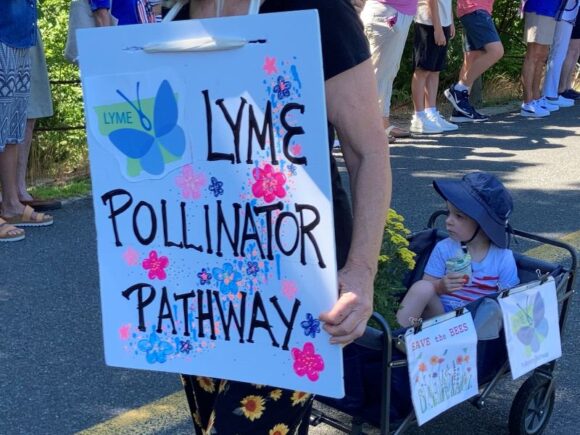
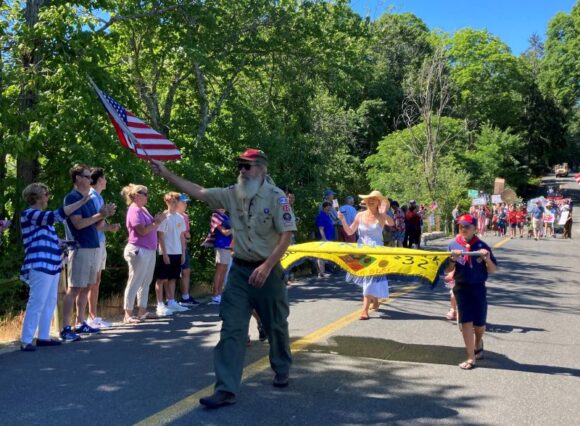
 OLD LYME — The Old Lyme Board of Selectmen will hold a Special Town Meeting this evening, Tuesday, July 5, at 7:30 p.m. in the Meeting Hall at the Old Lyme Memorial Town Hall at 52 Lyme St.