A la Carte: Pasta with Peaches … and Tomatoes? Try It, You’ll Love It!

Lee White

I don’t know about you, but I bought my CSA (Community-Supported Agriculture) last December, 2021. 

Remember December, 2021?

Joe Biden had been elected in early November. We knew that two COVID vaccines were being tested, but no one had them yet.

I had not been inside a restaurant in almost a year and I was 1) tired of my own food, and yet 2) couldn’t really afford much good take-out. I also felt then, and still do, that restaurant food should be consumed in the restaurant where it had been cooked by chefs (or even just cooks) and served to us when it is meant to be tasted and savored. 

In any case, I had written a check for my CSA in December, for Stone Acres Farm in Stonington. I paid it early, since the concept is that the farmers can buy their seeds or plants with that money and then live frugally through the hard winter months in the knowledge that — once the seeds have turned into food we can buy — they can pay their own bills during the summers and falls.

My CSA began June 22 and each week I get to visit their farm stand and pick up $30 of beautiful, fresh vegetables and herbs and I will be one happy camper until late September.

I am itchy, however, for the produce I may not get — including my favorite, tomatoes — until late July.

But southern-grown peaches are available now in supermarkets, and so are cherry and grape tomatoes. I never thought about peaches and tomatoes together, but here is a recipe I can use right now. And feel free to add sliced chicken, steak or shrimp atop the salad.

Peach and Tomato Pasta

From Fine Cooking, June/July 2021, page 54

12 ounces spaghetti or linguine
3 cloves garlic, thinly sliced
1 tablespoon olive oil
1 pint grape tomatoes
2 pounds peaches (about 6), pitted and sliced or coarsely chopped
½ cup pitted Kalamata olives, halved (I would use regular green olives)
1/3 cup chopped fresh basil leaves
Kosher salt and freshly ground black pepper
¼  to  ½ teaspoon crushed red pepper
Chopped toasted almonds (optional)

Cook the spaghetti according to package directions, reserving ¼ cup pasta water. Drain spaghetti, return to pot and keep warm.

Meanwhile, in a 12-inch skillet, cook the garlic in hot oil over medium-heat, 1 minute. Add tomatoes and cook, uncovered, 2 minutes.

Add peaches and cook until just soft, stirring occasionally, 4 to 5 minutes.

Stir in olives, basil, ¼ teaspoon salt, 1/8 teaspoon black pepper and the red crushed pepper and heat through.

Add peach mixture to the cooked spaghetti along with the reserved pasta water and toss to combine.

Season to taste with salt and pepper.

Sprinkle with almonds, if using.

About the author: Lee White has been writing about restaurants and cooking since 1976 and has been extensively published in the Worcester (Mass.) Magazine, The Day, Norwich Bulletin, and Hartford Courant. She currently writes Nibbles and a cooking column called A La Carte for LymeLine.com and the Shore Publishing and the Times newspapers, both of which are owned by The Day. She was a resident of Old Lyme for many years, but now lives in Groton, Conn.
Death Announced of Salvatore A. “Sal” Caruso of Lyme, Cofounder of Sunset Hill Vineyard

LYME   — Salvatore A. “Sal” Caruso, a longtime resident of Lyme, passed away peacefully June 25, 2021. He was born in Greenwich, June 5 1939 …

He is survived by his wife, MaryEllen of 59 years; sons, David and Matthew; wives Laurie Farrell Caruso and Donna Moore Caruso; grandsons, Zachary and Ryer …

Sal was a member of the Hamburg Cove Yacht Club, the Mile Creek Beach Club and served as a member of the Lyme Board of Appeals …

In 2007, he established, along with the family, Sunset Hill Vineyard in Lyme. Growing the grapes, making the wine and offering tastings to the public on weekends satisfied his desire to make good use of the property …

… a Celebration of Life will be held at the vineyard for family and friends on a date to be announced in late summer or early fall of this year …

Visit this link to read the full obituary published July 4 in The Day.

Immerse Yourself in ‘Connecticut Waters’ on a Nautical Trip with Lyme Photographer Caryn B. Davis in her Latest Book

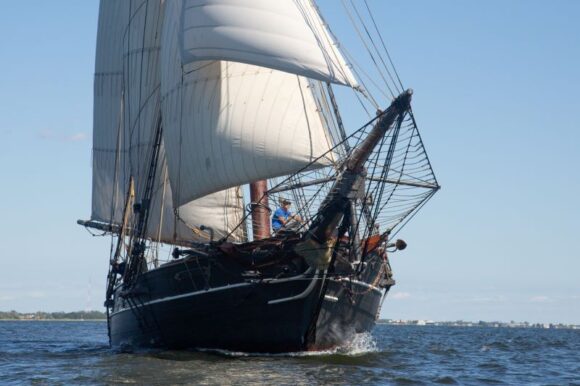
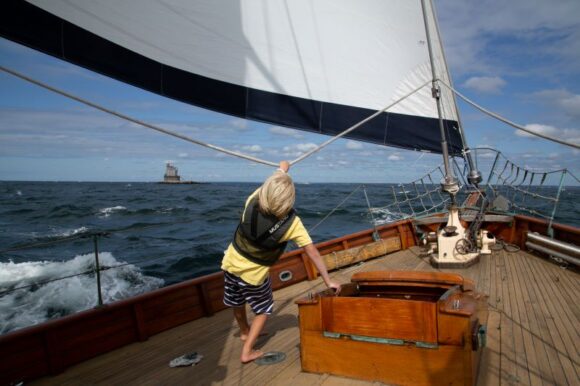
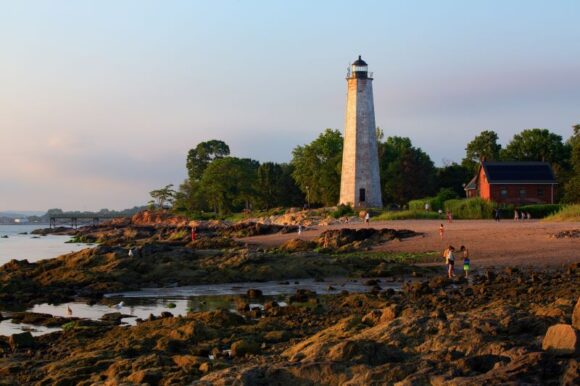
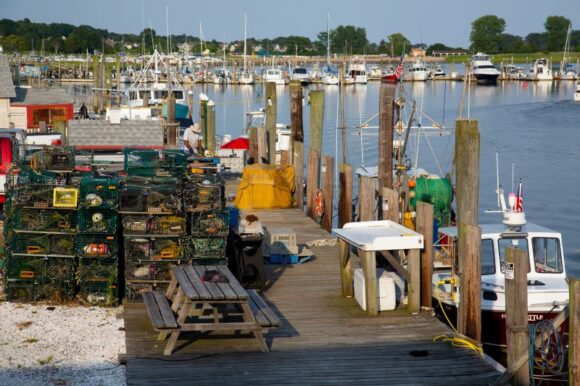
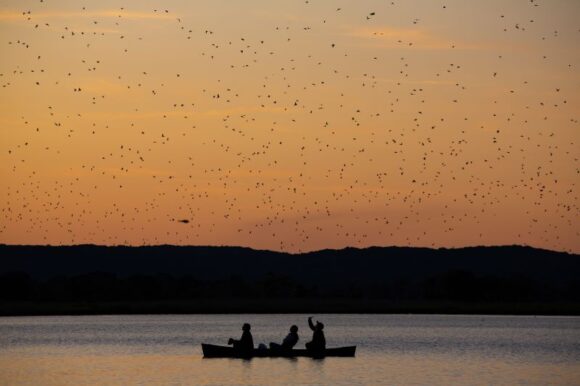
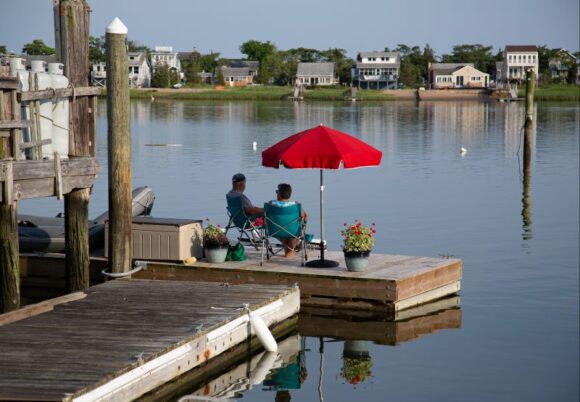
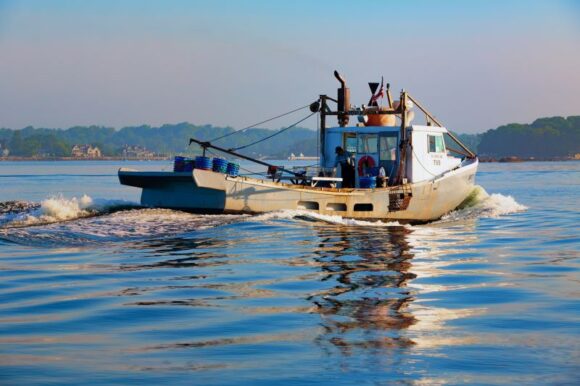
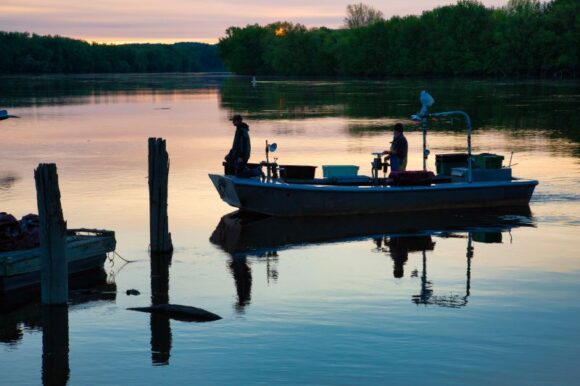
All photos by Caryn B. Davis and published with her permission. All photos taken from ‘Connecticut Waters.’

“The combination of stunning photography by Caryn B. Davis and rich text by Eric D. Lehman draws you into a world where the waters of the Nutmeg State metaphorically consume you”

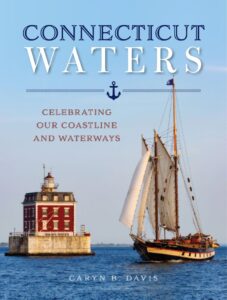
Connecticut Waters is a remarkable book.

First of all, you think it is going to be yet another ‘coffee-table book’ and start to skim the pages simply to admire the beautiful photographs.

But then you start to read the narrative and it immediately demands your attention to the extent you simply cannot put the book down.

The combination of stunning photography by Caryn B. Davis and rich text by Eric D. Lehman draws you into a world where the waters of the Nutmeg State metaphorically consume you, and all you can do is to let yourself become completely — and pleasantly — immersed in them.

After that, you move to yet another level and realize that you are now not only at one with the seas, lakes, rivers, streams and shores of this oh, so special state, but along your way to that perfect point, you have absorbed a plethora of interesting facts and tidbits of fascinating information that you never knew before.

Ultimately, you feel as though you are sharing the whole experience with Davis, who conceived the book and guided the narrative. You have never met her but you are certain you know her because her deep and intimate relationship with the waters of Connecticut has suddenly become yours.

Touching variously on an vast range of engaging topics, including — but by no means limited to — lobster and other snack shacks, historic ferries, antique boats, racing yachts, nautical arts, the oyster and fishing industries, and maritime museums, the book is packed with Davis’s striking photos, which frequently span more than one page making them even more impactful.

These latter explore in creative detail the subject matter of each chapter while the narrative amplifies the history, traditions, and culture of the state’s waters and how people use them in terms of industry, education, recreation and more.

The first chapter, Races and Rendezvous, opens with the words, “Something about being on the water calls for celebration of the magnificent power of the sea …” Throughout the book, Davis captures that celebration with photos of boats of all shapes, sizes and ages at events across the state, demonstrating clearly, “… our human love for life on the water, a love that never seems to die.”

A later chapter on Islands & Lighthouses states evocatively both are, “… about beginnings and endings, about loneliness and connection. A lighthouse keeper may be the opposite of a pirate, but both know the terrible beauty of the sea.”

The photos in this chapter are particularly striking while the narrative details some of the extraordinarily courageous feats of  Connecticut lighthouse keepers. Two such examples are Charles Kenny of the Peck Ledge Light at Norwalk, who in 1921, “rowed through huge swells to save four crewmen [who had] escaped their leaking steamboat” and Bridgeport resident Catherine Moore, who “lived on Fayerweather Island nearly her entire life, tending the light and saving two dozen lives during her tenure.”

The book vacillates between chapters on ‘concrete’ subjects such as Festivals & Celebrations; Boatbuilders & Restorations; Working Watercraft, and Museums & Aquariums, and those with a more intangible air like Wood, Wind & Water; Fun in the Sun; Water, Water, Everywhere, and Coming Into Port. In each case, however, Davis combines her exceptional skill as a photographer with her in-depth knowledge of local sights, sounds, events and personalities, thus bringing the chapter fully to life.

Caryn B. Davis

It is no surprise that the photography in this book is so powerful since Davis, who lives on Rogers Lake in Lyme, Conn., is an award-winning photographer, whose career has spanned the globe taking her to over 50 countries and counting, while her images and articles have been featured in over 60 publications worldwide.

Her first commissioned photography book, A Connecticut Christmas: Celebrating the Holiday in Classic New England Style, gained high accolades in 15 newspapers and magazines nationwide. 

Lehman, who write the narrative, is the director of Creative Writing at the University of Bridgeport.

He is the author or editor of 20 books and his work has been published in dozens of journals and magazines.

If you love the state of Connecticut or even if your love only extends to the waters of Connecticut, then this is a book — as they say at weddings — ‘to have and to hold.’

It will inspire you to start planning visits to many of the places Davis highlights in her photographs. It will enchant you with the fabulous photography and finally, it will engage you with its masterful management of the challenging task of interweaving superior photos with informative text on a topic, which runs freely through the veins of anyone who calls — or has called — Connecticut home.

Editor’s Notes: ‘Connecticut Waters’ was published April 2021 by Globe Pequot Press. For more information about how to order ‘Connecticut Waters’ online or purchase it in person, visit this link.
For more information about Caryn B. Davis, visit her website at this link.

For more information about Eric D. Lehman, visit his website at this link.


Rogers Lake Hosts ‘Fantastic’ Boat Parade

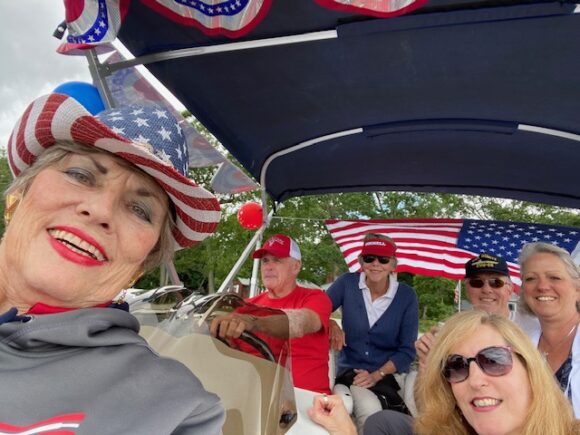
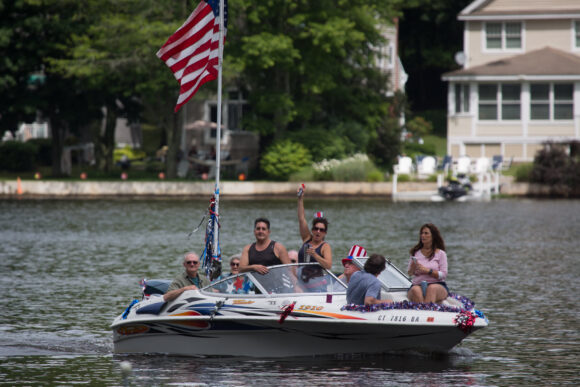
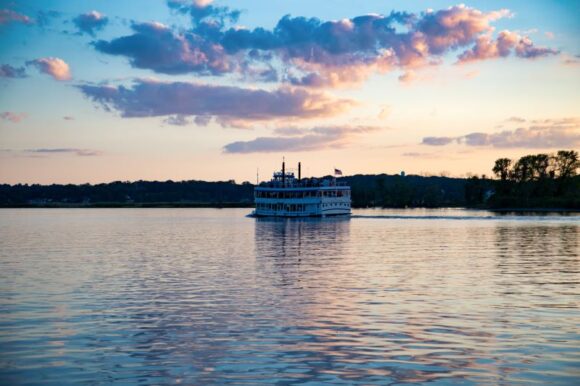
Maureen Plumleigh and friends enjoyed participating in Rogers Lake’s Second Annual Boat Parade on Independence Day 2021. Photo submitted by M. Plumleigh.

LYME/OLD LYME — Last year, Rogers Lake residents took matters into their own hands after both the Sound View and Lyme Independence Day parades were cancelled due to COVID-19 concerns. They came up with an inspired solution to the social distancing issue associated with parades and held the “1st Annual Rogers Lake 4th of July Boat Parade.”

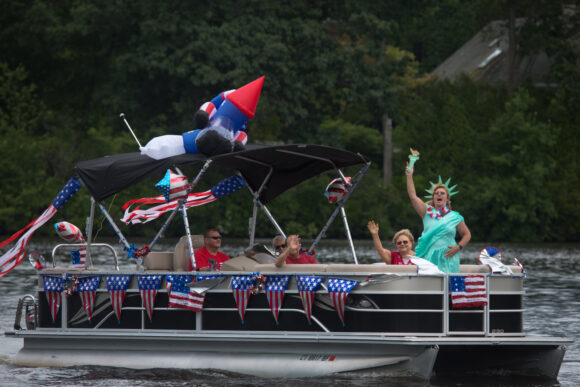
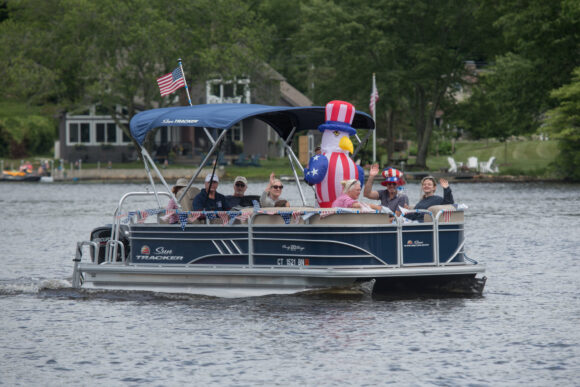
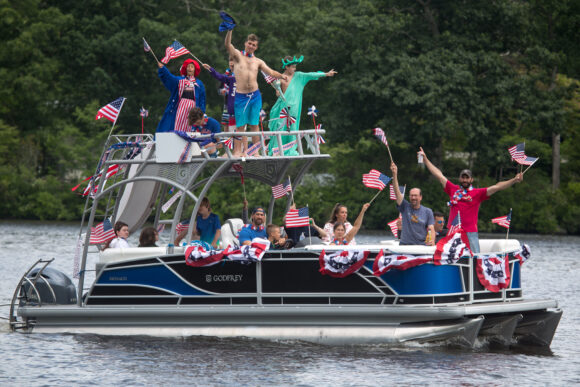
This year, they followed up with the 2021 Rogers Lake Boat Parade, which was held Sunday afternoon, and in the words of the Rogers Lake West Shores Association (RLWSA) Facebook page author was, “Fantastic.”

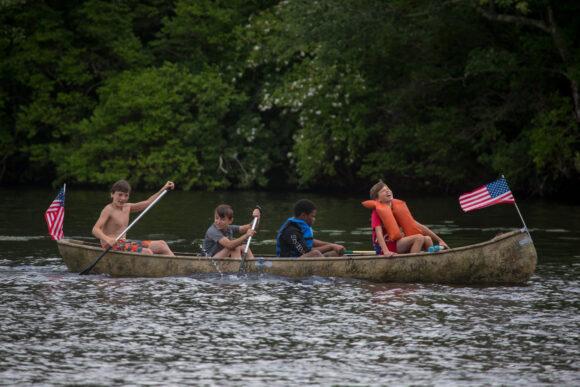
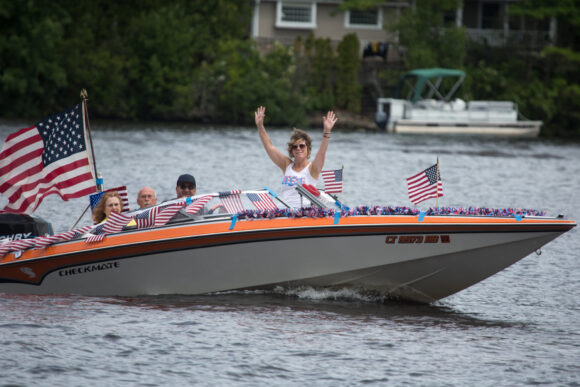
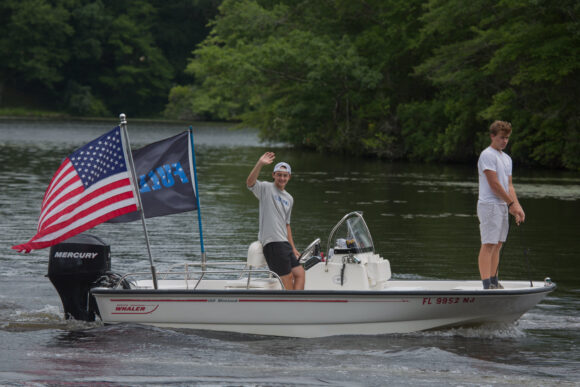
Here are some photos of the great event, which was clearly another huge success, courtesy of the RLWSA.

Op-Ed: Connecticut May Have ‘Reopened,’ Be ‘Returning to Normal’– But Don’t Criticize the ‘Still-Masked’

In May, Connecticut’s COVID-19 protocols for masks and face coverings were relaxed to coincide with newly-modified Centers for Disease Control and Prevention (CDC) recommendations, and the new, less stringent, rules then became effective statewide. 

Masks are not required for anyone outdoors, and the “vaccinated” are not required to wear masks indoors. Conversely, the “unvaccinated” must still wear them indoors.

Masks, however, may still be required in many settings, including healthcare facilities, public transit, and facilities that house vulnerable populations. Businesses and government offices have the option to require that masks be worn.

You can review these new rules in detail at: https://portal.ct.gov/Coronavirus/Covid-19-Knowledge-Base/Latest-COVID-19-Guidance

Despite all that, there are good reasons why some of the “fully vaccinated” may not embrace this “return to normalcy”. You will recognize them both by the masks that they may still wear, and their adherence to the old social distancing guidelines.

Is this excessive caution, or just an abundance of caution? 

“Who was that masked man?’ (The Lone Ranger; 1949-1957)

Unfortunately, people with autoimmune diseases (e.g., Type 1 diabetes, lupus, psoriasis, rheumatoid arthritis), and organ transplant recipients, who take immunosuppressant drugs, may manifest a significantly reduced antibody response to the COVID vaccines. The National Institutes of Health estimates that nearly 23.5 million Americans (about seven percent of the population) suffer from an autoimmune disease; and the prevalence of those diseases is rising. 

Connecticut has heart and kidney transplantation centers at both Yale New Haven and Hartford Hospitals. Each year, about 2,000 heart transplants are delivered in the United States; and the number of kidney transplants has increased annually since 2015, reaching nearly 25,000 in 2019. Yale New Haven Hospital is the largest kidney transplantation center in New England.

Further, while more than 174 million Americans have received at least one vaccine dose — about 65 percent of the adult population — there are still significant gaps at the local level. To illustrate that point, CDC data indicate that less than 30 percent of the population is fully vaccinated in nearly 1000 counties, many of which are rural and economically disadvantaged and concentrated in the Southeast and Midwest. The data also demonstrate a common political link to those shunning vaccination. 

In contrast, 60 percent of the Connecticut population has been fully vaccinated, and two-thirds of residents have received at least one dose.

Note that a single dose of a two-dose vaccine will provide some protection, but not nearly at the level achieved after the second dose. Of course, medical and public health professionals recommend getting fully vaccinated, especially now, with the continued emergence of troubling mutations.

And so, as much of the country emerges from masking and social distancing, under-vaccinated pockets in the U.S. still threaten to bring the virus roaring back; and, last Thursday, CDC Director Walensky announced that the number of COVID-19 cases in the United States has increased 10 percent, certainly fueled by the hyper-transmissible (i.e., highly contagious) delta variant spreading among the unvaccinated.

Although recent data indicate that our current vaccines are still effective at preventing severe COVID-19 caused by the delta variant that would require hospitalization, there is a concern that the vaccines might lose their effectiveness if new variants continue to evolve and spread in the unvaccinated.  

We need to get all Americans vaccinated. This is neither new information, nor partisan politics. I am not suggesting that everybody masks-up again. I do, however, want you to be aware and remain safe.

As you might have guessed, I am one of those “fully vaccinated,” who still wears a mask in a very crowded areas, and washes my hands frequently. 

Blanche Dubois, in the Tennessee Williams play, A Streetcar Named Desire, may have actually had the right vaccination message: “Whoever you are, I have often relied on the kindness of strangers.”

Editor’s Note: Thomas D. Gotowka, who wrote this op-ed and lives in Old Lyme, writes a regular column for LymeLine.com titled, ‘A View From My Porch.’ His entire adult career has been in healthcare.