Editor’s Note: This is the second of two parts of a highly topical essay titled, “A Primer on Vaccines,” by Thomas D. Gotowka. Part 2 considers the complexities of reaching vaccine distribution. The author’s goal is that the reader obtains a fundamental understanding of the vaccine approval process, and recognizes that Americans will be provided a vaccine that is safe and effective. Read the first part of the essay at this link.
The Good News First:
On Dec. 10, an independent Advisory Panel to the United States Food and Drug Administration (FDA), comprised of scientists and medical experts, voted overwhelmingly to endorse Pfizer’s Emergency Use Authorization (EUA) request. This brings the US to the threshold of a massive vaccination effort against a virus that has now killed over 300,000 Americans.
The Panel concluded that the vaccine appears safe and effective for emergency use in adults, and teenagers, 16 years, and older. Specifically, the Panel ruled that the vaccine’s potential benefits outweigh its risks.
A day later, FDA staff scientists, as expected, corroborated the Panel’s endorsement, and “greenlighted” use of the Pfizer vaccine.
UPS and FedEx trucks left Pfizer’s Michigan facility at Kalamazoo Sunday morning (Dec. 13), and began delivering the vaccine to nearly 150 distribution centers across the United States; the states began receiving the vaccine early this week. Moderna’s EUA request will be considered on Dec. 17.
The Panel’s endorsement came, despite allergic reactions observed in two individuals who received the vaccine after Britain launched their emergency vaccination program. A Panel member, Dr. Paul Offit of Children’s Hospital of Philadelphia, said, “There are still some unknowns, but in an emergency, the question is whether you know enough.”
Pfizer has said they have seen no signs of allergic reactions in their trial.
The President-elect called the FDA decision, “A
bright light in a needlessly dark time.”
Distribution Factors:
i) Cold Storage
Although all three of the leading vaccine candidates (i.e., Pfizer, Moderna, and Astra Zeneca) must be kept at low temperatures. Pfizer’s vaccine presents some challenges; and must be kept at minus 94 degrees F, or lower.
ii) Quantity of Vaccines Available/Number of Doses Required
Both the Pfizer and the prospective Moderna vaccines require two doses, three or four weeks apart, respectively.
Because the results from clinical trials were so favorable, both Pfizer and Moderna began production and warehousing of their vaccines in advance of FDA approval. Pfizer has said it will have about 25 million doses of the two-shot vaccine for the U.S. by the end of December.
Initial supplies will be limited and reserved primarily for health care workers and nursing home residents, with other vulnerable groups next in line until the vaccine becomes more widely available, which will probably not happen until the spring. Moderna will have 20 million doses available. These have been very fluid predictions.
Distribution Plans:
Last September, the U.S. Department of Health and Human Services (HHS), released a plan for distribution of vaccines across the United States. HHS has contracted with about a dozen pharmacy chains to administer the vaccination programs.
CVS and Walgreens will be involved in the early stages of the rollout to help vaccinate residents of long-term care facilities. Other participating pharmacies are expected to start later, when more doses become available. Working with pharmacies, most of which already have local patient relationships, will facilitate community-based vaccination programs.
As in mitigation, the states will have a very large role in vaccination. Governor Lamont presented CT’s plan for distribution of the vaccine on October 3rd. CT’s goal is to have everyone in the state “who wants a dose” to be vaccinated by early fall of 2021. The plan was developed by his Vaccine Advisory Group, with oversight from CT DPH. CT DPH has also been actively working with local health departments to organize CT’s distribution and vaccination plan.

Preparing to vaccinate. Photo by Kristine Wook on Unsplash.
From Here to Immunity:
The World Health Organization has indicated that 70 percent of the population of the United States must be immunized to reach “herd immunity; but because the vaccines are not effective all of the time, the threshold would likely need to be nearly 80 percent, in order to reach a 70 percent rate of successful vaccination.
However, we also know that, even assuming full participation, and full compliance with the two- dose regimen, it will not be until the end of 2021, or early 2022, before we have been able to vaccinate that much of the U. S. population.
During that extended period, Americans will continue to die unless we stop the spread by simply observing the behaviors that our medical and public health experts have stressed for nearly a year: wear a mask, wash your hands frequently, disinfect common surfaces, avoid crowds, especially indoors, and keep a safe space between yourself and other people who are not from your own household.
I believe that individuals can assume that immunity will occur about two weeks after the second dose of the vaccine.
Pfizer has said it will have about 25 million doses of the two-shot vaccine for the U.S. by the end of December. Initial supplies will be limited and reserved primarily for health care workers and nursing home residents, with other groups next in line after the vaccine becomes more widely available, which will probably not happen until the spring.
Unanswered Questions:
We do not yet know how long vaccines will confer immunity. The Panel stressed that, although the vaccine’s efficacy is very high, and may be more than 90 percent effective in blocking the symptoms of COVID-19 at the individual level; it is still unclear whether it will reduce transmission and stop the symptomless spread that accounts for a large portion of cases.
The vaccine trials excluded pregnant or breastfeeding women; and largely excluded children under 12 years old. Consequently, it is not yet clear when the immunizations would be safely available for them.
Pfizer will provide six months’ follow-up data about safety and side effects as it pursues full approval. “Americans want us to do a scientific review, but I think they also want us to make sure we’re not wasting time on paperwork, in lieu of moving forward to the decision,” FDA Commissioner Stephen Hahn said before the Pfizer EUA review meetings.
Was it Too Fast?
This was not “miraculous.” Rather, “the speed is a reflection of years of work that went before,” stated Dr. Anthony Fauci, Director of the National Institute of Allergy and Infectious Diseases.
Long before COVID-19 was even on the radar, the groundwork was laid in large part by two different streams of research, one at the NIH, and the other at the University of Pennsylvania. In addition, scientists had already learned a great deal about other coronaviruses from prior SARS and MERS outbreaks.
“Science and data guided the FDA’s decision,” Commissioner Hahn recently said. “We worked quickly, only because of the urgency of this pandemic, not because of any unwarranted external pressure.” (see below.)
What Happens Now?
The FDA and CDC will monitor the use of the vaccine long after its release, and conduct “active surveillance” of the health care workers and residents of long-term care facilities who were early recipients of the vaccine. The purpose of this monitoring is to identify the rare side effects and adverse reactions that were not seen, even in the very large clinical trials conducted by Pfizer.
Further, because the trials excluded some groups who might have different types of side effects (above), monitoring enables an additional review of those excluded trial groups who actually then received the vaccine as distribution expanded, presumably with medical advice.
Some Final Thoughts:
America’s systems worked. Teams of scientists and medical experts made vaccine development their highest priority early in this pandemic; and America’s highly respected public health agencies, which include NIH, FDA, and CDC, also stepped up, and acted as though we were in the midst of this century’s greatest threat to the nation’s health.
This was “deep state”, with all its expertise, moving ahead at optimum speed, despite an Executive Branch throwing brickbats, and unable to acknowledge the growing number of dead Americans.
Again, we need to develop education and communication strategies to overcome “vaccine hesitancy” (sometimes called anti-vaccination or anti-vax”), if we are ever to reach the threshold required for “herd immunity”.
There has been some concern that vaccine approval was accelerated to fulfill a political goal; and, unfortunately, the outgoing Administration did make threats regarding the timing of the approval.
The Commissioner had already stated “Let me be clear; our career scientists have to make the decision, and they will take the time that’s needed to make the right call”.
After the Panel’s endorsement was announced, The President-elect said “I want to make it clear to the public: You should have confidence in this. There is no political influence. These are first-rate scientists, taking their time, looking at all of the elements that need to be looked at,” Biden told reporters Friday at an event introducing several members of his Cabinet and White House staff.
I am concerned that maskless states like South Dakota, who was content with last week’s 47 percent test positivity rate, will make no effort to educate and encourage vaccination.
The new Administration will also need to deal with the availability of therapeutics for Americans. Some of these experimental drugs, which have been occasionally used on political celebrities, are in such short supply, that some states have set up lotteries to determine which patients would receive a dose.
In closing, we should acknowledge the tens of thousands of volunteers who participated in clinical trials. Pfizer had 44,000; Moderna, 30,000; and Astra Zeneca, 23,000.
This is the opinion of Thomas D. Gotowka.

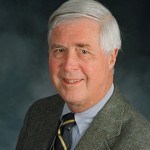
Tom Gotowka
About the author: Tom Gotowka’s entire adult career has been in healthcare. He’ will sit on the Navy side at the Army/Navy football game. He always sit on the crimson side at any Harvard/Yale contest. He enjoys reading historic speeches and considers himself a scholar of the period from FDR through JFK.
A child of AM Radio, he probably knows the lyrics of every rock and roll or folk song published since 1960. He hopes these experiences give readers a sense of what he believes “qualify” him to write this column.

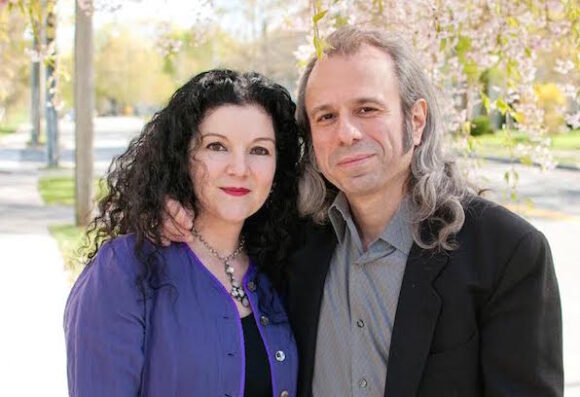
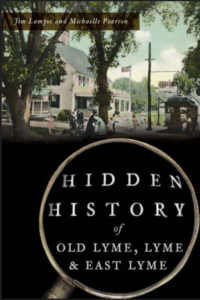 OLD LYME — The Phoebe Griffin Noyes Library in Old Lyme hosts an Author Talk, Tuesday, Dec. 15, from 6:30 to 7:30 p.m. when Old Lyme residents and expert local historians Jim Lampos and Michaelle Pearson, will introduce their newest book, ‘The Hidden History of Old Lyme, Lyme and East Lyme.’


 What can we do when we are besieged by a pandemic, offspring reluctant to visit, political chaos, advancing old age, and weather that no longer permits porch luncheons in a toasty sun?