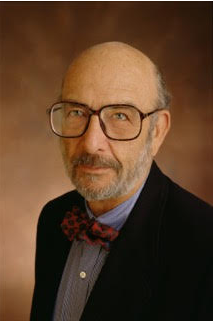
Philip Scheffler
Philip Scheffler, CBS News’ first television street reporter, a documentary producer and the executive editor at 60 Minutes for many years, died April 7, 2016, in New York Presbyterian – Cornell Weill Medical Center. He was 85 and lived in Manhattan. Until recently he also spent much of his time in Essex, Conn., where he had a home for 40 years.
Scheffler retired from 60 Minutes in June of 2003 and had served as a consultant to CBS News up until a few years ago. He was a friend and mentor to Jeff Fager, executive producer of 60 Minutes. “Phil was a guiding force behind the success of 60 Minutes for more than two decades,” said Fager. “Don Hewitt often said he couldn’t have done it without him. He was a first-class journalist, an admirable human being, and a great friend to many of us. We will miss him very much.”
Scheffler was a reporter and producer for CBS News for the first half of his five-decade career. He became the senior producer at 60 Minutes in 1980, handling the day-to-day responsibilities – essentially the right hand of the broadcast’s executive producer Don Hewitt. Hewitt named him executive editor later. In this capacity, Scheffler had a direct hand in producing every 60 Minutes report broadcast from 1980 to 2003 – a period during which 60 Minutes was the number-one program in America five times.
Scheffler oversaw the reporting from the field and handled most of the producers’ journalistic issues, enabling Hewitt to focus almost exclusively on shaping the newsmagazine’s stories. When tempers flared in the screening room between Hewitt and one of his correspondents, such as Mike Wallace or Morley Safer, it was the professorial Scheffler, sporting a bow tie and close-cropped beard, who played referee.
Before his senior positions, Scheffler produced 60 Minutes stories over nine seasons for Wallace, Safer, Harry Reasoner and Dan Rather. His first story with Safer was “After Attica,” a look inside a maximum security prison in Colorado broadcast after the horrible riots in the New York prison in 1971.
Hewitt hired him in March of 1951 as a copy boy for “Douglas Edwards with the News,” which Hewitt directed and produced. Debuting in May 1948, that broadcast was the first network television news program, and in 1951, Scheffler became its first street reporter.
His first field assignment was to ask people whether they thought Gen. Dwight Eisenhower should enter politics and run for the Republican presidential nomination. But reporting was only one of the hats worn by early television news people like Scheffler. Out of necessity, he also invented a makeshift news teleprompter.
Hewitt wanted his anchor, Edwards, to look at the camera instead of his script when reading the news, so he had Scheffler make cue cards. “My first job at CBS Television News,” recalls Scheffler, “was to hand print Douglas Edwards’ copy on two-by-three-foot cue cards. Then, when we were on the air, I would hold them up next to the camera lens and move them up a line at a time for Doug to read. My arms were always tired and sore, so I asked Don if the camera could move in closer. He put on a wide-angle lens and moved the camera to within 10 feet of Doug, and I started typing the copy using wide adding-machine paper and a huge-type typewriter. It was the first crude teleprompter, but I didn’t have the wit to develop it!” said Scheffler in 2001.
In 1953, Scheffler was drafted into the Army and served his two years. During this period, he convinced his superior officer that he could put the Army on television — as long as he could get a few weekends off to film the piece! The result was a feature series in weekly installments he helped produce and write for CBS in which a Korean War recruit was followed through basic training at New Jersey’s Fort Dix. Scheffler returned to CBS and continued working as writer, reporter and producer for the nightly network news and other regularly scheduled CBS News programs through the 1950s.
The news program, “Eyewitness,” was Scheffler’s next stop, where he served as associate producer and on-air reporter for the half-hour weekly from 1960 to 1963. He briefly served as an associate producer on “The CBS Evening News with Walter Cronkite,” where he covered the Kennedy assassination, before joining the documentary unit in 1964. There, Scheffler became a producer of documentary and special news broadcasts, including “CBS Special Reports” and “CBS Reports.” He produced more than 100 of them, including: “After 10 Years: The Court and the Schools” (1964), on school integration; “CBS REPORTS: Robert F. Kennedy” (1967), on Sen. Kennedy and his political ambitions; and “The Cities” (1968), about the nation’s urban crisis.
Scheffler’s assignments took him to 47 states and to 50 foreign countries, including Vietnam. He traveled there for six assignments during the war; his output included three two-hour specials on American policy in Southeast Asia, “Where We Stand in Vietnam” (1967), “Where We Stand in Indochina” (1970), and “The Changing War in Indochina” (1971).
CBS News broadcasts that Scheffler worked on, especially 60 Minutes, have received the industry’s highest recognition, including the Peabody, DuPont and Emmy awards. In 1981, he received the Alumni Award for distinguished contributions to journalism from the Columbia University Graduate School of Journalism, from which he received a master’s degree. As an adjunct professor, he once taught classes there as well.
Scheffler was born Sept. 16, 1930 in New York City and was graduated from the City College of New York. He is survived by his wife, Dr. Linda Weingarten Scheffler, a clinical psychologist, author and retired professor at Hunter College in New York City; his daughter, Ramsay Klaff, of Massachusetts; and a son, Adam, of Chicago.

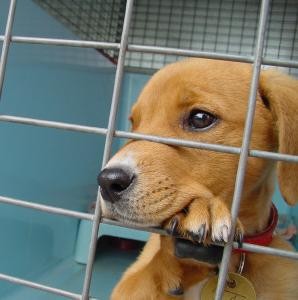 LYME – Reynolds Subaru and Boats is holding its sixth annual Adopt a Pet event Saturday, April 9, from 10 a.m. to 2 p.m.