Old Lyme’s Tributary Mill Allows Interns to Experience Environmental Preservation Efforts First-hand 

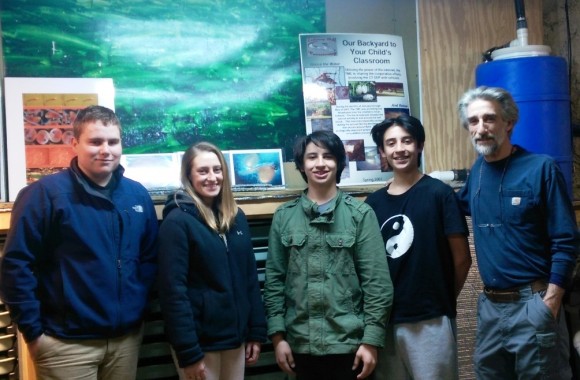
Gathered for a photo are, from left to right, Tyler Clinton, Ashley Bright, Gray Tripp, Morey Tripp, and Jim Tripp.

Gathered for a photo are, from left to right, Tyler Clinton, Ashley Bright, Gray Tripp, Morey Tripp, and Jim Tripp.

The Tributary Mill has stood strong in the heart of Old Lyme since 1672. Originally used to grind grains such as corn and wheat, the mill often became referred to as Rooks Mill in honor of Edward Rooks, an American impressionist who was enthralled with the mill’s beauty, which has since been the subject of many paintings.
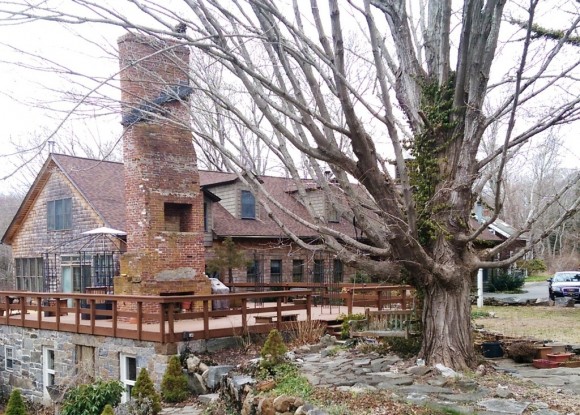
The Tributary Mill in Old Lyme.

The Tributary Mill in Old Lyme.

Purchased by Fran Tripp in 1981, her son Jim and his wife Sandra created the Tributary Mill Conservancy (TMC) that exists today from the original foundation. A nonprofit organization that strives to merge science and art through the conservation of the unique tributary ecosystem, the TMC has serviced its surrounding community in innumerable ways.
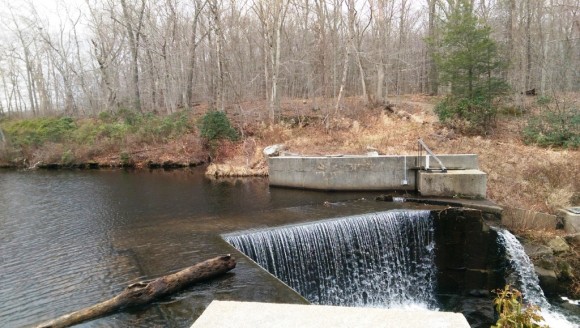
The waterfall at the mill.

The waterfall at the mill.

Operated by Jim, a carpenter, and Sandra, a high school chemistry teacher, as well as a variety of additional volunteers of all ages, the TMC works closely with a variety of environmentally oriented organizations such as the state Department of Energy and Environmental Protection (DEEP), Mystic Aquarium, and the Quebec-Labrador Foundation.
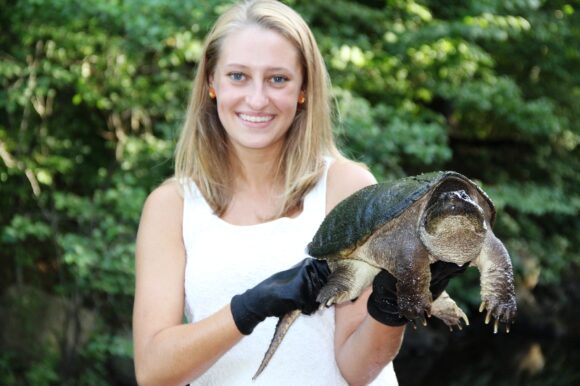
Smile for the camera! Ashley Bright holds a turtle.

Smile for the camera! Ashley Bright holds a turtle.

During the summer and fall seasons, the TMC focuses its energies on trapping and collecting data from snapping turtles by conducting blood tests,  fecal tests, and collecting the leeches found on the turtles for further testing.

In addition, National Geographic recently donated a large number of cameras to put on the backs of the snapping turtles to further track them.
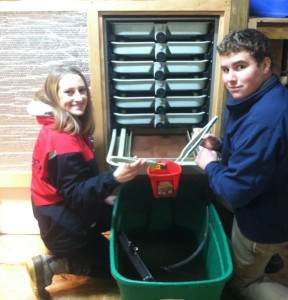
Ashley and Tyler work on transferring the baby salmon.

Ashley and Tyler work on transferring the baby salmon.

In the winter, the TMC turns its attention to hatching Atlantic salmon eggs given to them and regulated by the DEEP. An endangered species, the Atlantic salmon thrive in the unique ecosystem found at the TMC.

The highly efficient filtration system used by the TMC to hatch the eggs, which was engineered by Jim Tripp himself, has resulted in an 18 percent death rate for the eggs, significantly lower than the average 20 percent death rate. The eggs, once hatched, are then released into the surrounding Connecticut River tributaries.

In the spring, the TMC collects data on glass eels. Estimating the number of eels migrating up the Mill Brook as well as weighing trapped eels gives them valuable data, which they then send to the DEEP.
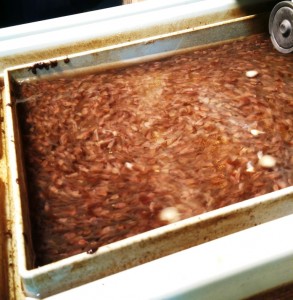
Eels galore!

Eels galore!

The Conservancy also focuses on educating and involving the community in their work. Along with offering tours for school groups ranging from elementary to high schoolers, the Conservancy also provides hands on learning opportunities for middle schoolers, high schoolers, and college students.

Old Saybrook High School seniors Ashley Bright and Tyler Clinton have been deeply impacted by their time at the preserve, which has inspired both of them to pursue careers in environmental science and engineering.

Ashley, who has been interning at the TMC since September, said, “I never expected to get so much out of a high school internship. I feel like I’ve been part of their family. It’s amazing that I’ve been able to do what I’ve done here as a high school student, and I know this experience is something I’ll always remember.”

Tyler, who has been interning at the TMC for two years, echoed Ashley’s sentiment, saying, “I have a second family here,” before going on to praise the kindness of Jim and Sandra Tripp. “They do this out of the kindness of their hearts. They really care about conserving the ecosystem and helping it thrive.”

Jim Tripp notes, “Our original goal was to make a prototype of a mill that could be emulated throughout the area because our location here on the river is such a great place to do wildlife work.”

For more information about the Tributary Mill Conservancy, visit tributarymill.org or email  tributarymill@comcast.net.  Donations to the nonprofit can also be made through the TMC website.

Reading Uncertainly? ‘Let Me Be Frank With You’ by Richard Ford

let me be frankLet me be frank with you, Frank: you are a bystander, a passive yet sensitive observer of the daily stream, but frustratingly disconnected!
“Frank,” of course, is Frank Bascombe, Richard Ford’s complex and compelling character who has now reached the age of 68. Ford first introduced him to us in The Sportswriter in 1986, when he, his wife and son moved from New York to “Haddam,” New Jersey (in reality Princeton, without the university) as he tried a new career as a novelist. That failed, his wife divorced him and he lost his son.

Frank resurfaced in Independence Day in 1995, when he took his second son for a quick tour of the Halls of Fame in Springfield and Cooperstown, just before the Fourth of July. This one included a delicious put-down of the town of Deep River! He had then become a real estate agent in Haddam.

And in our Millennium Year of 2000, in The Lay of the Land (published in 2007), Frank found a new wife, only to see her depart, had prostate surgery and, in this three-day story, tried to celebrate Thanksgiving as a 55-year-old in his new home on the Jersey Shore, still working in real estate.

Let Me Be Frank With You is the fourth in the series (doesn’t this remind you of John Updike’s Rabbit Angstrom?) and we find Frank back in Haddam, his second wife returned, as he interacts, still passively, with four unusual characters.

The first is Arnie Urquhart, a college classmate whose Jersey Shore house (it used to be Frank’s) has been demolished by Hurricane Sandy (Sandy, it seems, is a major character in this set of novellas). The second is Charlotte Pines, a woman he finds knocking on his Haddam door, an ex-resident of that house in which her family was killed. Then we reconnect with Ann Dykstra, his former wife, who has returned to Haddam to an “extended care facility” to cope with her onset of Parkinson’s. And finally we share Frank’s visit with Eddie Medley, an old friend who is in the final stages of dying.

Throughout these sessions Frank remains the foil, yet a remarkable observer of every facial tic, bodily motion and surrounding sights, smells and sounds: crows jousting in a tree, a trash truck grinding debris, auto horns, laughter next door. He just never seems connected. He’s open to everything …

But his stock answers in conversation are: “I don’t know. Maybe.” “It makes me realize how remote I am.” “All is frankly enigma.” He is an aloof reporter experiencing a syncopation of senses and sounds, in the middle of brief conversations.

Frank acknowledges his advancing age: “ . . .  the ‘gramps shuffle’ being the unmaskable, final-journey approaches signal.” And “as you get older things slide away, like molasses off a table top.” And “ . . . life’s a matter of gradual subtraction.” And someone asking of you “Are you okay?” He thinks: “No more grievous words can be spoken in the modern world.”

His self-description: “I am: a man who doesn’t lie (or rarely), who presumes nothing from the past, who takes the high, optimistic road (when available), who doesn’t envision the future, who streamlines his utterances (no embellishments) and in all instances acts nice.”

But Frank winds into all this a marvelous sense of humor, often acidic: An “extended care facility: Nothing’s bleaker than the stingy, unforgiving one-dimensionality of most of these places; their soul-less vestibules and unbreathable antiseptic fragrances, the dead-eyed attendants and willowy end-of-the-line pre-clusiveness to whatever’s made life be life but that now can be forgotten.”

Hurricane Sandy seems to be the primary stimulant of Frank’s aging recollections. As he notes, “There’s something to be said for a good, no-nonsense hurricane, to bully life back into perspective.”

But Ford’s Frank Bascombe lives on! Will we see a fifth view of him one day soon … perhaps at 80?

Editor’s Note: Let Me Be Frank With You by Richard Ford is published by Harper Collins, New York 2014.

Felix Kloman_headshot_2005_284x331-150x150

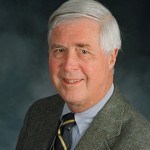
About the author: Felix Kloman is a sailor, rower, husband, father, grandfather, retired management consultant and, above all, a curious reader and writer. He’s explored how we as human beings and organizations respond to ever-present uncertainty in two books, ‘Mumpsimus Revisited’ (2005) and ‘The Fantods of Risk’ (2008). A 20-year resident of Lyme, he now writes book reviews, mostly of non-fiction that explores our minds, our behavior, our politics and our history. But he does throw in a novel here and there. For more than 50 years, he’s put together the 17 syllables that comprise haiku, the traditional Japanese poetry, and now serves as the self-appointed “poet laureate” of Ashlawn Farms Coffee, where he may be seen on Friday mornings. His wife, Ann, is also a writer, but of mystery novels, all of which begin in a bubbling village in midcoast Maine, strangely reminiscent of the town she and her husband visit every summer.

Celebrating 80+ Years of Center School’s History

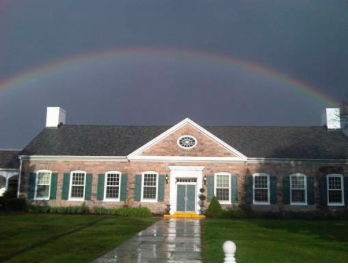
Center_School

There will be a celebration of the over 80-year history of Old Lyme’s Center School on Friday, May 1, from 3:30 to 5:30 p.m. The event will include a Maypole dance, reminiscent of the school’s former Mayday event; speeches; and informative displays of photos and artifacts from each decade of the school’s history.

Starting next year, the school will house the district’s central offices and preschoolers only. Other elementary grades will be located at Mile Creek and Lyme Schools until population trends require further changes.

LAA’s 94th Annual Elected Artist Exhibition on Show Through June 5

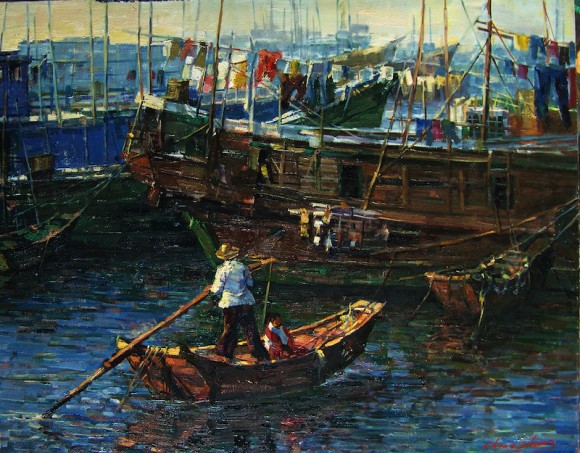
'Fishing boat' by Chris Zhang

‘Fishing boat’ by Chris Zhang is one of the signature paintings in the current LAA exhibition.

The Lyme Art Association (LAA) presents the 94th Annual Elected Artist Exhibition, on view from April 24 through June 5.  All four galleries will display work by Elected Artists, who are the LAA’s most accomplished artists.

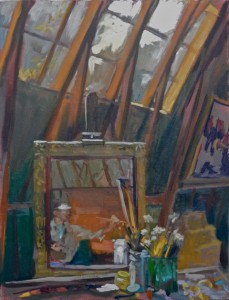
'Working in the Studio' by Bill Hanson.

‘Working in the Studio’ by Bill Hanson.

These torch-bearers for the representational tradition follow directly in the footsteps of the Lyme Art Colony artists who hung their tonalist and impressionist works in this historic building.  This is a great opportunity to see, and perhaps take home, work by Elected Artists, showcased in the LAA’s sky-lit galleries. 

The LAA will hold an opening reception and a gallery dedication in memory of Foster Caddell, Elected Artist, on Friday, May 1, from 6 to 8 p.m.

The LAA was founded in 1914 by the American Impressionists and continues the tradition of exhibiting and selling representational artwork by its members and invited artists, as well as offering art instruction and lectures to the community. The LAA is located at 90 Lyme Street, Old Lyme, CT, in a building designed by Charles Adams Platt and located within an historic district.

Admission is free with contributions appreciated.  Gallery hours are Monday through Saturday10 a.m. to 5 p.m.Sunday 1 to 5 p.m.

For more information on exhibitions, purchase of art, art classes, or becoming a member, call 860-434-7802.