Letter From Paris: Monsieur (le President) Hollande Goes to Washington

Nicole Prévost Logan

Nicole Prévost Logan

For the first time in 20 years, a French President was invited for a State visit to the United States. François Hollande was greeted with the highest honors, including a colorful pageant on the White House Lawn.

There was no better way to emphasize the historical ties between the two countries than a visit to Monticello, the plantation of Thomas Jefferson, third president of the United States.  Jefferson, ambassador to France from 1785 to 1789, was an ardent francophile.  But he was also a brilliant statesman — particularly when he bought Louisiana from France in 1808, which probably represented the best real estate deal of all time.
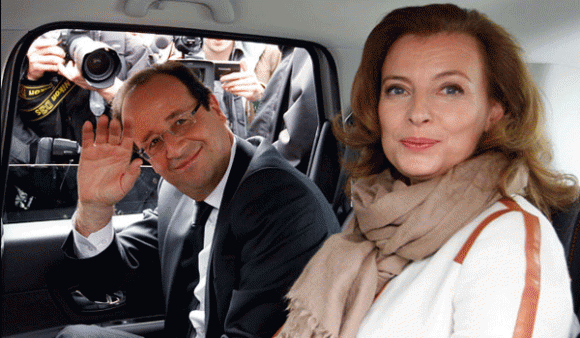
In happier days, French President Francois Hollande and then companion Valérie Trierweiler. (Photo courtesy of Reuters)

In happier days, French President Francois Hollande and then companion Valérie Trierweiler. (Photo courtesy of Reuters)

The logistics of the official dinner at The White House were the source of an intense “buzz” as to who would be sitting next to the American president in the absence of a French “First Lady,” after the recent break up of Hollande from his long-time companion, journalist Valerie Trierweiler.

The meeting of the two presidents in Washington had a strong symbolic importance aimed at reinforcing their respective statures on the world scene.  France is one of the staunchest allies of the US today.  It has an aggressive foreign policy demonstrated by military interventions in Mali and Centrafrique and the essential role it played during the international, ongoing negotiations regarding Syria and Iran.

Last summer the attitude of Obama was widely interpreted a slap in the face for Hollande when the latter was left high and dry after his offer to provide military assistance to the US against Syria. Laying out the red carpet in such a manner on this visit might be interpreted as a form of gratitude toward France.

Most of the difficult questions were asked during the press conference, but both Obama and Hollande chose to avoid contentious topics; criticisms were muted.  The resentment felt by France and the rest of Europe about the NSA surveillance was not brought to the forefront.  However, Obama did express his discontent about the untimely presence of a group of French businessmen in Iran even before any agreement was signed with that country.

Unlike Sarkozy, Hollande was not invited to speak in front of the US Congress.  This is not entirely surprising since the presence of a socialist leader could have ruffled too many conservative feathers.

Since the major press conference Hollande gave at the Elysees palace on Jan. 14, it seems that a government plan to turn around the French economy is developing.  The declaration of a “Pact of Responsibility” between the state and the private sector, by waving the obligation to finance social benefits (a reduction of 49% of the cost of labor), constitutes a substantial stimulus for the economy.

This new policy was reaffirmed by Hollande’s remarks made during his stay in California.  In fact, many thought he looked as if he were becoming more “Liberal Democrat” by the hour.  The exposure to Silicon Valley, dynamic French companies and start-ups, successful young French computer scientists, the stimulating atmosphere of flexible working conditions and the surprising remarks about “crowdfunding” were all, in the minds of many, like fresh air blowing from the West coast.

The French President enjoyed having lunch with the CEOs of giant internet companies like Microsoft, Google, Facebook, Mozilla and Twitter.  In 1984, the French President Francois Mitterand similarly enjoyed meeting a certain Stephen Jobs, then 29-years-old.

The stay in California triggered a real “digitalomania” (my own neologism) in France.  The media offered multiple talk shows about robotics, artificial intelligence, bio genetics and the like.  Analysts pointed out that the information technology was the key to the restructuring of the French economy.

While a major snow storm impacted 49 out of the 50 American states, the French president, flying the northern route, ended his short, but definitely positive, visit to the United States.
HeadshotAbout the author:  Nicole Prévost Logan divides her time between Essex and Paris, spending summers in the former and winters in the latter.  She will write a regular column for us from her Paris home where her topics will include politics, economy, social unrest — mostly in France — but also in other European countries.  She also will cover a variety of art exhibits and the performing arts in Europe.  Logan is the author of ‘Forever on the Road: A Franco-American Family’s Thirty Years in the Foreign Service,’ an autobiography of her life as the wife of an overseas diplomat, who lived in 10 foreign countries on three continents.  Her experiences during her foreign service life included being in Lebanon when civil war erupted, excavating a medieval city in Moscow and spending a week under house arrest in Guinea.
Letter from Paris: There’s Something About Sochi

Nicole Prévost Logan

Nicole Prévost Logan

xxii-winter-olympics-logoAfter a few weeks of a media coverage of the 2014 Olympic Winter Games saturated with predictions of terrorist attacks, confrontations and unpreparedness, it felt a relief to watch the opening ceremony on Feb. 6 proceed without any significant hitch.  The smiling and happy faces of the athletes parading inside the stadium before the beginning of the show were the promise of two great weeks on TV. (Close to four billion viewers watched the last winter games of Vancouver).
The sheer number and size of the national teams are astounding.  Compared to the 250 sportsmen from 16 countries who participated in the first Winter Olympics in 1924 in Chamonix, today more than 3,000 people make up the delegations from 87 countries.  Women have come a long way since the 1900 games when their appearances were limited to tennis and golf.

The German president of International Olympic Committee(IOC), Thomas Bach, defused the feared boycott caused by the Russian government’s homophobic position.  He declared that no discrimination would be tolerated toward any group of people.  President Putin of Russia made the shortest -10 second – speech of his career when he declared open the XXII Winter Olympic Games.

The opening ceremony was a grand scale production – Russians have always been good at those – that evoked the nation’s history.  It started with a short film showing Slavic tribesmen in a small vessel.  Actually the scene looked rather like ancient Greeks on their mythical quest to find the Golden Fleece on the distant shores of the Caucasus.

After a romantic 19th century program exalting Russian literature, music and ballet , the post-1917 era was introduced by dozens of young dancers wearing costumes straight out of a Malevich painting.   The message was clear: the Russian establishment had reconciled itself with abstract art which had been vilipended for so long.

The host country of the 2014 games had to show its pride in the most glorious event of its history: the orbiting around the earth of the adulated “cosmonaut” Yuri Gagarin.  The patriotism toward the country’s achievement intensified when five heroes of the past walked in, bearing the Olympic flag.

Among them was Valentina Tereshkova , the first woman in space in 1963 (she was a beautiful young woman when I met her at a reception given at the French embassy in Moscow in 1965).  The youthful appearance of tennis champion Maria Sharapova, who trained at the Sochi sport center until the age of seven, was obviously directed at the modern audience.

The Sochi games have been organized at a high human, financial and environmental cost: corruption, expropriation of local population, damage caused to the “Sochi National Park” and to the “Caucasian Biosphere Preserve”- a UNESCO World Heritage Site.  The Nordmen Firs, which are the tallest trees of Europe (close to 300 feet high) grow in those areas .

Some of the blogs against the Sochi project have been so vitriolic as to be uninformative.  It is better to read well-researched pieces like the one published by David Remnick.  Remnick was the Washington Post correspondent in Moscow in the 1980s and now is the editor of the New Yorker.

Soviet and Russian leaders have cherished the sub-tropical coast of the Black Sea.  Stalin, Brezhnev, Andropov and Yeltsin all had their summer residences in Sochi prior to Putin.  It was on his return from his dacha in Pitsunda, in what is today Abkhazia, that Nikita Khrushchev was overthrown by Brezhnev on Oct. 15, 1965.  Gorbachev’s dacha was located west of Yalta in the Crimea (we were boarded by an armed patrol craft for allegedly sailing too close) .

We circumnavigated the Black Sea on our 44-foot ketch in the summer of 1991.  We had obtained visas for Sochi.  In retrospect, our visit to Sochi was a preview to the 2014 games.  In an outdoor theater, we happened to watch the production of “Jesus Christ Superstar” by the Rock Opera St Petersburg Theater.  It was the first Russian-staged production of that musical.  There will be a repeat performance during the games.

We stayed at the very busy new marina called coincidentally the Center of Sailing Sports or “Olympic Centre.”  Or was it a premonition on the part of the Russians that there would be Olympic games one day in their town?

HeadshotAbout the author:  Nicole Prévost Logan divides her time between Essex and Paris, spending summers in the former and winters in the latter.  She will write a regular column for us from her Paris home where her topics will include politics, economy, social unrest — mostly in France — but also in other European countries.  She also will cover a variety of art exhibits and the performing arts in Europe.  Logan is the author of ‘Forever on the Road: A Franco-American Family’s Thirty Years in the Foreign Service,’ an autobiography of her life as the wife of an overseas diplomat, who lived in 10 foreign countries on three continents.  Her experiences during her foreign service life included being in Lebanon when civil war erupted, excavating a medieval city in Moscow and spending a week under house arrest in Guinea.

Essex Savings Bank Reflects on Successful Year at Annual Meeting

Essex Savings Bank held its semi-annual Trustees’ Meeting Monday, Jan. 27,  at the Bank’s Plains Road corporate office in Essex.  Bank Chairman Douglas Paul welcomed the attendees and stated that he was proud to preside at the completion of the Bank’s 162nd year.

Gregory R. Shook, President and CEO, reported on the Bank’s performance for the fiscal year ending Sept. 30, 2013 by stating, “I am pleased to report that the Bank posted a net profit of $1.7 million. Bank assets grew by $6.7 million to $331.5 million. While core deposits rose by $12 million, credit quality remained strong with zero foreclosed properties and capital increased by $1.8 million to $40.4 million – far exceeding regulatory requirements.”

He continued, ” Our branches continue to attract new relationships and our newest branches in Madison and Chester are operating ahead of our projections.  During the year, the Bank generated over $76 million in loans which were comprised of both residential and business loans. We are also proud to report that our Trust Department, led by professionals, Granville Morris and Moira Martin, has brought assets under management to over $300 million. ”

Shook added, ”  As part of our Bank’s success, we will again be distributing 10% of our after-tax net income or $224,000 to non-profits in our market area.  By year end, we will have contributed back to the community in excess of $3.9 million over the past 18 years that the Community Investment Program has been in existence.”

Charles Cumello, President & CEO of Essex Financial Services Inc., reported that gross revenue for the fiscal year ending Sept. 30, 2013 was $18.7 million, which is up 12 percent.  “This year’s performance is one of the firm’s best, and marks the fourth year in a row with record revenue growth.”

Cumello informed the trustees of  the  many improvements and investments in technology and infrastructure currently underway that will increase the excellence of the firm’s client service as the firm continues to grow.  He stated that these investments in infrastructure are critical as the addition of new clients to the firm has been very robust and inquiries from potential clients continue to rise.

Editor’s Note: Essex Savings Bank is a FDIC insured, state chartered, mutual savings bank established in 1851.  The Bank serves the Connecticut RiverValley and shoreline with six offices in Essex (2), Chester, Madison, Old Lyme and Old Saybrook.  Financial, estate, insurance and retirement planning are offered throughout the state by the Bank’s Trust Department and subsidiary, Essex Financial Services, Inc, Member FINRA, SIPC.

Investments in stocks, bonds, mutual funds and annuities are not FDIC insured, may lose value and are not a deposit, have no Bank guarantee and are not insured by any Federal Government Agency.

Potapaug Presents Beekeeping Talk by CT’s Beehive Inspector, Tonight at OL Town Hall

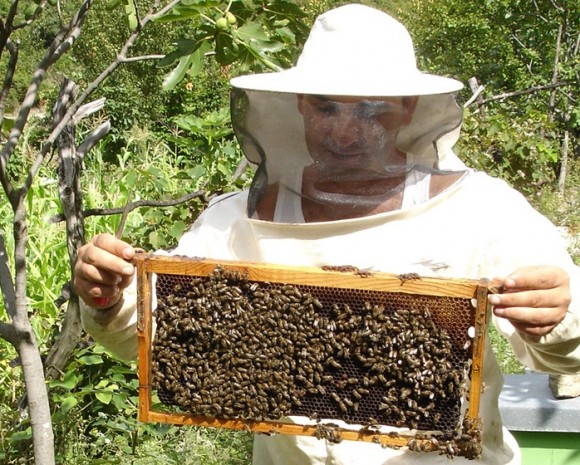
Bees, bees, glorious bees!

Bees, bees, glorious bees!

Potapaug Audubon presents “Beekeeping in Connecticut: History, Challenges & Opportunities” tomorrow, Thursday, Feb. 6, at 7 p.m. at the Old Lyme Town Hall, 52 Lyme St., Old Lyme, with guest speaker, Mark Creighton.

Creighton is a Beekeeper and Agricultural Research Technician at the Connecticut Agricultural Experiment Station, and Connecticut’s Apiary Inspector, inspecting the 5,400 beehives in the state.

This is a free program.

Refreshments will be served.

For more information, call 860-710-5811.

Letter From Paris: All Things Braque and Beautiful

Nicole Prévost Logan

Nicole Prévost Logan

The Georges Braque retrospective in Paris – the first in 40 years – just closed its doors after four months at the Grand Palais.  Braque is best known for being one of the creators of cubism.  But it would be an error to overlook the rest of his creative life, which was in constant metamorphosis from “Fauvism” at age 24 to his art studio and magnificent birds series from the 1930s onwards.  He was one of those rare artists to be recognized during his lifetime since honors were lavished on him.

Georges Braque (1882-1963) was a tall, handsome man with a quiet manner.  Instead of joining his father as a painting contractor, he left Normandy and moved to Paris to study art.  Soon he joins the Fauves (Matisse, Derain, Vlaminck) and his paintings at l’Estaque, or La Ciotat, on the Mediterranean, are an orgy of colors.

Then, after a two-year period, with the same apparent ease, he absorbed the geometrization of nature approach that Cézanne was the first to introduce.  The old master had died just one year earlier. Braque turned houses and vegetation into stylized shapes, devoid of any detail.  His colors are muted.

In 1907, Braque went to the Bateau Lavoir studio of Picasso in Montmartre.  Since 1905, Picasso (two years his junior) had been feverishly working on the “Demoiselles d’Avignon.”  Braque sees the preparatory studies Picasso had done, and is stunned.

From that time until the beginning of the Great War, a relationship – unique in the history of art – is formed between the two artists, based on mutual stimulation without any trace of rivalry.  They were like mountain climbers roped together, to use Braque’s own words.  Braque’s “Le Grand Nu” of a heavy set woman, with a distorted body, the face like a mask, shows the same understanding of African art that Picasso imbued.

In 1908, art critic Louis Vauxelles commented that Braque’s painting were reduced to cubes — thus, the word “cubism” was born.  Braque and Picasso were about to create the most important aesthetic revolution of the 20th century.

In the next few years, cubism evolved through several phases: “analytic” with the de-multiplication of the object into facets, absent of perspective.  A second phase, called “hermetic”, followed.  It is austere, to the point of being illegible, with colors reduced to camayeux (monochromes) shades of grey and ochre.  During the final “analytic” phase, the artist introduced clues to help the onlooker: letters from wine bottle labels or newspapers, or parts from a piano, guitar or mandolin (Braque had a passion for music.)

During this period, Braque and Picasso were also to invent totally new techniques to be emulated by many other artists: first the method of “collage ” using a variety of materials like sand, metal shaving, ground glass or dirt.  In his key painting titled, “Compotier, Bouteille et Verre, “(fruit dish, bottle and glass) of August 1912, he introduced the method of “papiers collés” (glued papers) serving as “trompe-l’oeil.”

In 1914, Braque is called to the European front.  In May 1915, he is seriously wounded in the Artois battle and undergoes brain surgery.  After coming out of his “trou noir” (black hole), he begins a long convalescence.  Not surprisingly, given his personality, he feels no bitterness, nor anger .

He returned again to cubism, but this time his paintings are vibrant with colors and, in spite of their abstraction, easier to read.

In the 1930s, his series of still life paintings in his art studio setting is so complex as to be called “studio landscapes.”  A charming chaos seem to lift fruits and objects and pile them on the ubiquitous “guéridon” (round table.)  An exuberant humor replaced the austerity of his pre-war cubism. American collectors, like MOMA or the Phillips gallery, are enthusiastic about his new works.

In the mid 1950s, the artists introduces a new theme : a bird floating above the apparent disorder of the studio.  In “Nid dans le Feuillage” (Nest in the foliage), the bird flies over an eerie mountainous landscape toward a nest lit in a frigid light.  The emptiness of his very last painting,”Sarcleuse,” is overpowering.  Under a black sky, golden wheat undulates in the breeze.  The metal wreck of the “sarcleuse” (agricultural machine) left on the beach is a final message of human activity.

HeadshotAbout the author:  Nicole Prévost Logan divides her time between Essex and Paris, spending summers in the former and winters in the latter.  She will write a regular column for us from her Paris home where her topics will include politics, economy, social unrest — mostly in France — but also in other European countries.  She also will cover a variety of art exhibits and the performing arts in Europe.  Logan is the author of ‘Forever on the Road: A Franco-American Family’s Thirty Years in the Foreign Service,’ an autobiography of her life as the wife of an overseas diplomat, who lived in 10 foreign countries on three continents.  Her experiences during her foreign service life included being in Lebanon when civil war erupted, excavating a medieval city in Moscow and spending a week under house arrest in Guinea.