Missing Dog FOUND in Old Lyme!

image04/13: We’ve just heard that Ruby has been found — great news!

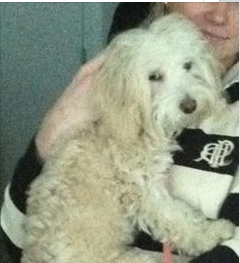
This adorable cock-a-poo puppy ran away from his home on Mile Creek Rd. this morning.  Ruby is a light tan color and weighs about 10 lbs.

If you see her, please contact Melyssa Hancock at 860-331-9339 or the Hancock family.  Poor Ruby is likely very scared since she is very young.

Letter From Paris: Following a New Silk Road

Nicole Prévost Logan

Nicole Prévost Logan

The presidents of the United States and of China were in Europe this week.  It was the first visit of a Chinese president to the European Union’s (EU) headquarters since 1975.  He will meet with the presidents of the Council, Herman Van Rompuy, of the Commission, Manuel Barroso and of the Parliament, Martin Schuls, showing a nascent  interest in  Europe as a political entity.

However, Europe has been the largest trade partner of China for a decade, with German leading the pack.  Why then did president Xi Jinping choose France as one of his four stops in Europe in spite of  that country’s small trade and investment with the Middle Kingdom ?  The reasons are historical, cultural, the Chinese’s attraction to  gastronomy and good wine, and, finally, the desire to acquire more areas of French “savoir faire” and state of the art technology, heretofore unexplored.

Xi Jinping and his beautiful star singer wife Peng Liyuan opened his three-day state visit in Lyon, the French silk capital, and announced his intention to promote a “new Silk Road.”  Started with French King Francis I, the silk-making industry in Lyon was flourishing by the 17th century.  In the 1920s cultural ties developed between China and France.  Chinese students entered French universities, among them several future political leaders.  In 1964 General Charles de Gaulle was the first Western chief of state to establish full diplomatic relations with the Middle Kingdom.

In this file photo, Xi Jinping and his wife Peng Liyuan wave to the crowd.

In this file photo, Xi Jinping and his wife Peng Liyuan wave to the crowd.

Mutual interests in literature, cinema and art have created special bonds between Chinese and French intelligencia.  Chinese fans of the “Nouvelle Vague” films (new wave) are sometimes more knowledgeable about the names of the directors that the French themselves.  The 1992 film “l’Amant‘”(the Lover), directed by Jean Jacques Annaud, based on the 1984 novel by Marguerite Duras, was a huge success in France.  The plot is the affair a “Chinaman” struck with a young French girl on a ferry boat crossing the Mekong river.  French readers cheered on the high school “Joueuse de Go” (Go player) character created by author Shan Sa, whose courage symbolized the determination of the Chinese population fighting against the impending invasion of Manchuria by the Japanese in 1931.

But the objectives of the Chinese president and of his cohort of businessmen and investors who accompanied him were more down to earth:  they were here for serious business.  Both by making inroads into the French industry and by opening their own market to French goods in order to tilt the massive trade deficit between the two countries.  The car company Dongfeng just acquired 14 percent of the PSA’s (Peugeot-Citroen) shares.   The Chinese have been trying to take over 46 percent of  Club Med’s (touristic villages) capital.

Whether it is nuclear energy  or aeronautic technology, automobile industry, or fast trains, the transfer of technology has always been a touchy point for the French.   The most striking example of this situation is the TGV (Train à grande vitesse) or fast train which was designed by Alstom in France in the 1970s and was further developed  jointly with other Western countries.  Now the Chinese network is ten times longer than the French and in July 2013  “Harmony Express” surpassed the speed of the French trains.

On a televised program, a spokeswoman for the Chinese government was asked the question about transfer of technology.   She said that the Chinese now are pretty much caught up, ( which is certainly true with telecom giants like Huawei and ZTE) and that now their policy was veering toward “partnership and cooperation” – language to be expected from a government spokeswoman.

The Chinese love France.  Millions of tourists speed through the most famous halls of the Louvre.  The growing middle class and the wealthy are increasingly   fascinated by luxury goods.  They are not satisfied anymore by the pirated brands one finds all over the world.  Now they can find the real stuff 72 percent cheaper in France thanks to the system of “detaxe” and by avoiding import duties into China.

During the many years we lived in Africa with the American Embassy, in the 1960s and 1970s, I had a chance to observe that, in those days, the Chinese lived in spartan compounds totally secluded from the local population , working on Guinea tea plantations or building a soccer stadium in the Gambia.  They have come a long way.  To-day they visit France to do their spring shopping and buy Chambertin ou Chateau Lafitte wine, Hermes silk scarves or Vuitton bags.

Agribusiness is a field where improvements would be welcome.   One remembers the problems China suffered a few years ago with contaminated powder milk.  The Chinese are very fond of foie gras and cheese.  They have just discovered the “Jambon de Bayonne.”  It takes many hours of preparation and manual work to prepare the dark red ham meat.  The traditional “savoir faire” has existed since the 13th century in the south west of France.  Its commerce is labeled “IGP” (Indication Geographique Protegéee) or geographically protected.  Pork is one of the main food staple in China and there the huge market is promising.  Will the  transfer of “savoir faire” be followed by the loss of the brand?

During the elegant dinner at the Elysees palace and the following night at the  Opera Royal of the Chateau de Versailles, what was president François Hollande thinking of  — 18 billion euros of new contracts or the difficult political situation he is in right now after the disastrous (for him) recent local elections?

HeadshotAbout the author:  Nicole Prévost Logan divides her time between Essex and Paris, spending summers in the former and winters in the latter.  She will write a regular column for us from her Paris home where her topics will include politics, economy, social unrest — mostly in France — but also in other European countries.  She also will cover a variety of art exhibits and the performing arts in Europe.  Logan is the author of ‘Forever on the Road: A Franco-American Family’s Thirty Years in the Foreign Service,’ an autobiography of her life as the wife of an overseas diplomat, who lived in 10 foreign countries on three continents.  Her experiences during her foreign service life included being in Lebanon when civil war erupted, excavating a medieval city in Moscow and spending a week under house arrest in Guinea.
Chester Historical Society Hosts Silent Auction Event, Saturday

F:DPFMonday NewsStorrs Convention of Characters #     February  24 2013  Al Malpa

Photo by Al Malpa
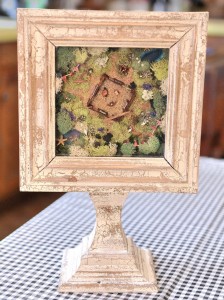
David Rau, Director of Education and Outreach at the Florence Griswold Museum, created “As Seen From Above” for the Chester Historical Society’s Unearthed in Chester Challenge & Reception. Using the rusted Es found buried in an early Chester property, David says his answer to the challenge is “a bird’s-eye view of the earth from above. As soon as I saw the shapes, I saw the openings as small doors. You can imagine the scene as a setting for an interesting archaeological dig, which might unearth more Es.” David is known far and wide for his fairy house creations for the museum.

Dipping back into Chester’s roots as a manufacturing town, the Chester Historical Society has created its fourth challenge for area artists, sculptors, photographers, engineers, and all others with a creative mind.

This spring’s creative challenge is named “Unearthed in Chester,” because it is based on flat, rusted iron pieces found buried in an early Chester Center property – one of the oldest houses in Chester.  These rusty pieces measure 1 ¼ by 2 inches and look like the capital letter E.

The finished pieces of art, jewelry, sculptures, photographs, etc. will be exhibited and sold by silent auction at the Historical Society’s Unearthed in Chester Reception on Saturday, March 22, from 5:30 to 7:30 p.m., at the historic Chester Meeting House.

“The Society has staged similar challenges over the past ten years.  In 2004 we started with Brooks for Hooks, which used hooks and screw eyes manufactured by M.S. Brooks & Sons,” said Skip Hubbard, Historical Society president. “Our last two challenges utilized 2-inch-square knitting gauges made by C. J. Bates & Son and bone handles from Bishop & Watrous.”

There is still time for artists and other creatively minded people to get involved in this year’s Unearthed Challenge. Call Sosse Baker at the Chester Gallery, 860-526-9822, for details.

To attend the reception, which will feature hearty hors d’oeuvres and white wine, tickets are $30 and can be purchased at Chester Gallery and Ceramica, both in the center of Chester, or by calling Sosse Baker at Chester Gallery.

All the proceeds from the event will benefit the Chester Historical Society and its programs, including Chester Museum at The Mill.  Information is available on the Society website, www.chesterhistoricalsociety.org or at Facebook.com/chestercthistoricalsociety.

Death Announced of Jean Washburn Hernandez, Florence Griswold Museum Board Member

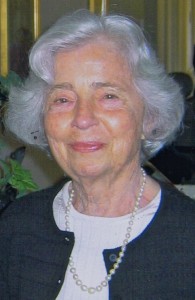
Jean Hernandez

Jean Washburn Hernandez

Jean Washburn Hernandez died peacefully on Saturday, March 1, 2014 at her home in Essex Meadows in Essex, Connecticut. She was 93 years old.

Jean was born on September 20, 1920, in Brooklyn, NY, to Lawrence and Margaret Washburn and was the oldest of three sisters.  Raised in Montreal, Canada and Scarsdale, New York, she was the 4th generation of women in her family to graduate from Packer Collegiate Institute in Brooklyn Heights, NY. After a childhood bout of polio, she attended Mt. Holyoke College where she contracted tuberculosis.  After recuperating in upstate NY and Arizona, she resumed her studies at the University of Arizona.

At the start of WWII Jean enlisted in the American Red Cross and served at an  Army Air Force Base in Arizona, at Camp Edwards in Massachusetts, Otis Field on Cape Cod, and at Washington DC’s St. Elizabeth Hospital.  In all locations she tended the returning wounded, particularly those impacted by psychological trauma.

Before the war she met her future husband, Silvio E. Hernandez in Havana, Cuba while staying with family friends.  She married him in 1946, when he returned from wartime service with the U.S. Army in Europe.  They first resided in New York but shortly after the births of their two children were sent by Westinghouse Electric to Madrid, Spain where they remained for 8 years.  From there they moved to Havana, her husband’s birthplace, a year before the Cuban Revolution.  After being witness to the tumultuous changes brought on by Castro’s policies, they fled in 1960, settling in Essex CT so as to be near Jean’s parents who had retired there.  She remained a resident of Essex for 54 years as an active and contributing member of the community.

Jean was a homemaker and dedicated volunteer.  She was on the Board of the Florence Griswold Museum, in Old Lyme, CT, where as a volunteer, she initiated and ran a successful travel program for the members of the Museum. She was President of the Essex Garden Club, on the Board of the Essex Library Association, and active with St. John’s Episcopal Church in Essex, the Child and Family Agency of SE CT, and many other charitable and community organizations.  Jean and her husband loved to travel and together they enjoyed taking extended trips throughout the world.

Jean was preceded in death by her loving husband of 55 years and more recently by her gentle companion, George (Bud) Lethbridge.  She is survived by her daughter Margaret (Maggie) Hernandez of Key Biscayne, FL, son Robert (Laurie) Hernandez of Essex, CT and their sons Alexander and Christopher.

A memorial service will be held May 2, 2014 at St. John’s Episcopal Church in Essex, CT at 10 a.m.

Memorial donations can be made to the Florence Griswold Museum, 96 Lyme St, Old Lyme, CT, 06371

Letter From Paris: US Academy Awards Spark Thoughts on ‘Le Cinéma Francais”

Nicole Prévost Logan

Nicole Prévost Logan

The ceremonies of the 86th “Oscars” and of the 39th “Césars” took place this week within two days of each other.  In comparison with the glamorous and giant show of the American Academy Awards, the French Césars seemed almost like an intimate affair.  But for the French it is very important as a way to evaluate the status of the film industry and for professionals in this field to reassert their contribution to the country’s Culture (note that ‘Culture’ is usually spelled with a capital “C” in France.)

In recent years – and this a very personal opinion – the French art of making films has been losing its edge as a leader in the industry, as it did for instance during the days of  the Nouvelle Vague associated with the names of François Truffaut, Claude Chabrol and Jean-Luc Godard in the late 1950s.  Nowadays, the subjects of the films are so specifically French as to be un-exportable.  Too often they turn into crowd-pleasers with simplistic plots and actors, who seem to have become the pet actors for the foreign market.

“The Artist,” which received multiple prizes in several countries in 2012, is the best illustration of this remark.  It catapulted Jean Dujardin from a second tier actor in France to a star.  Moreover, giving the award to a silent movie represents a negation of what makes French films special — that is, the thought-provoking ideas (such as Men and Gods, 2011) or the humor (such as the Intouchables 2012.)

Cecile de France, hostess of the 2014 Césars was most entertaining.  She kept the proceedings at a fast pace and had several funny quips.  She remarked, “Nobody’s perfect ” about the Belgians.  This obviously alluded to her own origins and also to the fact that the director of the best foreign film was Belgian.  Taking advantage of sexual orientation as the main theme of the evening, she addressed the audience thus, ” If there are any heteros in the theatre, it’s OK.  There are still a few among us who are.”

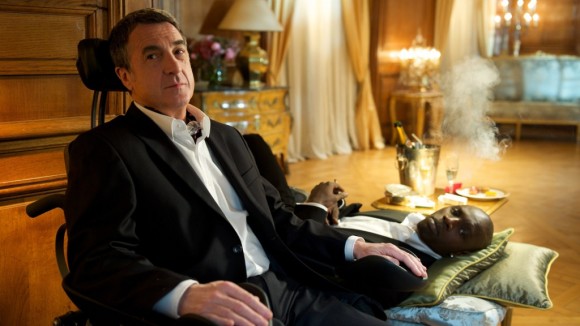
Francois Cluzet, the President of the Cesars, as he appears (left) in Les Intouchables,

Francois Cluzet, the President of the Cesars, as he appears (left) in Les Intouchables,

François Cluzet  (the lead actor who plays a wealthy quadraplegic in the Intouchables), who was the chairman of the ceremony,  made a few political comments to support the ongoing crusade of the intermittents du spectacle (show business workers) to defend the exception française (French exception.)  For them, special unemployment benefits are at stake.

Guillaume Gallienne’s,”Les Garçons et Guillaume, à Table was voted as the best film and received five Césars.  Gallienne is a societaire  from the Comedie Française, the prestigious theater company founded in 1680.  He developed the idea of his film from the one-man show he created.  It is a funny, but mostly touching, story of a boy,  who was brought up as a girl by a chain smoking and insensitive mother.

Mocked at home by his two older brothers and ridiculed by all, he survives years in French and English  boarding schools.  He continues to be the suffering nice guy always wearing a  big smile on his face, until one evening at a roof party.  The hostess calls out,  “a table, les filles et Guillaume” (“dinner’s ready, girls and Guillaume.”)  He finally realizes he is not a girl.  The film is centered on the brilliant acting of Guillaume, who also plays his mother, using the same voice.

The day after the Césars, Alain Resnais, a monument of the French cinema,  died at age 91.  He will be remembered by many movies, including, “Hiroshima Mon Amour”, 1958  (after a story by Marguerite Duras) and ” Last Year in Marienbad“, 1959 (after a novel by Alain Robbe-Grillet, who was the champion of the Nouveau roman.)

HeadshotAbout the author:  Nicole Prévost Logan divides her time between Essex and Paris, spending summers in the former and winters in the latter.  She will write a regular column for us from her Paris home where her topics will include politics, economy, social unrest — mostly in France — but also in other European countries.  She also will cover a variety of art exhibits and the performing arts in Europe.  Logan is the author of ‘Forever on the Road: A Franco-American Family’s Thirty Years in the Foreign Service,’ an autobiography of her life as the wife of an overseas diplomat, who lived in 10 foreign countries on three continents.  Her experiences during her foreign service life included being in Lebanon when civil war erupted, excavating a medieval city in Moscow and spending a week under house arrest in Guinea.