Unbeaten Valley/Old Lyme Football Wins Pequot Conference, Moves Onto State Championship

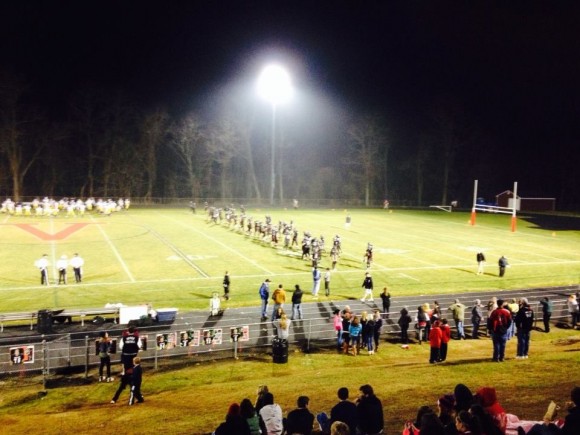
The teams line up before the start of tonight's game.

The teams warm up before the start of tonight’s game. Photo by T. Devlin.

The Valley Regional /Old Lyme football team blanked Gilbert/Northwest Regional 35-0 tonight to complete an amazing 10-0 unbeaten season and win the Pequot Conference overall title.

Valley/Old Lyme are likely to be the top seed in the Connecticut Interscholastic Athletic Conference (CIAC) Class M tournament, which starts with the quarter-final Tuesday, Dec. 3, with a home game on the Valley field.

Congratulations and go Warriors!

Chester Synagogue Remembers Night of Broken Glass, Tonight

Untitled

Major General Maurice Rose Post 51 Jewish War Veterans will mark the 75th anniversary of Kristallnacht in a special program on Sunday, Nov. 10, at 5 p.m.   The event will be held at Congregation Beth Shalom Rodfe Zedek, 55 E. Kingshighway, in Chester.

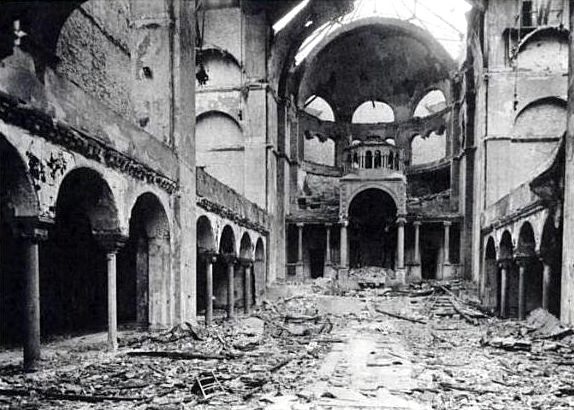
Kristallnacht means the “Night of Broken Glass.”  On Nov. 9, 1938, in Nazi Germany and in parts of Austria, synagogues, schools, cemeteries, hospitals, and businesses were destroyed and set on fire.  The next day, 35,000 Jews were arrested and sent to concentration camps.

In the coordinated attack, 1,000 synagogues were burned (95 in Vienna alone) and 7,000 Jewish businesses destroyed or damaged.    Historian Martin Gilbert writes that no event in the history of German Jews between 1933 and 1945 was so widely reported as it was happening, and accounts from foreign journalists working in Germany sent shock waves around the world.  The New York Times wrote at the time: “No foreign propagandist bent upon blackening Germany before the world could outdo the tale of burnings and beatings, of blackguardly assaults on defenseless and innocent people, which disgraced that country yesterday.”

The program will highlight German history leading up to the beginning of the Holocaust, as well as life in the U.S. at the time.  Kristallnacht was followed by additional economic and political persecution of Jews.  It is viewed by historians as part of Nazi Germany’s broader racial policy, and the beginning of the Final Solution and the Holocaust.

A deli dinner will be served at the program.  Reservations may be made by sending a check for $18, payable to “JWV Post 51.”  Mail to: Kevin Fox, 304 Colt Highway, #30, Farmington CT 06032.

Interview with a Piano (and Invitation to a Birthday Party)

My mother was born in 1913, and so was my piano. Helen Bloom is, as we say, of blessed memory. The Mason & Hamlin baby grand remains a tool of blessed memory — allowing me and others to play the songs that my mother loved: Hoagy Carmichael’s “Stardust,” the Puccini aria “Un Bel Di” or any of the standards of the ‘30s and ‘40s.
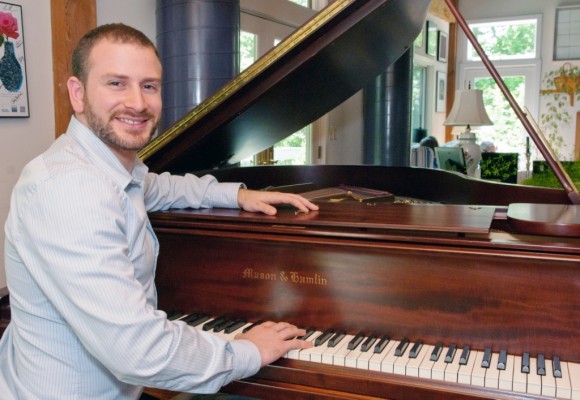
Dan Pardo, who will be playing the piano for the evening of the fund raiser, seated at the Mason & Hamlin. (Photo courtesy of  Deborah Rutty.)

Dan Pardo, who will be playing the piano for the evening of the fund raiser, seated at the Mason & Hamlin.  (Photo courtesy of Deborah Rutty.)

Now that the Mason & Hamlin is about to turn a century old you are invited to something usual — a birthday party for a piano that will honor not the endurance of an instrument but a synagogue community as well, because all the proceeds go to Congregation Beth Shalom Rodfe Zedek in Chester.

In keeping with the spirit of the event, I thought that I would reveal here the conversation I had recently with my old pal.  After all, there is a rule in journalism — never let a piano pass the 100-year mark without an interview.  And so:

LB: How do you feel at nearly a century old?

M&H: So how should I feel?  My middle C is giving me fits, and my hammers have a touch of, what do you call it? — the jimjam jeeters.

LB: Oh you’re a comedian, too?

M&H: I learned from the best — Borscht Belt, you know.  I was played on in the Catskills once.  You been to the Catskills.

LB: This is not about me.

M&H: What?  You play me all these years and now it’s not about you?

LB: Are you trying to be my mother?  Stop with the guilt already.

M&H: It’s just that I’m being a little nostalgic.

LB: Yes, tell me about it.  What was it like back in 1913?

M&H: An interesting time for music.  Not like now.  People actually played melodies in those days.  Beautiful melodies.  Kids.  Every kid played, in the parlor.

LB: So, you were a big deal back then?

M&H: Soccer wasn’t invented yet.  I mean, it was, but nobody ever heard of it in this country.  So every kid played piano.  And adults.  After dinner families gathered around the old Mason & Hamlin (oh, there were Steinways, too, but that’s my overrated competitor, and I don’t want to talk about them.)

LB: And now?

M&H: Sometimes days, or weeks, go by and you don’t play me.  What are you doing, writing books or something?

LB: I’m sorry.  I’m trying to make a living.

M&H: You wrote the words to the musical while playing me.  Didn’t A Woman of a Certain Age make you a fortune?

LB: It cost me a fortune.  But let’s get back to the point.  The party.  We’ll have birthday cake and bubbly, and we’ll toast you.

M&H: Yes, and I’ll finally have someone who isn’t an amateur play me.

LB: I’m excited about Dan Pardo.  Did you hear him play for us last High Holy Days at CBSRZ?

M&H: How would I go to Yom Kippur services?  I’m happy here in my little corner of the world.  And besides, I have nothing to a-tune for?  Get it?  Atone.  A-tune?

LB: Well, anyway, Dan has put together a great program — music written during your lifetime, from pieces by Scott Joplin to George Gershwin to Samuel Barber to Dave Brubeck.

M&H: And you.  Don’t forget something by you.  Anyway, I’m excited.  Actually. I know about him.  He’s maybe the most talented guy ever born in Reading, Pennsylvania.  And he’s been on the Goodspeed Opera House staff for three years.

LB: How do you know all this?

M&H: I read the papers.  You remember those?  Newspapers?  Well, anyway he recently music-directed and wrote vocal arrangements for The Fabulous Lipitones, music-directed and accompanied Come From Away.  Did you see City of Angels and Show Boat (oh, do I miss Jerome Kern) — he worked that, too.  And others.  What a guy.

LB: Wow, you’re more than a bunch of 88 keys, mahogany and strings.  You actually have a brain.

M&H: (sings) I would wile away the hours, conferrin’ with the flowers, consultin’ with the rain, and my head I’d be scratchin’ while my thoughts were busy hatchin if I only had a brain…

LB: OK, OK, we’ll leave the singing to Dan.

M&H: But when, where, why, when, how?

LB: Ah, you went to journalism school too?  Anyway, there are two levels of tickets for the event on Sunday, August, 4, from 4 to 6:30 p.m.  As this is your 100th birthday, wouldn’t it make sense to ask for a minimum donation to CBSRZ of $100 per person?

M&H: That’s a lot of money.  I remember when a concert cost five bucks, and a coffee a nickel, and a two cents plain cost only…

LB: Let me guess.  Two cents.

M&H: Aren’t you brilliant.  Well, you really need $100 a ticket?

LB:  It will support all of the great things we do at the shul.  You should see the oil bill.  And we haven’t had a fundraiser for a long time.

M&H: That’s not my fault.  You should have solar.  And what if somebody can’t pay a $100?

LB: Well, there’s a second level of tickets.  $50.

M&H: What’s the difference?

LB: Well, the house is a house, not a concert hall.  So some of the seats will have obstructed views.  That is, everyone will see you.  But not everyone will have a clear view of Dan.  People in those seats will pay a reduced rate.

M&H: What do they need to pay not to see you?  A thousand?  Oh, just a little joke there.

LB: Yes.  Very little.  But to the point.  Whether people buy $100 tickets or $50 tickets or want to sponsor the event they’ll have a great time, and get their cake, too.

M&H: And how do they sign up to honor me?

LB: Call Wendy, at the office.860.526.8920.   And you look through the closet to see if you have something in ebony and ivory to wear.

M&H: I’m so flattered.

LB: Don’t be.  When I was a kid, I had a player piano.  It never made me work so hard.  I could just turn it on and it would play, “Yes, We Have No Bananas.”

M&H: Are you trying to pull my strings?

(For more information, call Wendy Bayor, 860.526.8920.  For the entire transcript of the interview with the Mason & Hamlin, you should live so long.)

Summer Exhibit at ‘Chester Museum at The Mill’ Tells Story of Town’s Early Transportation

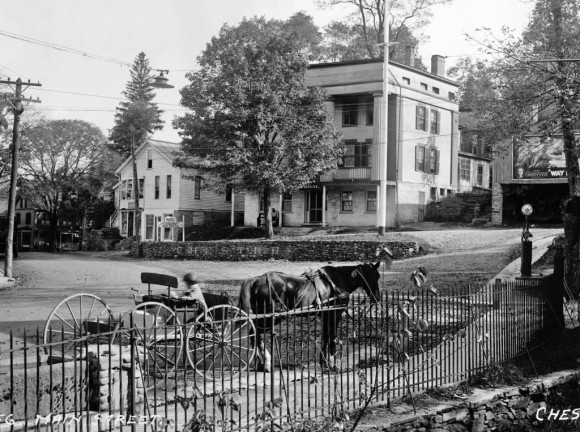
Just an ordinary day in Chester Center in 1913, photographed by Hugh Spencer, and on exhibit at the Chester Museum at The Mill. A horse-drawn cart is parked in the center of town. Just up from the wagon is a gas pump. Also nearby is the stone wall, with “Chester” spelled out in white stones, where the trolley stopped during the years it served Chester (photo by Skip Hubbard).

Just an ordinary day in Chester Center in 1913, photographed by Hugh Spencer, and on exhibit at the Chester Museum at The Mill.  A horse-drawn cart is parked in the center of town.  Just up from the wagon is a gas pump.  Also nearby is the stone wall, with “Chester” spelled out in white stones, where the trolley stopped during the years it served Chester.  (Photo by Skip Hubbard).

How did our ancestors manage without SUVs, highways, and 70 mph speed limits?  Indeed, how did they manage without any cars at all?  That question drove (pun intended) members of the Chester Historical Society to create this summer’s exhibit at the Chester Museum at The Mill.

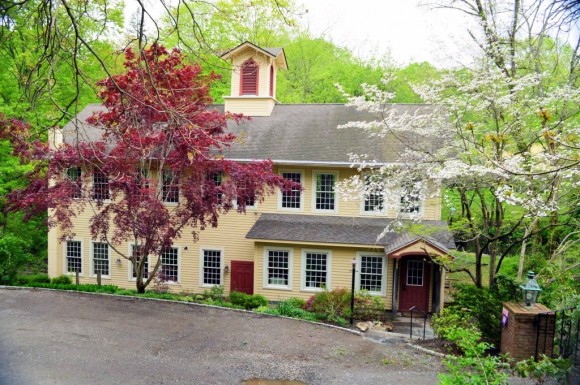
The Chester Museum at The Mill has been owned by the Chester Historical Society since 2000. It was first opened as a museum in 2010. Located on a waterfall on the Pattaconk Brook near the center of town, the mill site was once used to produce anchors, wagon springs, and augers (photo by Skip Hubbard).

The Chester Museum at The Mill has been owned by the Chester Historical Society since 2000. It was first opened as a museum in 2010.  Located on a waterfall on the Pattaconk Brook near the center of town, the mill site was once used to produce anchors, wagon springs, and augers. (Photo by Skip Hubbard).

“Over the River and Through the Woods – A Century of Transportation in Chester” focuses on early transportation in Chester, telling the stories of the beginning of the town’s roads and highways, as well as the train, the trolley, the ferry, and the steamboat.

Keith Dauer and Sandy Senior-Dauer, the exhibit chairmen, said, “Last year, as we closed our second Civil War exhibit, we assembled an enthusiastic committee to brainstorm ideas for a new exhibit.  There were many excellent ideas, but we kept coming back to the idea of telling the story of Chester’s early transportation.”

They continued, “Chester’s economy, geography and populace were greatly affected by the rise and decline of early stagecoach traffic, steamboats, the ferry, the railroad and trolley.  Our town’s upcoming downtown revitalization project, rebuilding of several bridges, and state government threats to ferry service make transportation changes particularly topical this summer.”

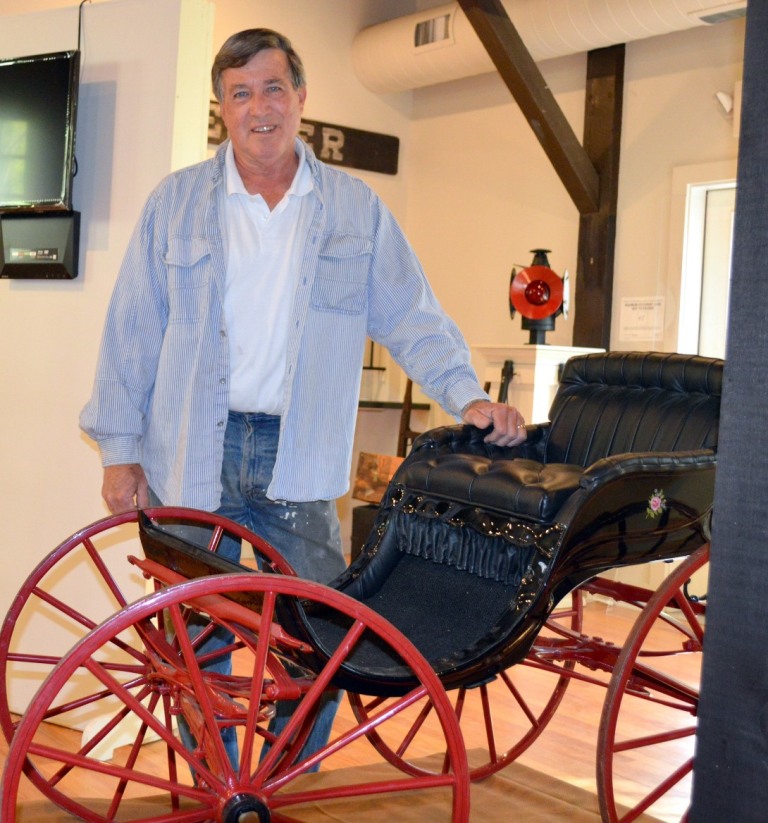
Keith Dauer, chairman of the exhibit with his wife, Sandy Senior-Dauer, is shown here with a wagon owned by Leonard Lieberman, on loan to the exhibit. Lieberman, a Chester native, recalls hearing that the wagon was used to help an elderly Chester woman get from Denison's store in town up to the church every Sunday (photo by Skip Hubbard).

Keith Dauer, chairman of the exhibit with his wife, Sandy Senior-Dauer, is shown here with a wagon owned by Leonard Lieberman, on loan to the exhibit.  Lieberman, a Chester native, recalls hearing that the wagon was used to help an elderly Chester woman get from Denison’s store in town up to the church every Sunday.  (Photo by Skip Hubbard).

The “Over the River” exhibit was funded in part by a grant from the Community Foundation of Middlesex County.  The mission of the Community Foundation is to improve the quality of life for the people of Middlesex County now and in the future by developing endowments, making grants that have impact, and assisting donors in meeting their philanthropic objectives.

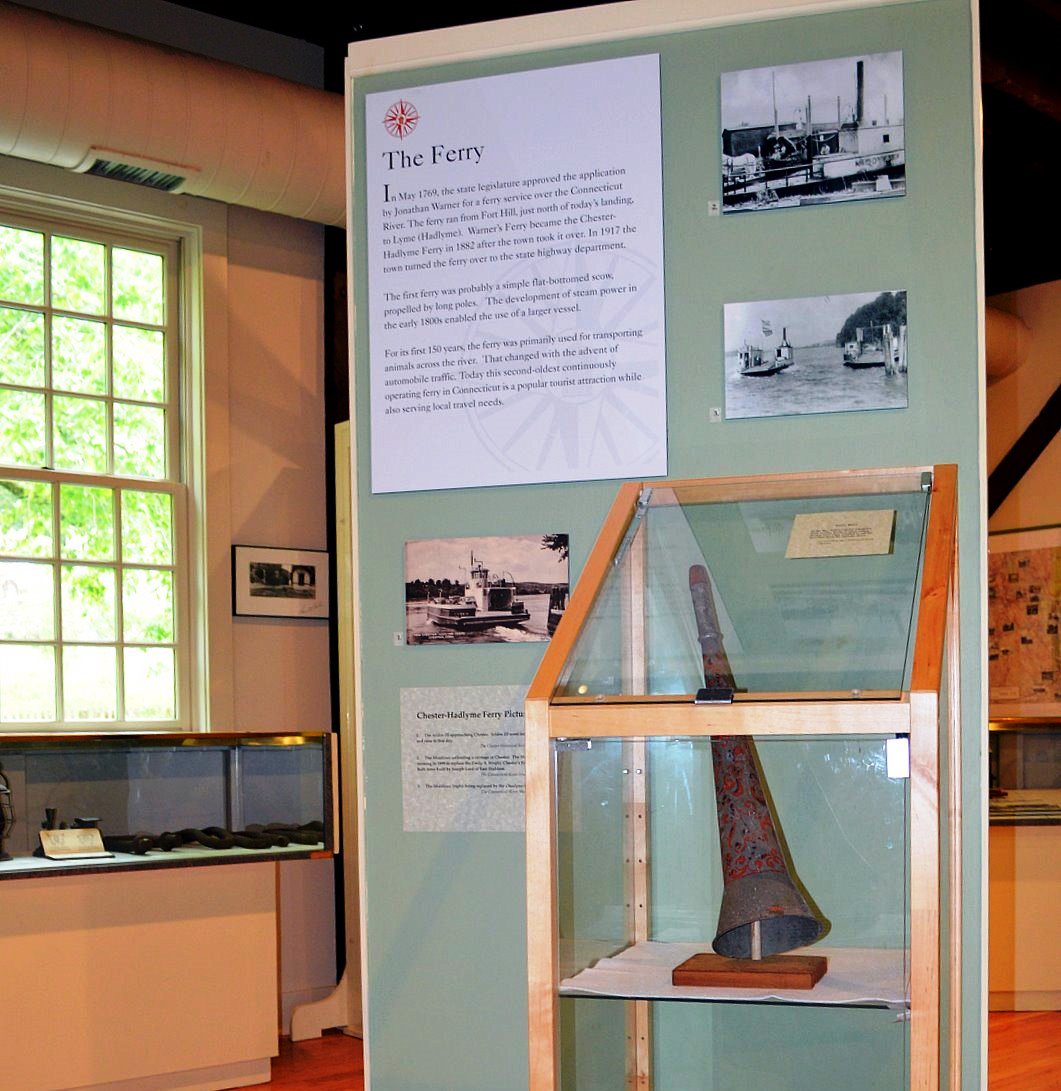
The Chester-Hadlyme Ferry over the Connecticut River is the second-oldest continuously operating ferry in the state. It was started by Chester resident, Jonathan Warner, in 1769.  For its first 150 years, the ferry was primarily used for transporting animals across the river.  In the days before regularly scheduled ferry service, horns or other devices were often used to call the ferryman from the opposite shore. The horn shown in the case is on loan from the Connecticut River Museum (photo by Skip Hubbard).

The Chester-Hadlyme Ferry over the Connecticut River is the second-oldest continuously operating ferry in the state.  It was started by Chester resident, Jonathan Warner, in 1769.  For its first 150 years, the ferry was primarily used for transporting animals across the river.  In the days before regularly scheduled ferry service, horns or other devices were often used to call the ferryman from the opposite shore.  The horn shown in the case is on loan from the Connecticut River Museum.  (Photo by Skip Hubbard).

On the second floor of the museum (reachable by elevator as well as stairs) is the permanent award-winning exhibit, “Streams of Change: Life & Industry along the Pattaconk.” Together, the two exhibits tell the story of the life, development and growth of Chester.

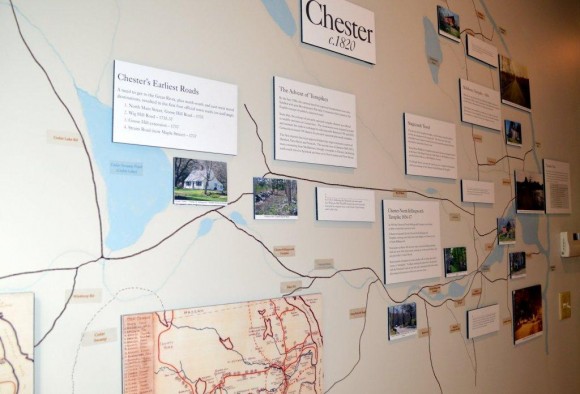
Skip Hubbard, president of the Historical Society, created this wall map showing the town’s first four official roads, which date back to 1735, and tracing how they developed over the years.  Visitors are encouraged to take home the pamphlet, “What’s in a Street Name?” to figure out the origin of their own street’s name (photo by Skip Hubbard).

Skip Hubbard, president of the Historical Society, created this wall map showing the town’s first four official roads, which date back to 1735, and tracing how they developed over the years. Visitors are encouraged to take home the pamphlet, “What’s in a Street Name?” to figure out the origin of their own street’s name.  (Photo by Skip Hubbard).

The Chester Museum at The Mill is located in the historic 1850s Griswold Mill site, overlooking a waterfall and the Pattaconk Brook near the center of town.  The museum is open to the public on Saturdays and Sundays, from 10 a.m. to 4 p.m., through the end of October.  It is air-conditioned as well as handicapped accessible.  Admission is free.

For more information, visit www.ChesterHistoricalSociety.org.

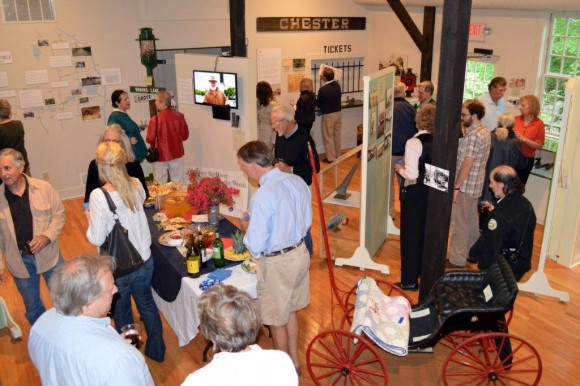
This year’s exhibit, “Over the River and Through the Woods,” opened with a reception for Chester Historical Society members and contributors on May 24 (photo by Skip Hubbard).

This year’s exhibit, “Over the River and Through the Woods,” opened with a reception for Chester Historical Society members and contributors on May 24.  (Photo by Skip Hubbard).

Hadlyme Public Hall Annual Meeting Votes to Oppose Doubling Ferry Fares, Launches Petition Drive

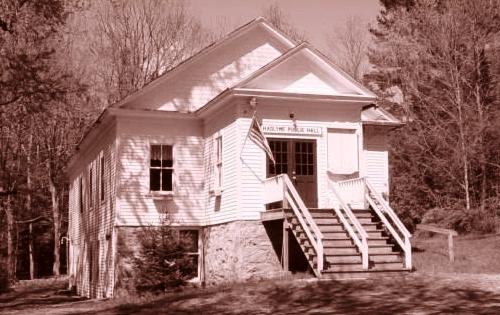
Exterior_500x315

The Hadlyme Public Hall Association has started a petition drive against the Connecticut River ferries fare increase.

On Saturday May 4, members attending the annual meeting of the Hadlyme Public Hall Association voted unanimously to oppose the proposal by Connecticut  Department of Transportation (DOT) to double the Connecticut River ferry fares to $6 and agreed to launch a petition drive opposing the fare increase.

The Association immediately initiated the petition drive by creating an on-line petition at SignOn.org.  Click here to add your name to the petition.

Paper petitions will also be circulated throughout the communities served by the two Connecticut River ferries — the Chester-Hadlyme Ferry and the Rocky Hill-Glastonbury Ferry.

All the petitions will be presented to the state DOT officials who will be making the decision on whether to raise the fares and by how much.

The position adopted by the members at the meeting states that the Association opposes the state’s proposal to double the fares and instead urges the state to give serious consider to other alternatives that could increase revenues, including:

— Increasing posted fare prices but provide a discount for cars with Connecticut license plates.

— Institute a system of On-peak & Off-peak pricing (similar to that used by commuter railroads) that would charge higher fares on weekends and holidays when there are usually long lines of cars waiting to ride the ferries.

— Increase hours of operation on weekends and holidays to take advantage of generating more fares when ridership demand is the highest.

— In addition to the current discount ticket books, offer a flat “annual pass” fare with a sticker to place on cars to identify those who have purchased the pass.

— Working with state tourism and parks agencies, aggressively promote both Connecticut River ferries to tourists and visitors.

Connecticut DOT will be holding public hearings on the proposed fare increases on May 20 and 22.

Hadlyme Hall Association President Curt Michael urged all those conerned about or affected by the proposed fare increase to sign the petition and to attend the public hearings.

Click here for more info on the fare increase proposal and the public hearings

Hadlyme Public Hall Association is a century-old not-for-profit community organization whose membership is open to all. Its current membership represents more 140 households in Hadlyme and the surrounding area.
For more information about the Association and its historic public hall, visit www.hadlymehall. com