Chestnut Market Celebrates Grand Opening in Old Lyme

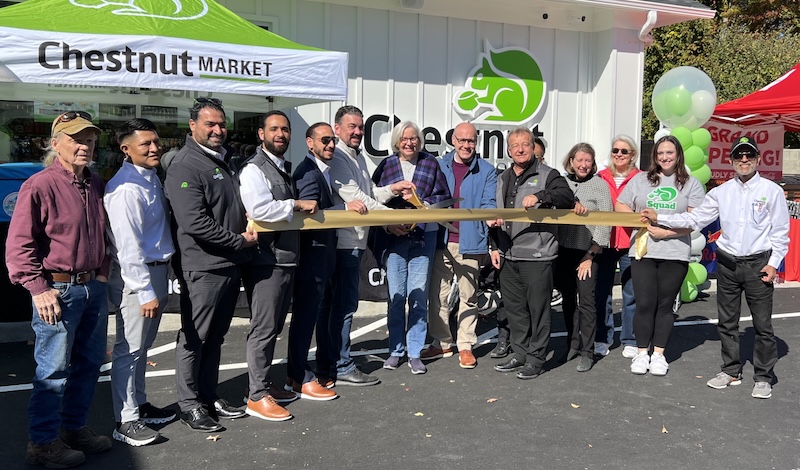
Celebrating the ribbon-cutting at Chestnut Market are, from left to right, Jim Ward, President, Lyme Old Lyme Food Share Garden; Alvaro Sari*, Territory Manager, Hesham Attia*, Territory Manager, Farris Jamal*, Merchandising Manager, Faheem Jamal*, Director of Operations; Scott Parker*, Director of Facilities; Martha Shoemaker, First Selectwoman, Town of Old Lyme; CT State Representative Devin Carney (R-23rd); Menent Oral*,Territory Manager; Jonathan Pintado*, Store Manager, Cheryl Poirier, Chairwoman, Old Lyme Economic Development Commission; Jude Read, Selectwoman, Town of Old Lyme; Abigail Cerra*, Loyalty Marketing Manager, and Mohammed Hossain*, Director of Purchasing. * denotes an individual employed by Chestnut Market. All photos by Doris Coleman.

Company Highlights its Commitment to Local Communities

OLD LYME, CT — As part of a grand opening celebration, Chestnut Market recently presented the Lyme-Old Lyme Food Share Garden (LOLFSG) with a $1250 donation and participated in a ribbon-cutting ceremony with Town of Old Lyme representatives.

The grand opening celebration took place on Friday, Oct. 18, and included a raffle, free giveaways, and a festive environment for customers who stopped by the 85 Halls Rd. location.
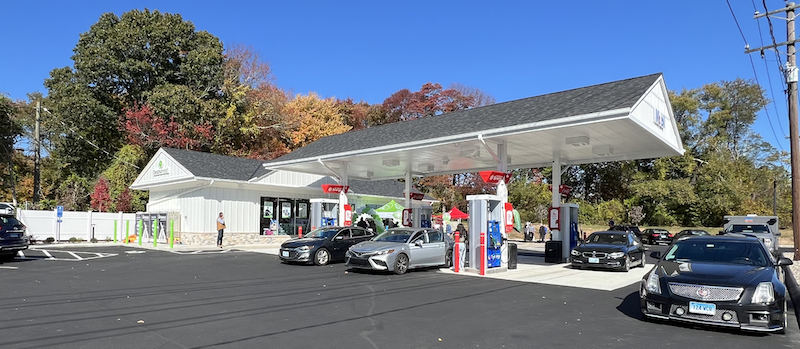
The exterior of Chestnut Market at 85 Halls Rd. in Old Lyme.

Chestnut Market is headquartered in New York and recently expanded into Connecticut, with Old Lyme being one of 11 Connecticut locations. The store stocks a number of “grab and go” breakfast and lunch items as well as snacks and beverages. Bags of ice are available for sale inside the store. Chestnut Market accommodated the needs of the Town of Old Lyme by closing its Halls Road location at midnight; many of its other locations are open 24/7.

Chestnut Market’s Director of Operations, Faheem Jamal, stated,: “We’re excited to expand our Connecticut footprint with this location in Old Lyme. With clean, well-maintained restrooms and an emphasis on excellent customer service, we ensure every stop is a pleasant one.” He continued, “Our extensive foodservice program features hot, delicious options for every part of the day and our coffee is served fresh every time with our bean-to-cup program. Add in the Mobil-branded fuel, and we’re proud to offer a top-notch experience from start to finish.”
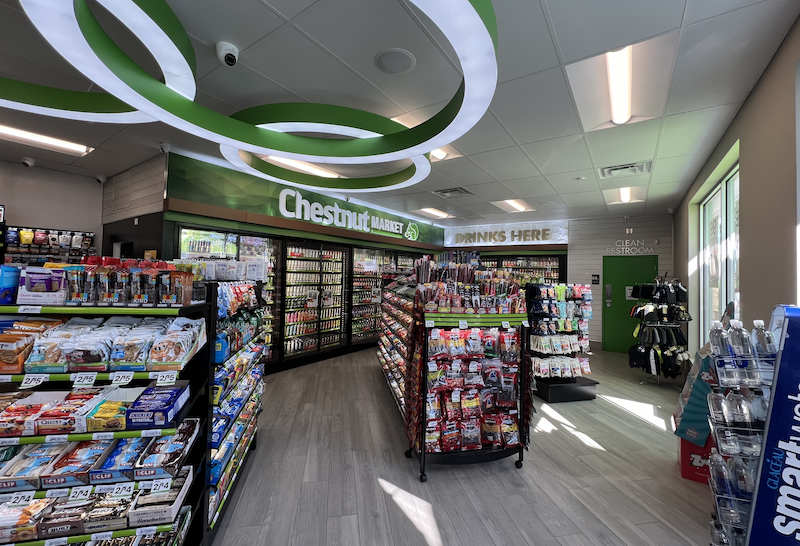
The interior of of Chestnut Market at 85 Halls Rd. in Old Lyme.

A ribbon-cutting was held at 1 p.m. that included local representatives including State Representative Devin Carney, Old Lyme First Selectwoman Martha Shoemaker, Selectwoman Jude Read, and Economic Development Chair Cheryl Poirier. In presenting Chestnut Market a Certificate of Appreciation for its investment in Old Lyme, Poirier noted with the recent renovations and upgrades to the property, the number of employees has gone from two to nine and is expected to grow during the summer season.
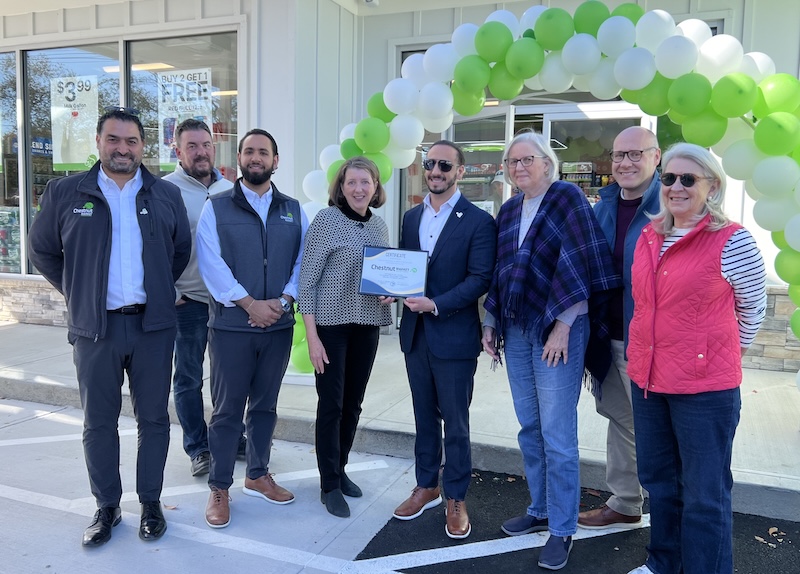
Cheryl Poirier, Chairwoman, Old Lyme Economic Development Commission presented Faheem Jamal, Director of Operations at Chestnut Market with a Certificate of Appreciation for its investment in Old Lyme. Others attending the presentation were, from left to right, ScrHesham Attia*, Territory Manager, Scott Parker*, Director of Facilities; Farris Jamal*, Merchandising Manager; Martha Shoemaker, First Selectwoman, Town of Old Lyme; CT State Representative Devin Carney and Jude Read, Selectwoman, Town of Old Lyme. * denotes an individual employed by Chestnut Market.

As part of the grand opening, Chestnut Market presented its $1250 donation to the Lyme-Old Lyme Food Share Garden. An oversized check was on hand to be received by LOLFSG President Jim Ward and Board Member MyLan Sarner. Ward said, “We are honored to have been chosen by Chestnut Market for their community support. Their financial donation will be supporting five vegetable rows for the 2025 growing season. We look forward to their continued support.”
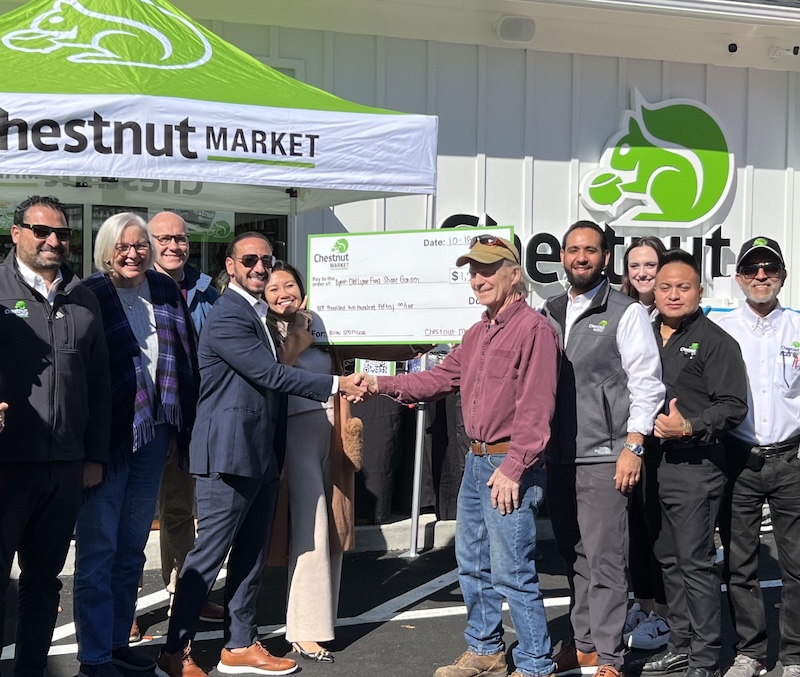

Faheem Jamal, Director of Operations at Chestnut Market presents a check for $1250 to Jim Ward, President, Lyme Old Lyme Food Share Garden. Also present were, from left to right, ScrHesham Attia*, Territory Manager: Martha Shoemaker, First Selectwoman, Town of Old Lyme; CT State Representative Devin Carney and MyLan Sarner, Board Member, Lyme Old Lyme Food Share Garden.To Ward’s right are Farris Jamal*, Merchandising Manager; Jonathan Pintado*, Store Manager; Mohammed Hossain*, Director of Purchasing; and (standing behind) Abigail Cerra, Loyalty Marketing Manager. * denotes an individual employed by Chestnut Market.

Chestnut Market is a family-owned convenience store chain operating 75 locations in New York, New Jersey, and Connecticut. The company states that its values, friendliness, cleanliness and safety attest to its commitment to make an impact in the communities it serves.

Chestnut Market notes that its stores are curated to meet the demands of local customers. It promotes the formation of strategic partnerships ranging from local collaborations to high-tech solutions and offers a wide selection of snacks, beverages and fresh food options.

Fuel brands across its locations include Exxon, Mobil, Shell and BP. The Old Lyme location carries the Mobil brand.
Letter to the Editor: This Country ‘Will Never Be a Garbage Can’

To the Editor:

I do not live in a garbage can!

Yesterday, I almost reconsidered when my second Harris/Walz sign was stolen.

But where I live bears no resemblance to a “garbage can.” In my lifetime, I have driven cross-country at least a dozen times. Our country is not a garbage can. Yes, there are some terrible neighborhoods. In my experience, many of the ugly spots are owned by very rich people who live in the safety of the suburbs. They rent to very poor people at inflated prices. The owners seldom maintain their rental properties, angering neighbors and festering the idea that their renters (aka poor people) are lazy, menacing slobs. Rat-infested streets breed depression and violence and they may be the “garbage cans” Mr. Trump speaks of. He seems to want to scare people into thinking we have—what he termed, as President—a “s***hole country.” 

I am sorry. Our country is beautiful. It is upsetting that a person who wants to lead us thinks that our country is a garbage can. He believes immigrants are ruining it. (My immigrants arrived in 1630). Yesterday, I learned that his pal, Elon Musk, was an illegal immigrant when he came here, and he worked illegally taking away jobs from Americans. I also learned that Mr. Musk lied to obtain citizenship. Mr. Trump hasn’t said a word about this, nor has he indicated Mr. Musk will be deported like all the other migrants he calls “animals.”

No local members of his party ever speak up. They didn’t after the insurrection. They never seem to separate themselves from his lies or false claims so I guess they agree with him. In my opinion, we never would have become a country, nor could we survive today without immigrants. And we will never be a garbage can.

Sincerely,

Charlotte Scot,
Old Lyme.

Leave the Leaves! Be a Lazy Gardener this Fall

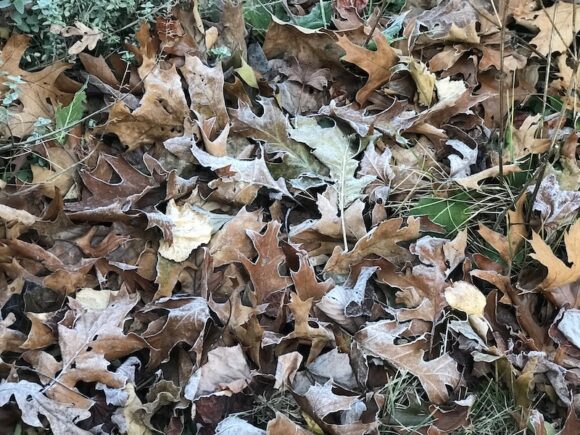
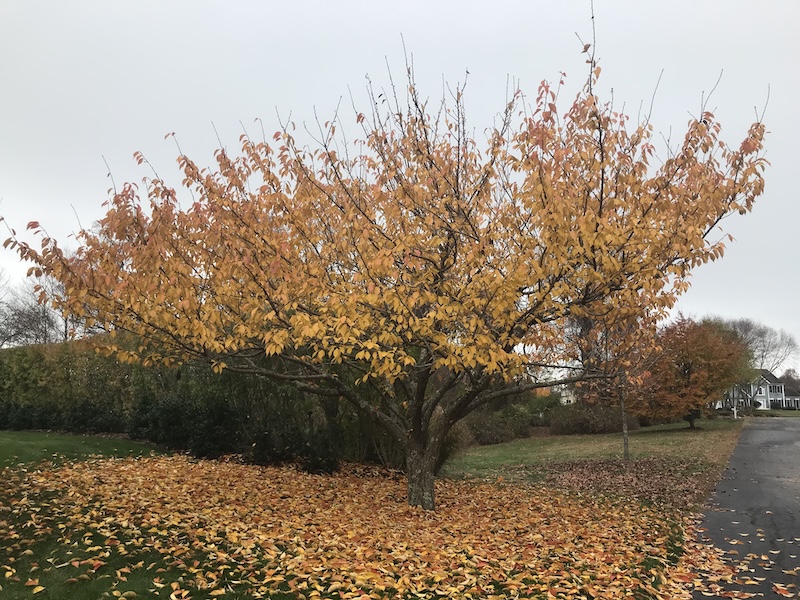
 Leaves falling off of a copper beech tree. These leaves can be gently raked to the side in a leaf pile or run the mower over dried leaves on your lawn to break them up as organic lawn mulch. All photos by Suzanne Thompson.

Ah, the sights, sounds and smells of fall … unfortunately, they often involve the racket and fuel fumes of motorized leaf blowers and visions of yard crews scalping lawns as part of our traditional New England fall yard cleanup. 

But did you know that we should be doing less to our yards this time of year, letting nature do her thing and saving some money in the process?

  For decades, the Xerces Society for Invertebrate Conservation has been explaining why we should let tree leaves fall where they may, or at least move them around gently with less energy and effort. See their Leave the Leaves campaign.

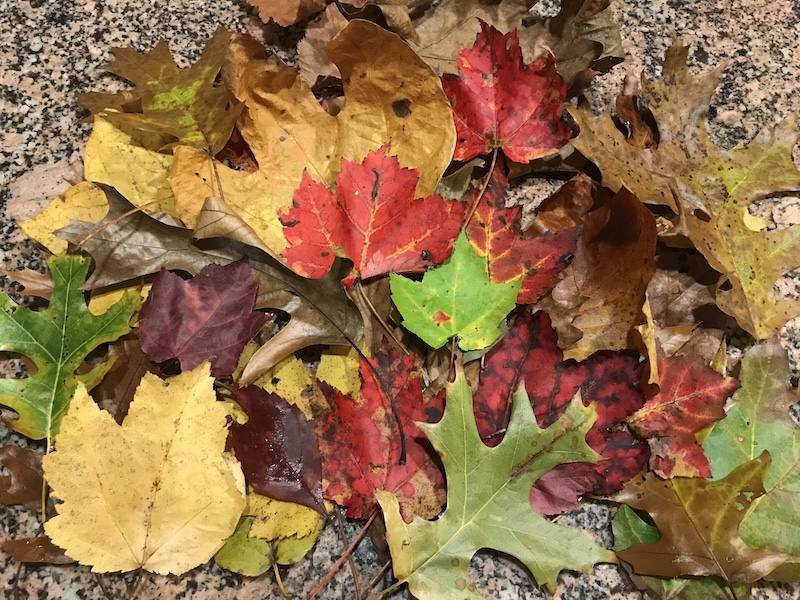
Fall leaves offer a full palate of color.

You see, dead leaves have a purpose in nature, more than just looking pretty for us two-legged leaf-peepers for a few weeks every fall. They are food and shelter for many beneficial insects (by definition, invertebrates) and other little critters (including frogs, salamanders and box turtles) that make up the outdoor ecosystem around us. And with the help of insects and wildlife, the leaves are broken down into nutrients and organic matter for our lawns, flowerbeds and landscapes. That is, if we leave them in place to do their good.

The Nature Conservancy points out that at least seven species depend on the leaves, as well as on the seed heads and stems of many of our favorite flowerbed plants. If we would only not strip these away in some fall frenzy to clear off our yards before colder weather hits. What we see as unnecessary brown stuff is actually natural insulation and nutrients.

If left untouched where they fall, leaves will soon be covered by early frosts that will help them decompose.

So, this fall, instead of contributing to the incessant drone and damage of motorized leaf blowers, try taking a kinder and gentler approach to fall cleanup. Xerces Society recommends raking leaves into garden beds and under trees where they serve as natural mulch.  Or, if you have an area in the yard that can accommodate a leaf pile over the winter, push the leaves over there. In the spring, you will have valuable leaf mold. Rewilding Magazine, a Canada-based publication, tells you how to make your own leaf mold. 

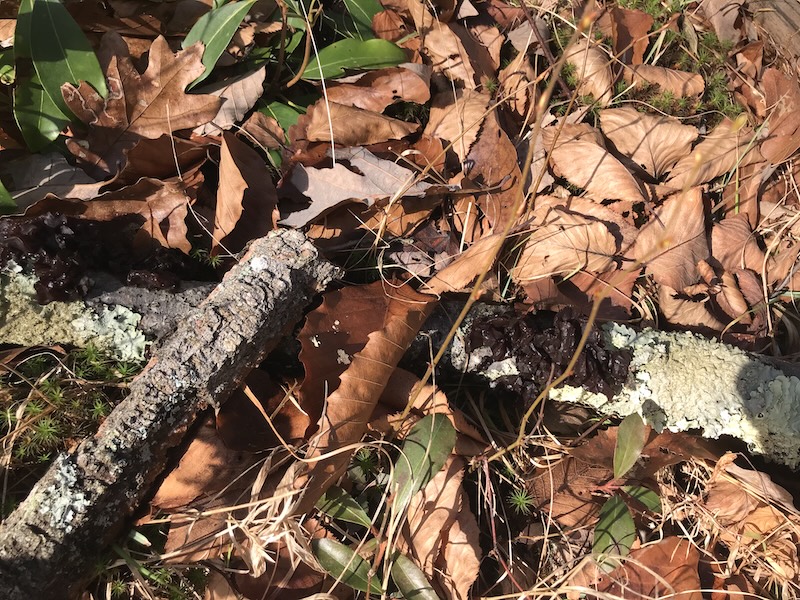
Fallen leaves and wood decompose to provide not only a natural mulch but also food and shelter for many beneficial insects.

Create small brush piles with the branches and twigs that you don’t want to leave in the middle of your yard; these also become home for insects and small wildlife. Put them at the far end of your property if you are worried about critters.

If you need to justify your actions to yourself, your spouse or neighbors (the ones with the scalped lawns), see National Wildlife Federation’s Six Excuses to Avoid Yard Work this Fall.

And, if you installed perennials, trees and shrubs this fall or earlier this year, don’t forget to give them a good watering. After a summer of enough rain, we are experiencing a dry fall. 

For more good gardening advice, listen to garden writer Tom Christopher’s weekly Growing Greener podcasts and spend some time researching Pollinator Pathways. There are now Pollinator Pathway community programs in 19 states and Ontario, Canada.

Editor’s Note: The author, Suzanne Thompson, is a founding member of Pollinate Old Lyme, which kicked off in 2020 and is Old Lyme’s Pollinator Pathway project. For more information, visit the Pollinator Pathway website and/or Like/Follow the Pollinate Old Lyme Facebook page at this link.

Death Announced of Natalie Garland of Needham, Mass., Mother of Peter Garland of Old Lyme

Natalie (Smith) Garland of North Hill, Needham, Mass. passed away October 21, 2024. Age 93. Formerly of Wellesley …

Devoted mother of Edward R. “Ted” Garland of Natick and fiancée Elizabeth McElroy; Peter T. Garland and wife Melissa of Old Lyme, CT; and Dwight W. Garland and wife Suzanne of Wellesley. Grandmother to Matthew, Katherine, Sally, Shannon, Roger, Madison, Christopher, Michael, and Peter. Great-grandmother to Jamie, Cooper and Benjamin … Predeceased by husband, David …

Natalie was a retired elementary school and special needs teacher in Wellesley for over 20 years …

Memorial Service at the Wellesley Hills Congregational Church, 207 Washington St. (RT. 16), Wellesley, on Friday, November 8, at 2:00 PM. Relatives and friends kindly invited. Expressions of sympathy may be made to Save the Children Fund …

Visit this link to read the full obituary published by ‘The Boston Globe’ from Oct. 26 to Oct. 27, 2024.

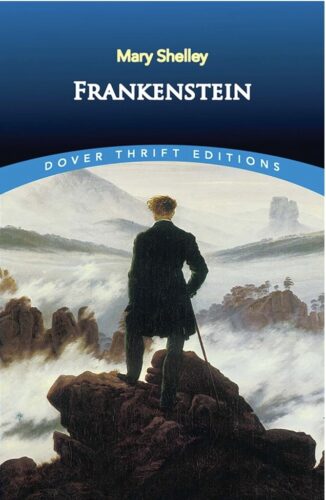
A Special Halloween ‘Literature in the Lymes’: ‘Frankenstein’ by Mary Shelley

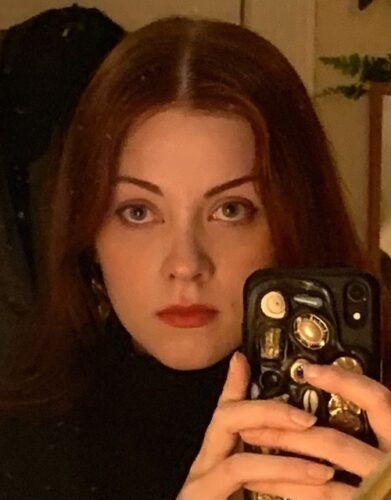
Editor’s Note:We are delighted to welcome a guest author to our ‘Literature in the Lymes’ column today and it is none other than the talented daughter of Jennifer Petty Hilger, our regular book reviewer. Campbell Mann is a writer from Lyme, Conn. After training as an operatic mezzo-soprano at The Boston Conservatory, she has since worked as a poet and mixed-media artist. She currently lives in Brooklyn, N.Y., with her partner and a variety of indoor philodendrons.

Campbell Mann

It is difficult, perhaps impossible, to find a 21st century reader unfamiliar with Frankenstein.

Mary Shelley’s seminal novel, first published in 1818 when its author was 20, has since towered over Gothic and post-Gothic literature for more than two centuries. It is rivaled in magnitude of popular absorption perhaps only by Stoker’s Dracula (a work, which is heavy-laden in its own right with Shelley’s influence, along with that of her husband Percy and the couple’s notorious, occasional friend, the poet Lord Byron).

It has inspired endless and near-constant adaptation—practically every decade of the past century has seen its own half-dozen film and television versions. And while some of these are faithful to the novel, most are wildly extrapolated—the green-skinned, bolt-necked icon of American Halloween bears little resemblance to Shelley’s wretch.

I say this not to argue for literary purism—it is entirely to be expected for a 206-year-old story to be vastly altered in so much time—but merely to highlight our vast distance from the source. Most, while they know Frankenstein, do not know Frankenstein

Admittedly, Frankenstein can be a difficult text. It possesses many of the qualities that often deter readers from Georgian literature at large; it is verbose, dense, confusing at times in structure and syntax. But in spite of this, it glistens with a modernity that is striking even now. It is gripping, tense, emotionally radiant, and immensely readable. It is haunting and stunningly profound.

As in many 19th century novels, Shelley places us first within the exterior of a frame narrative. We are loosely in the 18th century, as an Arctic-bound research ship finds itself trapped in the ice floes. The expedition’s leader, Captain Robert Walton, begins a series of letters to his sister, Margaret, detailing the strange occurrences of the recent days. First, an enormous figure has been seen driving a pack of sled-dogs in the distance, unnerving the captain and crew. A starving, freezing man is then pulled from the ice, who introduces himself as Victor Frankenstein. In Walton’s eyes, Victor sees a glimpse of something—passion, or obsession—and begins to warn him of its consequences with his own tale. 

Born into a wealthy family from Geneva, Switzerland, Victor Frankenstein spends his youth enraptured by the potential power of alchemy and science. Shortly before he leaves to pursue his interests formally at the University of Ingolstadt, his mother dies, pushing his obsession deeper into the mysterious forces of life and death.

At Ingolstadt he excels and soon longs to further his own secret theories, body-snatching corpses and vivisecting feral animals until he has created an eight-foot-tall humanoid creature, whom Shelley calls the wretch. But naturally, Victor has not thought this through. As the wretch gurgles painfully to unnatural life, his creator abandons him and flees in terror. 

The narrative’s long remainder details the ways in which Victor and the wretch relate to the world and one another. Of course, it is far more complicated than that, but that is the most broad stroke of it. There is violence, loss, and pain on all fronts.

Shelley tells us, over and over in endless ways, that these two beings are inextricably bound to one another. What do we owe to our children? What do we owe to each other, and to ourselves? What if our actions are not the whim of a moment but profound and material choices, with consequences borne not by us alone?

Mary Shelley wants to know as well.