Obituary: Death of Margaret Amy Hoffman (Peggy) Announced

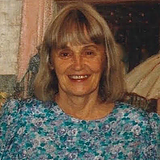
Margaret Amy Hoffman

Margaret Amy Hoffman (Peggy), 95, died peacefully on January 31 in Peterborough, NH after a long period of declining health. 

She was born in Spring Lake, New Jersey on August 24, 1921 to Everard C. Stokes and Phyllis M. (Beavis) Stokes, who had emigrated from England in 1919.  Her father published three books of poetry and was vice president of the Church Fire Insurance Corporation based in New York, which provided insurance to Episcopal churches. Margaret grew up in the coastal town of Sea Girt, NJ graduating from Manasquan High School in 1939, where she had played basketball and tennis. Following a preparatory year at St. Mary’s School in Peekskill, NY she entered Radcliffe College as a chemistry major where she met her husband John L Hoffman, an editor of the Harvard Lampoon and midshipman with the USNR. He was the son of artists Harry and Beatrice Hoffman of Old Lyme, CT. Margaret and Jack went on to have five children, settling first in Old Lyme, CT and then Winchester, MA, before retiring to Amherst, NH in 1984.  As children arrived, her chemistry training gravitated towards kitchen cuisine and her interests shifted to child psychology and sociology. She had always been a champion of the underdog and an advocate for the less fortunate. In midlife she completed a BS in psychology at Northeastern University in 1968 followed by a MSW at Simmons College in 1973.  She served as a clinical instructor at the Boston College Graduate School of Social Work, was employed as a medical social worker at the Winchester Hospital in MA and then for the rest of her career at Kennedy Memorial Hospital for Children in Boston. There she provided psychosocial assessments of children with a broad spectrum of problems including neurological, emotional, behavioral and developmental issues. She also provided individual and family therapy and was a group leader for the Rehabilitation Unit.

While living in Old Lyme, CT she had been a regular at the Old Lyme Beach Club during the 1940s and 50s. She and her husband were benefactors of the Florence Griswold Museum and the Old Lyme Land Trust, providing the first main portion of the riparian woodland that was to become the Hoffman-Matthiessen-Degerenday Preserve along Sill Lane.               

Following retirement and the move to Amherst, NH she pursued the creative interests she hadn’t had time for while working and raising a family.  She took a variety of art classes and worked hard at developing her natural talent.  She became a skilled artist, working in watercolor, oils, and pastel, and produced beautiful work, mainly flower studies and portraits.  She also took piano lessons and became an excellent pianist, although she was too shy to play in front of people.            

For several years she volunteered for the Friends of the Amherst Town Library and FISH, a group that provides rides to medical appointments.         

Margaret was an avid reader, library patron, and a gardener who thrived on being out in the sunshine maintaining her lovely flower gardens.  She loved dogs and had a number of them over the years.  Earlier in her life she enjoyed horseback riding.  She was adept with a sewing machine and made most of her own dresses (all the while grumbling about what a waste of time sewing was).  She was a devoted mother who frequently said that her greatest joy in life was her children.          

Her beloved husband Jack, a Harvard social anthropologist, died in 1992 after nearly 50 years of marriage.  In the years following his death, she took several trips abroad, traveling to England, France, Spain, and Russia with her sister Mary or via Elderhostel.  In 2002, while attending the Unitarian church in Wilton, she met John Voss of Hollis, NH.  They spent a happy five years in each other’s company until his death in early 2008.  Margaret then moved with her dog Cedric to the RiverMead retirement community in Peterborough NH, where she lived until the time of her death.      

She was predeceased by a son, John L. Hoffman, Jr. in 1957, by both parents, her sister Mary Horn, and her beloved West Highland white terrier, Cedric.  She is survived by her sister Beatrice Miles, her devoted children, David Hoffman and his wife Suzanne of Bivalve, MD and Old Lyme, CT; Stephen Hoffman of Alexandria, VA; Thomas Hoffman and his wife Alexis of Anchorage, AK; and Elizabeth Hoffman and her partner Anthony Iovino of Putney, VT.  She is also survived by her four grandchildren, Molly and husband Mike, Alex and wife Amanda, Michael and wife Cheryl, and James; three great-grandchildren, Sophie, Oliver, and Madelyn; her sister Beatrice Miles, and seven nieces and nephews.           

Margaret was smart, funny, artistic, empathetic, insightful, and generous.  She will be greatly missed.     

Her family would like to thank the staff at RiverMead for their unfailingly patient and loving care.  

She was buried at the Duck River Cemetery in Old Lyme, CT, with arrangements through the Jellison Funeral Home of Peterborough, NH.  A family memorial service will be held at a later date. Donations in Margaret’s memory may be made to Westie Rescue of New England, 10 South Washington Street, Norton MA 02766 www.westierescuene.com or your local humane society.   
Death of Andrew Pfeiffer Announced

Andrew Pfeiffer of Old Lyme, Conn., died at home on November 19th with his family at his side.

He was born in 1917 in Port Jefferson, N.Y.  At a young age he excelled in music, and was sent to study piano under Leopold Stokowski at the New York School of Music.  He then attended the Ethical Culture School and Fieldston during his teens and graduated from Wells High School in Maine at the age of 16, where he developed his life-long affinity for coastal living in the family cottage in Ogunquit.

After graduation, Andrew came to Old Lyme and worked as a camp counselor at McCulloch’s “Camp Aladdin”, on Whippoorwill Road.  His first career job was as a wood carver and touring puppeteer for America’s Puppet Master – Tony Sarg.  He later took his carving and woodworking skills to local furniture maker, Stanley Davis, whose factory was on Mill Lane in Old Lyme.   

He always had a keen and inventive mind.  He possessed the rare characteristic of genius, coupled with tremendous dexterity — a mix of science and ingenuity that allowed him not only to determine the issue, but also to design and build tools to implement the solutions. His accomplishments were achieved with only a high school education.

During the early stages of WWII, Andrew worked in the aero-technology industry for Sikorsky helping in the production of Connecticut’s fighter plane the “Corsair” and later aided in the development of helicopters.  He then took his skill to the Manhattan Project with Westinghouse in Bloomfield, New Jersey.  There, he worked directly with a new metal known as Uranium, or as the machinists called it, “Tubealloy”.  It had strange properties that made it difficult with which to work.  It caught fire, galled during machining, and required special techniques to handle during the manufacturing process.   In the lab, Andrew worked on many of those difficulties, as well as several experimental projects associated with x-ray and electrolysis.  At the end of the war, while offered a research lab opportunity, Andrew chose instead to settle back in Old Lyme, build his home, and raise a family. 

Andrew married Marianne Goetze, whom he met at the McCulloch farm. They were married for 74 years.  Her family had emigrated from Germany in 1934. Her father was a professor of Babylonian and Near Eastern Studies at Marburg University and assumed a position at Yale on his escape from Nazi Germany.   Andrew and Marianne built their house and family farm on Whippoorwill Road and raised three children.  Andrew built a shop and laboratory attached to the house.  Pfeiffer Research Instruments continued designing specialized equipment for various research laboratories and academic institutions.  Andrew held several patents in diverse fields of medical research and communications.  Several times in his career, Andrew and Marianne took on an artistic and creative sideline, designing and producing various kinds of jewelry.  Pfeiffer Cloisonné and Silver Work reached many corners of the world and has even been owned by some world leaders.   

Working for himself at his home and shop permitted Andrew to spend valuable time with his family.  He and Marianne formed a genuine partnership.  Together they raised two daughters and a son.  Andy and his wife bestowed to them the love of music, art, natural studies, academics, engineering and mechanics, as well as a competitive spirit.   They lived and modeled a life of integrity and honor, emphasizing the importance of community service and making the world a better place. 

During his life in Old Lyme, Andrew served as a high school class tutor in Chemistry and Physics, was on the Board of Education, served in several capacities in Civil Defense, was a member of the American Amateur Radio League, the Archaeological Society of Southeastern Connecticut, and most importantly – a friend to many.

Andrew is survived by his wife Marianne;  son Ned Pfeiffer and wife Marga of Old Lyme; daughter Dianne Merrill of San Rafael, California; and three grandchildren  – Aubris and Dane Pfeiffer of Old Lyme; and Trevor Page of San Francisco, California.  He was predeceased by his daughter Merrily Page of San Francisco, California and beloved brother John E. Pfeiffer of New Hope, Pennsylvania.   Andrew will be missed but not forgotten.

At Andrew’s request, no services will be held. The family extends its grateful thanks to the staff and volunteers of Hospice and Palliative Care at Middlesex Hospital.

Death of Eleanor Emery Harper of Lyme Announced

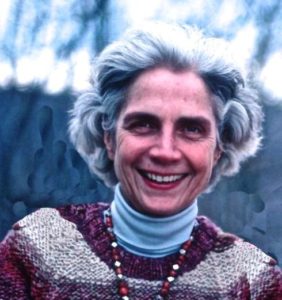
Eleanor Emery Harper

Eleanor Emery Harper

Eleanor Emery Harper, born on July 11, 1919, passed away peacefully on July 19, 2016 with her loving family around her. She and her late husband were long time residents of Lyme.

Raised in Denver with her four siblings, Eleanor graduated from the Kent School For Girls where she developed a strong interest in the arts, specifically drama, singing and literature. She went on to Bryn Mawr College and earned a BA in English. Following graduation, she studied drama at The New School in New York City, supporting herself with odd jobs. She worked in the product placement department at an advertising agency, at MGM Studios as a story analyst, and as an assistant at a reducing salon. At night, she pursued her other great love, singing, performing in nightclubs. In 1947 she married Paul C. Harper, Jr., with whom she had six children, including two sets of twins. They remained devoted partners until his passing in 2013.

The obligatory summary of Eleanor’s life doesn’t nearly capture the warmth, humor, iron will, intelligence and devotion that her family and friends had the privilege to experience. A loving mother and wife, she dedicated herself to the task of raising her children and creating a home built on love and connection. She encouraged creativity, sensitivity, achievement and was her family’s most ardent cheerleader. And through the ups and downs of domestic life, she sang. She sang when laboring over yet another meal for eight. She sang when changing myriad diapers. She sang in church. She sang when she tucked the children in at night. And she sang, most joyously, with her beloved daughters, all of whom inherited her angelic voice.

When her children left home, Eleanor turned her extraordinary energies to writing, producing three memoirs. “Love Around Us” chronicled her early life in Denver, still very much a frontier town. In “Love Between Us” she told of a budding romance with a young advertising executive and Yale graduate who became her husband of 67 years. “Love Among Us” recalled early motherhood, a perilous but rewarding journey of budget stretching and cramped Chicago apartments.

To her three sons and three daughters, to her fourteen grandchildren, to her five great grandchildren, she gave the gifts of empathy, humanity, humor, grace and, most of all, love. She wrote, “When the children were little, I had thought love was a kind of gentle mist that floated around us, drifted between us, that could be summoned and focused by a hug, a cookie or a song. But now that they were older I felt love more as a force that drove through our differences and difficulties until they were settled and we could see how to move ahead. Not just a mist, but a powerful force, and I meant to keep it among us. Whatever my faults and failures, I meant it to last.”

Eleanor Emery Harper’s love remains the song in all of our hearts.

Philip Scheffler, “60 Minutes” Executive Editor, Former Essex Resident, Died April 7

Philip Scheffler

Philip Scheffler

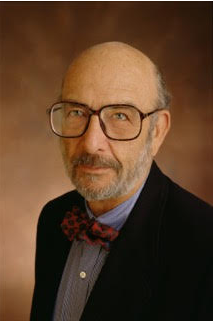
Philip Scheffler, CBS News’ first television street reporter, a documentary producer and the executive editor at 60 Minutes for many years, died April 7, 2016, in New York Presbyterian – Cornell Weill Medical Center. He was 85 and lived in Manhattan. Until recently he also spent much of his time in Essex, Conn., where he had a home for 40 years.

Scheffler retired from 60 Minutes in June of 2003 and had served as a consultant to CBS News up until a few years ago. He was a friend and mentor to Jeff Fager, executive producer of 60 Minutes. “Phil was a guiding force behind the success of 60 Minutes for more than two decades,” said Fager. “Don Hewitt often said he couldn’t have done it without him. He was a first-class journalist, an admirable human being, and a great friend to many of us. We will miss him very much.”

Scheffler was a reporter and producer for CBS News for the first half of his five-decade career. He became the senior producer at 60 Minutes in 1980, handling the day-to-day responsibilities – essentially the right hand of the broadcast’s executive producer Don Hewitt. Hewitt named him executive editor later. In this capacity, Scheffler had a direct hand in producing every 60 Minutes report broadcast from 1980 to 2003 – a period during which 60 Minutes was the number-one program in America five times.

Scheffler oversaw the reporting from the field and handled most of the producers’ journalistic issues, enabling Hewitt to focus almost exclusively on shaping the newsmagazine’s stories. When tempers flared in the screening room between Hewitt and one of his correspondents, such as Mike Wallace or Morley Safer, it was the professorial Scheffler, sporting a bow tie and close-cropped beard, who played referee.

Before his senior positions, Scheffler produced 60 Minutes stories over nine seasons for Wallace, Safer, Harry Reasoner and Dan Rather. His first story with Safer was “After Attica,” a look inside a maximum security prison in Colorado broadcast after the horrible riots in the New York prison in 1971.

Hewitt hired him in March of 1951 as a copy boy for “Douglas Edwards with the News,” which Hewitt directed and produced. Debuting in May 1948, that broadcast was the first network television news program, and in 1951, Scheffler became its first street reporter.

His first field assignment was to ask people whether they thought Gen. Dwight Eisenhower should enter politics and run for the Republican presidential nomination. But reporting was only one of the hats worn by early television news people like Scheffler. Out of necessity, he also invented a makeshift news teleprompter.

Hewitt wanted his anchor, Edwards, to look at the camera instead of his script when reading the news, so he had Scheffler make cue cards. “My first job at CBS Television News,” recalls Scheffler, “was to hand print Douglas Edwards’ copy on two-by-three-foot cue cards. Then, when we were on the air, I would hold them up next to the camera lens and move them up a line at a time for Doug to read. My arms were always tired and sore, so I asked Don if the camera could move in closer. He put on a wide-angle lens and moved the camera to within 10 feet of Doug, and I started typing the copy using wide adding-machine paper and a huge-type typewriter. It was the first crude teleprompter, but I didn’t have the wit to develop it!” said Scheffler in 2001.

In 1953, Scheffler was drafted into the Army and served his two years. During this period, he convinced his superior officer that he could put the Army on television — as long as he could get a few weekends off to film the piece! The result was a feature series in weekly installments he helped produce and write for CBS in which a Korean War recruit was followed through basic training at New Jersey’s Fort Dix. Scheffler returned to CBS and continued working as writer, reporter and producer for the nightly network news and other regularly scheduled CBS News programs through the 1950s.

The news program, “Eyewitness,” was Scheffler’s next stop, where he served as associate producer and on-air reporter for the half-hour weekly from 1960 to 1963. He briefly served as an associate producer on “The CBS Evening News with Walter Cronkite,” where he covered the Kennedy assassination, before joining the documentary unit in 1964. There, Scheffler became a producer of documentary and special news broadcasts, including “CBS Special Reports” and “CBS Reports.” He produced more than 100 of them, including: “After 10 Years: The Court and the Schools” (1964), on school integration; “CBS REPORTS: Robert F. Kennedy” (1967), on Sen. Kennedy and his political ambitions; and “The Cities” (1968), about the nation’s urban crisis.

Scheffler’s assignments took him to 47 states and to 50 foreign countries, including Vietnam. He traveled there for six assignments during the war; his output included three two-hour specials on American policy in Southeast Asia, “Where We Stand in Vietnam” (1967), “Where We Stand in Indochina” (1970), and “The Changing War in Indochina” (1971).

CBS News broadcasts that Scheffler worked on, especially 60 Minutes, have received the industry’s highest recognition, including the Peabody, DuPont and Emmy awards. In 1981, he received the Alumni Award for distinguished contributions to journalism from the Columbia University Graduate School of Journalism, from which he received a master’s degree. As an adjunct professor, he once taught classes there as well.

Scheffler was born Sept. 16, 1930 in New York City and was graduated from the City College of New York. He is survived by his wife, Dr. Linda Weingarten Scheffler, a clinical psychologist, author and retired professor at Hunter College in New York City; his daughter, Ramsay Klaff, of Massachusetts; and a son, Adam, of Chicago.