Lyme-Old Lyme HS Ranked 11th ‘Best High School’ in CT, 564th in US, by ‘U.S. News & World Report’  

Lyme-Old Lyme High School has received high placements in US News & World Report’s 2021 ‘Best High Schools in America’ rankings.

LYME/OLD LYME — Lyme-Old Lyme High School (LOLHS) has again been recognized as a top-performing high school both statewide and nationally in the latest U.S. News & World Report ‘Best High Schools in America’ rankings.

More than 17,800 public high schools (traditional, charter, and magnet) were evaluated in the 2021 report and LOLHS came in at 11th place in the state of Connecticut and also gained 564th place in the country. Moreover, if solely traditional schools are considered, LOLHS takes ninth place in Connecticut, while notably, the majority of the ‘Top 10’ schools in the state are located in Fairfield County.

“This ranking is a reflection of our teachers, staff, and community and their commitment to developing and becoming skilled problem-solvers, effective communicators and contributing citizens,” said Lyme-Old Lyme Schools  Superintendent Ian Neviaser.

He added, “I commend all of our staff PK-12 for the leadership and dedication shown each and every day. Their work is reflected in this great honor.”

To determine the rankings, US News & World Report evaluates schools on six criteria: college readiness, reading and math proficiency, reading and math performance, underserved student performance, college curriculum breadth and graduation rates. College readiness specifically measures participation and performance on Advanced Placement and International Baccalaureate exams.

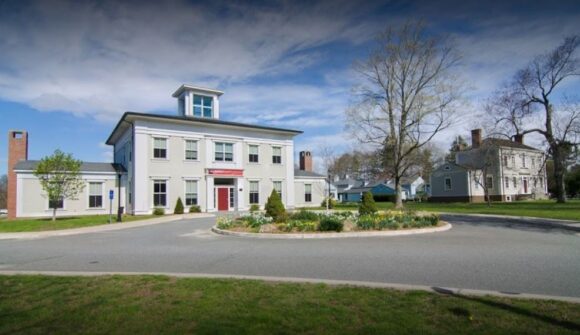
Lyme-Old Lyme High School serves 450 students in grades 9 through 12 and is located in the historic district of Old Lyme, CT.

Editor’s Note: This article is based on a press release issued by Lyme-Old Lyme Schools.

Letter From Paris: Restoration of Notre Dame Cathedral Symbolizes Hope for Both France, the World

Nicole Prévost Logan

April 15, 2021 was the second anniversary of the fire, which ravaged Notre Dame cathedral in Paris, and also the day when France reached 100,000 deaths from COVID-19. President Emmanuel Macron of France stressed that the reconstruction of the cathedral will be the symbol his country’s rebound from the pandemic.

Before giving the latest update of the most recent restoration process, here is a recap of what has been achieved over the past two years. The scope of the work is enormous.

For a long time, whenever I used to walk around the church prior to the 2019 fire, I had noticed that there was always scaffolding somewhere on  the church. It was a reminder for visitors that the cathedral was very old and fragile.

Throughout the centuries, it had suffered many fires and disasters. But the 2019 fire was the most catastrophic of all. It was a miracle that the cathedral survived that last tragedy.

After the fire, with hardly a square inch of the stone building still visible under so much scaffolding, wooden frames, plastic wrapping, tarp covers, and other protective contraptions, it was almost no longer recognizable. It ended up looking like a sick old bird.
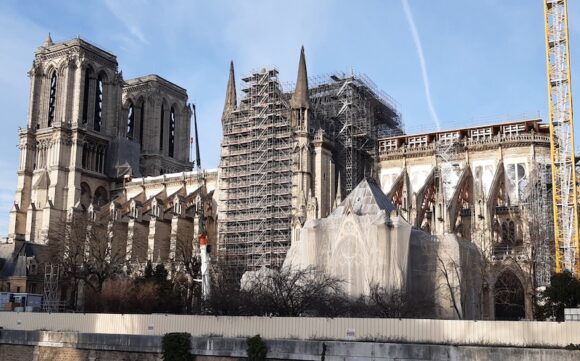
View of the cathedral showing some of the extensive scaffolding. Photo by Nicole Prévost Logan.

The gables and pinnacles at the end of the north and south transepts were in danger of toppling over with the force of the wind. Workers, dangling in the air like alpinists were doing their perilous job of wrapping the carved stones. Hovering over the cathedral cranes and other heavy machinery made the church look as if it was under perfusion.

The stained-glass windows were taken down and replaced by what looked like giant French doors. The collapse of the 19th century spire over the nave had left an enormous gaping hole at the crossing of the transept. Water – regardless of whether it is rain or the power spray used by firefighters – can cause lots of damage. It penetrates the stones, destroying the mortar between them .

The fire obliterated the roof. The lead dripped, spread and left a thick layer of toxic dust everywhere. For months, no one could go inside the cathedral because of the danger from the lead dust and also from the debris falling from the broken vault. A lonely robot, directed by remote control, was able to clear up the charred remains.

The organ and the three rose windows were thankfully preserved, but they will, however, require  lengthy restoration. The 7,800 pipes of the largest organ in the word have been pulled apart and so have been all the stained-glass pieces.

The stunning South Rose window in the cathedral. Photo by Nicole Prévost Logan.

It is particularly comforting to know that the Rose Window at the south end of the transept is intact. Given the light of the sun throughout the day, it is the Rose Window, which gives the cathedral its beautiful warm glow. Notre Dame would not be the same without the scenes of the triumphant Christ depicted through that magnificent window. In 1250, Louis IX, or Saint Louis, donated it after the end of the second crusade.

The April 15, 2019 fire left the cathedral in danger of collapse — in fact, it was a touch-and-go situation. The most urgent step was to consolidate the structure

A gothic cathedral is like a house of cards:- if one side weakens, the whole thing collapses. Because of its daring height and the fact that the outside walls are weakened by several tiers of windows, the structure is fragile.

The medieval master carpenters were real geniuses when they designed the 28 flying buttresses to reinforce the strength of the walls. An arch or beam extends from the walls of the church to a pier against the lateral forces arising from the roof and pushes the walls outwards.

Ken Follett in his 2002 book, The Pillars of the Earth, wrote a gripping story of the 12th century monks attempting to do something never done before, failing many times and starting all over again.

The earliest buttresses of Notre Dame date from the 12th century. They are massive and fairly close to the main structure. Later, during the flamboyant gothic period in the 14th century, the spans of the flying buttresses are longer and more decorated.

The first phase of the restoration — preservation and protection — lasted 15 months. President Macron appointed General Jean Louis Georgelin, former chief of staff under President Sarkozy, to supervise the work.

This photo shows the cathedral’s 14th  century flying buttresses prior to the fire. File used under the Creative Commons Attribution-Share Alike 3.0 Unported license.

The 28 damaged buttresses were reinforced by fitting custom-made wooden “centering frames” under each one of them. Each one of the buttresses had different dimensions, hence the fitting required utmost precision.

Then started the most difficult and dangerous operation: dismantling the scaffolding, which had been erected in May 2018 to repair the crumbling spire created by 19th century architect Eugene Viollet-le-Duc.

That scaffolding had melted, creating an ugly- and mean-looking black mass of 40,000 metal pieces glued together. Rope access workers (called cordists in French) had to pick the pieces by hand one by one, hanging from ropes high in the air. Sensors were placed under that unstable mass.

At one point the alarm sounded. Everybody fled. To disentangle that mass was like playing a giant pick-up sticks game, which involves removing sticks without disturbing the rest of the pile.

Twice the restoration work on the cathedral was interrupted: first when the scare caused by the lead contamination forced all activities to stop. Workers had to wear white haz-mat suits with masks connected to supplies of filtered air. They looked as clumsy as moon walkers.

Subsequently, the lock-down caused by the Coronavirus pandemic in March 2020 shut down operations for three months.

Five days before the fire, as a result of a near-miracle, the 10 ft. tall copper statues of the apostles and evangelists, climbing up the bases of the spire were air-lifted for restoration. Parisians enjoyed watching the ballet in the sky.

The statues are being restored in two workshops located near Perigueux. It takes four month to restore one statue. Pending the completion of the cathedral, all these art works will be exhibited  at the museum of architecture on Place du Trocadero.
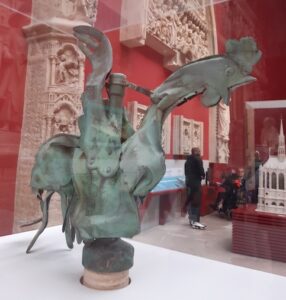
This rooster was on top of the spire. It is now exhibited in the Museum of Archaeology. Photo by Nicole Prévost Logan.

The rooster, pictured left, which used to sit at the top of the spire, will remain in the museum.  A replica will replace it.

Late in June 2020, chief architect Philippe Villeneuve climbed on an inspection tour of the cathedral. He was able to access the top of the vaults, which by then had been cleared of most of the debris.

Villeneuve was pleased to see that the limestone of the vault had resisted the damage caused by the fire itself as well as the water to extinguish the fire. For him, it was a milestone and he declared that the structure was now safe.

The first phase of conservation was over and one could look forward to the restoration to be launched at a later date.

In July 2020 came the decision everybody was waiting for. After months of deliberation and heated discussions between architects, historians and restoration professionals across the globe about how the future Notre Dame would look, a consensus was reached.

Based on a 300-page paper presented by Villeneuve and with the support of the public opinion, it was decided that the cathedral would be returned to its original appearance:- a spire identical to 1859 Viollet-le-Duc’s creation; a lead roof; and a wooden framework to support the roof.

A large part of the restoration work will be carried out using the methods of 13th century builders. Fortunately this type of savoir faire is kept alive in France thanks to a guild of crafted artisans, who are trained as Compagnons du Devoir.

All restoration will be done respecting the safeguards established by ICOMOS (the International Council for Monuments and Sites) founded by the Venice Charter of 1964 to protect historic monuments.

In 1991, UNESCO placed Notre Dame and the banks of the Seine within the area considered as part of the world heritage.

Within 24 hours of the fire, pledges to pay for the restoration poured in and reached close to one billion Euros. The two richest men in France raced to be the highest bidder. François Pinault pledged 100 million and refused to accept tax deductions. Bernard Arnault beat him with a sum of 200 million.

Arnault is the head of the LVMH (Louis Vuitton Moët Hennessy) luxury goods and champagne empire. The readers of this area might be interested to know that Antoine, one of the Arnault’s five children, is building a “cottage” in the Fenwick peninsula in Old Saybrook. He is married to Russian super-model Tatyana.

The Cathedral of Notre Dame de Paris prior to the fire. This file is licensed under the Creative Commons Attribution-Share Alike 2.0 Generic license.

At the two year mark since the fire, it is fitting to give the most recent update on the restoration process of Notre Dame. The task concerns the strengthening of the cathedral’s vault and the preparation of the future wooden framework, which will support the roof.

The scope of this phase to secure the building should be completed by next summer. It is just gigantic.

Most of the cathedral’s interior is now encased in metal scaffolding. An umbrella-like tarp has been installed above the gaping hole, where the spire once stood, for protection against the rain.

The vaults connecting the crossing of the transept were covered with platforms to enable rope-access workers to complete their job of removing the last fallen debris. This operation is still ongoing.

Most of those debris — stone, metal, glass — have been cleared up, analyzed, and used toward the creation of a 3D model, which is a replica of the original architecture and guiding the restorers in their mission.

Wooden scaffolding is being installed to stabilize the fragile areas of the cathedral’s vault, particularly the vaults adjacent to the crossing of the transept. Stonemasons apply plaster to the gaps and the exposed ends of the stones. They reinforce the most damaged areas with fiberglass.

The next step will be the insertion “of half-hangers” (also called “centring frames”)  under the six-rib vaults in the choir, the north transept and the nave. Note that the spire  crashed toward the West, onto the nave.

Above the vault and under the roof, other major work is in progress. The reconstruction of the 12-14th century wooden framework, called “the forest” is being prepared. Made-to-measure “half-hangers” and large-size triangular frames are being wedged under the roof to support it.

One thousand of the best oak trees have already been picked out in several French forests. A CNRS (National Center for Scientific Research) study of the use of timber led to surprising conclusions. Those conclusions differ from what one often reads in non-scientific publications.

The 13th century trees were much younger and smaller than often stated:  60 years, 39 ft. in height, and 12 ins. in diameter. Furthermore, the trees were not left to dry for 18 months but were used while still green, after being felled.

From the top of the cathedral, President Macron, accompanied by Paris Mayor Anne Hidalgo and Minister of Culture Roselyne Bachelot expressed huge thanks to the hundreds of people involved in the restoration: carpenters, scaffolders, rope access technicians, crane operators, master glassmakers, restorers, stonemasons, archaeologists, researchers and donors.

Macron reiterated his vision of the cathedral reopening to worship by 2024 in time for the Olympic games, while acknowledging the fact that the complete restoration will probably take several years longer.

A glimmer of hope is much needed for the weary French population. The latest curfew at 6 p.m., which applied to the whole country, should be lifted in early May, with café and restaurant terraces reopening by mid-May — that should really boost morale!


Lyme Academy Announces Spring, Summer Youth & Adult Programs, Registration Now Open 

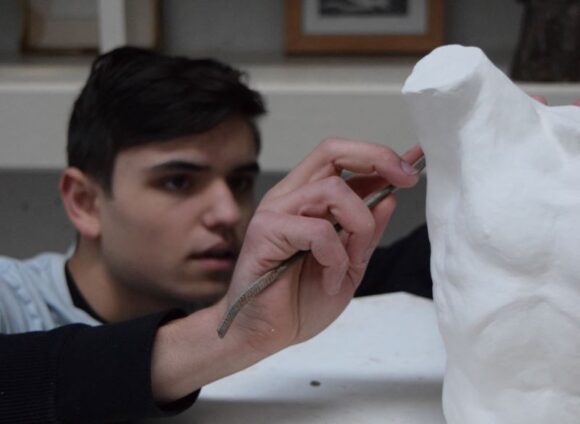
Courses galore — both online and in-person — for both young and old are being offered this spring and summer by Lyme Academy of Fine Arts.

OLD LYME — Spring programming at Lyme Academy of Fine Arts is starting online with introductory landscape painting essentials, which prepare students for practicing their craft in the great outdoors.  

Youth Academy Offers Summer Workshops for Pre-College and Middle School students

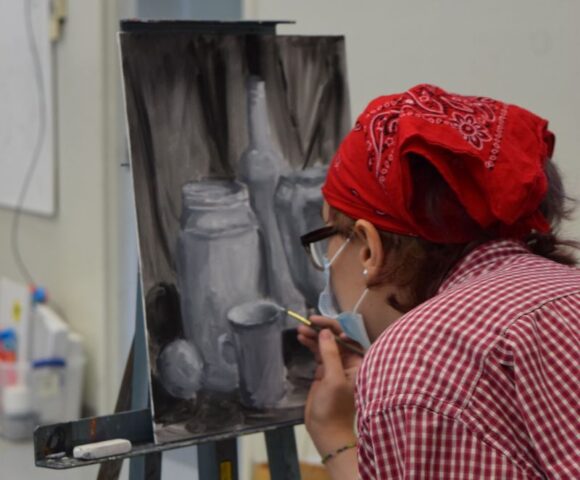
A student develops her painting skills in the Youth Academy at Lyme Academy of Fine Arts.

Lyme Academy is also accepting registrations for an onsite Youth Academy with summer workshops for Pre-College and Middle School students. “We are very happy to provide exceptional art courses to pre-teens and teens that legitimately prepare them with practical skills that artists actually use. We are more than a camp, we are a training ground for artists,” explains Kimberly Monson, Director of Pre-College and Youth Programming.  

The Academy’s Middle School Program takes lessons from the master artists of the past to demonstrate their significance in history. Through engaging projects, students learn to appreciate the featured artist’s unique style, but filter it through their own creativity.

The Pre-College Program assumes that all students are serious artists in-the-making and trains them accordingly. The academic curriculum is taught by experienced professional artists and college professors, making it as sophisticated as any program offered at the college level.

Monson adds, “The skills and practices learned will prepare students for the rigors of a true studio environment, which easily transfers to both college and work environments as well. Artists are self-motivated, innovative, analytical and creative problem-solvers and our program builds confidence by bringing out those qualities in our students.” 

For more information on the Youth Academy and to register for programs, visit this link or call 860-434-5232.

American Academy of Landscape Painting Presents Courses for Beginner, Advanced Students

Lyme Academy’s American Academy of Landscape Painting offers six online courses and 10 in-person courses beginning in April to prepare students for the transition to live courses outdoors.

The foundations are essential to success as an artist, and to that end Lyme Academy’s online foundation classes include Foundational Drawing with Zufar Bikbov, Perspective in the Landscape with Peter Van Dyck, Elements of Form with Jacqueline Jones, and Color for Landscape and Still Life with Eileen Eder. 

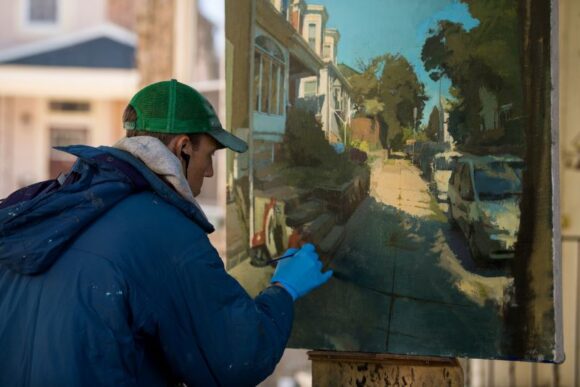
Peter Van Dyck, pictured above working on one of his original paintings, will be teaching Perspective in the Landscape as part of the American Academy of Landscape Painting program.

“With people getting vaccinated, we anticipate renewed vigor and interest in our programs. Our extraordinary faculty want to provide our students with the comfort and instruction to create effectively,” says Executive Director Mora Rowe. 

For students with more experience, two online courses at the intermediate level provide more challenge: Design and Composition Outdoors with Morgan Samuel Price and Going Beyond Theory of Color to Application with West Fraser.

“These courses provide the opportunity to  study on a mentor level with instructors from far away. West is from South Carolina and we are so lucky to have him extend his expertise for longer durations through Zoom” notes Eileen Eder, Lyme Academy Board member and instructor in the program.

She adds, “We cannot encourage the foundations enough, especially drawing.”

The Landscape Academy continues into summer with a wide array of onsite courses, beginner to master, celebrating the out of doors and social  distancing.  

For more information on the Landscape Academy and to register for programs, visit this link or call 860-434-5232.

In-person courses will be held at the Lyme Academy campus in Old Lyme.

Lyme Academy of Fine Arts was founded in 1976 by esteemed sculptor Elisabeth Gordon  Chandler and is located in historic Old Lyme, Conn., which has been a vibrant center for the arts and artists in southeastern Connecticut for more than 100 years. The Lyme Academy upholds the standard of a classical fine arts education, offering a variety of programs under the guidance of master artists, who share a deep respect for both traditional and innovative forms of teaching. The Academy has been providing students with the necessary foundation and skills to develop their own unique visual expression for almost 50 years.

For more information on Lyme Academy, visit the Academy website or call 860-434-5232.

Gardening Tips for April from The English Lady:

You may consider the dandelion (pictured above) a weed but, in fact, its young foliage is delicious in salads Photo by Jan Ledermann on Unsplash.

Those April showers that come our way
They bring the flowers that bloom in May
And when it’s raining, lets not forget,
It isn’t raining rain at all, its raining violets

April is the month of activity in the garden, and our old nemesis, the weeds, are beginning to rear their heads, so before we actually begin to extract the little devils before they get too large or strong, I feel that I must point out the benefits of many weeds.

Nettle, for example, are food for butterflies, clover extracts nitrogen from the air and fixes it in the soil and oil from jewel weed soothes poison ivy rash. Whilst the young foliage of dandelions is great in salads and when cooked tastes like spinach and is healthy as it contains many nutrients.  Not to forget to mention that our songbirds and other wildlife depend on weed seeds as a food source.

But let us return to the actual weed-pulling, weeds must be pulled gently so the weed and roots do not break for when this happens thousands of weed seeds will reseed and you will find yourself with an endless cycle of unnecessary weeding. When careful weeding has been accomplished I suggest applying an organic weed pre-emergent, with a corn gluten base by Bradfield organics.

ROSES

Photo by Bailey Chenevey on Unsplash.

Plant bare root roses at the end of April and container roses in mid May.  Add manure with a fine bark mulch about one foot from the base of the roses not now but in the middle of May. Check my March tips to refresh yourself on pruning roses.

Be careful clearing winter debris from around rhododendrons, mountain laurel and azaleas, these evergreens have shallow roots and you do not want to chance the roots being exposed. If the winter weather did indeed erode soil around any roots, add a few inches of soil to cover the exposed roots, at the same time resettle the plant in place and apply manure and fine bark mulch as well as some peat, which evergreens enjoy at the beginning of May.

In late April, plant gladioli corms at two-week intervals so that you will get a succession of bloom.  Planting the corms eight inches down; the extra depth helps keep the heavy blooms erect.

The Red Lily beetle is rearing its ugly head therefore I suggest applying organic Neem oil on the Lilies when they are about four inches above ground to help prevent and deal with this infestation.

SOIL SOLARIZATION

This is an effective way to control many soil borne problems, specifically the tomato blight that causes fruit rot. Covering the soil with clear plastic at the end of April, for one to two months can generate high enough temperatures in the top six to 12 inches of soil to kill pests, nematodes, weed seeds and many disease organisms like the tomato blight.  This process has proved invaluable for home gardeners and the beneficial effects seem to last for several seasons.

To solarize, dig a trench several inches deep around the bed, and spread a thin, clear plastic film (1-4mils) over the bed.  Press the plastic into close contact with the soil and seal the edges by filling the trench with soil.

MAINTAINING AN ORGANIC GARDEN

I urge you to throw away any pesticides and herbicides; they have the same effect as second hand smoke on you, your children and pets.  I am covering the state with my lecture on Garden Earth to reconnect people’s hearts, hands and minds with the nourishing energy of Mother Nature’s Life giving gardens. 

I am teaching people how to create a beautiful landscape but more important how to maintain it organically. That has always been the philosophy of my family’s heritage in landscaping and the same modus operandii is carried through in our company. Check ‘what to use in the garden ‘ on this website for all organic product sources.  

Manure all the borders with composted manure in bags from the garden center or aged manure from the bottom of the farmer’s pile. Mulch with a fine brown hardwood mulch, and in the vegetable garden when it comes time to mulch, mulch with manure which will not ‘cap’, meaning it does not form a crust like other mulches and therefore air and water can get through to the roots of the plants where it is needed.      

If you did not apply an organic grub control on the grass in March, apply now to keep the grubs down and cut down on the mole population.    

The soil is the most important component of the growing business; compost, organic manure and peat amend the soil to rebuild its structure. The ratio is one part compost to three parts manure and applies peat to the planting mix in the ratio of one part peat to three parts manure when planting evergreens. 

Good soil structure assists with drainage, prevents compaction, and the rich nutrients that is the result as these amendments break down encourage the soil animals beneath the surface to work at full capacity. In a light soil such as sand, humus binds the sand particles together and in heavy soil such as clay it keeps the clay particles apart making room for air and drainage.  Other humus forming materials are leaves and seaweed tea which we will have for sale in the two few weeks has a root growth hormone, which assists plants to form a strong root system.   

Conditions in April are very favorable for new plant-root development, so with this in mind, transplant evergreen shrubs and new evergreens can be planted at the end of April.  With the organic manure and peat with the topsoil in the planting hole in the ratios I mentioned above. Give the roots a work out before planting to release them and open them up so the roots will reach into the surrounding soil for nutrients and water and will not dry out in the heat of summer.    

Organic fertilizer contains blood meal, bone meal, seaweed, poultry litter and natural grains. The bulky organic amendments mentioned above must be incorporated into the soil to improve soil texture and structure and many of the necessary nutrients to plants. 

Before and a month after you have applied the bulky amendments of manure and compost, test the soil to see if there are still some nutrient deficiencies, particularly in clay soil and correct these with some organic fertilizers. Its always better to under fertilize so go sparingly but do not be cheap with the bulk amendments.

When I moved into my farmhouse on the shore 14 years ago, I found soil that was sandy, which is good for drainage but without nutrients.  I began adding a few inches of manure to all planted borders in April, July and October and today when I put a spade in the ground to check the color of the soil in spring, it’s ‘black gold’. 

If you have used chemical fertilizers in the past, many of the soil organisms that play such an important role in maintaining natural fertility will have died off.        

The major plant nutrients are nitrogen (N), which promotes healthy leaf growth, phosphorus (P) for healthy root growth, and potassium for flower development and ripening wood. Other important nutrients are required such as sulphur, magnesium, calcium, boron and iron, but in lesser amounts.  The organic fertilizer provides all the important nutrients listed above.  When buying the products read the labels — if there is a word you cannot pronounce; it’s a chemical so do not buy it.  

The amendments and organic fertilizers are of plant and animal origin so gloves should be worn when using them as bacteria is present in them.  These bacteria are great for the plants and the soil but not good for your health.  These products tend to be slow acting; gradually making the nutrients available to the plant and the rewards are infinite.

Organic fertilizers are applied in spring around mid to late May when the plant has about six inches of growth; this allows for the fertilizer to become active when the plant is growing most rapidly.  Avoid applying fertilizers after the end of July as new growth may not go dormant before winter and the plant could suffer damage.  

As well as the amendments of organic aged manure, peat and/or compost you can incorporate an organic root development enhancer like the seaweed tea by soaking the top four inches of the soil around the base of the trunk when planting trees and shrubs.  Top dressing organic fertilizers are scattered over the soil surface and around the base of the plant, avoiding the foliage. 

Organic soil enhancers like manure and seaweed tea, when applied to the soil, are most quickly absorbed by plants and are especially useful for container planting and these teas are excellent for feeding throughout the growing season. Foliar (aka leaf) feeds with the teas are a quick-acting tonic and are useful in supplying nutrients to plants especially in the heat and humidity of mid summer.  

April is the time to tackle a new lawn or patch seed, use only good quality seed and organic fertilizers.   

DAFFODILS

The daffodils will soon be in bloom and when the bloom has past, do not cut the leaves of any of your spring flowering bulbs, the leaves send down energy into the bulbs to store for next season’s nutrition. 

WHEN TO PLANT ANNUALS

Do not be lulled into complacency with a few back-to-back warm days; we can still get a frost and I caution you not to plant annuals until Memorial weekend.  Do not cultivate around the perennials in the borders until mid May. Do not panic if you were not able to get the April tasks done until May, your garden will wait for you and the constancy that is Mother Nature will continue to keep your patch of earth flourishing. 

Enjoy the pleasure of being outdoors in warmer temperatures, inhaling the pungency of awakening soil and experience the connection with growing things. Do not overdo it; warm up the body before the garden labor and stay well hydrated with lots of water. We are inexorably entwined with the earth and know that even the smallest gesture of a garden has positive rewards and the effects not only on you but our planet. 

I’ll see you in your garden in May.

Contact Maureen at maureenhaseleyjones@gmail.com

About the author: Maureen Haseley-Jones, pictured left, is a member of a family of renowned horticultural artisans, whose landscaping heritage dates back to the 17th century. She is one of the founders, together with her son Ian, of, ‘The English Lady Landscape and Home Company.’ Maureen and Ian are landscape designers and garden experts, who believe that everyone deserves to live in an eco-conscious environment and enjoy the pleasure that it brings. Maureen learned her design skills from both her mother and grandmother, and honed her horticultural and construction skills while working in the family nursery and landscape business in the U.K. Her formal horticultural training was undertaken at the Royal Botanic Gardens at Kew in Surrey.

Old Lyme Open Space Commission Launches Beaver, Bird Conservation Program, Sponsored by Two Grants

Beaver activity can result in a host of beneficial impacts. Photo by Niklas Hamann on Unsplash.

OLD LYME — Earth Day 2021 is Thursday, April 22.

In celebration, the Old Lyme Open Space Commission is launching a beavers and birds conservation/education program in the town’s Ames Open Space.

The program is sponsored by grants from The Rockfall Foundation and the Hartford Audubon Society.

The Commission’s slogan is “Let Nature Be.”

In the case of beavers, allowing their activity results in a host of beneficial impacts. Beavers are one of only a few animals that create their own habitat, which is then shared with an amazing variety of birds, plants, and wildlife.

Beaver ponds improve aquifer quality through natural filtration and regulate flow so downstream areas do not run dry in summer months.

The commission, through this program, will give beavers free reign where their activity is confined to town open space. At the same time, commission members will educationally explain the ecology of beaver ponds, which encompass so much more than dams and lodges.

Visitors, bird watchers and students will have a wonderful opportunity to observe nature in action with natural amenities at two observation sites.

Specifically, the Open Space Commission project will:

  • Use drones to aerially survey the Ames Open Space boundaries to determine if beaver activity is adversely affecting private property and seek solutions to problems, as needed.
  • Protect non-nuisance beaver activity on open space land and deter illegal vandalism.
  • Offer a wildlife educational program centered on the unique features of beaver ponds. High Definition (HD) cameras with remote access will capture wildlife activity for web-posting with help from Lyme-Old Lyme High School.
  • Create two wildlife observational areas with native-wood benches and interpretive signs on the Ames “blue” trail. QR codes will link to video footage, so visitors can watch beaver and bird activity where it was recorded and perhaps even see similar activity live.

Visit the commission’s website later this spring and summer for news of the program’s progress.