Old Lyme PGN Library Launches ‘Black History & the Graphic Novel’ Book Boxes for Age 12 & Up

OLD LYME — The Phoebe Griffin Noyes Library is offering personalized book boxes for readers aged 12 to adult. The first thematic offering is Black History and the Graphic Novel – a spotlight of Black story-telling through the immersive, artful form of the graphic novel.

To request their own Book Box, patrons are asked to share their preferred genres and keywords using this form, which can also be found on the library’s website.
The Black History and the Graphic Novel box comes with two limited edition bookmarks (is that Bernie on the new patio?), a snack-y food, a Black History button-making activity, notes from the librarian about why your books were chosen, including what to read next, and some other surprises.

Once their box is ready for curbside pick, patrons will be notified. Curbside hours on Friday are 9:30 a.m. to 4:45 p.m., Saturday 9:30 a.m.-12:45 p.m., and Monday to Thursday 9:30 a.m. to 6:45 p.m.

Young Adult librarian Nike Desis will choose two to three titles for each reader from a collection of majority Black authors and Illustrators. The books could include a memoir, a love story, or an account of an historical event.
In this program, history includes fiction, as storytelling can help to form culture and shed insight on history.
Desis comments, “The Young Adult collection of graphic novels is a portal to diverse stories, detailed histories, and rad futures.”
In parallel to thee Black History and the Graphic Novel Book Box program, new graphic novels are being added to the library’s collection from the independent. CT-based, Black-owned bookstore project, The Key Bookstore.

For more great reading suggestions, for any time of year, from Black educators and Black-centered institutions, check out the stories of @olpgn_library on Instagram, where resources from diverse networks are curated and shared.

Why Read Graphic Novels?

“[Reading a graphic novel] is a fun, immersive, and beautiful way to learn about and recognize the accomplishments of black Americans throughout time, and it just might change the way you see history. The true stories of black Americans are far too often overlooked and neglected, even left out of the history books entirely. ” https://www.bustle.com/p/11-powerful-graphic-novels-to-read-this-black-history-month-35848

“Research about children and graphic novels has established that children find reading graphic novels enjoyable and compelling, that graphic novels can infuse some readers with feelings of academic success in ways that traditional books do not, and that children are more likely to read graphic novels than read nothing at all… More and more, graphic novels are helping to shape children’s ideas of what is normal, acceptable, and powerful in a society they are just learning to navigate on their own. The combination of image, text, and story that graphic novels employ makes their influence a visceral and powerful one. “http://www.ala.org/aasl/sites/ala.org.aasl/files/content/aaslpubsandjournals/slr/vol21/SLR_DrawingDiversity_V21.pdf

“Graphic novels have become a standard in the [book] award community for giving children new means to explore difficult subjects that may be hard to understand or digest.” https://www.literacyprojecteaglecounty.org/latest-news/why-graphic-novels-matter

Reading Uncertainly? ‘Brief Candle in the Dark: My Life in Science’ by Richard Dawkins

“But I digress …”

Ostensibly a continuation of his autobiography, this engrossing and superbly entertaining ramble by Dr. Dawkins, the noted Oxford zoologist, biologist, and humanist, stretches your knowledge and imagination. Is it possible to read an autobiography that is self-acknowledged as a, “Series of flashbacks, divided into themes, punctuated by digressions and anecdotes,” without losing your place, your mind and your direction?

Certainly!

And oh, those digressions: evidence of a perambulating and ever-curious mind. He drops names in his stories, recollections, and diversions, and it is fascination to follow his mind as it rambles over memory’s landscape, “… flitting like a butterfly as the interest takes me.”

Dawkins warns the reader early in his writing with a poem:

What is Life, if full of stress
We have no freedom to digress?
But if the prospect you enrages
You’d better skip the next few pages!

Neither is he reluctant to throw in a pun, trying to bridge the gap between literature and science, as in, “Où sont les C. P. Snow’s d’antan?” (a corruption of the question of one of France’s most famous poets Francois Villon’s question, Mais où sont les neiges d’antan?, which translates into English as the well-known line, “But where are the snows of yester-year?” taken from Villon’s poem Ballade des dames du temps jadis, which, in turn, roughly translates as, “Ballad of the Ladies of Times Gone By.” C.P. Snow refers to Charles Percy Snow, who was an acclaimed English novelist and physical chemist.)

Charles Darwin and natural selection lie at the core of his studies: ”Natural selection is a miserly economist, invisibly counting the pennies, the nuances of cost and benefit too subtle for us, the observing scientists, to notice,” and “gene survival” is our dominant “utility.”

Dawkins is also known for his acerbic reactions to religious dogma and beliefs, a member of a writing group that includes Bertrand Russell, Christopher Hitchens, Daniel Dennett, and Sam Harris. His conclusion: “I have tried but consistently failed to find anything in theology to be serious about. Yet he is equally candid about the ever-present “limitations of science.”

I’ve read his The Selfish Gene, The God Delusion, and The Greatest Show on Earth, and fully intend to continue to be challenged as well as enlightened by his words. His penultimate chapter, some 120 pages, is a review of the themes from his 12 books:

  • Explaining the gene as a replicator and a vehicle
  • Extending the phenotype
  • Genes as a ‘gigantic colony of viruses,” both amicable and malevolent
  • Survival requires avoiding “being too risk-averse” and being “too laid-back.”
  • Using a “functional story” as a ‘powerful aid to memory.”
  • The sonar of bats (Might he have suspected the global arrival of a coronavirus?)
  • “Only changes have surprise value” and “information is a mathematically precise measure of ‘surprise’ “
  • The “power of cumulative natural selection”
  • A cooperative gene is most likely to survive.
  • The “meme” (pronounced like “cream”) is the “new soup of human culture.”
  • And religion: “We have taken on board a convention that religion is off-limits to criticism.,” something that Dawkins resists. We can and should teach about it but we should never indoctrinate children in any particular religious tradition.

Dr. Dawkins’ parting poem, which speaks volumes of the man and his mind, is:

Still time to gentle that good night.
Time to set the world alight.
Time, yet new rainbows to unweave,
Ere going on Eternity Leave.

Editor’s Note:Brief Candle in the Dark’ by Richard Dawkins was published by HarperCollins, New York 2015.

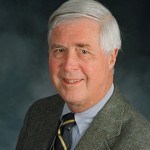
Felix Kloman

About the Author: Felix Kloman is a sailor, rower, husband, father, grandfather, retired management consultant and, above all, a curious reader and writer. He’s explored how we as human beings and organizations respond to ever-present uncertainty in two books, ‘Mumpsimus Revisited’ (2005) and ‘The Fantods of Risk’ (2008).
A 20-year resident of Lyme, Conn., he now writes book reviews, mostly of non-fiction, a subject which explores our minds, our behavior, our politics and our history. But he does throw in a novel here and there.
For more than 50 years, he’s put together the 17 syllables that comprise haiku, the traditional Japanese poetry, and now serves as the self-appointed “poet laureate” of Ashlawn Farm Coffee, where he may be seen on Friday mornings.
His late wife, Ann, was also a writer, but of mystery novels, all of which begin in a village in midcoast Maine, strangely reminiscent of the town she and her husband visited every summer.

Old Lyme Brokerage Manager Heather Gagnon Named William Pitt–Sotheby’s Realty ‘2020 Manager of the Year’

Heather Gagnon of Old Lyme has been named William Pitt-Sotheby’s 2020 Manager of the Year.

OLD LYME — William Pitt – Julia B. Fee Sotheby’s International Realty today announced that Heather Gagnon, manager of the firm’s Old Lyme, Conn., brokerage, has been named the company’s 2020 Manager of the Year.

Gagnon was chosen from among 17 brokerage managers for the honor, winning the award for the first time in her career with the firm and after only one year in the role of Brokerage Manager.

“I am proud to announce Heather Gagnon as our Manager of the Year, an honor well deserved,” said Paul Breunich, President and Chief Executive Officer of William Pitt – Julia B. Fee Sotheby’s International Realty.

He continued, “Her skillful approach to disciplines such as training, coaching, business development and social media has enabled her to offer unparalleled support to her agents, helping them in turn to provide the highest level of service to buyers and sellers, as well as target high net worth clients.”

Asked how she felt about receiving the award, Gagnon told LymeLine.com exclusively, “This is such a great honor.”

With 20 years of expertise in real estate, Gagnon took over the position of Brokerage Manager in Old Lyme in March 2020. Since that time she has grown the office by attracting top talent in New London County, including some of the highest producing agents by dollar volume county-wide.

Gagnon first joined William Pitt Sotheby’s International Realty in 2016 as the Director of Business Development for the firm’s Connecticut Shoreline offices, specializing in training and coaching agents to increase their production levels.

She was promoted to Assistant Manager for the Essex and Old Lyme brokerages in 2019. In that role she helped grow market share and developed a new agent training program that resulted in the offices achieving status as the top producing brokerages company-wide for new to business agents for two years in a row.

Gagnon additionally owns a real estate school in Connecticut that focuses on educating future real estate professionals throughout the state.

Editor’s Notes: i) This is article is based on a press release issued by William Pitt – Julia B. Fee Sotheby’s International Realty.
ii) Founded in 1949, William Pitt – Julia B. Fee Sotheby’s International Realty manages a $5.9 billion portfolio with more than 1,100 sales associates in 26 brokerages spanning Connecticut, Massachusetts, and Westchester County, N.Y. The company is one of the largest Sotheby’s International Realty(R) affiliates globally and the 37th-largest real estate by sales volume in the United States. For more information, visit williampitt.com.

Old Lyme Partnership Launches ‘Witness Stones’ Project to Honor Lives of Local Enslaved Persons, Introduce Related Curriculum in Schools

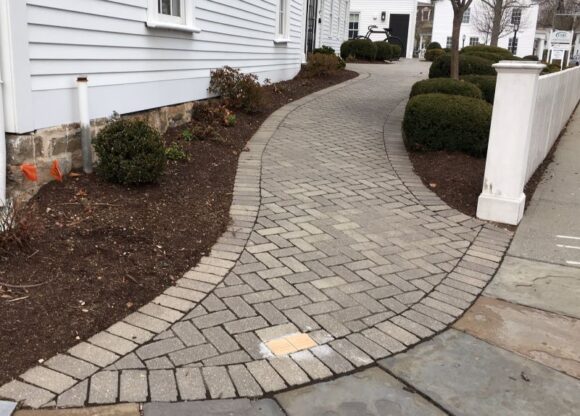
Two ‘Witness Stones’ (center, foreground) installed on the pathway leading to the Guilford Savings Bank on the Guilford Town Green.

Project Will Install Historical Plaques Honoring Lives of Enslaved Individuals from Old Lyme; Introduce Educational Curriculum in Schools; Raise Awareness of Local History
Partnership Members are Phoebe Griffin Noyes Library, Florence Griswold Museum, First Congregational Church of Old Lyme and Lyme-Old Lyme Schools 

OLD LYME — The Old Lyme Witness Stones Partnership has launched a public education and engagement effort that will introduce an educational curriculum for seventh-grade students of Lyme-Old Lyme Schools that will raise awareness of the town’s history. 

The project will also involve the installation of small historical plaques on Lyme Street commemorating the lives of individuals, who were once enslaved in Old Lyme.

Each historical plaque – or “witness stone” – will include the name of an enslaved individual, along with important details about their lives and circumstances derived from land records, emancipation certificates and other available historical documents. Middle school students will research these historical materials to explore the experiences of these vital but forgotten members of the community.

Amy Kurtz Lansing, the Florence Griswold Museum Curator, notes that the Museum, “Seeks to broaden awareness of American art, history and landscape.”

Commenting on the Museum’s involvement in the project, she says, “Just as we have been expanding narratives and bringing alternative voices into our exhibitions and interpretations, we see the Witness Stones project as a framework for parallel efforts in the community.”

Kurtz Lansing adds, “By marking the sites where enslaved people lived, the Witness Stones project reveals hidden histories and broaden narratives about Old Lyme’s past.”

Lyme-Old Lyme Schools are introducing the Witness Stones project curriculum this semester to seventh-grade social studies and language arts classes and will continue to include it as part of the educational curriculum through 2026.

Ian Neviaser, Superintendent of Lyme-Old Lyme Schools, comments, “The Lyme-Old Lyme Schools are pleased to bring history alive by partnering with our community members to help our students better understand the history of our area through this project.  The use of primary source documents helps develop in our students the ability to analyze and understand what life was like generations ago.”

It is anticipated that 12 witness stones providing the names of persons enslaved on properties along Lyme Street will be installed in late May to coincide with completion of the seventh-grade curriculum. The installation ceremony will feature projects designed by the local student-historians. 

The witness stones in Old Lyme will correspond to those installed in other Connecticut towns.  Each will consist of a four-inch square engraved bronze plaque installed flush with the ground.

Volunteers from the First Congregational Church of Old Lyme will maintain the plaques, which will be polished twice yearly by its Sunday School and youth group members. 

The Phoebe Griffin Noyes Library will install a sign that includes a map showing sites of enslavement on Lyme Street. Katie Huffman, Director of the Phoebe Griffin Noyes Library says the library is proud to be a partner in the development and implementation of the Old Lyme Witness Stones Project. 

She remarks, “While the Library will not have a marker on its grounds, we are honored to help remember the history of enslaved individuals in our community in this meaningful and lasting way.  As one of the local institutions committed to preserving Old Lyme history, we recognize the importance of telling these untold stories.” 

“It is our hope,” she says, “that telling them will bring a new awareness and understanding of Old Lyme’s history to our community.”

The Witness Stones Project was started by Dennis Culliton, a retired Guilford school teacher, who modeled it after the Stolpersteine Project in Berlin, which commemorates the lives of individuals persecuted by the Nazis before and during World War II. 

Guilford, Madison, Farmington and West Hartford are among the Connecticut towns participating in the project. The Old Lyme Witness Stones Partnership will extend the project along the Connecticut shoreline.  

Steven Jungkeit, Senior Minister of the First Congregational Church of Old Lyme, explains why the church has joined the initiative in these words, “I’m so pleased that Old Lyme is participating in the Witness Stones project. And I’m grateful to partner with so many other organizations in town as we resurrect the memory of those who were enslaved in Old Lyme across more than 150 years.”

He points out, “Too often, we assume that New England had no relationship to slavery, and that the infernal institution only existed in the South. The Witness Stones help to correct that myth, and help us to see our past with greater clarity.”

Jungkeit concludes, “Together, we’ll learn to say the names of those who labored in bondage in Old Lyme: Temperance and Jane, Oxford and Moses, Nancy and Lewis, and so many more.  By remembering forgotten voices, we can help bring about the racial justice and healing that our world, our country, our state, our town, and our very lives so desperately need.”

Editor’s Note: i) The Old Lyme Witness Stones Partnership’s goal is to expand the understanding of local history and honor the humanity and the contributions of those formerly enslaved in the community. This new partnership is part of a growing regional coalition of organizations raising awareness of New England’s forgotten history that includes the Bush-Holley House in Greenwich, Historic Deerfield in Massachusetts, the Stopping Stones Project in Vermont and the Martha’s Vineyard African-American Heritage Project.

ii) This article was prepared from a press release sent by the Old Lyme Witness Stones Partnership.
Lyme-Old Lyme Schools, OL Town Hall Closed Again Today as Towns Dig Out from Winter Storm

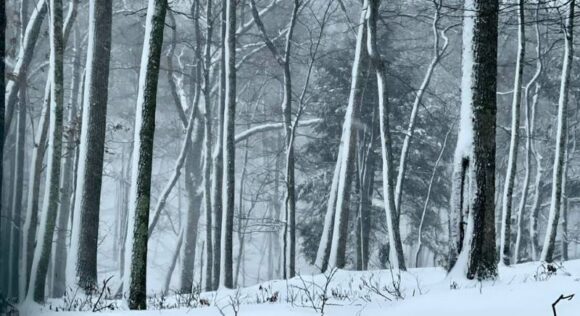
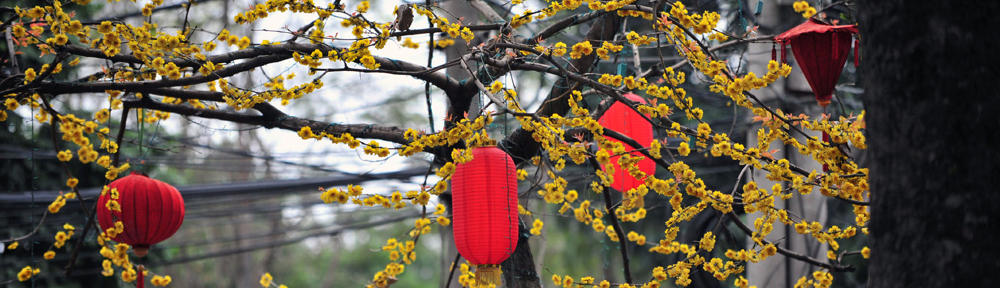
Silence of the trees. This beautiful photo was taken yesterday from Joshuatown Rd. in Lyme by Humphrey Tyler.

LYME-OLD LYME —  Winter Storm Oriena dumped around a foot of snow on Lyme and Old Lyme yesterday. As a result, Lyme-Old Lyme Schools and Town Halls remain closed today and there is an ongoing parking ban on Lyme Street south of I-95 through 4 p.m. this afternoon.

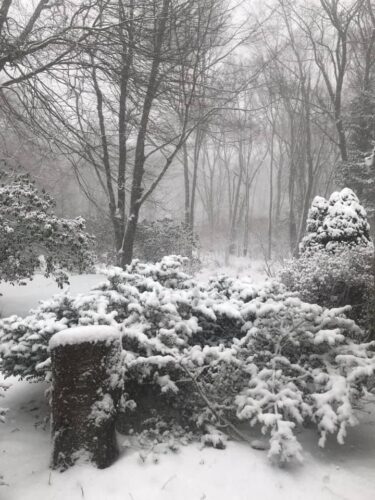
A back yard on Sill Ln. in Old Lyme is transformed into a winter wonderland. Photo by Linda Ahnert.

Snow fell steadily throughout the day, but thankfully, despite the high winds, no power outages were reported.

This delightful shot was taken by Kathy King at her home in Old Lyme during the storm. She titled it appropriately, “Hanging on.”

Speaking of “hanging on,” the photo below reminds us we all need to hang on until spring, which will come soon … despite the current weather. The tulips send the message that, even in the midst of a winter storm, spring is just around the corner.

Photo by Teresa Carlo Sullivan.

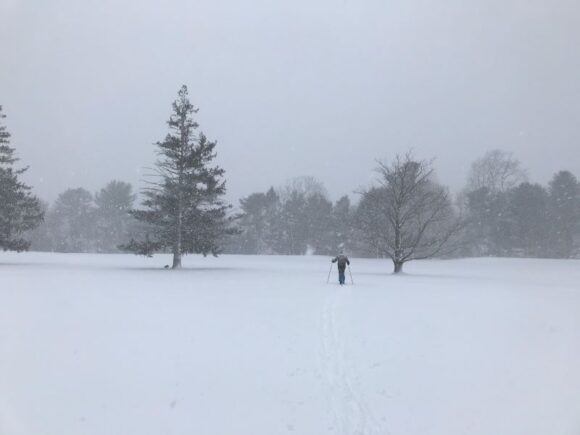
Some folk braved the weather yesterday to enjoy the snow up close and personal during a spot of cross-country ski-ing.

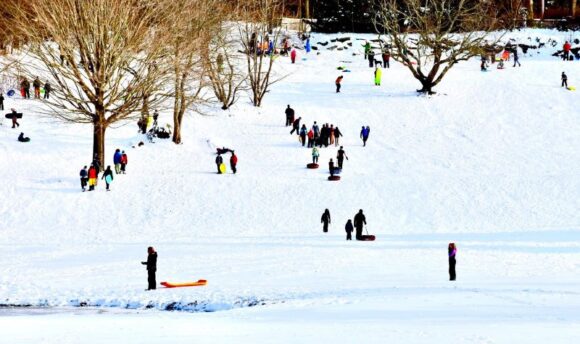
The photo below of the ever-popular winter activities on the Old Lyme Country Club hill was taken Dec. 17, 2020 during the previous winter storm by Frederick Verillo, but it is such a great photo we decided to include it anyway in this photo essay!

Photo by Frederick Verillo.