Area Legislators Applaud $7.5 Million Grant to Old Saybrook for Dredging North Cove

OLD SAYBROOK – Area legislators are applauding the State Bond Commission’s approval last Monday (May 11) of $7.5 million for the dredging of the North Cove, Connecticut River in Old Saybrook.

The funding, which comes from the state’s Grants-In-Aid program, will go toward improvements to ports and marinas, including dredging and navigational direction.

“This is a smart investment for our town,” Rep. Devin Carney (R-23) said. “Dredging the North Cove will keep property values up and protect our natural resources. I was pleased to work with local and state officials to secure this grant for Old Saybrook. This is great news.”

“This dredging project will create construction-related jobs while providing a lasting benefit to our region,” Sen. Art Linares, who represents part of Old Saybrook, said. “We are grateful to the governor and the bond commission for moving this project forward.”

“North Cove has been a port of call going back to the town’s early days,” Sen. Paul Formica, who represents part of Old Saybrook, said. “This project is really important. We need to make sure the ecological balance remains and that dredging allows for safe recreational boating.”

“This is a critical project for our town,” said Carl P. Fortuna, Jr., First Selectman of the Town of Old Saybrook. “The dredging last done in 2009 insufficiently opened up North Cove. This project will greatly add to the recreational usage of North Cove, as well as restoring it fully as a harbor of refuge in storms. We are thankful for the support of the Governor and the State Bond Commission.”

The North Cove in Old Saybrook is a part of the southern boundary of the Gateway Conservation Zone. The Gateway Conservation Zone boundary only extends 50 feet inland from the mean high water line. The proposed dredging of the North Cove would alleviate siltation issues due to reduced tidal flushing, which occurs when the openings to the river have been reduced by man-made structures. This also creates a problem for some deeper draft sailing vessels that moor at the North Cove.
Senators Linares, Formica Tour CT River Museum

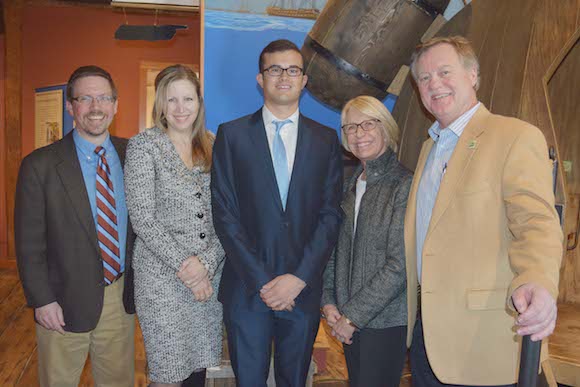
From left to right: Museum Executive Director Chris Dobbs, Museum Trustee Eileen Angelini, Sen. Linares, Museum Vice Chairman Joanne Masin, and Sen. Formica.

From left to right: Connecticut River Museum Executive Director Chris Dobbs, Museum Trustee Eileen Angelini, Sen. Linares, Museum Vice Chairman Joanne Masin, and Sen. Formica.

On March 9, area legislators toured the Connecticut River Museum on Main Street in historic Essex village. Senator Art Linares of Westbrook and Senator Paul Formica of East Lyme pledged to continue to raise public awareness of the museum at the State Capitol and throughout their senate districts.

For more information, visit www.ctrivermuseum.org .

Linares Meets with AARP Volunteers to Discuss Issues Affecting Seniors

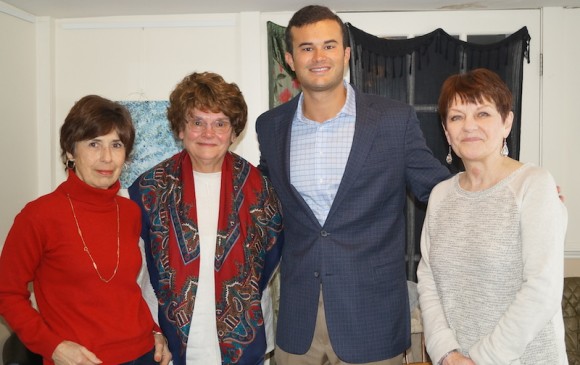
Gathered for a photo during Senator Linares's meeting with AARP volunteers are (from left to right) Barbara Rutigliano of Essex, Marian Speers of Old Saybrook, Sen. Art Linares, and Jean Caron of Old Saybrook.

Gathered for a photo during Senator Linares’s meeting with AARP volunteers are (from left to right) Barbara Rutigliano of Essex, Marian Speers of Old Saybrook, Sen. Art Linares, and Jean Caron of Old Saybrook.

Sen. Art Linares (R-33rd), whose District includes the Town of Lyme, met with Connecticut AARP volunteers at Essex Coffee and Tea Co. on Feb. 5, to discuss issues impacting seniors.

Linares urged seniors from throughout the region to contact him with any issues of concern.  He can be reached by phone at 800-842-1421 or email at Art.Linares@cga.ct.gov or on the web at www.senatorlinares.com.

Carney Proposes Ban on Electronic Cigarette Use in Schools, on School Grounds

State Representative Devin Carney

State Representative Devin Carney

State Rep. Devin Carney (R-23) hopes to prohibit the use of electronic cigarettes on school grounds in his bill H.B. 5219.  Current regulation is limited to the use of electronic cigarettes by anyone under the age of 18; this legislation, however, would seek to expand upon the current bans to include prohibiting the use of electronic cigarettes on school grounds entirely. Schools already ban tobacco-based products, so this would add e-cigarettes to that ban.

“It’s critical that our schools be free from negative influences. Countless studies show that electronic cigarette use among high school and even middle school aged kids is rapidly rising. Not to mention that many kids who would have never tried a traditional cigarette are experimenting with e-cigarettes – especially flavored ones,” Carney said. “The bad habits brought on by them lead to the increased potential for addiction to nicotine-based products in the future.”

A recent Yale study notes that one in four Connecticut high school students have tried an e-cigarette. In addition, 26 percent of students who had reported to have never tried one were interested in trying one in the future.

Carney adds, “The availability of electronic cigarettes and ease at which they can be purchased by minors is a bit unsettling to me. We are fortunate to live in an area where many schools have already taken this initiative – a statewide ban on them on school property will strengthen those initiatives while also ensuring other schools, who may not have banned them yet, will have a ban in place.”

Carney has also proposed other bills including several proposals to lower taxes and increase the overall quality of life for the residents of the 23rd District.

Former Governor Lowell Weicker Lauds President Obama’s New Openness to Cuba      

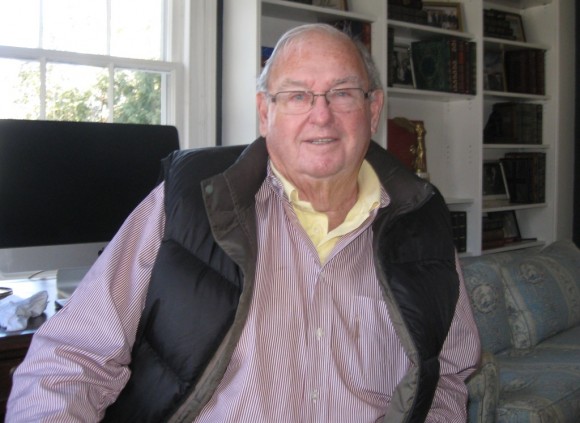
Former Connecticut Governor Lowell Weicker at his home in Old Lyme, Thursday.

Former Connecticut Governor Lowell Weicker at his home in Old Lyme, Thursday.

Lowell Weicker, a former Governor and Senator of Connecticut, has expressed his support for the Obama’s administration new policy of normalizing diplomatic relations with Cuba. In taking this position, Weicker noted in an interview at his home in Old Lyme with ValleyNewsNow yesterday that current polls show that 60 percent of Americans support diplomatic recognition of Cuba.

In adopting a new U.S. relationship with Cuba, Weicker said, “Finally, we are catching up with the times.” He continued, “The U.S. embargo has lasted for 50 years, yet country after country has recognized Cuba with only the United States in not doing so.” Weicker also expressed criticism of those who oppose the Obama Administration new policy of recognizing Cuba, such as U.S. Senator Marco Rubio of Florida.

Positive Aspects of Today’s Cuba

According to Weicker, “The most positive aspects of the present Castro regime in Cuba are in the areas of health care and good public education. Ninety nine percent of Cubans have free health care and good public education, a complete turnaround from the days of Battista.” At the same time, Weicker faulted the present Cuban government, “for its lack of human rights and democratic elections.”

As for his personal relationship with Cuba, the former Connecticut Governor said, “My family owned a large business in Cuba, which was expropriated by the Castro government, after Battista fled the island. No one, especially myself, is going to extol Castro’s confiscation of private property.”

Weicker also noted his, “deep personal distaste for the dictatorship of Flugencio Battista, who preceded Fidel Castro. Early on,” he said, “most of the Cuban immigrants to the United States were allied with Battista. Indeed in my losing the 1988 Senate campaign, the Florida Cuban community poured late money into Senator Joe Lieberman’s campaign.”

Weicker’s Two Trips to Castro’s Cuba

Photo from the 1980s of then U.S. Senator Lowell Weicker shaking hands with Cuban dictator Fidel Castro.

Photo from the 1980s of then U.S. Senator Lowell Weicker shaking hands with Cuban dictator Fidel Castro.

Weicker also stated, “When I was a U.S. Senator, I made two trips to Cuba in the early 1980s. The first was to organize a joint American-Cuban marine science mission. The second was to secure the release of six American women imprisoned in Cuba.” According to Weicker, he, “convinced Castro, personally, to release the women who were in jail on drug charges. Two of the six were from Connecticut.”

Weicker described how, while in Cuba, he and Castro went diving together and spent many hours discussing Cuban-American relations. When Castro inquired whether there was anything he could do for Weicker, the Senator jokingly responded by requesting the Major League Baseball franchise for Havana. Castro’s response was, ‘No, we keep that.’”

In Weicker’s account, “When I announced to the Senate that I was to go to Cuba to retrieve the six women, U.S. Senator Jesse Helms of North Carolina tried to block the trip.” Failing that endeavor, Helms asked Weicker, confidentially, if he could bring back some cigars for him.

Weicker also makes the point that the wrapper leaf for Cuban cigars are traditionally grown in Connecticut, so Connecticut would directly benefit from the lifting of U.S. restrictions on the importation of Cuban cigars.

In conclusion, Weicker said, “Cuban dictator Battista was bad news, and I agree that the Castro brothers have had their own failings.” However, Weicker does not want the U.S. to live in the past as regards Cuba. He states, “It is only a question of time … Cuba will become more and more democratic. It is a new world, and one that should see two old friends reconcile.”