Op-Ed: Carney Says Proposed State Education Budget Cuts Will Seriously Impact Region 18

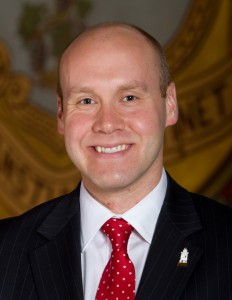
State Representative Devin Carney (R-23rd)

State Representative Devin Carney (R-23rd)

Does Governor Malloy have a problem with communities that succeed? This is a question we need to ask ourselves. Year after year, the schools of the 23rd District work diligently to provide quality education to our youth. Our teachers and administrators add to the success of our state by instilling the proper foundation to produce the industrial, business, and community leaders of tomorrow. Many of our best and the brightest students chose to continue their education in Connecticut – something of which the governor should be incredibly proud. Just last year the valedictorians from Region 18 (Lyme and Old Lyme) and Westbrook as well as the salutatorian from Old Saybrook chose UConn.

We have seen two budget proposals over the past two weeks that would do damage to the schools in the 23rd District. The Democrat-controlled Appropriations Committee released an incomplete budget that would cut Education Cost Sharing (“ECS”) funding to the towns in our district by 33 – 56%. This was bad enough. But, under the governor’s updated proposal, the four towns in the 23rd went from receiving a recommended amount of $1,831,496 in ECS funding to $0 for FY 2017 (July 1, 2016 – June 30, 2017). A total of 28 towns were zeroed-out, while many cities, like the governor’s hometown of Stamford, were held harmless. Talk about a shared sacrifice.

These proposed cuts – made at a time when most local Boards of Finance are crafting their own fiscal year budgets – are unfair. The clear lack of respect and care on the governor’s part is alarming. All four towns in the 23rd District will now have funding gaps and may require local property tax increases to offset them. This would add an even greater burden to Connecticut’s taxpayers and Connecticut simply cannot afford to lose additional wealth at this time. However, that’s where these indirect tax hikes would be directed – all 28 communities being zeroed-out are considered ‘wealthy’.

Although these cuts are debilitating to small towns like ours – which already receive far less back from the state than we put in – we must keep in mind that this is only a proposal.

I remain committed to finding a solution with other members of the legislature to address this inequitable cut to our towns and to solving our $930 million deficit. The state wants people to move to Connecticut and one of our best selling points is our top-tier education. While we are faced with many serious and pressing economic issues, predominantly the ongoing budget crisis, great public education is one area on which we can pride ourselves.

I have written a letter to the governor urging him not to turn his back on the children and the taxpayers of the 23rd District and to request that he amend his updated budget and eliminate these cuts. The taxpayers of Lyme, Old Lyme, Old Saybrook, and Westbrook provide a great deal to this state and the deficits would be much, much higher without us. If either the legislature’s or the governor’s cuts are enacted, then it would be only fair that some of the approximately 380 unfunded state educational mandates be eliminated.

Instead of education, the governor and the legislature must look to balance the budget through real structural changes in the way state government is run. Changes could include pension and benefit reform, re-negotiating of union contracts, a moratorium on unnecessary government projects, serious spending and bonding caps, and tighter controls on overtime. When I last checked, many don’t live in Connecticut for bloated government overtime, but they do for our great schools. In fact, it may just be the only thing keeping them here.

To read my letter to Governor Malloy: click here

To see how Connecticut towns fare under the Appropriations budget: click here

To see how Connecticut towns fare under the governor’s budget: click here

To read the governor’s budget proposal: click here

To see the approximately 380 unfunded educational mandates: click here
Lyme DTC Announces New Officer Slate; Mails Newsletter with New Look, Mission to all Residents

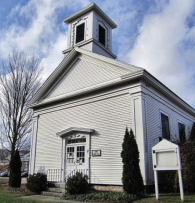
Lyme Town Hall

Lyme Town Hall

The Lyme Democratic Town Committee (DTC) held an election Thursday, March 24, and elected the following officers:  Steven Mattson was re-elected chair, Sue Hessel was elected vice chair, Jarrod Leonardo was re-elected treasurer and Mary Ann Kistner was re-elected secretary.  All serving a two year term.

The Lyme DTC also announced that the April issue of its official newsletter – “Lyme Matters” – was published recently and mailed free of charge to all local residents.  Lyme residents who did not receive the newsletter and would like to receive a copy are invited to send their mailing address to the Lyme DTC at LymeCtDems@gmail.com.

According to Lyme DTC Chairman Steven Mattson, the organization’s newsletter has a brand new look and a new public service mission.  In addition to promoting Democratic candidates for office, announcing special events, and providing election news and information, the publication now features stories that help citizens better understand Lyme’s town government.

The April issue contains the following articles among others:

  • “Government by Town Meeting” 
  • “The Benefits of Registering To Vote”
  • “Values and a Vineyard”
  • “Lyme Land Conservation Trust Featured in PBS Documentary Series”
  • “Become an Official Part of the Democratic Process”
  • “How Unaffiliated Voters Can Vote in the April 26 Primary”

Mattson said, “We are excited to share the newsletter with everyone in Lyme and encourage all residents to become more involved in our local government.”

The Lyme DTC will be featuring excerpts from its April newsletter on its Facebook page at www.facebook.com/LymeCTDems.  The Twitter account for the Lyme DTC is @LymeCtDems.

Senators Fight to Preserve Crucial Hospital Services

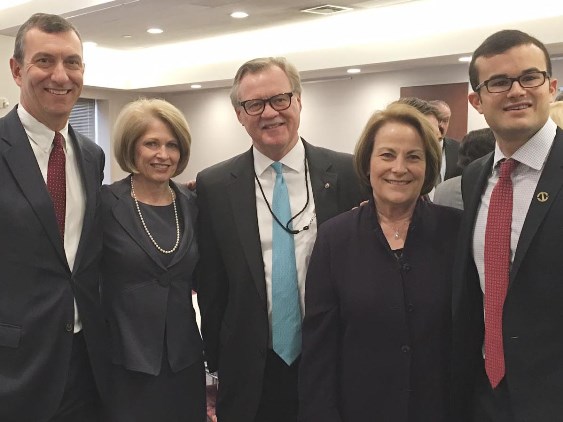
(L-R): Yale-New Haven Health System Senior Vice President of External Affairs Vin Petrini, Yale-New Haven Health System CEO Marna Borgstrom, Sen. Paul Formica, Yale-New Haven Health System Executive Vice President and Chief Strategy Officer Gayle Capozzalo, and Sen. Art Linares.

(L-R): Yale-New Haven Health System Senior Vice President of External Affairs Vin Petrini, Yale-New Haven Health System CEO Marna Borgstrom, Sen. Paul Formica, Yale-New Haven Health System Executive Vice President and Chief Strategy Officer Gayle Capozzalo, and Sen. Art Linares.

Sen. Paul Formica and Sen. Art Linares met with area hospital officials at the Legislative Office Building on March 23 to discuss ways to protect vital health care services for vulnerable populations like the disabled, children and seniors.

To protect those most in need, Formica and Linares, along with Senate and House Republicans, are proposing a plan to restore the governor’s funding cuts to Connecticut hospitals. The 2016 session of the Connecticut General Assembly ends in May.

Sen. Formica (R-20th, www.senatorformica.com) represents Bozrah, East Lyme, a portion of Montville, New London, Old Lyme, a portion of Old Saybrook, Salem and Waterford.

Sen. Linares (R-33rd, www.senatorlinares.com) represents Chester, Clinton, Colchester, Deep River, East Haddam, East Hampton, Essex, Haddam, Lyme, Old Saybrook, Portland and Westbrook.

Courtney, Blumenthal, Murphy Call on FRA to Work With CT Stakeholders on Rail Upgrades

Request follows concerns from local town leaders and constituents that rail upgrades could negatively impact their communities

US Senator Joe Courtney

US Senator Joe Courtney

Last Friday, Feb. 5, U.S. Representative Joe Courtney (CT-2), U.S. Senator Richard Blumenthal (D-Conn.), and U.S. Senator Chris Murphy (D-Conn.) called on the Federal Railroad Administration (FRA) to host listening sessions along the Connecticut shoreline to hear local concerns about how early proposals for rail upgrades may impact their communities.

In a letter to FRA Administrator Feinberg, Courtney, Blumenthal, and Murphy raise specific concerns they have heard from constituents regarding the proposed rail line realignment outlined in Alternative 1 of the NEC FUTURE Plan. This proposed new segment would shift the main rail line northward ahead of the Old Saybrook Station and run through several Connecticut and Rhode Island shoreline communities before reconnecting to the existing segment in Kenyon, RI. 

“While we understand that the FRA is still in the project planning stages of NEC FUTURE and many more steps remain ahead in this process, we believe consistent community involvement will serve as the most important tool for finding agreeable alternatives, increasing local buy-in, and instilling a sense of trust among affected residents,” wrote Courtney, Blumenthal, and Murphy. “As the planning process moves forward, we request that the FRA host listening sessions along the Connecticut shoreline where the proposed Alternative 1 new track segment will be constructed in order to hear the views and concerns of the communities in this area.”

The proposals for rail upgrades, including the Alternative 1 realignment, were contained in the Tier 1 Draft Environmental Impact Statement (EIS), which is currently in a public comment period. This initial report will be followed by a Tier 1 Final Environmental Impact Statement (Final EIS) and Record of Decision (ROD) which will be completed in 2016. The next stage of the process would be the Service Development Plan (SDP) in 2017 which will make the business case for why projects proposed in the EIS were selected for implementation. 

The full text of the letter is available online and below:

February 5, 2016

Administrator Sarah Feinberg
Federal Railroad Administration
1200 New Jersey Avenue, S.E.
Washington, D.C. 20590

RE: NEC FUTURE Tier 1 Draft EIS

Dear Administrator Feinberg:

As the Federal Railroad Administration continues the NEC FUTURE planning process, we write to underscore the importance of creating and maintaining a sense of open communication with communities who may be affected by new track segments constructed under the proposed Action Alternatives. Furthermore, we believe that it would be prudent for the FRA to consider hosting additional meetings and listening sessions in southeastern Connecticut. 

As representatives for the southeastern shore of Connecticut, we have seen firsthand the major need for improvement along the rail line. In fact, the vast majority of our constituents support upgrading our rail infrastructure to benefit our local economy and boost tourism. Unfortunately, these same constituents believe that the FRA has not done its due diligence in providing proper community outreach in towns that will be the most impacted by new track construction.

Specifically, we write to raise concerns we have heard from our constituents regarding the proposed new segment construction outlined in Alternative 1. As you know, the new segment in Alternative 1 will shift northward east of the Old Saybrook Station and run through several Connecticut and Rhode Island shoreline communities before reconnecting to the existing segment in Kenyon, RI. Connecticut’s shoreline boasts a rich, vibrant history and is home to quiet villages and historic port cities. Importantly, according to the assessment of cultural resources and historic properties in the draft Environmental Impact Statement (EIS), Connecticut is home to the greatest amount of properties on the National Register of Historic Places that may be affected by new rail construction.

To that end, it is understandable that the NEC FUTURE Draft EIS has raised alarm among many Connecticut residents. Many in the region were surprised to learn about the potential placement of a new rail line in the towns. For example, as currently proposed Alternative 1 would run straight through the center of Old Lyme, impacting the cultural, historical and geographic integrity of the town – which is concerning to town leaders and community stakeholders.  We recognize that FRA held listening sessions and public meetings in several Connecticut cities, and we understand that the proposals in the EIS are just the beginning of any analysis—a more thorough vetting with local stakeholders consistent with federal law would happen before any project moves forward. Still, it appears that little engagement was done in these communities to assess even the preliminary views and concerns of those potentially impacted by the proposed new segment in Alternative 1 prior to inclusion in the report.  

While we understand that the FRA is still in the project planning stages of NEC FUTURE and many more steps remain ahead in this process, we believe consistent community involvement will serve as the most important tool for finding agreeable alternatives, increasing local buy-in, and instilling a sense of trust among affected residents. As the planning process moves forward, we request that the FRA host listening sessions along the Connecticut shoreline where the proposed Alternative 1 new track segment will be constructed in order to hear the views and concerns of the communities in this area.

Thank you for your consideration of our request, and we look forward to your response. 

Sincerely, 

Richard Blumenthal
Christopher S. Murphy
Joe Courtney

Carney, Linares to Hold Office Hours in Westbrook, Feb. 9

Thumbnail for 215904

State Representative Devin Carney (R-23rd)

State Rep. Devin Carney (R-23rd) will hold pre-session office hours in Westbrook at the Westbrook Town Hall on Feb. 9, starting at 6:30 p.m. State Senator Art Linares (R-33rd) and State Representative Jesse MacLachlan (R-35th) will join Carney at the Westbrook event.

State Senator Art Linares

State Senator Art Linares (R-20th)

This session will provide constituents with an opportunity to ask questions or share their ideas and concerns about state government. Anyone with questions about the event can contact Carney’s office at 800-842-1423 or devin.carney@housegop.ct.gov.

Carney represents the 23rd General Assembly District that includes Lyme, Old Lyme, Old Saybrook and part of Westbrook.

Linares represents the 33rd District comprising Lyme along with Chester, Clinton, Colchester, Deep River, East Haddam, East Hampton, Essex, Haddam, Old Saybrook, Portland and Westbrook