Republican Duigou Announces Candidacy for 33rd State Senate District, Includes Lyme

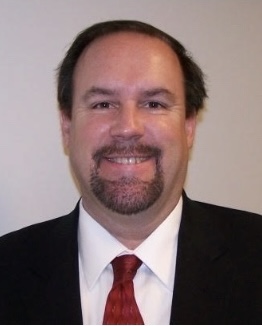
Jeff Duigou (R) is a candidate for Connecticut’s 33rd Senate District

COLCHESTER/LYME — Citing the need for “fresh, family-focused ideas” in the Connecticut legislature, Colchester’s Jeff Duigou announced yesterday that he is running to be the next Connecticut Senator from the 33rd District.

The 33rd District includes Lyme along with Chester, Clinton, Colchester, Deep River, East Haddam, East Hampton, Essex, Haddam, Portland, Westbrook and part of Old Saybrook. 

“From groceries to gasoline, Connecticut remains unaffordable for working and middle class families as well as for seniors and small business owners,” Duigou said.“

He continued, “As State Senator, I will work with Democrats and Republicans to lower those tax burdens. I will also work to pass laws which make our communities safer. We need to better support our law enforcement officials and first responders. As state senator, I will put you, the taxpayers, first. Your voices will be listened to.”

Noting, “I will bring a law-and-order, business-friendly, pro-environment perspective to the State Capitol, adding, “As a conservationist, I believe we should be good stewards of the abundant natural resources we enjoy here in Connecticut,”

Duigou stated, “I will be a voice for sustainability, preservation. and public health. At the same time, I understand that innovation, research, trades, and small businesses are the backbone of our economy.”

A Republican, Duigou worked for more than 30 years in the environmental engineering field and retired from his Vice President of Environmental Sciences position at Eagle Environmental, Inc.

For 18 years, he served as a Licensed Environmental Professional, helping clients with compliance with federal and state environmental regulations and for 15 years, Duigou worked with multiple school districts to help provide safety services to administrators, teachers and maintenance staff.

Duigou concluded,. “From affordability to public safety to wasteful government spending, there are so many areas where we can improve our state’s policies.”

A graduate of the University of Connecticut, Duigou and his wife Cari have lived in Colchester for the past 38 years and have raised their family there.

Editor’s Note: This article is based on a press release issued Jan. 17, by Jeff Duigou.

Op-Ed: The Democratic Promise of Small Towns vs. the ‘Escalating Erosion of Democracy in Lyme’

Two years ago, my son—a student at Lyme-Old Lyme Schools—attended a regional wrestling tournament, where he witnessed a remarkable act of ethical behavior. One of the matches featured two giants from rival high schools. Not long into their spirited contest, those colossal opponents collided in an unplanned way. They sent each other to the ground in pain. The breathless silence of alarm seized the crowd. Time ceased, uncannily, before the coaches and medical personnel could race to attend the injuries of the fallen. But in those frightening seconds of unease when so many bad decisions could have been made, the two young competitors mustered the mettle, composure, and respect for each other to share a fist bump in solidarity.

I ask that you keep that image in mind as you continue reading on.

In a series of letters to the editor of CT Examiner, I have made known my abiding concern about the escalating erosion of democracy in Lyme and the lack of viable and honest elections. Rather than reiterate the case here, I would request that readers examine those letters for a detailed explanation of the issue. The summary is that in five election cycles since 2015 and including the 2023 election, there has been only one competitive election in town for the Select Board, held in 2017. In the four other elections, the Select Board members chose their successors through mid-term retirements, self-promotions, and appointments of people who were not formally elected to the Board. The Lyme DTC and RTC have actively supported this anti-democratic process through cross-endorsements or by not running candidates and accordingly arranging uncontested races.

Predictably, this undemocratic practice has now spread to other boards. In the 2023 election, the Lyme DTC and RTC predetermined all board memberships, so that voters had no choice on the ballot. The only contest in town was for the Region 18 Board of Education.

Despite my numerous attempts to engage them in writing, the members of the Select Board have avoided any debate or discussion about this problem in public forums. The closest they came was an interview in this newspaper conducted by the daughter of the DTC Nominating Committee chair, and two interviews in The Day in October and November of last year. In the latter, John Kiker (the current Second Selectman and DTC chair) continued a talking point that David Lahm (the current First Selectman and now former RTC chair) and Steve Mattson (the former First Selectman and former DTC chair) introduced in LymeLine that such lack of elections is the “reality of life in a small town”—that is, presumably, a place in which few people run for office or volunteer for public service.

I will reserve commentary about the sheer falsity of that claim with an offer to provide copious data about political activism in small towns. Here, I would only note that honest elections require us to be honest about elections. And I would add that people generally do not become involved in civic affairs if they are made to toe a line that benefits only a handful of residents, including and especially the expectation for “polite cooperation” previously demanded by the DTC and RTC.

I say “previously,” because there is finally a sign of hope. On January 9th, the Lyme RTC held a caucus, the result of which was a revitalization of a rapidly declining membership, including with several new members. I want to express tremendous gratitude to all of them who stepped up at this precarious time. And I do so as a lifelong registered Democrat, a far-Left progressive, and a democratic socialist.

I am hopeful that a rejuvenated RTC may signal the return of competitive elections in Lyme—the very lifeblood of a healthy democracy. I am also hopeful because as a proponent of pluralistic democratic society, I believe strongly in the need for an allegiance with each other that encourages and protects differences of opinion and dissent. A robust democracy predicated on oppositional political perspectives not only assists each side reconcile with their blind spots, but it guarantees accountability in elected officials through checks and balances, a need for compromise, and opportunities to correct failures (or abuses) at the next election. In other words, legitimate democratic contests are the antidote both to a “polite cooperation” or an agreement that only benefits the few and to political combat and its rapacious reliance upon vilification, demonization, and misinformation.

The problem is that in our current political climate (and due to too many factors to unpack here), it is nearly impossible to achieve such democratic culture at the national and state levels, or even within larger municipalities. But such principled engagement—in which we regard politically disagreeing others as opponents but not enemies, rivals but not villains, and all as fellow human beings—is precisely the promise of small towns. It pains me to see Lyme fail the virtue of respectful competition.

I know there will be readers of this newspaper who will respond that Lyme is well governed. That is not the issue here. There are many places in the world that are “well governed” without a hint of democratic practices, the most important of which are viable and honest elections.

That said, let me also offer something I have not previously afforded: praise for First Selectman David Lahm, who finally stepped down from RTC chair. Whether a formal conflict of interest or not, it is highly questionable to have the governing representatives of the town—that is, the Select Board—also be chairs of the town committees, whose important job is to recruit partisan candidates to run for office. I hope that Mr. Kiker follows Mr. Lahm’s example and recognizes the wisdom of keeping those two positions separate, even as it would entail his yielding power to capable others.

Although I am arguing for regular contests to enjoy the genuine benefits of disagreement, I also know that as we cascade into the 2024 presidential election, we will all hear the siren song to side solely with our side—and to see all political opponents as the threat who must be conquered for there to be peace. I want to call attention to that profoundly unjust treatment of competitors, which we unfortunately caught a glimpse of in Lyme’s sole election last year.

To be clear, I am not trying to rehash 2023. I am expressing my concern, two years before the next municipal cycle, that if routine elections return to Lyme they not deteriorate into untoward negative campaigning and disinformation. Again, the democratic promise of small towns lies in their “thick networks”—the notion that the very person about whom you write a letter to the editor will be in line at the check-out in front of you the next day. Or behind you at the school pick-up, waiting for their kids whom they love with equal fervor as you do yours. Or rushing out of their homes to help you when the car accident erupts on their street. So let’s call a spade a spade: We failed in Lyme to uphold the obligation of community in the last election. But we can get it right in the future. We can model the democracy in town that we want to see thrive everywhere.

To do so requires a simple responsibility from the single most important civic role a person can undertake, that of citizen. As citizens, we must hold our own parties accountable to the democratic values we profess to uphold. And we must insist upon viable and honest elections, especially so in places where we can readily secure their fruition and success, namely in a small town.

That brings me back to those two teenagers—the future when we are all gone. Each of them entered the ring desirous of a victory for themselves and for their team. Each opposed the other and competed with a full commitment to win. But each also played within the rules and norms of a well-established contest, without deception or deceit. And when they both fell down together, each stopped before the collision went too far. And then each summoned the strength to show fidelity to a greater bond.  

My son will never know their names. But in what I hope will be a very long and happy life, he will also never forget the good he saw arise that day.

Will he and all our children be able to say the same of the democracy we will leave to them in Lyme?

Editor’s Note: This is the opinion of Stephen Olbrys Gencarella of Lyme, Conn.

State Sen. Needleman Announces Run for Fourth Term Representing 33rd District, Includes Lyme

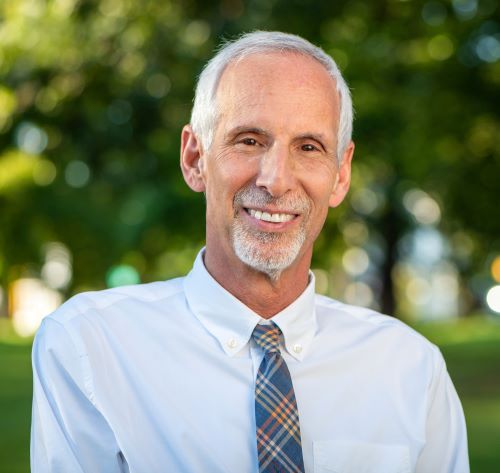
State Senator Norm Needleman

HARTFORD/ESSEX/LYME—Yesterday, State Senator Norm Needleman (D-Essex) announced he is running for a fourth term in the State Senate. First elected in 2018, Sen. Needleman represents the 33rd Senate District, which includes the town of Lyme along with Chester, Clinton, Colchester, Deep River, East Haddam, East Hampton, Essex, Haddam, Old Saybrook, Portland and Westbrook.

“While I am proud of what my colleagues and I have accomplished in Hartford since I was elected to the State Senate six years ago, there is still work left to be done,” said Sen. Needleman. “I want to continue to build on my reputation as someone who builds consensus and forges common-sense solutions to Connecticut’s challenges that have received bipartisan support.”

He continued, “From my leadership positions on the Energy and Technology and Planning Development committees to my membership on the Commerce, Finance, Revenue and Transportation committees.”

Needleman concluded, “I’m excited to continue working as a pragmatic problem solver and support my constituents.”

Since he was sworn in as a State Senator, Sen. Needleman has served as Senate Chair of the Energy & Technology Committee. In 2020, he authored and led passage of the “Take Back Our Grid Act,” and in 2023, he took those protections further with Senate Bill 7. 

Sen. Needleman has also achieved victories in energy and technology legislation.

Additionally, In 2023, Sen. Needleman championed the passage of a state budget that included the largest income tax reduction ever enacted in state history, an increase in a tax credit targeting lowest-income workers, and expanded exemptions on certain certain pension and annuity earnings benefitting seniors.

In addition to his work as State Senator, Sen. Needleman also serves as First Selectman of Essex, currently in his seventh term in the role, with a focus on effective municipal management.

He is also the founder and CEO of Tower Laboratories in Essex, a pharmaceutical manufacturing company he built from the ground up to be a leader in its field.

Editor’s Note: This article is based on a press release issued by State Sen. Needleman’s office.

Lt. Gov. Bysiewicz Participates in Swearing-In Ceremony for Newly-Elected Old Lyme Officials

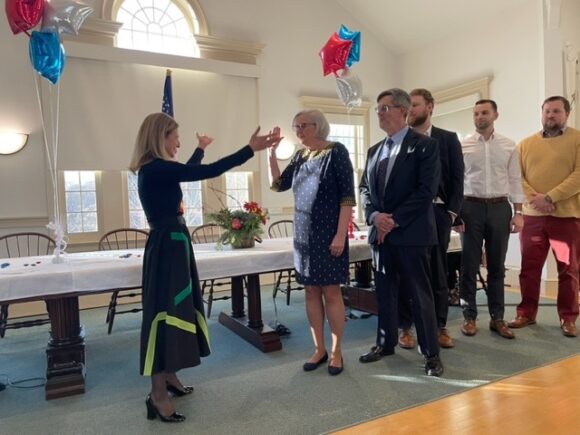
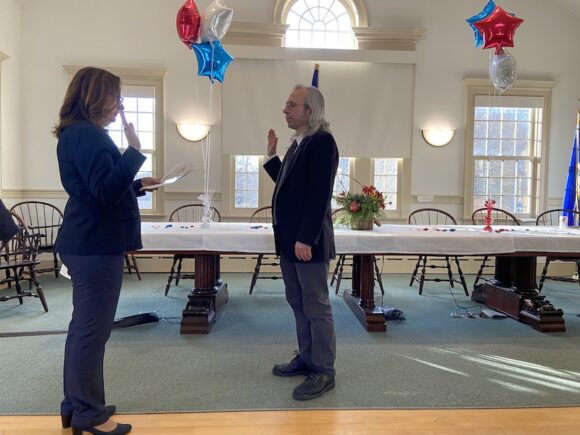
Connecticut Lieutenant Governor Susan Bysiewicz (left) celebrates Old Lyme First Selectwoman-elect Martha Shoemaker after administering the Oath of Office to her in a ceremony held Sunday in Old Lyme Town Hall. All photos submitted.

OLD LYME — More than 70 people showed up Sunday (Nov. 19) to witness the swearing-in of Old Lyme’s newly-elected officials in the Old Lyme Memorial Town Hall Meeting Room. It was a warm, sunny afternoon and the meeting room was appropriately decorated for the event.

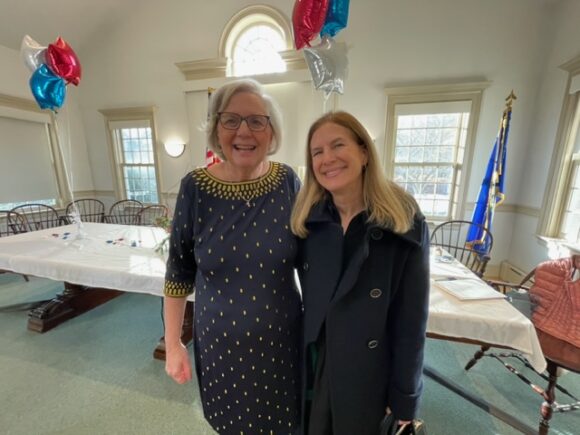
Old Lyme First Selectwoman-elect Martha Shoemaker (left) shares a smile with Connecticut Lieutenant Governor Susan Bysiewicz after Bysiewicz conducted Shoemaker’s swearing-in ceremony.

Old Lyme Town Clerk Vicki Urbowicz normally reads the Oath to all the candidates-elect, but on this occasion, Connecticut’s Lt. Governor Susan Bysiewicz was in attendance to swear in Old Lyme First Selectwoman-elect Martha Shoemaker (D). Standing alongside Shoemaker as she took the solemn oath to the Constitution were her husband Scott and sons David, Tim, and Peter.

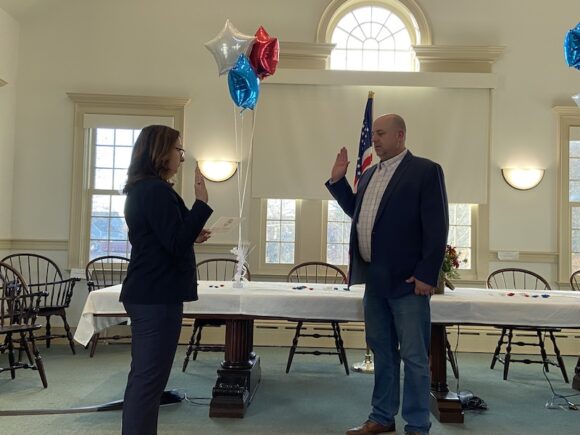
Old Lyme Town Clerk Vicki Urbowicz administers the Oath of Office to Old Lyme Selectman-elect Jim Lampos.

Urbowicz read the oath of office for the remainder of the incoming officials, asking each one to raise their right hand and swear to uphold their position to the best of their ability.

Connecticut Lieutenant Governor Susan Bysiewicz gave opening remarks at the ceremony.

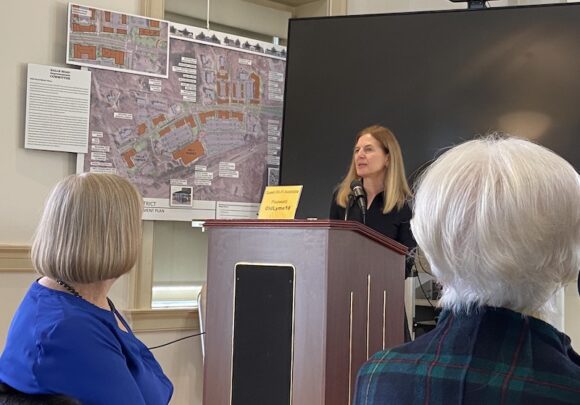
In opening remarks before she read the oath, Bysiewicz spoke about the brave service of the US Military, who made the right to choose our elected officials possible and asked all veterans present to stand up and be recognized. 

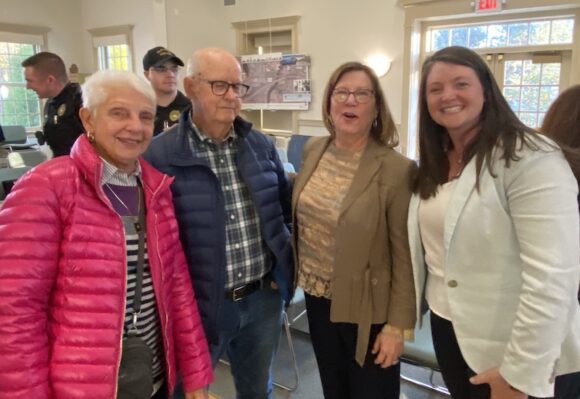
US Military Veteran Doug Wilkinson celebrates the swearing in of all the incoming officials with his wife Lucy (left), Old Lyme Democratic Town Committee Chair Mary Jo Nosal (second from right), and Board of Finance member-elect Anna Reiter (right).

Additionally, she honored the families of the elected officials for their support of their civic-minded family member. Bysiewicz concluded that it is no longer about party for these officials, but rather it is about committing to work for the future of Old Lyme. 

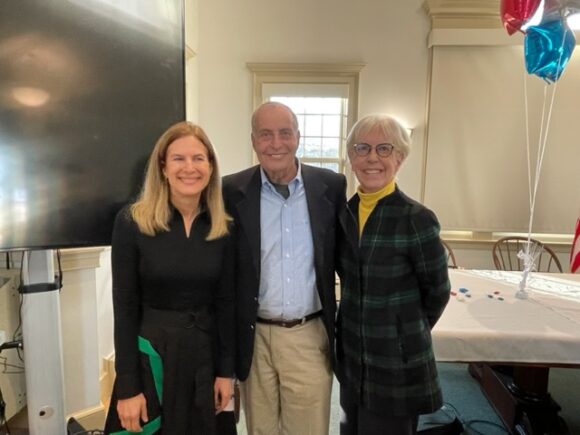
Planning Commissioner-elect Howard Margules stands with his wife Mary Jo (right) and Lieutenant Governor Susan Bysiewicz after taking his Oath of Office.

Asked to comment on how she felt after attending the event, Mary Jo Nosal, Chair of the Old Lyme Democratic Town Committee, said, “ I was moved by the beautiful ceremony and by the Lt. Governor’s comments today. Knowing the newly-sworn in officials as I do, I know  that each of them appreciates the sacrifices of our U.S. military and veterans made for the freedoms we Americans hold dear,  and that each of our new officials will keep that in mind as they work hard for our town.“

Old Lyme Town Clerk Urbowicz swears in Matt Ward (Unaffiliated but endorsed by Old Lyme Republican Town Committee (RTC)) as Old Lyme Town Treasurer.

Also sworn in on Sunday were Old Lyme Selectman-elect Jim Lampos (D), Treasurer-elect Matthew Ward (U but R-endorsed), Regional Board of Education members-elect Alexander Lowry (D), W. Scott Brown (D), and Susan Fogliano (D).

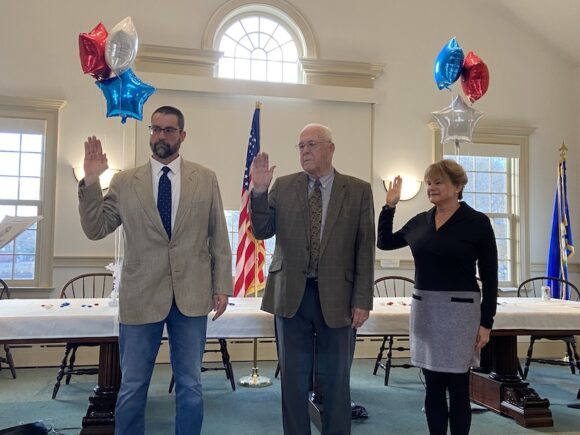
Region 18 Board of Education members-elect (from left to right) Alexander Lowry, Dr. W. Scott Brown and Susan P. Fogliano are sworn into office.

Urbowicz noted that Selectman-elect Judith Read (R), who was not present at the ceremony, had been sworn in earlier.

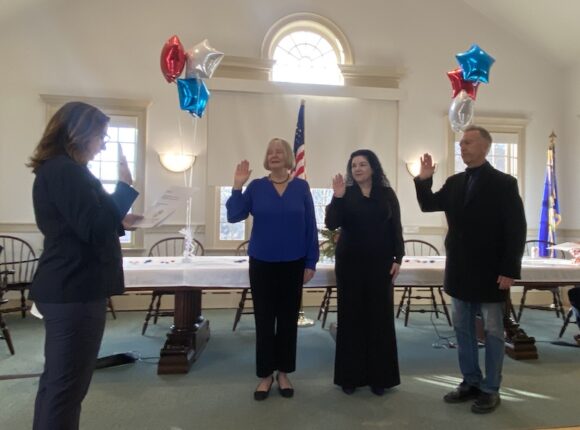
Zoning Board of Appeals Alternates-elect Democrats Kathleen Tracy and Michaelle Pearson, and Brian Cole (Unaffiliated but endorsed by Old Lyme RTC) take the Oath of Office for their positions.

Republican-endorsed candidate-elect Brian Cole was also sworn in on Sunday joining Ward as the R-endorsed candidates present at the ceremony.

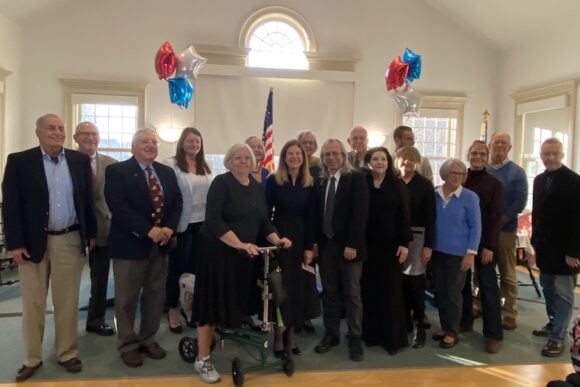
All the officials-elect, who had been sworn in during the afternoon, gathered around Connecticut Lieutenant Governor Susan Bysiewicz (front row, center, to left of Selectman Jim Lampos) for a celebratory photo at the end of the ceremony.

Editor’s Note: This article was prepared with information received from a variety of people, who attended the ceremony.

No Change to Any Elected Position in Old Lyme After Recount, Lowry (D) Wins BOE Seat by One Vote

OLD LYME — A recount of votes cast in Tuesday’s election was held Monday in the Meeting Room at Old Lyme Town Hall for the four offices shown below. The recount was held for these offices because, in each case, the vote totals announced on Election Day were less than 20 votes apart.

After the ballots had been run through the tabulator again, it was announced that the outcome of all four results remains unchanged.

The candidate now elected for each position is therefore as follows:

  • Selectman:
    Judith Read (R)
  • Board of Assessment Appeals:
    Peter Hunt (D)
  • Zoning Board of Appeals Alternate:
    Kathleen Tracy (D)
  • Region 18 Board of Education:
    Alexander Lowry (D)

The final unofficial counts were:

  • Selectman:
    Jim Lampos (D) 1781
    John Mesham (R) 1697
    Judith Read (R) 1715
  • Board of Assessment Appeals:
    Peter Hunt (D) 1738
    David Evers (R) 1721
  • Zoning Board of Appeals Alternate:
    Kathleen Tracy (D) 1760
    Michaelle Pearson (D) 1813
    Brian Cole (U, endorsed R) 1804
    Peter Lucchese 1567
    Roderick Clingman (R) 175
  • Region 18 Board of Education:
    W. Scott Brown (D) 1764
    Susan Fogliano (D) 1859
    Alexander Lowry (D) 1718
    Michael Presti (R) 1606
    Suzanne Thompson (R) 1717
    Steven Wilson (R) 1514