
Gardening Tips from ‘The English Lady’ for November, When There is ‘A Sort of Delightful Menace in the Air”

Enjoy the final colors of fall this month. Photo by Timothy Eberly on Unsplash.
Maureen Haseley-Jones is “The English Lady.”

We have been fortunate here in New England to have the pleasure of a lovely summer not too hot with adequate rain. Followed by a warm fall with more than enough rain into November to encourage healthy root growth for a vibrant spring next year.  I am keeping my fingers crossed that this weather foretells a mild winter – we can only hope, but then again, this is New England. 

With the warm fall we are enjoying, the soil is easy for digging, which to me means planting spring bulbs. So let us discuss daffodils …

Before handling these bulbs, I suggest wearing gloves as they can cause an irritation called a ‘lily rash’. Wearing gloves (I use the farmer’s soft leather gloves, which can be washed) plant the bulb at a depth of at least three times the size of the bulb with the pointed end up. Dig a trench a foot deep and scatter the bulbs in the trench at least nine inches down in the soil below the frost line. The bulbs can touch one another without a problem and by planting this way you will produce a dramatic show in spring.    

Tulip bulbs should be planted 12 inches down, getting them out of reach of rodents; tulips are the caviar of the rodent family. A suggestion to avoid this problem, before planting soak them in an organic deer repellent, and allow them to dry in the sun. This will deter other critters from eating them. Another protection is to line the planting hole with gravel.

In the spring when the bulb foliage is about four inches tall, apply  composted manure on the soil around the emerging bulb foliage. 

 I hear you saying, okay Maureen, I’m ready to plant the bulbs but what else is there to do in the garden”? Folks, there are many tasks to get you out in the garden this fall. 

The most important task is to apply a few inches of composted manure on all planted borders with a light layer of natural brown mulch on top. By doing this, you will continue to build the humus component in the soil.

Before the snow flies, any construction projects that you have in mind can be accomplished. This includes stonework and carpentry, building decks, and mending fences and building dry laid stonewalls, walkways, patios and digging ponds. This is definitely labor-intensive work, but at this time of year you won’t be uncomfortably hot. Make sure to stretch, take breaks and drink lots of water.  

When the weather is inclement, work under a construction tent when building walls, decks or digging ponds. Or build trellises, pergolas, arbors and fences in a shed or garage. The added advantage to the hard labor is that it keeps one in shape, especially with those fattening holiday meals looming on the horizon.  

If you are not able or do not want to do the work yourself, now is the time to call in a professional to do the work so that the project is completed before you plant in spring.  Each year, harsh winter wind damages much of the foliage of broadleaf evergreens. Rhododendrons, mountain laurel and azaleas are particularly vulnerable as cold wind drains them of much-needed moisture. Broadleaf evergreens with their shallow root system need a good store of water going into the winter. We have had reasonable rain but need more this fall; the rain helps the broadleaves to survive, as they will continue to lose water vapor through the cold months.  

Many of you have said that you notice the harsh winds of the past two winters caused the foliage on many rhododendrons to become brown and brittle. This happens when the soil freezes as plant roots cannot take up water to make up for moisture lost from water vapor. Dehydration is the result causing brown or wind burnt foliage.  

I don’t go overboard with wrapping large evergreens with burlap in winter. My own White Pines, Colorado blue spruce and Fraser firs are at least 50-years-old and well-established so no worries about damage. However, there are exceptions regardng plants that require a burlap wrap. Among those are evergreens planted in September, especially the Dwarf Alberta Spruce, which is extremely prone to wind burn. The Albertas should be covered with one layer of burlap, loosely wrapped.  

If the evergreens are close to a road and exposed to salt spray from snow trucks and ploughs, burlap these plants three feet up from the base may help to protect them. The best idea is not to plant them close to the road or plant salt-tolerant species like Juniper instead.

At the base of all evergreens. spread a three-inch layer of leaves or fine bark mulch, composted manure and peat around the base of the trunk. Following a heavy snowstorm when evergreen branches are weighed down with snow, gently brush the snow off with a broom.   

The leaves of the deciduous trees are falling quite quickly due to the recent wind and rain. Either you or a nimble person can climb a ladder and remove leaves from gutters and drainpipes. Water from clogged gutters and pipes falling onto foundation plantings cause damage to the plants below. But please be careful as there can be nasty injuries on falls from ladders. 

Peonies and Perennials:

After the first hard frost, cut Peonies down to within six inches from the ground, adding just a small amount of composted manure around the base.

I leave up my spent perennials until next April; I enjoy their soft grays, browns and yellows that enhance the muted hues of a winter landscape. Also our feathered friends appreciate the seed heads from the spent perennials. 

Any leftover vegetables in the vegetable garden should have been turned into the soil.  Add one part compost to three parts manure to the vegetable garden and plant a cover crop of buckwheat, alfalfa or white clover to minimize erosion. In spring, turn the cover crop into the soil, which has weathered into green manure.     

Take any of your power tools that require repair or sharpening into the shop at this time.  The repair shops are less busy now than in the spring.  Clean your tools off in a bucket of sand, the roughness of the sand will help clean off soil and debris, then oil and grease wooden handles to preserve them and prevent splinters. Hang them neatly on hooks in the garage or shed and not just “higgledy piggledy” in a pile! 

If you have an inground irrigation system, blow out the lines or have this done professionally. Also coil your hoses and store under cover and shut off outdoor faucets.

Put a bag of potting soil in the corner of the garage or basement, it will come in handy for repotting houseplants, bulb forcing or starting seeds in the spring.  A supply of peat, composted manure, sand and vermiculite is also useful.  Also put a bag of topsoil and some mulch under cover so that you can cover the shallow roots of evergreens if they become uncovered due to frost heave.  

Houseplants:

The best time to transplant houseplants is during the growing season beginning in April. However, if you need to repot some houseplants that have outgrown their containers, transplant to a clean pot only two inches larger than the original as plants like to be compact; add new potting soil and water.  

Container geraniums and begonias that you brought indoors should be placed in a sunny window to be enjoyed. In February, cut the plants down to about six inches from the soil surface and water them. 

Water houseplants, early in the day; not in the evening, as plants do not like to have wet feet at night.  Water them only when the top four inches of soil is dry to the touch. Once a month stand them in the bathtub or sink and spray the leaves with lukewarm water to remove any dust, dirt, white fly or aphids.  Do not get water on the leaves of African violets.  

Paper white Narcissus bulbs are great for forcing. I force these bulbs in pebbles; you may use potting soil if you wish; keep the pebbles or soil moist. Put the Narcissus bulbs in tall containers. I use tall clear glass vases, which help support the stems. I anchor the bulbs with pebbles, and keep the pebbles moist, then place the containers in a cool, dark place. As soon as you see root growth and the beginnings of leaf growth, bring the bowls into medium light, always keep the pebbles or soil moist at all times. 

I force about a dozen narcissus at a time and the remainder I store in the vegetable keeper in the refrigerator in a brown paper bag away from food. I bring them out and pot them up a few at a time so that I have a succession of fragrant bloom throughout the winter.  

Grow pots of parsley, dill, basil and other herbs in a sunny window, which offers delicious fresh herbs for cooking and salads through winter. 

Roses:

The last of the summer roses need special attention in November. Photo by Bailey Chenevey on Unsplash.

Remove any dead or diseased leaves from Roses and pick up any Rose debris off the ground.  If you notice disease like black spot in the debris, do not put it in your compost pile; throw it away in the garbage.  Mound soil, composted manure and mulch around the base of the Roses. The mounding helps maintain a constant temperature around the Rose. 

If the Roses are grown in an exposed area, which makes them vulnerable to drying winter winds, cover the plant with one loose layer of burlap or use a rose cone.  Make sure all climber Roses or other Vines are securely fastened to the fence or trellis.  

Set up your bird feeders where you can enjoy the birds, placed near to some low shrubs or small trees sheltered from the wind; birds like to flit from these protected spots to the feeder. Offer a varied menu for different birds.  Birds enjoy a recipe I received from my stepmother in England; a lump of suet embedded with peanuts or try hollowed-out pinecones filled with peanut butter.  

To prevent squirrels from raiding the feeders, set up a baffle and sprinkle cayenne pepper in the birdseed and on the suet feeders; the heat does not bother the birds and squirrels will stay clear.  I am aware that hungry squirrels can jump vertically five feet; but don’t worry if you happen to be a squirrel lover; they always manage to get food from some feeders.

This is the time of year when we gardeners can pause and with the previous season still fresh in your mind, say, “this worked”, and “that I will never try again”.  It is worthwhile to take a leisurely stroll around the garden before the snow falls. Look at the garden, squarely and soberly, making notes as you walk to plan for next season. Plan as you stroll, writing down your impressions, making sketches and lists and save them for your winter armchair gardening. 

Enjoy the Thanksgiving holiday and I’ll see you in your garden next month.

 Feel free to e-mail me with gardening questions at MaureenHaseleyJones@gmail.com

About the author: Maureen Haseley-Jones is a member of a family of renowned horticultural artisans, whose landscaping heritage dates back to the 17th century. She is one of the founders, together with her son Ian, of, The English Lady Landscape and Home Company. Maureen and Ian are landscape designers and garden experts, who believe that everyone deserves to live in an eco-conscious environment and enjoy the pleasure that it brings. Maureen learned her design skills from both her mother and grandmother, and honed her horticultural and construction skills while working in the family nursery and landscape business in the U.K. Her formal horticultural training was undertaken at the Royal Botanic Gardens at Kew in Surrey. 
Lt. Gov. Bysiewicz Participates in Swearing-In Ceremony for Newly-Elected Old Lyme Officials

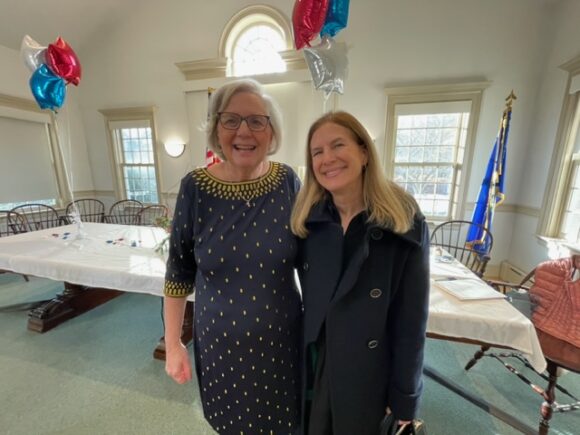
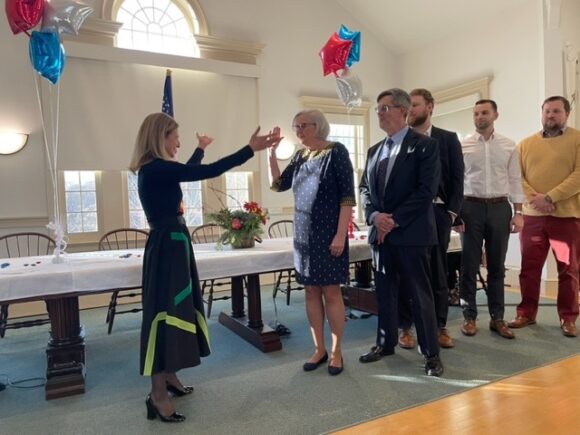
Connecticut Lieutenant Governor Susan Bysiewicz (left) celebrates Old Lyme First Selectwoman-elect Martha Shoemaker after administering the Oath of Office to her in a ceremony held Sunday in Old Lyme Town Hall. All photos submitted.

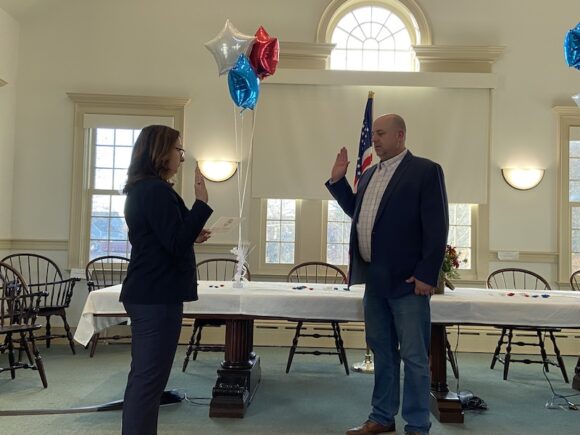
OLD LYME — More than 70 people showed up Sunday (Nov. 19) to witness the swearing-in of Old Lyme’s newly-elected officials in the Old Lyme Memorial Town Hall Meeting Room. It was a warm, sunny afternoon and the meeting room was appropriately decorated for the event.

Old Lyme First Selectwoman-elect Martha Shoemaker (left) shares a smile with Connecticut Lieutenant Governor Susan Bysiewicz after Bysiewicz conducted Shoemaker’s swearing-in ceremony.

Old Lyme Town Clerk Vicki Urbowicz normally reads the Oath to all the candidates-elect, but on this occasion, Connecticut’s Lt. Governor Susan Bysiewicz was in attendance to swear in Old Lyme First Selectwoman-elect Martha Shoemaker (D). Standing alongside Shoemaker as she took the solemn oath to the Constitution were her husband Scott and sons David, Tim, and Peter.

Old Lyme Town Clerk Vicki Urbowicz administers the Oath of Office to Old Lyme Selectman-elect Jim Lampos.

Urbowicz read the oath of office for the remainder of the incoming officials, asking each one to raise their right hand and swear to uphold their position to the best of their ability.

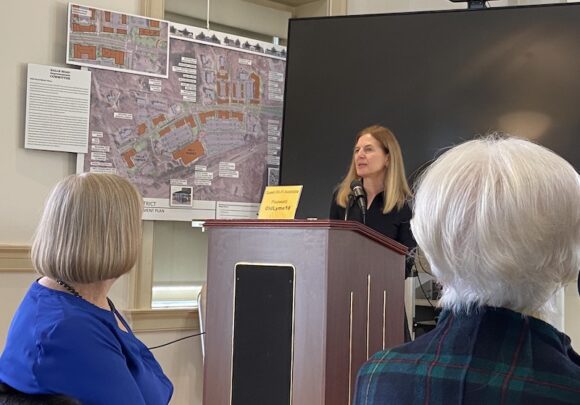
Connecticut Lieutenant Governor Susan Bysiewicz gave opening remarks at the ceremony.

In opening remarks before she read the oath, Bysiewicz spoke about the brave service of the US Military, who made the right to choose our elected officials possible and asked all veterans present to stand up and be recognized. 

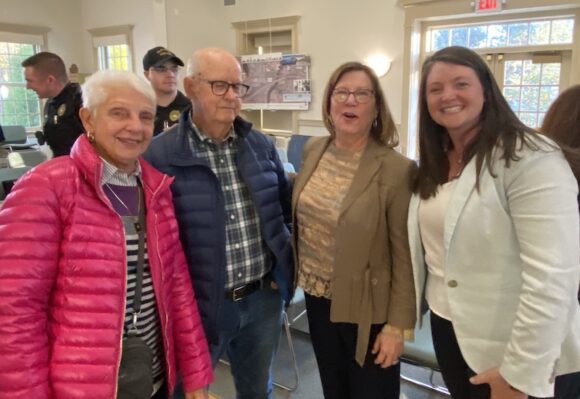
US Military Veteran Doug Wilkinson celebrates the swearing in of all the incoming officials with his wife Lucy (left), Old Lyme Democratic Town Committee Chair Mary Jo Nosal (second from right), and Board of Finance member-elect Anna Reiter (right).

Additionally, she honored the families of the elected officials for their support of their civic-minded family member. Bysiewicz concluded that it is no longer about party for these officials, but rather it is about committing to work for the future of Old Lyme. 

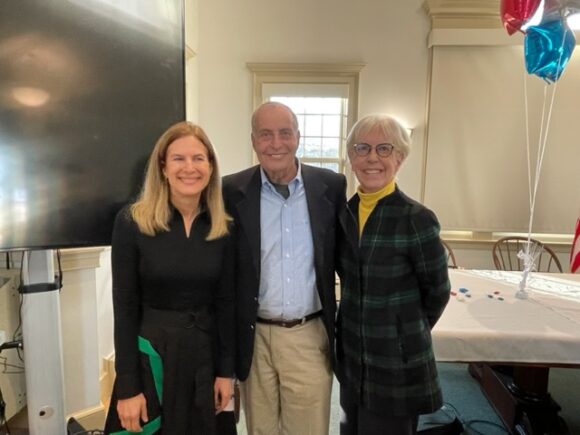
Planning Commissioner-elect Howard Margules stands with his wife Mary Jo (right) and Lieutenant Governor Susan Bysiewicz after taking his Oath of Office.

Asked to comment on how she felt after attending the event, Mary Jo Nosal, Chair of the Old Lyme Democratic Town Committee, said, “ I was moved by the beautiful ceremony and by the Lt. Governor’s comments today. Knowing the newly-sworn in officials as I do, I know  that each of them appreciates the sacrifices of our U.S. military and veterans made for the freedoms we Americans hold dear,  and that each of our new officials will keep that in mind as they work hard for our town.“

Old Lyme Town Clerk Urbowicz swears in Matt Ward (Unaffiliated but endorsed by Old Lyme Republican Town Committee (RTC)) as Old Lyme Town Treasurer.

Also sworn in on Sunday were Old Lyme Selectman-elect Jim Lampos (D), Treasurer-elect Matthew Ward (U but R-endorsed), Regional Board of Education members-elect Alexander Lowry (D), W. Scott Brown (D), and Susan Fogliano (D).

Region 18 Board of Education members-elect (from left to right) Alexander Lowry, Dr. W. Scott Brown and Susan P. Fogliano are sworn into office.

Urbowicz noted that Selectman-elect Judith Read (R), who was not present at the ceremony, had been sworn in earlier.

Zoning Board of Appeals Alternates-elect Democrats Kathleen Tracy and Michaelle Pearson, and Brian Cole (Unaffiliated but endorsed by Old Lyme RTC) take the Oath of Office for their positions.

Republican-endorsed candidate-elect Brian Cole was also sworn in on Sunday joining Ward as the R-endorsed candidates present at the ceremony.

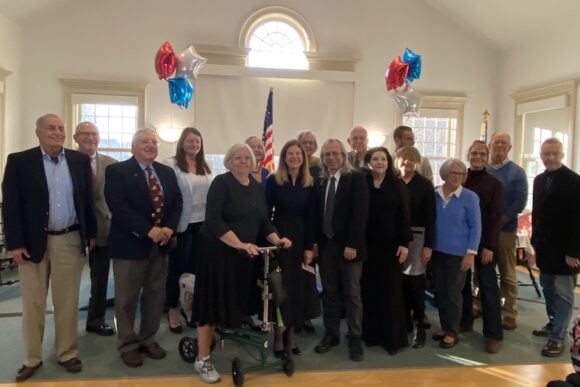
All the officials-elect, who had been sworn in during the afternoon, gathered around Connecticut Lieutenant Governor Susan Bysiewicz (front row, center, to left of Selectman Jim Lampos) for a celebratory photo at the end of the ceremony.

Editor’s Note: This article was prepared with information received from a variety of people, who attended the ceremony.

Lyme Art Association Greets Holiday Season with Three New Shows, Including ‘Deck the Walls’

J Elaine Senack’s “Black Swallowtail Caterpillar” in acrylic is one of the signature paintings in the ‘Our Fragile Planet‘ show on view from today at the Lyme Art Association. The Opening Reception takes place on Sunday.

OLD LYME — The Lyme Art Association (LAA) hosts three new shows for this year’s holiday season, which are on view now through through Sunday, Dec. 31. 

In the festive exhibition Deck the Walls, visitors will discover an array of fine art in various themes, sizes and mediums in this show that returns each year during the holidays, just in time for gift-giving. 

The juror for Deck the Walls will be Alonzo Clarke, a New Hampshire-based artist, who is a Signature Member of the New England Watercolor Society and has exhibited widely. Clarke is best known for his light-filled watercolors depicting scenes from his travels and his observations of daily life.

Artists explore our relationship to the environment in Our Fragile Planet, considering both the beauty and fragility of the world around us. This show draws artists and visitors into conversations on environmental preservation, sustainable living, and the responsibility we all share in protecting our habitat.

The juror for Our Fragile Planet will be Mark Shasha, award-winning artist, author and educator. Shasha is not only a renowned artist, who focuses on light and texture in the natural world, but also a children’s book author. His books include the beloved Night of the Moonjellies.

Finally, artist Catherine Puccio’s solo show All Things Great and Small will feature her love for animals and her pursuit of truth in nature.  Puccio, who won first place in last January’s Associate Artist show at the LAA, is now being honored for her award through this special exhibition. 

Deck the Walls and Our Fragile Planet are generously sponsored by Enterprise Construction and Point One Architects. Artist awards are sponsored by the Parthenon Diner and Caliber Computing.

Founded in 1914 by the American Impressionists, the LAA continues the tradition of exhibiting and selling representational artwork by its members and invited artists, as well as offering art instruction, lectures, and other public programs to the community.

The Lyme Art Association is located at 90 Lyme Street in Old Lyme, CT, in a building designed by Lyme colony artist and architect, Charles Adams Platt, and located within the national historic district.

Admission is free with contributions appreciated. Gallery hours are Wednesday through Sunday, 10 to 5 p.m., or by appointment.

For more information on exhibits, purchase of art, art classes, or becoming a member, visit the LAA website or call (860) 434-7802.

‘An Artist’s Eye: The Lukas Charles Collection’ on View at Lyme Academy

‘Untitled’ by Eduardo Zamacois y Zabala (1841-1871).

OLD LYME — The Lyme Academy of Fine Arts presents the public opening on Sunday, Nov. 19, of An Artist’s Eye: The Lukas Charles Collection. The exhibition will be on view through Feb. 18, 2024.

The collection features rarely-seen portraits by some of the 19th and early 20th centuries’ most accomplished European, American, and British portrait artists, including Ilya Repin (1844-1930), William Merritt Chase (1849-1916), and Solomon J. Solomon (1860-1927). It was assembled by Dr. Lukas Charles, an artist and New York radiologist.

The 28 paintings selected from Dr. Charles’ extraordinary collection represent some of the finest examples of realistic portraiture produced during this period. “My collection has grown from my love of fine painting and my observations of the differing and deep connections between these artists and their subjects,” reflects Dr. Charles. 

Curators and Co-Artistic Directors of the Lyme Academy, Jordan Sokol and Amaya Gurpide, see in this collection an opportunity for their students, fellow artists, and the art-loving public to witness first-hand both the technical excellence and expressive diversity of previous academic masters.

“The artists represented in this exhibition were trained in academies,” comments Gurpide.

She continues, “This institutionalized practice of art education dates back to the Renaissance and became popular again in the 18th and 19th centuries. Students learn through a progression of foundational, skills-based exercises. Yet, the artists each have their own style and approach their subjects differently, with resemblance becoming secondary to the evocation of character, mood, and self-reflection.”

Portrait of Henrietta Lowy Solomon, The Artist’s Sister by Solomon J. Solomon (1860-1927).

This is, in fact, what ties the collection so closely to the Lyme Academy, whose own mission is to train the newest generation of figurative artists in this age-old tradition, while also encouraging them to discover their own expressive voice. 

The exhibition at the Academy’s Chauncey-Stillman Gallery will be accompanied by a variety of public programming.

The exhibition is open to the public free of charge Wednesday through Friday, from 12 to 4 p.m. and Saturdays and Sundays from 10 a.m. to 4 p.m.  Some holiday closings will be scheduled, which will be listed on the Academy’s website.

The mission of the Lyme Academy of Fine Arts is to teach the foundational skills of drawing, painting, and sculpture in the figurative tradition. Its commitment to training students in these skills and its engagement with contemporary discourse will empower a new generation of artists.

Through its programs and related ventures, including the opening of de Gerenday’s Fine Art Materials and Curiosities on its historic campus, the Academy will enrich the cultural life of the community. 

Visit this link for more information about Lyme Academy.

The Movie Man: Quite Simply, ‘The Holdovers’ is a Must-see

Kevin Ganey is ‘The Movie Man.’

The Holdovers is a must-see, there is no other way to describe it.

Paul Giamatti delivers alongside Da’Vine Joy Randolph and newcomer Dominic Sessa (who is certain to have an extensive career with this debut) in Alexander Payne’s newest film depicting the in-between period of life on campus for a boarding school during Christmas break.

This film struck a personal note with me. Though I never attended boarding school (why should one pay the equivalent of a college tuition for a high school diploma?), I attended Xavier High School, which was all-boys (like the fictional Barton Academy in the film.)

I felt a rush of nostalgia as I watched the students clash amongst each other (ah, the first rushes of testosterone), but it was the setting the first drew me in, as it was something to which I could relate. This is one of the many ways that art finds a way to touch us individually, especially as I recalled Dead Poets Society and Scent of a Woman.

I can confidently say that The Holdovers belongs along their ranks.

Set in December 1970, The Holdovers depicts Paul Giamatti as Paul Hunham, a classics teacher at the fictional Barton Academy who is disliked by both the students and faculty for his dry, sarcastic, cynical, and merciless approach to teaching the spoiled children of immensely wealthy and powerful figures.

Da’Vine Joy Randolph is Mary Lamb, Barton’s cafeteria manager, who is grieving the loss of her son, Curtis — also a Barton alumnus, but he was recently killed in Vietnam as they could not afford tuition for college deferment.

Amongst the elite, Mary, a Black woman, represents the inequality in society (which possibly led to the students’ wealth). Despite her lowly position in the school, she possesses empathy for the students while also being able to wield authority over them, perhaps the result of wisdom, best described as “knowledge from scars.”

Sessa’s portrayal of Angus Tully — a frustrated student who has been neglected by his mother — perfectly encapsulates, not just teen angst, but sorrow and hope, in addition to an earlier sense of empathy for others (even if he needs to learn the hard way, but he is quick to pivot.)

All the characters are exceptionally layered. Throughout the movie, we learn the comprehensive foundation of Paul, Mary, and Angus (in addition to the secondary characters).

One leaves the theater feeling as though you have known said characters for many years.

If Giamatti is not nominated for an Oscar this season, it will just be more proof of the awards being shows and parties for entertainment’s elite. Although cantankerous, Giamatti portrays Hunham in a lovable antihero manner, particularly in regard to his ability to cleverly reference historic persons and events to insult others.

I also need to give kudos to the cinematography, which has the rustic touch of 1970s nostalgia.

But the writing: it all comes back to the writing.

World events intertwine within the story to reinforce the era. Clichés are evident, but it was the ability to subtly to pick up on the characters and their personalities that impressed me, akin to watching a stage play as we learn about prior events that took place off-stage.

My sole complaint was that Mary, a main character, did not have a fulfilling resolution weaved into the stories of Paul and Angus. But apart from that, I am telling readers that The Holdovers is a must-see and definitely worth the potentially high price of a ticket.

About the Author: Though no longer a resident of Lyme, Kevin knows he can never sever his roots to the tree of his identity. When not attending to his job in Boston, he is committed to ensuring a better grasp of current (and past) releases of cinema to his home community as he strives to leave his own mark in the same field that has always been his guide to understanding life. If you enjoy his published reviews here on LymeLine.com, follow him on his website at ‘The City of Cinema and read more of his unique insights into entertainment.