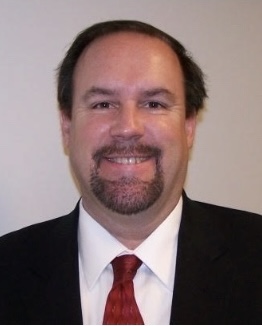
Jeff Duigou (R) is a candidate for Connecticut’s 33rd Senate District
COLCHESTER/LYME — Citing the need for “fresh, family-focused ideas” in the Connecticut legislature, Colchester’s Jeff Duigou announced yesterday that he is running to be the next Connecticut Senator from the 33rd District.
The 33rd District includes Lyme along with Chester, Clinton, Colchester, Deep River, East Haddam, East Hampton, Essex, Haddam, Portland, Westbrook and part of Old Saybrook.
“From groceries to gasoline, Connecticut remains unaffordable for working and middle class families as well as for seniors and small business owners,” Duigou said.“
He continued, “As State Senator, I will work with Democrats and Republicans to lower those tax burdens. I will also work to pass laws which make our communities safer. We need to better support our law enforcement officials and first responders. As state senator, I will put you, the taxpayers, first. Your voices will be listened to.”
Noting, “I will bring a law-and-order, business-friendly, pro-environment perspective to the State Capitol, adding, “As a conservationist, I believe we should be good stewards of the abundant natural resources we enjoy here in Connecticut,”
Duigou stated, “I will be a voice for sustainability, preservation. and public health. At the same time, I understand that innovation, research, trades, and small businesses are the backbone of our economy.”
A Republican, Duigou worked for more than 30 years in the environmental engineering field and retired from his Vice President of Environmental Sciences position at Eagle Environmental, Inc.
For 18 years, he served as a Licensed Environmental Professional, helping clients with compliance with federal and state environmental regulations and for 15 years, Duigou worked with multiple school districts to help provide safety services to administrators, teachers and maintenance staff.
Duigou concluded,. “From affordability to public safety to wasteful government spending, there are so many areas where we can improve our state’s policies.”
A graduate of the University of Connecticut, Duigou and his wife Cari have lived in Colchester for the past 38 years and have raised their family there.
Editor’s Note: This article is based on a press release issued Jan. 17, by Jeff Duigou.
Two years ago, my son—a student at Lyme-Old Lyme Schools—attended a regional wrestling tournament, where he witnessed a remarkable act of ethical behavior. One of the matches featured two giants from rival high schools. Not long into their spirited contest, those colossal opponents collided in an unplanned way. They sent each other to the ground in pain. The breathless silence of alarm seized the crowd. Time ceased, uncannily, before the coaches and medical personnel could race to attend the injuries of the fallen. But in those frightening seconds of unease when so many bad decisions could have been made, the two young competitors mustered the mettle, composure, and respect for each other to share a fist bump in solidarity.
I ask that you keep that image in mind as you continue reading on.
In a series of letters to the editor of CT Examiner, I have made known my abiding concern about the escalating erosion of democracy in Lyme and the lack of viable and honest elections. Rather than reiterate the case here, I would request that readers examine those letters for a detailed explanation of the issue. The summary is that in five election cycles since 2015 and including the 2023 election, there has been only one competitive election in town for the Select Board, held in 2017. In the four other elections, the Select Board members chose their successors through mid-term retirements, self-promotions, and appointments of people who were not formally elected to the Board. The Lyme DTC and RTC have actively supported this anti-democratic process through cross-endorsements or by not running candidates and accordingly arranging uncontested races.
Predictably, this undemocratic practice has now spread to other boards. In the 2023 election, the Lyme DTC and RTC predetermined all board memberships, so that voters had no choice on the ballot. The only contest in town was for the Region 18 Board of Education.
Despite my numerous attempts to engage them in writing, the members of the Select Board have avoided any debate or discussion about this problem in public forums. The closest they came was an interview in this newspaper conducted by the daughter of the DTC Nominating Committee chair, and two interviews in The Day in October and November of last year. In the latter, John Kiker (the current Second Selectman and DTC chair) continued a talking point that David Lahm (the current First Selectman and now former RTC chair) and Steve Mattson (the former First Selectman and former DTC chair) introduced in LymeLine that such lack of elections is the “reality of life in a small town”—that is, presumably, a place in which few people run for office or volunteer for public service.
I will reserve commentary about the sheer falsity of that claim with an offer to provide copious data about political activism in small towns. Here, I would only note that honest elections require us to be honest about elections. And I would add that people generally do not become involved in civic affairs if they are made to toe a line that benefits only a handful of residents, including and especially the expectation for “polite cooperation” previously demanded by the DTC and RTC.
I say “previously,” because there is finally a sign of hope. On January 9th, the Lyme RTC held a caucus, the result of which was a revitalization of a rapidly declining membership, including with several new members. I want to express tremendous gratitude to all of them who stepped up at this precarious time. And I do so as a lifelong registered Democrat, a far-Left progressive, and a democratic socialist.
I am hopeful that a rejuvenated RTC may signal the return of competitive elections in Lyme—the very lifeblood of a healthy democracy. I am also hopeful because as a proponent of pluralistic democratic society, I believe strongly in the need for an allegiance with each other that encourages and protects differences of opinion and dissent. A robust democracy predicated on oppositional political perspectives not only assists each side reconcile with their blind spots, but it guarantees accountability in elected officials through checks and balances, a need for compromise, and opportunities to correct failures (or abuses) at the next election. In other words, legitimate democratic contests are the antidote both to a “polite cooperation” or an agreement that only benefits the few and to political combat and its rapacious reliance upon vilification, demonization, and misinformation.
The problem is that in our current political climate (and due to too many factors to unpack here), it is nearly impossible to achieve such democratic culture at the national and state levels, or even within larger municipalities. But such principled engagement—in which we regard politically disagreeing others as opponents but not enemies, rivals but not villains, and all as fellow human beings—is precisely the promise of small towns. It pains me to see Lyme fail the virtue of respectful competition.
I know there will be readers of this newspaper who will respond that Lyme is well governed. That is not the issue here. There are many places in the world that are “well governed” without a hint of democratic practices, the most important of which are viable and honest elections.
That said, let me also offer something I have not previously afforded: praise for First Selectman David Lahm, who finally stepped down from RTC chair. Whether a formal conflict of interest or not, it is highly questionable to have the governing representatives of the town—that is, the Select Board—also be chairs of the town committees, whose important job is to recruit partisan candidates to run for office. I hope that Mr. Kiker follows Mr. Lahm’s example and recognizes the wisdom of keeping those two positions separate, even as it would entail his yielding power to capable others.
Although I am arguing for regular contests to enjoy the genuine benefits of disagreement, I also know that as we cascade into the 2024 presidential election, we will all hear the siren song to side solely with our side—and to see all political opponents as the threat who must be conquered for there to be peace. I want to call attention to that profoundly unjust treatment of competitors, which we unfortunately caught a glimpse of in Lyme’s sole election last year.
To be clear, I am not trying to rehash 2023. I am expressing my concern, two years before the next municipal cycle, that if routine elections return to Lyme they not deteriorate into untoward negative campaigning and disinformation. Again, the democratic promise of small towns lies in their “thick networks”—the notion that the very person about whom you write a letter to the editor will be in line at the check-out in front of you the next day. Or behind you at the school pick-up, waiting for their kids whom they love with equal fervor as you do yours. Or rushing out of their homes to help you when the car accident erupts on their street. So let’s call a spade a spade: We failed in Lyme to uphold the obligation of community in the last election. But we can get it right in the future. We can model the democracy in town that we want to see thrive everywhere.
To do so requires a simple responsibility from the single most important civic role a person can undertake, that of citizen. As citizens, we must hold our own parties accountable to the democratic values we profess to uphold. And we must insist upon viable and honest elections, especially so in places where we can readily secure their fruition and success, namely in a small town.
That brings me back to those two teenagers—the future when we are all gone. Each of them entered the ring desirous of a victory for themselves and for their team. Each opposed the other and competed with a full commitment to win. But each also played within the rules and norms of a well-established contest, without deception or deceit. And when they both fell down together, each stopped before the collision went too far. And then each summoned the strength to show fidelity to a greater bond.
My son will never know their names. But in what I hope will be a very long and happy life, he will also never forget the good he saw arise that day.
Will he and all our children be able to say the same of the democracy we will leave to them in Lyme?
Editor’s Note: This is the opinion of Stephen Olbrys Gencarella of Lyme, Conn.
Tragic link between the featured artists is that they all committed suicide
Nicole Prévost Logan
PARIS, FRANCE — The art scene in Paris during the last month of 2023 was quite intense. Three major exhibits of artists—coming respectively from France, the US and the Netherlands—attracted a sophisticated, international public. These artists have nothing in common, except that all three of them committed suicide.
Nicolas de Staël is all the rage today in Paris. The retrospective at the Museum of Modern Art in Paris is the first since 2003 when the Pompidou Center showed the artist’s early work. De Stael is considered as one of the most famous artists in France today and also the most expensive.
The large exhibit includes works coming almost entirely from private collections rather than from museums, indicating his success on the art market. This may explain the sometimes acerbic comments from art circles. Except for Braque, who became his longtime friend, de Staël was closer to writers and poets than to other artists. In contrast, the reaction of the public was gushing and unanimous enthusiasm.
De Staël was born into to the Russian military nobility in St Petersburg. In 1917, at the age of three, he left Russia with his family. After a few difficult years in exile, he found himself as an orphan at the age of eight. Wealthy friends, who welcomed Russian immigrants, helped him attend an upscale school in Brussels.
At the age of 23, he folded up his more than six foot five frame into the tiniest of all French cars—a deux chevaux ( a two-horsepower) Citroën—and drove to Spain on the first of his incessant travels, always searching for the perfect light. What he discovered in Morocco made him throw out everything he learned during his three years of study at the Royal Academy of Fine Arts in Brussels. He painted eight hours a day and destroyed everything he painted.
His life story reads like a Russian novel, full of passion, despair and drama. His flamboyant and vibrant personality was like a magnet, attracting relatives, lovers and friends and contributed a great deal to his fame as an artist. Disregarding morality conventions, he fell passionately in love with married women. The first one was a young painter, Jeanine Guillou, an adventurer, touring the Sahara desert on the back of a donkey with her husband, also a painter.
After her death in 1946 and the difficult years of the Occupation of Paris by the Nazis, he married Francoise Chapiton, 21, who was teaching English to his stepson Antek and had three children with her. A few years later without qualms, he would leave her and his three children and engaged in another passionate liaison with a married woman, Jeanne Polge.
A visitor to the exhibition is struck by the unusual journey of the artist’s creation which broke the traditional path from figurative to abstract and therefore did not fit into the accepted categories. During his earlier period, de Stael had produced a majority of black and white drawings, graphic work and then one witnesses an explosion of spectacular colors and a return to figurative work.
Actually it is deceptive:since, from a distance, landscapes, architecture, scenes with people or with activities—like a port, or a football game—may seem like figurative representations created “after the motif” but, on looking more closely, the scenes are, in fact, made up of geometrical shapes, which are close to abstraction. One of the earliest paintings where he used color was done in 1933—in the “Arbre Rouge ” (the red tree), red paint drips and makes the tree look as if shedding red tears.
His way of painting was unique. He worked on several paintings at the same time, borrowing from one to modify another. A buyer would be surprised to discover that the work he purchased from the artist was different from the one he saw at first.
Even his studio was out of the ordinary. Located on Rue Gauguet in the 14th arrondissement of Paris, close to Rue des Artists and Parc Montsouris, it had an incredibly high ceiling of eight meters. An art historian compared it to a well, a barn or a chapel.
In 1953, de Staël presented his works in New York and was celebrated by an enthusiastic public and rave reviews in the New York Times. But de Staël’s temperament clashed with art merchants. He disliked the way they speculated on his paintings even before seeing them. There was a great deal of tension at the time of hanging the paintings, which de Stael was used to insist on doing himself. Nevertheless the exhibition of 36 paintings was both a triumph and a financial success.
In 1954 he bought Le Castelet,Menerbes, a fortified manor perched on a rock in the Luberon region of southeast France. The family still owns it today.
In 1955, he continued his frenzy of travels and painting. He rented a studio in the ramparts of Antibes, overlooking the Mediterranean. Ten years earlier, Picasso had created his art studio in the Grimaldi castle also in the ramparts. Antibes was founded by the Greeks in the 5th century BC, under the name of Antipolis.
On the 16th of March, 1955, de Staël commited suicide by jumping onto the rocks.
The de Staël exhibit at the Museum of Modern Art is unusually large. It includes 11 rooms and covers his entire life. One is literally overwhelmed by the masterful works created during his last few years, painted in a wide spectrum of dazzling colors. Here are but a few of them.
“Agrigente”, 1954, 60x81cm .This Sicilian landscape, is simplified to the maximum. the colors are imaginary (purple sky, pink road, yellow hillside). An historian describes the choice of colors of de Stael as a “crashing wave of emotions.”
“Temple Sicilien”, 1954, 73x100cm. The colors are golden, softer, the architecture reduced to simple lines.
“Le Fort Carré d’Antibes”, 1955, 114x195cm. A symphony in blues and whites. The paint is light and fluid. Not much figurative work in this one, mostly geometric shapes floating between sky and sea.
“Ciel à Honfleur”, 1952, 100x73cm. The softer. shades of blues in horizontal bands under the pale sky of Normandy.
“Marseille”, 1954. 80.5x60cm bright primary colors, houses are just cubes, the Mediterranean sea is a flat deep blue
“Parc des Princes”, 1952, 200x350cm. France-Sweden soccer match. One of the master pieces of de Staël. The match takes place at night under spotlights. A ton of muscles fly around the green grass of the stadium. After many sketches, the final painting is an abstract composition of colored energy. At the 86th minute of the game France lost to Sweden.
Mark Rothko (I903-1969)
The Rothko exhibition is the blockbuster of this winter in Paris. Parisians have become accustomed to these spectacular events taking place in the museum of the Vuitton Fondation. Since its opening in 2014, it has held other breathtaking exhibits such as the collections of the two most important Russian art collectors of the Tsarist era: Morozov and Shchukin.
Photo of Mark Rothko, Yorktown Heights, ca. 1949 by Consuelo Kanaga (American, 1894-1978). Gelatin silver photograph, 10 x 8in. (25.4 x 20.3cm). Brooklyn Museum, This image was uploaded by the Brooklyn Museum as a content partnership, and is considered to have no known copyright restrictions by the institutions of the Brooklyn Museum.
An aerial picture of the Bois de Boulogne reveals that the spinnaker-shaped museum created by Frank Gehry is the only building peeping out of the green expanse of the forest. How did they ever obtain permission to build there? The fact that Bernard Arnault, the owner of LVMH—which stands for Louis Vuitton Moët and Chandon—was the richest man in the world until April 2023 perhaps helps explain why.
Twenty four years ago, the Museee d’Art Moderne in Paris had presented a full retrospective of the artist’s works. So, why a repeat in 2023? The long lines of visitors attest to the fascination of the Parisians for the American artist.
Christopher Rothko, son of Mark and co-curator of the exhibition, is playing an essential role in the present exhibition since he contributes the inside story about his father’s personality and the struggles in his artistic career. “It is a miracle”, he explained in an interview, that we were able to obtain 60 percent of the works we wanted as well as several never seen before in Paris. Besides, he added, the Fondation Vuitton helped negotiate loans, which usually have an exorbitant cost.
The Frank Gehry structure is perfect for an exhibition of this size. It allows for an easy flow of the visitors who can access painlessly the five levels of the display, thanks to the all-glass elevators located at strategic places. Personally I wish the confusing layout of the Orsay museum, with its cramped rooms, was more like this.
Learning about Rothko is to attend a course in the history of American art in the 20th century. Marcus Rotkovich Rothko was a scholar, a rebel, and a pioneer fighting for his deep philosophical and social convictions. In 1913 his family emigrated from Latvia, which was then part of Russia, to Portland, Oregon. A brilliant student, he attended Yale for three years. Until 1950 he taught children in the Brooklyn Jewish Center Association.
The exhibit starts with a huge room where his early works are exposed . For 20 years, he was a figurative artist, painting portraits, urban scenes (such as his subway scenes) and landscapes . He also liked to draw archaic figures and monsters inspired by his readings of Nietzsche and Aeschylus . He was most impressed by European artists like Matisse, Miro or Marx Ernst, the Surrealists, and later by the generation of artists—mostly Jewish—who left Europe in World War II.
In 1946 he began his “multiform” series and his definitive evolution toward total abstraction, which art historians call his “classic period” This is the period we are most familiar with, characterized by his “fields of color” .
There was a love-hate relationship between Rothko and New York. He found his inspiration in the town but was highly critical of New Yorkers for their mercantilism, calling them “shopkeepers.”. He hated the frenzy of his life as an artist. But American art was enriched by the stands he was taking.
In 1950, the Metropolitan Museum of Art organized an exhibit entitled: American Painting today” and did not even mention abstract art. Rothko joins the group of 19 “angry artists” , including Jackson Pollock and Willem de Koonig, rebelling against the conservatism of the Met. And today, what does the visitor to the Met or MoMA see? The works of Rothko seem to form the core of those museums’ collections.
The monumental sizes of Rothko’s paintings tend to overpower the viewer. One does not look at Rothko’s painting, wrote an art critic, but enters them. In the small “Philips room”, a simple bench invites the viewer to sit in front of a Roth’s painting and meditate .
The range of colors, from the luminous orange, to the maroon to the grey and black , has a strong impact on the feelings of the spectator. The canvasses are totally covered with paint The demarcation line between different strata of colors seem out focus and a zone with a fluffy texture. In the room at the upper level of the exhibition, his paintings are the most severe. We see a black sky and a grey earth transporting us into wnat one could describe as lunar scenery. The Giacometti statue of “man walking” add sto the somber feeling
Probably the most spectacular event in his career was the commission he received in 1958, to create murals for the elegant Four Seasons restaurant of the Seagram building on Park Avenue, between 51st and 52nd streets. Mies van der Hohe was the chief architect of the 37-floor skyscraper and Philip Johnson was his associate . Van der Hohe was German and the last director of the Bauhaus school in Berlin before it was forced to close by the Nazis in 1933. The innovative design of the Seagram was a steel structure on pillars with a reinforced concrete inner core. Rothko worked for months on the project in an oversize studio he had rented for that purpose. Then he abandoned the project. Later he donated nine maroon murals to the Tate Modern in London. The nine maroon murals are part o the Rothko exhibition on loan from the Tate.
His very last project, was “The Rothko chapel” in the Saint Thomas University in Houston commissioned by sthe extremely rich art collectors John and Dominique Menil (she was the heir to Schlumberger) .
At age of 66, in 1969, he committed suicide in his studio by overdosing on barbiturates and slashing an artery in his right arm.
Gallery talks, offered by art specialists or “mediators”at every level of the exhibit, provide some helpful guidance to the general public on how to analyze one’s emotions when trying to comprehend Rothko’s “Abstract Expressionism”
Vincent Van Gogh’s at Auvers-sur-Oise ( May 20—July 29 1890)
At the Orsay museum, the exhibit of the last three months of Vincent Van Gogh at Auvers-sur-Oise leaves the visitors dumbfounded at how the artist, whom we all know so well, could still impress us with paintings never seen before.
After a one-year, self-imposed stay in St Remy-de-Provence psychiatric hospital, the prospect of living in the small village of Auvers-sur-Oise around 30 miles to the northwest of Paris, and being totally free to go and plant his easel to paint wherever he pleased, was most enticing. His brother, Theo, could visit him often since Auvers was easily accessible by suburban train from Paris.
In Auvers, Dr. Gachet, who was to treat Van Gogh, became his close friend. They shared a mutual interest in Impressionist painting and even their neurasthenic (neurasthenia is a condition characterized especially by physical and mental exhaustion) tendency. Theo, who had made all the arrangements for Vincent’s stay, was optimistic as to the improvement of his brother’s condition. in such a setting.
One must go through a one small room called, “La Palette” before seeing the main exhibit for two reasons: first, saving hours of waiting in line and second, the short, three-dimensional, virtual experience conditions the visitor to plunge into Von Gogh’s haunted world.
You live through intense, almost scary, moments, with the heavy head-set on. You open an elegant, white door with a digital hand and enter a parlor furnished with a piano, a desk and a few chairs. Next, you are transplanted into the wilderness. A palette appears on your left and moves toward you, it becomes huge and threatening, with heavy blobs of paint on it. You are being attacked by it. You find yourself in a forest, surrounded by trees. Slowly you are going down, going through a layer of roots, menacing like a bunch of wiggling giant worms.
Or to use the words of Guillaume Morel’s, a regular contributor to the magazine “Connaissance des Arts,” “gnarled roots, charred trunks, twisted branches.” You are pulled down lower and lower into a bottomless pit, a wreath of trees above your head closes up the view of the sky. Still shaking, you return to the parlor. Now you are emotionally ready to affront the mob scene of the Von Gogh’s exhibit .
The theme of the small format paintings is the village, with its streets, houses and walled gardens, and the fields nearby. One of the streets is animated by two black figures of old women, followed by two young pony-tailed girls dressed in fluffy, white dresses. The 13th century church seems to be aggressively pulsating with life. On the outskirts of the small town, sleepy thatched roof farmhouses and cultivated fields seem peaceful at first.
‘Wheatfield with crows’ by Vincent van Gogh. July 1890. Van Gogh Museum, Amsterdam. This work is in the public domain in the United States because it was published (or registered with the U.S. Copyright Office) before January 1, 1929.
But the agitated brush strokes of Van Gogh turn the few trees into flames, the cottages about to collapse under the weight of their roof, the skies are torn with bizarre and tormented hieroglyphs. The use of aplats or flat areas of paint by the artist to picture the calm fields and sheaves of wheat left by the farmers are soon replaced by a stormy wheat field swept into a storm—a splash of yellow dotted with the black dots of the flying crows.
This most famous painting of all was long believed to be Vincent Van Gogh’s last one. No more. On July 27, 1890, the artist painted “Roots” (the painting the visitor suffered through during the virtual experience of La Palette). Later on that day Van Gogh shot himself in the chest. The painting was found on the easel after his death. He died two days later .
And let me leave you with this extraordinary fact—in the 70 days he spent at Auvers, Van Gogh created 74 paintings … more than one a day.
Editor’s Note:This is the opinion of Nicole Prévost Logan.
Nicole Prévost Logan
About the author: Nicole Prévost Logan divides her time between Essex and Paris, spending summers in the former and winters in the latter. She writes an occasional column for us from her Paris home where her topics will include politics, economy, social unrest — mostly in France — but also in other European countries. She also covers a variety of art exhibits and the performing arts in Europe. Logan is the author of ‘Forever on the Road: A Franco-American Family’s Thirty Years in the Foreign Service,’ an autobiography of her life as the wife of an overseas diplomat, who lived in 10 foreign countries on three continents. Her experiences during her foreign service life included being in Lebanon when civil war erupted, excavating a medieval city in Moscow and spending a week under house arrest in Guinea.
A portfolio of work by newly-elected Lyme Art Association (LAA) Elected Artist Paul Loescher will be displayed at the LAA from Jan. 12 through Feb. 22, 2024. The watercolor painting above is titled, ‘Waiting for the Evening Train‘.
OLD LYME — This winter, the Lyme Art Association (LAA) celebrates the new year with three exciting exhibitions, namely, First Impressions: 32nd Annual Associate Artist , Congratulations, and Nostalgia.
First Impressions: 32nd Annual Associate Artist includes a full range of media and themes created by LAA’s Associate Artists.
Congratulations features works by the LAA’s newest Elected Artists, artists who were elected by their peers after a rigorous selection and evaluation process. Susanna DalPonte, Isabel Lane and Paul Loescher will display their portfolios in this group exhibition.
In Nostalgia, LAA Member Artists reflect on cherished memories and the importance of preserving moments of joy. Participating artists were encouraged to delve into their interpretations of nostalgia and share through a variety of mediums and styles what these precious recollections mean to them.
All three shows are on view from Jan. 12 through Feb. 22, 2024.
In addition to exhibits, the LAA offers a variety of art programming. On Sunday, Feb. 11 at 2 p.m., artists and sailing enthusiasts alike will enjoy an Art Talk with Connecticut artist Howard Park. Through paintings and photos, Park recreates for visitors his trip around the world in his restored sailboat, a 1946 Sparkman & Stephens 52’ yawl.
Founded in 1914 by the American Impressionists, the LAA continues the tradition of exhibiting and selling representational artwork by its members and invited artists, as well as offering art instruction, lectures, and other public programs to the community.
The Association is located at 90 Lyme Street in Old Lyme, CT, in a building designed by Lyme colony artist and architect, Charles Adams Platt, and located within the town’s national historic district.
Admission is free with contributions appreciated. Gallery hours are Wednesday through Sunday, 10 to 5 p.m., or by appointment.
For more information on exhibits, purchase of art, art classes, or becoming a member, visit the LAA website or call (860) 434-7802.
HARTFORD/ESSEX/LYME—Yesterday, State Senator Norm Needleman (D-Essex) announced he is running for a fourth term in the State Senate. First elected in 2018, Sen. Needleman represents the 33rd Senate District, which includes the town of Lyme along with Chester, Clinton, Colchester, Deep River, East Haddam, East Hampton, Essex, Haddam, Old Saybrook, Portland and Westbrook.
“While I am proud of what my colleagues and I have accomplished in Hartford since I was elected to the State Senate six years ago, there is still work left to be done,” said Sen. Needleman. “I want to continue to build on my reputation as someone who builds consensus and forges common-sense solutions to Connecticut’s challenges that have received bipartisan support.”
He continued, “From my leadership positions on the Energy and Technology and Planning Development committees to my membership on the Commerce, Finance, Revenue and Transportation committees.”
Needleman concluded, “I’m excited to continue working as a pragmatic problem solver and support my constituents.”
Since he was sworn in as a State Senator, Sen. Needleman has served as Senate Chair of the Energy & Technology Committee. In 2020, he authored and led passage of the “Take Back Our Grid Act,” and in 2023, he took those protections further with Senate Bill 7.
Sen. Needleman has also achieved victories in energy and technology legislation.
Additionally, In 2023, Sen. Needleman championed the passage of a state budget that included the largest income tax reduction ever enacted in state history, an increase in a tax credit targeting lowest-income workers, and expanded exemptions on certain certain pension and annuity earnings benefitting seniors.
In addition to his work as State Senator, Sen. Needleman also serves as First Selectman of Essex, currently in his seventh term in the role, with a focus on effective municipal management.
He is also the founder and CEO of Tower Laboratories in Essex, a pharmaceutical manufacturing company he built from the ground up to be a leader in its field.
Editor’s Note: This article is based on a press release issued by State Sen. Needleman’s office.