Nature Conservancy Works to Control Damaging Invasive Plant Along Lower Connecticut River

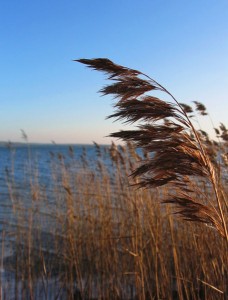
phragmites australis

Phragmites australis

In order to help restore and sustain the tidal wetlands along the lower Connecticut River, The Nature Conservancy last year undertook invasive phragmites control work at 12 locations on more than 215 acres, including sites in both Lyme and Old Lyme.

Paid for by funding provided by the Ecosystem Management and Habitat Restoration grants administered by the Connecticut Department of Energy and Environmental Protection (DEEP), the state-permitted and safe herbicide treatments are necessary to help sustain the gains made by DEEP, The Nature Conservancy and others against phragmites.

Initial post-treatment monitoring concluded in June 2013, and the DEEP grant-funded work completed last year by the Conservancy helps ensure that gains made from previous phragmites control efforts are sustained.

In addition to sustaining gains made against phragmites, the project provides more experience and know-how for partners to better analyze best management practices, ensuring future decisions remain well informed.

Apart from Lyme and Old Lyme, the treatments took place at sites in Essex, East Haddam and Old Saybrook.  Observation of conditions in treated areas will be ongoing.

“The Conservancy is grateful for the DEEP’s leadership on this issue,” said David Gumbart, assistant director of land management for The Nature Conservancy in Connecticut.  “We’re also grateful to the many private landowners who granted permission for work on their lands and appreciative of the many supportive local land trusts and towns.”

In the 1990s, a study documenting the invasion of phragmites along the lower Connecticut River showed that the outstanding native biodiversity for which these marshes are famous was disappearing at an alarming rate.  In some locations, over 40 percent of the native plant communities had been converted to phragmites in less than 30 years.

Subsequently, the Conservancy, DEEP and others began work to stop these losses and rein in phragmites in the tidal marsh system using conventional herbicide and mulching treatments.  Over time, an approximately 80 percent reduction of the plant has been achieved in the tidal marshes of the lower Connecticut River.  These efforts also helped regain additional habitat that will see colonization by native species.

More about phragmites and the Lower Connecticut River

Invasive European strains of Phragmites australis were introduced to the United States in the 1880s, possibly through ships’ ballast, according to the United States Department of Agriculture’s National Invasive Species Information Center.

Since then, phragmites has become one of the biggest threats to the lower Connecticut River’s exemplary tidal marsh system.  This is because it overruns the native plant communities that are a primary feature in the system’s health and productivity.

Although common birds and wildlife can utilize stands of phragmites, the biodiversity and overall ecological integrity of a marsh system is severely compromised by the invasive plant.

Sustaining the tidal marsh habitats through efforts such as phragmites control sustains rare plant species, as well as the migratory, shore and wading birds that thrive in these habitats.  Among the other beneficiaries are fish, including the Atlantic silverside, that utilize the marshes at high tide. Such work also helps sustain the quality of the Long Island Sound.

The Nature Conservancy is the leading conservation organization working around the world to conserve the lands and waters on which all life depends. The Conservancy and its more than 1 million members have protected nearly 120 million acres worldwide. Visit The Nature Conservancy at www.nature.org/connecticut
After 15 Years of Turmoil, Trust for Public Land Announces Conservation Opportunity for The Preserve

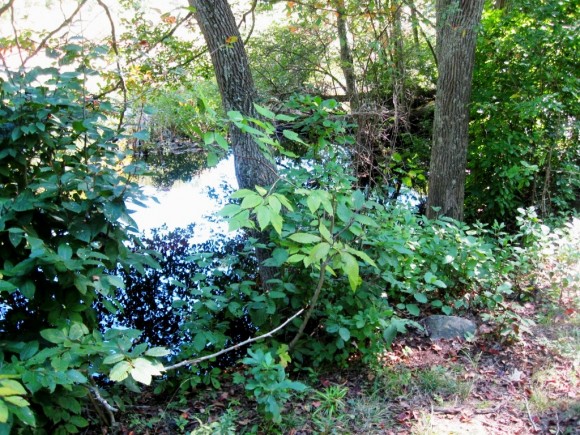
A vernal pool on the Preserve (photo by Jerome Wilson)

A vernal pool on the Preserve (photo by Jerome Wilson)

Its status in flux for 15 years, the largest unprotected coastal forest between New York City and Boston may soon provide hiking, bird watching, and recreational opportunities for public

The Trust for Public Land announced today that it has reached an agreement with River Sound Development, LLC, to purchase 1,000 acres known as The Preserve – the last large unprotected coastal forest between New York City and Boston – for conservation, recreation, and habitat protection.  If the acquisition is successful, the land will be permanently protected from future development and open to the public to enjoy for passive recreational activities such as hiking and wildlife viewing.  The property, which is rich in natural resources and wildlife, will connect to 500 acres of existing town parkland and miles of existing hiking trails.

Alicia Betty, The Trust for Public Land’s Connecticut State Director, said her organization is moving forward with the acquisition and fundraising efforts to raise $10 – $11 million in public and private funds by June, 2014, in order to acquire the property and cover stewardship and costs.

“We are thrilled to be able to present this opportunity to the state of Connecticut’s land conservation community,” Betty said.  “We’ve been able to end 15 years of uncertainty and can now move forward toward protecting this valuable property of regional significance.”

“The work of the Trust for Public Land to secure rights to The Preserve represents a major milestone in our efforts to preserve critical lands in this state,” said Connecticut Governor Dannel P. Malloy.  “We look forward to partnering with the Trust for Public Land and others to make this purchase a reality and protect this property for the future.”

Located in Old Saybrook, Essex and Westbrook, CT, The Preserve includes 38 vernal pools and 114 acres of wetlands and more than 3,100 linear feet of watercourses. The dense canopy of forest and the Pequot Swamp Pond act as a refueling stop for many migratory birds, and the many freshwater seeps on the property are home to amphibian species such as the northern dusky salamander, spotted turtles, and box turtles. Bobcats and fisher cats have also been spotted on the property.

In addition to its recreational and habitat resources, The Preserve provides important water quality benefits to residents.  Surface waters on the property drain to 3 different watersheds: the Oyster River, Mud River and Trout Brook, as they make their way to Long Island Sound.  The protection of The Preserve will ensure that stormwater on the site is recharged to local aquifers.  An aquifer protection area is located just east of the Preserve and supplies an average of 200,000 gallons per day of drinking water to Old Saybrook and surrounding communities.

The Preserve is located in the area designated by FEMA’s Hurricane Sandy Impact Analysis as having experienced “high impact” from the Superstorm Sandy. Coastal forests like The Preserve have been losing ground for some time as saltwater gradually moves inland as a result of rising tides and sea levels. The Preserve acts act as a sponge for stormwater, releasing it slowly into the tributaries and rivers that lead to the Connecticut River and Long Island Sound, protecting downstream property owners from flooding.

“This is an immensely positive development, and I commend The Trust for Public Land for their leadership in preserving and protecting this priceless natural resource. As Attorney General, I was proud to fight on behalf of hundreds of Old Saybrook residents and environmental advocates seeking to protect The Preserve from ecologically devastating development. Once lost, forests and habitats such as The Preserve can never be recovered. This is a great day for Old Saybrook, Long Island Sound and Connecticut’s environment,” said U.S. Senator Richard Blumenthal.

“This property is the last of its kind–an intact thousand acre maritime forest, the source waters of three separate watersheds,” said Philip Miller, Representative for the 36th district.  “It is said that water will be to the twenty-first century what oil was to the twentieth.  This will help assure a bright future for this region of Connecticut.”

The Preserve was the subject of development proposals dating back to 1998, including plans to build more than 200 homes and an 18-hole golf course. These plans met with strong opposition and lawsuits from conservation groups and residents.  Over the years, multiple attempts were made to acquire the land for conservation, but an agreement was never reached and efforts to develop the property continued.

“Old Saybrook looks forward to working with The Trust for Public Land towards a successful closing on this property, a closing that economically and environmentally favors The Town of Old Saybrook and the region,” said Carl Fortuna, Old Saybrook First Selectman.  “This property has been at the center of attention, good and bad, for 20 years. It is now time for a resolution. We are optimistic that enough private and public funds can be raised to purchase the property and preserve the Preserve in its natural state. The Town will work cooperatively with all parties in this effort, including the DEEP. Most importantly, I will work for and listen to Old Saybrook’s residents as they decide the future of this parcel.”

Many entities and conservation organizations have come together over the years to defend this natural asset for Connecticut and to create this opportunity.  The collaboration will continue and will be essential to a successful outcome next year.  These entities include:  the Connecticut Department of Energy and Environmental Protection (CT DEEP), the Towns of Old Saybrook, Essex, and Westbrook, the Old Saybrook Land Trust, the Essex Land Trust, The Connecticut Fund for the Environment / Save the Sound, The Alliance for Sound Area Planning, Audubon Connecticut, and The Nature Conservancy.

Suellen McCuin, a resident of Essex, neighbor of the Preserve and member of the Alliance for Sound Area Planning, stated, “I am so happy to know that this incredible piece of nature will now be forever available for our family, others in the community and future generations to hike, explore and seek solace.  It is also great news that so many will continue to benefit from the now protected pristine waters that fill our local public and private wells. We are inextricably linked to this forest. As Franklin D. Roosevelt once said, ‘Forests are the lungs of our land.’”

Founded in 1972, The Trust for Public Land is the leading nonprofit working to conserve land for people. Operating from more than 30 offices nationwide, The Trust for Public Land has protected more than three million acres from the inner city to the wilderness and helped generate more than $34 billion in public funds for conservation. Nearly ten million people live within a ten-minute walk of a Trust for Public Land park, garden, or natural area, and millions more visit these sites every year. Learn more at tpl.org.

Oh, What a Wonderful Weekend to be in Old Lyme!

Poor_Old_shine_at_FGM_121KB

Photo by C. Poirier.

After torrential rains on Thursday and clouds on Friday morning, predicting the weather for Midsummer Festival 2013 was nerve-wracking affair.  But there was no cause for alarm — the gods smiled and Friday evening the sun broke through and then proceeded to stay out for the entire event.

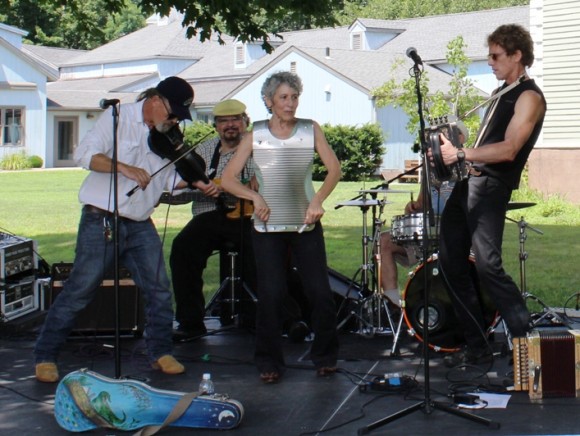
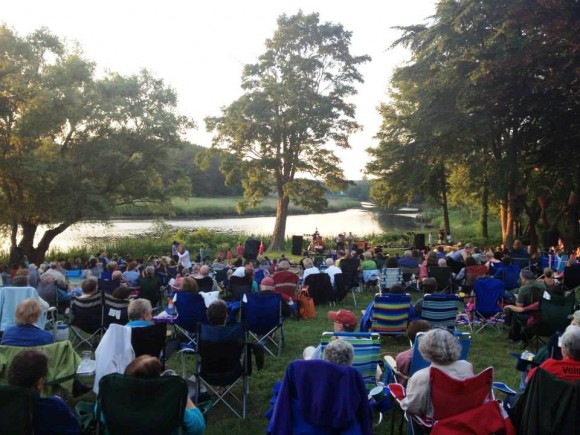
All three art institutions on Lyme Street, the Florence Griswold Museum, the Lyme Arts Association and Lyme Academy College of Fine Arts, were open early Friday evening to the public with free receptions.  Then cheerful crowds gathered for a foot-tapping concert by Poor Old Shine on the lawn sloping down to the banks of the Lieutenant River behind the museum.

Caroline’s Miracle Run started Saturday at a brisk race with some 500 contestants assembling to run the 5K race or walk or run the 1K route.  The Walker family gave quite a performance winning not only first place (Nick) but also 10th (David) and 100th (Cary)!

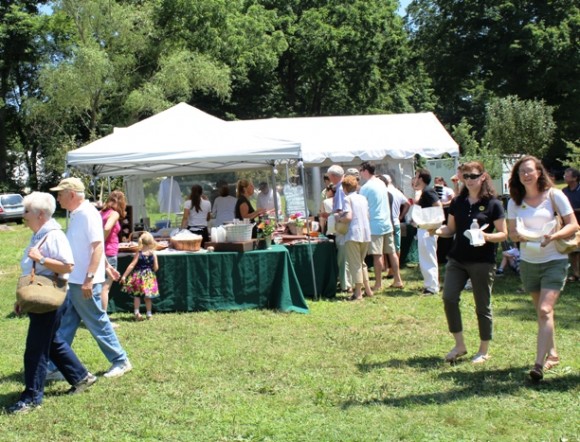
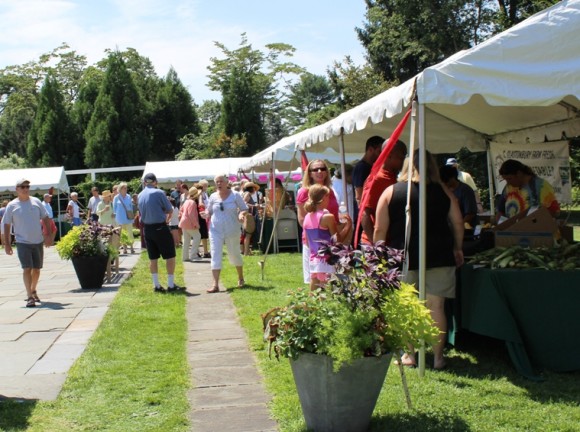
Th En Plein Air Market opened early bursting with fresh breads, foods and vegetables — and a whole lot more besides.

Vendors_at_FGM_612

There were vendors galore …

Vendors_at_rear_of_FGM_759

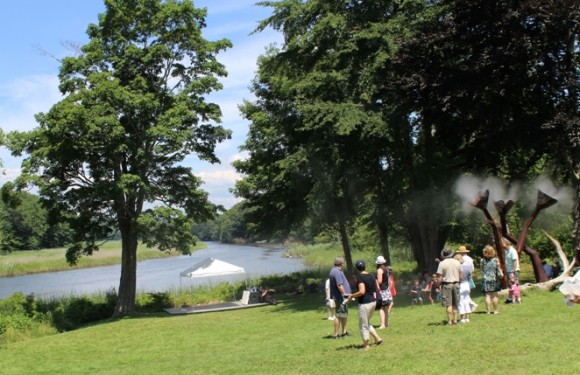
… but always an idyllic scene looking towards the river.

At_FGM_looking_to_river_662

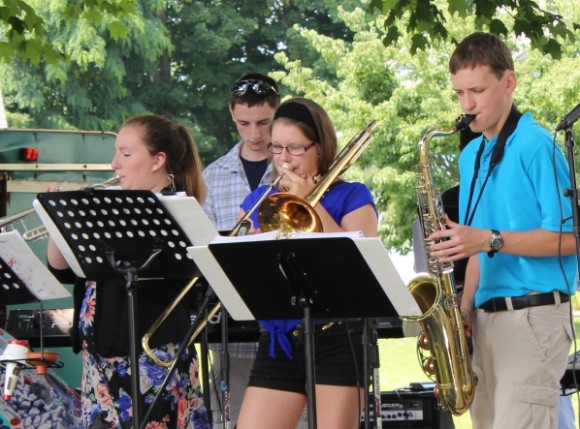
Over at the Old Lyme Inn, a jazz band wowed the crowd under the large tent …

OL_Inn_631

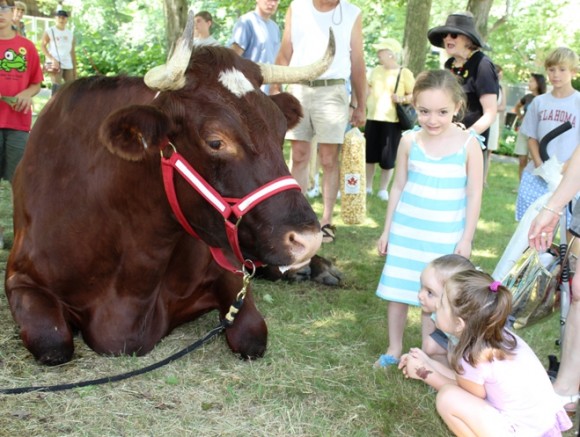
… and, next door at the Lyme Art Association, some handsome bulls also impressed a different crowd …

Girls_looking_at_bull_659

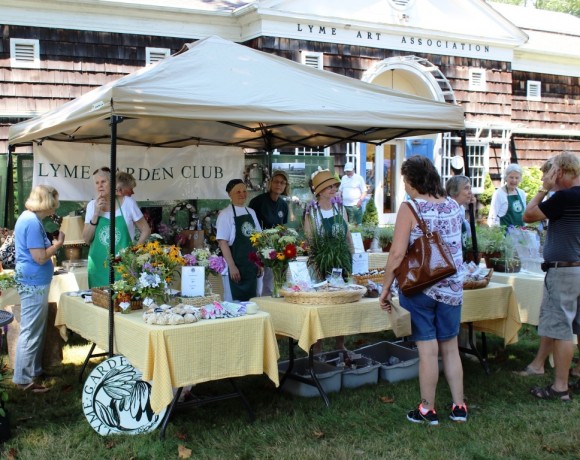
The ladies of the Lyme Garden Club were selling their wares …

Lyme_GC_34KB

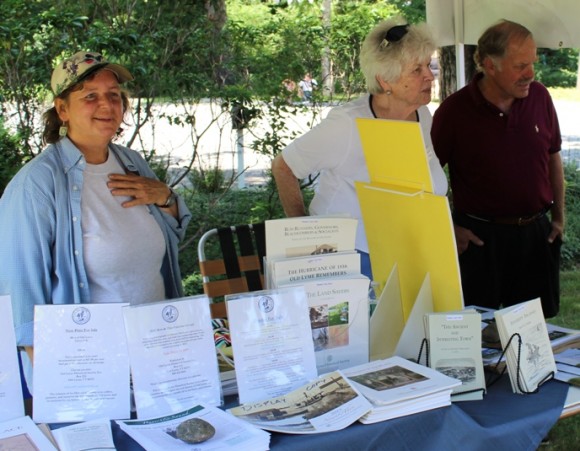
… and the Old Lyme Historical Society had plenty of books and information on offer …

OLHS_stand_688

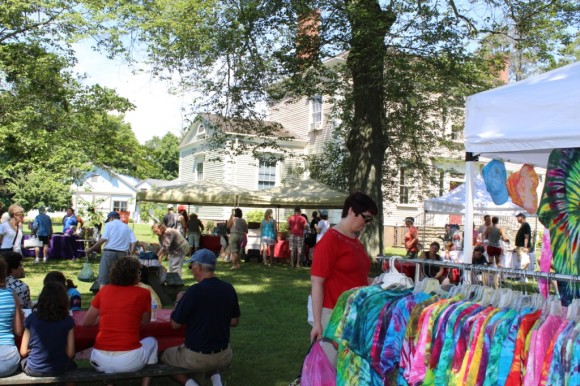
On the south side of I95, the fun continued.  There was a huge array of vendors at Lyme Academy College …

LACFA_lawn_354KB

along with a tempting lobster truck and plenty of New Orleans-themed food.  Music was a continuum at the College from 11 a.m. through until 4 p.m. …

Band_at_LACFA_598

A zydeco band was especially popular, while …

Zydeco_band_at_LACFA_707

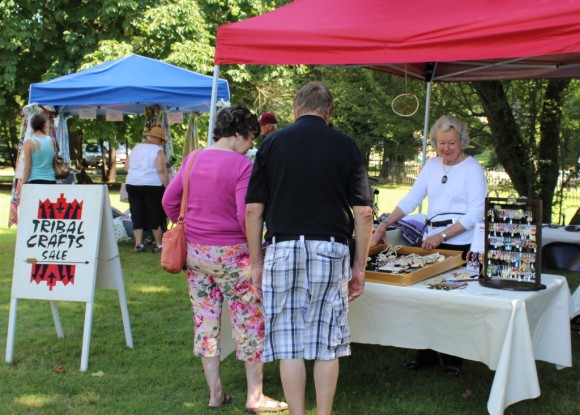
… Tribal Crafts benefiting the Lakota Indians of South Dakota drew many interested admirers …

Tribal_Crafts_354KB

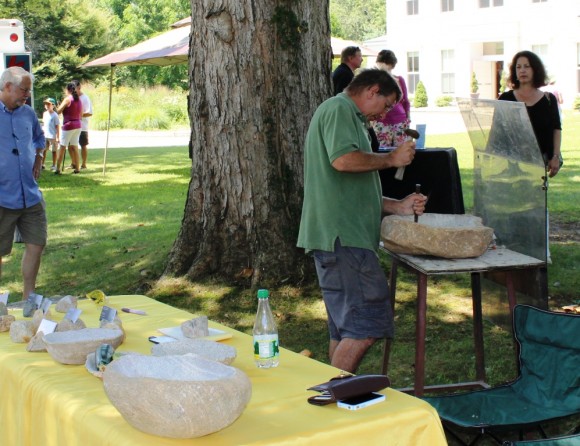
… and Steve Evankow demonstrated his stone-carving skills …

Steve_Evankow_354KB

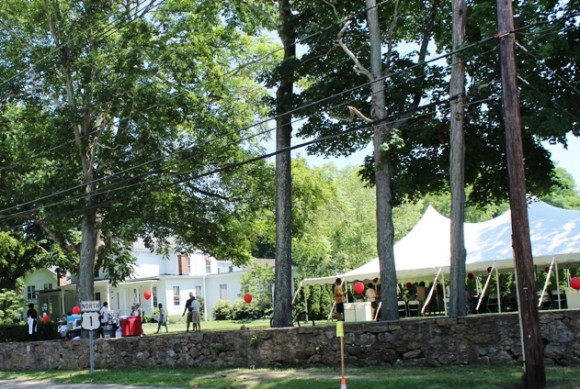
There was activity all the way down Lyme Street with all the stores participating and the ‘Plein Air’ painters selling their paintings on the lawn in front of Center School.  In the early evening, the Old Lyme Town band entertained the gathering crowds behind Lyme-Old Lyme Middle School and finally, as night fell, a truly splendid display of fireworks concluded the festivities.

fireworks_301KB

Photo by Emily Czarnecki.

It was indeed a wonderful weekend to be in Old Lyme — and at the end of it, everyone was filled with happy memories and a strong sense of community … to such an extent that no one complained about the traffic jam on Lyme Street following the fireworks!

Traffic_on_Lyme_Street_after_fireworks

Eagle Scout Project Benefits Old Lyme Land Trust

Workers create a switchback down a steep slope to the ladder

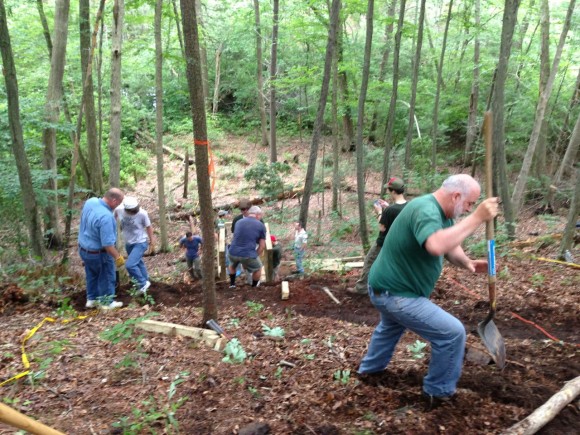
One step in TJ Lynch’s Eagle Scout project involved workers creating a switchback down a steep slope to the ladder TJ was building.

On Saturday and Sunday, July 13 and 14, Life Scout TJ Lynch led a crew of more than 20 workers, blazing a new trail approximately 500 feet long and then building an elaborate “wilderness ladder” down a steep embankment.  The two day effort culminated an ambitious Eagle Scout project for the Old Lyme Land Trust (OLLT) that took nearly 14 months to plan and carry out.

Two major milestones were achieved.  Completion of this project is a major first step toward providing public access to the OLLT’s Three Mile River preserve, a very unique and wild property in Old Lyme that has been essentially inaccessible heretofore.  It is also the final major requirement that Lynch needs in order to become an Eagle Scout.

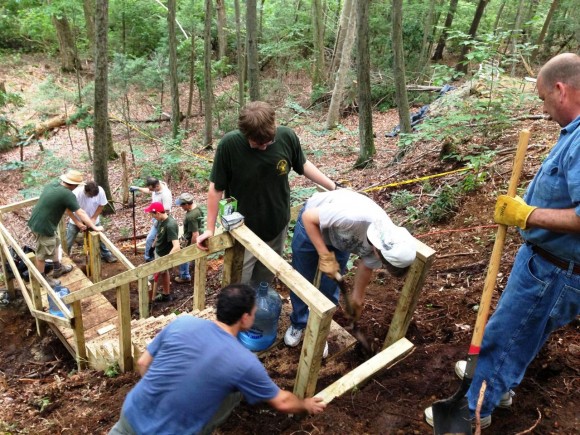
Ladder components are assembled and anchored in place

Ladder components are assembled and anchored in place

Scouts and Leaders from Lyme-Old Lyme Boy Scout Troop 26, as well as family members and friends, braved steamy July weather and mosquitos, expending more than 230 man-hours to bring this dream to reality.  Christina Clayton, President of the OLLT, remarked “What an effort and what a result!”.

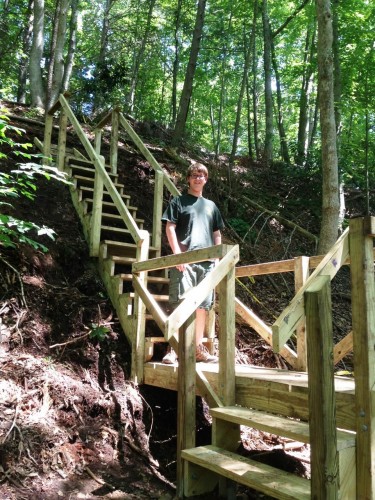
TJ Lynch with the completed wilderness ladder.

TJ Lynch with the completed wilderness ladder.

Lynch and the OLLT extend special thanks to Thomas Muckle of Mill Brook, LLC for designing the wilderness ladder; Mark P. Wayland, LLC for construction input and assistance with procuring materials; Rings End Lumber in Niantic for their generous help with lumber and other supplies; and to Michael Kiernan, Trustee of the OLLT for his tireless support and encouragement.

Delays Expected This Weekend During ‘Q’ Bridge Traffic Shift on I-95 South

The new 'Q' bridge.

The new ‘Q’ bridge.

The Connecticut Department of Transportation (DOT) District 3A has announced that significant construction activities for the I-95 New Haven Harbor Crossing (NHHC) Corridor Improvement Program will be occurring this coming weekend, Friday, July 26 to Monday, July 29, as traffic is shifted onto the new I-95 southbound lanes of The Pearl Harbor Memorial (Q) Bridge.

The weekend work is expected to cause traffic delays as construction activities take place the I-95 southbound between Woodward Avenue/Lighthouse Point (Exit 50) and the Sargent Drive (Exit 46), and the I-91 southbound connection to I-95 southbound.

The DOT has been coordinating this traffic shift with state and local public safety officials, including First Selectwoman Bonnie Reemsnyder, and implementing extensive public outreach.

Continuous updates are posted on the I-95 NHHC Corridor Improvement Program website about the construction activities leading up the traffic shift and throughout the weekend.  Visit www.i95newhaven.com for additional resources, such as videos explaining the lane and ramp closures for the weekend, detour maps and alternate routes.

To request further information, email info@i95newhaven.com or call 203-752-1996 to speak with Public Information Coordinator, Melissa Guerrero.