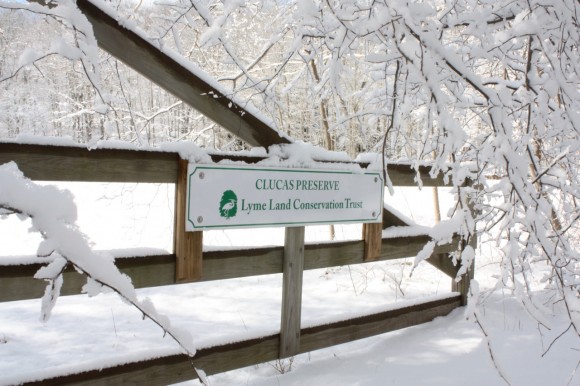
The Lyme Land Conservation Trust has been awarded accreditation by the Land Trust Accreditation Commission, an independent program of the Land Trust Alliance.
“This accreditation demonstrates our commitment to permanent land conservation that benefits the entire community,” said Land Trust President John Pritchard in making the announcement. “Our land trust is a stronger organization today having gone through the rigorous accreditation program.”
The Lyme Land Conservation Trust was awarded accreditation this December. It is one of only 285 land trusts in the country that have been accredited by the Land Trust Accreditation Commission. There are more than 1,700 land trusts nationwide.
 “Accreditation provides the public with an assurance that, at the time of accreditation, a land trust has met high standards for quality and that the results of their conservation work are permanent,” explained Commission Executive Director Tammara Van Ryn.
Each accredited land trust submitted extensive documentation and underwent a rigorous review. “Through accreditation land trusts conduct important planning and make their operations more efficient and strategic,” said Van Ryn. “Accredited organizations have engaged and trained citizen conservation leaders and improved systems for ensuring that their conservation work is permanent.”
Accredited land trusts are authorized to display a seal indicating to the public that they meet national standards for excellence, uphold the public trust and ensure that conservation efforts are permanent. The seal is a mark of distinction in land conservation.
“This round of accreditation decisions represents another significant milestone for the accreditation program; the 285 land trusts now accredited account for three quarters of the more than 20 million acres currently owned in fee or protected by a conservation easement,” said Van Ryn.
The Lyme Land Conservation Trust was founded in 1966 and currently manages more than 3,000 acres of forests, farms and marshes that are preserved as wildlife habitat and productive agricultural land for the enjoyment and benefit of future generations.
In making the announcement, Pritchard thanked the many volunteers and staff who work to maintain the properties under Lyme Land Trust management and singled out those who spent hundreds of hours preparing the Land Trust’s accreditation application.
He personally thanked Environmental Director Lisa Niccolai, who led the Land Trust’s accreditation team, as well as Vice President Don Gerber, Treasurer Andy Baxter, Executive Director George Moore, and former President Linda Bireley for the hundreds of hours they worked in preparing and organizing the Land Trust’s records and operations documentation to meet the exacting standards of the Accreditation Commission.
Pritchard also thanked and recognized the Lyme community leaders who have served as officers and board members of the Land Trust during its almost half century of preserving the town’s bucolic farms, wetlands, and back country.
“They were the leaders, the visionaries,” said Pritchard. “What Lyme has achieved today in preserving its beauty and natural environment was made possible by earlier generations of Lyme civic leaders who were committed to conservation.”
According to the Land Trust Alliance, conserving land helps ensure clean air and drinking water; safe, healthy food; scenic landscapes and views; recreational places; and habitat for the diversity of life on earth.
In addition to health and food benefits, research has shown that conserving land increases property values near greenbelts, saves tax dollars by encouraging more efficient development that require less public service infrastructure, and reduces the need for expensive water treatment facilities.
Across the country, local citizens and communities have formed land trusts to save the places they love. Community leaders in land trusts throughout the country have worked with willing landowners to save over 47 million acres of farms, forests, parks and places people care about, including land transferred to public agencies and protected via other means.
Strong, well-managed land trusts provide local communities with effective champions and caretakers of their critical land resources, and safeguard the land through the generations.
Editor’s Notes: The Land Trust Accreditation Commission, based in Saratoga Springs, N.Y., awards the accreditation seal to community institutions that meet national quality standards for protecting important natural places and working lands forever. The Commission, established in 2006 as an independent program of the Land Trust Alliance, is governed by a volunteer board of diverse land conservation and nonprofit management experts from around the country. See a complete list of all recently accredited land trusts online at http://www.landtrustaccreditation.org/newsroom/press-releases. More information on the accreditation program is available on the Commission’s website, www.landtrustaccreditation.org. The Land Trust Alliance, of which the Lyme Land Conservation Trust is a member, is a national conservation group that works to save the places people love by strengthening conservation throughout America. It works to increase the pace and quality of conservation by advocating favorable tax policies, training land trusts in best practices and working to ensure the permanence of conservation in the face of continuing threats. The Alliance publishes Land Trust Standards and Practices and provides financial and administrative support to the Commission. It has established an endowment to help ensure the success of the accreditation program and keep it affordable for land trusts of all sizes to participate in accreditation. More information can be found at http://www.landtrustalliance.org
 The Nature Conservancy is coordinating a deer hunt at the Conservancy’s Selden Creek Preserve in Lyme starting