Volunteers Decorate Gillette Castle State Park for the Holidays

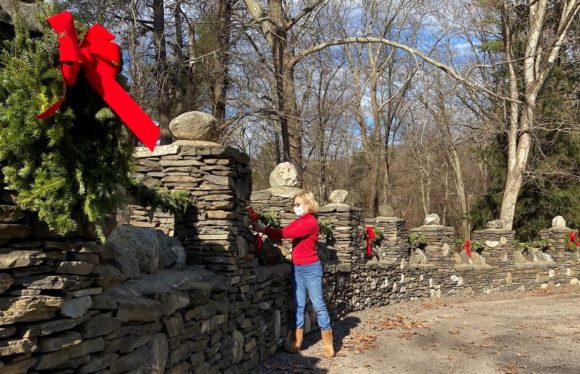
Laura Borg decorates the courtyard around Gillette Castle.

EAST HADDAM, Conn. – Members of the Friends of Gillette Castle State Park spent a recent weekend decorating the grounds and exterior of the late William Gillette’s mansion at 67 River Road.

The group included Jack Hine, the park’s supervisor, and staff member Sarah Lucey, as well as Friends members Laura Borg, Lynn Wilkinson and Dorothy Millen. Borg purchased the decorations and donated them to the effort.

The mansion itself is closed to the public but visitors may stroll about the grounds to view the decorations from 8 a.m. until sunset daily through Jan. 2, 2021.

Harold “Tyke” and Theodora “Teddie” Niver also are expected be on hand Sunday afternoons during the holiday season to greet and entertain visitors while portraying William and Helen Gillette.

The popular tourist destination is nestled atop the “Seventh Sister” hill in the towns of East Haddam and Lyme along the Connecticut River.

The Friends of Gillette Castle State Park is a nonprofit, all-volunteer group dedicated to the preservation, conservation and educational activities of the building and its grounds.

More information may be found at www.gillettecastlefriends.org

CT Audubon to Buy ‘Bee & Thistle Inn’ in Old Lyme, Plans to Renovate it as Roger Tory Peterson Estuary Center HQ

OLD LYME — (Press release issued by CT Audubon) The Connecticut Audubon Society and its Roger Tory Peterson Estuary Center (RTPEC) will soon have a new facility in Old Lyme to continue to carry out the regional conservation, science research and education work that began five years when the RTPEC was established.

The organization has reached an agreement to buy the former Bee and Thistle Inn, at 100 Lyme St. The plan is to create an environmental education center for people of all ages. It will become the Estuary Center’s new headquarters and will include a room for public talks and workshops, a location for summer day camp, and a staging area for research on the ecology of the estuary.

The RTPEC offices, which are currently at 90 Halls Rd., will move to the new facility as well.

The 5.25-acre site is on the Lieutenant River, a tributary of the Connecticut River. It includes a wetland area and offers river access to the local 56-acre section of the Silvio O. Conte National Fish and Wildlife Refuge.

The RTPEC has developed a strong reputation in its five years based on a succession of successful programs. The Center currently reaches 5,000 young people and adults across the region through environmental education programs at schools, online and in the field.

“The RTPEC is one of our jewels, and this new facility is in a perfect location for a nature center that focuses on the estuarine environment,” said Connecticut Audubon Executive Director Patrick Comins. “We can’t wait to introduce people to its birds and wildlife, and to use it as a launching area for more great outings. The volunteers who had the vision to establish the center in 2015 and then to keep building on its success deserve all the credit for this.”

Connecticut Audubon is planning a  comprehensive campaign to cover the purchase price to renovate the building for visitors, and to preserve this landmark for the community. The goal is to open the new facility within 12 to 18 months.

Claudia Weicker, chair of the RTPEC Regional Board, said that the new facility’s location, next to the Florence Griswold Museum, was particularly appropriate.

“Our commitment to conservation of the Connecticut River estuary and of Long Island Sound is as strong as ever,” she said. “We focus on the environment and education, in particular, and, in doing so, we relate the importance of nature to the history and culture of our area. This location, next to the home of Miss Florence Griswold, revives the synergy that existed between America’s great art colony and the beauty of the natural world.”

The Center is named after Roger Tory Peterson, the artist, writer, teacher, and conservationist, who lived and worked in Old Lyme. Peterson’s acclaimed field guides to birds and nature are widely known and recognized as iconic in their field.

Two of the Center’s most successful programs will continue to take place elsewhere. Its spring and fall lecture series regularly draws overflow crowds to local auditoria to hear nationally-known experts on birds, estuary science and other conservation topics.

The Science in Nature outdoor education program will continue to be taught at area schools, natural areas within walking distance of schools, and through distance learning.

Those two off-site programs will complement the offerings at the new center, said Alisha Milardo, the director of the RTPEC.

“The residents of southeastern Connecticut have an abiding interest and enthusiasm for environmental conservation programs,” she said, adding, “Our education, science research and advocacy programs have received great support and we’re confident that at this new location we will be able to expand our offerings for the community.”

‘Coastal Cleanup’ at Old Lyme’s White Sand Beach Generates 78 Pounds of Garbage

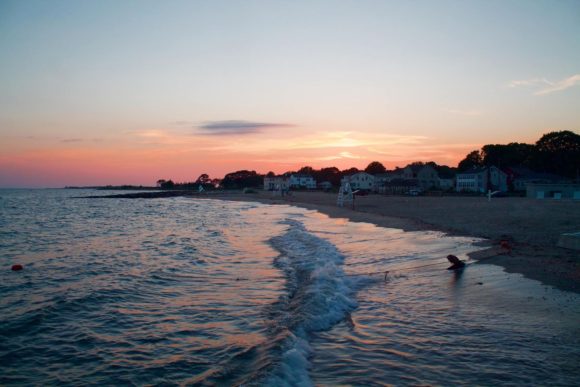
Help to keep White Sand Beach beautiful. Join a Beach Cleanup on Saturday, Sept. 19!

OLD LYME — UPDATED Sept. 21: After the Clean-Up Event was held this past Saturday, Sept. 19, organizer Marie Ryan expressed her thanks to all who volunteered, saying on her Facebook page, ” Many, many thank you’s to all the wonderful people who volunteered in the International Coastal Clean Up Day, Save the Sound at White Sand Beach today.”

She added, “We collected 78 pounds (!) of garbage and truly made a difference for our lovely beach and coastline.”

Are you concerned with the state of our environment? Do you want to help do your part to preserve our coastlines? Will you commit to ‘Strive to Stop the Spread of Litter in the Long Island Sound’?

Then join Marie Ryan of Old Lyme and Reynolds’ Subaru of Lyme in a volunteer coastal cleanup of White Sand Beach in Old Lyme on Saturday, Sept. 19, from 10 a.m. to 12 p.m. For further details, contact Marie at mcargr@aol.com or call her at 860-304-3334.

This volunteer event is part of Save the Sound’s annual coastal cleanup efforts.  Save the Sound organizes cleanup events every fall. The Connecticut Cleanup is part of the International Coastal Cleanup, which takes place each year within the months of September and October. Volunteers are needed to remove trash and collect data that will be used to help stop debris at its source. 

There are additional opportunities to assist this effort apart from at White Sand Beach. Find a complete list of cleanups throughout the state at this link, choose your beach and then register. Save the Sound will follow up with details about how to connect with your beach’s Cleanup Captain on the day of the event.

For more information about Save the Sound’s Coastal Cleanup program, visit www.savethesound.org/2020Cleanup or call Save the Sound’s Volunteer Coordinator, Annalisa Paltauf, at (203) 787-0646, Ext.116

Last year, Save the Sound’s Coastal Cleanup program helped bring together 2,554 volunteers, who removed 6,017 pounds of trash from over 78 miles of Connecticut shoreline. Volunteers will remove trash and collect data that will be used to help stop debris at its source.

Roger Tory Peterson Estuary Center Presents the ‘Great Eats’ Raffle, Benefits Conservation Efforts

Gift certificates at a variety of shoreline eateries valued at $400 each are on offer as prizes in the ‘Great Eats’ raffle hosted by the RTPEC.. Photo by Artem Beliaikin on Unsplash.

OLD LYME — Purchase a Great Eats raffle ticket and support the conservation of our land, waters and the species that inhabit them.

Enter for a chance to win a gift certificate to some of the Shoreline’s finest eateries, valued at $400 each. Certificates will offered from eateries including:

  • Alforno Trattoria & Bar,
  • Atlantic Seafood,
  • Bar Bouchee,
  • Carlson’s Landing,
  • Fromage Fine Foods,
  • Griswold Inn & Wine Bar,
  • La Marea,
  • Liv’s Oyster & Restaurant
  • Old Lyme Inn
  • Pasta Vita Inc,
  • The River Tavern,
  • Rustica Restaurante,
  • Weekend Kitchen

Only 250 tickets will be sold.

Winners will be notified Oct 8, 2020 via email.

Raffle funds will benefit shoreline restaurants and support the Roger Tory Peterson Estuary Center’s efforts to strengthen the Southeastern Connecticut community and environment using three complementary approaches: Education, Research and Advocacy.

Drawings will be held on October 8, 2020 at 5 p.m. and can be seen on Facebook Live.

Purchase tickets at https://ibidmobile.net/greateats/reservations/

Volunteers Invited to Join CT River Conservancy’s ‘Source to Sea’ Cleanup Through September

GREENFIELD, MA/ LYME, CT/ OLD LYME, CT– (From a press release sent by the CRC)  Registration is now open for the Connecticut River Conservancy’s (CRC) Source to Sea Cleanup. This annual event, now in its 24th year, has grown into one of the largest river cleanups in the country.

The CRC invites volunteers to safely continue the tradition of getting dirty for cleaner rivers in September. The banks of the Connecticut River in Lyme and Old Lyme have both been Cleanup sites in previous years.

For more information, event safety guidelines, or to register for the Cleanup visit www.ctriver.org/cleanup.

“The Source to Sea Cleanup strengthens community while cleaning up our rivers and streams. It’s an opportunity for you to make a difference,” says CRC Executive Director Andrew Fisk. “When people help clean their rivers, they make lasting connections with each other and with their rivers.”

The annual Source to Sea Cleanup is a river cleanup coordinated by CRC in all four states of the 410-mile Connecticut River basin (NH, VT, MA, CT).

This year’s Cleanup continues throughout September, rather than the typical two-day event, for better social distancing of volunteers. “We’re excited to work with volunteers to tackle trash, even during the pandemic. We’ve redesigned the event to keep everyone as safe as possible while still making a difference for cleaner rivers,” says Stacey Lennard, CRC Cleanup Coordinator.
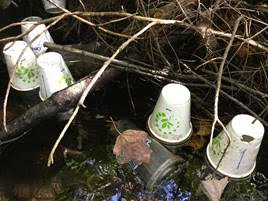
Each fall, thousands of volunteers of all ages and abilities clean the Connecticut River and its tributaries on foot or by boat. Volunteers remove trash along rivers, streams, parks, boat launches, trails and more. In 2019, more than 3,600 volunteers hauled nearly 67 tons of trash from riverbanks and waterways across our four river states.

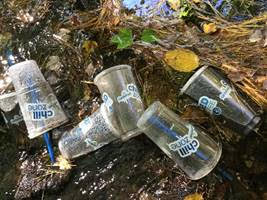
Volunteers remove everything from recyclable bottles and cans, fishing equipment and food waste to tires, televisions, and refrigerators. To date, volunteers have removed more than 1,167 tons of trash from our rivers.

“There are lots of ways to get involved,” continues Lennard. “Volunteers can report a trash site in need of cleaning, organize and register your own local cleanup group, or be a #RiverWitness on social media. Join us to celebrate our collective efforts – together yet apart – at a virtual Source to Sea Shindig on Sept. 30 to wrap up the Cleanup.”

New this year, CRC added #RiverWitness to help people connect with each other online through their shared concern for and appreciation of our rivers. Take a photo or video when you are at the river, participating in the Source to Sea Cleanup or enjoying time outside. Or make art inspired by river beauty or river pollution. Share on social media, include #RiverWitness and tag Connecticut River Conservancy.

If you’re not on social media, share images on CRC’s website: www.ctriver.org/riverwitness. Your images will be added to an online mosaic photo display and video. Select images will be used to call on decision-makers to enact trash solutions to keep trash out of our rivers.

If your group wants to get involved but needs a cleanup site, if you have questions, or if you know of a trash site in need of cleaning, contact CRC’s Cleanup Coordinator Stacey Lennard at cleanup@ctriver.org.

Learn more about the event at www.ctriver.org/cleanup.

Since 1952, the CRC has been the voice for the Connecticut River watershed, from source to sea. They collaborate with partners across four states to protect and advocate for your rivers and educate and engage communities. They bring people together to prevent pollution, improve habitat, and promote enjoyment of your rivers and streams. Healthy rivers support healthy economies.

To learn more about CRC, or to make a contribution to help protect your rivers, visit www.ctriver.org.

Thoughts from CRC Executive Director Andrew Fisk on the national trash problem

“After cleaning up 1,167 tons of trash over the past 23 years, it’s clear that repeated cleaning is not the solution to our trash problem,” says CRC Executive Director Andrew Fisk. “Consumers need to avoid single use items. And it’s time for the businesses who created and have been profiting from this trash to now help solve the problem through fundamental redesign of how our products are made and disposed of.”

The CRC insists we need to redesign our economy so there isn’t waste in the first place and that it is time businesses step up voluntarily to do the right thing by offering more sustainable, reusable, recyclable, and compostable options. “As individuals, we should always properly dispose of and recycle our waste,” continues Fisk. “And it’s time that corporations also take responsibility for their role in trashing our rivers.” 

As consumers, we have been trained by businesses to rely on unnecessary disposable and single-use plastics. Meanwhile, businesses and manufacturers are profiting by making these products out of cheap, petroleum-based plastic that is harmful and doesn’t easily break down. Producers and manufacturers then pass the responsibility and disposal costs for the products they make to the consumers, which lead to litter and polluted rivers.  

According to CRC, the best way businesses and corporations can cut down on their products becoming litter in our rivers is to offer more reusable options, like coffee mugs and drink cups. Additionally, bio-plastics are emerging as a promising alternative to plastic made from fossil fuels.

There are plenty of eco-friendly cups and dishware items on the market that businesses should be using. These new plastics are compostable, break down in the marine environment as food, are made from waste, and are made with less energy and environmental impact than traditional petroleum plastics.  

“We all have a responsibility to solve this problem,” says Fisk. “We are responsible as consumers to make good choices in how we purchase and dispose of products. Manufacturers, businesses, and government are also responsible and it’s time they do their part.”

Fisk continues, “By working together, we can make a real difference for our rivers. These ideas are going to take time, decades even. And we’ll keep at it as long as it takes. But our rivers need change now.”