Ivoryton Playhouse Presents Dinner-Cabaret, ‘A Night on the Town,’ at ‘Water’s Edge,’ June 25

AREAWIDE — Ivoryton Playhouse, in a new partnership with Water’s Edge Resort,  will present a series of eight cabaret-style dinner theatre performances beginning Sunday, June 11, written for and performed exclusively at Water’s Edge.  This original series will showcase the professional talent of Ivoryton Playhouse performers and musicians in four unique events.

This original series of four uniquely themed productions celebrate a broad array of musical styles and genres:

Great Balls of Fire:
Sunday, June 11, and Sunday, June 18
‘50s Rock N’ Roll and so much more.

A Night on the Town:
Sunday, June 25 and Sunday, July 9
Featuring the musical inspiration of New York City.

That’s Amore:
Sunday, July 16 and Sunday, July 23
Favorites from opera and musical theatre celebrating all things Italian.

Sounds of the ‘70s:
Sunday, July 30 and Sunday, Aug. 13
Hits from the disco era.

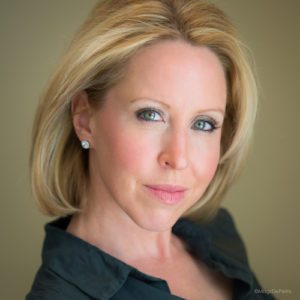
Carly Callahan. Photograph courtesy of Carly Callahan

Each evening will feature a professional cast of performers, in addition to a trio led by Music Director, Eric Trudel and directed by Carly Callahan.

Cast members include Marsha Ackerman, Schuyler Beeman, Carly Callahan, Billy DiCrosta, Amy Maude Helfer, Kate Hubbard, Emily Johnson, Mia Pinero, Jorge Prego, Michael Scarcelle and Charlie Widmer.

“We have put together some great talent for these evenings, including cast members from our season, to bring the Water’s Edge audience a night of entertainment that they won’t forget,” said Jacqui Hubbard, Artistic Director of Ivoryton Playhouse.

Water’s Edge, previously known as Bill Hahn’s Hotel, was an entertainment destination in the 1940s and 50s and featured both up-and-coming singers and stars such as Henry Youngman, Art Carney and Barbra Streisand.  “We’re thrilled to revive the wonderful provenance of this resort, and look forward to entertaining a new audience inspired by Bill Hahn’s delightful evenings here decades ago”, said Hubbard.

Tickets are $69 per person, including dinner and the show, and can be purchased by calling Water’s Edge Resort at 860-399-5901.  Tickets are not available through the Ivoryton Playhouse website or theatre box office.

For more information, visit watersedgeresortandspa.com.

‘Art in the Barn 2017’ Continues Today, Saturday in Lyme

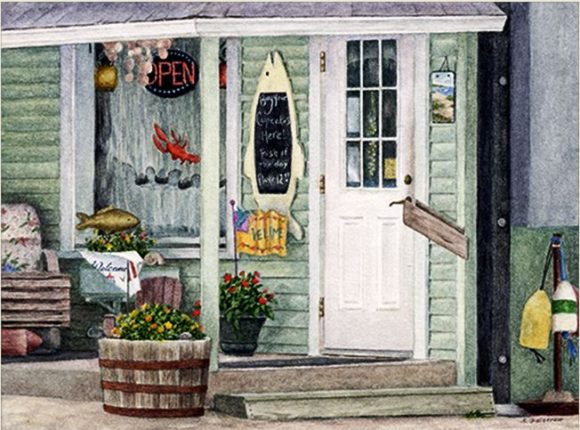
‘Old Lyme Fish Market’ by Angie Falstrom.

On Thursday, June 15, the barn at 11 Sterling City Rd. in Lyme will open its doors to friends of local artists and artisans.

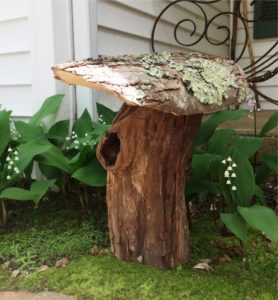
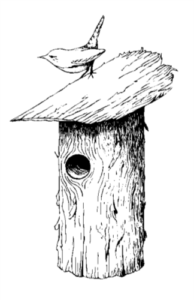
Birdhouse by Ben Kegley.

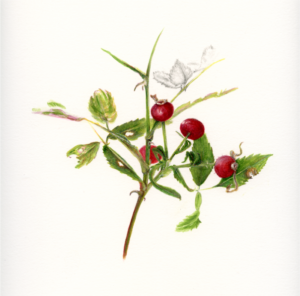
‘Rose Hips’ by Jodi Muench.

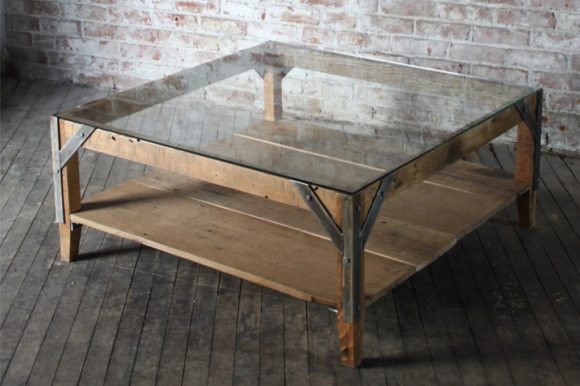
Works for sale will include Seana Bill’s handmade, one-of-a-kind wood furniture and accessories, Jodi Muench’s botanical watercolors, Ben Kegley’s rustic, whimsical cedar birdhouses, and Angie Falstrom’s miniature watercolors of local scenes.

Oak and steel coffee table by Seana Bill.

Logo for the Barn Show (copyright Angie Falstrom).

The show opens June 15, from 5 to 7:30 p.m., and continues on Friday and Saturday, June 16 and 17, from 10 a.m. to 5 p.m. on both days.

No parking is available on site.  Visitors to the show are asked to park on Sterling City Rd. or on the lawn of the First Congregational Church of Lyme.
For further information, call 860-434-3194.

SummerSing Mozart’s Requiem This Evening, All Welcome

Summer Sing Mozart’s “Requiem” this evening at 7 p.m. at St. Paul Lutheran Church, 56 Great Hammock Road, Old Saybrook. This session will be conducted by Rachael Allen of Westbrook High School. All singers are welcome to perform in this read-through of a great choral work. Professional soloists often participate.

The event is co-sponsored by Cappella Cantorum and Con Brio. A $10 fee covers the costs of the event. Scores will be available, and the church is air-conditioned.

The next Summer Sing on Monday, June 19, will be conducted by Barry Asch of Cappella Cantorum directing the Lord Nelson Mass, by Haydn.

For more information call (860) 767-9409 or (203) 530-0002   or visit www.cappellacantorum.org or www.conbrio.org

Studio 80’s ‘Summer Sculpture Showcase 2017’ on View Through October

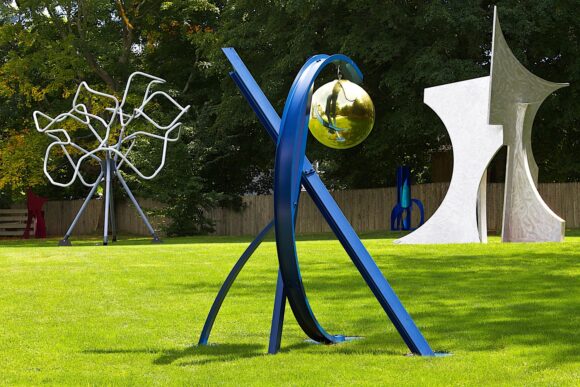
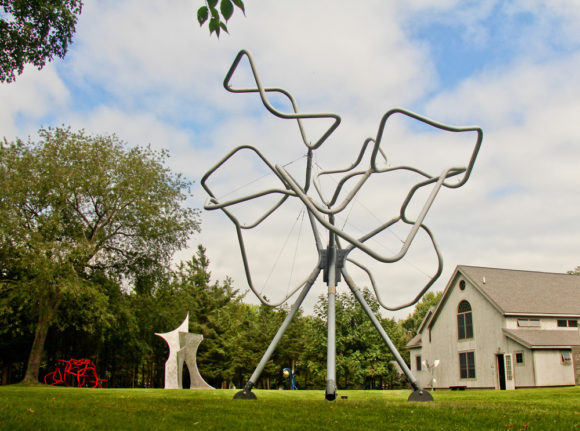
View of the Sculpture Grounds at Studio 80 where the Opening Reception for Summer Sculpture Showcase 2017 will be hosted on June 10. Three works by Gilbert Boro can be seen in the photo.

Opening Reception Features Live Performances by GUSTO Dance & River Valley Dance Project 

Gilbert Boro, owner and sculptor at Studio 80 + Sculpture Grounds in Old Lyme, is hosting an Opening Reception on Saturday, June 10, from 5 to 8 p.m. for two new exhibitions on his property, Summer Sculpture Showcase 2017 and The Golden Hour. All are welcome to attend the reception at which light refreshments will be served.

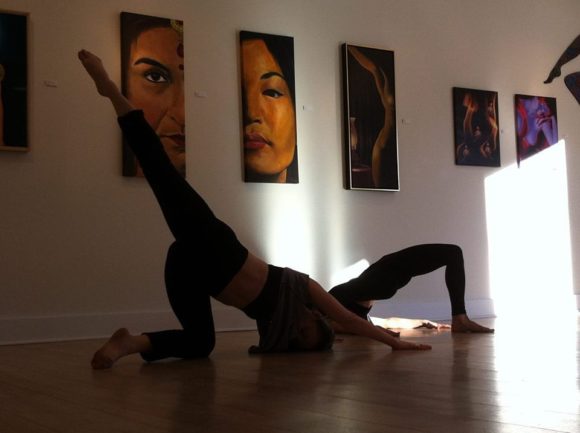
During the Opening Reception, there will be two live, outdoor performances at 6 and 7 p.m. by the GUSTO Dance & River Valley Dance Project. All are welcome to attend the reception, watch the dance performances and wander the beautiful gardens and on-site gallery to view the works.

GUSTO Dance & River Valley Dance Project will present two live performances on Saturday, June 10, at Studio 80 + Sculpture Grounds.

Summer Sculpture Showcase 2017 follows on naturally from last year’s extremely successful juried exhibition of the same name , which drew large crowds and had to be extended into October to meet public demand.  This new exhibition on the grounds adjoining Boro’s studio and inside the Emily Seward Boro (ESB) Gallery on the property features works created by 17 widely acclaimed sculptors interspersed among Boro’s own sculptures, along with works by 22 other contributing artists.  More than 30 sculptors from across the country responded to the Call for Entries submitting some 60 works.

Boro’s expansive Sculpture Gardens are located on 4.5 acres of his residence on historic Lyme Street in the heart of Old Lyme, Conn.  The beautifully landscaped grounds slope down toward the Lieutenant River offering a unique en plein air experience for the exhibition, which combines both large- and small-scale contemporary sculptures. Many of the works, which are in a variety of media, are for sale.

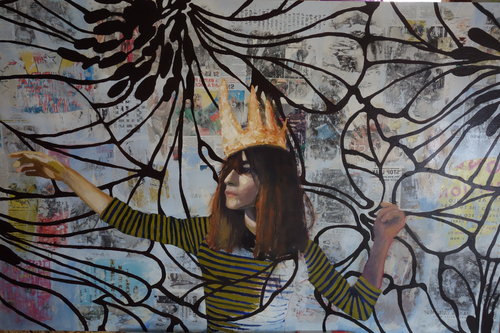
In Love with an Idea’ is the signature mixed media piece in Susan Hickman’s ‘The Golden Hour’ exhibition on view in the ESB Gallery at the Sculpture Grounds during Summer Sculpture Showcase 2017.

A second exhibition will be on view in the ESB Gallery located on the Studio 80 grounds during the Showcase. “The Golden Hour” will feature mixed media works by talented indoor artist Susan Hickman, who was born a twin in rural Ohio.  She grew up in a small town and went on to study graphic design and photography at Ohio University.

Hickman moved to New York for a year before making her way up to the New England area where she has spent the last 15 years.  She is currently a resident artist of Hygienic Gallery in New London.  An eclectic mixed media artist working with paper, acrylic, ink, oils, found objects, graphic design, clothing design, photography and more, Hickman has also owned and managed several small galleries in New London including DEW ART Gallery, TAKEOUT Gallery and Down Gallery in Mystic.

She utilizes studio waste, discarded paintings, and found textiles as well as new ones, thus creating a restorative process, making something new from the past. She enjoys experimenting with texture and color and finds making art of any kind an exploration and an escape.

The sculptors and the title(s) of their work(s) included in the Showcase are as follows:
Michael Alfano • Fox
Greg Bailey • Green Descent
Henneke Beaumont • Connected-Disconnected
Brooke Bofill • Tension, Reveal
Jerry Erlich • Third Wheel
Denis Folz • Structured Form 1

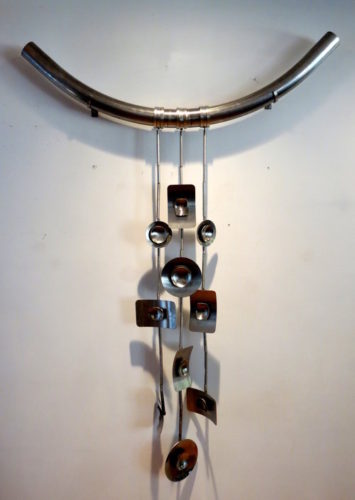
‘Amulet’ by Gints Grinbergs is the signature piece of Summer Sculpture Showcase 2017.

Gints Grinbergs • Amulet, Stainless Steel Globes
Deborah Hornbake • Leap
David Judelson • Pablo
Elizabeth Knowles & William Thielen • Locating
Carlin Morris • Untitled
Christ Plaisted • Victorious Vine
Marcia Raff • 3’s a Crowd
Janet Rutkowski • Cymbalic Journey
Lisa Simonds • Silueta
Matthew Weber • Cedar Shingles & Shim Stacks
Melanie Zibit • Echo

The signature piece of the exhibition is Amulet by Gints Grinbergs, who works with a variety of metals, including copper, bronze, and stainless steel, to create open forms.  Welding metal spheres and partial spheres, he creates modern structures, for indoors or out. Fascinated by pictures taken by the Hubble telescope and electron microscopes, Grinbergs makes associations with galaxies and molecular structures. The combination of a modern metal structure with rough, natural stone make these works unique sculptural forms.

Grinbergs has a BFA and a BA. in architecture from the Rhode Island School of Design and has studied at Massachusetts College of Art and the School of the Museum of Fine Arts, Boston. His work has been featured at the DeCordova Museum and Sculpture Park; Michael Beauchemin Gallery, Boston; and Lever House Gallery, New York, N.Y. and is Included in private and corporate collections throughout North America.

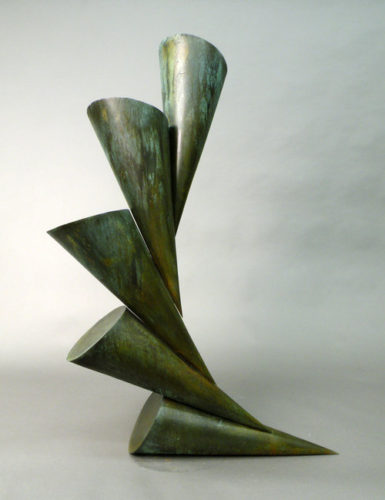
‘Green Descent’ by Greg Bailey is a featured piece in Summer Sculpture Showcase 2017.

Greg Bailey’s Green Descent is a striking work featuring elongated cones creating a continuum in the shape of an arc.  Bailey comments, “I am more than halfway through my life and besides some fleeting glimpses of awakening, I remain to be a predominantly unconscious individual. I am surprised that I have not grown past being manipulated by advertisements, angered by the news, or frustrated by the people around me. My hope is that by the end of my days I can learn to be present and at peace.”

He adds, “The production of art offers opportunities for discovering unconscious motivations and rationalizations. In this way, working in the studio is a practice of introspection and clarification.”

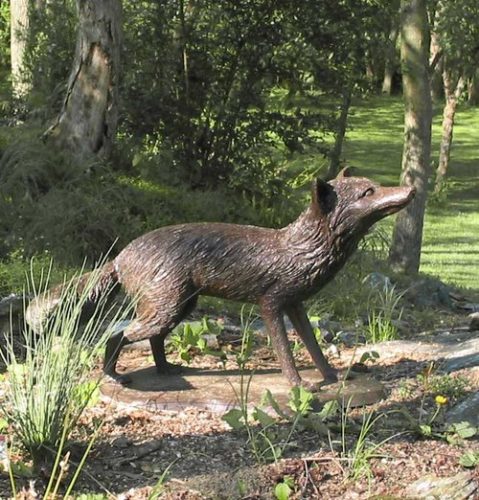
Fox by Michael Alfano is a delightful, engaging study in realism.  The sculptor explains that he has been, “… sculpting figures, monuments, and philosophical pieces for 20 years,” and comments, “If the artist taps into a universal truth, the piece is felt by everyone like clear mountain air.” He first studied at the Art Students League of New York with an emphasis on life size sculpture and anatomy.

His formal education continued at Boston University, and was augmented by internships with several prominent sculptors. He continues his training with master classes, and occasionally teaches sculpture.  Alfano exhibits his work at galleries and other public venues, and he is a regular entrant in art shows, where he has garnered over 60 awards.  His sculptures are found in private collections throughout the world and can be seen in monuments and other public art on permanent display in the United States.  Alfano’s work has been featured in newspapers, magazines, books, and on television.

‘Fox’ by Michael Alfano is a featured piece in Summer Sculpture Showcase 2017.

The jurors for the exhibition were sculptor Gilbert V. Boro, art historian Barbara Zabel and photographer Christina Goldberg.

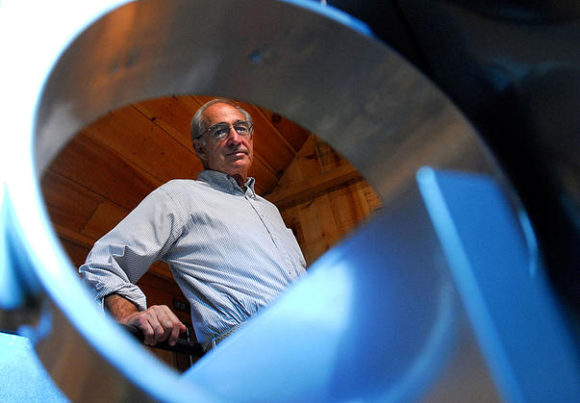
Boro has enjoyed an extraordinary and distinguished more than 50-year-career as a successful architect, sought-after international design consultant and an inspiring educator.  With a BFA from Duke University and post-graduate degrees from Columbia University, NYC, his work explores the interplay of space, place and scale in a wide range of media including steel, stone, wood, metal, aluminum and fiberglass.

Working in sculpture has been a compulsion rather than a possibility for Boro.  While mastering the rigors of technical competence, he developed a deep-seated passion for three-dimensional art, which continues to be the influential force behind his creations. He is both inspired and motivated by the creative freedom of sculpting, finding that abstract work is the means to fulfill his vision.  Boro’s sculptures can be found in art centers and public art venues across the US and throughout Europe; they have also been purchased by private collectors, corporations and foundations in both the US and internationally.

Sculptor Gilbert V. Boro in his studio.

Zabel is Professor Emerita of Art History at Connecticut College, where she taught modern and contemporary art.  She received her PhD at the University of Virginia and has received grants from the NEH, the Smithsonian, and the Mellon Foundation. She has written for art magazines and has published two books, the latest Calder’s Portraits, published in 2011 by the Smithsonian for the exhibition she curated at the National Portrait Gallery.

Since her retirement, Professor Zabel has taught several courses at local museums and has organized several exhibitions for the Lyman Allyn Art Museum, most recently The David Smalley Memorial Exhibition, which opens June 3 and is on view through Aug. 13.

Goldberg has worked as Exhibitions Coordinator and resident photographer for Studio 80 + Sculpture Grounds for almost five years.  She is chief curator of Summer Sculpture Showcase 2017 and also photographs all the works exhibited on the sculpture grounds on a revolving basis. Additionally, she builds and designs web content for a great range of social media outlets, both for Studio 80 and external clients.

With a background in visual arts and communications from the University of Hartford Art School and Suffolk University, Goldberg’s photographs have been published extensively in numerous local print and digital venues including Coastal Connecticut magazine, Middletown Press, and Events magazine. A selection of her photographs will be on display in the coming months at Paynter Fine Art Gallery, located in the heart of Old Lyme’s Historical District.

View across Gil Boro’s Sculpture Grounds looking towards Studio 80.

This Summer Sculpture Showcase offers a unique opportunity for established sculptors to exhibit their work in a different location, while also effectively creating a new exhibition within the Sculpture Gardens.  Boro comments, “I’m delighted to be able to open my grounds to these exceptional sculptors whose work intrigues me.  Each one offers original creative thinking resulting in a combination of contrasting conceptual designs in a variety of media.  I think any visitor to the exhibition is going to be thoroughly engaged by what he or she sees – including children.”

Boro is somewhat unusual as a professional sculptor in that he loves to see folk of all ages directly interacting with his sculptures, noting that he has a strong aversion to exhibitions, “… where people can’t touch my work.”  Apart from attracting visitors to see the works on his grounds, Boro is thoroughly invested in the vibrant Old Lyme arts scene and hopes this exhibition will help cement the town as a summer destination for art-loving visitors from near and far, especially during the town’s Midsummer Festival, which this year is on Friday, July 28, and Saturday, July 29.

About Studio 80 + Sculpture Grounds:  Located at 80-1 Lyme St., less than a minute from Exit 70 on I-95, the Sculpture Grounds are open 365 days a year from 9 a.m. to 5 p.m. daily.  Admission is free.  Children, field trips and group visits are all welcome. The Studio is open by appointment.  For further information, contact 860-434-5957, visit www.sculpturegrounds.com or email studio80sculpturegrounds@gmail.com

New Exhibition Devoted to Environmentally-Conscious Artists on View at Florence Griswold Museum

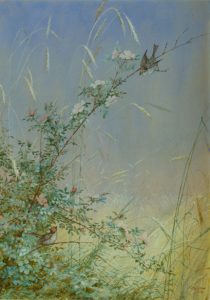
Fidelia Bridges, Wild Roses Among Rye, 1874. Watercolor and gouache over pencil on paper, 13 1/2 x 9 in. Florence Griswold Museum, Gift of The Hartford Steam Boiler Inspection and Insurance Company, 2002.1.13

The Florence Griswold Museum in Old Lyme, Conn., presents a major exhibition entitled Flora/Fauna: The Naturalist Impulse in American Art, on view June 3 through Sept. 17, 2017. Drawn extensively from the Museum’s collection, as well as many public and private lenders, the 101 works in the exhibition survey the history of environmentally-conscious artists in the United States from the dawn of the 19th century through the mid-20th century.

Flora/Fauna begins with early-American artists such as the Peale family, John James Audubon and their contemporaries, then examines the naturalist impulse in works by the Hudson River School, American Pre-Raphaelites, and American Impressionist artists before featuring select 20th-century artist-naturalists such as Roger Tory Peterson, creator of widely-used bird guides.

Works in the exhibition reveal how artistic production corresponded with social developments in American history, from an early concern with establishing a national identity distinct from Europe; to reflecting Americans’ shifting philosophies on evolution and the human relationship to the environment; to the growth of the conservation movement in the United States.

The Artist-Naturalist in Early America

The birth of natural history in America coincided with the founding of the country. Such artists as Mark Catesby, William Bartram, the Peale family, Alexander Wilson, and John James Audubon participated in the American Enlightenment by pioneering many of the country’s firsts—the first natural history publications, institutions, and environmental experiments. Scientists quickly realized that they needed the assistance of artist-naturalists to give visual form to their discoveries and disseminate that knowledge through books, botanic gardens, lectures, and museum displays.

During this age of Enlightenment, many political leaders, including Thomas Jefferson, looked to natural history to help forge the identity of the new nation. Not surprisingly, the country’s first scientific center developed in and around its first capital. Philadelphia attracted the brightest intellectual, scientific, and artistic minds that formed a network of new professionals. Works in this section by the Bartram, the Barton, and the Peale families reveal that the forging of an American natural history was often a ‘family affair’ facilitated by personal relationships.

Titian Ramsay Peale’s, Monarch Butterfly [No. 16], 1817 (American Philosophical Society Library) a work from an entomological sketchbook, demonstrates how artists participated in the discovery, documentation, and collection of natural specimens. The sketch shows the monarch at different stages of life. Beneath the illustration, he wrote his scientific observation: “Went into the Chrysalis state on the 4th of September­—and became perfect on the 13th of the same month.”

Nature’s Nation: The Hudson River School

Building on the documentary and aesthetic achievements of the artist-naturalists before them, the Hudson River School painters sought to capture what was unique about the American land—its vast, untouched wilderness. The group who has become known as the Hudson River School first took up this task around the mid-19th century. Based in and around New York City, they traveled to such areas as the Hudson River Valley of New York and the White Mountains of New Hampshire to experience expansive American scenery firsthand.

Their resulting paintings symbolically linked the natural landscape to concepts of nationalism and environmentalism, equating the American landscape with American identity. For Hudson River School painters, pictorializing nature in the United States became a mode of social and environmental criticism that reflected scientific and ecological questions of the time, and laid the roots for the American conservation movement as well as the national park system.

Beginning with Thomas Cole’s allegorical admonitions about man’s intrusion on nature, others such as Asher B. Durand and Frederic Church evolved to value realism over metaphor, reflecting their firsthand observations of American scenery in highly detailed paintings both modest and vast—finding beauty in nature’s growth and decay.
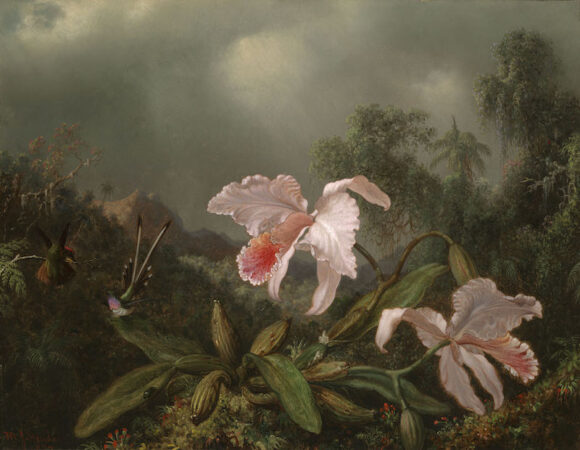
Martin Johnson Heade, Jungle Orchids and Hummingbirds, 1872. Oil on canvas, 18 1/4 x 23 in. Yale University Art Gallery, Christian A. Zabriskie and Francis P. Garvan, B.A. 1897, M.A. (Hon.) 1922, Funds

Martin Johnson Heade can be called a quintessential artist-naturalist. His inventive combination of elements of scientific illustration (in his exactness of representation), his dramatic use of still life elements (birds and flowers), and his evocative placement of them in their natural environment gave his works a power not seen before in American painting. These traits are exemplified in Jungle Orchids and Hummingbirds, 1872 (Yale University Art Gallery).

Truth to Nature: American Pre-Raphaelites & Beyond

Many of the Hudson River School artists were aware of the writings of the English artist and critic John Ruskin, one of the most significant voices in the 19th century art world. Ruskin’s works spanned a variety of topics from art, architecture, and natural history (including geology, botany, and ornithology) to religion, myth, and politics. His most influential and widely read text, Modern Painters (1843), emphasized the connections between art, nature, and society, and advocated for artists to uphold a “truth to nature” in their work.

Ruskin’s pledge to a morally and socially committed art led him to reject the artifice of “decorative” art in favor of an art with an authentic source, such as nature itself. His followers in the United States, the American Pre-Raphaelites, produced landscape, still life, and studies that utilized a meticulousness of detail gleaned from their close study of nature en plein air.

Prior to his involvement in the arts, Ruskin had contemplated becoming a geologist. In the 19th century, geology was considered a gentlemanly endeavors that many artists, including the Hudson River School and the American Pre-Raphaelites, pursued. As works in this section show, careful studies exposing evidence of the artist’s process were as highly valued as finished works. In additional to geology, botany became an enormously popular genteel hobby, and developed into a status symbol.

These pursuits enabled the success of nature illustrators like Fidelia Bridges, who brought these topics to mass-marketed periodicals and, thus, into thousands of American homes.  A rare portfolio of Bridges’ work in the collection of the Florence Griswold Museum has been newly conserved and will be on view for the public for the first time. Ruskin and his American followers employed a scrupulous observation of nature from life in order to convey the ‘truths’ of their subjects’ identities, as seen in Bridges’s Thistle in a Field, 1875 (Florence Griswold Museum).

Impressionism & The Naturalist Impulse in Connecticut

While the “naturalist impulse” most often yielded a work of art that appeared naturalistic, or true to nature in a scientific sense, this exhibition allows for an expanded definition to include works that may be deemed “impressions” of nature. Like artists of previous generations in Europe, the American Impressionists found art colonies in the suburbs and countryside to be restorative retreats, where they could immerse themselves in nature and enjoy the camaraderie of like-minded colleagues.

Around 1900, the natural landscape of Old Lyme perfectly fulfilled that need for artists. Not coincidentally, many artists who frequented art colonies, like Willard Metcalf, Childe Hassam, and Harry Hoffman, were also practicing naturalists, to varying degrees.
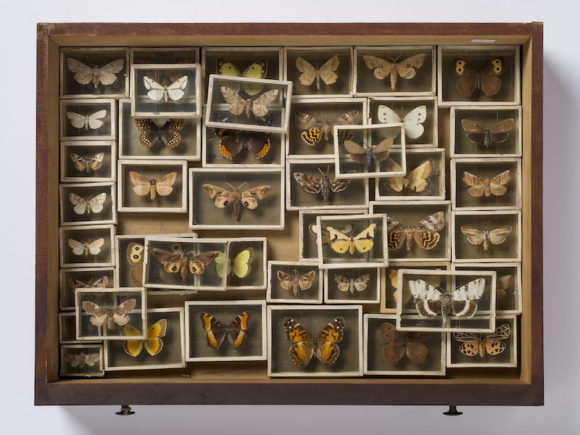
Drawer 1B, containing bird eggs collected by William L. Metcalf in Giverny and Grez-sur-Loing from Metcalf’s Naturalist Collection Chest, ca. 1885–1925. Mahogany wood drawer, 18 x 13 3/4 in. Florence Griswold Museum, Gift of Mrs. Henriette A. Metcalf

The consummate artist-naturalist of the Lyme Art Colony was Willard Metcalf. On view in Flora/Fauna is the cabinet housing his collection of specimens. One drawer contains thirty-eight glass-mounted moths, many with furry bodies and wings still displaying their original deep gold, bright yellow, or rosy pink pigments. A second drawer reveals thirty-two pink cigarette boxes containing the tiny eggs of such birds as the English Sparrow and the creamy blue eggs of a Redstart.

Metcalf translated his love of the natural world to his artwork. He painted Kalmia (Florence Griswold Museum) in 1905, the first summer he stayed at Florence Griswold’s boardinghouse with the keen observations of one very much attuned to their environment. In Kalmia, Metcalf captures the smooth, blue Lieutenant River reflecting the calm sky, while fluffy white and pink blossoms and green grasses appear to breathe in the spring air.

The exhibition concludes with the artist-naturalist tradition that persisted into the 20th century and still thrives today in the Connecticut River Valley. Roger Tory Peterson, who inspired the environmental movement with his activities as a naturalist, educator, and artist, purchased 70 acres of property in Old Lyme in 1954. Peterson published the first modern field guide, A Field Guide to the Birds; giving field marks of all species found in eastern North America in 1934 and developed the Peterson Identification System so that amateurs and professionals could identify species visually for close observation without hunting them.
Drawer 1B, containing bird eggs collected by William L. Metcalf in Giverny and Grez-sur-Loing from Metcalf’s Naturalist Collection Chest, ca. 1885–1925. Mahogany wood drawer, 18 x 13 3/4 in. Florence Griswold Museum, Gift of Mrs. Henriette A. Metcalf

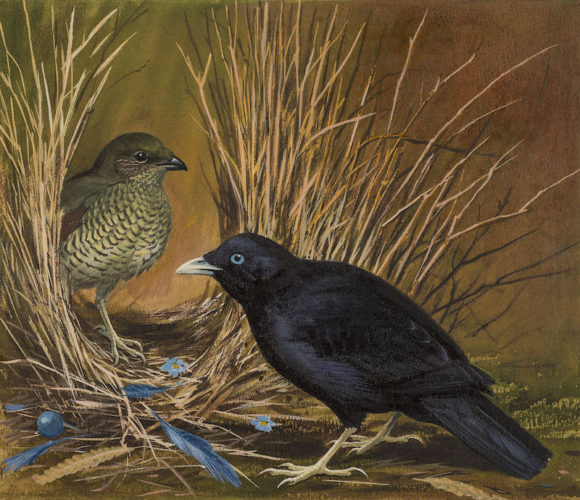
Satin Bowerbird, (Private Collection), created for reproduction in his 1964 bookThe World of Birds, is a simplified scene illustrating two birds interacting in their environment. These guides helped to popularize the pastime of bird watching and cultivate a national interest in wildlife.

Continued Awareness

When members of the Lyme Art Colony made nature the focus of their practice, they were drawing on an American tradition that began 100 years earlier with some of the country’s first artist-naturalists and explorers. Today, issues of climate change, land conservation, and preservation of endangered species and habitats have acquired new urgency in the 21st century, making the chronicling of America’s natural history through art more relevant than ever.

The Florence Griswold Museum remains dedicated to the pursuits of the artist-naturalist by fostering the understanding of American art with an emphasis on the art, history, and landscape of Connecticut.

Flora/Fauna: The Naturalist Impulse in American Art is accompanied by a fully-illustrated catalogue authored by the exhibition’s curator, Jennifer Stettler Parsons, Ph.D., with additional essays by Ellery Foutch, Ph.D. (Middlebury College), and Amy Kurtz Lansing (Florence Griswold Museum). Copies of the catalogue are available from the Museum’s website (www.florencegriswoldmuseum.org) or at the Museum’s Shop.

For related programming see FlorenceGriswoldMuseum.org.

The exhibition has been made possible with the generous support of The Hartford Steam Boiler Inspection and Insurance Company, Bank of America, the Rudolph and John Dirks Fund of the Community Foundation of Eastern Connecticut, the Nika P. Thayer Exhibition and Publication Fund, and the Connecticut Office of the Arts. Additional support has been generously provided by a group of individual donors that are helping to advance the Museum’s mission through special exhibitions.

Editor’s Note: The recipient of a Trip Advisor 2016 Certificate of Excellence, the Florence Griswold Museum has been called a “Giverny in Connecticut” by the Wall Street Journal, and a “must-see” by the Boston Globe. In addition to the restored Florence Griswold House, the Museum features a gallery for changing art exhibitions, education and landscape centers, a restored artist’s studio, 13 acres along the Lieutenant River, and extensive gardens. Its seasonal Café Flo was recognized as “best hidden gem” and “best outdoor dining” by Connecticut Magazine. The Museum is located at 96 Lyme Street, Old Lyme, Connecticut. 

Visit www.FlorenceGriswoldMuseum.org for more information.