Lyme Academy Welcomes Community to Enchanted Afternoon of Seasonal Celebrations

Photo by Suzanne Thompson.

OLD LYME — There were smiles everywhere on Saturday afternoon when Lyme Academy of Fine Arts opened its doors and grounds to the community to celebrate the season.

There was plenty of activity at the firepits where ‘smores galore were toasted. Photo by Lyme Academy of Fine Arts.

Asked after the event how she felt this inaugural event had worked out, Mora Rowe, Executive Director of Lyme Academy told LymeLine, “Our first annual tree lighting was the picture of holiday cheer, with families and friends of all ages gathered on the Academy grounds. Hands were warmed around a bonfire, perfect for homemade s’mores, and hearts were made merry through the festive sounds of caroling and local bands.

Photo by Lyme Academy of Fine Arts.

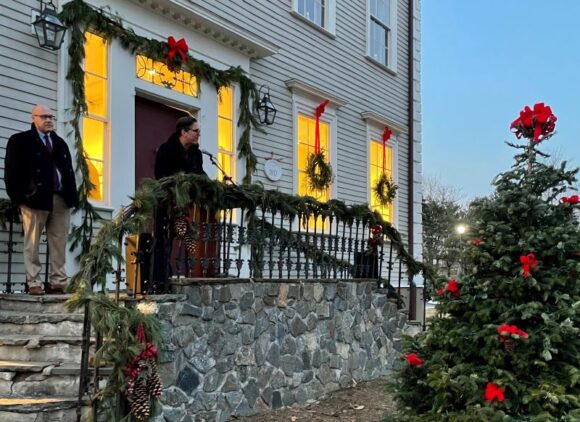
Michael Duffy, chairman of the Lyme Academy Board of Trustees, addressed the large crowd from the steps of the Sill House (above).  State Representative Devin Carney (R-23rd) to his left followed suit …

Photo by Suzanne Thompson.

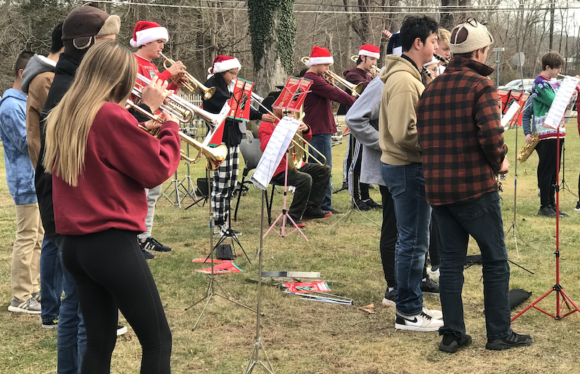
The Lyme-Old Lyme Middle School Band cheerfully played …

Photo by Lyme Academy of Fine Arts.

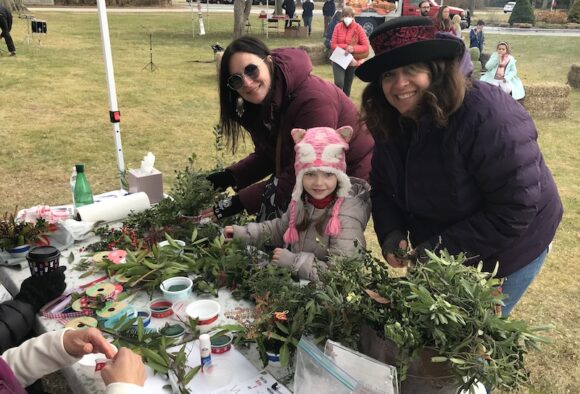
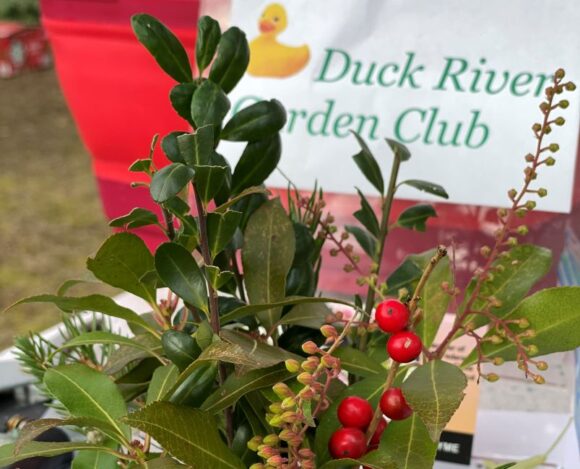
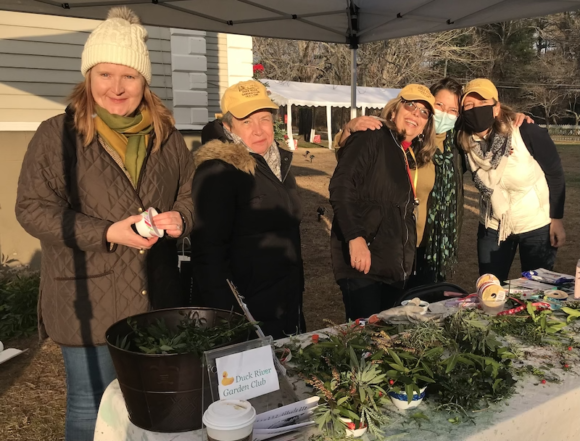
Many local non-profit organizations participated and the Duck River Garden Club (DRGC) was an especially popular stand …

Photo by Suzanne Thompson.

… where people spent time enjoying their ‘Tussie Mussie’ handiwork …

Photo by Suzanne Thompson.

… and the ladies working behind the stand were clearly enjoying themselves too!

Photo by Suzanne Thompson.

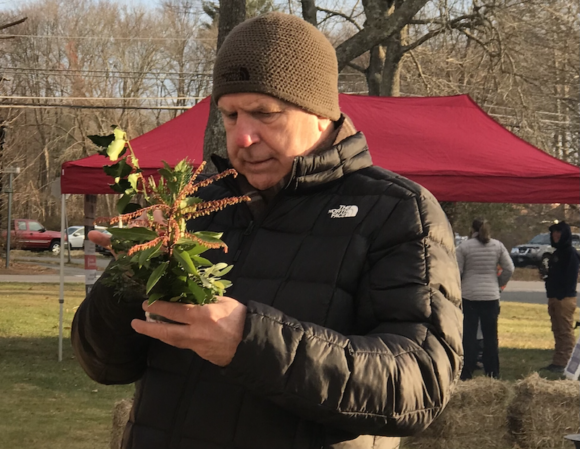
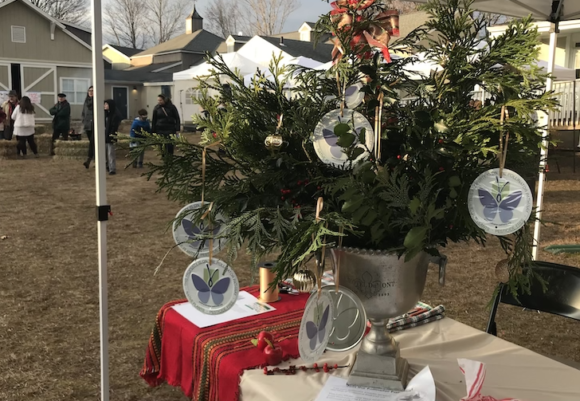
Pollinate Old Lyme! was kept busy educating folks on the importance of pollinators and selling beautiful medallions …

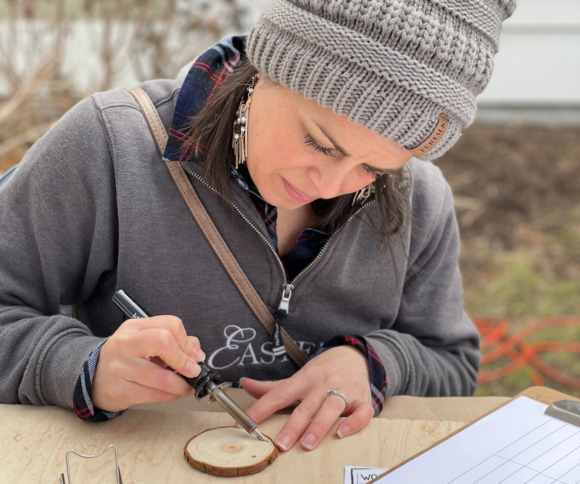
Rowe continued, “Our arts and crafts stations ensured that gift-able goodies would find their way under the tree – thank you to our own Academy students and faculty for their creativity and help with that!”

Photo by Lyme Academy of Fine Arts.

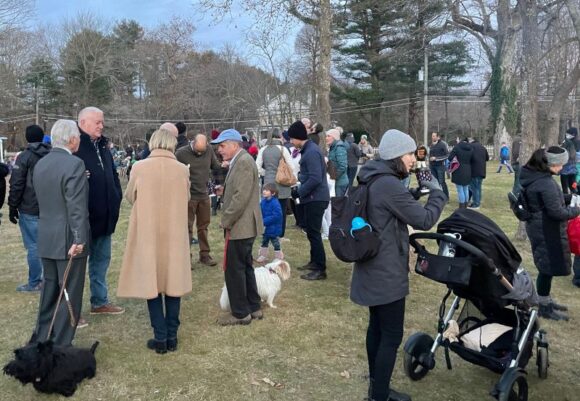
Old Lyme First Selectman Timothy Griswold (center in blue baseball hat) and newly-elected Region 18 Board of Education Chairman Steven Wilson (second from left facing camera with dark-colored jacket) were two of the hundreds of local residents enjoying the festivities …

Photo by Suzanne Thompson.

… as were these DRGC ladies and their ‘customers.’

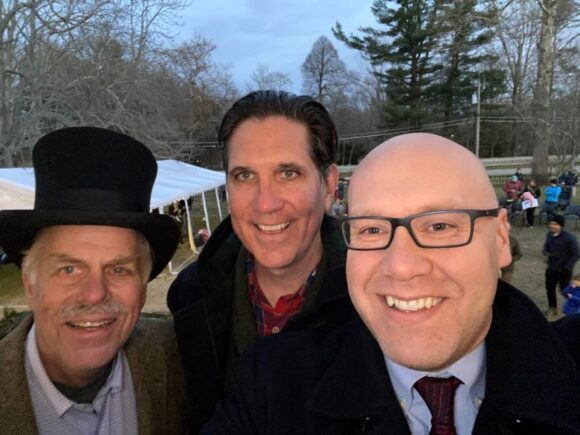
Photo by State Rep. Devin Carney.

These three local dignitaries, Michael Duffy (Lyme Academy Board Chairman), Tim Griswold (Old Lyme First Selectman) and Devin Carney (R- 23rd District State Representative) took a few moments out from all the fun to take a smiling selfie.

Photo by Lyme Academy of Fine Arts.

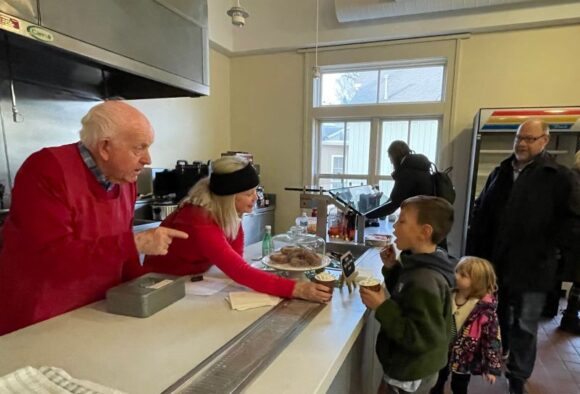
The Lyme Academy Cafe did a brisk business in Apple Cider Donuts and hot chocolate …

Photo by State Rep. Devin Carney.

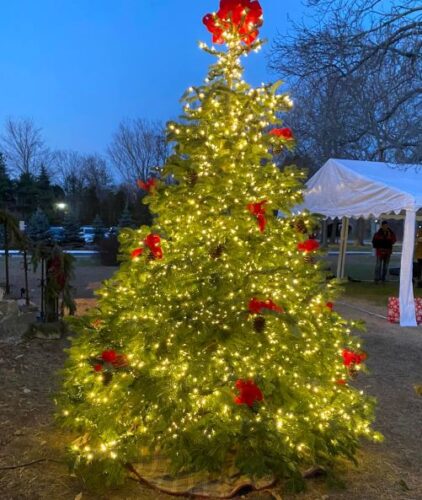
A sparkling Christmas tree was lit, carols were sung, and a thoroughly good time was had by all.

Rowe summed up the whole event with these words, “The afternoon was a reflection of the wonderful community we have here in Old Lyme and surrounds, and was the jolliest and most special way to begin the holiday season,” adding enthusiastically, “May all days be so merry and bright!”

Florence Griswold Museum Presents ‘Revisiting America: The Prints of Currier & Ives’ Through Jan. 23 

Broadway New York, n.d. Lithograph. Joslyn Art Museum, Gift of Conagra Brands, 2016.20.78

OLD LYME — The Florence Griswold Museum in Old Lyme, Connecticut, presents Revisiting America: The Prints of Currier & Ives, on view through Jan. 23, 2022.

Currier & Ives was a prolific printmaking firm based in New York City in the 19th century. Founded by Nathaniel Currier in 1834 and expanded by partner James Merritt Ives in 1856, the firm produced millions of affordable copies of over 7,000 lithographs, gaining it the title, “the Grand Central Depot for Cheap and Popular Prints.” 

Revisiting America comes from the Joslyn Art Museum in Omaha, boasting a collection of nearly 600 Currier & Ives prints donated by Conagra Brands. Currier & Ives perpetuated Victorian ideals in its depictions of family, history, politics, and urban and suburban life—concepts that persist today partly as a result of the wide distribution of their images. 

Revisiting America offers an opportunity for viewers to contemplate the complexities and contradictions of America’s past. For many people, what could be more iconic representations of America than the prints of Currier & Ives? For others, they are reminders of harmful stereotypes of the poor and indigenous and enslaved peoples. While a trip down America’s memory lane, the exhibition offers an opportunity to delve into the reality that the company’s romanticized scenes sometimes prioritized marketability over morality. 

For the presentation at the Florence Griswold Museum, Curator Amy Kurtz Lansing expands upon the exhibition’s original scholarship with a section discussing artist Frances Flora Bond Palmer, examples of how Currier & Ives images were re-discovered and used in the 20th century, an explanation of lithography, and additions pertaining to the Griswold family. 

Made to Sell 

Currier & Ives prints were first and foremost commodities, with subjects often determined by popularity and sales figures. 

The choices the company made about what not to include in their images are as significant as what is depicted. For instance, although cities were often characterized by deep poverty and inequality, and perceived as full of crime, the firm’s views of urban streets represent an idealized version of the city—populated by fashionable, well-to-do people, clean thoroughfares, and regal buildings.

These idealized images appealed to rural and urban customers alike by offering visions of city life unaffected by the social and economic issues of the day. Broadway New York depicts the intersection of Broadway and Ann Streets in Manhattan. Once a quiet residential district surrounding City Hall Park, where people stroll in the foreground, the area became a bustling commercial and entertainment hub around 1841. 

As author James Dawson Burn described, “There you may see the lean lanky Puritan from the east, with keen eye and demure aspect, rubbing shoulders with a coloured [sic] dandy, whose ebony fingers are hooped in gold.” The Currier & Ives print shows a bustling urban space with chic (but not diverse) passersby. 

Other popular sellers were depictions of leisure time activities. The age of industrialization allowed Americans more opportunity to fill their day with sports and other pastimes. Popular hobbies of the time included hunting, fishing, and horse racing, topics marketed to men for their offices, saloons, and clubs. 

Currier & Ives produced more than 750 prints related to horses and horse racing, such as Harry Bassett and Longfellow, in their Great Races at Long Branch, N.J. July, 2nd and Saratoga, N.Y. July, 16th 1872. The lithograph depicts two famous racehorses, Harry Bassett and Longfellow, whose two newsworthy races are memorialized in the text of the print. 

The Social Media of the Day? 

The sheer reach of Currier & Ives prints, sold in their New York City store, or by mail order, pushcart vendors, and far-flung agents, put their pictures in view of countless Americans, particularly women to whom they were marketed as affordable domestic decor.

The visually-based culture we live in today, with images circulating on the internet and social media, has its origins in the mass communications created in part by Currier & Ives. The prints promoted an optimistic ideal of home, family, and stability in their day, and continue to exemplify that view for Americans, who became acquainted with them in the 20th and 21st centuries, when we play out those same fantasies on our social media feeds. 

A Griswold Connection 

Nineteenth-century Americans took pride in the technological advancements being made across their nation. A rapid and wide-reaching revolution in transportation led the country from majestic clipper ships to powerful steam-driven boats and locomotives in a matter of decades.

At their height in the middle of the century, clipper ships—three-masted merchant ships designed for speed—ruled the seas and allowed for the faster-than-ever transportation of goods and people across the Atlantic and along the coasts. 

Pairing Charles Parsons’s oil painting Clipper Ship Challenge at Griswold’s Wharf, Pine Street, New York (ca. 1851), on loan from local collectors, with James E. Butterworth’s Currier & Ives lithograph Clipper Ship Flying Cloud, (1852), Curator Amy Kurtz Lansing makes a Connecticut connection to the pursuit of global trade. 

As captain of a fast sailing ship Florence Griswold’s father transported goods and people across the Atlantic until his retirement, while extended family members Nathaniel and George Griswold (owners of Challenge) imported tea from China. 

Frances Flora Bond Palmer (1812–1876) 

Most of Currier & Ives’s artists are unidentified, their works published under the name of the firm rather than their own signature. However, one of their most prolific contributors, responsible for at least 200 lithographs, was Frances (Fanny) Palmer. Born and educated as an artist in England, Palmer and her printer husband owned their own firm before immigrating to America in 1844.

Frances Palmer, Snipe Shooting, 1852, Lithograph. Joslyn Art Museum, Gift of Conagra Brands, 2016.20.338

For Snipe Shooting (1852), the artist sketched the image from nature and made the final drawing on the lithographic stone. The image was printed with two separate inkings of the stone in different colors. Palmer’s artistic skill, knowledge of lithographic techniques, and ability to compose what became some of their most iconic prints gave Currier & Ives its edge over the competition.  

Lithography Explained 

Derived from the Greek for “writing on stone,” lithography was invented in 1796 by the German Alois Senefelder. It differs from other forms of image reproduction in the way it allows artists to draw expressively and with varying thicknesses of line right on the printing surface. Unlike etched or engraved metal plates that wear down over time, lithography allowed for printing many more copies, leading to its quick embrace by the industry in America by the 1830s. 

By displaying lithography tools, including examples of stones used by artists today borrowed from neighboring Lyme Academy of Fine Arts, visitors better understand the process necessary to produce this type of print. 

The Legacy of Currier & Ives 

Why are Currier & Ives lithographs still so well-known today?

By the time Currier & Ives ceased operations in 1907 it had dispersed countless prints around the country. Hanging in homes, offices, bar rooms, clubs, and schools, these “engravings for the people” were often the only visual representations in Americans’ lives. After World War I, artists and collectors, striving to define an identity proudly distinct from Europe, delved into America’s past, where they re-discovered Currier & Ives. Suddenly appreciated again, newspapers in the 1920s published stories about the frenzied search for the prints in attics and shadowy corners, and noted their inclusion in art exhibitions.  

Currier & Ives prints began to be reproduced on Christmas cards, collectibles, stamps, everyday dishes, and glassware. Examples of these items are on display. Connecticut artist George Henry Durrie, whose snowy views of country homes appeared in nearly a dozen Currier & Ives lithographs, are the among the most commonly reproduced as evocations of Thanksgiving and Christmas. Visitors to the exhibition have enjoyed sharing their memories through social media and interaction with staff, such as this quote from the comment book, “My wonderful grandfather gave cards at Christmas with Currier & Ives pictures on the front. I am 67 years old and still have some of them. Nice memory!” In Connecticut, Travelers Insurance included Currier & Ives images on their annual calendar in beginning in 1936 and encouraged the prints to become lasting décor with instructions on how to cut out and put the calendar pages in 11 x 16 inch frames. The company still produces Currier & Ives calendars today.  

Collection  

Roy King, a private collector from New York, assembled the extensive Currier & Ives print collection over a period of three decades starting in the 1950s. He collected 672 lithographs, most of which were purchased individually.

In 1975, King sold his prints to New York holding company, Esmark. The collection was kept together and shown across the country at universities and museums. Esmark allowed the prints to be seen in over 100 galleries, museums, and universities as well as two dozen other countries, created a wider audience than ever before for these popular depictions of quintessential American life.

The prints were then purchased by Conagra Brands, which installed them in spaces that were open to the public in Omaha, Neb. I

n June 2016, Conagra Brands donated the collected to the Joslyn Art Museum, where it could remain a cherished presence in the Omaha community. 

Florence Griswold Museum  

The consistent recipient of a Trip Advisor Certificate of Excellence, the Florence Griswold Museum has been called a “Giverny in Connecticut” by the Wall Street Journal, and a “must-see” by the Boston Globe.

In addition to the restored Florence Griswold House, the Museum features a gallery for changing art exhibitions, education and landscape centers, a restored artist’s studio, 12 acres along the Lieutenant River, and extensive gardens and nature trail. The Museum is located at 96 Lyme Street, Old Lyme, CT.

Visit FlorenceGriswoldMuseum.org for more information, including a list of programs and activities related to the exhibition.  
Three Shows On View at Lyme Art Association; ‘Deck the Walls’, “Hands on the Land,’ ‘Polly Seip Solo Show’

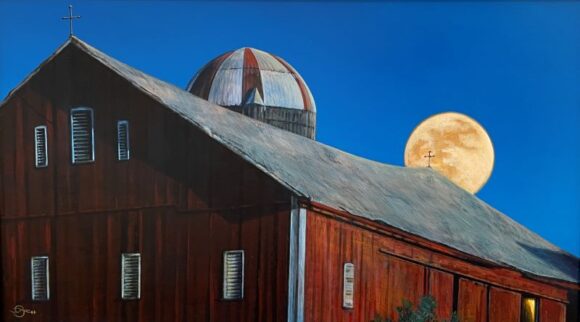
‘Harvest Moon’ by Del-Bourree Bach in acrylics is one of the featured works in the ‘Deck the Halls’ show on view at Lyme Art Association.

OLD LYME — There are currently three shows on view at Lyme Art Association (LAA.)

The signature show is the LAA’s perennially popular holiday art exhibition and sale, Deck the Walls, which is on view through Jan. 2, 2022. More than 200 original works of art by member artists will be on display and priced to sell as holiday gifts. Deck the Walls features a wide variety of appealing subjects and tends toward smaller, less expensive works.

Concurrently with Deck the Walls, an exhibition reflecting on the impact of humans on the local landscape will be on view. This show titled Hands on the Land is a collaboration with the Connecticut River Museum and was previously on view there.

A third show, the Polly Seip Solo Show, is also on view. Polly Seip won the first prize in the 2019 Associate Artists Show, and received the opportunity to present a solo show. Her luminous nocturnes are especially noteworthy.

‘Slate-Colored Junco’ by Bivenne Staiger reflects the wintry theme of the ‘Deck the Halls’ show.

“For Deck the Walls, the Lyme Art Association features a wide variety of appealing subjects at affordable prices that are great for holiday shopping. We hope to help solve those gift giving dilemmas – a beautiful piece of artwork is always appreciated!” says Jocelyn Zallinger, Gallery Manager.

“During the holiday season, the Lyme Art Association is a great place to come for a gentle activity for children on school vacation or for visiting guests. Whether you have a few minutes or more than an hour, the gallery is a wonderful way to decompress, stimulate conversation, or simply enjoy yourself,” comments Laurie Pavlos, Executive Director.

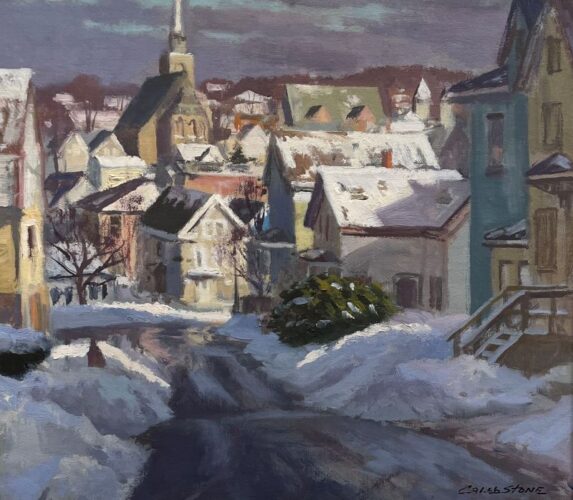
‘Winter Light’ by Caleb Stone is another of the signature paintings in the ‘Deck The Walls’ show.

The LAA is free and open to the public Wednesday through Sunday, from 10 a.m. to 5 p.m., and by appointment.

The LAA is located at 90 Lyme St. in Old Lyme, at the corner of Halls Road. Call 860-434-7802 for more information, or visit www.lymeartassociation.org.

Arron to Serve as Artistic Director for Final Musical Masterworks Season Before Lark Assumes Role; Next Concerts Dec. 11-12

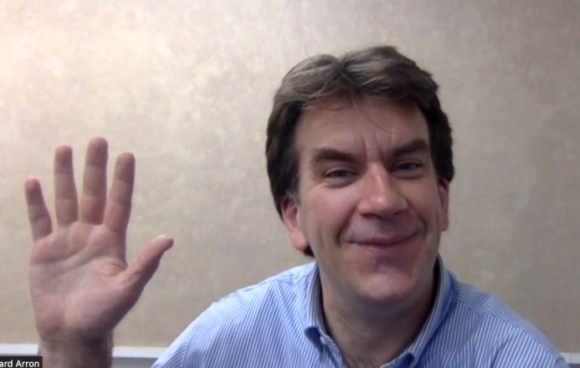
Musical Masterworks Artistic Director Edward Arron waves during the Zoom interview recently conducted by Suzanne Thompson for this article.

OLD LYME — Musical Masterworks is back with live concerts and audiences next weekend — and this 31st season of chamber music concerts is special on multiple fronts.

This season’s five concerts will be a farewell tour for cellist Edward Arron, who has served as Artistic Director for 13 years. A soloist with major orchestras and chamber musician throughout North America, Europe and Asia, Arron has garnered recognition worldwide for his elegant musicianship, impassioned performances, and creative programming. 

The Juilliard graduate was for 10 years the artistic director of the Metropolitan Museum Artists in Concert, a chamber music series created in 2003 to celebrate the 50th anniversary of the Museum’s prestigious Concerts and Lectures series.

He has been a University of Massachusetts Amherst Music Department faculty member since 2016, after serving on the faculty of New York University from 2009 to 2016. He tours and records regularly as a member of the renowned Ehnes Quarter.

Tessa Lark, who is Musical Masterworks Artistic Director-designate and will take over the role for the 2022-23 season, waves during the Zoom interview recently conducted by Suzanne Thompson for this article.

This season also is a settling-in for the series’ Artistic Director Designate, violinist Tessa Lark. This budding superstar in the classical realm, who first performed on Musical Masterworks stage almost a decade ago, will become Artistic Director with the 2022-23 season.

The 2020 GRAMMY nominee in the Best Classical Instrumental Solo category, recipient of a 2018 Borletti-Buitoni Trust Fellowship and a 2016 Avery Fisher Career Grant and winner of the 2012 Naumburg International Violin Competition also is a highly acclaimed fiddler in the tradition of her native Kentucky.

Lark delights audiences with programming that includes Appalachian and bluegrass music that inspired composers have written for her. She also has started composing.

Edward Arron plays the cello while his wife Jeewon Park accompanies him on the piano during a previous Musical Masterworks concert. Photo credit: Musical Masterworks.

The 2021-22 season marks a return to live performances before audiences in the Meeting Room of the First Congregational Church of Old Lyme. While Musical Masterworks artists and fans improvised last year with a series of professionally-recorded performances by the artists in the church hall and remote viewing for patrons, there is nothing comparable to the magic of experiencing world-class performances in this consummate sanctuary for classical chamber music. 

Add to that, for the first time in 16 years of the series, a harpsichord will be on stage. No wonder the Sunday, Oct. 24 performance sold out two weeks ahead of the concert. Tickets for the Saturday, Oct. 23 performance are still available but must be ordered in advance.

Sitting down recently – via Zoom – with Arron and Lark, they expanded on what is in store for this season and beyond.

The founder and first Artistic Director of Musical Masterworks was legendary pianist Charles Wadsworth. Photo credit: Musical Masterworks.

“I was honored to be invited to be a part of this concert series,” said Arron, recalling his first Musical Masterworks appearance in 2005. Legendary classical pianist Charles Wadsworth, director of chamber music at the Spoleto Festivals in both Italy and Charleston, S.C., and founder of the Chamber Music Society of Lincoln Center, was the series’ first artistic director. 

“I learned a lot from Charles, we laughed a lot and made some great music together. It was a dream in the back of my head to run such a concert series some day.” 

Musical Masterworks brings together talented, world-class classical musicians to play an inspiring collection of works, some perhaps never presented together before, others completely new and some older. 

Wadsworth must have recognized a kindred spirit in Arron as someone with an extensive knowledge of the chamber music repertoire, who both knew and performed with many other talented musicians and also had a passion for putting together musical programs. Arron served as assistant artistic director for two years before Wadsworth retired, and took over the helm in his early thirties.

“There are several stages to the great pleasures of this job,” Arron said. “First, dreaming up the music that you would like to play and the combination of dear friends that you would like to put together to play these pieces.”

He continued, “People had to trust me, that we could give them something entertaining. I also felt I had to earn the trust of this audience to put it into proportion and to create a context of an afternoon well-spent. Charles before me did that and I enjoyed searching for that balance. It was such a nourishing part of my life, being able to dream of programs and render them.”

Arron saw similar talents and interests in Lark, who he admires for her creative programming as well as her masterful delivery. Driving from Detroit to Massachusetts in a COVID-impacted travel schedule, he had time to ponder which performer connected best with Musical Masterworks audiences. 

Publicity shot of Musical Masterworks Artistic Director-designate, violinist Tessa Lark.

“Tessa lights up the stage wherever she goes, and people fall in love with her, in addition to that, I observed that Tessa was falling in love with this place, too,” he said. Speaking directly to her (since both were on-screen simultaneously), Arron said, “Tessa, every time you returned to Musical Masterworks, you genuinely connected back with these people who you had met there and to the stage. That seemed a harmonious thing.”

Lark, who lives in New York and travels much of the time to perform — in locations as far away as The Netherlands and Australia, and including Seattle, Santa Fe and Tulsa in the US — welcomes the Old Lyme venue for its acoustics, charm and the ability for musicians and audiences to connect.

“It’s equal part intimate and grand, it is just so hard to find that combination especially for chamber music, and to get into the music nitty-gritty. Every subtlety that the group has, that has been worked out, can be appreciated by every audience member. That is such a rarity,” Lark said enthusiastically.

She added, “I love that it is bright and sunny, all of the visual aesthetics match the spirit of the place, and the sounds of the music-making, it is such a beautiful harmony of the senses.”

“It acoustically and aesthetically one of the most magical places to play,” said Arron, continuing, “Returning year after year, it’s beautiful you can see the seasons changing as you go through the concert season. In the fall, you see beautiful foliage outside, in the winter concerts you see the winterscape, then you see and hear the spring unfolding, [and then] they often open the windows for that final concert.

Arron noted, “The acoustic is really clear and warm, the audience sits in a way where you can see each other’s faces. There is a particularly special connection. The people in the audience become friends, all of these elements come together – you’re among friends, you’re playing to friends, with friends, there are a lot of elements to look forward to.”

Edward Arron describes the First Congregational Church of Old Lyme as “One of the most magical places to play.” Photo credit: Musical Masterworks.

“I just adore that a musician can be free to play what they love in that beautiful space, and because Ed has instilled so much trust, the audience will come,” explained Lark.

Arron describes his selections for the 31st season as “a bit daring and unconventional,” but still promising to be familiar and entertaining. 

The opening concert features the debut of harpsichordist Paolo Bordignon, alongside violinists Jesse Mills and Lark in a program of Baroque delights that served as the inspiration for Stravinsky’s ballet, Pulcinella.

In December, pianist Orion Weiss, violinist Amy Schwartz Moretti and violist Nicholas Cords perform a program of glorious piano quintets, from Dvorak, Shostakovich and Brahams to Rag-Gidon-Time for String Trio, composed 25 years ago by Giya Kancheli from Republic of Georgia.

In February, celebrated guitarist Colin Davin performs Bach, Schubert, plus a piece by contemporary composer Vivian Fung, a past fellow classmate of Arron’s.

In March, two Musical Masterworks veterans flutist Tara Helen O’Connor and pianist Adam Neiman play works by Haydn, Prokofiev, Zwilich and Weber, with Arron.

The final farewell program, in April, by Arron and his wife, pianist Jeewon Park with Lark and her fiancé, double bassist Michael Thurber, features Handel/Halvorsen, Beethoven, Rachmaninoff and Appalachia Waltz by Mark O’Connor.

Editor’s Note: For further information on the 31st season of ‘Musical Masterworks’, details of all the performances, and ticket purchase options — including for Saturday, Oct. 23 — visit this link

Lyme Academy Returns to its Roots with New Programs for Serious Art Students; Exhibitions, Classes for Community

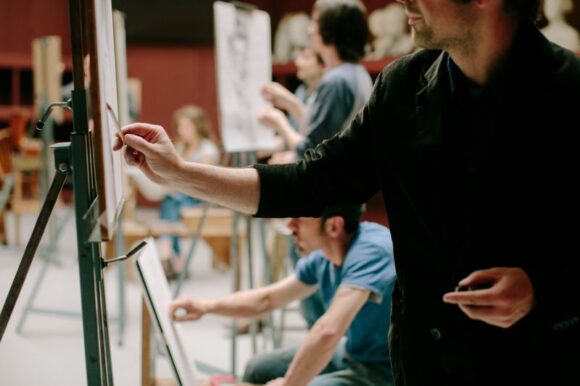
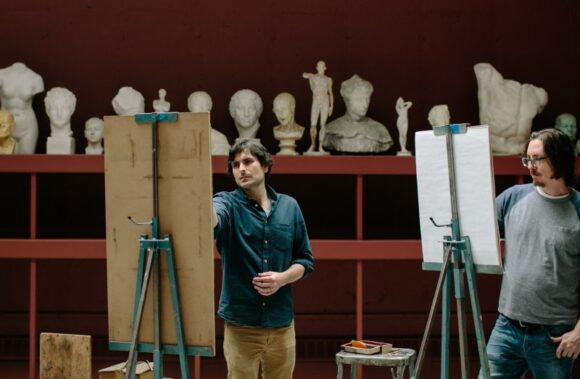
The all-new Core Program at Lyme Academy of Fine Arts focuses on foundational artistic skills in drawing, painting and sculpture in the figurative tradition.

OLD LYME — The Lyme Academy of Fine Arts has officially reopened with a renewed dedication to the mission first articulated by its Founder, sculptor Elisabeth Gordon Chandler. The Academy was created in 1976 as an institution dedicated to the traditional, skills-based art education first taught in the Renaissance academies of Europe and later at Paris’s École des Beaux-Arts.

With this return to its roots, the Academy begins the academic year with the launch of a new Core Program of study for full-time students, which will commence in late September. Led by the husband and wife team of Jordan Sokol and Amaya Gurpide, who serve as Co-Artistic Directors, a dynamic new faculty of internationally-acclaimed instructors will teach students the foundational skills on which they can build a career in the fine arts.

Artistic Director and Director of Painting, Jordan Sokol (left) and newly-appointed Painting-Drawing Instructor, Hollis Dunlap — himself an alumnus of Lyme Academy College of Fine Arts — working in the Southwick-Keller Studio at Lyme Academy of Fine Arts.

Enrollment for the 2021-2022 academic year is now open and applications will be accepted on a rolling basis throughout the academic year.

The Academy’s Core Program is comprehensive and intense: classes are conducted five days a week, from 9 a.m. until 9 p.m. with weekly supplementary instruction in anatomy, sculpture, and the history of art. Landscape, still life and portraiture are included in the program, as are dedicated explorations of the properties of light and form.

Students work in custom north-lit studios, honing their technical skills through the direct observation of imported European plaster casts and live models. Intimate class sizes allow for in-studio demonstrations and individualized critiques, as well as guided museum and gallery visits. Faculty and guest lectures are regularly scheduled, many of which are open to the public.

The Core Program will run on a trimester schedule with the first (Fall) trimester beginning on Sept. 27, of this year. The cost per trimester is $3650, with scholarship opportunities available.

“We’re looking for students who want to apply themselves and work hard to grow and develop” said Sokol, himself an accomplished painter, continuing, “You’ve got to be willing to put in the thousands of hours required if you are serious about developing your talent. There are no short-cuts.”

It is anticipated that most students will study for three years, although some will pursue a shorter course of study and others longer, depending on their individual objectives and the progress they make developing their skills.

“As in the original vision for Lyme Academy, the institution will no longer confer Bachelor’s degrees. In the place of seat-time requirements for credit accumulation, students will instead focus on skill-building with an eye towards mastery, fully preparing our students for the 21st century art world,” the Academy’s Executive Director, Mora Rowe, said.

She added, “In addition to our Core Program, we are planning a full spectrum of public programming, which will include gallery openings, exhibitions, part-time classes, workshops, lectures, cultural events, and more. Our partnership with the community along with the accessibility and openness of our campus are of the highest priority.”

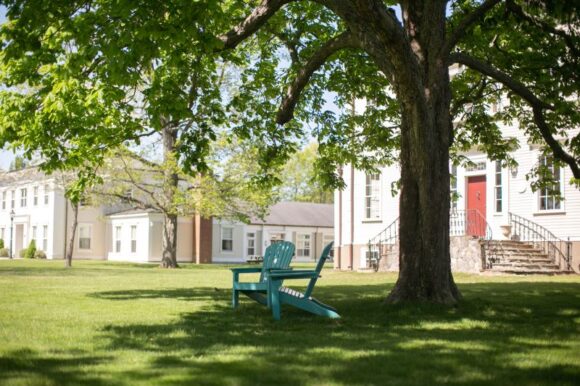
Lyme Academy of Fine Arts features 40,000 sq. ft. of studio and teaching space on the sprawling four-acre campus located in the heart of Old Lyme.

Two additional educational programs are currently under development. Firstly, the Academy will offer a Continuing Education program focused on students of all ages and abilities to benefit from a skills-based curriculum, with a choice of year-round study or individual classes. And secondly, a Portfolio Preparation program is also under development, which will be designed to provide a solid, skills-based visual education to develop one’s portfolio and abilities under the leadership of professional artists.

The Lyme Academy of Fine Art will host quarterly Gallery Openings beginning with the first exhibition, Memento Vivere, on Oct. 16. This invitational group exhibition will be curated by Sokol and Gurpide, and will also have the additional role of being an Inaugural Fundraiser for the Academy. The Memento Vivere exhibition, located in the Chauncey Stillman Gallery, will be open to the public from Oct. 17 through Dec. 10.

Lyme Academy is located midway between Boston and New York at 84 Lyme St. in Old Lyme, Conn. The town has been a site of artistic congregation for over a century after evolving as the heart of the Lyme Art Colony, which led to it becoming the Home of American Impressionism.

Visit this link for more information about Lyme Academy of Fine Arts or call 860.434.5232.