

The Movie Man: Happy Gilmore 2 ‘Worth the Wait’

Kevin Ganey is ‘The Movie Man’

Adam Sandler’s long-anticipated sequel to the cult-classic Happy Gilmore has been worth the wait as we get another glimpse into the life of the lovable misfit golfer.

Normally I approach long-awaited sequels with apprehension. Star Wars and Indiana Jones taught me that in my formative years. And then there was exploring the franchises whose studio bosses could not take the hint that the world was not interested in films such as Jaws: The Revenge.

But not this time.

If anybody reading this review loved the original Happy Gilmore, I urge you to find a time to watch it as soon as possible. It is a Netflix release, after all. The sequel contains a myriad of Easter Eggs paying homage to the cult classic that can make you laugh and even warm your heart.

Returning stars Julie Bowen, Christopher McDonald, and Ben Stiller deliver; in addition to a litany of cameos ranging from golfers (Rory McIlroy, Scottie Scheffler, and Jack Nicklaus are among them) to current acting phenomenon Margaret Qualley to rapper Bad Bunny. There are also the expected cameos of Sandler’s comedy friends Kevin Nealon, Rob Schneider, Jon Lovitz, and Steve Buscemi.

Much can also be said about tribute that was paid to the original cast members, who died in the three decades since its 1996 release.

There is no doubt that the critics will not laud this movie. The original Happy Gilmore was not well-received upon its release but became an instant cult classic. And while I do not believe it will leave as large of an impact as the original, I think it’s a sequel worth watching.

I believe it will be on the level of Anchorman 2: The Legend Continues. For perspective, I have memorized every line of The Hangover but never saw any of its sequels. Very rarely does a sequel surpass the original movie, and it’s even scarcer in comedy. But, as I have written before in my review for Hubie Halloween, Adam Sandler has demonstrated his motivation is not to satisfy the critics, but his fans.

In this long-awaited follow-up, we get a more intimate and vulnerable glimpse into the title-character, who has now hit rock-bottom. Having tossed aside the golf clubs and picked up bad drinking habits, Happy is given his incentive to get back in the game: sending his daughter, Vienna (Sandler’s real-life daughter, Sunny), to a prestigious dance academy in France.

It certainly adds to the necessary tension of any sports movie, with many additional moments giving Happy more reasons to come out on top. In addition, there are important pieces of wisdom peppered throughout its runtime.

I have commented extensively about this hybrid era of movie-going where the audience is given the opportunity to watch at home or take a trip to the local cinema. My previous review for James Gunn’s Superman contained a summons to screen it at the theater, particularly an IMAX screening for its special effects. While there are actual moments that include special effects in Happy Gilmore 2, I think that the viewer will be perfectly content watching this from the comfort of their own home. If you wish to make a social occasion of this movie, feel free to search for a theater option.

But you will not be missing anything major by watching this through Netflix. Just don’t watch it on your phone (unless there are no other options). Will there be a Happy Gilmore 3 released in the next 30 years? Who knows? By that time, Sandler’s mobility will be limited, and I cannot see him performing his iconic golf swing without the use of AI.

For now though, we can all enjoy Happy Gilmore 2.

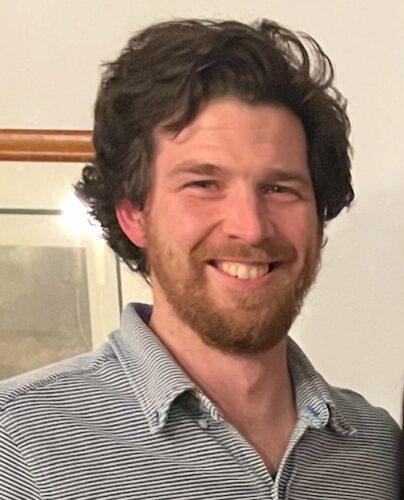
About the Author: Having lived in Old Lyme and Lyme since the age of three, Kevin Ganey has always had a passion for movies that is beyond simply watching, but understanding the craft of cinema and and experiencing films as if they were a musical album. Kevin also has his own website devoted to movie analysis, CityOfCinema.com, and also co-hosts a podcast, Moviehouse Mystics, with Koda Uhl (available on Apple Podcasts, Spotify, and YouTube.)
The Movie Man: ‘Superman’ is a ‘Summer Blockbuster … Absolutely Worth’ Seeing

Kevin Ganey is ‘The Movie Man’

With an alluring narrative, top-notch special effects, amicable characters, and thought-provoking themes, James Gunn’s adaptation of Superman is absolutely worth the occasion of going to the movies.

David Corenswet leads as Clark Kent (or Kal-El) and is perfect for the role. Besides his massive and well-built physique, he does justice to the superhero, who was raised in modesty (his parents, Jonathan and Martha, appear as if they were authentic elderly residents of Kansas, juxtaposed with his fast-paced city life). He curses only a few times, mostly resorting to wholesome words like “darn” or “heck”.

This is countered by Rachel Brosnahan’s performance of his cynical co-worker (and secret girlfriend) Lois Lane, always seeking the truth but giving a hint of envy for Clark’s unusually positive outlook on humanity.

Much can be said about Nicholas Hoult’s performance as archvillain Lex Luthor. Hoult perfectly personifies the man who does not possess superhuman powers, but brilliance, capital, and clout; all infused with coldhearted ambition, guided by cruelty. There is something all too familiar about the personality of this tech billionaire, who despises Superman and his kind because they remind humanity of their limitations.

He seems to be pursuing another kind of superman, the subject of the writings of Friedrich Nietzsche (the Übermensch), the next step in evolution. This superman must destroy all preconceived concepts of right and wrong, which will hinder humanity’s growth to dominate. 

Gunn’s adaptation goes further than previous depictions of Superman. Despite being the starting point of a franchise that will (hopefully) be followed by many sequels, Superman’s origins are not depicted.

He is already an established superhero, beloved by the public, and working as a reporter for The Daily Planet (which also includes a steady relationship with Lois Lane that has yet to be disclosed to Human Resources.) And while the movie reminds the audience of Superman’s origins as an alien sent to earth after his home planet of Krypton was destroyed, a damning revelation is eventually made public which will break Superman’s understanding of his purpose. 

This revelation also amplifies the themes interwoven throughout the movie’s runtime, particularly about morality and heroism. Superman is not the only superhero character (this also includes the Green Lantern, Mister Terrific, and Hawkgirl), but he appears to be one of the few characters, who authentically desires to do the right thing for the right reasons, while others appear to have corrupt motives.

In a bold move, this Superman acknowledges his imperfections and has come to terms with his limitations, understanding that true greatness comes from the choices we make, not the destinies that we create for ourselves.

But beyond the character development and themes, this is an overall enticing movie that entertains the viewer in every aspect. Despite being a DC superhero movie, which tend to have dark and gritty themes, there is an abundance of humor peppered throughout its runtime. I particularly loved Lois Lane’s “interview” with Superman which ultimately morphs into an argument about politics with her boyfriend.

Gunn also brings the nostalgic charm that made his Guardians of the Galaxy movies instant hits, with a soundtrack that consists of Dad Rock and title design similar to the 1978 movie with Christopher Reeve (there is also a wholesome Easter Egg in which Reeve’s son Will—a reporter for ABC News—makes a cameo appearance.)

In addition, the special effects were truly made for the movie theater, not the most expensive 4K (or even 8K) TV that can be grabbed from Best Buy or Amazon. One of the best ways to see it is in IMAX. For those in the greater Boston area (as I was this past weekend), I suggest catching a screening in one of the Jordan’s IMAX theaters that includes “butt-kickers” (speakers installed beneath the seats).

So what are you waiting for?

This is a summer blockbuster and a family-friendly movie (in fact, I saw a family in line in which mom, dad, and all the kids were wearing their own Superman t-shirts.)

Do you need any additional reasons to catch it? Well, you might even end up watching it multiple times … I know I am seriously considering another screening.

About the Author: Having lived in Old Lyme and Lyme since the age of three, Kevin Ganey has always had a passion for movies that is beyond simply watching, but understanding the craft of cinema and and experiencing films as if they were a musical album. Kevin also has his own website devoted to movie analysis, CityOfCinema.com, and also co-hosts a podcast, Moviehouse Mystics, with Koda Uhl (available on Apple Podcasts, Spotify, and YouTube.)

The Movie Man: Reflections on the Renaissance of Anakin Skywalker Actor, Hayden Christensen

Hoping Hayden Hears the ‘Voice of the People’

Kevin Ganey is ‘The Movie Man’

UPDATED 5/20 with an Editor’s Note. I was able fully nourish the wonder that came from the space soap operas of George Lucas. And now that I was an adult, I was also able appreciate the intellectual influences of Star Wars. These included anthropologist Joseph Campbell, Eastern spirituality, and the samurai movies of Akira Kurosawa. In addition, I finally understand why critics had hailed the original trilogy and bashed the prequels. Being aged 8, 11, and 14 respectively when they were released, they were simply my favorites because they were newer. Kids always think what is new is de facto better.

As I finished my senior year at Xavier High School, I experienced a renaissance: Star Wars.

My passion had returned for the adventures that took place a long time ago in that galaxy far, far away. I sought to live according to the unwritten rules of being a teenager, which forbade fandom of sci-fi and fantasy.

But as my second semester began, the scales fell from all our eyes. We realized the popularity contest was nonsense. We spent our whole lives longing for the days when we would be top dogs as seniors. Instead, we found ourselves casually conversing with those we once considered social lepers.

Throughout 2009, I rewatched the movies constantly. I picked up on the merited criticisms, no doubt …

But something stuck out to me: Hayden Christensen, the actor who played Anakin Skywalker.

I was well aware that older fans were critical of his performances. but after many re-watches I realized that these criticisms went too far. It all came down to the delivery of his lines. His tone of voice and his intonation were lifeless. But his facial expressions and the physicality of his performance were impressive when Anakin was not speaking.

One day it finally dawned on me: the poor performance was not Hayden Christensen’s fault. It was George Lucas’ writing and directing.

For all the praise I can heap on Lucas, I do have criticisms. I cannot deny that the man was better fit as the creative executive force driving the productions rather than directing.

Mark Hamill, Carrie Fisher, and Harrison Ford never hesitated to roast Lucas for his unnatural dialogue. They claim his direction was simply “Faster and more intensity.” Hamill boasts that he can still recall the cheesiest line of his audition to this day. The raw footage of the original movie is quite cringe-worthy. The editing saved the movie (and also won an Academy Award). For the remaining films of the trilogy, he opted to hire directors. He chose Irvin Kershner and Richard Marquand to helm The Empire Strikes Back and Return of the Jedi, respectively.

But when Lucas finally got to work on the prequels, he directed all three, himself. The editing room saved A New Hope, and Kirschner and Marquand were able to able to bring produce quality content. Now that Lucas was giving acting advice, the guardrails were down. Any actor, regardless of their potential talent, would be subject to Lucas’ direction.

By 2001, Hayden Christensen, was a rising star in Hollywood. He had appeared in a variety of material, including Canadian youth television (Are You Afraid of the Dark? is among the credits). He received a Golden Globe nomination for acting alongside Kevin Kline in Life as a House. He also portrayed defiled journalist Stephen Glass’s fall in Shattered Glass. He was certainly on the trajectory for a long and respected career. Lucas even compared him to James Dean.

But when Attack of the Clones and Revenge of the Sith were excoriated by the critics, so were Christensen’s performances. While the rest of the cast was also criticized, it was mostly directed towards Christensen. As a result, he appeared to experience the “Yips” and was unable produce better performances after Star Wars. He has mainly kept to independent films since.

But in recent years, Christensen has been shown much love and appreciation. He has always been happy to appear at conventions. He has received love for reprising the role of Anakin for Disney’s canon of Lucasfilm with Obi-Wan Kenobi and Ahsoka. This exposure has led to appearances on The Tonight Show.

Additionally, there have been promotions with WIRED and GQ. These appearances and promotions have accumulated millions of views online.

Much to my delight, it appears that Star Wars fans are experiencing a Hayden Christensen renaissance. I am grateful for the stock I bought all the way back in 2009.

The 20th anniversary of Revenge of the Sith arrived today.

I must ponder: “Why should this renaissance be confined to just Star Wars?” Did he not bring his talent to other movies and shows? Does that mean he can’t contribute to projects that fans of pure entertainment can enjoy? Perhaps he can lead a miniseries, as seems to be the trend now? Why has he not been considered for at least cameo appearances in any upcoming projects by A-list filmmakers?

If Lindsey Lohan can experience a second act, then why can’t Hayden Christensen?

I believe he still has much to bring to the table. I hope he can read the signs of the times and hear the voice of the people.

Editor’s Note: For the record, the publication day of this article—Monday, May 19—is the 20th anniversary of the release of ‘Revenge of the Sith.’

About the Author: Having lived in Old Lyme and Lyme since the age of three, Kevin has always had a passion for movies that is beyond simply watching, but understanding the craft of cinema and and experiencing films as if they were a musical album. Kevin also has his own website devoted to movie analysis, CityOfCinema.com, and also co-hosts a podcast, Moviehouse Mystics, with Koda Uhl (available on Apple Podcasts, Spotify, and YouTube.)

The Movie Man: ‘A Complete Unknown’ Draws You In, Keeps You There—Overall a Great Movie

I am generally wary of biopics, as I think they are simply made for Oscar bait.

Kevin Ganey is ‘The Movie Man.’

Your team could definitely catch the attention of the Academy of Motion Picture Arts and Sciences if you are seeking to re-create an aesthetic of a bygone era (be it costumes, set design, makeup, music, or even using production technology from any particular era to make it resemble films made in that time). This is on top of your actors’ working impressions of iconic public figures, hoping it be deemed more worthy of praise than creating a new character for audiences.

However, this is not the case with A Complete Unknown, which tells the story of the rise of music legend Bob Dylan. The first indication that I was enjoying this movie was that I was emotionally invested in the characters right from the start (a lesson I learned from the shortcomings of Gladiator II).

I never listened to Bob Dylan’s music, simply because I had no interest. But I was aware of his merit and influence on pop culture (after all, he was awarded the Nobel Prize for Literature in 2014). The title is seems appropriate for me, as this movie was the first time I listened to more than one song in one sitting. This was also my introduction to the debate surrounding Dylan’s controversial choice of using electric music at the 1965 Newport Folk Festival.

A Complete Unknown covers the rise of Dylan from his arrival in New York City in 1961 to said controversial performance. Dylan is depicted as possessing a genius beyond human capacity, which comes with the cost of social skills.

The theme woven throughout this picture is that Dylan is always seeking to be his own authentic self, and is willing to disrespect anyone, friends or business acquaintances alike, in order that he does not become a product of the music industry’s arsenal. Ironically, he will not share details about his background with anybody, even his girlfriend Suze Rotolo (renamed Sylvie Russo, at Dylan’s request, played by Elle Fanning).

While I did not think too much of Timothée Chalamet’s delivery of his lines (seems easy to imitate Bob Dylan’s nasal, high-pitched voice), my opinion changed when I learned he (and every other actor playing a musician in this movie) sang and played the instruments, himself. Upon learning this, my appreciation for his overall performance increased. It is one thing to imitate a historic figure’s speaking characteristics, but it is another to imitate their singing ability.

One particular performance that deserves praise is Edward Norton as Pete Seeger, who seemed to carry a wholesome and folksy vibe with him in every scene that put you at peace, even in the midst of a conflict. Norton’s performance, in my opinion, will be referenced in years to come as a metric for creating a character that is impossible to dislike.

We can also appreciate the little details in this movie (Easter Eggs, as we call them), as they reinforce the themes explored throughout its runtime. One I think of in particular is Dylan’s overgrown fingernails. That, alone, adds more depth to his character than extra dialogue, as it tells us that Dylan is non-traditional to his core.

Overall, this is a great movie worth the reader’s time and money. Compared to other movies I have reviewed, I do not consider it essential to screen it in a theater if there is the ability to stream it, as the reader could enjoy it from the comfort of their own living room if they simply wanted to stay in.

But I will reiterate that the best way to experience a movie is always in the theater. If you can, make screening A Complete Unknown an occasion that is worthy of getting out of the house and meeting up with friends. Doing so will give you more of an experience than just watching it at home.

About the Author: Having lived in Old Lyme and Lyme since the age of three, Kevin has always had a passion for movies that is beyond simply watching, but understanding the craft of cinema and and experiencing films as if they were a musical album. Kevin also has his own website devoted to movie analysis, CityOfCinema.com, and also co-hosts a podcast, Moviehouse Mystics, with Koda Uhl (available on Apple Podcasts, Spotify, and YouTube).

The Movie Man: ‘Conclave’ is Good … But Don’t Rush to See It

Kevin Ganey is ‘The Movie Man’

While Edward Berger’s Conclave brings an iconic cast of beloved actors, who deliver superb performances and offers thought-provoking themes, I do not believe it should be prioritized when asked for recommendations on recently released films. It is certainly worth watching, but not as soon as possible.

So often when we think of the depiction of the Catholic Church in media, it is often portrayed as an ancient institution that most of us do not relate to. Whether it is a historic film set at any point in the last two millennia, or the Church is a backdrop for sequences including a ritual (perhaps the baptism scene in The Godfather), or perhaps culture wars are at the heart of the matter, the Church appears to be irrelevant to the viewer.

Or, if the character is along the lines of Mother Teresa, Pope John Paul II, Mother Cabrini, or St. Francis of Assisi, we consider them to be heroes that have achieved a transcendent level of humanity that none of us could imitate. But Conclave reminds us, whether we are practicing Catholics or not, the Church is a human institution, dealing with familiar human matters that any of us will recognize.

One line perfectly encapsulates these themes, which are interwoven throughout the entire film: “We are mortal men. We serve an ideal. We cannot always be ideal.”

Ralph Fiennes leads the star-studded cast (which also includes John Lithgow, Stanley Tucci, Lucian Msamati, and Isabella Rossellini) as Cardinal Thomas Lawrence, Dean of the College of Cardinals, tasked with overseeing the papal conclave after the sudden death of the pope. We witness an ancient tradition taking place in buildings constructed during the Renaissance era but accompanied by contemporary technology (which I considered to be an incredible juxtaposition).

Here we witness the politics within the Church as groups with differing interpretations of pastoral care vie for positions of power, and we see the ugliness that leaders stoop to in order to achieve their goals, despite their positions as spiritual leaders. Lawrence perfectly encapsulates a hero we can relate to. He is a protagonist handed an important task that deals with the one thing he does not want: power.

He reminds me of Pope Benedict XVI, who also held Lawrence’s position when he was Cardinal Joseph Ratzinger, and submitted several letters of resignation from 1981 until he was tasked with overseeing the 2005 conclave. Hoping the new Pope would grant his request to return to Germany for academic purposes, he was ironically chosen to lead. 

I anticipated the film to move in this historic direction but was surprised by the film’s choice for a twist ending. Without revealing any spoilers, it bore relevance to the theme of wrestling with uncertainty, but I cannot help but wonder if there were better options to pursue.

Uncertainty is the overall theme. As we stress over the uncertainty of the future—especially regarding secular matters—the film reminds us that uncertainty is even experienced in an institution that is founded on the hope of the resurrection of the historical Jesus and has spent 2000 years professing dogmas to better understand salvation. Even the most learned scholars and leaders struggle to understand what specifically should be done in this current chapter of history. 

The viewer must contemplate the overall history of the Church as the cardinals squabble about who should take the seat of the successor to St. Peter the Apostle. As the protagonists fret that rigidly dogmatic clerics may end up in charge, they console themselves that, despite the possibility of leadership implementing harmful pastoral care, there have been worse Popes in the past (think of the Borgia Popes during the Renaissance, when the Church was run by the Mafia).

While Conclave certainly had my interest and I consider it a decent movie worth watching, I do not consider it necessary to watch as soon as possible. Perhaps it will be a movie for a rainy day in the future, but it is not a movie that requires a trip to the theater, especially during awards season.

About the Author: Having lived in Old Lyme and Lyme since the age of three, Kevin has always had a passion for movies that is beyond simply watching, but understanding the craft of cinema and and experiencing films as if they were a musical album. Kevin also has his own website devoted to movie analysis, CityOfCinema.com, and also co-hosts a podcast, Moviehouse Mystics, with Koda Uhl (available on Apple Podcasts, Spotify, and YouTube).