
Talking Transportation: What is Connecticut’s Transportation Future Post-COVID?

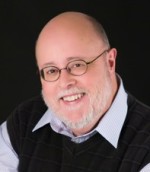
Jim Cameron

When it comes to transportation, Joe McGee is often the smartest guy in the room. If I want a vision of our state’s mobility future, he’s the first man I turn to.

McGee served as then Gov. Lowell Weicker’s Commissioner of Economic Development. For years I worked with him on the Connecticut Metro-North Rail Commuter Council. And until recently he was the Fairfield Business Council’s VP for Public Policy, specializing in the intertwined issues of transportation and economic development. Sadly, that group recently announced its closure after 50 years of service.

True, McGee and I have sparred in the past, especially over his uber-aspirational 30-30-30 plan for speeding up rail service. But nobody is a better advocate for our state’s transportation future than McGee, so in this dismal period I turned to him for inspiration.

“We will get through this,” he says. “There will be life after this and now’s the time to start planning.”

You’ll remember that McGee and the Business Council led the charge for tolling on our highways, rejecting Republican proposals that we instead dip into the state’s “rainy day” fund. Wasn’t that prescient?

“Lamont is looking so good through all of this (crisis). He’s handling it so much better than he dealt with the legislature,” McGee said with a smile.

Sure, transit ridership is down. But he’s confident it will come back.

“I’m old enough to remember the days of polio when people evacuated cities. Same thing with HIV,” he said.

Despite their new-found success with telecommuting, McGee is confident that once the virus is gone workers will return to their jobs in New York City.

“The city brings vitality, creativity and job opportunities. People feel isolated now. They need face to face physical contact to really be connected.” McGee predicts that some companies may open new offices in the suburbs but will still maintain a presence in Manhattan.

And to get there they will need the trains.

“The trains are the economic backbone of our state,” he says. And he means the branch lines as well as the main line. McGee says he’s worried about CDOT’s recent decision to replace Waterbury line trains (which have seen a 95 percent drop in ridership) with buses for four weeks … both to save money and to accelerate construction of sidings.

“The (Naugatuck) Valley’s economic future depends on those trains,” he says. With better train service will come jobs and economic growth, tying the Valley to both Stamford and New Haven. “It’s a regional economy,” he says.

Trains mean mobility and higher real estate values. In New Jersey when they opened the new Secaucus line, communities offering a one-seat ride to New York City saw a 14 percent jump in home prices.

Just look at the twin communities of New Canaan (served by a branch line) and Darien (on the main line of Metro-North). Housing prices in Darien have remained much stronger because of better access to the trains.

In the short run, the railroad’s huge deficits will need Federal assistance. MTA is already seeking Federal money to cover the $125 million they are losing in each week in lost fares. “No one state (or agency) can handle this,” says McGee.

Now is the time for all the towns and states to work together, not throw up literal roadblocks to out-of-staters.

We will get through this.

Posted with permission of Hearst CT Media.

About the author: Jim Cameron is founder of The Commuter Action Group, and a member of the Darien RTM.  The opinions expressed in this column are only his own. You can reach him at CommuterActionGroup@gmail.com  For a full collection of  “Talking Transportation” columns, visit www.talkingtransportation.blogspot.com

Op-Ed: TV News? Turn it Off

Jim Cameron

I can’t watch TV news anymore.

I used to be a news junkie, a control freak who thought that by knowing everything that was going on everywhere in the world I could somehow control it.  Hah!  Was that ever a naïve view.

Having worked in local and network newsrooms, what was coming over the AP and UPI newswires was like heroin for my news habit. 

I used to read two or three newspapers a day, listen to CBS Radio Network news almost hourly and never miss the networks evening newscasts … at least two or three of them a night, including the BBC. 

But now, I know that none of that matters.  My world has shrunk to the size of my house and I don’t need to know anything happening in the world that doesn’t directly affect me and my family.   

It was Simon & Garfunkel, who said, “I get the news I need on the weather report.’  My information consumption pattern is only slight larger now.  But it’s only “news I can use”… news I need to know.

Are my town’s parks still open?  What hours is the grocery store open?  Are my immediate neighbors OK?  Is my family alright?  That’s hyperlocal news.

I am so tired of watching CBS anchor Norah O’Donnell start every newscast with an emphatic “Breaking News!”, only to regurgitate hours-old stories that could be “news” only to someone living under a rock.  And I won’t even go near CNN or Fox News.  Their coverage is purposely designed to scare me and keep me tuned in for more.

I don’t trust TV news anymore.  Not the networks, not the local Connecticut stations and certainly not our local cable company’s offering.  So I’m not watching any of it. 

And forget about the rumor-mongering on social media.  “Unfriend” and “unfollow” are my defensive mechanisms there.

But I still read the papers, on paper and online.  I try to catch New York Governor Andrew Cuomo’s daily briefings and anything that Dr. Fauci has to say.  C-Span and CT-N are my few remaining “reality TV” options as they are unfiltered and non-opinionated.  Just give me the facts.  Don’t tell me how to think.

(At this point, dear reader, you can stop reading this screed if you think I’m telling you how to think … but you’ll miss the good part.)

Over 30 years ago I changed my life in a program led by a simple prayer.

“God grant me the serenity to accept those things I cannot change.  The courage to change those I can … and the wisdom to know the difference.”

It’s known as The Serenity Prayer and it has brought me a lot of inner peace in the past few weeks. 

I know I’m not in control in this crisis, beyond protecting my family and myself as best I can.  I can’t change this virus, its lethality or effect on my community.

But I can keep my social distance, maintain my immune system, get plenty of rest and just take this world one day at a time.  Beyond that, I’m resigned to my fate and I hope that’s a sign of wisdom.

There’s no planning for the future … next week or next month.  It’s just making the most out of every single day.

And by avoiding the hysteria of TV news, my shrinking world seems a little less crazy and a lot more calm.  And that’s kinda nice.

Posted with permission of Hearst CT Media.

About the author: Jim Cameron is founder of The Commuter Action Group, and a member of the Darien RTM.  The opinions expressed in this column are only his own. You can reach him at CommuterActionGroup@gmail.com  For a full collection of  “Talking Transportation” columns, visit www.talkingtransportation.blogspot.com

Talking Transportation: Memoirs of a Metro-North Conductor

Jim Cameron

Did you ever wonder what it would be like to work for the railroad?

That’s what Paul Holland did for 39 years, first with Amtrak, later with Conrail and finally as a conductor on Metro-North.  His self-published “My Life As A Rear End” pays tribute to his time in cabooses, but it’s his commuter rail stories that kept me laughing.

Like the colorful crowd from the psychiatric hospital on the Harlem line who’d escape, often in their pajamas, and ride his trains, obviously unable to pay.  Or the many times he was assaulted by knife-wielding thugs only to be rescued by his 6 ft. 7 in. cross-dressing frequent rider, “Rocky”.

Over the years Holland collected his stories, often scribbling them on seat-checks. Upon his retirement it took him less than a year to pen his “memoirs”, many of which are far too racy to mention in this column.  Let’s just say that the diminutive conductor was very popular with the ladies.  It must have been the uniform.

Because he truly loved his job, and had three kids bound for college, Holland worked six or seven days a week.  Railroad conductors can work split shifts of up to 16 hours a day, and with his overtime, Holland averaged about 80 hours a week.

Some passengers would ask him the stupidest questions, like the riders who would congregate in the front car for a fast exit at Grand Central.  A common query: why can’t you add more cars to the front of the train?

Occasionally, Holland would work the last train to depart Grand Central, the 1 a.m. train making all local stops to New Haven, affectionately known as “The Vomit Comet”.  It was a quiet run, though getting inebriated passengers off at their correct stop was always a challenge.

He also tells the story of the German tourist who had parked his friend’s borrowed car at a remote station, returning late at night to find it had been stripped of all four wheels.  He thought it was the local cops penalizing him for parking without a permit.

Enforcing the rules in ‘The Quiet Car’ was a thankless job, like the time a passenger kevtched about another rider eating a smelly egg salad sandwich.  Not a violation, ruled Holland.

Or the passenger angry about the woman in ‘The Quiet Car’ talking, albeit quietly, on her cellphone.  “Tell her to shut the F up,” said the vigilante.  As Holland approached the woman, he heard her say, “Have a blessed Easter” before hanging up.  Holland returned to the complainant and said, “She’s a nun, but I’ll relay your message.”  As he turned to approach the woman again, the now-penitent passenger raced after him to say, “Never mind”.  Holland said, “He must have gone to Catholic school.”

Holland insists all his stories are true.  “I have witnesses,” he told me.

Retired and living in New Milford, Holland obviously misses his job and his passengers, some of whom he still keeps in touch with.  He says that over the years passengers have changed.  “These days they don’t seem to show any respect (for authority), especially the kids.”

As “the face of the railroad” Holland says he never minded facing angry passengers, upset about delays.  “I just always told them the truth and treated them the way I’d want to be treated.”

Posted with permission of Hearst CT Media.

About the author: Jim Cameron is founder of The Commuter Action Group, and a member of the Darien RTM.  The opinions expressed in this column are only his own. You can reach him at CommuterActionGroup@gmail.com  For a full collection of  “Talking Transportation” columns, visit www.talkingtransportation.blogspot.com

Talking Transportation: Avoiding Air Turbulence

Jim Cameron

“Buckle up folks.  There’s some bumpy air ahead”, said the pilot on a recent flight.  No need to remind me; my seatbelt is always fastened as “bumpy air”… a euphemism for air turbulence … is my worst fear in flying. It’s the whole “fear of death” thing.

Intellectually I know that modern aircraft can survive all manner of stress from changing or violent winds, but can I?  I’ve been on flights where our aircraft plummeted hundreds of feet without notice, sending passengers, their drinks and laptops flying.  There’s not much you can do in a situation like that except, hang on,  breathe deeply and pray.

Thanks to climate change there are dire predictions that in-flight turbulence is getting worse, increasing by several hundred percent in some areas.  Even today severe air turbulence is thought to cost airlines $200 million a year and is the single biggest cause of passenger injuries.

According to the FAA there were 27 passengers and crew injured by turbulence in 2015.  In 2016 that number was 42.  And with more and more people flying, those numbers will climb.

Only a few years ago, United Airlines offered passengers an in-flight audio channel where they could listen to air traffic control (ATC) handling their and other flights.  That was my favorite channel as I heard our flight being cleared to higher altitudes, warned about other aircraft and being guided across the country. It was reassuring to hear the professionalism of the flight crew and ATC.  But the channel was only available at the pilot’s discretion. And when it was turned off mid-flight, I always knew something nasty was coming our way.

Pilots regularly ask ATC for “ride reports” from other aircraft at the same altitude and flight path, always seeking the smoothest flight.  But sometimes the turbulence is unexpected, the so-called “clear air turbulence.”  You can be cruising along at 35,000 feet when, without notice, you get slammed.

On a Turkish Airlines flight to JFK last March, the 777 jetliner encountered clear air turbulence over Maine that sent everything flying.  The terror lasted about 10 minutes and when the plane finally landed, 30 passengers were taken to hospital.

That’s why you should always keep your seatbelt fastened so if the plane drops, you don’t crash into the ceiling.

Now there’s new technology that may help us all have a smoother flight.

The International Air Transport Association (IATA) is testing an automatic tracking and reporting system to warn flights of “bumpy air.”  So far 15 major airlines are sharing data in the test phase of the program.

Their planes are equipped with a black box measuring changes in the flight’s speed and tilt eight times each second.  That data is transmitted to the ground and within 30 seconds, flights in the area can be warned of trouble ahead.

So far the participating airlines are generating 115,000 reports a day to the IATA Turbulence Aware system.  The system will be most valuable on long, overseas routes where there are fewer aircraft flying the same corridor.

The Turbulence Aware system should be fully operational this year when airlines will have installed the gear on most of their planes.  American Airlines alone hopes to have 800 airliners gathering and reporting data in the coming months.

Meantime … buckle up, friends!  There’s bumpy air ahead.

Posted with permission of Hearst CT Media.

About the author: Jim Cameron is founder of The Commuter Action Group, and a member of the Darien RTM.  The opinions expressed in this column are only his own. You can reach him at CommuterActionGroup@gmail.com  For a full collection of  “Talking Transportation” columns, visit www.talkingtransportation.blogspot.com

Talking Transportation: A Conversation With CT DOT Commissioner Giulietti, Part 2

Jim Cameron

Editor’s Note:  This is the second of two articles written by Jim Cameron reporting on his conversation with CDOT Commissioner Joseph Giulietti. Read the first article at this link.

Connecticut’s Department of Transportation (CDOT) Commissioner Joseph Giulietti is about to finish his first year on the job and his plate is more than full.  It’s overflowing with controversy.

In my last column, in part one of an exclusive, no-holds barred interview he spoke of his challenges in speeding up Metro-North, coping with the over-budget, behind-schedule Walk Bridge replacement and ordering new rail cars.

This week, in part two of our conversation he speaks of the biggest issue of all … getting the legislature to pass truck tolls to raise money to replenish the Special Transportation Fund, which pays for transportation in our state.

I asked the Commissioner if Governor Lamont had “bungled” this initiative by his constant flip-flopping on what to toll and where.

Choosing his words very carefully, he said, “The Governor has admitted that there were some things he wished had been done differently.  If it was bungled, it was because he was trying to come up with bipartisan support for a solution everyone could buy into.”

Giulietti said nobody expected how pervasive and organized the opposition forces would be against tolling.

As for Mr. Sasser, leader of the #NoTollsCT movement, “I’ve never met him. This is never a personal issue.” But when the initial tolling plan was unveiled, he said the #NoTollsCT forces “ran with the paranoia.”  But if not tolls: “How do you want to pay for it [transportation]? Connecticut drivers have been subsidizing out of state drivers for years. Tolls are the closest thing we have to a user fee.”

As for the claim that truck tolls will lead to car tolls and the money will be misspent, “The Federal government determines that and that those funds must be spent on the roads [where the tolls would be.]”  Trucks don’t buy gas in Connecticut, so they’re getting a free ride.

On the claim that the CDOT wastes money: “We used to have 5000 people at the CDOT.  Now we have 2700.” Even snow plowing is done with one driver, guided by a computer on where to deploy brine and how to best clear the snow.  One truck can now even handle three lanes of pavement.”

“We’ve always looked how we can be more efficient. That’s the type of department CDOT has become. We always want to be good stewards of the public’s money.”

“I don’t know of a better way [to pay for transportation] than tolls.  The Governor has always said, ‘If you have a better idea, come to me with it,’ so if we’re not going to do tolling, what’s the alternative … gas tax, income tax, sales tax?  But there don’t seem to be any alternate ideas on how to get this thing [funding] through.”

Giulietti says he has a good working relationship with Governor Lamont. “I’m not a politician, I don’t run for office,” he said. “But I know of very honorable people who do the right thing [like voting in favor of tolls] despite the threats of being voted out of their jobs.”

“I’ve worked now for six or seven governors. Lamont is one of the most honest and decent people I’ve worked with … a genuine good guy who truly wants bipartisan support to try and get this thing through.  It makes it easy [for me] to face the criticism because I know he’s trying to do the right thing.”

To which I can only add … Amen!

Posted with permission of Hearst CT Media.

About the author: Jim Cameron is founder of The Commuter Action Group, and a member of the Darien RTM.  The opinions expressed in this column are only his own. You can reach him at CommuterActionGroup@gmail.com  For a full collection of  “Talking Transportation” columns, visit www.talkingtransportation.blogspot.com