
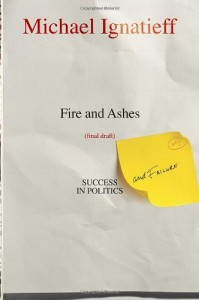
Reading Uncertainly: ‘Fire and Ashes’ by Michael Ignatieff

Fire and Ashes by Michael Ignatieff

I admit to a lifelong fascination with the people and territory of that land just north of the United States.  I first drove through Alberta and the Yukon in 1952, on my way to Alaska, and then sailed up the St. Lawrence River on a Navy cruiser to Quebec City in 1954. Since then I’ve spent considerable time in Vancouver, Calgary, Toronto, Ottawa, Montreal and Quebec, with side excursions to Victoria, Banff, Edmonton, Trenton, and Beaconsfield. So it was only natural to buy an early copy of Michael Ignatieff’s description of his six-year foray into Canadian politics.

Who can ignore this description of Canada: “ten provinces and three territories strung out like birds on the wire of the forty-ninth parallel?” And its political uniqueness: “ . . . the fact that we didn’t have capital punishment or a right to bear arms; that we believed in group rights to protect the French language and aboriginal title to land; the fact that we believed a woman’s right to choose should prevail; the fact that a bilingual national experiment, always under stress, forced us constantly, as a condition of survival, to try and understand each other and reach common ground.”

Ignatieff first ran for Parliament in 2005, resigning a professorial chair at Harvard and returning to the land of his birth after many years abroad. He later became the leader of Canada’s Liberal Party, one with which his family had early close connections, only to lose a national election in 2011. The book is his analysis of those years and the nature of politics in a democracy. He concludes with a “renewed respect for politicians as a breed and with reinvigorated faith in the good sense of citizens,” and “ . . . what is right about the democratic ideal: the faith, constantly tested, that ordinary men and women can rightly choose those who govern in their name, and that those they choose can govern with justice and compassion.”

But how can mere mortals stand for leadership positions? “Politics tests your capacity for self-knowledge more than any profession I know,” Ignatieff says, going on to offer “self-dramatization is the essence of politics,” playing on a perpetual stage. He also urges development of listening skills: “listening, being deeply able to deeply listen to your fellow citizens, is the most under-rated skill in politics.” And “standing” is equally important: “When you first enter politics, your first job is to secure your standing, the authority to make your case and ensure a hearing.” That is especially true for newcomers, who will certainly be attacked for their “lack of experience.”

He also argues for civility in political life, something all too lacking recently. But is it possible to treat someone, civilly, as an “adversary” when that person treats you as an “enemy?”

The “virtues” of successful politics include “adaptability, cunning, rapid-fire recognition of Fortuna, the keen intuition that a situation has changed and that what was true is no longer so, together with the noble capacity to lead, to charm, to inspire.” Politics is then “the baffling combination of will and chance that determines the shape of life.”

I now know something more about my Canadian friends and their country. Oh, Canada!

Editor’s Note: Michael Ignatieff’s ‘Fire and Ashes’ is published by Harvard University Press, Cambridge 2013

Felix Kloman

Felix Kloman

About the author: Felix Kloman is a sailor, rower, husband, father, grandfather, retired management consultant and, above all, a curious reader and writer.  He’s explored how we as human beings and organizations respond to ever-present uncertainty in two books, ‘Mumpsimus Revisited’ (2005) and ‘The Fantods of Risk’ (2008).  A 20-year resident of Lyme, he now writes book reviews, mostly of non-fiction that explores our minds, our behavior, our politics and our history.  But he does throw in a novel here and there. For more than 50 years, he’s put together the 17 syllables that comprise haiku, the traditional Japanese poetry, and now serves as the self-appointed “poet laureate” of Ashlawn Farms Coffee, where he may be seen on Friday mornings.  His wife, Ann, is also a writer, but of mystery novels, all of which begin in a bubbling village in midcoast Maine, strangely reminiscent of the town she and her husband visit every summer.
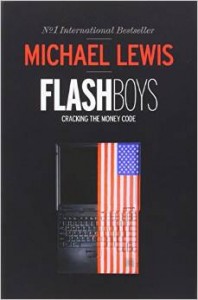
Reading Uncertainly: ‘Flash Boys’ by Michael Lewis

Flash_BoysWhat on earth is “the stock market?” It is something in which I have participated for almost 60 years, first as a most modest buyer of stocks, then through the investments of growing pension and profit-sharing funds, and finally, today, trying to stretch my dwindling IRA to cover our modest expenses as my wife and I enter our eightieth years. Throughout this time I’ve maintained a trust that the “market system” is reasonably fair.
Michael Lewis pops that balloon. In his mesmerizing story of high frequency trading on the world’s stock markets, but especially in the U. S., we learn that customers are “prey,” that “people are getting screwed because they can’t imagine a microsecond” (a millionth of a second), that “moral inertia” is the dominant trait, and that “ the entire history of Wall Street was the story of scandals.”

And yet, what the so-called high-speed traders were (and are) doing is “riskless, larcenous, and legal.”  The story seems to be the result of “human nature and the power of incentives,” plus the incredible complexity of today’s markets, a complexity whose outcomes are totally unpredictable — witness the recent series of “flash sales” in which markets drop precipitously and then recover, all within moments.

And how do the brokers, banks and traders respond, other than in their natural, self-admiring language?  They have learned the “art of torturing data” to try and persuade their customers they are entirely honest!  Lewis’s conclusion … “the stock market at bottom is rigged!”

But where on earth can we safely invest our funds?  My mattress is already stuffed!

Felix Kloman

Felix Kloman


About the author:
 Felix Kloman is a sailor, rower, husband, father, grandfather, retired management consultant and, above all, a curious reader and writer.  He’s explored how we as human beings and organizations respond to ever-present uncertainty in two books, ‘Mumpsimus Revisited’ (2005) and ‘The Fantods of Risk’ (2008).  A 20-year resident of Lyme, he now writes book reviews, mostly of non-fiction that explores our minds, our behavior, our politics and our history.  But he does throw in a novel here and there. For more than 50 years, he’s put together the 17 syllables that comprise haiku, the traditional Japanese poetry, and now serves as the self-appointed “poet laureate” of Ashlawn Farms Coffee, where he may be seen on Friday mornings.  His wife, Ann, is also a writer, but of mystery novels, all of which begin in a bubbling village in midcoast Maine, strangely reminiscent of the town she and her husband visit every summer.

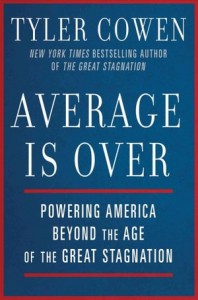
Reading Uncertainly? ‘Average is Over’ by Tyler Cowan

Average_is_Over_by_Tyler_CowanTired of vapid novels featuring uninteresting characters that cannot manage in this complex world of ours? Then try Tyler Cowan’s, Average Is Over, (Dutton, New York 2013), which has the sub-title, Powering America Beyond the Age of the Great Stagnation, to give you a jolt of reality! I read it earlier this year.
Cowan gives us a fresh, both pessimistic and optimistic, view of our future, using frequent analogies to the game of chess in this engaging book. We appear to live in a current situation of diminished job opportunities with low wages for most and extremely high wages for the few.

As Cowan states, “It’s becoming increasingly clear that mechanized intelligence can solve a rapidly expanding repertoire of problems,” but at the cost of growing unemployment. And the larger question is “can mechanized intelligence” help us solve the problem of supporting our population of 7.2 billion, possible increasing to 10 billion by 2050? We already recognize the scarcity of “quality land and natural resources, intellectual property, or good ideas about what should be produced, and quality labor with unique skills.” But are we actually “overloaded with information,” stunting our ability to deal with the future?

Cowan writes a wide-ranging challenge to our futures, pointing out that, “Risk taking in humans . . . tends to bring out sweat and emotion.” It also stimulates both fear and hope, as those involved in risk management can confirm. Four of his chapters warrant serious attention.

Chapter 5, Our Freestyle Future, confirms the radical changes in the availability and quality of information. He notes the “most frequently consulted ‘doctor’ in the U.S. today is Google!” Cowan concludes that “human-computer teams are the best,” that “the person working the smart machine doesn’t have to be an expert in the task at hand,” and that “knowing one’s own limits is more important than it used to be.”

Chapter 6, Why Intuition Isn’t Helping You Get a Job, suggests we should “be skeptical of the elegant and intuitive theory,” and that “we should revel in messiness.” I particularly like that latter admonition, given the clutter in my own office. He also warns “the advances of genius machines (IBM’s Watson, for example – my comment) come in an uneven and staggered fashion.”

Chapter 9, The New Geography, confirms that “outsourcing” has always been a practice. It goes in all directions. And “immigration is vital to the future economic vitality of the United States.” After all, we are all foreigners … save for the few remaining native Americans. But can we, globally, manage increasingly free movement of our species?

Perhaps his most challenging chapter is 10, Relearning Education, in which he challenges almost all the current models. MOOCs (Massive Open On-line Courses) create an entirely “new world of competitive education, based on interaction with machine intelligence.” Cowan predicts the future of education will be underwritten by the following concepts: online education will be extremely cheap; it will be more flexible; there will be major profits from teaching innovations; and, finally, it will allow much more precise measurement of learning.”

Our “human instructors” will be “much more important for motivation, psychology, and teaching pacing” than in the past. They will become “a mix of exemplars and nags and missionaries.” With three of our children and their spouses involved in education, this chapter has special pertinence.

There is nothing, my friends, nothing quite so stimulating as a complete challenge to old convictions!

Felix Kloman

Felix Kloman

About the author: Felix Kloman is a sailor, rower, husband, father, grandfather, retired management consultant and, above all, a curious reader and writer.  He’s explored how we as human beings and organizations respond to ever-present uncertainty in two books, ‘Mumpsimus Revisited’ (2005) and ‘The Fantods of Risk’ (2008).  A 20-year resident of Lyme, he now writes book reviews, mostly of non-fiction that explores our minds, our behavior, our politics and our history.  But he does throw in a novel here and there. For more than 50 years, he’s put together the 17 syllables that comprise haiku, the traditional Japanese poetry, and now serves as the self-appointed “poet laureate” of Ashlawn Farms Coffee, where he may be seen on Friday mornings.
His wife, Ann, is also a writer, but of mystery novels, all of which begin in a bubbling village in midcoast Maine, strangely reminiscent of the town she and her husband visit every summer.

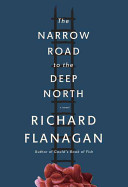
Reading Uncertainly? The Narrow Road to the Deep North

Narrow Road to the Deep NorthRichard Flanagan, an Australian writer born in Tasmania, whose father survived labor for the Japanese in the Second World War, has written a compelling, mesmerizing and thoroughly memorable novel of that period.  And it is the 2014 Man Booker Prize winner!
The Aussies in the story are led by Dorrigo Evans while his physician officer tries to save his troops from starvation, disease and beatings as they attempt to build a rail line for the Japanese through the jungle from Siam to Burma.  They are controlled by a few Japanese, consumed with love for their country, their emperor and for the poet Matsuo Basho, whose most famous work is the title for the book.

You will remember the names: Darky Gardner, Rabbitt Hendricks, Rooster MacNeice, Wat Cooney, Gallipoli von Kessler, Jimmy Bigelow and their captors,  Colonel Shira Kota, Major Tenji Nakamura, Lieutenant Fukihara and The Goanna, Corporal Aki Tomokawa.  Flanagan follows many of them, plus Evans, in shifts of perspectives and time, from present to past, with uncanny ability to maintain our interest and understanding.  But did any of them really understand what they experienced?

It is a story of obedience and disobedience. The Aussies (and many of us from the West) are intuitively and culturally critical of authority: when an order is issued, their (our) first instinct is to ask “Why?”  The Japanese, and many Eastern cultures, in contrast, are taught to revere “authority.”  Their reply to an order is an immediate “Yes!”  Flanagan explores this natural friction, one that seems to continue even after the war.

Dorrigo Evans’ inability to connect with family and friends after the war is explained with these words:

“It did not fit within the new age of conformity that was coming in all things, even emotions, and it baffled him how some people now touched each other excessively and talked about their problems as though naming life in some ways described its mysteries or denied its chaos. He felt the withering of something, the way risk was increasingly evaluated and, as much as possible, eliminated, replaced with a bland new world where the viewing of food preparation would be felt more moving than the reading of poetry; more excitement would come from paying for a soup made out of foraged grass.”

Evans goes on: “Adversity brings out the best in us  . . .  It’s everyday living that does us in.”  And he gives us the perfect conclusion to this novel: “A good book, he had concluded, leaves you wanting to reread the book.  A great book compels you to reread your soul.”  The Narrow Road to the Deep North comes close to “the elegant mystery of poetry.”

And it is the poetry, the haiku, of Matsuo Basho that intrigues both Evans and his Japanese captors.  So that inevitably led me to his The Narrow Road to the Deep North (in Japanese: oku no hoso-michi) his story of a 1689 walk from Edo (now Tokyo) north along the east coast of Japan, then northwest through the mountains, and finally southwest by the Japan Sea.  In it are some of the poet’s most memorable haiku. Consider these:

Furuike ya  Old pond

Kawisu tobikomu  Frog jumps in

Mizu no oto  Sound of water

Flanagan incorporates Basho with a line late in his novel: “ . . .  the fish fell into the sound of water.”

Natsugusa ya  Summer grasses

Tsuwamono  domo ga  All  that remains

Yume no ito  Of mighty warriors’ dreams

And Flanagan’s final sentence: “Of imperial dreams and dead men , all that remained was long grass.”  I suspect I may well have missed other allusions to the poet’s famous haiku.

And for a more recent view of Basho’s walk, try Lesley Downer’s story of retracing his steps in the early 1980s.

A novel to read, reread and think on.  Rightio, mates!

Editor’s Notes: Book details are as follows:
Richard Flanagan, The Narrow Road to the Deep North, Alfred A. Knopf, New York 2014
Matsuo Basho, The Narrow Road to the Deep North, translated by Nobuyuki Yuasa, Penguin Classics, Baltimore 1966
Lesley Downer, On the Narrow Road, Summit Books, New York 1989

Felix Kloman

Felix Kloman

About the author: Felix Kloman is a sailor, rower, husband, father, grandfather, retired management consultant and, above all, a curious reader and writer.  He’s explored how we as human beings and organizations respond to ever-present uncertainty in two books, ‘Mumpsimus Revisited’ (2005) and ‘The Fantods of Risk’ (2008).  A 20-year resident of Lyme, he now writes book reviews, mostly of non-fiction that explores our minds, our behavior, our politics and our history.  But he does throw in a novel here and there. For more than 50 years, he’s put together the 17 syllables that comprise haiku, the traditional Japanese poetry, and now serves as the self-appointed “poet laureate” of Ashlawn Farms Coffee, where he may be seen on Friday mornings.
His wife, Ann, is also a writer, but of mystery novels, all of which begin in a bubbling village in midcoast Maine, strangely reminiscent of the town she and her husband visit every summer.

Welcome, Felix Kloman: Our Newest Columnist

HFKPicture2008_138KB

Felix Kloman

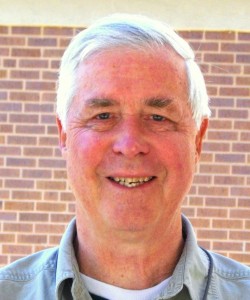
We are delighted to welcome a new columnist to our ranks today. Felix Kloman will be writing book reviews under the column title of “Reading Uncertainly” and we are pleased to publish his first review in a separate article today.

Kloman is a sailor, rower, husband, father, grandfather, retired management consultant and, above all, a curious reader and writer.  He’s explored how we as human beings and organizations respond to ever-present uncertainty in two books, ‘Mumpsimus Revisited’ (2005) and ‘The Fantods of Risk’ (2008).  A 20-year resident of Lyme, he now writes book reviews, mostly of non-fiction that explores our minds, our behavior, our politics and our history.  But he does throw in a novel here and there.

For more than 50 years, he’s put together the 17 syllables that comprise haiku, the traditional Japanese poetry, and now serves as the self-appointed “poet laureate” of Ashlawn Farms Coffee, where he may be seen on Friday mornings.

His wife, Ann, is also a writer, but of mystery novels, all of which begin in a bubbling village in midcoast Maine, strangely reminiscent of the town she and her husband visit every summer.  Her characters also explore the world, causing murders or tripping over bodies in Jackson Hole, Wyoming, Stockholm, Sweden, Hamilton, Bermuda, Newport, R.I., Bainbridge Island, Wa., and, believe it or not, Old Lyme, Conn.

He can be reached at fkloman@aol.com.