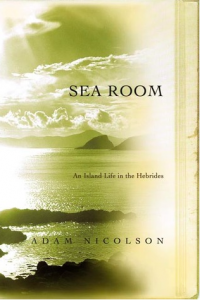
Reading Uncertainly? ‘Sea Room’ by Adam Nicolson

Sea RoomWhy do islands so often seem to be symbols of disconnection when, in fact, they illustrate multiple connections to the past, present and future?

Adam Nicolson, a privileged Englishman (Eton, Cambridge and Parliament) explores these thoughts through the medium of the three rugged Shiant (pronounced “Shant”) Islands, in the middle of The Minch, a rushing, spilling, tumultuous tidal spillway between the mainland of Scotland and the Hebrides islands off its northwest coast. They were purchased by his father, deeded to him and are now the possessions of his son.

But, as he cautions early in this story of the seasons in Scotland, “My islands are not a place from which to exclude others … Land … is to be shared.” And so he does in this captivating exploration of essentially three rocks “owned” by millions of birds: puffins, kittiwakes, fulmars, gannets, and eagles comprising a veritable, “… theatre of competition and enrichment.”

I first heard of the Shiants through Robert Macfarlane, in his story of trekking and sailing both land trails and waterways, The Old Ways (Penguin, New York 2012), when he and a friend sailed a small lugger from Stornoway, on the Island of Lewis, to spend two idyllic days and nights there. He too found them far from lonely with the evidence of past habitation, the teeming avian population (primarily puffins) and a copy of Nicolson’s Sea Room about the islands’ former residents.  Macfarlane noted the, “delusion of comprehensive totality … a boundedness” of islands, in light of the reality of their connectedness to the sea, to other islands, to the mainland, to history, and to present inhabitants.

“Sea room” to me, a long-time sailor with modest service in the U. S. Navy, means always maintaining proper distances between my ship and the shore, other ships, and especially the bottom. To Nicolson it also connotes a “room,” a place near the sea, from which to appreciate both motion and stability.”

And he does appreciate the seasons. “Spring here is always beautiful for those uncertainties … It is the season of uncertainty … Summer … is languor … Autumn hangs on like an old tapestry, brown and mottled, a slow, long slide into winter … and winter itself, of course, has persistence at its heart, a long, dogged grimness which gives nothing and allows nothing … “

This is a very human exploration. Nicolson’s approach: “I never think things through. I never have. I never envisage the end before I plunge into the beginning. I never clarify the whole. I never sort one version of something from any other. I bank on instinct, allowing my nose to sniff its way into the vacuum, trusting that somewhere or other, soon enough, out of the murk, something is bound to turn up. I’m wedded to this plunging-off form of thought, and to the acceptance of muddle which it implies.”

Nicolson advocates “ … an excited ‘what next?’ as the motivating force in life, a stodgelessness, an inability to plan.”

His enthusiasm, however, in investigating the past of his islands leads too often to simple conjecture. In 11 consecutive pages, I found the following words and phrases: “a possibility – perhaps – maybe – no record – almost certainly – might have been – probably – is it? –  one can only imagine – no way of telling – guesses – may have been used – may well be – suggests – may be dated – would have been seen – another version – might well have been – fragmentary at best.” Almost a fictional novel , but he remains a thoroughly engaging tour director for the Shiants and the lore of Scotland.

So isn’t it time to explore our islands? How many of us have been ashore, lifting rocks and staring at the mainland, on some of the Lyme islands: Selden Neck, Brockway, Notts, and the evocatively named Calves, Goose and Rat? What are their histories?

I think I will try one of them this summer …

Editor’s Note: Sea Room by Adam Nicolson is published by Harper Perennial, London 2001

Felix Kloman_headshot_2005_284x331-150x150About the author: Felix Kloman is a sailor, rower, husband, father, grandfather, retired management consultant and, above all, a curious reader and writer. He’s explored how we as human beings and organizations respond to ever-present uncertainty in two books, ‘Mumpsimus Revisited’ (2005) and ‘The Fantods of Risk’ (2008). A 20-year resident of Lyme, he now writes book reviews, mostly of non-fiction that explores our minds, our behavior, our politics and our history. But he does throw in a novel here and there. For more than 50 years, he’s put together the 17 syllables that comprise haiku, the traditional Japanese poetry, and now serves as the self-appointed “poet laureate” of Ashlawn Farms Coffee, where he may be seen on Friday mornings. His wife, Ann, is also a writer, but of mystery novels, all of which begin in a bubbling village in midcoast Maine, strangely reminiscent of the town she and her husband visit every summer.
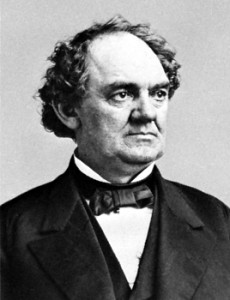

Talking Transportation: PT Barnum and Metro-North

P.T. Barnum

P.T. Barnum

What do Connecticut’s own PT Barnum and I have in common?  No, not just a love of circuses.  We are both “rail advocates” fighting for the interests of commuters.

This amazing piece of news about Barnum, a man better known for his showmanship and menageries, came to me while watching a speech at the Old State House in Hartford broadcast on CT-N (every policy wonk’s favorite channel).  The speaker was Executive Director and Curator of the Barnum Museum Kathleen Maher.

She explained that Barnum was more than a showman.  He was also a railroad advocate. (He also went on to be part-owner of a cross-Sound ferryboat service that’s still running today.)

In 1879 Barnum wrote an impassioned letter to the NY Times promoting a street railway be built in New York City along Broadway between Bleecker and 14th Street, enlisting the support of local merchants such as the Brooks Brothers and, “the carpet men, W & J Sloan”.

Earlier, in 1865, Barnum went to Hartford representing the town of Fairfield as a Republican — later he became Mayor of Bridgeport.  As he writes in his autobiography, he arrived at the capitol to find that powerful railroad interests had conspired to elect a Speaker of the House who had protected their monopoly interests in the state.

Further, he found that Connecticut’s “Railroad Commission” had been similarly ensnared by the industry it was supposed to regulate and that one member was even a clerk in the office of the NY & New Haven RR!  Barnum pushed through a bill prohibiting such obvious conflicts of interest.

Then he turned his sights on helping commuters.  Barnum noted that New York railroad magnate Commodore Vanderbilt’s new rail lines (now the Hudson and Harlem divisions of Metro-North) were popular with affluent commuters.  Once Vanderbilt had them hooked as passengers for their daily ride into and out of New York City, he jacked up fares by 200 to 400 percent.

Sensing that Vanderbilt might try to do the same to Connecticut riders on the new New Haven line (in which “The Commodore” had a financial stake), Barnum set to work in the legislature to make sure the state had some control over “its” railroad.  Barnum said his only ally in the fight was then-State Senator Ballard of Darien.

So spirited were they in their lobbying that the railroad’s “man” on the state Railroad Commission “took to his bed some ten days before the end of the session and actually remained there ‘sick’” until the legislature adjourned.” (Sound familiar?)

Fast forward to the present and we could again use Barnum’s help.

Though Connecticut hires Metro-North to run “our” trains on “our” tracks, our contract with that New York state agency gives us little say and no seat on it board.  As one lawmaker noted, the Connecticut Department of Transport defends Metro-North much as a kidnap victim fights for its captor (what he called the Stockholm syndrome).

Jim Cameron

Jim Cameron


Editor’s Note:
Jim Cameron is founder of The Commuter Action Group, and a member of the Darien RTM.  The opinions expressed in this column are only his own.  You can reach him at CommuterActionGroup@gmail.com   For a full collection of “Talking Transportation” columns, see www.talkingtransportation.blogspot.com

Nibbles: Summer Just Isn’t Summer Without Ratatouille (and a Five-Bean Bake!)

Ratatouille is always a welcome addition to any summer meal -- or as a meal on its own.

Ratatouille is always a welcome addition to any summer meal — or as a meal on its own.

I am so enjoying this summer.

I do love my CSA baskets (Hanukkah or Christmas every Tuesday afternoon), but I still delight in visiting my local farm and farm markets twice a week to get more tomatoes and sweet corn, either at Whittle’s in Mystic or Becky’s in Waterford.

If that were not enough, a neighbor, who is a scientist at Pfizer, asked if I liked tuna. “Fresh tuna?” I asked. Sure enough, her colleague was going tuna fishing the next day and she came home with two simply gorgeous tuna fillet.

The next day I marinated it with extra-virgin olive oil, salt, pepper and fresh tarragon. Aside from the fact that I overcooked the tuna, it was amazing and my plate shared space with two big tomatoes with burrata (from Fromage) and sweet corn. Life can be pretty darn good.

Over the July 4 weekend, I went to a party at John Colton’s house in Lyme. His sister, Beverly Picazio, made two salads—ratatouille with fresh vegetables and another that can be whipped up with pantry staples.

I loved both of them so you might consider making these from your next potluck or party. The ratatouille is not only a great side dish, but, with a crusty loaf of bread and a salad, it is a terrific vegetarian dinner.

Ratatouille

Slightly adapted from recipe of Beverly Picazio of Stonington

Yield:

2 tablespoons extra-virgin olive oil

2 to 4 large cloves of garlic, minced

One-half teaspoon crusted pepper flakes

2 medium-sized eggplants, peeled and chopped

3 zucchini, chopped2 green peppers, chopped

2 8-ounce packages of sliced mushrooms

4 tablespoons fresh basil, chopped

1 can lima beans

1 yellow squash, chopped

2 28-ounces crushed tomatoes

Fresh ground fresh black pepper and salt, to taste

Chop all vegetables to about the same side.

In a large (or Le Creuset) Dutch oven, saute garlic in oil. Add pepper flakes. Stir in all the vegetables, including the tomatoes. Bring ingredients to a simmer, then cover and bake until fork tender, about 45 minutes. Season to taste.

Beverly thinks the dish is better made a day or two earlier. When reheating, water if ratatouille is too thick.

Five-Bean Bake

From Beverly Picazio of Stonington

Yield: serves 12 as a side dish

Preheat oven to 350 degrees.

8 bacon slices, chopped

1 medium onion, diced

1 28-ounce can Bush baked beans

1 19.75 ounce of black beans, rinsed and drained

1 16-ounce can chick peas, rinsed and drained

1 15-ounce can kidney beans, rinsed and drained

1 15-ounce can lima beans, rinsed and drained

1 cup ketchup

Three-quarter cup firmly packed brown sugar

One-half cup water

One-quarter cup cider vinegar

Cook bacon I a large skillet over medium high heat until crispy. Remove bacon, reserving 3 tablespoons drippings in skillet. Add diced onion and saute until tender. Combine the rest of the ingredients in a large bowl.

Add all ingredients into a 9-inch by 13-nch baking dish and cook in the oven covered for 1 hour; uncover and bake another 30 minutes.

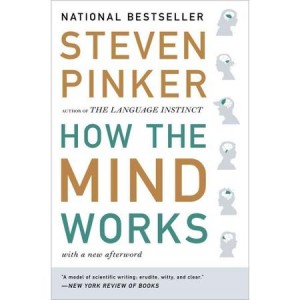
Reading Uncertainly? ‘How The Mind Works’ by Steven Pinker

How_the+Mind+WorksWhy is reading, at least for me, so soothing, stimulating and confusing, all at the same time? Why does my mind react so strangely at times to what I am reading?

Four years ago, I tried Steven Pinker’s monumental (some 800 pages of small type!) suggestion that we humans are actually becoming less violent, in The Better Angels of Our Nature. So it was only natural that I stepped back in time to read How The Mind Works, his equally long tome of 1997, updated to 2009, describing the innumerable quirks and ramblings that emanate from inside our heads.

A noted professor of psychology at Harvard University, Dr. Pinker attempts, and succeeds, I think, in synthesizing, “An emerging view of human nature,” one replete with frequent humor, quotations from numerous other sages (ranging from Plato and Pascal, to Bierce and Mencken, including Monty Python, Peanuts and Woody Allen!), and solid scientific evidence.

But he begins on a “note of humility,” saying, “We don’t understand how the mind works and I have not discovered what we do know about how the mind works.”

He cautions, “… our minds are not animated by some godly vapor or single wonder principle.” We do know, “the mind is a product of the brain and the brain is a product of evolution.” That leads him to “the central idea … that the mind is a system or naturally selected organs of computation.” He notes, “We increasingly understand ourselves in terms of the inner workings of our minds, their origins in the natural world, and their interplay with the contents of culture and civilization.”

Pinker explains further: “The mind is a system of organs of computation, designed by natural selection to solve the kinds of problems our ancestors faced in their foraging way of life; in particular, understanding and outmaneuvering objects, animals, plants and other people.”

Many of his succinct “definitions” made me come to a complete halt, frequently with a laugh, followed by serious reflection:

The tongue: “a boneless water balloon, controlled by squeezing.”

The computer: “the most legalistic, persnickety, hard-nosed, unforgiving demander of precision and explicitness in the universe.” (Could a computer actually become a “thinking machine?”)

Life: “a series of deadlines”

Winter: “the best insecticide”

Our brains: “… take up only two percent of our body weight but consume 20 percent of our energy and nutrients.”

Information: “…  the one commodity that can be given away and kept at the same time.”

Mathematics: “… ruthlessly cumulative.”

The stock market: “a large industry of self-appointed seers hallucinating trends in the random walk of the stock market.”

Jewish dietary laws: “Talmudic sophistry and bafflegab”

Status: “the public knowledge that you possess assets that would allow you to help others if you wished to.” (But Pinker notes that these “assets” must be conspicuous to be of any use …)

Music: “an enigma – a cocktail of recreational drugs that we ingest through the ear to stimulate a mass of pleasure circuits at once.”

And humor: “an anti-dominance poison, a dignicide.”

But “problems continue to baffle the modern mind: consciousness in the sense of sentience, the self, free will, knowledge, and morality.” Pinker suggests that you “step outside your own mind for a moment and see your thoughts and feelings as magnificent contrivances of the natural world rather than as the only way that things could be.”

And comments in conclusion, “Our bafflement at the mysteries of the ages may have been the price we paid for a combinatorial mind that opened up a world of words and sentences, of theories and equations, of poems and melodies, of jokes and stories, the very things that make a mind worth having.”

We human beings, surmounting by our minds, are extraordinary, complex and yet strange adaptations.

What a read!

Editor’s Note: ‘How The Mind Works,’ by Steven Pinker is published by W. W. Norton, New York 2009.

Felix Kloman_headshot_2005_284x331-150x150About the author: Felix Kloman is a sailor, rower, husband, father, grandfather, retired management consultant and, above all, a curious reader and writer. He’s explored how we as human beings and organizations respond to ever-present uncertainty in two books, ‘Mumpsimus Revisited’ (2005) and ‘The Fantods of Risk’ (2008). A 20-year resident of Lyme, he now writes book reviews, mostly of non-fiction that explores our minds, our behavior, our politics and our history. But he does throw in a novel here and there. For more than 50 years, he’s put together the 17 syllables that comprise haiku, the traditional Japanese poetry, and now serves as the self-appointed “poet laureate” of Ashlawn Farms Coffee, where he may be seen on Friday mornings. His wife, Ann, is also a writer, but of mystery novels, all of which begin in a bubbling village in midcoast Maine, strangely reminiscent of the town she and her husband visit every summer.

Talking Transportation: Transportation News Updates

It’s time to update you on some of the hot topics we’ve discussed in recent weeks:

MALLOY’S TRANSIT LAND GRAB:
Remember the Governor’s stealth proposal for a “Transit Corridor Development Authority,” described by some as “eminent domain on steroids”? Well, the initial idea to allow the state to acquire any land within a half-mile of train stations was modified, then killed in the legislature. I predict it will be back.

BRIDGE WOES:
Just as planning begins to replace Norwalk’s 118-year-old railroad bridge, which opens but doesn’t close, another ancient bridge is suffering the same engineering arthritis. On July 1st the Devon Bridge in Stratford was raised but wouldn’t close, delaying every train that ran across it for days. Estimated replacement cost, $750 million.

STAMFORD GARAGE:
It has been two years since the CDOT tapped Darien developer John McClutchy as their choice to demolish the old rail station garage. (That announcement came 10 days after, just coincidentally, McClutchy’s wife donated $10,000 to the state Democrats.) But a final deal has yet to be signed for reasons unknown, so any work is still many months away. Meanwhile in April of this year the old garage was crumbling so badly that the CDOT closed it for safety inspections. Those inspections were completed, but the garage is still closed, displacing 700+ daily commuters.

THIS IS “SAFETY FIRST”?
On June 29, Metro-North allowed two trains to run toward each other on a single track just south of New Canaan. Fortunately they stopped before a collision and one of the trains backed up and out of the way. When reporters first asked Metro-North what happened, they insisted nothing was wrong. Later, they described the incident as “undesirable train routing”, an amazing euphemism for a near collision.

TAKEN TO COURT IN HANDCUFFS:
Is it reassuring to passengers to see MTA conductors and engineers on a “perp walk” for the news media? Thirteen current and former employees of the MTA were taken to court last week, indicted on charges of cheating on safety exams that were testing their knowledge of signals, speed limits and safe operation of trains. The cheating ring ran for more than two years in a period just before Metro-North was hit with a series of derailments and collisions. Eight different exam cycles were compromised before the MTA’s internal investigators started their probe.

HOW LATE WAS YOUR TRAIN?
When the 11:39 p.m. left Grand Central on the night of July 1, passengers settled in for a nap en route to Stamford and a 12:48 a.m. arrival. But instead of taking one hour, their journey took three. Near Woodlawn, the train entered a section with inoperative third-rail and coasted to a halt. The train sat there for 90 minutes before a rescue train arrived, taking 40 minutes to pull them to a station where passengers got on another train. To their credit, the crew did pass out water to the stranded passengers … never a good sign when you’re on a stranded train.

Jim Cameron

Jim Cameron

Jim Cameron is founder of The Commuter Action Group, and a member of the Darien RTM. The opinions expressed in this column are only his own. You can reach him at CommuterActionGroup@gmail.com For a full collection of “Talking Transportation” columns, see www.talkingtransportation.blogspot.com