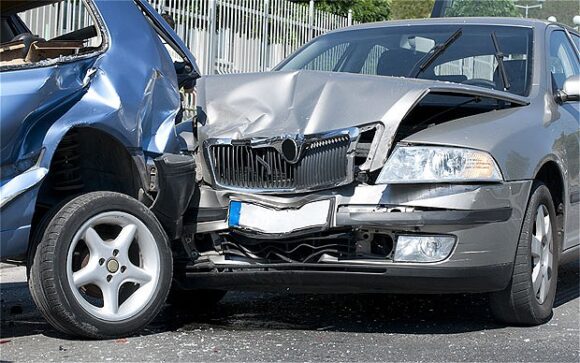
Legal News You Can Use: Why Many Car Accidents Happen Close to Home

Part of the reason many accidents occur near home is because driving in familiar places can cause drivers to rely on memory instead of what is happening around them. This auto-pilot phenomenon can prevent people from remaining vigilant while driving, potentially causing them to miss important visual cues. It is imperative that drivers combat this phenomenon by staying awake and alert as unpredictable elements, such as other drivers, crossing animals or mechanical failure, can always cause an accident. However, because others are also likely driving on auto-pilot, motorists should also ensure that they always buckle their seat belt no matter how far they are driving.

Further, fatal car accidents are more likely to occur at certain times of times of the day, particularly when workers are heading home or when residents are out running errands. For example, 16 percent of fatal accidents that occurred in 2013 took place between 3 p.m. and 6 p.m.. Further, 31 percent of car accidents in 2013 occurred between 6 p.m. and midnight.

Car accidents that occur on interstates, local highways or even rural roads can result in serious injuries or even death. If the accident occurred due to another driver’s negligence or risky driving habits, those who suffered injuries could seek compensation for the damages they sustained in the incident, including recovering the cost of their medical bills, lost income and pain and suffering. However, some insurance companies may attempt to settle the claim for less than what the injured individuals need. In such an event, filing a lawsuit against the at-fault motorist with an attorney’s help might be advisable.

The Law Firm of Suisman Shapiro focuses on this area of the law.
Sponsored post.

Legal News You Can Use: Proving Negligence in a Car Accident Case

Photo by Samuel Foster on Unsplash

SPONSORED POST: To recover compensation in a car accident case, a plaintiff must satisfy the required elements of a negligence claim: duty, breach, causation and damages. Specifically, the plaintiff must persuade the jury that the defendant breached his or her duty of care, resulting in injury, by a preponderance of the evidence standard.

Element Two: Breach of Duty

As we discussed in a recent post, every licensed driver has a duty of care to operate his or her vehicle in a responsible manner. That duty includes abiding by traffic laws and paying attention to traffic and road conditions. Thus, the most contested element of a car accident case is usually not whether a duty existed, but whether the defendant driver’s actions breached that duty.

Types of Evidence in a Car Accident Claim

A plaintiff may use both direct and circumstantial evidence in a car accident case. Thanks to technology, there may be direct evidence of a defendant driver’s actions. For example, street cameras may have recorded the driver running a stop sign or red light. If a crash victim suspects that the other driver was texting behind the wheel, a subpoena to the driver’s cell phone carrier may confirm that suspicion. Many newer motor vehicles also contain an Event Data Recorder (EDR), or “black box,” which may have recorded speed and braking patters immediately before the collision.

Creating a Trial Narrative With Expert Testimony

Suisman Shapiro also has established relationships with accident reconstruction specialists. These professionals may offer testimony that interprets circumstantial evidence, such as skid marks, vehicle resting positions, EDR data, and the driver’s memories immediately before the crash. However, none of this evidence may be apparent without the skilled investigative efforts of a personal injury attorney.

The Law Firm of Suisman Shapiro focuses on this area of the law.

Source: Washington Post, “Study on drug-impaired driving gets pushback — from other safety advocates,” Fredrick Kunkle, May 1, 2017

Legal News You Can Use: How do you Hold an Impaired Driver Accountable After an Accident?

SPONSORED POST: In fatal motor vehicle accidents, the National Highway Traffic Safety Administration collects blood alcohol content levels for analysis in the Fatality Analysis Reporting System.  This reporting requirement applies to all states.

However, authorities do not have as standardized an approach to non-fatal crashes. After responding to the scene of an accident, police authorities may request testing of a driver who exhibits signs of intoxication. Yet is this enough? There are many influences that may render a driver unfit to get behind the wheel, including prescription drugs, opioid medications, or marijuana use, which may not be as noticeable as the effects of alcohol.

Significantly, an analysis of federal crash data from 2015 indicates that more drivers in fatal motor vehicle accidents had been under the influence of drugs, legal or illegal, than alcohol. Specifically, the data indicated that 43 percent of drivers had been drug impaired, compared to 37 percent who were driving under the influence of alcohol.

This begs the question of whether a crash victim will be able to hold a negligent driver accountable under the law. In Connecticut, an individual may file a personal injury lawsuit against a negligent driver. By a preponderance of the evidence standard, the crash victim must prove that the named defendant(s) breached the duty of safe driving incumbent upon all licensed drivers.

In a personal injury case, a reasonableness standard is used to evaluate the actions of an allegedly negligent driver. Examples may include failing to obey traffic laws, driving inappropriately for traffic or road conditions, or getting behind the wheel when drugs or alcohol render you unfit to drive.

The Law Firm of Suisman Shapiro focuses on this area of the law.

Source: Washington Post, “Study on drug-impaired driving gets pushback — from other safety advocates,” Fredrick Kunkle, May 1, 2017

Legal News You Can Use: Protect Your Most Precious Cargo

As the seasons change and we transition from winter to spring, many of us also experience a change in our daily lives and schedules.  The days get longer, and children begin outdoor activities. As these inevitable changes occur, the need for parents to transport their children sometimes becomes more frequent.  This being the case, it is imperative for parents to be aware of and to employ proper car safety practices while transporting their children.

According to the Centers for Disease Control and Prevention (CDC), in the United States during 2014, 602 children ages 12 and younger died as occupants in motor vehicle accidents,  making car accidents one of leading causes of death for children under 12-years-old.  CDC studies also revealed that in 2014, more than 121,350 children under 12 year of age suffered injuries while occupants in cars involved in accidents.

In order to lessen these disturbing statistics, the CDC recommends the following to parents while driving with their young children:

  • Use proper car seats, booster seats and seat belts in the back seat on every trip. Which option is appropriate will depend on the child’s age, weight and height;
  • Use a rear-facing car seat for children under 2 years of age;
  • Use forward-facing car seats for children ages 2 through 5;
  • Use booster seats from age 5 until the seat belt fits properly. Seat belts should fit so that the lap belt lays across the upper thighs and the shoulder belt lays across the chest;
  • Never sit a child in front of an airbag. Children should ride in the back seat of the car, preferably in the back middle seat as that is the safest place in the car.
  • Use the proper restraint system on every trip, no matter how long;
  • Install and use car seats according to the owner’s manual or get help with installation from a certified Child Passenger Safety Technician;
  • If purchasing or using a pre-owned car seat, be sure to research the make and model to check for any recalls and if necessary contact the manufacturer to obtain an owner’s manual for proper installation and maintenance instructions.
  • Set a good example for children and always wear a seatbelt.

Aside from the important safety concerns discussed above, parents can face further consequences for failing to employ proper car safety practices with children.  Connecticut law not only requires all drivers to wear seatbelts, it also requires them to ensure that any occupant of their vehicle under 16 years of age wears a seat belt.  Connecticut law also requires children less than 6 years of age and under 60 pounds to ride in a proper safety seat.  Infants less than 1 year of age and under 20 pounds must ride in a rear-facing child seat at all times.  Drivers who fail to abide by these laws can face punishment including fines.

Apart from potential criminal liability, the failure to properly secure your child can affect their ability to recover civil damages for injuries they suffer as a result of a motor vehicle accident.  Such failures can be viewed as contributing causes of injuries and negate or decrease a civil settlement or verdict.

Injuries to children are some of the most difficult and emotional cases with which Suisman Shapiro deals.  We implore parents and guardians to educate themselves on and employ proper car safety practices for children.  Unfortunately, even when all proper safety steps are taken, accidents and injuries still occur.

If you or your child is injured in a car accident or due to the fault of another person, our law firm is here to help you.  Contact Suisman Shapiro today online or by telephone to arrange a free initial consultation with an experienced personal injury lawyer.

SPONSORED POST

About the Author: Roger Scully is an associate attorney at Suisman Shapiro in New London, CT, the largest law firm in eastern Connecticut. His practice focuses on civil and personal injury litigation and criminal defense. Attorney Scully has extensive jury trial experience. Prior to joining Suisman Shapiro, he served as Assistant District Attorney for the Norfolk County District Attorney’s Office, representing the Commonwealth of Massachusetts in a diverse range of criminal matters. To contact Roger Scully visit www.suismanshapiro.com or call 860-442-4416. Suisman Shapiro is located at 2 Union Plaza, P.O. Box 1591, New London, CT 06320.

Legal News You Can Use: Workers’ Compensation: How it Works

hph-workers-compensation-insurance-compressed
Sponsored Post:
The day begins like almost any other. You arrive at the workplace, spend a few moments interacting with your co-workers and begin the daily task. Maybe it’s a job that you’ve done a thousand times, or perhaps the demands of that day result in your performing an assignment for the first time. And then “it” happens ~ you feel a twinge in your back or shoulder; there is an ache in your hands that doesn’t subside; or there is an exposure to a substance that is foreign to you. What do you do then?

The origin of Workers’ Compensation
 in Connecticut dates over a century, the original Act becoming part of the Law in 1913. As the result of a “Contract of Employment” (whether written or implicit) with the employer, he/she/the business will cover medical benefits and lost wages for an employee who suffers an injury out of and in the course and scope of their employment. There are, essentially, three different types of injuries covered in Workers’ Compensation. They are:

(1) Accidental injuries. These are injuries that can be located in time and space; e.g., the lifting of heavy equipment, which results in an Employee screaming in pain.

(2) Repetitive trauma injuries. These are claims that arise not from one injurious situation, but are cumulative over time. Examples would include repetitive computer work with one’s hands, or kneeling on steel every day for years.

(3) Occupational disease/exposure. These injuries are those where there is a clear link between the workplace and substances to which the individual is exposed; e.g., asbestos in a shipyard; a dental hygienist contracting Hepatitis.

When an employee has sustained, or has reason to believe they have sustained, an injury related to their employment, what are the next steps?

(1) Report the injury. In accidental injuries and repetitive trauma claims, there is a one year Statute of Limitations for reporting of the injury. In Occupational Disease claims, the general rule is that the injury needs to 
be reported within three years of when the employee knew, or should have known, of the connection between the occupational exposures and the medical condition alleged.

The better approach is to report the injury to your employer at the first opportunity, or when you have reason to believe there is a connection between work activities and your injury. Employers and insurance carriers become increasingly skeptical about the validity of an injury claim when there is a delay in reporting an injury.

(2) Obtain medical treatment. Any significant injury requires treatment from a medical provider. Even if you have to use your own insurance at an initial appointment, treatment and opinions on causal connection should be obtained. Insurance companies can sort out the issues at a later date. Again, employers and insurance carriers are more likely to be skeptical about an injury if there is a significant delay in obtaining medical treatment.

(3) File notice of the injury. In Connecticut, the Form 30-C is the vehicle to place employers and their carriers on notice that an individual has suffered an injury or illness related to their employment. The Form 30-C should be sent via Certified Mail and is the ultimate protection for an injured worker. Also, note that Connecticut General Statutes Section 31-290a protects the injured worker from retaliatory actions or discrimination by an employer for asserting their rights to Workers’ Compensation benefits.

Now that the claim has been properly filed, what benefits are obtainable for the injured worker? Clearly, medical treatment is paid for by the employer or insurance carrier with no deductible for the injured worker. Other “indemnity” benefits may also be appropriate, including:

(1) Temporary total disability benefits. If an injury results in lost time from work, a weekly (or bi-weekly) monetary payment, based upon earnings in the preceding 52 weeks, is payable to the injured worker until they are able to return to their job, or some other work within their restrictions.

(2) Permanent partial disability benefits.  
If an injury results in permanent impairment to a body part; e.g., following a surgery, the injured worker is entitled to obtain a “rating” for their loss of use from their Attending Physician. Additional benefits
 are payable pursuant to Connecticut General Statutes Section 31-308b. In certain, specified situations, an injured worker may also be entitled to a disfigurement award, depending on the site of the injury.

(3) Wage loss benefits. If, as the result of
 a work-related injury, the injured worker is capable of work, but cannot perform the same job and there is a resulting loss of income, the injured worker is eligible for a period of wage loss. This, too, is controlled by the Connecticut General Statutes, and appears at Connecticut General Statutes Section 31-308a.

(4) Death benefits. Where an injury results in the death of the injured worker, benefits are payable to the surviving spouse and/or other dependents of the decedent.

Being pro-active in reporting an injury and obtaining medical care will be beneficial to any injured worker.

This article represents an overview of the Workers’ Compensation System. While the System was designed to be user-friendly, complexities often arise which may dictate hiring a Lawyer.

Attorney James P. Berryman

Attorney James P. Berryman

About the author: Jay Berryman is a Director at Suisman Shapiro Attorneys at Law in New London, CT, the largest law firm in eastern Connecticut. He concentrates in Workers’ Compensation Law and Social Security Disability claims. Attorney Berryman was named by “Bench- mark Plaintiff” magazine as a Local Litigation Star, and his department at Suisman Shapiro was selected by the 2013-15 editions of U.S. News – Best Lawyers® “Best Law Firms” among all law firms in Connecticut for Workers’ Compensation – Claimants.

For more information, visit www.suismanshapiro.com or call (860) 442-4416. Suisman Shapiro is located at 2 Union Plaza, P.O. Box 1591, New London, CT 06320.