

Legal News You Can Use: Technology can be Worrisome for Parents

internet_safetySponsored by Suisman Shapiro Attorneys at Law:

The issues facing parents today, as technology ushers in newer and faster means of communicating, are markedly different from those faced by our parents.  Through ever increasing methods of communication, our children have, at their fingertips, the ability to reach a multitude of people in an instant.  Take that instantaneous availability, and mix in the processing and maturity of the adolescent brain, and, in the blink of any eye, circumstances may be set in motion that can immediately change the course of your child’s life.

While the above may seem drastic, it is, nevertheless, true.  On the Internet, our children can access and disseminate child pornography, commit racial and bigotry crimes, and violate our state’s bullying laws, without even knowing it.   Through posts on Facebook, Twitter, Yik Yak, Flickr, Tumblr and MeetUp, just to name a few social media sites, words and images can be sent into the vast world of social media and the internet, where they can be reposted, retweeted, tagged and sent to all corners of the globe.  Once sent, they are there for all to see, including law enforcement.

This onslaught has led organizations like the American Academy of Pediatrics to issue clinical reports on the impact of social media and sexting on our children (Fn1).  Further, it has led each state, Connecticut included, to pass laws making it a crime to engage in certain activity that affects the health and safety of our children.

While this article is not meant to be an in depth analysis of each and every statute which criminalizes certain conduct of our children through their use of social media, it bears mentioning some common issues which arise.  One widespread problem that occurs in the educational environment is bullying.

Connecticut has enacted a comprehensive statute, in conjunction with the U.S. Department of Education, to ensure that bullying does not impede our children’s learning environment.  Enactment of criminal laws, some of which are felonies punishable by more than one year in jail, has made it illegal to discriminate on the basis of race, religion, ethnicity, disability, sexual orientation or gender identity.

Another common problem occurs if your child sends a “visual depiction” of child pornography (nude or showing genitalia) of himself/herself or that of his/her partner, and either one of them is under 16-years-old, they have violated our state’s “possessing or transmitting child pornography” statutes (fn2).  If they use their Facebook account to meet someone under 16, for the purposes of engaging in a sexual act, they have violated our state’s “enticing a minor” statute.

The above is just a snapshot of the complex issues that occur when you mix the not-yet-fully formed mind of a child and the speed of the Internet and social media.  It is also the reason you should seek competent legal representation when confronted with these issues.  Consulting with the right attorney can potentially prevent mistakes such as those mentioned above from affecting your child’s future.

Editor’s Note: Attorney Michael A. Blanchard is a Director at Suisman Shapiro whose practice concentrates in criminal and family law.  Contact him via email at mblanchard@sswbgg.com or via phone at (860) 442-4416 with questions regarding these laws.

Fn1.  Clinical Report-the Impact of Social Media on Children, Adolescents, and Families; O’Keeffe, Gwenn Schurgin, Clarke-Pearson, Kathleen and COUNCIL ON COMMUNICATIONS AND MEDIA; published online March 28, 2011; Sexting and Sexual Behavior among Middle School Students; Rice, Eric PhD, et als; published online June 30, 2014.

Fn2.  Connecticut General Statutes sections 53a-181i through 53a-181l.

Legal News You Can Use: Know Your Rights When Unexpected Injury Occurs

Car_accidentAn unexpected injury can be frightening and disorienting, whether from an automobile accident, slip-and-fall, or a “freak” accident.  It is helpful to know your rights, and consider in advance the important steps you should take in these situations.


#1. Seek Emergency Medical Care

This may seem obvious, but take a minute to be sure you’re alright!  If you are able to do so, check on any passengers in your vehicle, or on others who may have been injured in a motor vehicle accident.  Once you have taken precautions for your safety, move your vehicle out of the lane of travel, if possible.  Then, call 911.

If you refuse treatment at the scene, go directly to your doctor or the local emergency clinic to be checked out, even if you think your injuries are minor.  Often times it is well after the adrenaline wears off that we start to experience pain.

#2. Inform Authorities and Get Copies of Reports

Wait for the police to arrive on the scene, and, respectfully ask that the other driver do the same.   If you have been injured in an accident on the premises of a business, notify the manager or supervisor immediately, or, inform the homeowner if you have been injured on residential property.  Always remain calm during the course of any conversations with the police, authorities, business representatives, or other parties involved.  Remember to ask for copies of any accident reports that are generated.

#3. Exchange Insurance Information and Take Photos

Try to get the names and contact information for any witnesses to the accident. If you have been in a motor vehicle accident, you should exchange insurance information with the other driver.  If you were injured on residential or commercial premises, ask for contact information for the appropriate insurance company.  Take photos of any visible injuries and damage to your vehicle or property.

#4. Don’t Ignore Follow-up Medical Treatment, and Keep Good Records

Don’t skip follow-up appointments, and be sure to obey the recommendations of any medical professionals who are treating you. Not keeping your medical appointments or failing to follow your doctors’ advice may hinder the healing process, and can also have an impact on any compensation to which you may be entitled. Insurance companies often try to reduce compensation for failing to do these things, calling it “failure to mitigate damages”. Your medical records will provide documentation in the event that the insurance company asks for it.    Save copies of doctors’ notes, time off from work, and receipts from any expenses incurred.

#5. Seek Legal Counsel

It’s important to understand your rights after an accident. It usually takes time to assess the full nature of your claim, including your injuries, property damage, loss of wages, out-of-pocket expenses associated with the claim, etc.  Do NOT sign any documents, releases or checks from the insurance company without first consulting with an attorney.

Beware of insurance companies who are quick to offer you cash after you have been injured.  Often, accepting a cash payout from an insurance company shortly after the incident means signing a written promise that you will not bring a claim or a lawsuit against the insurance company or the party they insure.  If you discover additional injuries or property damage after you have made this promise, you may inadvertently waive future recovery to which you may be entitled.

#6. Claims

Many, but not all, motor vehicle collisions have a two-year statute of limitations.  This means that you have the right to bring a lawsuit claiming damages arising out of the collision up to two years after the date on which it happened.  On the other hand, in some situations, if you fail to notify certain parties within as little as 60 to 90 days that you intend to bring a claim, you may forfeit certain legal rights. The time limits prescribed by Connecticut law vary depending on the type of accident and if the responsible party is an individual, business, municipality, or other entity; where the accident occurred, and other factors.

It is wise to consult with a competent attorney who can advise you as to the statute of limitations that applies to your particular situation.  It’s important to understand your rights after an accident. Many people mistakenly assume that if they file a lawsuit, they will be required to go through the stress and anxiety of a court trial.  However, the majority of lawsuits that are filed settle before reaching the point of a trial.  Following the important steps above will help make the road to physical, emotional and financial recovery much smoother.

jcollinsnew_square_headshot

Attorney John A. Collins III

Editor’s Note: Suisman Shapiro Attorneys at Law is the largest law firm in eastern Connecticut, serving the community for over 70 years with a wide range of legal services.  John A. Collins III is the Managing Partner of the firm and a Director/Shareholder who concentrates in the areas of Personal Injury Law and Civil Litigation. For more information, visit www.suismanshapiro.com or call (860)442-4416.

Suisman Shapiro is located at 2 Union Plaza, P.O. Box 1591, New London, CT  06320

Legal News You Can Use: Man’s Best Friend (?) and the Law

Dog with LeashThe state of Connecticut is very strict about the keeping of dogs.  In addition to requiring all dogs to be licensed and leashed, Connecticut has what is known as strict liability as to injury that may be caused by man’s best friend.  Section 22-357 of the Statutes provides:

“If any dog does any damage to either the body or property of any person, the owner or keeper … shall be liable for such damage except when such damage has been occasioned to the body or property of a person … who was committing a trespass or other tort or when the person was teasing, tormenting or abusing such dog.”

So, the law specifies that the dog has the right to defend its owner’s property against a trespasser and no one has the right to abuse a dog.  This is called Strict Liability, because if a dog causes harm, the victim does not have to prove that the dog was of “known vicious propensities” as is required in some states.  Or as it is known in those states, “the dog is entitled to its first bite.”

Connecticut’s Strict Liability law only applies to the owner or keeper of the dog.  However, victims of dog bites are not limited to the owner or keeper of the dog.  If the victim can show another person, e.g., a landlord, was aware of a known vicious dog kept by his tenant, the landlord could be held personally responsible, similar to the other states described above.  This is called the common law.

Insurance

Homeowner’s insurance has traditionally provided coverage for injuries caused by the owner’s dog.  However, with the growing popularity of special breed dogs, e.g., Pit Bulls, Rottweilers, Akitas, etc. more insurance companies are excluding such breeds from coverage or excluding all dogs completely.

Apartment dwellers can also obtain tenant’s insurance with the possibility of exclusions as in homeowner’s insurance.  Of course, where these are such exclusions, special endorsements to include dogs can be obtained, for an extra premium, of course.

Damages

The usual cases we see arise from dog bites which can be quite serious.  Risk of infection, even rabies is always a possibility – therefore any dog bite should be reported to the dog warden/animal control officer/police so the dog can be quarantined for the proper length of time.  Medical attention should be sought immediately, especially if the skin is broken.

Next the identity of the dog and its owner should be obtained – from its license and/or the Town Clerk.

Any witnesses should be identified and contact information be obtained.

Next, any injury should be photographed.  Frequently, we employ a professional photographer because scarring and disfigurement are difficult to portray accurately and realistically.

Cosmetic surgery may be required or recommended.  This may be problematic for children as surgery may have to wait until their teens.  Meanwhile, children must live with scars and disfigurement, which can be psychologically traumatizing.

There will be medical bills, which, if paid for by health care insurance, may have to be reimbursed.  Future medical costs also may have to be considered.

So although a dog may be man’s best friend, it’s usually your own dog, not the other guy’s dog.

Editor’s Notes: i) Attorney Matthew Shafner is a Director at Suisman Shapiro Attorneys-at-Law in New London, and a nationally recognized lawyer in the fields of personal injury, asbestos injury, maritime injury and workers compensation law. Contact him at mshafner@sswbgg.com or (860) 442-4416.
ii) Suisman Shapiro Attorneys-at-Law is the largest law firm in eastern Connecticut, serving the community for over 75 years with a wide range of legal services.  For more information, visit suismanshapiro.com or call 860-460-0875.  Suisman Shapiro is located a 2 Union Plaza, P.O. Box 1591, New London, CT  06320.

Legal News You Can Use: What Do You Mean — I Don’t Have Enough Insurance?

Car Crash
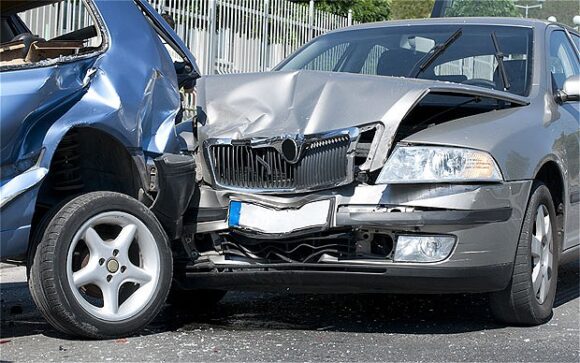
In our personal injury practice we frequently deal with clients injured in automobile accidents. Frequently (and sadly), we often have to explain to severely injured people that their insurance may be inadequate to compensate them for their injuries. Thus, part of our initial client consultation is spent reviewing – and trying to simplify – Connecticut’s laws dealing with liability and uninsured/ underinsured motorist coverage.

Our job is to zealously advocate for our clients . . . and to provide good counsel.  So, let’s cover some basics (different rules may apply for commercial and fleet policies):

1. What is “liability coverage”?
This coverage protects the negligent operator and/or owner of a vehicle for injuries caused by negligent operation of the vehicle up to the amount of the purchased coverage limit. This coverage is generally found in Part A of your policy.

2. What is uninsured motorist (UM) coverage?
Connecticut law (C.G.S. 38a-336) provides that that each automobile liability insurance policy shall provide uninsured motorist coverage with limits equal to the policy’s “liability” limits. Uninsured motorist coverage provides protection and compensation to the driver and/or passengers in a vehicle if they sustain injuries and the negligent tortfeasor (“the bad guy”) does not have insurance. This coverage is generally found in Part C of your policy.

3. What is underinsured motorist (UIM) coverage?
UIM coverage provides protection for the same occupants in the event that the tortfeasor does not have enough insurance. Connecticut law requires that the tortfeasor only needs $20,000 in liability coverage.

4. What’s the cost for UM/UIM coverage?
When the liability limits and UM/UIM limits are the same most companies charge a premium for UM/UIM coverage that’s significantly less than the liability premium. Check Part C of your policy declarations page and compare that premium to Part A; it’s often 60-75% less. It’s less because insurance company actuaries have determined that you are less likely to use UM coverage than liability coverage.

5. Should I purchase UM/UIM coverage which is lower than my liability coverage?
The short answer: No. Connecticut Law allows you to reduce your UM/UIM coverage. Don’t do it.  UM/UIM coverage is designed to protect the operator, passengers and family members (and in some circumstances, pedestrians) associated with your vehicle. The cost is much cheaper than the liability coverage premium.

6. Can I purchase higher UM/UIM coverage?
Yes you can . . . and should. Generally, as you purchase more insurance the premium cost becomes cheaper per $1,000 purchased.  Connecticut law allows you to purchase UM/UIM coverage which is double your liability limits. Thus, if you have a $100,000 liability policy, you may elect to purchase $200,000 in UM/UIM coverage. If you can afford it, you should do so for your own protection.

7. What’s the difference between straight UIM coverage and conversion UIM coverage?
Under Connecticut law your insurance carrier is allowed to reduce from your UIM recovery any amount paid to you by the tortfeasor. Here’s how it works:  let’s assume that you have an injury for which $100,000 is fair compensation. Further assume that the tortfeasor has a $25,000 liability policy and that you have a $50,000 straight UIM policy.  You would think that you could collect $25,000 from the tortfeasor and $50,000 from your UIM carrier. Wrong!  If you have a straight UIM policy your carrier can deduct the $25,000 from your $50,000 policy, leaving you with $25,000 from the tortfeasor and $25,000 from your carrier. . . to compensate you for your $100,000 injury. Conversion coverage eliminates the ability of your carrier to claim a credit for money you receive from the tortfeasor. Thus, you could collect $25,000 from “the bad guy” and the full $50,000 from your policy.  Better yet, if you had double UIM conversion coverage ($50,000 x2 = $100,000), you could receive $25,000 from the tortfeasor and up to $100,000 from your carrier, thus fully compensating you for your loss.

There are many local insurance agents who can arrange coverage for you. The intent of this article is to simply better educate you on the need for, and issues surrounding, uninsured motorist and underinsured motorist law, so that you can make a better informed decision to protect you and your passengers in the event that the need to use such coverage should arise.

Suisman Shapiro Attorneys at Law is the largest law firm in eastern Connecticut, serving the community for over 70 years with a wide range of legal services.  John A. Collins III is the Managing Partner of the firm and a Director/Shareholder who concentrates in the areas of Personal Injury Law and Civil Litigation. For more information, visit www.suismanshapiro.com or call (860)442-4416.

Suisman Shapiro is located at 2 Union Plaza, P.O. Box 1591, New London, CT  06320

Legal News You Can Use: Is Your Teen Gearing Up For A Driver’s License?

Teen_with_drivers_licenseYoung people ages 15-24 represent only 14% of the U.S. population. However, they account for 30 percent ($19 billion) of the total costs of motor vehicle injuries among males and 28 percent ($7 billion) of the total costs of motor vehicle injuries among females.1

The risk of motor vehicle crashes is higher among 16- to 19-year-olds than among any other age group. In fact, per mile driven, teen drivers ages 16 to 19 are nearly three times more likely than drivers aged 20 and older to be in a fatal crash.2

According to the Center for Disease Control (CDC), the leading causes of teenage crashes are as follows:

  • Driver inexperience
  • Driving with teen passengers
  • Nighttime driving
  • Not using seat belts
  • Distracted driving
  • Drowsy driving
  • Reckless driving
  • Impaired driving

Confronted with these staggering statistics, it is only right that we take steps to address this with our children.

While the prospect of getting a driver’s license is an exciting step for teenagers, parents have to be mindful of the risks associated with young drivers in their formative years.  Unfortunately, the worry over executing the parallel park during the road test should be the least of parents’ concerns.  It is ever so important for parents to instill in their teenagers the responsibility that comes along with driving an automobile.  This is especially true considering the wide range of distractions present now as compared to the recent past.  For instance, we all recognize the growth of multi-media applications regularly accessed and used by teens on their cell phones, IPods or tablets.

Parents must be resolute in setting forth ground rules with their young drivers.  Driving is, after all, a privilege – one that perhaps we take for granted, but that endows us with civic and personal responsibility.  Do our young people truly internalize these concepts? Do they understand the power inherent with operating a motor vehicle? Do they consider the consequences of aggressive driving? We were all there once.  Our focus at sixteen or seventeen was the freedom and fun associated with getting a driver’s license.  I would submit that young folks today have similar interests.

You should not be timid or embarrassed to lay down strict rules with your teenage drivers.  Our children are the center of our lives and we’ll do anything to protect them and ensure their safety.  It’s not important to be the cool parent.  Perhaps consider one or more of the following suggestions for ground rules:

  1. Your teenager does not have to get his/her license at the very moment he/she is eligible. If he/she is not working or not participating in an activity that would require transportation not otherwise available, perhaps consider waiting.  This would be especially true for parents who feel that their child is not ready for the responsibility that comes along with driving.
  1. While it may seem obvious, reinforce the seriousness of driving under the influence. The topic should not be taboo, but rather one that parents should broach with their children.
  1. You should determine the friends that you trust to drive your teenager. Whether it’s to after-school practice, the movies or a part-time job, make sure you are comfortable with the friend or teammate who is driving your child.  Once again, do not be afraid to prohibit your child from travelling with another teenager who you don’t fully trust.
  1. Take the opportunity to establish a vested interest in the eyes of your teenager. If your child has a job, perhaps mandate that he/she contribute to the car payment, insurance or repairs.  The obvious benefit is that the teenager will appreciate the privilege of driving.
  1. Practice good driving habits as parents. For the first 16-18 years of his/her life, your child has been observing you driving.  We can be an example for our children by practicing good driving habits.

Driving can be an amazing and fulfilling adventure for a teenager.  In many cases it ushers in rich experiences, both for social and vocational advancement.  It must, however, be approached with care and responsibility and the parents’ role is vital. If we try our best to send this strong message of responsibility and safety, it will go a long way toward ensuring that the driving experience of our young people is fruitful.  Being the caring and loving parent is more important than being the cool parent.

Editor’s Note: Attorney Bryan Fiengo is a Director at Suisman Shapiro whose practice concentrates in the areas of criminal law (including DUI defense), employment law and general litigation. To contact Bryan Fiengo, email him at bfiengo@sswbgg.com or call (860) 442-4416.

Suisman Shapiro Attorneys-at-Law is the largest law firm in eastern Connecticut, serving the community for over 75 years with a wide range of legal services.

1Finkelstein EA, Corso PS, Miller TR, Associates. Incidence and Economic Burden of Injuries in the United States. New York: Oxford University Press; 2006.

2Insurance Institute for Highway Safety (IIHS). Fatality facts: teenagers 2012. Arlington (VA): The Institute; 2012 [cited 2014 Sept 29].