Letter From Paris: Two Local Elections — Two Remarkably Different Outcomes

Nicole Prévost Logan

Nicole Prévost Logan

Local elections have just taken place in Turkey and in France.  The outcomes of the elections speak a great deal about these two countries .

Primeminister Recep Tayyip Erdogan of Turkey, already in power for 12 years, is showing no intention of stepping down.  His aura at the polls was barely affected by the scandals and accusations of wrong-doing.  Particularly the violent repression of the popular manifestations on Istanbul Taksim Square, the  allegations of frauds directed not only at him, but at his family, the murky circumstances of score settlings.

His recent strategy includes the taking over 85 percent of the main TV channel and the curbing of social networks like Twitter or Facebook.  Nevertheless  Erdogan’s party, the AKP  (Party of Justice and Development),  passed  the test of the polls with flying colors, not acknowledging the distress of the public opinion.  These events did not speak much for the democratic system of that country and should constitute a red flag for the 28 EU members next time Turkey knocks at their door.

In contrast, the French municipales (local elections) were a reflection of the French opinion’s strong disapproval of the policy  of the Francois Hollande government and brought on major changes.

The municipales,  are always an important and colorful event in France,  when mayors and  council members of 36,500 communes (towns) are elected for six years.  But this time they turned into a tsunami, which modified the political landscape of the country.  The vague bleue (blue wave ) showing the gains of the Right and even the vague bleue marine (navy blue wave ) named after Marine Le Pen, head of the far right Front National.  Just a few figures:  in 2008 in the towns of more than 10,000 inhabitants, the Left had 509 mayors and the Right 433.  In 2004, the Left was reduced to 349 and the Right grew to 572.  Emblematic  was the town of Limoges, which had voted socialist since 1912, and turned conservative.

Paris resisted this tidal wave and remained socialist.  Incumbent Mayor Bertrand  Delanoe had groomed his assistant Anne Hidalgo to be his successor.  Together, they engaged in an intensive and efficient campaign.  The Mayor of Paris is elected according to a special system of voting in three rounds.  The first two rounds each Parisian vote for the mayor and council in each arrondissement.  Then mayors and councils vote for the mayor of Paris.  The fight to the finish between Anne Hidalgo and her conservative opponent Union pour un Mouvement Populaire (UMP) Nathalie Kosciusko-Morizet , was fierce, to say the least.  The former won by 53.34 over 44.06 percent.

The map of Paris to-day is made up of two halves: a blue west, and a red east.   With 11 versus nine arrondissements,   Hidalgo leads but not as much as  Jacques Chirac did in 1983 when he won all of them.  These results will be important in the next senatorial elections since the members of the Senat (high chamber)  are elected by the mayors.

Barely 24 hours after the closing of the polls, president François Hollande appeared on TV.  He declared that he had heard and understood the people’s message of disapproval of the policy he conducted since 2012.  He reassured his audience that appropriate measures would be taken.

A day later he announced the remaniement (reshuffle) of the government.  The soft spoken, kind-looking prime minister Jean Marc Ayrault was replaced by tough and energetic Manuel Valls, former minister of the interior.  The number of ministers was trimmed down from 38 to 16 and the parity men/women respected.  The new ministers are more experienced and some of the “heavyweights” remained, like Laurent Fabius, at the Foreign Affairs desk.

The decision concerning Bercy (ministry of Finances and Economy)  was crucial given the urgency to reduce the budget deficit and increase the competitivité (competitiveness)  of the French industry.  The new prime minister Manuel Valls decided to split the responsibilities between two ministers: Michel Papin handling Budget and Finances , Arnaud Montebourg becoming minister of Economy.  This will be a “hot” area since France has to work in a partnership with Brussels.
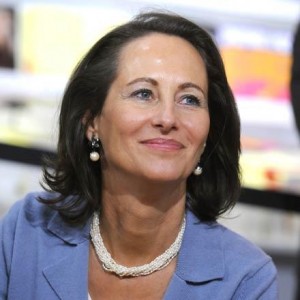
Ségolène Royal

Ségolène Royal

The second spectacular move was the nomination of Ségolène Royal as the minister of Ecology, Sustainable Industry and Energy.  She will rank as number three in the new cabinet.  She is an old timer, particularly in the environmental field.  Her appearance in the courtyard of Hotel de Matignon made quite a splash.  Royal is a highly educated woman, used to be Hollande’s companion for 29 years, the mother of their four children and the last contestant for the presidency against Sarkozy in  2002.  Her appointment will be helpful to Valls’ government because she brings her strong connections to the lower working class with her.

The outspoken Housing minister Cecile Duflot left the Matignon in a huff and a puff , showing her overwhelming dislike for Valls.  Her colleagues in the Green party at the Assemblée Nationale, were upset by her move as they were willing to work within the cabinet.

The overhaul of the new government was greeted by salvos of criticisms and gibes from the UMP and naturally from the extreme parties – this is normal in France.   However, the composition of the new government was interpreted, by more unbiased analysts,  as the determination to follow the road map set out by François Hollande at the Jan. 14  press conference and to keep the course on the Pacte de Responsabilité, but to  implement it with more determination, more speed and more pedagogy.

Failure is not an option and Brussels  will not ease off the pressure.

HeadshotAbout the author:  Nicole Prévost Logan divides her time between Essex and Paris, spending summers in the former and winters in the latter.  She will write a regular column for us from her Paris home where her topics will include politics, economy, social unrest — mostly in France — but also in other European countries.  She also will cover a variety of art exhibits and the performing arts in Europe.  Logan is the author of ‘Forever on the Road: A Franco-American Family’s Thirty Years in the Foreign Service,’ an autobiography of her life as the wife of an overseas diplomat, who lived in 10 foreign countries on three continents.  Her experiences during her foreign service life included being in Lebanon when civil war erupted, excavating a medieval city in Moscow and spending a week under house arrest in Guinea.
Letter From Paris: Following a New Silk Road

Nicole Prévost Logan

Nicole Prévost Logan

The presidents of the United States and of China were in Europe this week.  It was the first visit of a Chinese president to the European Union’s (EU) headquarters since 1975.  He will meet with the presidents of the Council, Herman Van Rompuy, of the Commission, Manuel Barroso and of the Parliament, Martin Schuls, showing a nascent  interest in  Europe as a political entity.

However, Europe has been the largest trade partner of China for a decade, with German leading the pack.  Why then did president Xi Jinping choose France as one of his four stops in Europe in spite of  that country’s small trade and investment with the Middle Kingdom ?  The reasons are historical, cultural, the Chinese’s attraction to  gastronomy and good wine, and, finally, the desire to acquire more areas of French “savoir faire” and state of the art technology, heretofore unexplored.

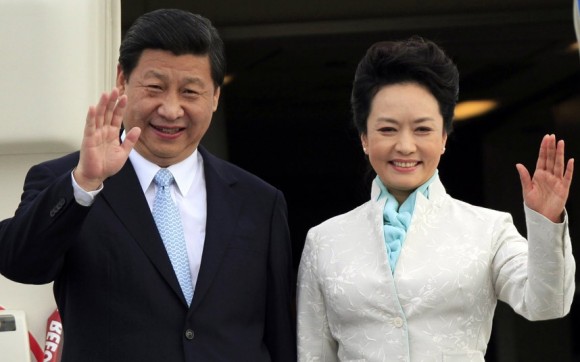
Xi Jinping and his beautiful star singer wife Peng Liyuan opened his three-day state visit in Lyon, the French silk capital, and announced his intention to promote a “new Silk Road.”  Started with French King Francis I, the silk-making industry in Lyon was flourishing by the 17th century.  In the 1920s cultural ties developed between China and France.  Chinese students entered French universities, among them several future political leaders.  In 1964 General Charles de Gaulle was the first Western chief of state to establish full diplomatic relations with the Middle Kingdom.

In this file photo, Xi Jinping and his wife Peng Liyuan wave to the crowd.

In this file photo, Xi Jinping and his wife Peng Liyuan wave to the crowd.

Mutual interests in literature, cinema and art have created special bonds between Chinese and French intelligencia.  Chinese fans of the “Nouvelle Vague” films (new wave) are sometimes more knowledgeable about the names of the directors that the French themselves.  The 1992 film “l’Amant‘”(the Lover), directed by Jean Jacques Annaud, based on the 1984 novel by Marguerite Duras, was a huge success in France.  The plot is the affair a “Chinaman” struck with a young French girl on a ferry boat crossing the Mekong river.  French readers cheered on the high school “Joueuse de Go” (Go player) character created by author Shan Sa, whose courage symbolized the determination of the Chinese population fighting against the impending invasion of Manchuria by the Japanese in 1931.

But the objectives of the Chinese president and of his cohort of businessmen and investors who accompanied him were more down to earth:  they were here for serious business.  Both by making inroads into the French industry and by opening their own market to French goods in order to tilt the massive trade deficit between the two countries.  The car company Dongfeng just acquired 14 percent of the PSA’s (Peugeot-Citroen) shares.   The Chinese have been trying to take over 46 percent of  Club Med’s (touristic villages) capital.

Whether it is nuclear energy  or aeronautic technology, automobile industry, or fast trains, the transfer of technology has always been a touchy point for the French.   The most striking example of this situation is the TGV (Train à grande vitesse) or fast train which was designed by Alstom in France in the 1970s and was further developed  jointly with other Western countries.  Now the Chinese network is ten times longer than the French and in July 2013  “Harmony Express” surpassed the speed of the French trains.

On a televised program, a spokeswoman for the Chinese government was asked the question about transfer of technology.   She said that the Chinese now are pretty much caught up, ( which is certainly true with telecom giants like Huawei and ZTE) and that now their policy was veering toward “partnership and cooperation” – language to be expected from a government spokeswoman.

The Chinese love France.  Millions of tourists speed through the most famous halls of the Louvre.  The growing middle class and the wealthy are increasingly   fascinated by luxury goods.  They are not satisfied anymore by the pirated brands one finds all over the world.  Now they can find the real stuff 72 percent cheaper in France thanks to the system of “detaxe” and by avoiding import duties into China.

During the many years we lived in Africa with the American Embassy, in the 1960s and 1970s, I had a chance to observe that, in those days, the Chinese lived in spartan compounds totally secluded from the local population , working on Guinea tea plantations or building a soccer stadium in the Gambia.  They have come a long way.  To-day they visit France to do their spring shopping and buy Chambertin ou Chateau Lafitte wine, Hermes silk scarves or Vuitton bags.

Agribusiness is a field where improvements would be welcome.   One remembers the problems China suffered a few years ago with contaminated powder milk.  The Chinese are very fond of foie gras and cheese.  They have just discovered the “Jambon de Bayonne.”  It takes many hours of preparation and manual work to prepare the dark red ham meat.  The traditional “savoir faire” has existed since the 13th century in the south west of France.  Its commerce is labeled “IGP” (Indication Geographique Protegéee) or geographically protected.  Pork is one of the main food staple in China and there the huge market is promising.  Will the  transfer of “savoir faire” be followed by the loss of the brand?

During the elegant dinner at the Elysees palace and the following night at the  Opera Royal of the Chateau de Versailles, what was president François Hollande thinking of  — 18 billion euros of new contracts or the difficult political situation he is in right now after the disastrous (for him) recent local elections?

HeadshotAbout the author:  Nicole Prévost Logan divides her time between Essex and Paris, spending summers in the former and winters in the latter.  She will write a regular column for us from her Paris home where her topics will include politics, economy, social unrest — mostly in France — but also in other European countries.  She also will cover a variety of art exhibits and the performing arts in Europe.  Logan is the author of ‘Forever on the Road: A Franco-American Family’s Thirty Years in the Foreign Service,’ an autobiography of her life as the wife of an overseas diplomat, who lived in 10 foreign countries on three continents.  Her experiences during her foreign service life included being in Lebanon when civil war erupted, excavating a medieval city in Moscow and spending a week under house arrest in Guinea.
Letter From Paris: A Week Like No Other in French Politics

Nicole Prévost Logan

Nicole Prévost Logan

It has been a week out of the ordinary in French politics, to say the least.  A summary of the sequence of events may help the foreign reader in deciphering the situation.

It all started March 2 with a few revelations about the UMP (Union for Popular movement) right wing party.  Jean François Copé, UMP president, was denounced in the weekly magazine “Le Point” of surfacturation (over billing) of expenses incurred during the 2012 electoral campaign.  A communications company had obtained the contract without preliminary invitations to tender.  Copé, looking wan and thin, reacted almost emotionally to the attack.  He announced that all the accounts of the UMP would be locked in a sealed room contingent upon the other political parties as well as the media, doing the same .

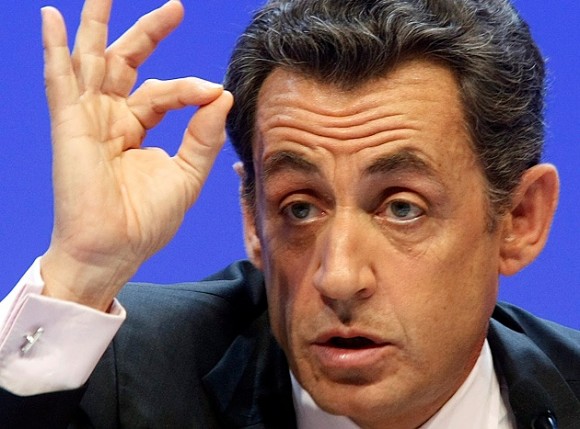
Former President Nicolas Sarkozy was at the center of an extraordinary week in French politics.

Former President Nicolas Sarkozy was at the center of an extraordinary week in French politics.

Then, on March 3, the whistle-blowing satirical newspaper, “Canard Enchainé,” reported that Patrick Buisson, a collaborator of former president Nicolas Sarkozy, recorded the latter’s conversations.  Buisson was part of Sarkozy’s first circle and his closest adviser.  He made the recordings himself for hours on end, from morning to evening,  with an old-fashion dictaphone carried in his pockets.  Some of the recorded conversations took place just prior to a planned cabinet reshuffle — in other words, they were politically sensitive.

The question was: who gave the recordings to the press?  Buisson’s lawyer vouched that his client did not.  But what was suspicious was the fact that Buisson told his son (father and son have been estranged for two years) that those recordings were a “life insurance” and that cela peut toujours servir (One never knows, it might be useful someday)

But this was just the beginning.  An avalanche of revelations, which followed – all involving  the wiretapping of Nicolas Sarkozy to hamper his return to the political life –  was even more serious and  turned into a full blown political crisis reaching the top level of the Executive and of the Judiciary.

Four legal cases or “affaires,” which had been dormant, were resurfacing now:  the 2008 arbitrage-granting of 403 millions to businessman and former minister Bernard Tapie by the Credit Lyonnais;  the “retro- commissions” obtained from Pakistan after the Karachi terrorist attack in 2002 ;  the alleged financing from Libyan president Gaddafi in 2007 ;  the funds given by Liliane Bettencourt, one of the richest women in the world and heir to the l’Oreal company.

These four affaires share the common factor of suspicion in involvement of the illegal financing of Sarkozy’s electoral campaigns of 2007 and 2012.  Last October, Sarkozy was cleared and received a non-lieu (no ground for public prosecution) in the Bettencourt affaire.

On March 6, the headlines of the daily “Le Monde” were a bombshell: the former president’s phone had been tapped since April 13 by orders  of the judges d’instruction ( investigating judges running preliminary inquiry) – a totally unprecedented occurrence in the French Republic.  In early March, the judges opened an inquiry for traffic of influence  and corruption against Sarkozy, his lawyer Thierry Herzog, and Gilbert Azibert, general counsel at the Cour de Cassation  (highest judiciary court in France).

An aggressive perquisition (search) was conducted in Herzog’s Bordeaux residence.  Ten police and judges showed up at eight in the morning.  The lawyer’s computer and his portable phone were seized.  The taking of the former president ‘s personal “carnets” (agendas) created a great commotion.   In a television talk show, the president of the Bar commented that these actions were reminiscent of the Stasi.

Up to that point it was all bad news for the former president.  The socialist government had remained prudently quiet.  The wiretapping of Sarkozy was legal (he did not have immunity any more) as long as there was a suspicion of infraction.  However, the accumulation of proceedings against him was  beginning to be seen as harassment.  By coincidence, Eliane Houlette  was appointed in the new position of “National Financial Attorney” on March 3 in order to deal with corruption and tax frauds.  The first case was to be Sarkozy’s.

Then the blame game seemed to move from the opposition to the majority.  As a journalist commented, the government turned this gold – Sarkozy on the run – to lead, with the government violating the independence of justice.  The Garde des Sceaux or Minister of Justice Christiane Taubira, a high-spirited and smart woman, born in Guyana, was put on the defensive and even accused of lying.

Did she know the content of the recordings?  When did the prime minister and the minister of interior (Secretary of the Interior) know?  Their evasive and even conflicting answers made them appear guilty when their main sin was probably just to be disorganized.

By the end of that memorable week, “Le Monde” published a letter, co-signed by the most eminent members of the judiciary corps, calling for moderation.  The letter praised transparency, but said that lawyers were not above the law, and that wiretapping was only legal if carried out by independent judges.  It also demanded a return to one of the basic rules of the French (and American) institutions – the separation of power between Executive and Judiciary.

HeadshotAbout the author:  Nicole Prévost Logan divides her time between Essex and Paris, spending summers in the former and winters in the latter.  She will write a regular column for us from her Paris home where her topics will include politics, economy, social unrest — mostly in France — but also in other European countries.  She also will cover a variety of art exhibits and the performing arts in Europe.  Logan is the author of ‘Forever on the Road: A Franco-American Family’s Thirty Years in the Foreign Service,’ an autobiography of her life as the wife of an overseas diplomat, who lived in 10 foreign countries on three continents.  Her experiences during her foreign service life included being in Lebanon when civil war erupted, excavating a medieval city in Moscow and spending a week under house arrest in Guinea.
Letter From Paris: Monsieur (le President) Hollande Goes to Washington

Nicole Prévost Logan

Nicole Prévost Logan

For the first time in 20 years, a French President was invited for a State visit to the United States. François Hollande was greeted with the highest honors, including a colorful pageant on the White House Lawn.

There was no better way to emphasize the historical ties between the two countries than a visit to Monticello, the plantation of Thomas Jefferson, third president of the United States.  Jefferson, ambassador to France from 1785 to 1789, was an ardent francophile.  But he was also a brilliant statesman — particularly when he bought Louisiana from France in 1808, which probably represented the best real estate deal of all time.

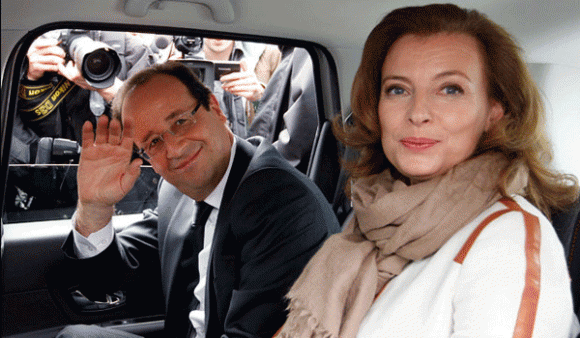
In happier days, French President Francois Hollande and then companion Valérie Trierweiler. (Photo courtesy of Reuters)

In happier days, French President Francois Hollande and then companion Valérie Trierweiler. (Photo courtesy of Reuters)

The logistics of the official dinner at The White House were the source of an intense “buzz” as to who would be sitting next to the American president in the absence of a French “First Lady,” after the recent break up of Hollande from his long-time companion, journalist Valerie Trierweiler.

The meeting of the two presidents in Washington had a strong symbolic importance aimed at reinforcing their respective statures on the world scene.  France is one of the staunchest allies of the US today.  It has an aggressive foreign policy demonstrated by military interventions in Mali and Centrafrique and the essential role it played during the international, ongoing negotiations regarding Syria and Iran.

Last summer the attitude of Obama was widely interpreted a slap in the face for Hollande when the latter was left high and dry after his offer to provide military assistance to the US against Syria. Laying out the red carpet in such a manner on this visit might be interpreted as a form of gratitude toward France.

Most of the difficult questions were asked during the press conference, but both Obama and Hollande chose to avoid contentious topics; criticisms were muted.  The resentment felt by France and the rest of Europe about the NSA surveillance was not brought to the forefront.  However, Obama did express his discontent about the untimely presence of a group of French businessmen in Iran even before any agreement was signed with that country.

Unlike Sarkozy, Hollande was not invited to speak in front of the US Congress.  This is not entirely surprising since the presence of a socialist leader could have ruffled too many conservative feathers.

Since the major press conference Hollande gave at the Elysees palace on Jan. 14, it seems that a government plan to turn around the French economy is developing.  The declaration of a “Pact of Responsibility” between the state and the private sector, by waving the obligation to finance social benefits (a reduction of 49% of the cost of labor), constitutes a substantial stimulus for the economy.

This new policy was reaffirmed by Hollande’s remarks made during his stay in California.  In fact, many thought he looked as if he were becoming more “Liberal Democrat” by the hour.  The exposure to Silicon Valley, dynamic French companies and start-ups, successful young French computer scientists, the stimulating atmosphere of flexible working conditions and the surprising remarks about “crowdfunding” were all, in the minds of many, like fresh air blowing from the West coast.

The French President enjoyed having lunch with the CEOs of giant internet companies like Microsoft, Google, Facebook, Mozilla and Twitter.  In 1984, the French President Francois Mitterand similarly enjoyed meeting a certain Stephen Jobs, then 29-years-old.

The stay in California triggered a real “digitalomania” (my own neologism) in France.  The media offered multiple talk shows about robotics, artificial intelligence, bio genetics and the like.  Analysts pointed out that the information technology was the key to the restructuring of the French economy.

While a major snow storm impacted 49 out of the 50 American states, the French president, flying the northern route, ended his short, but definitely positive, visit to the United States.

HeadshotAbout the author:  Nicole Prévost Logan divides her time between Essex and Paris, spending summers in the former and winters in the latter.  She will write a regular column for us from her Paris home where her topics will include politics, economy, social unrest — mostly in France — but also in other European countries.  She also will cover a variety of art exhibits and the performing arts in Europe.  Logan is the author of ‘Forever on the Road: A Franco-American Family’s Thirty Years in the Foreign Service,’ an autobiography of her life as the wife of an overseas diplomat, who lived in 10 foreign countries on three continents.  Her experiences during her foreign service life included being in Lebanon when civil war erupted, excavating a medieval city in Moscow and spending a week under house arrest in Guinea.

Letter from Paris: There’s Something About Sochi

Nicole Prévost Logan

Nicole Prévost Logan

xxii-winter-olympics-logoAfter a few weeks of a media coverage of the 2014 Olympic Winter Games saturated with predictions of terrorist attacks, confrontations and unpreparedness, it felt a relief to watch the opening ceremony on Feb. 6 proceed without any significant hitch.  The smiling and happy faces of the athletes parading inside the stadium before the beginning of the show were the promise of two great weeks on TV. (Close to four billion viewers watched the last winter games of Vancouver).

The sheer number and size of the national teams are astounding.  Compared to the 250 sportsmen from 16 countries who participated in the first Winter Olympics in 1924 in Chamonix, today more than 3,000 people make up the delegations from 87 countries.  Women have come a long way since the 1900 games when their appearances were limited to tennis and golf.

The German president of International Olympic Committee(IOC), Thomas Bach, defused the feared boycott caused by the Russian government’s homophobic position.  He declared that no discrimination would be tolerated toward any group of people.  President Putin of Russia made the shortest -10 second – speech of his career when he declared open the XXII Winter Olympic Games.

The opening ceremony was a grand scale production – Russians have always been good at those – that evoked the nation’s history.  It started with a short film showing Slavic tribesmen in a small vessel.  Actually the scene looked rather like ancient Greeks on their mythical quest to find the Golden Fleece on the distant shores of the Caucasus.

After a romantic 19th century program exalting Russian literature, music and ballet , the post-1917 era was introduced by dozens of young dancers wearing costumes straight out of a Malevich painting.   The message was clear: the Russian establishment had reconciled itself with abstract art which had been vilipended for so long.

The host country of the 2014 games had to show its pride in the most glorious event of its history: the orbiting around the earth of the adulated “cosmonaut” Yuri Gagarin.  The patriotism toward the country’s achievement intensified when five heroes of the past walked in, bearing the Olympic flag.

Among them was Valentina Tereshkova , the first woman in space in 1963 (she was a beautiful young woman when I met her at a reception given at the French embassy in Moscow in 1965).  The youthful appearance of tennis champion Maria Sharapova, who trained at the Sochi sport center until the age of seven, was obviously directed at the modern audience.

The Sochi games have been organized at a high human, financial and environmental cost: corruption, expropriation of local population, damage caused to the “Sochi National Park” and to the “Caucasian Biosphere Preserve”- a UNESCO World Heritage Site.  The Nordmen Firs, which are the tallest trees of Europe (close to 300 feet high) grow in those areas .

Some of the blogs against the Sochi project have been so vitriolic as to be uninformative.  It is better to read well-researched pieces like the one published by David Remnick.  Remnick was the Washington Post correspondent in Moscow in the 1980s and now is the editor of the New Yorker.

Soviet and Russian leaders have cherished the sub-tropical coast of the Black Sea.  Stalin, Brezhnev, Andropov and Yeltsin all had their summer residences in Sochi prior to Putin.  It was on his return from his dacha in Pitsunda, in what is today Abkhazia, that Nikita Khrushchev was overthrown by Brezhnev on Oct. 15, 1965.  Gorbachev’s dacha was located west of Yalta in the Crimea (we were boarded by an armed patrol craft for allegedly sailing too close) .

We circumnavigated the Black Sea on our 44-foot ketch in the summer of 1991.  We had obtained visas for Sochi.  In retrospect, our visit to Sochi was a preview to the 2014 games.  In an outdoor theater, we happened to watch the production of “Jesus Christ Superstar” by the Rock Opera St Petersburg Theater.  It was the first Russian-staged production of that musical.  There will be a repeat performance during the games.

We stayed at the very busy new marina called coincidentally the Center of Sailing Sports or “Olympic Centre.”  Or was it a premonition on the part of the Russians that there would be Olympic games one day in their town?

HeadshotAbout the author:  Nicole Prévost Logan divides her time between Essex and Paris, spending summers in the former and winters in the latter.  She will write a regular column for us from her Paris home where her topics will include politics, economy, social unrest — mostly in France — but also in other European countries.  She also will cover a variety of art exhibits and the performing arts in Europe.  Logan is the author of ‘Forever on the Road: A Franco-American Family’s Thirty Years in the Foreign Service,’ an autobiography of her life as the wife of an overseas diplomat, who lived in 10 foreign countries on three continents.  Her experiences during her foreign service life included being in Lebanon when civil war erupted, excavating a medieval city in Moscow and spending a week under house arrest in Guinea.